
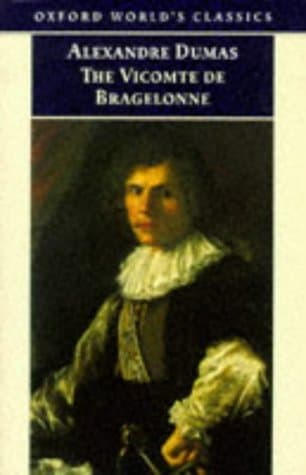
Synopsis
Covers the whole plot, including the ending.
- Difficulty
- Medium
- Pacing
- Variable
- Mood
- Epic, Adventurous, Melancholy, Intriguing, Grand
- Read it if
- You love classic historical fiction, grand adventures, political intrigue, and the iconic characters of The Three Musketeers.
- Skip it if
- You prefer fast-paced, modern prose or are looking for a standalone story with a neat, conclusive ending.
The Vicomte de Bragelonne Plot Summary
Covers the whole plot, including the ending.
The Return of the Musketeers
The novel opens years after 'Twenty Years After,' finding the musketeers in different stages of life. D'Artagnan, a captain in the King's Musketeers, feels restless and unappreciated in Louis XIV's peaceful court. Athos, the Comte de la Fère, is a nobleman devoted to his son Raoul. Porthos, now Baron du Vallon de Bracieux de Pierrefonds, enjoys his wealth but wants adventure. Aramis, now Bishop of Vannes, is involved in politics and secretly plotting against the current government. Their paths start to cross as D'Artagnan considers leaving his position, feeling held back by the court's inactivity and the King's youth.
Raoul's Love and Departure
Raoul de Bragelonne, Athos's son, loves Louise de la Vallière, a lady-in-waiting to the Duchess of Orléans. They hope to marry, but King Louis XIV begins to notice Louise. His interest grows, fueled by her innocence and her devotion to Raoul. To remove Raoul from court, the King, influenced by his advisor Colbert, sends Raoul on an expedition to England. This forced separation begins Raoul's heartbreak and sets the stage for future betrayals.
D'Artagnan's English Mission
D'Artagnan, tired of court life, is given a secret mission by Cardinal Mazarin (shortly before his death) and then by King Louis XIV. He is to go to England to help restore King Charles II. This mission revives D'Artagnan's adventurous spirit and lets him show his skill. He navigates English politics, outwitting Cromwell's forces and ensuring Charles II's return to the throne. This success raises D'Artagnan's standing with Louis XIV, and shows the King's growing reliance on his own authority.
Fouquet's Rising Power and Aramis's Scheme
Nicolas Fouquet, the Superintendent of Finances, is a powerful and ambitious man, known for his lavish life and support of the arts. He is also Aramis's friend. Aramis, now a Jesuit, sees Fouquet as an ally in his plan to place a secret prisoner on the French throne. Unbeknownst to Fouquet, Aramis uses his influence and resources for a larger, more dangerous plot. Aramis believes Fouquet's wealth and power make him a useful tool, and he cultivates their friendship for his own ends, ready to betray him if needed. Colbert, Louis XIV's finance minister, sees Fouquet as a rival and works to undermine him, increasing the King's suspicions.
The King's Affection for Louise
King Louis XIV's interest in Louise de la Vallière grows. He openly flirts with her, sending gifts and giving her special attention, to Raoul de Bragelonne's dismay, who is still serving abroad. The court notices, and Louise, despite her initial loyalty to Raoul, is drawn to the King's power and charm. Athos, seeing his son's suffering and the King's actions, tries to intervene, but the King ignores him. This affair becomes a central conflict, straining loyalties and love in the court.
Aramis's Secret Prisoner
Aramis, now General of the Jesuits, tells Porthos the full extent of his political plans. Porthos remains loyal, though he understands little. Aramis reveals his secret: a prisoner in the Bastille, an identical twin brother of King Louis XIV. This prisoner, Philippe, was secretly held since birth to prevent a challenge to the throne. Aramis plans to replace Louis XIV with Philippe, believing he can control the new king and bring in Jesuit influence. He unknowingly enlists Fouquet to help with the plan, using Fouquet's fortress of Belle-Île-en-Mer as a potential stronghold and source of funds.
The Belle-Île Fortifications
Fouquet, guided by Aramis, begins to fortify his island fortress of Belle-Île-en-Mer. He thinks these fortifications are for his protection against enemies, especially Colbert, and to show his wealth. However, Aramis plans for Belle-Île to be the base for his coup, a secure place for Philippe and a strategic point for his takeover. D'Artagnan, observant, grows suspicious of Fouquet's military preparations after inspecting the island. His reports increase Louis XIV's distrust of Fouquet, further fueling Colbert's schemes.
The Vaux-le-Vicomte Fête
Fouquet hosts a fête at his château, Vaux-le-Vicomte, to honor King Louis XIV. The party shows off wealth, art, and entertainment, with Molière, La Fontaine, and Le Nôtre. While meant to impress the King and show Fouquet's loyalty, it backfires. Louis XIV, already suspicious of Fouquet's fortune, is angered by the superintendent's display, which seems to rival his own royal splendor. Colbert skillfully uses the King's jealousy, whispering accusations of treason. The fête, meant to secure Fouquet's position, instead seals his fate, as Louis XIV decides to bring him down.
The Substitution of Kings
Aramis, with Porthos's loyalty, carries out his plan. They abduct King Louis XIV, replace him with his twin brother, Philippe, and imprison the true King, masked, in the Bastille. Philippe, initially confused, is coached by Aramis to impersonate Louis XIV. The switch is almost perfect, thanks to their resemblance. However, the true King's character, his temper and regal manner, are hard to perfectly copy. D'Artagnan, despite his initial confusion, soon senses a difference in the 'King's' demeanor, especially his unusual kindness towards Fouquet, which raises his suspicions.
D'Artagnan Uncovers the Plot
D'Artagnan's intellect and loyalty lead him to uncover Aramis's deception. He notices inconsistencies in the 'King's' behavior and speech, particularly the 'King's' leniency towards Fouquet, which goes against Louis XIV's known animosity. Following his instincts, D'Artagnan investigates and finds the true King, Louis XIV, imprisoned and masked in the Bastille. With Athos's help, he rescues the true King and recaptures Philippe. The true Louis XIV is restored to the throne, while Philippe returns to his masked imprisonment. Aramis and Porthos flee, becoming fugitives.
The Fall of Fouquet and the Musketeers' Loyalty
With the true King restored, Louis XIV turns his anger on Fouquet. Despite Fouquet's loyalty and his unwitting involvement in Aramis's plot, Colbert convinces the King of Fouquet's treason. D'Artagnan reluctantly arrests Fouquet, a task he performs with a heavy heart, recognizing Fouquet's good qualities. The Musketeers are now scattered, their loyalties tested. Athos remains loyal to the King but disapproves of his treatment of Raoul and Fouquet. Aramis and Porthos, now fugitives, try to escape, with D'Artagnan reluctantly pursuing them, torn between duty and friendship. The old bonds of the musketeers are strained.
Raoul's Despair and Departure
Raoul de Bragelonne, devastated by Louise de la Vallière's public betrayal and her affair with King Louis XIV, is broken. His father, Athos, tries to comfort him and asks the King for justice, but Louis XIV ignores Raoul's suffering. Unable to bear the shame, Raoul volunteers for a dangerous military expedition to Africa, seeking an honorable death. His departure is a tragic turn for Athos, who sees his son's life destroyed by the King's selfishness. This deeply affects Athos, solidifying his disappointment with the young monarch.
The Pursuit of Aramis and Porthos
D'Artagnan, tasked with pursuing Aramis and Porthos, faces a moral dilemma. He is bound by his oath to the King but saddened by the need to hunt his old friends. He tracks them to Belle-Île, where they try to escape. A siege follows, and Porthos, showing his strength and loyalty to Aramis, fights bravely. However, during their escape through a grotto, Porthos is crushed by falling rocks. His death is a blow to D'Artagnan and Aramis, marking the end of an era for the friends. Aramis escapes, heartbroken and alone, leaving D'Artagnan to mourn his friend.
Athos's Final Grief
Athos, heartbroken by the King's treatment of Raoul and the loss of his friends, receives news of his son's death in battle in Africa. Raoul found the death he sought. This final blow is too much for Athos. Overwhelmed by grief and disillusionment with the world and monarchy he served, Athos dies peacefully at his estate. His death signifies the passing of the old guard and the end of an era of honor and chivalry that struggled in Louis XIV's cynical court. D'Artagnan is left to mourn another dear friend.
D'Artagnan's Lingering Loyalty
After the deaths of Porthos and Athos, and Raoul's tragic fate, D'Artagnan is the only original musketeer still serving the King. Despite his losses and sadness over the King's actions and betrayals, D'Artagnan remains loyal to Louis XIV. He continues to serve, though with a heavy heart, upholding his duty and honor. The novel ends with D'Artagnan reflecting on the changing times and the cost of loyalty, setting the stage for his continued service and the King's growing absolutism. Aramis, though a fugitive, continues his political plans from the shadows.
Principal Figures
D'Artagnan
Protagonist
The loyal, astute, and adventurous captain of the King's Musketeers.
D'Artagnan is the quintessential Gascon, combining wit, courage, and an unmatched skill with a sword. By this stage of his life, he is a seasoned veteran, loyal to the crown but also deeply cynical about court politics. He values friendship above all else, often finding himself torn between his duty to the King and his devotion to his old comrades. He is observant, intelligent, and possesses a strong moral compass that allows him to discern truth from deception, even when faced with powerful illusions. He yearns for adventure but is also capable of profound reflection.
Relationships: Athos (Deep, lifelong friendship, mutual respect); Porthos (Deep, lifelong friendship, admiring Porthos's strength); Aramis (Deep, lifelong friendship, but often at odds due to Aramis's plotting); Louis XIV (Loyal servant, though often critical of the King's actions)
Athos (Comte de la Fère)
Supporting
The noble and honorable ex-musketeer, devoted father to Raoul.
Athos embodies the ideals of the old nobility: honor, integrity, and a profound sense of justice. He is a man of quiet dignity and deep emotion, particularly where his son, Raoul, is concerned. He finds the new court of Louis XIV to be increasingly vulgar and immoral, clashing with the King's burgeoning absolutism and self-interest. Athos is a moral anchor for the narrative, representing a fading era of chivalry and principle. His sorrow over Raoul's fate and the changing world ultimately leads to his demise.
Relationships: D'Artagnan (Deep, lifelong friendship, D'Artagnan looks up to him); Raoul de Bragelonne (Devoted father, Raoul is his entire world); Louis XIV (Loyal subject, but disapproves of the King's moral conduct)
Porthos (Baron du Vallon de Bracieux de Pierrefonds)
Supporting
The jovial, strong, and loyal ex-musketeer, a man of simple pleasures.
Porthos is a man of immense physical strength and a hearty appetite for life. He is less intellectually complex than his friends, but his loyalty is absolute and unshakeable. He enjoys his wealth and status but retains a childlike enthusiasm for adventure. He often acts as Aramis's devoted, if sometimes bewildered, accomplice, trusting his friend implicitly even when he doesn't fully grasp the intricacies of the plot. His simplicity and unwavering devotion make his ultimate sacrifice all the more poignant.
Relationships: D'Artagnan (Deep, lifelong friendship, Porthos admires D'Artagnan's cleverness); Aramis (Deep, lifelong friendship, unwavering loyalty, often manipulated by Aramis); Louis XIV (Loyal subject, but easily swayed by friends)
Aramis (Abbé d'Herblay, Bishop of Vannes, General of the Jesuits)
Antagonist/Supporting
The cunning, ambitious, and politically astute ex-musketeer, now a high-ranking cleric.
Aramis is the most complex and enigmatic of the musketeers. Beneath his clerical robes lies a brilliant, Machiavellian mind, driven by ambition and a desire for power. He is a master of intrigue, capable of orchestrating elaborate plots with breathtaking audacity. While he retains a fondness for his old friends, his ultimate loyalty lies with his own grand designs and the Jesuit order. He is a dangerous adversary, yet his charm and intellect are undeniable. His actions are often morally ambiguous, blurring the lines between good and evil.
Relationships: D'Artagnan (Deep, lifelong friendship, but often at odds due to Aramis's plotting); Porthos (Deep, lifelong friendship, manipulates Porthos's loyalty); Nicolas Fouquet (Strategic ally, manipulates Fouquet for his grand scheme); Philippe (His chosen puppet king, a tool for his ambition)
Raoul, Vicomte de Bragelonne
Supporting
Athos's noble and honorable son, deeply in love with Louise de la Vallière.
Raoul is a young man of impeccable honor, courage, and sensitivity, mirroring his father's best qualities. He is deeply and sincerely in love with Louise de la Vallière. His innocence and purity make him particularly vulnerable to the corrupting influences of the court and the King's self-serving desires. He represents the tragic victim of Louis XIV's unchecked power and the changing moral landscape. His heartbreak and eventual death are central to the novel's themes of lost innocence and the end of an era.
Relationships: Athos (Devoted son, deeply loves and respects his father); Louise de la Vallière (Deeply in love, his betrothed); Louis XIV (Loyal subject, but ultimately betrayed by the King)
Louise de la Vallière
Supporting
A young lady-in-waiting, Raoul's beloved, who becomes King Louis XIV's mistress.
Louise is initially portrayed as a virtuous, innocent young woman, genuinely in love with Raoul. However, she is drawn into the King's orbit, flattered by his attention and eventually succumbing to his charm and power. She struggles with her conscience and her loyalty to Raoul, but ultimately chooses the King. Her character embodies the seductive power of the monarchy and the difficult choices faced by women in court, highlighting themes of temptation, betrayal, and the loss of innocence. She is both a victim and a participant in the King's amorous pursuits.
Relationships: Raoul de Bragelonne (Initially deeply in love, later betrays him for the King); Louis XIV (Becomes his mistress, both flattered and genuinely fond of him)
King Louis XIV
Antagonist
The young, ambitious, and increasingly autocratic King of France.
Louis XIV, the 'Sun King,' is depicted as a young monarch growing into his power and absolutism. He is intelligent, proud, and increasingly self-absorbed, believing himself to be above the moral constraints that bind others. He is quick to anger, easily swayed by flattery, and ruthless in consolidating his power. His infatuation with Louise de la Vallière, his rivalry with Fouquet, and his unwitting role in Aramis's plot reveal his flaws and his burgeoning tyranny. He represents the changing nature of monarchy, moving away from the more chivalrous ideals of the past.
Relationships: D'Artagnan (Relies on D'Artagnan's loyalty and skill, but often takes him for granted); Louise de la Vallière (His mistress, object of his infatuation); Nicolas Fouquet (His rival, whom he seeks to destroy); Jean-Baptiste Colbert (His trusted advisor, who fuels his suspicion of Fouquet)
Nicolas Fouquet
Supporting
The powerful and lavish Superintendent of Finances, a patron of the arts.
Fouquet is a man of immense wealth, ambition, and a genuine love for the arts. He is a loyal servant to the crown, but his ostentatious displays of wealth and his independent power make him a target for King Louis XIV's jealousy and Colbert's political maneuvering. He is a tragic figure, unknowingly manipulated by Aramis and ultimately destroyed by the King's envy. Despite his flaws, he possesses a certain grandeur and generosity that contrast with the King's pettiness.
Relationships: Aramis (Close friend, unknowingly manipulated by Aramis); Louis XIV (Loyal subject, but becomes the target of the King's wrath); Jean-Baptiste Colbert (Political rival, Colbert actively seeks his downfall)
Philippe
Supporting
The secret twin brother of King Louis XIV, imprisoned since birth.
Philippe is the tragic 'Man in the Iron Mask' (though not yet masked in this volume). He is the identical twin brother of Louis XIV, secretly imprisoned since infancy to prevent a challenge to the throne. He is intelligent and possesses a natural nobility, but his long years of confinement have left him naive and somewhat unworldly. He is a pawn in Aramis's grand scheme, briefly experiencing freedom and power before being returned to his prison. His existence challenges the legitimacy and absolute power of the monarchy.
Relationships: Aramis (His liberator and manipulator, used as a tool for Aramis's ambition); Louis XIV (His identical twin brother, whom he briefly replaces)
Jean-Baptiste Colbert
Supporting
King Louis XIV's shrewd and ambitious finance minister, rival to Fouquet.
Colbert is a brilliant but ruthless administrator, driven by a desire to serve the King and consolidate royal power. He is the antithesis of Fouquet: frugal, meticulous, and utterly devoted to the state's financial health. He views Fouquet as a corrupt rival who squanders public funds and undermines the King's authority. Colbert skillfully manipulates Louis XIV's suspicions and jealousy, relentlessly working to bring about Fouquet's downfall. He represents the pragmatic, absolutist forces shaping the new French monarchy.
Relationships: Louis XIV (Trusted advisor, who influences the King's decisions); Nicolas Fouquet (Bitter political rival, actively seeks his ruin)
Themes & Insights
Loyalty vs. Duty
This theme explores the conflicts characters face, especially D'Artagnan, when personal loyalty to friends clashes with duty to the King. D'Artagnan's pursuit of Aramis and Porthos shows this struggle. He is heartbroken, but his honor and oath to Louis XIV compel him. Athos's loyalty to the crown is tested by the King's treatment of Raoul and Fouquet, leading to his disillusionment. The novel questions serving both personal bonds and an increasingly tyrannical state.
“I am the King's man, but I am also your friend. My heart is torn.”
The Price of Absolutism
The novel shows the rise of absolute monarchy under Louis XIV and its human cost. The King's unchecked power destroys individuals like Raoul and Fouquet, whose lives are sacrificed for his whims and political goals. Louis's self-interest, seen in his affair with Louise and his envy of Fouquet, shows how unchecked power corrupts. Philippe's imprisonment also highlights the ruthlessness needed to maintain absolute power, where even family ties are sacrificed. The characters' suffering comments on the dangers of a monarch who believes himself above all laws.
“Kings are like the sun; they darken all who stand near them.”
Lost Innocence and Betrayal
This theme is most clearly seen through Raoul de Bragelonne and Louise de la Vallière. Raoul's pure love is shattered by Louise's betrayal and the King's pursuit. Louise, initially innocent, succumbs to the allure of power, losing her innocence. The novel depicts how the corrupting influence of the court and the pursuit of power can destroy genuine affection and moral purity. Betrayal extends beyond romance, as Aramis betrays Fouquet's trust for political gain, and Louis XIV betrays the social contract with his loyal subjects.
“There are some hearts so noble that they break rather than bend.”
The End of an Era
The novel is an elegy for the fading ideals of chivalry, honor, and personal loyalty, represented by the aging musketeers. Athos, with his strict honor code, feels out of place in Louis XIV's pragmatic court. The deaths of Porthos and Athos, and Raoul's tragic fate, symbolize the end of an older, more romantic age. D'Artagnan, the sole survivor, carries the weight of these losses, recognizing that the world has changed. The novel mourns a time when personal valor and friendship mattered more than political schemes and royal decrees.
“The age of gold is past, and the age of iron has begun.”
Friendship and Sacrifice
Despite political intrigues and betrayals, the bonds of friendship among the musketeers remain a central emotional core. Porthos's loyalty to Aramis, even to his death, and D'Artagnan's agonizing pursuit of his friends, highlight these strong ties. Sacrifices made for friendship, whether Porthos giving his life or D'Artagnan struggling with duty, show the depth of their connection. Even when fractured, their shared history and affection are clear, making their losses all the more tragic.
“We are four, and we shall always be four, even if we are but one.”
Plot Devices & Literary Techniques
The Secret Twin (The Man in the Iron Mask)
A hidden identical twin brother of the King, used as a political pawn.
This device is the central mechanism of Aramis's grand conspiracy. The existence of Philippe, an identical twin of Louis XIV, provides the means for a seamless royal substitution. It creates immense dramatic tension and allows for exploration of themes such as legitimacy, identity, and the ruthlessness of power. The secret twin's imprisonment since birth highlights the extreme measures taken to secure the throne and sets up the audacious plan to replace the King, driving a significant portion of the plot and leading to a major climax.
The Love Triangle
Raoul, Louise, and King Louis XIV form a destructive romantic entanglement.
This classic device fuels much of the personal drama and reveals the King's character flaws. It creates immediate sympathy for Raoul and highlights the vulnerability of individuals against royal power. The King's pursuit of Louise, despite her engagement to Raoul, serves as a catalyst for Raoul's despair, Athos's disillusionment, and Louise's moral compromise. It demonstrates the destructive impact of royal caprice on innocent lives and underscores the theme of lost innocence and betrayal within the court.
The Political Rivalry
The intense competition between Fouquet and Colbert for the King's favor.
This device drives the political intrigue and contributes significantly to Fouquet's downfall. Colbert's relentless undermining of Fouquet, fueled by genuine policy differences and personal ambition, provides the constant pressure that makes Fouquet vulnerable. It illustrates the cutthroat nature of court politics and the manipulation of a monarch's insecurities. This rivalry also provides the backdrop against which Aramis's plot unfolds, as Fouquet's vulnerability makes him an unwitting tool for Aramis's greater scheme.
The Grand Fête (Vaux-le-Vicomte)
Fouquet's lavish party, intended to impress the King, but which seals his doom.
This dramatic set-piece serves as a pivotal moment, showcasing Fouquet's immense wealth and taste while simultaneously highlighting King Louis XIV's growing jealousy and desire for absolute control. The fête, meant to be a demonstration of loyalty and splendor, instead becomes the ultimate evidence of Fouquet's perceived insolence and power, triggering the King's wrath and solidifying Colbert's accusations. It's a classic example of dramatic irony, where an act intended for one purpose achieves the exact opposite, serving as a direct catalyst for Fouquet's arrest.
The Vicomte de Bragelonne Quotes
“All for one, one for all.”
“Youth is a flower, and old age is a fruit; the one has the perfume, the other the savor.”
“The greatest misfortune that can happen to a man is to know himself to be unworthy.”
“What is life but a series of deaths?”
“Kings are but men, and often, less than men.”
“Hope is a tree that bears its fruit in winter.”
“There are some men who are born to command, and others to obey.”
“Friendship is a plant of slow growth, and must undergo and withstand the shocks of adversity before it is entitled to the appellation.”
“The past is a phantom, the future a dream; the present is the only reality.”
“A man without a country is a man without a soul.”
“To govern is to choose, and to choose is to displease.”
“Happiness is a sunbeam, which the least cloud can intercept.”
“The heart has reasons that reason knows nothing of.”
“It is not by flying from misfortune that we can surmount it, but by facing it with courage.”
Quiz
10 questions on the plot and the characters. Each answer comes with a short explanation.
Question 1
At the beginning of 'The Vicomte de Bragelonne', what is D'Artagnan's primary concern regarding his position?
- He is worried about the King's health.
- He feels his services are not sufficiently appreciated or rewarded.
- He is eager to retire to his country estate.
- He fears a war with England is imminent.
Show answer
B. He feels his services are not sufficiently appreciated or rewarded. D'Artagnan, despite his loyalty and past service, feels neglected and under-rewarded by the young King Louis XIV, leading him to consider resigning his commission.
Question 2
Which historical figure, a key advisor to King Louis XIV, plays a significant role in the early political machinations of the novel?
- Cardinal Richelieu
- Cardinal Mazarin
- Jean-Baptiste Colbert
- Nicolas Fouquet
Show answer
B. Cardinal Mazarin Cardinal Mazarin is still alive and a powerful figure at the beginning of the novel, guiding the young King Louis XIV and influencing many political decisions.
Question 3
What is the primary reason Raoul, the Vicomte de Bragelonne, travels to England early in the story?
- To negotiate a peace treaty with Charles II.
- To visit his father, Athos, who is already there.
- To deliver a message from King Louis XIV to Charles II.
- To participate in a diplomatic mission concerning Queen Henrietta Maria.
Show answer
C. To deliver a message from King Louis XIV to Charles II. Raoul is sent to England by Mazarin, at the King's behest, to deliver a confidential message to Charles II, who is in exile.
Question 4
What significant event occurs in England that directly involves D'Artagnan and his companions, altering the political landscape?
- The signing of a new trade agreement with France.
- The restoration of King Charles II to the English throne.
- A major naval battle between England and the Netherlands.
- The marriage of Charles II to a French princess.
Show answer
B. The restoration of King Charles II to the English throne. A pivotal part of the early novel involves D'Artagnan's role in assisting the return of Charles II to England and his subsequent restoration to the throne.
Question 5
What is the name of the young woman with whom Raoul, the Vicomte de Bragelonne, is deeply in love?
- Madame de Chevreuse
- Louise de La Vallière
- Mademoiselle de Montalais
- Queen Henrietta Maria
Show answer
B. Louise de La Vallière Raoul is deeply devoted to Louise de La Vallière, a lady-in-waiting, whose eventual attraction to King Louis XIV becomes a central conflict.
Question 6
Which of the original Musketeers is characterized by his philosophical nature and deep sense of honor, often acting as a moral compass?
- Porthos
- Aramis
- Athos
- D'Artagnan
Show answer
C. Athos Athos, the Comte de la Fère, is consistently portrayed as the most noble and philosophical of the four, embodying a strong code of honor and acting as a father figure to Raoul.
Question 7
What is the underlying theme explored through the relationship between King Louis XIV and Louise de La Vallière, particularly from Raoul's perspective?
- The triumph of true love over social status.
- The corrupting influence of absolute power on personal relationships.
- The importance of loyalty to one's monarch above all else.
- The inevitable decline of the French monarchy.
Show answer
B. The corrupting influence of absolute power on personal relationships. The King's pursuit of Louise, despite her engagement to Raoul, highlights how absolute power allows a monarch to disregard personal affections and societal norms, causing immense pain to those around him.
Question 8
What significant political appointment does D'Artagnan eventually receive from King Louis XIV, reflecting his growing influence?
- Captain of the King's Guard
- Governor of the Bastille
- Captain-Lieutenant of the Musketeers
- Minister of Finance
Show answer
C. Captain-Lieutenant of the Musketeers After his successful mission to England and his continued loyal service, D'Artagnan is finally granted the prestigious position of Captain-Lieutenant of the Musketeers.
Question 9
What is the primary motivation behind Aramis's increasingly complex and secretive schemes in the novel?
- To gain personal wealth and power for himself.
- To protect the interests of his friends and their families.
- To restore the power of the Catholic Church in France.
- To challenge the authority of the King and place a different monarch on the throne.
Show answer
D. To challenge the authority of the King and place a different monarch on the throne. Aramis, as the General of the Jesuits, becomes deeply involved in a grand conspiracy to replace King Louis XIV with his twin brother, a plot that sets the stage for 'The Man in the Iron Mask'.
Question 10
Which character represents the burgeoning power of the young King Louis XIV and the shift from the old nobility to a centralized monarchy?
- Athos, with his adherence to traditional honor.
- Nicolas Fouquet, the ambitious Superintendent of Finance.
- King Louis XIV himself, as he asserts his absolute authority.
- Cardinal Mazarin, as he maintains control over the young king.
Show answer
C. King Louis XIV himself, as he asserts his absolute authority. Louis XIV's character arc in 'The Vicomte de Bragelonne' shows his growth from a young man under Mazarin's influence to an absolute monarch, embodying the centralizing power of the French crown.
The Vicomte de Bragelonne FAQ
What is the central conflict that initiates the plot of 'The Vicomte de Bragelonne'?
The central conflict arises from Raoul de Bragelonne's unrequited love for Louise de La Vallière, who, despite their long-standing affection and informal engagement, becomes infatuated with King Louis XIV. This royal entanglement creates a profound personal crisis for Raoul and sets the stage for much of the novel's emotional drama and political maneuvering.
How does the youthful King Louis XIV's character begin to develop in this novel, particularly in relation to his court and personal desires?
King Louis XIV is depicted as a young monarch asserting his authority, eager to move beyond the regency of Mazarin and his mother, Anne of Austria. He begins to display a growing self-importance and a keen eye for beauty, which is evident in his pursuit of Louise de La Vallière, demonstrating his burgeoning power and willingness to disregard established social norms for his personal gratification.
What role do the 'Four Musketeers' (D'Artagnan, Athos, Porthos, Aramis) play in this installment, given their advanced age?
While older, the Musketeers remain central figures, each navigating their own paths. D'Artagnan struggles with his loyalty to the young King and his friendship with Athos, while Athos champions his son Raoul's cause. Aramis, now the Bishop of Vannes, is deeply involved in political intrigues, and Porthos, ever loyal, often provides comic relief while supporting his friends.
What significant political event or power shift is foreshadowed or directly depicted in 'The Vicomte de Bragelonne'?
The novel directly depicts the decline of Cardinal Mazarin's influence and his eventual death, marking a significant power shift as King Louis XIV begins to rule directly without a chief minister. This transition signifies the start of Louis's absolute monarchy and sets the stage for the political landscape of his long reign.
How does the relationship between Athos and D'Artagnan evolve or become strained in this book?
Their relationship becomes strained due to their conflicting loyalties: D'Artagnan to the King, and Athos to his son Raoul and his sense of honor. D'Artagnan is often forced to execute royal commands that directly or indirectly harm Raoul's interests, leading to a deep, unspoken tension and a temporary coolness between the two old friends, highlighting the difficult choices loyalty entails.
What is the significance of the character of M. Fouquet and his rivalry with Colbert, and how does it connect to the larger narrative?
M. Fouquet, the Superintendent of Finance, represents the old aristocratic power and lavish spending, while Colbert embodies the rising meritocratic administrative class under Louis XIV. Their rivalry for the King's favor highlights Louis's efforts to centralize power and control the nobility, with Fouquet's eventual downfall being a major plot point that underscores the King's absolute authority.
Are there any subtle clues or mentions in 'The Vicomte de Bragelonne' that allude to 'The Man in the Iron Mask'?
While not explicit, the novel contains subtle hints, particularly through Aramis's secretive dealings and his growing involvement in a grand conspiracy. His ambition and willingness to manipulate events for a perceived greater good, often involving royal secrets, indirectly lay the groundwork for the more dramatic revelations concerning the man in the iron mask in the subsequent books.
How does the presence of the English court in exile, particularly Charles II and Henrietta Maria, influence the French court and the Musketeers?
The presence of Charles II and Henrietta Maria in exile at the French court adds a layer of political intrigue and provides opportunities for the Musketeers, especially D'Artagnan, to undertake missions. D'Artagnan's famous mission to restore Charles II to the English throne is a key episode, demonstrating the interconnectedness of European politics and the enduring capabilities of the aging heroes.
What is the true nature of Aramis's ambition and his long-term goals, as revealed in this installment?
Aramis's ambition is revealed to be far-reaching and deeply political, extending beyond mere ecclesiastical advancement. He seeks to wield significant power, not just within the church but also over the monarchy itself, often through clandestine means. His machinations hint at a grander scheme involving secret knowledge and a desire to shape the destiny of France, foreshadowing his pivotal role in later volumes.
Analyze Raoul de Bragelonne's psychological state as he copes with Louise de La Vallière's betrayal.
Raoul experiences profound grief, disillusionment, and a sense of existential despair. His unwavering loyalty and pure love are shattered, leading to a deep melancholy and a loss of purpose. This emotional devastation ultimately drives him to seek solace in military service and a potentially self-destructive path, highlighting his noble but ultimately fragile romantic idealism.
How does King Louis XIV's pursuit of Louise de La Vallière reflect his evolving psychological profile as a monarch?
Louis XIV's pursuit of Louise de La Vallière demonstrates his burgeoning sense of entitlement and a growing belief in his absolute power, extending even to matters of the heart. His disregard for Raoul's legitimate claim and Louise's prior commitment reveals a narcissistic tendency and a willingness to use his royal authority to satisfy personal desires, marking a shift towards a more autocratic and self-serving ruler.
Discuss the psychological impact of aging on D'Artagnan, particularly his struggle between his adventurous past and his duties to the crown.
D'Artagnan grapples with the psychological burden of aging, feeling the weight of his past glories and the increasing demands of his duty. He often finds himself torn between his personal loyalties to his old friends and his professional obligation to the King, leading to moments of inner conflict and a melancholic reflection on the changing times and his own mortality.
How does the character of Athos embody the 'old guard' ideals of honor and loyalty in contrast to the emerging values of Louis XIV's court?
Athos steadfastly represents the fading aristocratic ideals of honor, personal integrity, and unwavering loyalty to family and friends, even when it means opposing the King. His deep sense of justice and his chivalrous code stand in stark contrast to the pragmatic, self-serving, and often ruthless political maneuvering of Louis XIV's court, highlighting a generational and ideological clash.
Is Louise de La Vallière a truly malicious character, or is she a victim of circumstances and her own desires?
Louise de La Vallière is generally portrayed as more of a victim of circumstance and her own youthful vulnerability rather than a malicious character. She is genuinely captivated by the King's power and charm, but she also feels guilt and remorse for betraying Raoul. Her actions are driven by a mix of genuine attraction and the irresistible allure of royal attention, rather than intentional cruelty.
To what extent does 'The Vicomte de Bragelonne' function as a critique of absolute monarchy, especially through the lens of personal tragedy?
The novel subtly critiques absolute monarchy by showcasing the personal tragedies it inflicts, particularly through Raoul's suffering. The King's unchecked power allows him to disregard personal loyalties and honor, leading to heartbreak and injustice for individuals like Raoul, thereby illustrating the human cost of a monarch's absolute authority and self-indulgence.
How does the theme of 'change' manifest throughout the novel, both personally for the characters and politically for France?
The theme of change is pervasive, as the Musketeers grapple with their advancing age and the diminishing relevance of their heroic past. Politically, France transitions from a regency to Louis XIV's direct rule, marked by the rise of new administrative figures and the decline of old aristocratic power, fundamentally altering the social and political landscape for all characters involved.
Does Dumas portray D'Artagnan's unwavering loyalty to the King as admirable or as a pragmatic compromise that sacrifices personal values?
Dumas presents D'Artagnan's loyalty as a complex mix of both. While admirable in its steadfastness and professionalism, it is also portrayed as a pragmatic compromise, often requiring him to suppress personal feelings and friendships. This loyalty sometimes puts him in morally ambiguous positions, suggesting a nuanced view of duty versus personal conviction in a changing world.
In what ways does this novel set the emotional and thematic groundwork for the subsequent books in the D'Artagnan Romances?
'The Vicomte de Bragelonne' establishes critical emotional and thematic groundwork by introducing the tragic love triangle involving Raoul and Louise, the rise of King Louis XIV's absolute power, and Aramis's burgeoning political conspiracy. These elements create significant character arcs and unresolved conflicts that drive the narratives of 'Louise de La Vallière' and 'The Man in the Iron Mask,' deepening the saga's emotional stakes.
About the author
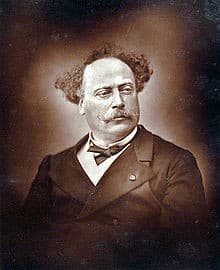
Alexandre Dumas, also known as Alexandre Dumas père, was a French novelist and playwright.
Similar books
- The Three Musketeers
Alexandre Dumas
4.1 (274k) average on GoodreadsHistorical FictionThe direct predecessor, featuring the same beloved characters and swashbuckling adventure.
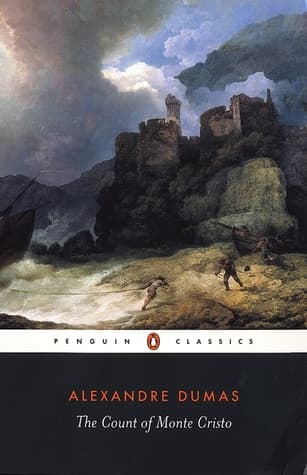
- The Count of Monte Cristo
Alexandre Dumas
4.3 (746k) average on GoodreadsHistorical FictionShares Dumas's signature style, intricate plotting, and themes of revenge and justice.
- Les Misérables
Victor Hugo
4.2 (683k) average on GoodreadsHistorical FictionAnother epic French historical novel with a vast scope, complex characters, and social commentary.
- A Tale of Two Cities
Charles Dickens
3.9 (810k) average on GoodreadsHistorical FictionBoth Bragelonne and A Tale of Two Cities are historical novels that use personal stories to illuminate grand historical events, but they differ significantly in their thematic focus and narrative style. Dickens's novel is a tightly structured narrative centered on the French Revolution, emphasizing themes of sacrifice, resurrection, and class struggle, often with stark moral contrasts. Dumas's Bragelonne, while also dealing with political intrigue, is more sprawling and character-driven, focusing on the internal struggles and loyalties of its protagonists against the backdrop of the Ancien Régime. Dickens employs more symbolic and allegorical language, while Dumas prioritizes adventure and character interaction within a meticulously detailed historical setting. Both, however, masterfully evoke their respective historical periods and the human cost of political upheaval.
- To Kill a Mockingbird
Harper Lee
4.3 (4.5M) average on GoodreadsHistorical FictionIn the 1930s Jim Crow South, Harper Lee writes about racial injustice, moral growth, and the quiet courage of a lawyer father, Atticus Finch, as seen through his young daughter's eyes.
- The Great Gatsby
F. Scott Fitzgerald
3.9 (3.8M) average on GoodreadsHistorical FictionIn the opulent Roaring Twenties, a mysterious millionaire's lavish parties hide his desperate, tragic pursuit of a lost love, exposing the emptiness within the American Dream.




Enjoyed the summary?
A summary gives you the shape of the book. The book itself has the detail, the examples and the voice.
Find The Vicomte de Bragelonne on AmazonAs an Amazon Associate, BookBrief earns from qualifying purchases. How we're funded