
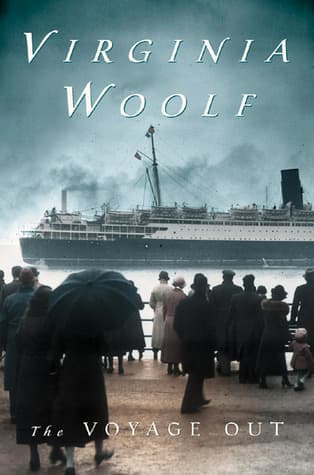
Synopsis
Covers the whole plot, including the ending.
- Difficulty
- Medium
- Pacing
- Slow
- Mood
- Atmospheric, Melancholy, Introspective, Poetic, Tragic
- Read it if
- You enjoy introspective character studies, philosophical discussions, and a melancholic atmosphere, or are interested in early feminist themes and stream-of-consciousness elements in fiction.
- Skip it if
- You prefer fast-paced plots, clear-cut resolutions, or books with a strong focus on external action rather than internal thought.
The Voyage Out Plot Summary
Covers the whole plot, including the ending.
A Sudden Departure from London
Rachel Vinrace, a 24-year-old, lives a quiet life in Richmond with her two unmarried aunts. One day, her aunt Helen Ambrose and uncle Ridley Ambrose arrive from their country home, on their way to sail to Santa Marina, a resort town in South America, where Ridley plans to write. Helen, seeing Rachel's life as dull, invites Rachel to join them on the 'Euphrosyne'. Rachel, at first unsure and not used to making her own choices, accepts, leaving her familiar life for an unknown adventure.
Life Aboard the Euphrosyne
On the 'Euphrosyne', Rachel's sheltered life is challenged by the more experienced passengers. She plays piano, reads, and watches the people around her. She becomes friends with Mrs. Dalloway, a social woman who tries to teach Rachel about manners and marriage, which Helen finds amusing and slightly disapproving. Rachel also meets Richard Dalloway, Mrs. Dalloway's husband, who kisses her without her consent in the dark. This event deeply disturbs and confuses Rachel, her first real encounter with male desire and her own developing sexuality.
Arrival in Santa Marina
The 'Euphrosyne' arrives in Santa Marina, a fictional South American coastal town. The Ambroses and Rachel get off the ship and move into their rented villa, a somewhat old but charming house with a garden, surrounded by tropical plants. Moving from the ship's closed world to the new, isolated resort town is another change for Rachel. The new place feels strange, and Richard Dalloway's advance still bothers her, keeping Rachel somewhat quiet, but she starts to feel drawn to nature and the chance for new experiences.
The English Colony and New Acquaintances
In Santa Marina, Rachel and the Ambroses meet the small English community. This group includes Mr. Pepper, Mr. Grice, and Miss Allan. Later, younger English visitors arrive: Hewet, Hirst, Perrott, and Arthur. Rachel likes the intellectual talks among these new friends, especially with Terence Hewet, a young writer, who seems to understand her in a way others have not. This starts an immediate intellectual and emotional connection.
Deepening Connections and Intellectual Debates
Rachel and Terence Hewet spend more time together, having long talks about life, art, and what is real. Their discussions often cover abstract ideas, and Rachel, though still somewhat shy, finds her thoughts and feelings sparked by Terence's curiosity. They share moments of deep connection and understanding, exploring the jungle and beaches together. Helen and others notice their growing romance, though Rachel herself is somewhat unaware of how serious their bond is.
The Picnic and a Proposal
The English group plans a picnic and trip into the jungle. In the new setting, Rachel feels both excited and uneasy. During a private moment, Terence Hewet proposes marriage to Rachel. Overwhelmed by the moment and her mixed feelings, Rachel accepts his proposal. Her acceptance is not entirely happy; she feels confused, afraid, and strangely detached, grappling with the sudden change in her future and what such a promise means.
Engaged Life and Lingering Doubts
After their engagement, Rachel and Terence spend their days in a new relationship. They continue their long talks, trying to understand each other better. However, Rachel struggles with being engaged. She often feels separate from herself and from Terence, having moments of deep loneliness and worry about the future. Their strong emotional and intellectual bond is clear, but Rachel's inner world remains troubled, with a sense of dread and a feeling that something inside her is wrong, despite her feelings for Terence.
The Onset of Illness
As the tropical heat grows, Rachel suddenly becomes ill with a fever that quickly gets worse. Her symptoms are severe, including confusion, seeing things that are not there, and great weakness. The others in the English community, especially Helen Ambrose and Terence Hewet, worry and then become upset as her condition worsens. Despite the local doctor's efforts, who seems unable to diagnose or treat her illness, Rachel's health declines quickly. The lively Santa Marina suddenly feels threatening, showing Rachel's internal struggle.
A Tragic End
Despite constant care from Helen and Terence, and their hopes for her recovery, Rachel's fever continues. She goes in and out of awareness, having vivid, often disturbing, visions. The novel ends with her death. Her passing leaves Terence Hewet devastated and Helen Ambrose deeply sad. The sudden loss of Rachel, just as she was starting to grow and understand herself, makes everyone in the community sad, showing how fragile life is and how human plans can fail in the face of nature.
Aftermath and Reflection
After Rachel's death, a deep silence and sadness fill the villa. Helen Ambrose and Terence Hewet are left to deal with their grief and the questions about Rachel's short, unfulfilled life. The other English community members offer their sympathy, but their usual words seem not enough for the tragedy. The novel closes with a sense of quiet sadness, showing the emptiness left by Rachel's absence and the lasting effect of her life and death on those who knew her, especially on Terence, whose future is now changed forever.
The Voyage Out Characters
Rachel Vinrace
Protagonist
A sheltered, naive young woman seeking self-discovery and understanding.
Rachel is a 24-year-old woman, initially living a reclusive life in Richmond. She is deeply introspective, artistic (a talented pianist), and highly sensitive, but also incredibly naive about the world and human relationships, particularly those between men and women. Her journey on the 'Euphrosyne' and in Santa Marina forces her to confront her own identity, sexuality, and desires. She struggles to articulate her complex inner world and often feels alienated from conventional society. Her character arc is tragically cut short just as she begins to understand herself and form a profound connection with Terence Hewet.
Relationships: Helen Ambrose (aunt, mentor, confidante); Terence Hewet (fiancé, intellectual companion); Richard Dalloway (brief, unsettling encounter); Mrs. Dalloway (social acquaintance, attempts to guide Rachel)
Helen Ambrose
Supporting
Rachel's intellectual and perceptive aunt, who serves as a guide and observer.
Helen Ambrose is Rachel's aunt, a thoughtful, intelligent, and somewhat cynical woman who is married to Ridley Ambrose. She is perceptive and often provides commentary on the social dynamics around her. Helen takes Rachel under her wing, observing her niece's development with a mixture of concern and intellectual curiosity. She acts as a sounding board for Rachel and, at times, a protector. Her own marriage to Ridley is portrayed as one of intellectual companionship and quiet understanding, rather than passionate romance. She represents a more mature, albeit sometimes detached, female perspective.
Relationships: Rachel Vinrace (niece, mentee); Ridley Ambrose (husband); Terence Hewet (future nephew-in-law, intellectual acquaintance)
Terence Hewet
Supporting
A young, intellectual aspiring writer who forms a deep connection with Rachel.
Terence Hewet is a young, earnest, and intellectual aspiring writer who arrives in Santa Marina with a group of friends. He is thoughtful, sensitive, and deeply philosophical, constantly seeking to understand the human condition and the nature of life. He quickly forms a profound intellectual and emotional bond with Rachel, seeing and appreciating her unique inner world in a way others do not. Their relationship is characterized by long, probing conversations. He proposes to Rachel and is utterly devastated by her sudden death, representing the tragic loss of potential and love.
Relationships: Rachel Vinrace (fiancé, intellectual companion); Helen Ambrose (future aunt-in-law, intellectual acquaintance); St. John Hirst (friend)
Ridley Ambrose
Supporting
Helen's academic husband, engrossed in his writing and classical studies.
Ridley Ambrose is Helen's husband and Rachel's uncle, a distinguished scholar and classical academic. He is often depicted as being somewhat detached from the immediate social world, absorbed in his studies and writing. He is a figure of intellectual authority but lacks emotional warmth or deep engagement with others' personal lives, including Rachel's. His presence anchors the narrative in a world of scholarly pursuit, contrasting with the emotional and social explorations of the younger characters. He represents a more traditional, patriarchal intellectualism.
Relationships: Helen Ambrose (wife); Rachel Vinrace (niece)
Richard Dalloway
Supporting
A charismatic politician who makes an unsettling advance on Rachel.
Richard Dalloway is a prominent, charismatic politician and the husband of Mrs. Dalloway. He is worldly, confident, and possesses a certain social charm. During the voyage, he makes an uninvited and somewhat predatory kiss on Rachel, which profoundly disturbs her and awakens her to the complexities and dangers of male desire. His brief but impactful interaction with Rachel serves as a pivotal moment in her sexual awakening and her understanding of human relationships, particularly the power dynamics between men and women.
Relationships: Mrs. Dalloway (wife); Rachel Vinrace (brief, unsettling encounter)
Clarissa Dalloway (Mrs. Dalloway)
Supporting
A vivacious, conventional society woman who attempts to guide Rachel.
Clarissa Dalloway, later the protagonist of Woolf's novel 'Mrs. Dalloway', appears here as a lively, charming, and conventional society woman. She is concerned with social graces, appearances, and the proper way for young women to conduct themselves, especially in relation to marriage. She takes an interest in Rachel, attempting to 'educate' her in social etiquette and the expectations of womanhood, often clashing subtly with Helen Ambrose's more liberal views. She represents the established social order and its expectations for women.
Relationships: Richard Dalloway (husband); Rachel Vinrace (social acquaintance, attempts to guide Rachel)
St. John Hirst
Supporting
A cynical and intellectual friend of Terence Hewet.
St. John Hirst is a friend of Terence Hewet, part of the younger intellectual group who arrive in Santa Marina. He is highly intelligent, often cynical, and prone to intellectual sparring. He observes the burgeoning relationship between Rachel and Terence with a critical, yet ultimately supportive, eye. Hirst represents a more detached, analytical perspective on human relationships and emotions, often providing a counterpoint to Terence's idealism. He is a loyal friend to Terence and is also deeply affected by Rachel's death.
Relationships: Terence Hewet (friend); Rachel Vinrace (acquaintance, later friend's fiancée)
Mr. Pepper
Supporting
An elderly, somewhat ineffectual member of the English colony in Santa Marina.
Mr. Pepper is one of the long-standing English residents in Santa Marina. He is elderly, often depicted as a figure of polite but ultimately harmless eccentricity. He is kind-hearted but somewhat ineffectual, often providing a source of mild amusement or background presence rather than significant plot driving. He represents the older generation of expatriates, content with their established routines and less engaged with the philosophical and emotional turmoil of the younger characters.
Relationships: Helen Ambrose (acquaintance); Rachel Vinrace (acquaintance)
The Voyage Out Themes
Identity and Self-Discovery
The novel follows Rachel Vinrace's journey from a sheltered life to an understanding of her identity, desires, and place in the world. Her trip is both real and symbolic, as she leaves her upbringing to explore new ideas and feelings. She deals with social expectations, artistic goals, and human connections, especially through her interactions with Helen Ambrose and Terence Hewet. Her struggle to express her inner life and her tragic awakening show how fragile and often incomplete self-discovery is.
“She had a profound, if vague, conviction that she was a failure, and not only a failure, but a fraud. What was it that she was always trying to express and always failing to express?”
The Nature of Love and Marriage
Woolf explores different aspects of love and marriage through the relationships shown. Mrs. Dalloway represents the common, social view, seeing marriage as practical and respectable. In contrast, Helen and Ridley Ambrose's marriage is one of intellectual partnership and quiet understanding. Rachel and Terence's developing love is a deep intellectual and emotional connection, from shared talks and a desire for understanding. However, Rachel's worry and confusion about her engagement show the fear of losing oneself in a relationship and the uncertainties of such a commitment.
“She felt for him an extraordinary sense of familiarity, as if they had known each other for years, and yet with it a sense of distance, as if they were strangers.”
Patriarchy and Female Agency
The novel quietly criticizes the male-dominated society of the early 20th century and its effect on women's lives. Rachel's early sheltered life, her aunts' unmarried state, and Mrs. Dalloway's focus on social rules all show the limited roles for women. Richard Dalloway's uninvited kiss reminds Rachel of male power and its ability to confuse and violate. Helen Ambrose, though more independent, still lives within these limits. Rachel's struggle to express herself and her inner conflict over marriage show the difficulties women faced in stating their own desires in a male-dominated world.
“It was not her body, but her soul that was revolted. She felt as if she had been flung into the dirt.”
Communication and Misunderstanding
A main theme is how hard, and sometimes impossible, it is for people to truly communicate and understand each other. Rachel often struggles to express her complex inner world, which makes her feel isolated and misunderstood. Even with Terence, despite their deep connection, there are times of disconnect and unsaid thoughts. The characters often talk past each other, or their words fail to show the depth of their feelings. This theme becomes stronger with Rachel's delirium, where language itself breaks down, further showing the limits of spoken words.
“She felt as if she were speaking in a foreign language, and not only speaking, but thinking in a foreign language.”
The Allure and Indifference of Nature
The South American setting is important, first seeming exotic and freeing, but eventually becoming a force of indifferent power. The journey, the sea, and the wild jungle of Santa Marina are described with strong details, showing Rachel's inner awakenings. However, nature also brings danger and death, as the tropical climate leads to Rachel's fatal illness. This dual nature shows nature's beauty and its unpredictability, suggesting that while it can inspire, it also does not care about human desires and weaknesses.
“The jungle was alive with sound; the air was thick with the scent of unknown flowers; and a thousand strange shapes of leaves and branches seemed to beckon her deeper into its heart.”
Plot Devices & Literary Techniques
The Voyage as Metaphor
The physical journey mirrors Rachel's internal journey of self-discovery.
The 'voyage out' itself is a central metaphor. Rachel's physical journey from the familiar, staid environment of London to the exotic, unknown shores of South America directly parallels her internal journey of awakening and self-discovery. The ship, the 'Euphrosyne', acts as a transitional space where she begins to shed her old self and encounter new ideas and experiences. The arrival in Santa Marina signifies her deeper immersion into the complexities of life, love, and human relationships, before her journey is tragically cut short.
Symbolism of Music (Piano)
Rachel's piano playing represents her inner world and means of expression.
Rachel's talent for playing the piano is a significant symbol. Music serves as her primary means of self-expression, particularly in the early parts of the novel when she struggles to articulate her thoughts and feelings verbally. Her improvisations often reflect her emotional state and her burgeoning inner life. It is through her music that others, especially Terence, first glimpse the depth and complexity of her soul. The piano also symbolizes her artistic sensibility and her capacity for profound, non-verbal communication.
Stream of Consciousness
Narrative technique used to delve into characters' internal thoughts and feelings.
Woolf employs stream of consciousness, a narrative technique that blurs the lines between internal thought, external observation, and dialogue. This allows the reader direct access to the characters' subjective experiences, particularly Rachel's, revealing her fragmented thoughts, fleeting impressions, and deep emotional states. This device highlights her struggle for self-definition and the often inchoate nature of her inner world, making her a complex and psychologically rich character, even when she is unable to articulate her feelings verbally.
The Tropical Setting (Santa Marina)
The exotic, yet ultimately dangerous, setting influences the characters' development and fate.
The fictional South American resort of Santa Marina is more than just a backdrop; it is a vital element influencing the plot and characters. Its exotic beauty, lush jungle, and oppressive heat contribute to the sense of liberation and heightened emotion, fostering the intense connections between characters like Rachel and Terence. However, the untamed nature of the tropics also harbors danger, ultimately leading to Rachel's mysterious and fatal illness. The setting thus symbolizes both the allure of the unknown and the indifferent, sometimes destructive, power of nature.
The Voyage Out Quotes
“She felt as if she had been plunged into a cold bath. It was a shock, but a pleasant one.”
“It was as if the surface of the world had been cracked, and for a moment she looked into the abyss.”
“She had a profound, if vague, sense of the beauty of the world.”
“The world was a great workshop, and she felt like a useless tool.”
“It seemed to her that she was watching a play, and the actors were very good, but she was not part of it.”
“The truth was, that she was profoundly ignorant of the world.”
“She felt a sudden conviction that if she could only discover the truth about love, she would be happy.”
“For a moment she felt that she was about to be told something of immense importance.”
“The past, she thought, was like a long corridor, and at the end of it was a door.”
“It was impossible to say whether she liked him or not; she felt nothing but curiosity.”
“The whole world, she thought, was a conspiracy to make one feel small and insignificant.”
“She could not help feeling that there was something profoundly absurd in the spectacle of human beings.”
“It was as if she had been born again, but this time with a full knowledge of her own insignificance.”
“The air was full of the sound of people talking, but no one seemed to be saying anything of importance.”
Quiz
10 questions on the plot and the characters. Each answer comes with a short explanation.
Question 1
Who is the central character whose journey forms the basis of the novel's plot?
- Helen Ambrose
- Terence Hewet
- Rachel Vinrace
- Richard Dalloway
Show answer
C. Rachel Vinrace Rachel Vinrace is the protagonist of 'The Voyage Out.' The novel details her awakening and journey of self-discovery, from her sheltered life in England to the South American coast.
Question 2
What is the primary mode of transportation for Rachel and the Ambroses from London to the South American coast?
- A train journey across Europe and then a flight
- A motorcar expedition
- A sea voyage on Mr. Ambrose's ship
- A hot air balloon trip
Show answer
C. A sea voyage on Mr. Ambrose's ship The title 'The Voyage Out' directly refers to the sea journey on the ship, which is the initial setting for many of the novel's early interactions and Rachel's introduction to a wider world.
Question 3
What is Rachel Vinrace's primary artistic talent or passion before her journey?
- Painting
- Writing poetry
- Playing the piano
- Sculpting
Show answer
C. Playing the piano Rachel is depicted as a talented pianist. Her music is a significant aspect of her character, often reflecting her inner emotional state and providing a means of expression.
Question 4
Which character serves as Rachel's aunt and initially takes her under her wing during the voyage?
- Clarissa Dalloway
- Helen Ambrose
- Susan Warrington
- Evelyn Murgatroyd
Show answer
B. Helen Ambrose Helen Ambrose is Rachel's aunt, and she and her husband, Ridley Ambrose, take Rachel on the voyage. Helen plays a crucial role in Rachel's intellectual and emotional development.
Question 5
What significant event occurs between Rachel and Terence Hewet during their time at the South American resort?
- They have a major falling out and stop speaking.
- They discover a hidden treasure together.
- They become engaged to be married.
- They decide to pursue separate careers in different continents.
Show answer
C. They become engaged to be married. Rachel and Terence Hewet develop a deep connection, leading to their engagement. This relationship is central to Rachel's exploration of love, intimacy, and her own identity.
Question 6
The setting of the South American coast, as described by E. M. Forster, is notable for being:
- A historically accurate depiction of a real-world location.
- A bustling, modern port city.
- A fantastical, dream-like place 'not found on any map.'
- A desolate, uninhabited island.
Show answer
C. A fantastical, dream-like place 'not found on any map.' As quoted by E. M. Forster, the South America in 'The Voyage Out' is 'not found on any map,' emphasizing its symbolic and psychological nature rather than a literal geographical one. It's a place for internal exploration.
Question 7
What significant illness does Rachel contract towards the end of the novel?
- Malaria
- Pneumonia
- A mysterious tropical fever
- Tuberculosis
Show answer
C. A mysterious tropical fever Rachel contracts a sudden and severe tropical fever, which rapidly leads to her death. This unexpected turn is a crucial and tragic element of the novel's climax.
Question 8
Which overarching theme is most prominently explored through Rachel's experiences and ultimate fate?
- The triumph of adventure and exploration.
- The fragility of life and the unpredictability of fate.
- The societal critique of the British class system.
- The pursuit of political freedom and revolution.
Show answer
B. The fragility of life and the unpredictability of fate. Rachel's sudden death, just as she is beginning to discover herself and experience love, powerfully underscores the theme of life's fragility and the arbitrary nature of human existence, a common thread in Woolf's work.
Question 9
How does the novel's ending, particularly Rachel's death, impact the overall tone and thematic message of the book?
- It provides a clear resolution and a sense of happy closure for Rachel's journey.
- It transforms the narrative from a coming-of-age story into a profound tragedy, emphasizing life's unpredictability.
- It suggests a new beginning for Rachel in the afterlife, offering spiritual comfort.
- It shifts the focus entirely to the political unrest in South America, making it a political commentary.
Show answer
B. It transforms the narrative from a coming-of-age story into a profound tragedy, emphasizing life's unpredictability. Rachel's death is a stark and tragic conclusion, particularly because it occurs just as she is blossoming. It denies a conventional 'happy ending' and instead emphasizes the vulnerability of human life and the often arbitrary nature of fate, transforming the novel into a more profound and melancholic exploration of existence.
Question 10
What distinguishes 'The Voyage Out' as Virginia Woolf's first novel, based on critical reception and its stylistic elements?
- It is a straightforward adventure novel, lacking the psychological depth of her later works.
- It already exhibits her characteristic blend of lyrical prose, psychological insight, and experimental narrative, though perhaps less refined than later novels.
- It is primarily a historical romance, a genre she abandoned in subsequent books.
- It is a highly didactic novel, aiming to teach a specific moral lesson above all else.
Show answer
B. It already exhibits her characteristic blend of lyrical prose, psychological insight, and experimental narrative, though perhaps less refined than later novels. While 'The Voyage Out' is considered more conventional in structure than Woolf's later masterpieces, it already displays her distinctive lyrical prose, keen psychological observation, and an early exploration of consciousness, foreshadowing the modernist techniques she would further develop.
The Voyage Out FAQ
What is 'The Voyage Out' about?
'The Voyage Out' follows Rachel Vinrace, a sheltered young woman, as she embarks on a sea voyage from London to a South American resort with her aunt and uncle, Helen and Ridley Ambrose. It explores her awakening to love, self-discovery, and the complexities of human relationships, set against a backdrop of societal expectations and the exotic, yet ultimately indifferent, natural world.
Why should I read 'The Voyage Out'?
You should read 'The Voyage Out' for its pioneering exploration of a young woman's inner life and burgeoning consciousness, characteristic of Woolf's later works. It offers a unique blend of social satire, romantic entanglement, and profound existential reflection, wrapped in lyrical prose that captures both the beauty and the melancholy of human existence.
What is the background/setting of 'The Voyage Out'?
The novel begins in London before shifting to a lengthy sea voyage, culminating in a stay at a fictional resort town called Santa Marina on the South American coast. This exotic, somewhat dreamlike setting serves as a crucible for Rachel's experiences, contrasting the rigid social norms of England with a more untamed, sensuous environment.
What are the most memorable quotes?
Some memorable quotes include: "She had a profound and reverent love for the world, as if it were a person and she a lover." and "The world, she thought, was a terrible place, and life a terrible thing." These encapsulate Rachel's dual experience of wonder and dread, reflecting her journey of discovery.
What writing style does the author use?
Virginia Woolf employs a lyrical and impressionistic style, often blending detailed external observation with deep dives into characters' internal thoughts and perceptions. While not yet full stream-of-consciousness, it foreshadows her later experimental techniques, using vivid imagery and extended metaphors to evoke mood and psychological states.
What minor details add significant meaning?
The recurring motif of music, particularly Rachel's piano playing, symbolizes her inner world and provides a means of non-verbal expression and connection. Her initial naivety, such as her ignorance of anatomy, subtly highlights the sheltered existence she has led and the societal constraints on women's knowledge.
What are some subtle foreshadowing moments?
Early descriptions of Rachel's delicate health and her susceptibility to the humid climate subtly foreshadow her eventual illness. The pervasive sense of melancholy and the characters' philosophical discussions about the ephemeral nature of life also create an undercurrent of impending tragedy.
What unexpected character connections exist?
The most unexpected connection is perhaps the deep, almost telepathic bond that forms between Rachel and her aunt Helen Ambrose. Helen, initially a somewhat critical observer, becomes a crucial confidante and guide for Rachel, sharing her intellectual and emotional journey in a way that transcends typical familial roles.
What are unspoken character motivations?
Terence Hewet's unspoken motivation for proposing to Rachel seems to be a desperate search for meaning and connection, perhaps even a desire to escape his own intellectual isolation, rather than purely romantic love. Helen Ambrose's sometimes sharp observations of Rachel are often motivated by a protective, almost maternal, concern for her niece's future and intellectual development.
What psychological complexities do characters exhibit?
Rachel exhibits profound psychological complexities as she grapples with her nascent sexuality, intellectual awakening, and the crushing weight of societal expectations. She swings between moments of ecstatic joy and profound existential dread, reflecting the turmoil of a sensitive soul confronting the vastness of life and love for the first time.
What are the major emotional turning points?
A major emotional turning point is Rachel's encounter with the older, unsettling Mr. Dalloway, which forces her to confront the darker, more predatory aspects of male desire. Her engagement to Terence Hewet marks another, as it signifies her tentative embrace of love and commitment, fundamentally altering her perception of herself and her future.
How do relationship dynamics evolve?
The relationship dynamics evolve from initial superficial social interactions to profound, intimate connections. Rachel's relationship with Helen deepens from niece-aunt to intellectual companions, while her dynamic with Terence Hewet transforms from intellectual sparring partners to engaged lovers, exploring the boundaries of shared consciousness.
Which parts remain ambiguous or open-ended?
The exact nature of Rachel's final illness remains somewhat ambiguous, hinting at both physical and perhaps psychological causes. The novel also leaves open the question of what Rachel's life would have become had she lived, emphasizing the tragic loss of her unfulfilled potential and the dreams she had just begun to articulate.
What are controversial scenes or decisions?
The most controversial aspect is arguably the abrupt and seemingly arbitrary death of Rachel at the novel's end. This decision has been debated by critics, some viewing it as a symbolic sacrifice of youthful potential to societal constraints, others as a narrative misstep or an early exploration of Woolf's thematic concerns with mortality.
'The Voyage Out' ending explained: how it ends & what it means
The novel ends with Rachel succumbing to a sudden, mysterious fever, dying in Terence Hewet's arms shortly after their engagement. Her death is a poignant, tragic conclusion that cuts short her journey of self-discovery and emerging love. It signifies the fragility of life and happiness, and can be interpreted as a commentary on the vulnerability of women in a restrictive society, or simply the indifferent cruelty of nature.
About the author
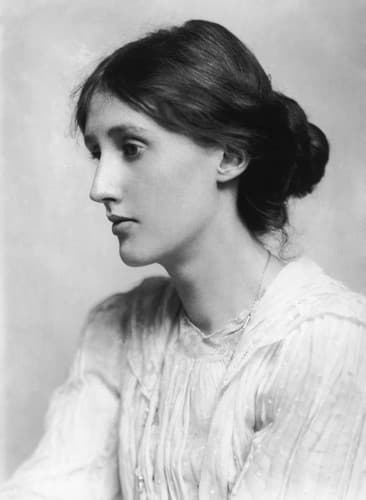
Adeline Virginia Woolf was an English writer. She is considered one of the most important modernist 20th-century authors and a pioneer in the use of stream of consciousness as a narrative device.
Similar books
- A Room With a View
E.M. Forster
3.9 (152k) average on GoodreadsHistorical FictionExplores a young woman's awakening and social conventions in a foreign setting.
- Mrs Dalloway
Virginia Woolf
3.8 (361k) average on GoodreadsFictionFeatures Woolf's signature stream-of-consciousness style and deep psychological insight.
- Tender is the Night
F. Scott Fitzgerald
3.8 (114k) average on GoodreadsLiterary FictionExamines the lives and relationships of expatriates in a beautiful, yet ultimately tragic, setting.
- Pride and Prejudice
Jane Austen
4.3 (3M) average on GoodreadsHistorical FictionAusten's novel, a foundational romance, ultimately affirms marriage as a path to happiness and social stability, emphasizing intelligent partnership. Woolf, in The Voyage Out, profoundly questions the capacity of such institutions to fulfill a woman's intellectual and emotional needs, offering a far more subversive and proto-feminist perspective on love and societal roles.
- The Old Man and the Sea
Ernest Hemingway
3.8 (831k) average on GoodreadsLiterary FictionA Cuban fisherman's long struggle with a giant marlin becomes a story of endurance and dignity, now retold for young adults with illustrations, phonetic guides, and writing prompts in Traditional Chinese.
- One Hundred Years of Solitude
Gabriel García Márquez
4.1 (753k) average on GoodreadsLiterary FictionThrough the multi-generational story of the Buendía family, a mythical town deals with the repeating patterns of time, love, and solitude, as the extraordinary mixes with the ordinary.






Enjoyed the summary?
A summary gives you the shape of the book. The book itself has the detail, the examples and the voice.
Find The Voyage Out on AmazonAs an Amazon Associate, BookBrief earns from qualifying purchases. How we're funded