
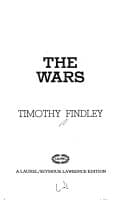
Synopsis
Covers the whole plot, including the ending.
- Difficulty
- Medium
- Pacing
- Moderate
- Mood
- Somber, Poignant, Intense, Reflective, Tragic
- Read it if
- You appreciate powerful, poetic prose, unflinching portrayals of war's psychological toll, and stories of profound moral struggle and compassion in the face of inhumanity. Perfect for those interested in the emotional and philosophical aspects of WWI.
- Skip it if
- You prefer fast-paced action, clear-cut heroes, or shy away from graphic depictions of violence and suffering. This book is emotionally demanding and can be bleak.
The Wars Plot Summary
Covers the whole plot, including the ending.
Robert Ross's Early Life and the Death of Rowena
The story introduces Robert Ross as a young man from a wealthy Toronto family, known for his sensitivity and love for animals. His life changes after his developmentally disabled sister, Rowena, dies from an illness. Robert is especially upset because his parents, particularly his mother Mrs. Ross, insist on gassing Rowena's pet rabbits after her death, believing they carry disease. Robert, unable to stop it, feels immense guilt and rage, locking himself in the bathroom, where he smashes his reflection in the mirror. This event marks a turning point, fueling his desire to escape his home and the grief, leading to his decision to join the Canadian Army during World War I.
Enlistment and Training at Valcartier
After Rowena's death, Robert joins the Canadian Expeditionary Force, seeking escape from grief and a purpose. He travels to Valcartier, Quebec, for basic training. Here, his quiet nature makes him different from other recruits, many of whom are rougher. During training, Robert struggles with military life, especially the cruelty towards animals and the drills. He forms an uneasy friendship with other soldiers, including Private Poole and Private Levitt. His sensitivity is tested repeatedly, showing the greater horrors he will face in Europe.
The Voyage to England and Mrs. Ross's Despair
Robert goes on the long sea voyage to England. During the journey, he sees the confined animals on board, meant for slaughter, which further shows his empathy for suffering creatures. He also meets other officers, including Captain Taffler, who will later become important. Meanwhile, back in Toronto, Mrs. Ross drinks more and grieves, unable to cope with Rowena's death and Robert's departure. Her letters to Robert are erratic and full of despair, showing the psychological toll the war and personal tragedy are taking at home. Robert's family life continues to fall apart as he moves closer to the front lines.
Arrival in England and Lady Barbara d'Orsey
When Robert arrives in England, he is stationed at a training camp. He soon meets Lady Barbara d'Orsey, a wealthy woman interested in young Canadian officers. Lady Barbara represents a part of the British upper class that supports the war but is somewhat removed from its realities. Robert spends time at her estate, where he meets her family and sees social dynamics. He has a brief, intense sexual encounter with her, which confuses him and helps shape him, further distancing him from his past innocence and preparing him for the moral complexities of war.
The Trenches and the Horrors of War
Robert goes to the Western Front in France, where he immediately faces the horrors of trench warfare. He sees constant shelling, mud, rats, and the smell of death. His initial idealism quickly disappears as he sees fellow soldiers killed and injured. He is especially affected by the suffering of horses used in the war, often finding comfort in caring for them. The psychological cost is huge, and Robert struggles to make sense of the brutal reality. He begins to detach emotionally, a way to cope with such violence.
The Rape of the German Girl and Robert's Response
During a quiet period, Robert sees Canadian soldiers, including Private Poole, raping a young German girl in a dugout. This brutality deeply disturbs Robert, challenging his morality and showing the dehumanizing effects of war. He cannot intervene directly but is affected by the girl's suffering. This event, with constant exposure to violence, pushes Robert closer to his breaking point. It reinforces his belief that the war is not just about fighting an enemy, but also about the loss of humanity in those who fight.
The Horse Incident and Robert's Act of Compassion
In a moment, Robert is ordered to oversee the killing of horses trapped in mud and considered a problem during a retreat. Unable to bear their suffering, Robert defies orders. Instead of shooting them, he leads them away, trying to save them from death or abandonment. This act of compassion and rebellion against military authority marks a turning point for Robert. He is no longer just a soldier following orders but an individual driven by his own moral compass, willing to sacrifice his safety for innocent creatures. This act makes him a deserter.
Flight and the Search for Sanctuary
After releasing the horses, Robert becomes a fugitive, deserting his post. He travels through the war-torn landscape, meeting displaced civilians and battle remnants. He seeks refuge in abandoned barns and ruins, with some of the horses he saved. During his flight, he meets Juliette d'Orsey, Lady Barbara's niece, who is a nurse. Juliette offers him brief comfort and understanding, seeing his distress. This meeting provides a moment of human connection amid his isolation, but his status as a deserter means he cannot stay safe for long, and he continues his search for a sanctuary for himself and the animals.
The Barn and the Final Stand
Robert finds refuge in a ruined barn, where he shelters himself and the horses he rescued. Other displaced individuals, including a pregnant woman, join him, and they try to create a temporary haven. However, his defiance is noticed. British officers, including Captain Taffler, are sent to arrest him. A standoff happens, with Robert barricading himself inside the barn with the animals, refusing to surrender. He is seen as a symbol of rebellion and an insult to military discipline. The authorities, unwilling to let his act of compassion go unpunished, prepare to force him out.
The Fire and Robert's Death
The standoff ends in a fire. It is unclear if the fire was accidental or set by soldiers trying to flush Robert out. Robert, refusing to abandon the animals he protected, dies in the blaze with them. His death is violent and tragic, the ultimate sacrifice for his beliefs. The story concludes with the aftermath, detailing investigations into his death and conflicting reports. Robert Ross becomes a legendary figure, his story passed down through fragmented accounts, remembered as a compassionate rebel who defied the inhumanity of war.
The Wars Characters
Robert Ross
Protagonist
A sensitive young Canadian officer who struggles with the brutality of war.
Robert Ross is a deeply empathetic and introverted young man from a wealthy Toronto family. Haunted by the death of his disabled sister, Rowena, and the subsequent gassing of her rabbits, he enlists in the army seeking escape and purpose. His defining characteristic is his profound connection to animals and his inability to tolerate cruelty. He is initially naive but quickly becomes disillusioned by the horrors of trench warfare. His quiet nature masks an intense inner turmoil and a strong moral compass that ultimately leads him to defy military orders in an act of profound compassion, making him a tragic hero.
Relationships: Rowena Ross (Younger sister, her death deeply impacts him); Mrs. Ross (Mother, distant and grieving, her actions contribute to his enlistment); Captain Taffler (Fellow officer, initially a superior, later an antagonist pursuing Robert); Lady Barbara d'Orsey (Wealthy British woman, brief sexual encounter and patroness); Juliette d'Orsey (Lady Barbara's niece, nurse, offers him brief solace)
Mrs. Ross
Supporting
Robert's mother, consumed by grief and alcoholism.
Mrs. Ross is Robert's aristocratic and emotionally distant mother. Her grief over Rowena's death is profound but manifests as a cold, controlling demeanor, particularly evident in her insistence on gassing Rowena's rabbits. This act is a catalyst for Robert's enlistment. Throughout the war, she descends into alcoholism and despair, her letters to Robert reflecting her unraveling mental state. She represents the home front's struggle with loss and the psychological toll of war, contrasting sharply with Robert's active engagement in the conflict.
Relationships: Robert Ross (Son, her actions push him away); Rowena Ross (Daughter, her death is the source of Mrs. Ross's profound grief)
Rowena Ross
Mentioned
Robert's developmentally disabled younger sister, whose death profoundly impacts him.
Rowena is Robert's younger sister, who is developmentally disabled. Although she dies early in the novel, her presence and death are a powerful catalyst for Robert's actions. Her innocence and vulnerability, coupled with Robert's deep affection for her, make her death and the subsequent gassing of her rabbits a traumatic event that fuels Robert's rage and his decision to enlist. She symbolizes purity and innocence lost, and her memory continues to influence Robert's moral compass throughout the war.
Relationships: Robert Ross (Brother, he loves and protects her deeply); Mrs. Ross (Mother)
Captain Taffler
Supporting/Antagonist
A British officer who becomes increasingly antagonistic towards Robert.
Captain Taffler is a British officer who Robert encounters at various points, both on the voyage to England and on the front lines. Initially, he is merely a superior officer, but as Robert's defiance grows, Taffler becomes the embodiment of military authority and the rigid adherence to rules. He is pragmatic and unsentimental, contrasting sharply with Robert's idealism. Taffler is ultimately responsible for leading the pursuit of Robert after his desertion, representing the unforgiving nature of the military machine.
Relationships: Robert Ross (Superior officer, then antagonist pursuing him)
Lady Barbara d'Orsey
Supporting
A wealthy, eccentric English socialite who takes an interest in Robert.
Lady Barbara d'Orsey is a sophisticated and somewhat eccentric English socialite from a privileged background. She represents the British upper class's engagement with the war, hosting officers at her estate. She is worldly and experienced, and she initiates a brief, intense sexual encounter with Robert, which is both confusing and formative for him. Her character highlights the social complexities and moral ambiguities of the era, and her interactions provide Robert with a glimpse into a world far removed from his Canadian upbringing and the brutal realities of the trenches.
Relationships: Robert Ross (Brief sexual partner and patroness); Juliette d'Orsey (Aunt)
Juliette d'Orsey
Supporting
Lady Barbara's niece, a nurse who offers Robert brief solace.
Juliette d'Orsey is Lady Barbara's niece and works as a nurse near the front lines. She is more grounded and compassionate than her aunt, representing a different facet of the British response to the war. She encounters Robert after his desertion and offers him a moment of understanding and human connection, providing a brief respite from his isolation and trauma. Her compassion contrasts with the brutality Robert has experienced, offering a fleeting glimpse of hope and humanity.
Relationships: Robert Ross (Brief confidante and source of solace); Lady Barbara d'Orsey (Aunt)
Private Poole
Supporting
A rough and brutal fellow soldier of Robert's.
Private Poole is one of Robert's fellow soldiers, a rougher and more hardened individual who embodies some of the brutalizing effects of war. He is involved in the rape of the German girl, an act that deeply disturbs Robert. Poole represents the darker side of human nature unleashed by the conflict, a contrast to Robert's inherent compassion. His presence highlights the moral degradation that can occur in extreme circumstances.
Relationships: Robert Ross (Fellow soldier, represents the negative aspects of military life)
Private Levitt
Supporting
A cynical but observant soldier who shares the trenches with Robert.
Private Levitt is another of Robert's fellow soldiers, characterized by his cynical and often philosophical observations about the war. He provides a different perspective on the conflict, often highlighting its absurdity and futility. While not as brutal as Poole, Levitt's detachment reflects another coping mechanism for the horrors of war. He serves as a foil to Robert's idealism, offering a more jaded view of their shared experience.
Relationships: Robert Ross (Fellow soldier, shares experiences in the trenches)
The Horses
Symbolic
Represent innocence, suffering, and Robert's deep empathy.
The horses in 'The Wars' are not characters in the traditional sense but are central to the narrative and Robert's character. They symbolize innocence, vulnerability, and the indiscriminate suffering caused by war. Robert's profound connection to them, stemming from his childhood, drives his most significant act of defiance: saving them from abandonment or slaughter. Their fate is inextricably linked to Robert's, and their presence underscores his deep humanity and his rebellion against the dehumanizing machinery of war.
Relationships: Robert Ross (He deeply loves and protects them)
The Wars Themes
The Dehumanizing Nature of War
The novel shows how war takes away humanity, making soldiers parts of a destructive machine. Robert sees the loss of individuality, the casual cruelty, and the moral decay among his peers, like the rape of the German girl. The violence, mud, rats, and constant threat of death wear down soldiers' spirits, leaving them empty. Robert tries to keep his humanity in the face of this dehumanization, ultimately rebelling against it.
“'All wars are the same. They are all fought by the young, for the old, for nothing.'”
Empathy and Compassion vs. Cruelty
A main theme is the contrast between Robert's empathy, especially for animals, and the cruelty he finds. From the gassing of Rowena's rabbits to the suffering of war horses and the rape of the German girl, Robert constantly faces violence. His inability to tolerate suffering, especially of the innocent, drives his most important actions, leading to his defiance to save the horses. This theme shows the struggle to keep compassion in a brutal world.
“'He had always been a solitary boy, more at home with animals than with people.'”
Loss of Innocence and Disillusionment
Robert starts the war as a sensitive, somewhat naive young man, burdened by personal grief but still innocent. The trenches quickly remove this. He sees horrors, experiences violence, and is exposed to the moral ambiguities of human nature under pressure. His initial idealism is replaced by disillusionment with the war's purpose and conduct, leading him to question authority and rebel against its destructive force. This loss of innocence is personal and reflects a broader societal disillusionment with the 'Great War'.
“'The world was just a place where things were done to you.'”
Memory and the Construction of History
The novel is a historical investigation, with an unnamed narrator putting Robert's story together from documents, letters, and interviews. This structure emphasizes the subjective and incomplete nature of memory and historical truth. Different accounts of Robert's actions, especially his death, show how history is made and understood. Robert's story becomes a legend, his motivations debated, showing the difficulty of truly knowing the past and the impact of individual lives.
“'We are all of us, in the end, the sum of our histories.'”
Rebellion and Individual Conscience
Robert's journey is one of increasing rebellion against authority and the collective madness of war. His initial enlistment is an escape, but his act of defiance—saving the horses and becoming a deserter—is an act of individual conscience. He chooses to follow his own moral code, even when it means sacrificing his life, rather than conform to the military's dehumanizing demands. This theme explores the power of individual will and the moral need to resist injustice, even when facing overwhelming power.
“'He would not let them do it. He would not.'”
Plot Devices & Literary Techniques
Non-linear Narrative / Fragmented Structure
A retrospective narrative piecing together Robert's story from various sources.
The novel does not follow a strict chronological order. Instead, an unnamed historian/narrator pieces together Robert's story through a collection of documents, letters, interviews, and memories. This fragmented structure mirrors the difficulty of fully grasping the truth of war and an individual's experience within it. It allows for shifts in perspective and time, emphasizing the subjective nature of memory and history, and creating a sense of mystery around Robert's ultimate fate.
Animal Symbolism
Animals represent innocence, vulnerability, and Robert's core humanity.
Animals are a pervasive and powerful symbolic element throughout the novel. Rowena's rabbits, the gassed horses on the ship, the rats in the trenches, and especially the horses Robert saves, all represent innocence and vulnerability in the face of human cruelty and the destructive force of war. Robert's deep connection to and protection of animals is central to his character, serving as a constant reminder of his humanity and his moral compass, contrasting sharply with the dehumanizing environment of the war.
Juxtaposition
Contrasting elements to highlight themes and character traits.
Findley frequently uses juxtaposition to emphasize key themes. The innocence of Robert's pre-war life is contrasted with the brutality of the trenches. The refined world of Lady Barbara d'Orsey's estate stands in stark opposition to the squalor of the front lines. Robert's profound empathy is juxtaposed with the callousness of his fellow soldiers and military command. This device effectively highlights the moral and psychological conflicts at the heart of the novel and underscores the transformative, often destructive, power of war.
Foreshadowing
Early events and imagery hint at future tragedies and Robert's fate.
Foreshadowing is used to build tension and deepen the impact of later events. The traumatic gassing of Rowena's rabbits early in the novel foreshadows Robert's later desperate act to save the war horses. Descriptions of confined animals on the voyage to England hint at the broader suffering to come. These early indicators of Robert's sensitivity and the cruelty he witnesses prepare the reader for his eventual rebellion and tragic end, creating a sense of inevitability around his fate.
The Fire Motif
Symbolizes destruction, purification, and Robert's ultimate sacrifice.
Fire appears repeatedly as a motif, culminating in Robert's death in the burning barn. It symbolizes both destruction and, paradoxically, a form of purification or ultimate sacrifice. The fire that consumes Robert and the animals he protects is a final, violent act that erases him physically but solidifies his legend. It represents the destructive power of war, but also the burning intensity of Robert's convictions and his refusal to compromise his moral integrity, even unto death.
The Wars Quotes
“All my life I've been a man apart. I've been a man who's seen things other men haven't. And I've done things other men wouldn't. And I've suffered things other men couldn't.”
“Wars were not fought with flags and bugles. They were fought with mud and blood and fear. And the sound of screaming horses.”
“The world was not a safe place. It was not a kind place. It was a place where things happened, and you had to deal with them.”
“He knew then that he had come to the end of something. And that the end of something was always the beginning of something else.”
“You couldn't escape your past. It was always there, waiting for you, like a shadow.”
“There was a loneliness about him that was almost tangible, a sense of being utterly alone in a world that was too big and too cruel.”
“He had learned that courage was not the absence of fear, but the ability to act in spite of it.”
“Animals were not like people. They didn't judge. They just were.”
“The dead were never truly gone. They lived on in the memories of those who loved them.”
“He felt a sudden overwhelming desire to protect them all, the living and the dead, the innocent and the guilty.”
“Silence was a weapon. It could be used to wound, or to heal.”
“He carried the weight of the world on his shoulders, and sometimes, it was too heavy to bear.”
“To forget was a kind of death. To remember was to live again.”
“He saw the future as a dark tunnel, but at the end of it, there was always a light, however faint.”
Quiz
10 questions on the plot and the characters. Each answer comes with a short explanation.
Question 1
What is Robert Ross's primary motivation for enlisting in the Canadian Army during World War I?
- To escape a troubled relationship with his father.
- To seek adventure and glory on the battlefield.
- To avenge the death of his beloved sister, Rowena, and her animals.
- To prove his courage to his family and society.
Show answer
C. To avenge the death of his beloved sister, Rowena, and her animals. Robert's decision to enlist is heavily influenced by the traumatic death of his sister, Rowena, and the subsequent mercy killing of her animals, which he felt responsible for. His enlistment is an attempt to escape this grief and guilt.
Question 2
Which animal plays a recurring symbolic role throughout Robert Ross's journey, often representing innocence, vulnerability, and the natural world destroyed by war?
- Dogs
- Horses
- Rats
Show answer
B. Horses Horses are a central motif in 'The Wars.' They are present from Rowena's death, through Robert's care for them in the army, to his final act of compassion and defiance. They symbolize the natural world's beauty and its tragic destruction in the face of human conflict.
Question 3
Before leaving for the front, Robert Ross has a significant encounter with a woman named Lady Juliet d'Orsey. What is the nature of their relationship?
- She is his childhood sweetheart who he plans to marry.
- She is a prostitute he visits for comfort.
- She is a wealthy socialite who takes an interest in his artistic talents.
- She is an older woman who initiates him into a sexual experience, providing a brief escape from his anxieties.
Show answer
D. She is an older woman who initiates him into a sexual experience, providing a brief escape from his anxieties. Lady Juliet d'Orsey is an older, wealthy woman who seduces Robert before he goes to war. This encounter is a significant moment of sexual awakening and a temporary reprieve from his internal turmoil, highlighting his innocence and vulnerability.
Question 4
What extreme act of compassion and defiance does Robert Ross undertake near the end of the novel, leading to his final tragic confrontation?
- He attempts to assassinate a high-ranking German officer.
- He tries to negotiate a truce with the enemy forces.
- He steals a herd of horses designated for slaughter and tries to lead them to safety.
- He refuses to follow an order to fire on unarmed civilians.
Show answer
C. He steals a herd of horses designated for slaughter and tries to lead them to safety. Robert's ultimate act is to free and attempt to save a group of horses that were condemned to be killed, likely for meat or to clear the battlefield. This act, driven by his deep empathy for animals, directly leads to his final stand against his own side.
Question 5
Which historical figure does Robert Ross encounter and share a brief, unsettling moment with, highlighting the absurdity and terror of war?
- Winston Churchill
- Adolf Hitler
- Kaiser Wilhelm II
- King George V
Show answer
B. Adolf Hitler Robert has a brief, chilling encounter with a young Adolf Hitler in a German brothel. This moment is significant for its historical irony and for foreshadowing the future horrors that will stem from such individuals, juxtaposing personal experiences with larger historical forces.
Question 6
What is the significance of the character of Marian Turner, Robert's nurse, in the overall narrative?
- She represents the compassionate, healing aspect of humanity amidst the destruction of war, and is a key source of information for the 'historian'.
- She is a German spy who secretly works against the Allied forces.
- She is Robert's estranged lover who finds him wounded.
- She symbolizes the dehumanizing effects of bureaucracy in wartime hospitals.
Show answer
A. She represents the compassionate, healing aspect of humanity amidst the destruction of war, and is a key source of information for the 'historian'. Marian Turner is crucial to the novel's structure. She is one of the main 'witnesses' whose recollections and written accounts form the basis of the 'historian's' narrative. She represents the care and humanity that persists even in the brutal context of war, and her perspective offers insight into Robert's final days.
Question 7
The novel employs a non-linear narrative structure, jumping between past and present, and utilizing various documents and testimonies. What is the primary effect of this narrative choice?
- To confuse the reader and obscure the true events of the war.
- To emphasize the fragmented nature of memory and the difficulty of reconstructing historical truth.
- To build suspense by gradually revealing plot twists.
- To allow for multiple perspectives on the same battle, enhancing realism.
Show answer
B. To emphasize the fragmented nature of memory and the difficulty of reconstructing historical truth. Findley's use of fragmented memories, letters, interviews, and a 'historian's' attempts to piece together Robert's story highlights the inherent difficulties in understanding and conveying the truth of events, especially something as chaotic and personal as war. It underscores the subjective nature of history and memory.
Question 8
What is the significance of the fire that consumes Robert Ross at the end of the novel?
- It is a symbol of his purification and ascension to sainthood.
- It represents the destructive power of war that ultimately consumes everything, including innocence and life.
- It is a self-immolation, a final act of protest against the atrocities he witnessed.
- It is both a literal wound from a flamethrower and a metaphorical representation of his sacrifice and the burning away of his humanity by war.
Show answer
D. It is both a literal wound from a flamethrower and a metaphorical representation of his sacrifice and the burning away of his humanity by war. Robert is engulfed by a flamethrower during his final stand. This literal burning symbolizes the complete destruction of his physical being and, metaphorically, the way the 'wars' have consumed his innocence and humanity, leaving only the legend of his defiant spirit.
Question 9
Which character serves as a foil to Robert Ross, embodying a more conventional, perhaps cynical, view of military duty and survival?
- Captain Leather
- Private Rodwell
- Sergeant Bates
- Major Mickle
Show answer
C. Sergeant Bates Sergeant Bates represents a different kind of soldier, one who has become hardened by war and prioritizes survival and following orders, even if morally questionable. His interactions with Robert highlight Robert's idealism and ultimately his tragic inability to conform to the brutal realities of the conflict.
Question 10
What is the primary theme explored through Robert Ross's interactions with animals throughout the novel?
- The superiority of humans over the animal kingdom.
- The unreliability of animals as companions in times of crisis.
- The inherent innocence and vulnerability of the natural world, and humanity's capacity for both cruelty and profound empathy towards it.
- The use of animals as military assets and tools of war.
Show answer
C. The inherent innocence and vulnerability of the natural world, and humanity's capacity for both cruelty and profound empathy towards it. From Rowena's animals to the horses Robert tries to save, animals consistently represent innocence, the natural order, and life itself. Robert's deep connection to them highlights his empathy and sensitivity, contrasting sharply with the dehumanizing violence of the war and underscoring the tragic destruction of the natural world.
The Wars FAQ
What is 'The Wars' about?
'The Wars' by Timothy Findley is a poignant historical fiction novel that follows Robert Ross, a sensitive and compassionate young Canadian officer, through the horrors of World War I. Traumatized by the death of his sister Rowena and the subsequent mercy killing of her pet rabbits, Robert volunteers for the war, seeking a form of escape or penance, only to confront the brutal realities of combat, the loss of innocence, and the profound moral dilemmas faced by soldiers.
Why should I read 'The Wars'?
You should read 'The Wars' for its powerful exploration of humanity amidst the inhumane conditions of war, its beautiful prose, and its deep psychological insight into its characters. It's a profound anti-war statement that focuses not just on the physical battles but on the internal struggles, the moral decay, and the desperate acts of compassion that emerge from the chaos, leaving a lasting emotional impact.
What is the background/setting of 'The Wars'?
The novel is set primarily during World War I, beginning in Toronto, Canada, and quickly transitioning to the battlefields and trenches of France and Belgium. It vividly portrays the grim realities of trench warfare, the desolate landscapes, the strict military hierarchy, and the social attitudes of the early 20th century, providing a stark backdrop for Robert Ross's personal journey.
What are the most memorable quotes?
One memorable quote is, 'All my life I've been a man of peace, and yet I've been a man of violence.' Another impactful line is Robert's observation, 'The animals... they understand. They just want to be left alone.' These quotes encapsulate the central themes of peace, violence, and the natural world's purity contrasting with human conflict.
What writing style does the author use?
Timothy Findley employs a lyrical and evocative writing style, often shifting between third-person narration, epistolary excerpts, and fragmented recollections, mimicking the way traumatic memories are processed. His prose is rich with sensory details, vivid imagery, and a poetic quality that brings both the beauty of nature and the ugliness of war to life, often with a sense of melancholic detachment.
What minor details add significant meaning?
The recurring motif of animals, particularly horses and rabbits, adds significant meaning, symbolizing innocence, vulnerability, and the natural world's suffering at human hands. Robert's act of mercy-killing his sister's rabbits before enlisting foreshadows his later, more desperate attempts to protect animals and vulnerable humans from the war's atrocities, highlighting his deep empathy and internal conflict.
What are some subtle foreshadowing moments?
Robert's early struggles with his family, particularly his mother's coldness after Rowena's death and his violent outburst with the rabbits, subtly foreshadow his later inability to conform to societal expectations or military orders. His sensitivity and emotional intensity from the outset suggest he is ill-suited for the brutalities of war, hinting at his eventual breakdown and defiance.
What unexpected character connections exist?
An unexpected connection is Robert's bond with the prostitute, Juliette d'Orsey, who, despite her profession, offers him genuine human warmth and understanding. Another is his complex relationship with Private David Purchas, a fellow soldier who initially seems antagonistic but eventually becomes a witness to Robert's final, desperate act of compassion, revealing the unexpected alliances forged in extreme circumstances.
What are unspoken character motivations?
Robert's unspoken motivation for enlisting, beyond the explicit desire to escape his grief over Rowena, seems to be a subconscious search for meaning or a form of self-punishment for the violence he committed against the rabbits. His actions throughout the war are often driven by an almost primal need to protect the vulnerable, stemming from his profound empathy and a desire to atone.
What psychological complexities do characters exhibit?
Robert Ross exhibits profound psychological complexities, grappling with PTSD, moral injury, and a deep-seated struggle between his innate compassion and the brutal demands of war. His increasing detachment from human society and his heightened connection with animals reflect a fracturing psyche, where the conventional world makes less sense than the instinctual, suffering world of creatures.
What are the major emotional turning points?
A major emotional turning point is the death of Robert's sister, Rowena, which precipitates his enlistment and initial emotional withdrawal. Another is the gas attack that blinds him and the subsequent loss of his men and the horses he was trying to save, which pushes him past his breaking point, leading to his final, desperate act of rebellion and rescue.
How do relationship dynamics evolve?
Robert's relationship with his mother, Mrs. Ross, deteriorates from strained to almost non-existent as she struggles with her own grief and fails to understand his sensitivity. His relationships with fellow soldiers evolve from cautious camaraderie to deep, unspoken bonds of shared trauma, particularly with characters like Harris and Purchas, demonstrating how war can forge intense, if temporary, human connections.
Which parts remain ambiguous or open-ended?
The precise details of Robert's final moments and the exact circumstances of his death remain somewhat ambiguous, pieced together from various, sometimes conflicting, accounts. The novel leaves the reader to ponder the ultimate 'justice' or meaning of his sacrifice, and whether his act of saving the horses was a triumph of humanity or a tragic descent into madness.
What are controversial scenes or decisions?
Robert's decision to shoot the horses trapped in the mud, and later his final act of leading the horses out of the burning barn, are controversial. While some view these as acts of profound mercy and heroism, others might see them as a breakdown of military discipline or a desperate, perhaps futile, rebellion against an overwhelming force, leading to his own destruction.
'The Wars' ending explained: how it ends & what it means
The novel ends with Robert Ross, having rescued a group of horses from a burning barn and defying orders, being shot and severely burned. He is eventually found and cared for by civilians, but his identity is obscured, and he dies later, an anonymous 'man who went to war.' His ending signifies a tragic martyrdom, a final, desperate stand for compassion against the senseless destruction of war, transforming him into a legendary figure whose story is pieced together through fragmented historical accounts, emphasizing the lasting impact of his defiance.
About the author

Timothy Irving Frederick Findley was a Canadian novelist and playwright. He was also informally known by the nickname Tiff or Tiffy, an acronym of his initials.
Similar books
- All Quiet on the Western Front
Erich Maria Remarque
4.0 (355k) average on GoodreadsHistorical FictionBoth offer a raw, anti-romanticized look at the psychological and physical horrors of WWI from a soldier's perspective.
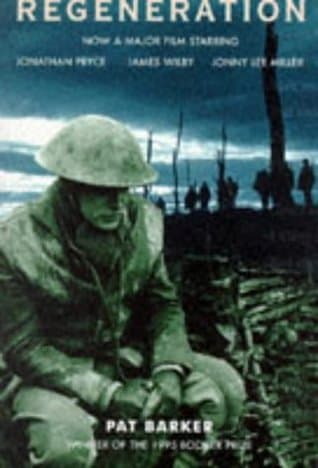
- Regeneration
Pat Barker
4.0 (25k) average on GoodreadsLiterary FictionFocuses on the psychological trauma of WWI soldiers and the moral dilemmas faced by those on the front lines.
- To Kill a Mockingbird
Harper Lee
4.3 (4.5M) average on GoodreadsHistorical FictionIn the 1930s Jim Crow South, Harper Lee writes about racial injustice, moral growth, and the quiet courage of a lawyer father, Atticus Finch, as seen through his young daughter's eyes.
- The Great Gatsby
F. Scott Fitzgerald
3.9 (3.8M) average on GoodreadsHistorical FictionIn the opulent Roaring Twenties, a mysterious millionaire's lavish parties hide his desperate, tragic pursuit of a lost love, exposing the emptiness within the American Dream.
- Pride and Prejudice
Jane Austen
4.3 (3M) average on GoodreadsHistorical FictionIn a society focused on status and money, Elizabeth Bennet navigates love and pride, challenging Mr. Darcy and social expectations to find true affection.
- Angels & Demons
Dan Brown
3.9 (2.7M) average on GoodreadsThrillerA Harvard symbologist races through Rome's ancient sites, deciphering cryptic clues to unmask the Illuminati and stop a vengeful plot to destroy the Vatican with a stolen antimatter weapon.





Enjoyed the summary?
A summary gives you the shape of the book. The book itself has the detail, the examples and the voice.
Find The Wars on AmazonAs an Amazon Associate, BookBrief earns from qualifying purchases. How we're funded