
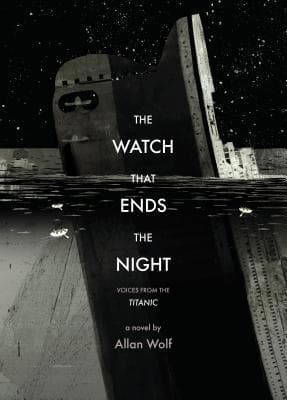
Synopsis
Covers the whole plot, including the ending.
- Difficulty
- Medium
- Pacing
- Variable
- Mood
- Tragic, Poignant, Historical, Suspenseful, Atmospheric
- Read it if
- You want a multi-perspective, emotionally resonant account of the Titanic disaster, told through diverse character voices and poetic prose.
- Skip it if
- You prefer a single, linear narrative or are not interested in historical retellings of well-known tragedies.
The Watch That Ends the Night Plot Summary
Covers the whole plot, including the ending.
The Maiden Voyage Begins
The RMS Titanic, called 'unsinkable,' begins its first trip from Southampton, England, heading for New York City. Among the many passengers are prominent figures like millionaire John Jacob Astor, traveling with his pregnant, much younger wife Madeleine, hoping to avoid scandal. Also aboard is Margaret 'Molly' Brown, a lively American socialite, and Captain Edward Smith, respected for his experience. Below decks, immigrant families like the Lebanese refugees, including the young and hopeful Sarah, dream of new lives in America. The ship's splendor and the promise of a fast, safe journey fill the early days with excitement and a feeling of invincibility, though class divisions are already clear in the ship's separated areas.
Life Aboard: Hopes and Dreams
As the Titanic sails, the passengers begin to live their short-term lives on the ship. John Jacob Astor tries to shield Madeleine from public view, while Madeleine deals with her new status and soon-to-be motherhood. Sarah, a young Lebanese woman traveling with her family, experiences the start of first love with a fellow passenger, Alfred. Molly Brown enjoys the luxury of first class, having lively conversations and showing her independent spirit. Meanwhile, in the lower decks, many immigrants marvel at the ship's luxury, a sharp contrast to their previous lives, all while looking forward to a fresh start in America. The crew, from wireless operators to stokers, do their jobs, each with their own thoughts and worries about the journey.
Warnings and Disregard
Over several days, the Titanic's wireless operators, Jack Phillips and Harold Bride, receive many iceberg warnings from other ships in the North Atlantic. These messages, however, are often dismissed or not given the urgent attention they need. Captain Smith, despite his experience, continues to drive the ship at a high speed, prioritizing the schedule and the prestige of a fast crossing. The warnings are sometimes incomplete, ignored due to busy circuits, or simply not relayed effectively to the bridge. This growing number of unheeded warnings sets a tense mood, hinting at the coming danger, even as most passengers remain unaware of the peril in the icy waters ahead.
The Iceberg's Perspective
Mixed with the human stories, the ancient iceberg itself offers a chilling, non-human view. It describes its long, solitary journey from the Greenland glaciers, its slow, steady drift southward, and its indifference to the human world. The iceberg is shown as a primal entity, a silent, powerful force of nature, simply following its course, unaware of the technological marvel it is destined to meet. Its 'voice' is cold, ancient, and without emotion, showing nature's vast, impersonal power against humanity's fragile creations. This view emphasizes the cosmic scale of the coming disaster, portraying the iceberg not as an enemy, but as an inevitable, natural phenomenon.
The Fateful Collision
On the night of April 14th, 1912, under a moonless, star-filled sky, lookout Frederick Fleet spots a large iceberg directly in the Titanic's path. Despite immediate alerts to the bridge and efforts to turn the ship, it is too late. The Titanic scrapes along the starboard side of the iceberg, causing a series of gashes below the waterline. The impact, initially described by many as a slight shudder or vibration, is significant enough to damage several of the ship's watertight compartments. Water begins to flood into the lower decks, and the initial calm among passengers slowly gives way to confusion and concern as the reality of the situation begins to set in.
Initial Chaos and Denial
After the collision, there is a period of disbelief and confusion. Many passengers, especially those in first class, are reluctant to believe the 'unsinkable' ship is in serious trouble. Captain Smith and his officers quickly determine the damage: the ship is fatally wounded and will sink. Orders are given to prepare the lifeboats, but there are not enough for everyone on board. Panic begins to spread, particularly among those in steerage, who are initially kept below decks. The crew struggles to maintain order, and the clear class divisions become painfully obvious as first and second-class passengers are given priority access to the limited lifeboats.
The Struggle for Survival
As the ship lists further, launching the lifeboats becomes a desperate, chaotic event. Many boats are launched far below capacity, either due to confusion, fear that the davits would break, or a lack of understanding regarding how serious the situation was. John Jacob Astor bravely helps Madeleine into a lifeboat, knowing he cannot follow. Sarah is separated from her family in the chaos, desperately trying to find a place in a boat. Molly Brown, despite being urged to leave, helps others and eventually boards a lifeboat, later famously urging it to return to search for survivors. The chilling reality of the 'women and children first' policy, and its often inconsistent use, unfolds amid the growing panic.
Final Moments of the Ship
In its final hours, the Titanic is a scene of horror and heroism. The ship's band famously plays on, trying to calm the passengers. Many men, including John Jacob Astor, choose to go down with the ship, upholding a code of honor. Captain Smith remains on the bridge, accepting his fate. The ship's lights flicker and then go out, plunging the scene into darkness. The stern rises dramatically into the air before the ship breaks apart and plunges into the icy depths of the Atlantic, taking over 1,500 souls with it. The cries of those left behind echo across the water, a haunting reminder of the tragedy's enormity.
The Aftermath: Lifeboats Adrift
Those who made it into lifeboats face a harrowing night on the open ocean. The air is frigid, and the water is deadly cold. The screams of those in the water, slowly dying from hypothermia, haunt the survivors. Molly Brown, in her lifeboat, strongly argues to turn back and search for more survivors, but her pleas are largely ignored due to fear of being swamped by desperate swimmers. Sarah, huddled in a lifeboat, is overwhelmed by grief and shock, separated from her family and her new love. The silence that eventually falls after the cries fade is perhaps even more terrifying, signifying the end for so many.
Rescue and Reckoning
Hours after the sinking, the RMS Carpathia arrives at the scene, having raced through the night after receiving the Titanic's distress calls. The survivors in the lifeboats are brought aboard, exhausted, traumatized, and freezing. The scale of the disaster becomes clear as the Carpathia's crew realizes how few have survived compared to the thousands who were on board. Sarah is reunited with a few family members, but the loss of Alfred and others weighs heavily on her. Molly Brown, now a leader, helps organize the survivors. The Carpathia then turns towards New York, carrying the living and the weight of an unimaginable tragedy, while the world grapples with the news of the 'unsinkable' ship's demise.
Principal Figures
John Jacob Astor IV
Supporting
Wealthy American businessman, traveling with his pregnant, young bride.
Astor is presented as an immensely wealthy and influential man, accustomed to getting his way, yet also deeply devoted to his young, pregnant wife, Madeleine. He is trying to protect her from the scandal surrounding their marriage and her pregnancy. Despite his privileged position, he exhibits a sense of honor and calm during the disaster, embodying a certain stoicism. His primary motivation is Madeleine's well-being and ensuring her safety.
Relationships: Madeleine Astor (Husband, protective and loving)
Madeleine Astor
Supporting
John Jacob Astor's pregnant, teen bride, navigating societal judgment.
Madeleine is a young, vulnerable woman, pregnant with her first child and acutely aware of the societal scandal surrounding her marriage to the much older John Jacob Astor. She is initially depicted as somewhat fragile and reliant on her husband. Her journey on the Titanic is marked by a quiet strength emerging as she faces the challenges of her new life and, ultimately, the disaster. She represents innocence thrust into a harsh reality.
Relationships: John Jacob Astor IV (Wife, dependent on him but also loved)
Margaret 'Molly' Brown
Supporting
Outspoken American socialite and survivor, known for her resilience.
Molly Brown is portrayed as a vivacious, strong-willed, and compassionate woman. She embodies the self-made American spirit, having risen from humble beginnings to immense wealth. She is unafraid to speak her mind, challenge authority, and stand up for what she believes is right. During the disaster, she acts as a leader and advocate for others, displaying remarkable courage and practical resourcefulness. Her primary drive is to help others and to survive.
Relationships: Other survivors (Advocate and leader)
Sarah
Protagonist
A young Lebanese immigrant seeking a new life and experiencing first love.
Sarah is a young, hopeful Lebanese immigrant traveling with her family in third class, bound for America. She represents the dreams and aspirations of countless immigrants seeking a better life. Her journey is marked by the excitement of new experiences, including the stirrings of first love with Alfred, another young passenger. She is observant and sensitive, experiencing the wonders of the ship and the terror of its demise through an innocent, yet increasingly mature, lens. Her motivations are family, love, and the pursuit of a new future.
Relationships: Alfred (First love, fellow immigrant); Her family (Dependent, loving)
Captain Edward Smith
Supporting
The Titanic's experienced captain, who goes down with his ship.
Captain Smith is depicted as a seasoned and respected maritime veteran, commanding the Titanic on what was intended to be his final voyage before retirement. He carries the weight of immense responsibility and pride in his ship. While initially confident, he is ultimately overwhelmed by the unfolding disaster. His character explores themes of hubris and duty, as he makes decisions that lead to the tragedy and eventually accepts his fate, choosing to go down with his vessel.
Relationships: His crew (Commander); The Titanic (His ship, his pride)
The Iceberg
Antagonist
An ancient, indifferent force of nature, the cause of the disaster.
The Iceberg is personified as a primordial, ancient entity, an indifferent force of nature rather than a malicious villain. Its narrative voice describes its long, solitary journey from the glaciers, highlighting its age and its detachment from human concerns. It is simply following its natural course, unaware of the technological marvel it is destined to destroy. Its presence underscores the theme of humanity's vulnerability against the vast, impersonal power of the natural world. It is the catalyst for all the human drama.
Relationships: The Titanic (Fateful encounter, destroyer)
Frederick Fleet
Supporting
The lookout who spots the iceberg.
Frederick Fleet is one of the lookouts in the crow's nest on the night of the collision. His role is brief but pivotal, as he is the first to sight the iceberg. He represents the ordinary crewman performing his duty, thrust into an extraordinary and terrifying situation. His perspective highlights the suddenness and shock of the impact, and the immediate, desperate attempts to avert disaster.
Relationships: Reginald Lee (Fellow lookout)
Jack Phillips
Supporting
Senior wireless operator, sending distress calls.
Jack Phillips is the senior wireless operator on the Titanic. He is diligent and hardworking, often overwhelmed by the volume of passenger messages. He represents the cutting edge of communication technology at the time, and his efforts to send distress signals are crucial. His character highlights the challenges of early wireless communication and the desperate struggle to summon aid in the face of disaster. He is motivated by duty.
Relationships: Harold Bride (Junior wireless operator, colleague)
Alfred
Supporting
A young immigrant, Sarah's love interest.
Alfred is a young, hopeful immigrant traveling in third class, who forms a romantic connection with Sarah. He represents the youthful dreams and budding love that blossomed even on a ship destined for tragedy. His character provides a tender human element amidst the grand scale of the Titanic's journey, making the eventual loss even more poignant. He is driven by hope for a new life and his affection for Sarah.
Relationships: Sarah (Love interest)
Themes & Insights
Hubris and the Illusion of Invincibility
The novel explores human arrogance, especially mankind's belief in its ability to conquer nature through technology. The Titanic itself is a symbol of this, often called 'unsinkable.' This arrogance is clear in Captain Smith's decision to maintain high speeds despite iceberg warnings, and in the general complacency of many passengers and crew. The iceberg, an ancient force of nature, is a sharp reminder of humanity's vulnerability, shattering the illusion of technological supremacy. The tragedy is a humbling lesson against overconfidence.
“They called me unsinkable. The greatest ship ever built. A floating city. And for a time, I believed them.”
Class Divide and Social Inequality
The strict class structure of the early 20th century is a constant theme, clearly shown by the Titanic's design and the disaster itself. The novel contrasts the luxurious lives of first-class passengers like the Astors and Molly Brown with the cramped conditions and desperate hopes of third-class immigrants like Sarah. During the sinking, these divisions become matters of life and death, with first-class passengers having priority access to lifeboats and often better chances of survival. The initial holding back of third-class passengers below decks further shows how social standing dictated fate, exposing the brutal inequalities of the era.
“First class was about privilege. Third class was about hope. On this ship, both were just thin veneers.”
Love, Loss, and Human Connection
Amidst the grandeur and tragedy, the novel explores human experiences of love and loss. We see the deep, protective love of John Jacob Astor for his young wife Madeleine, the growing romance between Sarah and Alfred, and the family bonds that are tragically broken. The disaster forces characters to face life's fragility and the immense pain of separation. These personal stories of connection and heartbreak provide the emotional center of the book, making the vast scale of the tragedy relatable on an individual level. The shared experience of terror and survival also creates new, though temporary, bonds among strangers.
“A lifetime of love, compressed into a single, desperate moment. Then, nothing.”
The Indifference of Nature
The personified iceberg is a powerful symbol of nature's vast, ancient, and indifferent power. It does not act with malice but simply follows its natural course, clashing with human ambition. This theme highlights that despite humanity's technological advancements, nature remains an unconquerable force. The iceberg's 'voice' is cold and factual, without emotion, emphasizing that the disaster was not an act of vengeance but a collision of two separate worlds, one natural and one man-made, with devastating consequences for the latter. It reminds us of humanity's place within a larger, often unforgiving, natural order.
“I was. I am. I will be. And the ships, they come and go. Brief flares against the dark.”
Plot Devices & Literary Techniques
Multiple Perspectives (Polyphonic Narrative)
The story is told through the distinct voices of 24 characters, including the iceberg and the ship itself.
This device allows the author to present a comprehensive, multi-faceted view of the Titanic disaster. By shifting perspectives between first-class passengers, immigrants, crew members, and even inanimate objects, the narrative captures the diverse experiences, hopes, fears, and understandings of the event. It provides a rich tapestry of human (and non-human) emotion and thought, allowing readers to feel the impact of the tragedy from every angle. This technique builds suspense, empathy, and a nuanced understanding of the historical event, highlighting its universal human resonance.
Personification of Inanimate Objects
The Titanic and the Iceberg are given distinct narrative voices.
By giving the Titanic and the Iceberg their own voices, the author elevates the narrative beyond mere historical recounting. The Titanic's voice often reflects human pride and eventual despair, embodying the hubris of its creators. The Iceberg's voice, conversely, is ancient, indifferent, and primal, representing the vast, unfeeling power of nature. This device creates a powerful symbolic layer, allowing for commentary on themes like technology versus nature, human arrogance, and fate, without directly stating them through human characters. It adds a unique, almost mythological dimension to the tragedy.
Foreshadowing through Warnings
Repeated mentions of iceberg warnings leading up to the collision.
The recurring motif of unheeded iceberg warnings serves as a powerful form of foreshadowing. These warnings, often dismissed or misinterpreted by the crew, build a palpable sense of impending doom for the reader, even as the characters remain largely oblivious. This device heightens dramatic tension and creates a sense of tragic inevitability. It underscores the theme of human fallibility and the consequences of arrogance, demonstrating how a series of small oversights can lead to catastrophic results, making the eventual collision feel both shocking and, in retrospect, tragically predictable.
Juxtaposition of Class Experiences
Contrasting the lives and fates of passengers from different social classes.
The novel frequently juxtaposes the experiences of first, second, and third-class passengers, especially during the crisis. This device starkly highlights the social inequalities of the era. For example, the luxurious dining of first-class is contrasted with the crowded steerage decks, and the priority given to first-class in lifeboats against the delayed access for third-class. This contrast not only provides a vivid social commentary but also amplifies the emotional impact of the tragedy, as readers witness how wealth and status dictated opportunities for survival, making the disaster a profound statement on social justice.
The Watch That Ends the Night Quotes
“The sea, once it casts its spell, holds one in its net of wonder forever.”
“There are some things you can't outrun, no matter how fast you are or how much money you have.”
“Hope is a fragile thing, easily broken, easily lost.”
“Every man has his breaking point, even the bravest among us.”
“The stars were out that night, bright and cold, watching us die.”
“It's not the size of the ship, but the size of the heart that matters when the waves come crashing in.”
“Silence is the loudest sound when you're waiting for the end.”
“Some secrets are meant to stay buried, like the ship itself.”
“You can plan all you want, but the ocean has its own plans.”
“In the end, all that's left is the story, and who tells it.”
“The cold was a living thing, a predator with icy teeth.”
“We were all passengers on that ship, whether we had a ticket or not, whether we lived or died.”
“Sometimes the greatest luxury is just another breath.”
“The music played on, a defiant whisper against the roar of the inevitable.”
“A ship is just a vessel, but a dream, that's something else entirely.”
Quiz
10 questions on the plot and the characters. Each answer comes with a short explanation.
Question 1
Which prominent millionaire is traveling on the Titanic with his pregnant teen bride, hoping to avoid media scandal?
- Benjamin Guggenheim
- Isidor Straus
- John Jacob Astor
- J. Bruce Ismay
Show answer
C. John Jacob Astor John Jacob Astor is specifically mentioned in the synopsis as the millionaire hoping to bring home his pregnant teen bride with minimum media scandal.
Question 2
What natural entity, besides the human characters, is given a voice in the book?
- The Atlantic Ocean
- The Moon
- The Iceberg
- The Wind
Show answer
C. The Iceberg The synopsis explicitly states that 'twenty-four haunting voices of the Titanic tragedy, as well as the iceberg itself, are evoked'.
Question 3
Which historical figure, known as 'the unsinkable', is one of the voices in the book?
- Dorothy Gibson
- Madeleine Astor
- Elizabeth Shutes
- Margaret ('the unsinkable Molly') Brown
Show answer
D. Margaret ('the unsinkable Molly') Brown The synopsis directly names 'Margaret ('the unsinkable Molly') Brown' as one of the voices included.
Question 4
What is the primary motivation of the beautiful Lebanese refugee mentioned in the synopsis?
- To find work in New York City
- To escape political turmoil in Lebanon
- To join family in Florida
- To marry a wealthy American suitor
Show answer
C. To join family in Florida The synopsis states she is 'on her way to family in Florida', indicating her primary motivation for the journey.
Question 5
Beyond the narrative voices, what other types of historical documents does Allan Wolf incorporate into the book?
- Newspaper headlines and personal diaries
- Ship's blueprints and passenger manifests
- Telegraphs and undertaker’s reports
- Immigration records and cargo lists
Show answer
C. Telegraphs and undertaker’s reports The synopsis mentions 'Slipping in telegraphs, undertaker’s reports, and other records' as elements used by the author.
Question 6
What contrasting themes are highlighted in the book's description regarding the human experience of the Titanic tragedy?
- Wealth and poverty
- Courage and cowardice
- Arrogance and innocence, hubris and hope
- Science and superstition
Show answer
C. Arrogance and innocence, hubris and hope The very first sentence of the synopsis explicitly states: 'Arrogance and innocence, hubris and hope--twenty-four haunting voices...'.
Question 7
What is one of the specific interests attributed to a young boy among the Titanic passengers whose voice is included?
- Searching for lost treasure
- Collecting stamps
- Searching for dragons
- Learning Morse code
Show answer
C. Searching for dragons The synopsis mentions voices 'from the lookout and wireless men to a young boy in search of dragons'.
Question 8
The back matter of the book includes 'Morse code with messages to decipher'. What does this suggest about the author's intent or the book's interactive elements?
- It implies the book's primary audience is amateur radio enthusiasts.
- It offers an interactive way for readers to engage with a key communication method of the era.
- It suggests that secret messages are hidden throughout the main narrative.
- It is a stylistic choice purely for aesthetic appeal, without practical function.
Show answer
B. It offers an interactive way for readers to engage with a key communication method of the era. Including 'Morse code with messages to decipher' in the back matter suggests an interactive element, allowing readers to practically engage with a historically relevant communication method.
Question 9
How does the book's structure, involving 'twenty-four haunting voices', contribute to its 'breathtaking, intimate glimpse at the lives behind the tragedy'?
- It creates confusion by presenting too many perspectives without clear focus.
- It limits the emotional depth by focusing on a select few, rather than the masses.
- It allows for a multifaceted exploration of the disaster, capturing diverse experiences and emotions across social strata.
- It primarily serves to highlight the author's poetic skill rather than character development.
Show answer
C. It allows for a multifaceted exploration of the disaster, capturing diverse experiences and emotions across social strata. The multiple voices 'span classes and stations' and provide 'a breathtaking, intimate glimpse at the lives behind the tragedy', indicating that this structure allows for a comprehensive and emotionally rich understanding from diverse perspectives.
Question 10
Given the book's genre as 'Historical Fiction, Young Adult' and its focus on multiple voices, what is a likely primary educational or thematic goal for the author?
- To provide a definitive, factual account of the Titanic's sinking without emotional interpretation.
- To entertain young readers with a fictional adventure story, loosely based on historical events.
- To make history accessible and emotionally resonant for young adults by humanizing the Titanic tragedy through diverse personal narratives.
- To primarily teach about maritime engineering and ship construction to a younger audience.
Show answer
C. To make history accessible and emotionally resonant for young adults by humanizing the Titanic tragedy through diverse personal narratives. As Young Adult Historical Fiction, the use of multiple voices and focus on 'intimate glimpse at the lives behind the tragedy' with 'clear-eyed compassion and astounding emotional power' suggests an aim to connect young readers to history on a personal and empathetic level.
The Watch That Ends the Night FAQ
What is the central premise of 'The Watch That Ends the Night'?
'The Watch That Ends the Night' retells the Titanic disaster through the interwoven perspectives of twenty-four different characters, including passengers, crew members, and even the iceberg itself. It explores themes of arrogance, innocence, hubris, and hope as these diverse voices confront their fates during the ship's maiden voyage.
Who are some of the prominent historical figures whose voices are included in the book?
The book gives voice to several historical figures, such as millionaire John Jacob Astor IV, who was traveling with his pregnant teen bride, and the resilient socialite Margaret 'Molly' Brown. Captain Edward Smith also provides his perspective, detailing the pressures and decisions leading up to the disaster.
How does the book portray the diverse social classes aboard the Titanic?
The narrative meticulously captures the stark class distinctions on the Titanic by presenting voices from all three classes. Readers hear from wealthy first-class passengers like the Astors, middle-class travelers, and impoverished third-class immigrants, highlighting their differing experiences and opportunities for survival.
What unique narrative device does Allan Wolf employ to tell this story?
Allan Wolf utilizes a unique polyphonic narrative structure, presenting the story through free verse poems from the perspectives of twenty-four distinct characters. This allows for a multifaceted exploration of the event, offering intimate glimpses into their thoughts, fears, and hopes.
Beyond the human voices, what other unconventional narrator is featured in the book?
One of the most striking narrative choices is the inclusion of the iceberg's perspective. The ancient iceberg narrates its journey south, anticipating its fateful encounter with the ship, adding an element of natural inevitability and a chilling, detached observation of human events.
How does the author subtly foreshadow the disaster through early character voices?
Early voices subtly foreshadow the disaster through character thoughts and observations. For instance, the wireless operators express frustrations with the volume of personal messages, hinting at the ignored ice warnings, while some passengers' hubris about the ship's 'unsinkability' creates dramatic irony.
Are there any specific details or interactions between characters that reveal a deeper commentary on societal norms of the time?
Yes, interactions between characters often highlight societal norms. The concern of John Jacob Astor about media scandal regarding his young, pregnant wife underscores the era's social expectations, while the disparity in treatment and access between first and third-class passengers reveals inherent class biases.
How do the included historical documents, like telegraphs and undertaker's reports, enhance the narrative?
The integration of historical documents like telegraphs, undertaker's reports, and newspaper clippings grounds the poetic narrative in factual reality. These pieces provide stark, objective counterpoints to the emotional, subjective character voices, adding authenticity and a sense of historical weight to the tragedy.
What is the significance of the young boy searching for dragons in the narrative?
The young boy searching for dragons symbolizes childhood innocence and imagination amidst impending doom. His fantastical quest provides a poignant contrast to the grim reality unfolding, representing a fragile hope and the lives cut short before they could fully experience the world.
How does the book explore the psychological impact of impending doom on different characters?
The book delves into varied psychological responses to impending doom. Some characters, like the gambler, resort to desperate acts for survival, while others, like Captain Smith, grapple with immense responsibility and denial. Many passengers experience a range of emotions from disbelief to terror, and ultimately, acceptance or resignation.
What psychological defense mechanisms do some characters employ to cope with the crisis?
Characters employ various psychological defense mechanisms. Many initially use denial, refusing to believe the 'unsinkable' ship is in danger. Others exhibit gallows humor or a heightened sense of duty, like the musicians who continue to play, attempting to maintain order and calm in chaos.
How does the character of the Lebanese refugee develop psychologically throughout her journey?
The Lebanese refugee experiences significant psychological development, moving from a sense of displacement and anticipation for a new life to discovering the first stirrings of love and then facing ultimate terror. Her journey highlights vulnerability and the universal human desire for connection and safety.
In what ways does the book explore the concept of 'hubris' through its characters and the ship itself?
The book profoundly explores hubris through the characters' overconfidence in human ingenuity and the 'unsinkable' design of the Titanic. Voices like the shipbuilders and some first-class passengers embody this arrogance, believing they have conquered nature, only to be tragically disproven by the iceberg.
How does the author's choice of free verse poetry contribute to the psychological depth of the characters?
The free verse poetry allows for raw, unfiltered expression of inner thoughts and emotions, enhancing psychological depth. Its unconstrained form mirrors the characters' fragmented and intense experiences, giving readers direct access to their fears, hopes, and final reflections in a very personal way.
Is the iceberg's perspective meant to be symbolic of nature's indifference or a more active force?
The iceberg's perspective primarily symbolizes nature's indifferent and ancient power, contrasting sharply with human ambition and vulnerability. While it anticipates the encounter, it is portrayed as an unfeeling force of the natural world, rather than an actively malicious one, highlighting the futility of human hubris against nature.
How does the book challenge or reinforce traditional narratives of heroism and villainy associated with the Titanic?
The book largely challenges simplistic notions of heroism and villainy by presenting nuanced perspectives. It reveals the complex motivations and fears of individuals, showing that even those who made controversial decisions were often under immense pressure, thus moving beyond black-and-white judgments to explore the spectrum of human behavior.
What is the overarching message about human connection and isolation presented through the multiple voices?
The book conveys a powerful message about both human connection and profound isolation. Despite being on the same ship, characters experience varying degrees of connection and detachment, especially across social classes. Ultimately, the shared tragedy unites them in a universal human experience of loss and vulnerability.
How does the title, 'The Watch That Ends the Night,' relate to the themes and events of the story?
The title, 'The Watch That Ends the Night,' refers to the final hours of the Titanic's voyage and the watches kept by the crew. It also metaphorically signifies the end of an era of perceived invincibility and the dawning of a new, more sober understanding of human limitations when facing the forces of nature.
Does the book offer any definitive answers about the 'cause' of the disaster, or does it focus more on human elements?
While acknowledging the physical cause (the iceberg), the book primarily focuses on the human elements contributing to and reacting to the disaster. It explores the 'causes' in terms of human decisions, arrogance, class structures, and the communication failures, rather than solely the impact itself.
About the author

Allan Wolf is the author of "The Watch That Ends the Night," a historical novel exploring the sinking of the Titanic. His work is known for its meticulous research and compelling narrative, often delving into significant historical events. Wolf brings a unique blend of factual accuracy and engaging storytelling to his fiction.
Similar books
- A Night to Remember
Walter Lord
4.0 (17k) average on GoodreadsBiographyClassic non-fiction account of the Titanic, focusing on individual experiences.
- Salt to the Sea
Ruta Sepetys
4.3 (123k) average on GoodreadsHistorical FictionHistorical fiction following multiple perspectives during a maritime disaster (Wilhelm Gustloff sinking).
- To Kill a Mockingbird
Harper Lee
4.3 (4.5M) average on GoodreadsHistorical FictionIn the 1930s Jim Crow South, Harper Lee writes about racial injustice, moral growth, and the quiet courage of a lawyer father, Atticus Finch, as seen through his young daughter's eyes.
- The Great Gatsby
F. Scott Fitzgerald
3.9 (3.8M) average on GoodreadsHistorical FictionIn the opulent Roaring Twenties, a mysterious millionaire's lavish parties hide his desperate, tragic pursuit of a lost love, exposing the emptiness within the American Dream.
- Pride and Prejudice
Jane Austen
4.3 (3M) average on GoodreadsHistorical FictionIn a society focused on status and money, Elizabeth Bennet navigates love and pride, challenging Mr. Darcy and social expectations to find true affection.
- Angels & Demons
Dan Brown
3.9 (2.7M) average on GoodreadsThrillerA Harvard symbologist races through Rome's ancient sites, deciphering cryptic clues to unmask the Illuminati and stop a vengeful plot to destroy the Vatican with a stolen antimatter weapon.




Enjoyed the summary?
A summary gives you the shape of the book. The book itself has the detail, the examples and the voice.
Find The Watch That Ends the Night on AmazonAs an Amazon Associate, BookBrief earns from qualifying purchases. How we're funded