

Synopsis
Covers the whole plot, including the ending.
- Difficulty
- Medium
- Pacing
- Moderate
- Mood
- Atmospheric, Suspenseful, Melancholy, Introspective
- Read it if
- You enjoy sprawling, character-driven historical mysteries that delve into family secrets and the loss of innocence.
- Skip it if
- You prefer fast-paced thrillers or straightforward mysteries without complex psychological depth and a large page count.
The Way the Crow Flies Plot Summary
Covers the whole plot, including the ending.
Arrival at Centralia
In 1962, the MacIsaac family—Jack, Mimi, and their children, Madeleine, Lily, and Michael—move to Centralia, a Canadian Air Force base near the US border. Eight-year-old Madeleine, imaginative and observant, quickly becomes part of the base's social life, befriending the Pye children, especially Jimmy Pye. Her father, Jack, a former bomber pilot, is now an officer, seemingly dedicated to his family and career. Mimi, Madeleine's beautiful mother, tries to keep things normal. Madeleine's early experiences include childhood games, the excitement of the space race, and the subtle anxieties of the Cold War.
The Summer of '63 and the Girl Guides
The next summer, 1963, Madeleine joins a Girl Guide troop led by Mrs. Pye, Jimmy Pye's mother. The troop, including Madeleine, Lily, and their friends Mona and Alice, goes camping in the woods near the base. The mood is initially one of youthful fun. During the trip, a younger girl, Mona, goes missing from their campsite, causing alarm. The search begins, involving Girl Guide leaders and later, base staff. The camping trip's innocence quickly turns into a tense search for the missing child, changing Madeleine's view of safety.
The Discovery and Its Aftermath
The search for Mona ends when her body is found, murdered. This discovery shocks the Centralia community. The police, including Inspector T.J. Quinn, start an investigation. Suspicion immediately falls on Jimmy Pye, given his past behavior and his closeness to the Girl Guide camp. Madeleine, who looks up to Jimmy, struggles to believe the accusations. The base, once safe, becomes a place of fear, as parents guard their children. The MacIsaac family, like others, deals with the horror, and Jack becomes involved in the investigation.
Jimmy Pye's Arrest and Trial
After Mona's body is found, Jimmy Pye is quickly arrested. Despite his denials and lack of direct evidence, circumstantial evidence and his reputation lead to his indictment. The trial is a big event that affects the base and nearby towns. Madeleine, sure of Jimmy's innocence, struggles to understand why everyone, including her parents, believes he is guilty. She remembers interactions with Jimmy that show a different side of him. Jimmy is convicted and sent to a facility for young offenders, leaving Madeleine with a sense of injustice.
Madeleine's Growing Doubts and Jack's Secrets
In the years after Jimmy Pye's conviction, Madeleine remains troubled by the murder and her belief in Jimmy's innocence. She starts to notice problems in the official story and remembers details from the murder day that don't fit. At the same time, her father, Jack, becomes more distant and secretive. He is often absent, and Madeleine hears hushed talks and feels tension in the house. Jack's involvement with a secret intelligence operation, hinted at by calls and meetings, begins to subtly connect with Mona's death, though Madeleine is too young to understand.
The MacIsaac Family Disintegrates
The unresolved trauma of Mona's murder, along with Jack's secrecy and the general Cold War paranoia, slowly breaks down the MacIsaac family. Mimi, already fragile, struggles with depression and isolation. Jack's emotional distance and secret activities create a gap between him and Mimi, and their children. Madeleine, Lily, and Michael deal with a household full of unspoken tensions and a sense of loss—not just for Mona, but for the family's past happiness. The image of the MacIsaac family shatters, affecting Madeleine's development.
Madeleine's Adulthood and Persistent Quest
Twenty years later, in the early 1980s, Madeleine is an adult working as a university lecturer. The memory of Mona's murder and Jimmy Pye's conviction still bother her. She has never accepted the official story and has, in a subtle way, spent her adult life trying to understand the events of that summer. Her academic work often relates to memory, truth, and judgment, reflecting her personal search. She begins to actively revisit old memories, seek out former residents of Centralia, and look into archived reports, driven by a need for answers and to clear Jimmy's name, or at least understand the full truth.
Revisiting Centralia and Old Acquaintances
Madeleine's investigation leads her back to the abandoned Centralia base and to various people who were there that summer. She reconnects with Lily, her sister, who has her own painful memories. She also seeks out former neighbors, police officers, and Jimmy Pye, now an adult released from the facility. These meetings are tense, as many are hesitant to revisit the past, and some have secrets or distorted memories. Each conversation, each detail, brings Madeleine closer to a more complex and disturbing picture of what happened, making her face uncomfortable truths about her childhood and the people she once trusted.
Uncovering Jack's Deception
Through research and connecting clues, Madeleine uncovers the full extent of her father Jack's involvement, not just after the murder, but in a larger cover-up. She learns that Jack was involved in a top-secret Cold War intelligence operation regarding the base's radar systems, and Mona's murder exposed a vulnerability related to this operation. To protect the mission and his career, Jack manipulated the investigation, deflecting suspicion and making Jimmy Pye the scapegoat. This revelation shatters Madeleine's image of her father, revealing a man capable of moral compromises.
The True Killer Revealed
With her father's deception known, Madeleine connects the final pieces of the puzzle, leading her to the true killer: her own brother, Michael. The truth is that Michael, a child at the time, was responsible for Mona's death, possibly by accident or in a moment of childish anger, and Jack, to protect his son and his career, orchestrated the cover-up. This is devastating for Madeleine, forcing her to confront her family's actions and the moral compromises made to protect a secret. The truth, though sought for decades, brings immense pain and a re-evaluation of everything she thought she knew.
Confrontation and Aftermath
Armed with the full truth, Madeleine confronts her family, especially her mother Mimi and her brother Michael. The confrontation is emotional, bringing decades of unspoken grief, guilt, and denial to the surface. Mimi, who had suppressed much of the truth, must acknowledge the reality. Michael, now an adult, must deal with the childhood act that was hidden. The family dynamic, already broken, faces its ultimate test. Madeleine's search for justice is complete, but the cost is immense, as the truth, while freeing, also brings sadness and forces a redefinition of familial love in the face of tragedy.
The Way the Crow Flies Characters
Madeleine MacIsaac
Protagonist
An imaginative child who becomes an adult academic obsessed with an unsolved murder.
As an eight-year-old, Madeleine is highly observant, imaginative, and deeply sensitive, often retreating into a rich inner world. She idolizes her father and forms a strong, if complicated, bond with Jimmy Pye. The trauma of Mona's murder and Jimmy's wrongful conviction leaves an indelible mark on her, fueling a lifelong quest for truth and justice. As an adult, she is intelligent, persistent, and driven, using her academic skills to meticulously investigate the past, even when it leads to painful personal revelations.
Relationships: Jack MacIsaac (Daughter, initially adores him, later discovers his profound deception.); Mimi MacIsaac (Daughter, shares a complex, sometimes distant, bond with her fragile mother.); Lily MacIsaac (Sister, shares a strained but ultimately supportive relationship as they process shared trauma.); Michael MacIsaac (Brother, initially protective, later discovers his role in the murder.); Jimmy Pye (Childhood friend/crush, believes in his innocence, driving her adult quest for justice.)
Jack MacIsaac
Antagonist/Supporting
Madeleine's father, a respected Air Force officer with a hidden agenda and deep secrets.
Jack is initially presented as a heroic, disciplined, and loving father, a former bomber pilot who exudes authority and competence. However, beneath this facade lies a man deeply entangled in Cold War intelligence operations, driven by a rigid sense of duty, loyalty to his country, and a desire to protect his family and career at all costs. His actions are dictated by a utilitarian morality, leading him to make profound compromises, including orchestrating a cover-up that condemns an innocent boy. He is emotionally distant and carries the weight of his secrets, which ultimately fractures his family.
Relationships: Madeleine MacIsaac (Father, initially adored, later revealed as a deceiver.); Mimi MacIsaac (Husband, their relationship is strained and eventually broken by his secrets and emotional distance.); Michael MacIsaac (Father, protects his son from the consequences of his actions, leading to a cover-up.); Inspector T.J. Quinn (Colleague/manipulator, subtly influences the murder investigation.)
Mimi MacIsaac
Supporting
Madeleine's beautiful but fragile mother, struggling with depression and unspoken truths.
Mimi is a beautiful, artistic, and sensitive woman who struggles with the demands of military life and the emotional distance of her husband. She is prone to anxiety and depression, often retreating into herself. While she loves her children, she is somewhat overwhelmed by motherhood and the complexities of her marriage. She possesses an intuitive understanding of the family's underlying tensions and the dark shadow cast by the murder, but she lacks the strength or agency to confront the truth, instead choosing to suppress it, often through alcohol, which contributes to the family's dysfunction.
Relationships: Madeleine MacIsaac (Mother, has a complex, sometimes distant, relationship with her observant daughter.); Jack MacIsaac (Wife, their marriage deteriorates under the weight of his secrets and her fragility.); Lily MacIsaac (Mother, struggles to connect with her children amidst her own pain.)
Jimmy Pye
Supporting
A troubled local boy wrongly accused and convicted of Mona's murder.
Jimmy Pye is a complex character, initially presented through Madeleine's eyes as an enigmatic and slightly dangerous older boy, a figure of both fascination and fear. He is known for being a delinquent and is an outsider on the base, making him an easy target for suspicion. Despite his rough exterior, he shows moments of surprising tenderness and vulnerability, especially towards Madeleine. His wrongful conviction for Mona's murder defines his life, leading to a difficult adulthood marked by institutionalization and the stigma of a crime he didn't commit. He represents the tragic consequences of societal prejudice and a flawed justice system.
Relationships: Madeleine MacIsaac (Childhood friend/crush, Madeleine believes in his innocence.); Mrs. Pye (Mother, struggles to parent her troubled son.); Mona Joudry (Victim, wrongly accused of her murder.)
Mona Joudry
Victim/Mentioned
The young Girl Guide whose murder drives the central mystery of the novel.
Mona Joudry is a young Girl Guide, a friend of Madeleine and Lily, whose brutal murder serves as the catalyst for the entire narrative. Although she is only seen briefly before her death, her absence and the injustice of her unsolved murder permeate the entire story. She represents lost innocence and the profound impact of violence on a community and on individuals. Her memory drives Madeleine's decades-long quest for truth, making her a pivotal, though absent, character.
Relationships: Madeleine MacIsaac (Friend and fellow Girl Guide.); Lily MacIsaac (Friend and fellow Girl Guide.)
Lily MacIsaac
Supporting
Madeleine's younger sister, also traumatized by the murder.
Lily is Madeleine's younger sister, a fellow Girl Guide present during the camping trip where Mona disappeared. She is more timid and less imaginative than Madeleine, and the trauma of the murder affects her deeply, though she processes it differently. As an adult, she carries her own fragmented and painful memories, often reluctant to revisit the past. Her relationship with Madeleine is complex, marked by shared history, unspoken grief, and differing approaches to confronting their family's secrets.
Relationships: Madeleine MacIsaac (Sister, shares a strained but supportive bond.); Mimi MacIsaac (Daughter, part of the fractured family unit.)
Michael MacIsaac
Supporting
Madeleine's younger brother, whose hidden role in the murder is a central secret.
Michael is Madeleine's youngest sibling, a quiet and somewhat withdrawn child. His character is largely defined by the shocking truth revealed late in the novel: he is the true, albeit possibly accidental, killer of Mona Joudry. His innocence as a child becomes a tragic irony, as his actions are covered up by his father, leading to a lifetime of unspoken guilt and the burden of a secret he may not fully comprehend until adulthood. His character embodies the devastating consequences of secrets and the lengths a family will go to protect its own.
Relationships: Madeleine MacIsaac (Brother, his secret is the ultimate betrayal.); Jack MacIsaac (Son, protected by his father from the consequences of his actions.); Mimi MacIsaac (Son, part of the fractured family unit.)
Inspector T.J. Quinn
Supporting
The lead detective in Mona's murder, influenced by external pressures.
Inspector T.J. Quinn is the police detective assigned to Mona Joudry's murder case. He is initially portrayed as a diligent but somewhat overwhelmed local officer. While seemingly committed to finding the truth, he is ultimately swayed by circumstantial evidence, societal prejudices against Jimmy Pye, and subtle, yet powerful, pressure from figures like Jack MacIsaac, who have vested interests in a swift and convenient resolution. He represents the fallibility of the justice system and how external forces can compromise an investigation, leading to a wrongful conviction. His character highlights the theme of institutional failure.
Relationships: Jack MacIsaac (Professional acquaintance, subtly manipulated by Jack.); Jimmy Pye (The primary suspect he convicts.)
The Way the Crow Flies Themes
The Corrupting Nature of Secrets
The novel explores how secrets, both personal and political, harm individuals and families. Jack MacIsaac's involvement in a secret Cold War operation and his cover-up of Michael's crime ruin his family, causing Mimi's depression, Madeleine's lifelong search, and the breakdown of their relationships. These unspoken truths create paranoia and distrust, showing how protecting a 'greater good' or a family's reputation can lead to moral decay and injustice. The truth, when it appears, is destructive but also offers a way to heal.
“Secrets are like a virus. They may lie dormant for years, but they always, always surface, and they always, always sicken.”
Loss of Innocence
Mona Joudry's murder shatters Madeleine's idyllic childhood and that of other children on the Centralia base. The initial optimism of the early 1960s is replaced by fear, suspicion, and an early understanding of human evil. Madeleine's imaginative world is invaded by harsh reality, making her face the complexity of morality and the capacity for darkness in seemingly normal people, including her own family. This theme is highlighted by the contrast between innocent games and the brutal crime, marking an end to childhood and an entry into a more complex world.
“The summer of '63 was when the world cracked open, and we fell through.”
Justice and Injustice
Central to the novel is the injustice of Jimmy Pye's wrongful conviction and Madeleine's search for true justice. The story shows the flaws in the justice system, especially how prejudice, circumstantial evidence, and external pressures can condemn an innocent person. Madeleine's adult quest is driven by a moral need to correct this wrong, even when the truth is painful and implicates her own family. The novel questions the nature of justice, suggesting it is often hard to find and sometimes sacrificed for convenience.
“Justice isn't blind; it's just slow, and sometimes, it's deliberately misled.”
Memory and Truth
The novel explores how memory is subjective and often unreliable, and the decades-long struggle to find a definitive truth. Madeleine's adult investigation involves piecing together fragmented memories, suppressed traumas, and distorted stories from various characters, including her own childhood memories. Each character holds a different part of the past, often colored by guilt, denial, or self-preservation. Reconstructing the past is challenging, showing how truth is often buried under layers of personal and collective forgetting, and how facing it requires courage.
“Memory is a tricky thing. It shows you what it wants to show, and hides what it can't bear to see.”
The Cold War's Shadow
The Cold War is a constant backdrop, influencing the story and characters' lives. The setting of an Air Force base, the threat of nuclear war, and Jack MacIsaac's involvement in a secret intelligence operation highlight the era's paranoia and the moral compromises made for national security. The global conflict intertwines with the local murder, showing how large-scale political anxieties can create environments where individual lives are seen as expendable, and truth is sacrificed for strategic advantage. This context provides a chilling reason for Jack's actions and underscores the novel's look at moral complexity.
“In those days, everything was about the Russians, the bomb, and what you would do to protect your country, no matter the cost.”
Plot Devices & Literary Techniques
Non-linear Narrative
Alternating between Madeleine's childhood and her adult investigation.
The novel employs a non-linear narrative structure, shifting between Madeleine's childhood experiences in the early 1960s and her adult investigation in the 1980s. This device effectively builds suspense, as the reader gradually uncovers layers of the past alongside adult Madeleine. It allows for a deeper exploration of how childhood trauma shapes an individual's adult life and how memories are revisited and reinterpreted over time. The dual timeline also emphasizes the lasting impact of the murder and the enduring quest for truth, highlighting the passage of time without diminishing the immediacy of the past.
First-Person Perspective (Madeleine)
The story is primarily filtered through Madeleine's subjective viewpoint.
The narrative is predominantly told from Madeleine's first-person perspective, both as a child and as an adult. This allows the reader to experience the events through her vivid imagination, her innocent understanding of the world, and later, her adult critical analysis. Her subjective lens shapes the initial presentation of characters and events, making the gradual uncovering of truth more impactful as her perceptions are challenged and shattered. It also creates a strong emotional connection with her quest for justice, as her personal pain and determination drive the narrative forward.
Symbolism of the Crow
Crows represent omens, death, and the watchful presence of truth.
The crow motif, explicitly referenced in the title, serves as a powerful symbol throughout the novel. Crows are often associated with death, mystery, and the gathering of secrets. Their presence in the narrative, whether literal or metaphorical, signals foreboding, observation, and the eventual revelation of hidden truths. They represent the ever-present shadow of the crime and the watchful, perhaps judgmental, eye of memory. The 'way the crow flies' suggests a direct, unvarnished path to truth, contrasting with the circuitous and deceptive paths taken by the human characters.
Red Herring
Jimmy Pye is presented as the obvious suspect to mislead the reader.
Jimmy Pye functions as a significant red herring. His troubled nature, his status as an outsider, and the circumstantial evidence against him are all carefully constructed to lead both the characters and the reader to believe he is the killer. This misdirection serves to highlight themes of prejudice and the fallibility of the justice system. By making the seemingly obvious choice the wrong one, the novel deepens the mystery and underscores the shocking nature of the true killer's identity, thereby magnifying the impact of the final revelation and the extent of the cover-up.
The Way the Crow Flies Quotes
“There are some things you can’t forgive. There are some things you can’t forget.”
“The past is never dead. It’s not even past.”
“Sometimes the truth is too terrible to be believed, and sometimes it's too simple.”
“Children, like animals, know when they are loved, and when they are not.”
“Silence can be a kind of violence.”
“Grief is a private country, and no one else can enter.”
“Every family has its secrets, but some families are built on them.”
“The world is full of monsters, but they don't always look like monsters.”
“Memory is a slippery thing, especially when you want it to be firm.”
“Sometimes the things you don't say are the loudest.”
“Innocence is a fragile thing, easily broken, rarely restored.”
“There’s a difference between knowing something and believing it.”
“A child's world is a small world, until it breaks open.”
“The hardest part of any journey is the first step, and the last.”
Quiz
10 questions on the plot and the characters. Each answer comes with a short explanation.
Question 1
What is the name of the eight-year-old protagonist through whose eyes much of the early story is told?
- Eleanor
- Madeleine
- Charlotte
- Josephine
Show answer
B. Madeleine Madeleine is the high-spirited, eight-year-old girl who narrates the early parts of the story, experiencing the world from the Air Force base.
Question 2
In what decade does the primary historical setting of the story begin?
- 1950s
- 1960s
- 1970s
- 1980s
Show answer
B. 1960s The story begins in the early sixties, a period marked by the space race and the Cold War, as mentioned in the book's description.
Question 3
What is Madeleine's father's name, and what is his profession?
- Robert, a doctor
- Jack, an Air Force officer
- Thomas, a teacher
- William, a mechanic
Show answer
B. Jack, an Air Force officer Madeleine's father is Jack, and his family's posting to an Air Force base indicates his profession as an Air Force officer, caught in a web of secrets.
Question 4
What significant event occurs that forces Madeleine to confront the ambiguity of human morality?
- A major natural disaster on the base
- A global espionage scandal
- A very local murder
- Her family's sudden relocation
Show answer
C. A very local murder The book description states that 'a very local murder intersects with global forces,' leading Madeleine to learn about the ambiguity of human morality.
Question 5
What is the primary role of the Air Force base where Madeleine's family is posted?
- A training facility for new recruits
- A research and development center for new aircraft
- A strategic location near the Canadian border, potentially involved in Cold War operations
- A hospital for injured service members
Show answer
C. A strategic location near the Canadian border, potentially involved in Cold War operations The base is described as a 'quiet Air Force base near the Canadian border,' implying its strategic importance during the Cold War era.
Question 6
How long after the initial events does Madeleine resume her quest for the truth and the killer?
- Five years later
- Ten years later
- Fifteen years later
- Twenty years later
Show answer
D. Twenty years later The description explicitly states that Madeleine carries her quest 'into adulthood twenty years later,' when she begins to understand the lesson about human morality.
Question 7
What overarching global event significantly influences the atmosphere and Jack's involvement in secrets?
- World War II
- The Vietnam War
- The Cold War
- The Korean War
Show answer
C. The Cold War The synopsis mentions the 'menace of the Cold War' as a key element of the early sixties setting, impacting characters like Jack.
Question 8
What central theme does Madeleine's journey into adulthood primarily explore regarding human nature?
- The unwavering nature of justice
- The clarity of good versus evil
- The ambiguity of human morality
- The inevitability of fate
Show answer
C. The ambiguity of human morality The description states that Madeleine 'will be forced to learn a lesson about the ambiguity of human morality,' a central theme she explores into adulthood.
Question 9
How does the author use Madeleine's perspective to color the initial depiction of the early sixties?
- Through a cynical and critical lens
- Through the rich imagination of a high-spirited, optimistic child
- Through a detached and objective viewpoint
- Through a melancholic and nostalgic filter
Show answer
B. Through the rich imagination of a high-spirited, optimistic child The description highlights that 'the optimism of the early sixties... is filtered through the rich imagination of high-spirited, eight-year-old Madeleine.'
Question 10
What is the core conflict Jack faces that ties into the broader global forces of the era?
- Balancing his family life with his personal ambitions
- Deciding where his loyalties lie amidst a web of secrets
- Choosing between career advancement and moral integrity
- Overcoming a personal addiction while serving his country
Show answer
B. Deciding where his loyalties lie amidst a web of secrets The description states that Jack 'is caught up in a web of secrets,' and when the murder occurs, he 'must decide where his loyalties lie,' connecting his personal struggle to global forces.
The Way the Crow Flies FAQ
What is the central mystery that drives the plot of 'The Way the Crow Flies'?
The central mystery revolves around the murder of two young girls, Amy and Jenny, on the military base where eight-year-old Madeleine lives. This horrific event shatters the idyllic innocence of her childhood and sets her on a lifelong quest for the truth and the identity of the killer, a quest she continues into adulthood.
Who is Madeleine and what role does her perspective play in the early parts of the novel?
Madeleine is the spirited, imaginative eight-year-old protagonist whose perspective initially filters the optimistic early 1960s setting, the space race, and the Cold War anxieties. Her youthful innocence and vivid imagination are central to experiencing the family's new life on the Air Force base before the murder profoundly impacts her understanding of the world.
How does the Cold War context influence the narrative and Jack's character?
The Cold War context permeates the novel, creating an atmosphere of secrecy and paranoia that directly impacts Madeleine's father, Jack. He is an Air Force officer caught in a web of clandestine activities and loyalties, suggesting that the murder on the base might be intertwined with larger global forces and espionage, complicating his ability to protect his family.
What significant event forces Madeleine to confront the ambiguity of human morality?
The murder of Amy and Jenny, followed by the arrest and eventual conviction of her father's friend, Rick, forces Madeleine to confront the ambiguity of human morality. This event shatters her black-and-white view of justice and innocence, instilling in her a deep-seated suspicion that the true killer was not brought to justice, leading to her adult investigation.
How does the novel transition from Madeleine's childhood to her adulthood?
The novel meticulously traces Madeleine's journey from an eight-year-old girl witnessing a traumatic event to an adult, twenty years later, still haunted by the unsolved aspects of the murder. This transition highlights her enduring quest for truth and justice, showing how the childhood trauma profoundly shaped her identity and life choices.
What is the significance of the 'crow flies' idiom in the book's title?
The idiom 'as the crow flies' refers to the shortest, most direct route between two points, often implying a simpler, unvarnished truth. The title's slight alteration, 'The Way the Crow Flies,' suggests that truth, in this narrative, is not straightforward or direct but rather circuitous, obscured by secrets, and only gradually revealed through complex paths and perspectives.
How do Madeleine's childhood fantasies and games connect to the later revelations?
Madeleine's elaborate childhood fantasies, often involving spy games and hidden meanings, subtly foreshadow the real-life espionage and hidden agendas surrounding her father, Jack. Her imaginative play, initially a coping mechanism, later provides a framework for her adult investigation, as she learns that the seemingly innocent world of the base harbored dangerous secrets.
Are there any symbolic elements related to birds or flight throughout the novel?
Yes, birds and flight are recurring symbolic elements. Beyond the title, the Air Force setting itself emphasizes flight and surveillance. Crows, often associated with mystery and death, appear throughout, subtly linking to the dark events. These symbols underscore themes of freedom, observation, and the ominous undercurrents beneath the surface of the base.
How does the author use the setting of a military base to enhance the themes of secrecy and paranoia?
The military base setting inherently fosters an environment of strict protocols, classified information, and an 'us vs. them' mentality, which the author expertly uses to enhance themes of secrecy and paranoia. This atmosphere makes it plausible that a murder could be covered up or misdirected due to security concerns or the protection of national interests, directly impacting Jack's predicament.
How does Madeleine's trauma manifest in her adult life and relationships?
Madeleine's childhood trauma profoundly shapes her adult life, leading to a relentless pursuit of truth that often isolates her. Her relationships are colored by her inability to fully trust and her obsession with the past, making it difficult for her to form deep, lasting connections. Her investigative drive often overshadows personal happiness.
Analyze Jack's internal conflict between his family loyalty and his professional duties/secrets.
Jack faces a profound internal conflict between his love and loyalty to his family, especially Madeleine, and his clandestine professional duties and secrets within the Air Force. This conflict forces him to make agonizing choices, potentially compromising his integrity or even his family's safety to protect national security, leading to a deep moral struggle and a strained relationship with his daughter.
How does the novel explore the concept of memory and its reliability?
The novel deeply explores the concept of memory, particularly its unreliability when filtered through childhood perception and the trauma of adulthood. Madeleine's fragmented memories, mixed with speculation and repressed details, highlight how personal narratives are constructed and re-evaluated over time, making the quest for objective truth challenging and complex.
What psychological impact does the perceived betrayal by adults have on Madeleine?
The perceived betrayal by the adults around her, particularly her father and the justice system, has a devastating psychological impact on Madeleine. It instills a deep-seated distrust and a need to uncover hidden truths, shaping her into a fiercely independent and often isolated individual who believes she must uncover the truth herself, rather than relying on authority figures.
Is Rick a truly sympathetic character, or is his portrayal more ambiguous?
Rick's portrayal is highly ambiguous, making him a complex figure. While he is convicted of the murders, the narrative carefully plants seeds of doubt about his guilt, particularly through Madeleine's adult investigation. His initial arrest and the circumstances surrounding it suggest he might be a scapegoat, compelling readers to question the justice system and the true perpetrator.
What is the novel's ultimate message about truth and justice?
The novel suggests that truth and justice are often elusive, complex, and rarely absolute. It argues that while the pursuit of truth is vital, it can be a lifelong, painful journey, often revealing uncomfortable ambiguities rather than clear-cut answers. Justice, too, is portrayed as imperfect and subject to human flaws, biases, and external pressures.
How does the author use the historical setting to comment on broader societal issues of the time?
The author uses the early 1960s historical setting to comment on broader societal issues, including the era's optimism juxtaposed with Cold War paranoia, the burgeoning space race, and the underlying tensions of gender roles and class within a seemingly idyllic community. This backdrop highlights how personal tragedies can be entangled with larger political and social forces.
Could the ending be interpreted as a victory for Madeleine, or is it more bittersweet?
The ending is more bittersweet than a clear victory for Madeleine. While she ultimately uncovers significant truths and identifies the killer, the process has exacted a heavy toll on her life and relationships. The resolution is tinged with the lingering pain of past trauma and the realization that some wounds never fully heal, making it a complex and nuanced conclusion.
What role does the theme of innocence lost play in the novel?
The theme of innocence lost is central to the novel, primarily through Madeleine's journey. The murder on the base shatters her idyllic childhood, forcing her to confront the dark realities of human nature and the world's complexities at a tender age. This loss of innocence drives her adult quest for truth and shapes her understanding of morality.
About the author

Ann-Marie MacDonald is a Canadian playwright, author, actress, and broadcast host who lives in Toronto, Ontario. MacDonald is the daughter of a member of Canada's military; she was born at an air force base near Baden-Baden, West Germany. She is of partial Lebanese descent through her mother.
Similar books
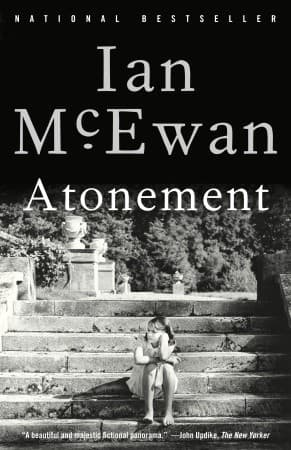
- Atonement
Ian McEwan
4.4 (70) average on GoodreadsExplores a childhood misunderstanding with tragic, long-lasting consequences and a quest for truth.
- The Goldfinch
Donna Tartt
3.9 (720k) average on GoodreadsLiterary FictionFeatures a young protagonist grappling with trauma, family secrets, and a sprawling narrative.
- Alias Grace
Margaret Atwood
4.0 (111k) average on GoodreadsLiterary FictionA historical mystery with a strong female protagonist, exploring truth, memory, and social injustice in Canada.
- The Lovely Bones
Alice Sebold
3.8 (2M) average on GoodreadsFantasyBoth novels explore the aftermath of a child's murder and its impact on a family. However, MacDonald's novel is more grounded in psychological realism and historical context, eschewing the supernatural elements found in Sebold's work. The Way the Crow Flies offers a more detailed and prolonged exploration of the protagonist's lifelong quest for justice and understanding, rooted in the specific social fabric of a 1960s military base, whereas The Lovely Bones focuses on the immediate aftermath and the victim's ethereal perspective.
- Case Histories
Kate Atkinson
3.8 (88k) average on GoodreadsThrillerBoth authors excel at crafting intricate mysteries with deep psychological insights into their characters and explore the long-term effects of past crimes. However, MacDonald's novel maintains a singular focus on one protagonist's lifelong pursuit of truth within a specific historical period, offering a more intense character study. Atkinson's Case Histories is part of a series featuring detective Jackson Brodie, often intertwining multiple cold cases and offering a broader, more episodic view of crime and its consequences across different individuals.
- The Old Man and the Sea
Ernest Hemingway
3.8 (831k) average on GoodreadsLiterary FictionA Cuban fisherman's long struggle with a giant marlin becomes a story of endurance and dignity, now retold for young adults with illustrations, phonetic guides, and writing prompts in Traditional Chinese.



Enjoyed the summary?
A summary gives you the shape of the book. The book itself has the detail, the examples and the voice.
Find The Way the Crow Flies on AmazonAs an Amazon Associate, BookBrief earns from qualifying purchases. How we're funded