
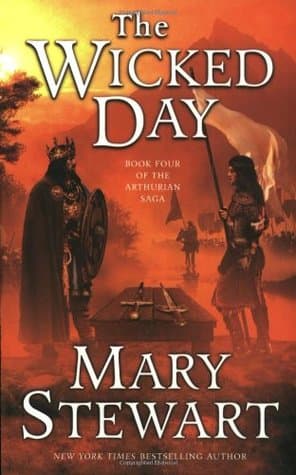
Synopsis
Covers the whole plot, including the ending.
- Difficulty
- Medium
- Pacing
- Moderate
- Mood
- Melancholy, Tragic, Reflective, Historical
- Read it if
- You enjoy a deeply psychological and humanistic retelling of Arthurian legend, focusing on character motivations and the tragic inevitability of fate.
- Skip it if
- You prefer a more traditional, heroic, or magic-heavy fantasy take on the Arthurian mythos.
The Wicked Day Plot Summary
Covers the whole plot, including the ending.
A Boy on the Coast
Mordred grows up in the Orkney Islands, believing he is the son of King Lot and Queen Morgause. He is a sensitive and smart boy, often feeling like an outsider due to his mother's coldness and his brothers' wildness. His life is connected to the old ways of the north, with a strong link to nature and a sense of coming doom. One day, a stranger tells Mordred he is not Lot's son, but the result of an incestuous union between King Arthur and Morgause, a secret kept to prevent a prophecy of Arthur's fall. This news shatters Mordred's world, filling him with wonder, fear, and anger towards his true father. He is then sent to Camelot, supposedly as a page, but with the unspoken tension of his true parentage hanging over him.
Arrival at Camelot
At Camelot, Mordred is struck by the grandeur and often shallow feel of Arthur's court. He meets King Arthur, who does not know their true relationship, and Mordred struggles to see the legendary king as a man. He watches the relationships between Arthur, Queen Guinevere, and the knights, especially Lancelot, whose close bond with Guinevere is an open secret. Mordred feels lonely and isolated, despite being surrounded by people. He finds some comfort with Nimue, the Lady of the Lake, who offers him guidance. He begins to learn court customs, his sharp mind making him a quick learner, though he remains an outsider.
A Son's Burden
As Mordred gets older, he becomes a squire and then a knight, known for his quiet skill and strategic thinking. He struggles with the secret of his birth, always torn between wanting Arthur's acceptance and a simmering anger about his existence. Merlin, before leaving, gives Mordred vague warnings about his fate and choices. Mordred also sees the growing problems in Camelot: the rumors about Lancelot and Guinevere get louder, the Round Table's unity begins to break, and Arthur himself seems weighed down by his kingship. Mordred's inner conflict grows as he deals with his identity and the dark prophecy, feeling both drawn to and pushed away by his powerful father.
The Seeds of Discord
Mordred, now a respected knight, observes the political maneuvering and personal dramas in Camelot. He sees the increasing tension among court factions, especially the growing dislike for Lancelot. He sees how Arthur's ideals are slowly worn down by his knights' betrayals and failures. Mordred's own relationships are complex; he forms a careful friendship with Gawain but remains wary of others. He is especially sensitive to Guinevere's suffering and Arthur's unspoken pain. While he does not actively try to harm Arthur, his presence and the knowledge of his true identity subtly add to the unease. He feels a growing sense of certainty, as if the prophecy is slowly guiding events to their tragic end, despite his own wish for peace.
The Unveiling of Truth
The truth of Mordred's birth is eventually revealed to King Arthur, though the exact details are vague. This news devastates Arthur, confirming his worst fears and the ancient prophecy that a son from his incestuous union would destroy him. The knowledge creates a huge barrier between father and son. Arthur, while acknowledging Mordred, cannot fully accept him, always seeing the shadow of his own sin and the coming doom. Mordred, in turn, feels the sting of Arthur's distant affection and the burden of his cursed heritage. This strained relationship causes deep pain for both, further isolating Mordred and deepening Arthur's sense of tragedy. The court, now aware of the scandal, sees Mordred with fear and suspicion, solidifying his role as an outcast.
The Affair Exposed
The long-standing affair between Sir Lancelot and Queen Guinevere, once an open secret, is finally exposed. Agravaine, Mordred's brother, driven by anger and a desire to break down Arthur's court, arranges this public revelation. The exposure throws Camelot into chaos. Lancelot must flee, and Guinevere is condemned to death for treason. Arthur is heartbroken, torn between his love for his wife, his loyalty to his best knight, and the laws and honor he established. Mordred watches this disaster with mixed feelings: a sense of tragedy for Arthur, a recognition of the inevitable results, and perhaps a subtle satisfaction that the moral decay he saw is now clear. The event marks a clear turning point, signaling the beginning of the end for the Round Table.
The Siege of Joyous Gard
After Lancelot rescues Guinevere and she retreats to a convent, Arthur is forced by honor and justice to pursue Lancelot. He besieges Joyous Gard, Lancelot's castle, drawing the kingdom into civil war. Mordred, caught in the growing conflict, is given various duties, often finding himself in a hard position. He sees the pointlessness and tragedy of Arthur fighting his most loyal friend. The siege is long and costly, draining Arthur's resources and further dividing his kingdom. The once-united Round Table is now broken, with knights forced to choose sides. Mordred observes the devastating impact of this internal fight, realizing that the very foundations of Arthur's rule are crumbling, sped up by the king's strict adherence to a code that no longer serves the greater good.
Arthur's Departure
Despite many pleas, Arthur feels honor-bound to follow Lancelot to France, intending to bring him to justice for abducting Guinevere and killing several knights. Before leaving, Arthur, out of desperation and a lack of other suitable people, reluctantly names Mordred as regent of Britain. This decision is met with worry by the remaining loyal knights, who distrust Mordred due to his parentage and his perceived aloofness. Mordred accepts the responsibility with a heavy heart, understanding the huge burden and the uncertainty of his position. He is left to govern a kingdom already weakened by internal conflict and now facing the added stress of its king's absence, a situation ripe for more instability and betrayal.
The Usurpation
While Arthur is in France, fighting Lancelot, rumors spread throughout Britain, fueled by opportunists and those who resent Arthur's rule. Mordred, initially struggling with the weight of regency, finds himself increasingly swayed by ambitious nobles and his own growing sense of entitlement and resentment. He becomes convinced, perhaps genuinely, that Arthur has abandoned Britain and that a new ruler is needed. With the support of various groups, Mordred makes the fateful decision to take the throne, declaring Arthur dead and himself the new king. This act is the result of his lifelong struggles with identity, his perceived rejection by Arthur, and the dark prophecy that has followed him since birth, setting the stage for the final confrontation.
Arthur's Return and the Final Battle
News of Mordred taking the throne reaches Arthur in France, forcing him to stop his campaign against Lancelot and return to Britain to reclaim his kingdom. He lands on Britain's shores, where loyalists are ready to fight for their king. Mordred, now established as a usurper, gathers his own forces, ready to defend his claim. The two armies meet on the plains of Camlann, a desolate and misty battlefield. The battle is fierce and bloody, a tragic clash between father and son, and the final, devastating end of the age of Camelot. Both sides suffer huge losses, and Britain's best knights are destroyed in the civil war, fulfilling the ancient prophecies of doom.
The Last Stand
Amid the carnage of the Battle of Camlann, Arthur sees Mordred on the battlefield. Driven by desperate fury and the weight of all the betrayals and tragedies that led to this moment, Arthur charges his son. Mordred, recognizing his father, stands to meet him. Their duel is the story's climax, a deeply personal and symbolic struggle between the old order and the new, between father and son, fate and choice. In a final, desperate lunge, Arthur fatally wounds Mordred, but not before Mordred deals a mortal blow to Arthur. Both fall, mortally wounded, bringing a tragic end to their intertwined lives and to the legendary reign of King Arthur.
The Passing of Arthur
After the duel, the few remaining loyal knights find King Arthur gravely wounded. Sir Bedivere, one of the last survivors, is told to return Excalibur to the Lady of the Lake. He struggles with this command, trying to hide the sword twice before finally obeying. Arthur is then carried away by mysterious women on a barge, bound for Avalon, the mythical island where he is said to rest and await his return. With Arthur's departure, the age of Camelot truly ends. The Round Table is broken, its ideals shattered, and Britain is left in ruin and despair. The story ends with a deep sense of loss and the lingering question of whether Arthur will ever return, leaving a melancholic and reflective mood.
Principal Figures
Mordred
Protagonist/Antagonist
Arthur's illegitimate son, destined to bring about his father's downfall.
Mordred is a complex and deeply conflicted character. Raised in the Orkneys believing himself the son of King Lot, he is later revealed to be the incestuous son of King Arthur and Morgause. He is intelligent, sensitive, and observant, but also carries a deep sense of isolation and resentment over his cursed birth and his father's perceived rejection. He yearns for acceptance but is constantly shadowed by prophecy and the expectations of others. He is not inherently evil, but is driven by a combination of ambition, a desire for legitimacy, and the insidious influence of a fate he struggles against.
Relationships: King Arthur (Father-son, strained, adversarial); Morgause (Mother-son, cold, manipulative); Gawain (Brother-brother, cautious friendship); Nimue (Lady of the Lake) (Confidante, mentor)
King Arthur
Protagonist/Tragic Hero
The noble king of Camelot, whose reign is destined to end in tragedy.
King Arthur is portrayed as a wise, just, and idealistic ruler, dedicated to establishing peace and order in Britain through the Round Table. He is deeply committed to his ideals of chivalry and justice, often to his own detriment. He carries the heavy burden of leadership and the guilt of his incestuous sin with Morgause, which produces Mordred. He is a man of great integrity but is also vulnerable to the failings of human nature and the inexorable march of fate. His love for Guinevere and his friendship with Lancelot are central to his character and ultimately contribute to his downfall.
Relationships: Mordred (Father-son, strained, adversarial); Queen Guinevere (Husband-wife, deep love, betrayed); Sir Lancelot (King-knight, profound friendship, betrayed); Merlin (Mentor, advisor)
Queen Guinevere
Supporting
Arthur's queen, whose affair with Lancelot contributes to Camelot's downfall.
Guinevere is depicted as a beautiful, intelligent, and strong-willed queen. She loves Arthur but finds herself drawn into a passionate, illicit affair with Lancelot. She is a figure of both grace and tragedy, deeply conflicted by her loyalty to Arthur and her love for Lancelot. Her actions, though not malicious, ultimately contribute significantly to the unraveling of the Round Table and Arthur's reign. She experiences profound guilt and sorrow, especially after the affair is exposed, and seeks penance in a convent.
Relationships: King Arthur (Wife-husband, deep love, betrayed); Sir Lancelot (Lover, passionate, illicit); Mordred (Queen-knight, distant, complex)
Sir Lancelot
Supporting
Arthur's greatest knight, whose affair with Guinevere shatters the Round Table.
Lancelot is presented as the epitome of chivalry and the finest knight of the Round Table, renowned for his courage, skill, and loyalty. However, he is tragically flawed by his passionate love for Queen Guinevere, which leads him to betray his king and his vows. His actions, though stemming from love, ultimately become a catalyst for the destruction of Camelot. He is a man of deep honor and regret, torn between his duty to Arthur and his devotion to Guinevere, leading to his eventual exile and penitence.
Relationships: King Arthur (Knight-king, profound friendship, betrayed); Queen Guinevere (Lover, passionate, illicit)
Morgause
Antagonist/Mentioned
Mordred's mother and Arthur's half-sister, a sorceress who manipulates events.
Morgause is King Lot's wife and Arthur's half-sister, a powerful and manipulative sorceress. She is the mother of Mordred through her incestuous union with Arthur, a liaison she orchestrated, perhaps unknowingly, through deception. She is cold, ambitious, and often cruel, using her children as pawns in her schemes against Arthur. Her influence over Mordred's early life instills in him a sense of being an outsider and a tool, contributing to his later resentment. Though she does not play a direct role in the later plot, her actions set in motion the tragic events of the story.
Relationships: Mordred (Mother-son, manipulative, distant); King Arthur (Half-sister-brother, adversarial, incestuous past); King Lot (Wife-husband, political marriage)
Nimue (Lady of the Lake)
Supporting
A wise enchantress who offers guidance and protects the ancient ways.
Nimue, one of the Ladies of the Lake, is a powerful and wise enchantress connected to the ancient magic of Britain. She serves as a mentor and confidante to Mordred, understanding his struggles and offering him cryptic advice. She represents the fading pagan world and its wisdom, often acting as a bridge between the mystical and the mortal realms. She is a benevolent figure, though her power is limited by fate and the choices of men. She ultimately receives Excalibur at the end of Arthur's reign.
Relationships: Mordred (Mentor, confidante); King Arthur (Mystical ally, guardian of Excalibur)
Sir Gawain
Supporting
Mordred's half-brother, a loyal knight of the Round Table.
Sir Gawain is one of the sons of King Lot and Morgause, and thus Mordred's half-brother. He is a brave and loyal knight, known for his strength and his adherence to the chivalric code, though he can also be impetuous and prone to seeking revenge. He initially holds some affection for Mordred, but this relationship becomes strained as the court fractures. His loyalty to Arthur is unwavering, and he plays a significant role in the conflict against Lancelot and later against Mordred, driven by a strong sense of honor and family loyalty.
Relationships: Mordred (Half-brother, initially friendly, later adversarial); King Arthur (Loyal knight, nephew)
Merlin
Mentioned
The powerful sorcerer and Arthur's mentor, whose warnings go unheeded.
Merlin, though largely absent for the main narrative, casts a long shadow over the events. He is Arthur's former mentor and a powerful prophet and sorcerer. His early warnings about the incestuous birth of Mordred and the prophecy of Arthur's downfall are central to the story's tragic trajectory. His wisdom and foresight are unmatched, but his power to alter fate is limited. His influence is felt through his past actions and the weight of his prophecies, which Mordred and Arthur struggle against, ultimately in vain.
Relationships: King Arthur (Mentor, advisor); Mordred (Prophet, indirect influence)
Themes & Insights
Fate vs. Free Will
This theme explores how much characters, especially Mordred and Arthur, can change or avoid a predetermined fate. Mordred is born under a dark prophecy, and much of his life involves dealing with this knowledge. Despite wanting a different path, circumstances and his own choices often lead him to fulfill the prophecy. Arthur also knows about the doom over his reign, yet his commitment to honor and law, and his personal flaws, seem to inevitably lead to his downfall. The story suggests that while characters have choices, the weight of old prophecies and past actions can make certain outcomes feel unavoidable, as seen in the final, tragic duel at Camlann.
“For all a man’s striving, the tide of fate could not be turned.”
The Corrosive Nature of Secrecy and Guilt
The story shows how hidden truths and unacknowledged guilt grow and eventually cause destruction. Arthur's incestuous sin with Morgause, and the hidden truth of Mordred's parentage, are the core secrets that break his kingdom. Mordred's entire life is shaped by this hidden truth, leading to his isolation and anger. Similarly, the long-secret affair between Lancelot and Guinevere, though known by many, becomes a public scandal that shatters the Round Table. The burden of these secrets and the guilt they create directly lead to the mistrust, division, and collapse of Camelot, showing that what is hidden often has the most destructive power, as seen when the affair's exposure leads to civil war.
“Secrets are like poison, Mordred. They fester and corrupt everything they touch.”
The Decline of Idealism and Chivalry
The novel tracks the decline of the noble ideals King Arthur tried to establish with the Round Table. What starts as a vision of justice, peace, and unity slowly breaks down due to internal conflict, human flaws, and the clash between old traditions and new moral rules. The knights, once symbols of virtue, give in to pride, jealousy, and forbidden desires, shown by Lancelot's affair and Agravaine's vengeful plans. Arthur himself, by strictly following a code of honor that demands he pursue Lancelot, unintentionally speeds up his own destruction. The Battle of Camlann is not just a physical fight but a symbolic end to an age of idealism, replaced by chaos and despair, showing how even the best intentions can be ruined by reality.
“The glory of Camelot was a fragile thing, built on dreams and held by the thread of men’s frail loyalties.”
The Burden of Identity and Belonging
Mordred's journey is shaped by his struggle with identity and his search for belonging. Born of a forbidden union and raised by false parents, he is an outsider from the start. His true identity as Arthur's son brings him power but also isolates him further, as he is viewed with suspicion and fear due to the prophecy. He longs for Arthur's fatherly love but receives only distant acknowledgment, fueling his anger and contributing to his tragic choices. This theme explores the psychological impact of being defined by one's birth and fate rather than one's own character, ultimately leading Mordred to take on a role he might not have otherwise chosen, as he never truly finds a place where he feels fully accepted and understood.
“He was the son of a king and a queen, yet he was also the child of a sin, a prophecy, and a curse. Where, then, was his true place?”
Plot Devices & Literary Techniques
Prophecy
Preordained events that guide the characters' destinies.
The ancient prophecy of Arthur's downfall by a son born of incest is the overarching plot device. It is revealed early in the story and constantly looms over Arthur and Mordred. It creates dramatic irony, as characters often act in ways that inadvertently fulfill the prophecy, even when trying to avoid it. The prophecy shapes Mordred's identity and drives many of Arthur's decisions, making the tragic ending feel both inevitable and deeply personal. It also serves to heighten the sense of doom and the struggle between fate and free will.
Incestuous Birth
The forbidden union that produces the catalyst for the kingdom's end.
Mordred's birth from the incestuous union of King Arthur and his half-sister Morgause is the foundational event of the plot. It is not merely a scandalous detail but the direct cause of the prophecy of Arthur's destruction. This plot device creates a deep sense of guilt for Arthur and a profound burden of identity for Mordred. It establishes the initial conflict and moral stain that permeates the entire narrative, contributing to Mordred's resentment and the court's eventual distrust of him, directly leading to the final confrontation.
The Love Triangle (Arthur-Guinevere-Lancelot)
The affair between Arthur's queen and his greatest knight.
The illicit love affair between Queen Guinevere and Sir Lancelot serves as a major catalyst for the internal collapse of the Round Table. It introduces a deep moral failing within Arthur's most trusted circle, undermining the very ideals of chivalry and loyalty he sought to uphold. Its eventual public exposure leads directly to civil war, dividing the kingdom and weakening Arthur's authority, paving the way for Mordred's usurpation. This device provides the emotional core of betrayal that shatters the unity of Camelot.
The Absent King/Regency
Arthur's departure from Britain, leaving Mordred in power.
Arthur's decision to leave Britain to pursue Lancelot in France, entrusting Mordred with the regency, is a critical plot device. It removes the central authority figure, creating a power vacuum and an opportunity for Mordred to seize the throne. This absence allows the simmering resentments and ambitions within the court to boil over, directly leading to Mordred's usurpation. It highlights Arthur's tragic flaw of adhering to a code of honor even when it endangers his kingdom, setting the stage for his final, fatal return.
The Wicked Day Quotes
“The gods have no favourites. They merely use us.”
“There is no joy in being a king, only a heavy responsibility.”
“Love is a strange thing. It can make a man strong, or it can destroy him.”
“The past is a chain, and we are all bound by it.”
“A man's worth is not in his birth, but in his deeds.”
“Even the strongest walls will crumble in time.”
“Fear is a cold companion, and it breeds betrayal.”
“The truth is a sharp sword, and it cuts both ways.”
“Hope is a fragile thing, easily broken, but essential to life.”
“Some battles are fought not with swords, but with words.”
“The greatest victory is to know when to yield.”
“Darkness breeds in the shadows of ambition.”
“The threads of destiny are woven by many hands, not just one.”
“To forget the past is to be condemned to repeat it.”
Quiz
10 questions on the plot and the characters. Each answer comes with a short explanation.
Question 1
What is Mordred's true parentage, a secret kept for much of his early life?
- He is the son of Arthur and Guinevere.
- He is the son of Arthur and his half-sister Morgause.
- He is the son of Lot of Orkney and Morgause.
- He is an adopted son, found by Morgause.
Show answer
B. He is the son of Arthur and his half-sister Morgause. Mordred is the product of an unwitting incestuous union between King Arthur and his half-sister Morgause, a secret that fuels much of the novel's tension.
Question 2
Which character is primarily responsible for raising Mordred in secrecy during his early years?
- Merlin
- Morgause
- Igraine
- Nimue
Show answer
B. Morgause Morgause, Mordred's mother, raises him in secrecy, keeping his true parentage hidden from him and the world for a significant period.
Question 3
What is the name of the place where Mordred first encounters Arthur and begins his integration into court life?
- Camelot
- Tintagel
- Dinas Bran
- Caerleon
Show answer
C. Dinas Bran Mordred's initial, pivotal meeting with King Arthur occurs at Dinas Bran, where he is presented to the court.
Question 4
What is Mordred's initial attitude or motivation when he first arrives at Arthur's court?
- He seeks to immediately overthrow Arthur.
- He genuinely wants to serve Arthur and find his place.
- He is indifferent and only seeks personal gain.
- He plans to expose Arthur's past sins.
Show answer
B. He genuinely wants to serve Arthur and find his place. Initially, Mordred is portrayed as genuinely desiring to be a good knight and serve Arthur, wanting to find acceptance and a role within the court, before darker influences take hold.
Question 5
Which character serves as a mentor and protector for Mordred early in his time at court, before the true nature of his parentage is revealed?
- Lancelot
- Gawain
- Pellinore
- Kay
Show answer
B. Gawain Gawain, Mordred's half-brother, initially takes Mordred under his wing and acts as a protector and guide at court, unaware of their true shared parentage.
Question 6
What is the primary theme explored through Mordred's character arc regarding fate and free will?
- That fate is immutable and cannot be changed.
- That individuals can always choose their own path regardless of prophecy.
- That attempts to defy or outwit fate often lead directly to its fulfillment.
- That only magic can alter the course of destiny.
Show answer
C. That attempts to defy or outwit fate often lead directly to its fulfillment. A central theme is the tragic irony that Arthur's attempts to prevent the prophecy of his downfall by Mordred ultimately set in motion the very events that lead to it, highlighting the idea that defying fate can inadvertently fulfill it.
Question 7
What is the immediate consequence for Arthur after Mordred's true parentage is revealed to the court?
- Arthur immediately abdicates his throne.
- He faces significant political instability and a loss of moral authority.
- He banishes Mordred from the kingdom.
- Guinevere leaves him for Lancelot.
Show answer
B. He faces significant political instability and a loss of moral authority. The revelation of Arthur's incestuous sin deeply shames him and severely damages his moral authority and the stability of his kingdom, leading to widespread doubt and unrest.
Question 8
What is the significance of the 'Wicked Day' in the title, as it relates to the novel's climax?
- It refers to the day Mordred was born.
- It is the day of the final, catastrophic battle between Arthur and Mordred.
- It signifies the day Lancelot and Guinevere's affair is discovered.
- It is the day Merlin disappears from the narrative.
Show answer
B. It is the day of the final, catastrophic battle between Arthur and Mordred. The 'Wicked Day' refers to the fateful and final battle at Camlann, where King Arthur and Mordred meet their tragic end, marking the destruction of Arthur's kingdom.
Question 9
How does Mary Stewart's portrayal of Mordred differ from some traditional Arthurian legends?
- She depicts him as a purely evil, irredeemable villain from birth.
- She emphasizes his initial desire to be good and his gradual corruption by circumstance and revelation.
- She makes him a powerful sorcerer, matching Merlin's abilities.
- She portrays him as a loyal knight who never betrays Arthur.
Show answer
B. She emphasizes his initial desire to be good and his gradual corruption by circumstance and revelation. Stewart's 'The Wicked Day' notably humanizes Mordred, showing his early years with genuine aspirations for good and his subsequent descent into villainy driven by the devastating revelation of his parentage and Arthur's past actions, rather than an inherent evil.
Question 10
What is Arthur's ultimate realization about his own role in the unfolding tragedy involving Mordred?
- He realizes he should have killed Mordred at birth.
- He acknowledges that his own past sin and attempts to avert prophecy contributed to the downfall.
- He blames only Mordred's inherent evil nature.
- He believes magic was solely responsible for his fate.
Show answer
B. He acknowledges that his own past sin and attempts to avert prophecy contributed to the downfall. Arthur comes to a painful realization that his own unwitting incestuous act and the subsequent attempts to conceal or avert the prophecy of his downfall directly led to the tragic culmination, accepting his share of responsibility for the 'Wicked Day'.
The Wicked Day FAQ
What is the central conflict Mordred faces upon his arrival at Arthur's court?
Mordred's primary conflict is the internal struggle between his desire for recognition and a place within Arthur's court, and the growing dread of the prophecy foretelling his role in Arthur's downfall. He seeks to prove his worth as a knight and a son, but is constantly haunted by the truth of his parentage and the 'wicked day' that looms.
How does Mordred initially perceive King Arthur, and does this perception change?
Initially, Mordred views King Arthur with a mix of awe, admiration, and a longing for paternal acceptance, having been raised in isolation. As he spends more time at court, this perception becomes complicated by Arthur's perceived favoritism towards Lancelot, his distant demeanor, and the weight of the prophecy, leading to a more conflicted and eventually resentful view.
What role does Morgause play in Mordred's early life and his understanding of his destiny?
Morgause, Mordred's mother, raises him in secrecy, instilling in him a sense of his royal heritage but also the burden of the prophecy regarding Arthur's end. She manipulates his understanding of events, subtly guiding him towards his fated role while perhaps not fully revealing the depth of her own bitterness or the incestuous nature of his conception.
How does Lancelot's presence at court affect Mordred's integration and his relationship with Arthur?
Lancelot's esteemed position as Arthur's favorite knight and the Queen's champion creates an immediate barrier for Mordred, fueling his feelings of inadequacy and jealousy. Arthur's overt affection for Lancelot, contrasted with his more reserved approach to Mordred, exacerbates Mordred's sense of being an outsider and a less favored son, contributing to his resentment.
What is the 'wicked day' referred to in the title, and how does Mordred learn about it?
The 'wicked day' refers to the fated battle in which Mordred is prophesied to kill King Arthur, thus bringing about the end of Arthur's reign. Mordred learns of this prophecy, albeit in fragments and often through Morgause's veiled hints, throughout his upbringing and more explicitly as he approaches adulthood and joins the court.
Are there any subtle clues about Mordred's parentage before the full revelation?
Yes, there are subtle clues, particularly in the way certain older characters react to Mordred's resemblance to Arthur and his uncanny presence, often with a mix of unease or veiled recognition. His mother Morgause's secretive nature and the way she guards his past also hint at a significant, hidden truth.
How does Merlin's prophecy, even if not directly delivered to Mordred, influence the narrative?
Merlin's prophecy, foretelling Arthur's doom at the hands of one born of incest, hangs over the entire narrative like a shadow, shaping the actions and anxieties of many characters, including Arthur himself. Even without direct knowledge, Mordred's path seems to align with the inevitable, making the prophecy a driving, unseen force.
Is there any indication that Arthur suspects Mordred's true identity or destiny early on?
Arthur shows a degree of paternal affection and a desire to integrate Mordred, but there are moments of unease and a certain guardedness in his interactions, suggesting a subconscious, or even conscious, awareness of a deeper connection or a looming threat, perhaps fueled by earlier prophecies or his own memories of the 'wicked day' when Mordred was conceived.
What is the significance of the specific location of Mordred's upbringing?
Mordred's isolated upbringing on Morgause's remote lands serves to both protect him from early discovery and to shape his worldview. It fosters a sense of otherness and a deep attachment to his mother, while also depriving him of the social graces and courtly connections that might have allowed him a smoother integration into Arthur's world, making him an outsider by design.
How does Mordred's experience of social ostracization contribute to his psychological development?
Mordred's upbringing in secrecy and his subsequent arrival at court, where he feels like an outsider, fosters a profound sense of isolation and resentment. This ostracization leads him to internalize feelings of unworthiness and suspicion, making him prone to misinterpret others' intentions and ultimately pushing him towards a path of antagonism.
To what extent is Mordred a victim of fate versus a perpetrator of his own choices?
Mordred's tragic journey is a complex interplay of fate and free will. While he is born into a prophecy that dictates his role, his choices—driven by jealousy, a desire for recognition, and a growing bitterness—are crucial in actively fulfilling that prophecy. He struggles against his destiny but ultimately succumbs to the psychological pressures and his own darker impulses.
How does the revelation of his incestuous parentage impact Mordred's self-perception and actions?
The revelation of his incestuous parentage shatters Mordred's already fragile self-perception, filling him with shame, horror, and a profound sense of being 'unclean' and cursed. This knowledge fuels his resentment towards Arthur and Morgause, intensifying his internal conflict and hardening his resolve, pushing him closer to embracing his destructive role.
What psychological factors contribute to Mordred's eventual betrayal of Arthur?
Mordred's betrayal stems from a confluence of factors: deep-seated resentment over his hidden past, jealousy of Lancelot, a craving for Arthur's love and recognition that he never fully receives, and the crushing weight of the prophecy. His feelings of being unloved and an outcast, combined with a desire to assert his own power, ultimately drive him to his fated actions.
Is Mordred presented as purely evil, or is there a more nuanced portrayal of his character?
Mordred is presented with significant nuance. While he ultimately performs acts that lead to the downfall of Arthur, the narrative explores his internal struggles, his longing for acceptance, and the psychological torment caused by his parentage and destiny. He is a tragic figure, not purely evil, but deeply flawed and driven by circumstances beyond his control.
How does the book's title, 'The Wicked Day,' frame the reader's perception of Mordred's actions?
The title 'The Wicked Day' immediately establishes a tone of impending doom and moral ambiguity, suggesting that the day of Arthur's downfall is not merely a political event but one imbued with profound moral and tragic significance. It frames Mordred's actions within a larger, unavoidable narrative of fate and the consequences of past sins, inviting empathy for his burdened role.
Does the novel suggest that Arthur bears any responsibility for his own downfall?
The novel subtly suggests that Arthur bears some responsibility for his downfall, particularly through his initial youthful indiscretion that sired Mordred, and perhaps his later emotional distance or perceived favoritism. While he strives for good, his past actions and certain aspects of his leadership contribute to the circumstances that allow the prophecy to unfold.
How does Mary Stewart's portrayal of Mordred differ from traditional Arthurian legends?
Mary Stewart's portrayal of Mordred significantly humanizes him compared to traditional legends, which often depict him as purely villainous. Stewart delves into Mordred's psychological torment, his internal conflict, and his longing for a place within the court, presenting him as a more complex and tragic figure caught between fate and his own desires, rather than a simple antagonist.
What is the ultimate message or theme conveyed by the tragic ending of the book?
The tragic ending conveys themes of the inescapability of fate, the devastating consequences of past sins, and the inherent fragility of even the greatest kingdoms when confronted by internal strife and personal failings. It suggests that even noble intentions cannot fully overcome the shadows of history and human nature, leading to an inevitable, sorrowful conclusion.
About the author
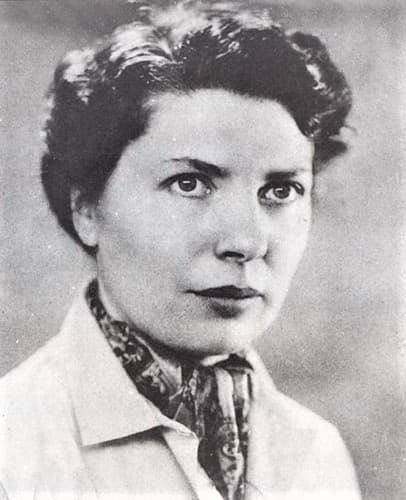
Mary Stewart was a British author known for her works of historical fiction and romantic suspense. Her notable books include "The Crystal Cave," which explores the legend of King Arthur, "The Hollow Hills," a continuation of that story, "Nine Coaches Waiting," a romantic thriller set in France, and "The Wicked Day," which delves into the aftermath of Arthur's reign.
Similar books
- The Mists of Avalon
Marion Zimmer Bradley
4.1 (192k) average on GoodreadsFantasyExplores the Arthurian legend from a different perspective, focusing on character psychology and the human elements behind the myth.
- Harry Potter and the Sorcerer's Stone
J.K. Rowling
4.5 (7M) average on GoodreadsFantasyRescued from a miserable life under the stairs, an orphaned boy discovers he's a wizard destined for a magical school, where he uncovers a dangerous secret tied to the dark wizard who murdered his parents.
- The Hunger Games
Suzanne Collins
4.3 (6.4M) average on GoodreadsFantasyIn a future where children fight to the death on live television, Katniss Everdeen volunteers for the arena, turning a death sentence into a fight for survival and a spark of rebellion.
- 1984
George Orwell
4.2 (3.1M) average on GoodreadsPoliticsIn a future where surveillance and thought control are absolute, a man's search for truth clashes with the Party, showing that hope can be a form of rebellion.
- Divergent
Veronica Roth
4.2 (2.9M) average on GoodreadsFantasyIn a society divided by virtues, a sixteen-year-old's difference from the norm starts a rebellion that threatens her world.
- The Hobbit, or There and Back Again
J.R.R. Tolkien
4.3 (2.9M) average on GoodreadsFantasyA comfort-loving hobbit named Bilbo Baggins is whisked away by a mischievous wizard and a band of dwarves on an unexpected journey to reclaim stolen treasure from a fearsome dragon, discovering courage and a magical ring along the way.






Enjoyed the summary?
A summary gives you the shape of the book. The book itself has the detail, the examples and the voice.
Find The Wicked Day on AmazonAs an Amazon Associate, BookBrief earns from qualifying purchases. How we're funded