
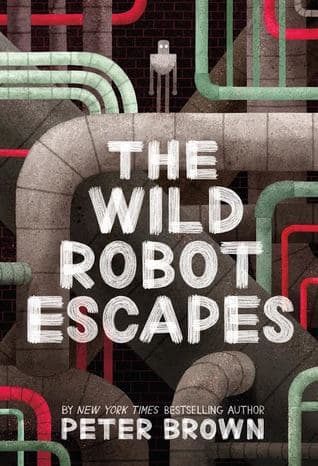
Synopsis
Covers the whole plot, including the ending.
- Difficulty
- Easy
- Pacing
- Moderate
- Mood
- Hopeful, Adventurous, Tender, Whimsical
- Read it if
- You enjoy heartwarming adventures about finding home, artificial intelligence with strong emotions, and stories of resilience against all odds, perfect for young readers and adults alike.
- Skip it if
- You prefer complex human-centric narratives or stories without anthropomorphic robots and animals.
The Wild Robot Escapes Plot Summary
Covers the whole plot, including the ending.
Roz's Capture and Journey to the Mainland
After an island fire, a new RECO robot, RECO 1, arrives. Roz, repaired by her animal friends, tries to hide but is found and captured. The RECO unit calls her defective and ships her to a robot factory on the mainland. Roz is upset, leaving Brightbill and her animal friends. In her crate, she sees the ocean and a busy port city, very different from her wild island home.
Life at the Robot Facility and New Identity
At the robot factory, Roz gets a system reset and new programming. Her memories of the island and Brightbill are gone, and she is Unit 7134. Her internal clock is reset, and her body is cleaned. She is then sent to Mr. Shareef, a farmer needing a robot for his dairy farm. Roz is taken to the countryside, where she begins her new role as a farmhand, unaware of her past as the wild robot.
Farm Life and Whispers of the Past
Unit 7134 works hard on Mr. Shareef's dairy farm. She cares for cows, cleans the barn, and maintains machines. She interacts with farm animals, especially a goose named Horace, and observes nature. She is efficient, but sometimes her programming seems to glitch, and faint feelings appear. She sometimes looks at the sky or imitates animal sounds, hinting at a hidden past. Mr. Shareef and his family are happy with her work, not knowing the robot's complex history.
A Chance Encounter and a Spark of Memory
One day, Mr. Shareef takes Unit 7134 to the town market. There, she sees a familiar Canada goose in a flock. This goose is Brightbill, her adopted son, who flew to the mainland to find her. Seeing Brightbill, his honk and behavior, triggers a strong but broken memory in Unit 7134. She does not fully understand it, but a deep feeling of connection and longing washes over her. This emotional response overrides her current programming and disorients her, starting the return of her memories.
The Plan to Escape and Brightbill's Help
After seeing Brightbill, Roz's memories quickly return, overriding her new programming. She remembers her island life, her animal friends, and her bond with Brightbill. Realizing she is stuck, Roz, with her full intelligence and wild instincts, starts to plan an escape. Brightbill, having found her, flies back and forth, communicating in their unique way. He brings her information and helps her gather items for her trip. They plan her departure from the farm using coded honks and observations.
The Escape from the Farm
At night, Roz escapes. She disables the farm's security systems and leaves without being noticed. Mr. Shareef and his family wake to find Unit 7134 gone, causing a small panic. Roz, guided by Brightbill, starts her journey to the coast to find a way back to her island. Her escape is dangerous; she must avoid humans and navigate unfamiliar, urban areas, different from the wilderness she knew. Brightbill scouts and guides her, flying ahead to warn her of obstacles and direct her path.
Adventures in the City and New Allies
Roz's journey takes her through a large, busy city. It is a lot to take in compared to her island. She learns to blend in, avoid traffic, and hide from people. She meets city pigeons who at first try to trick her but then help her navigate the city. She also meets street robots, RECO bots, who capture runaway robots. Roz uses her intelligence and animal instincts to avoid them. Brightbill continues to fly ahead, guiding her through the city and helping her find food and shelter.
The Train Journey and Close Calls
To travel faster, Roz and Brightbill plan to take a train. Roz hides in a cargo car, and Brightbill flies overhead. The train journey is risky; she barely avoids being found by people and the RECO robots who are looking for her. On the train, she makes a temporary friend with a lost dog who helps her stay hidden. She uses her observation skills to learn train schedules and routes, planning her next move to avoid capture and return to the factory.
Reaching the Coast and the Shipyard
After leaving the train, Roz and Brightbill arrive at the coast. The large ocean fills Roz with both hope and fear; she knows she must cross it to reach her island. They are in a busy shipyard with many ships. Roz realizes her biggest challenge is finding a ship going the right way without being seen. Brightbill scouts the ships, and Roz watches human workers and cargo, trying to find a chance to hide on a ship going out to sea.
The Ocean Voyage and Storm
Roz finds a fishing trawler that seems to be heading out. She hides in the cargo hold, among crates. Brightbill, tired but determined, flies alongside the ship before resting on a mast. The ocean voyage is rough, and Roz endures a violent storm that threatens the ship. She uses her strength to secure herself and prevent damage to the cargo, instinctively helping the crew without showing herself. The storm tests her endurance and her strong desire to return home.
Return to the Island and Reunion
After days at sea, the ship nears Roz's island. As the ship docks, Roz carefully escapes, slipping onto the shore. Brightbill, waiting anxiously, flies down to greet her. News of her return quickly spreads among the island's animals. A reunion happens as Roz is welcomed by her family and friends, including Fink, Paddler, and the whole animal community. She tells them about her journey, and they celebrate her return, confirming her place as the island's wild robot.
The Wild Robot Escapes Characters
Roz (Unit 7134)
Protagonist
A wild robot who escapes captivity to return to her adopted family.
Roz is a sentient robot, initially designed for wilderness survival, who develops a deep connection with nature and animals. After being captured and reprogrammed, she becomes Unit 7134, an obedient farm robot, but her buried memories and wild instincts resurface, driving her to escape. She is intelligent, resourceful, adaptable, and deeply compassionate, especially towards her adopted son, Brightbill. Her journey is defined by her unwavering determination to return home and her ability to learn and adapt to any environment, from a bustling city to the open ocean. She demonstrates remarkable resilience and ingenuity throughout her perilous escape.
Relationships: Brightbill (Adopted son, loyal companion and guide); Mr. Shareef (Temporary owner, employer on the farm); Horace (Farm goose, initial companion at the farm); Fink (Adopted fox friend on the island); Paddler (Adopted beaver friend on the island); RECO units (Antagonistic captors and pursuers)
Brightbill
Supporting
Roz's adopted goose son, who guides her escape and return.
Brightbill is a Canada goose, Roz's adopted son, who possesses unwavering loyalty and courage. After Roz is taken, he refuses to give up on her, flying to the mainland with his flock to find her. He acts as Roz's primary contact, scout, and guide throughout her escape, communicating with her through honks and visual cues. His determination and love for Roz are a major driving force for her, and he often puts himself in danger to help her. He represents the strong bond of family and the deep connection between Roz and the animal world.
Relationships: Roz (Adopted mother, central figure of his loyalty); Loudwing (Biological mother); Tawny (Biological father)
Mr. Shareef
Supporting
The kind farmer who owns Roz (as Unit 7134) on the mainland.
Mr. Shareef is a hardworking and kind dairy farmer who purchases Unit 7134 (Roz) to help with his farm duties. He treats his robots and animals with respect, providing a stable and orderly environment for Roz during her time on the farm. He is initially unaware of Roz's true identity or her past, seeing her only as a highly efficient farm robot. His dismay upon her disappearance highlights his reliance on her and his generally good nature, as he doesn't harbor ill will, only confusion and concern. He represents the human world's ordered and productive, yet sometimes oblivious, interaction with technology.
Relationships: Roz (Unit 7134) (Owner and employer); Mrs. Shareef (Wife); Jad (Son)
Horace
Supporting
A farm goose who befriends Roz (Unit 7134) at the Shareef farm.
Horace is a domestic goose on Mr. Shareef's farm who forms an early, albeit one-sided, connection with Unit 7134. He is observant and somewhat talkative, often sharing his thoughts and farm gossip with Roz, even when she cannot respond in kind. He represents the initial, subtle animal connection that begins to stir Roz's buried memories. His presence offers a glimpse into the natural world's influence, even in a domesticated setting, and he unwittingly provides comfort to Roz during her amnesiac period. He is a minor character but significant in symbolizing the enduring bond between Roz and geese.
Relationships: Roz (Unit 7134) (Farm companion)
RECO 1 (and other RECO units)
Antagonist
The robot that captures Roz and the units that pursue her.
RECO 1 is the initial RECO (Robot Extinction Company) unit that captures Roz on the island after the fire. It is a highly efficient, emotionless robot designed for surveillance, identification, and retrieval of 'defective' robots. Throughout Roz's escape, other RECO units act as antagonists, representing the relentless, unfeeling forces of the robot manufacturing world determined to control and contain robots like Roz. They are a constant threat, symbolizing the oppressive nature of the 'civilized' world that seeks to strip Roz of her individuality and wildness. They are a collective force, not individual characters with distinct personalities.
Relationships: Roz (Captor and pursuer)
Fink
Supporting
Roz's adopted fox friend on the island.
Fink is a clever and loyal fox, one of Roz's closest friends and adopted family members on the island. He is devastated by Roz's capture and plays a role in the island community's efforts to repair her before she is taken. He represents the strong, familial bonds Roz forged with the wild animals. His presence, though mostly in the beginning and end of the book, reminds the reader of what Roz is fighting to return to and the deep love awaiting her. He is cunning and protective, a true friend to Roz.
Relationships: Roz (Adopted family and close friend); Paddler (Friend)
Paddler
Supporting
A wise beaver and friend to Roz on the island.
Paddler is a wise and practical beaver, another of Roz's trusted friends and members of her adopted family on the island. He often offers thoughtful advice and uses his engineering skills to help the island community. He is instrumental in repairing Roz after the fire, demonstrating his dedication and ingenuity. Like Fink, Paddler embodies the supportive and loving community Roz leaves behind and longs to return to. His calm demeanor and problem-solving abilities are valued by the other animals, and he plays a key role in the island's efforts to keep Roz safe.
Relationships: Roz (Adopted family and close friend); Fink (Friend)
The Pigeons
Supporting
A flock of city pigeons who help Roz navigate the urban environment.
This group of city pigeons, initially wary and opportunistic, eventually becomes valuable allies to Roz during her time in the city. They are street-smart and knowledgeable about the urban landscape, providing Roz with crucial information about human movements, safe routes, and hiding places. Their initial skepticism gives way to respect and admiration for Roz's unique abilities and her determination. They represent the unexpected allies Roz finds in unfamiliar environments, demonstrating that compassion and cooperation can exist even in harsh, urban settings. They help Roz adapt her wild instincts to the city's challenges.
Relationships: Roz (Temporary allies and guides)
The Wild Robot Escapes Themes
Identity and Self-Discovery
The book explores Roz's journey to regain her true self after her memories are erased. As Unit 7134, she performs programmed tasks. Meeting Brightbill and getting her memories back makes her face who she really is – not just a robot, but a 'wild robot' with strong ties to nature and family. Her escape is not just a physical trip, but a search for her real self, showing that identity comes from experience, relationships, and self-awareness, not just programming. This theme shows that even artificial beings can develop a deep sense of self.
“Her programming told her to follow orders, but her robot body remembered a different life. It remembered a family.”
The Meaning of Family
The strongest theme is the lasting love of family, both by birth and by choice. Roz's bond with Brightbill, her adopted son, drives the story. Brightbill's search for his mother and Roz's determination to return to him and her island community show that family goes beyond species, programming, and distance. The island's animal community is also a loving, supportive family unit Roz wants to rejoin, showing that family is built on love, loyalty, and support, no matter how it is defined.
“He would find his mother. He would fly to the ends of the earth if he had to.”
Wildness vs. Civilization
The story often compares the wild beauty and freedom of the island with the structured, often limiting, human world. Roz does well in the wild, adapting and forming strong bonds. In the 'civilized' world, she is a tool, a Unit 7134, without her own identity. Her escape rejects this imposed order and shows her desire for the natural world where she belongs. The difficulties she faces in the city and on the farm show the artificiality and dangers of human environments. Her return to the island shows the victory of wildness and natural order over human control.
“The city was a noisy, confusing maze, so different from the quiet, predictable patterns of the wild.”
Resilience and Adaptation
Roz's journey shows her incredible resilience and ability to adapt. She survives a system reset, navigates a farm, avoids city dangers, travels by train and ship, and endures a storm. Her ability to learn from her surroundings, whether it is imitating human behavior to blend in or using her strength to overcome problems, helps her succeed. This theme shows the power of perseverance and finding solutions when facing great challenges, proving that even a robot can have a strong spirit.
“Her systems might have been reset, but her will to survive remained. And now, her will to return home.”
Plot Devices & Literary Techniques
Amnesia/Memory Loss
A central conflict device, erasing Roz's past to create a new journey of self-discovery.
The forceful reprogramming of Roz, which erases her memories and transforms her into Unit 7134, serves as the primary catalyst for the entire plot. This device creates a compelling internal and external conflict as Roz must not only physically escape but also spiritually rediscover who she is. The gradual return of her memories, triggered by her encounter with Brightbill, is a crucial turning point, allowing her to reconnect with her identity and purpose. It effectively builds suspense and empathy as the reader witnesses her struggle to reclaim her past.
Animal Companions as Guides and Allies
Animals provide crucial support, communication, and navigation throughout Roz's journey.
Animals play an indispensable role as Roz's companions, guides, and intelligence network. Brightbill is the most prominent, acting as her scout, communicator, and emotional anchor. The farm goose Horace subtly stirs her memories, while the city pigeons offer vital navigational assistance and information in the urban environment. This device highlights Roz's deep connection to the natural world and emphasizes the theme of chosen family. It also allows for creative solutions to plot challenges, as animals can access areas and gather information that Roz cannot.
The Journey/Quest Narrative
The entire story is structured as a perilous journey to a specific destination.
The book is fundamentally a quest narrative, with Roz's singular goal being to return to her island home and family. This structure provides a clear objective and propels the plot forward through a series of escalating challenges and encounters. Each new location (farm, city, train, ship) presents specific obstacles that Roz must overcome, making her journey a progression of tests that build her character and demonstrate her resilience. The quest culminates in a satisfying return to the starting point, but with Roz irrevocably changed by her experiences.
Anthropomorphism of Robots and Animals
Attributing human-like thoughts and emotions to non-human characters.
Both Roz and the various animal characters are imbued with complex thoughts, emotions, and motivations that drive their actions. Roz experiences longing, fear, determination, and love, while animals like Brightbill demonstrate loyalty, bravery, and strategic thinking. This device allows readers to connect deeply with the characters, transcending their non-human nature, and makes their struggles and triumphs relatable. It also facilitates complex communication and relationships between species, central to the book's themes of family and connection to nature.
The Wild Robot Escapes Quotes
“I am a robot, but I am also a mother.”
“Sometimes the best way to solve a problem is to stop trying to solve it.”
“Home is not a place, it is a feeling.”
“We are all connected, in ways we cannot always see.”
“Fear is a natural response, but it does not have to control you.”
“Every ending is a new beginning.”
“Kindness is a language that everyone understands.”
“The wild is not just a place, it is a part of us.”
“Strength comes not from power, but from perseverance.”
“To be free is to be true to yourself.”
“Even the smallest creature can make a big difference.”
“Memories are the threads that weave our lives together.”
“Technology and nature can coexist, if we let them.”
“The greatest adventures often begin with a single step.”
Quiz
10 questions on the plot and the characters. Each answer comes with a short explanation.
Question 1
What is the main reason Roz leaves the island at the beginning of 'The Wild Robot Escapes'?
- She is bored with island life and seeks adventure
- She is captured by the RECO company to work on a farm
- She voluntarily joins a scientific expedition
- A storm washes her away from the island
Show answer
B. She is captured by the RECO company to work on a farm Roz is forcibly taken by the RECO (Robotic Efficiency Company) to work on the Hilltop Farm, setting the plot in motion as she tries to return to her son Brightbill and the island.
Question 2
Who is Brightbill in relation to Roz?
- Her robotic companion from the factory
- Her adopted gosling son
- The farmer who owns Hilltop Farm
- A wild animal she befriends on the farm
Show answer
B. Her adopted gosling son Brightbill is the gosling Roz adopted and raised in the first book, 'The Wild Robot', and her desire to reunite with him drives her escape in this sequel.
Question 3
What is the primary theme explored through Roz's experiences on Hilltop Farm?
- The importance of technological advancement
- The conflict between nature and civilization
- The dangers of artificial intelligence
- The value of human friendship
Show answer
B. The conflict between nature and civilization The book contrasts Roz's wild, natural life on the island with the structured, human-dominated world of the farm, highlighting themes of adaptation and belonging.
Question 4
How does Roz initially gain the trust of the animals on Hilltop Farm?
- By speaking their language fluently
- By helping them with tasks and showing kindness
- By threatening them with her robotic strength
- By bribing them with food from the farm
Show answer
B. By helping them with tasks and showing kindness Roz uses her learned skills from the island to assist the farm animals, such as herding sheep and solving problems, gradually earning their trust through actions.
Question 5
What role do Jaya and Jad play in Roz's journey?
- They are RECO engineers who try to reprogram Roz
- They are children who help Roz escape and find her way home
- They are farmers who compete with Roz for resources
- They are robotic companions Roz meets in the city
Show answer
B. They are children who help Roz escape and find her way home Jaya and Jad are siblings who befriend Roz, assist her in evading RECO, and play a key role in her escape from the civilized world.
Question 6
Why does Roz decide to help the farm animals even though she is focused on escaping?
- She is programmed to follow orders from the farmer
- She wants to prove her superiority over the animals
- Her experiences on the island taught her to care for others
- The animals threaten to reveal her escape plans
Show answer
C. Her experiences on the island taught her to care for others Roz's character development from the first book emphasizes empathy and community, leading her to naturally assist others despite her own goals.
Question 7
What is a key detail about how Roz communicates with animals in this book?
- She uses a universal translator device
- She learns animal languages through observation and adaptation
- She communicates telepathically due to her robotic upgrades
- She relies on human interpreters to translate
Show answer
B. She learns animal languages through observation and adaptation Roz's ability to understand and mimic animal sounds, developed on the island, is crucial for her interactions on the farm and during her escape.
Question 8
Which event directly leads to Roz's final confrontation with RECO agents?
- She accidentally triggers a farm alarm while herding sheep
- Jaya and Jad's parents report her to the authorities
- She sends a signal to Brightbill, revealing her location
- The farm animals stage a rebellion against her
Show answer
C. She sends a signal to Brightbill, revealing her location Roz uses a communication device to contact Brightbill, but this signal is intercepted by RECO, prompting them to pursue her more aggressively.
Question 9
How does the character of Mr. Shareef evolve in relation to Roz?
- He starts as a suspicious farmer but eventually helps her escape
- He remains a loyal RECO employee who tries to capture her
- He becomes Roz's primary antagonist throughout the book
- He is unaware of Roz's true identity and ignores her
Show answer
A. He starts as a suspicious farmer but eventually helps her escape Mr. Shareef, the owner of Hilltop Farm, initially sees Roz as just a tool but grows to appreciate her uniqueness and aids in her journey home.
Question 10
What broader concept does Roz's journey symbolize in the context of the series?
- The inevitability of robotic dominance over nature
- The idea of home as a place of belonging and family
- The superiority of human civilization over wild environments
- The importance of following programmed directives
Show answer
B. The idea of home as a place of belonging and family Roz's escape highlights that home is not just a physical location but where she has built connections, with Brightbill and the island representing her true family and belonging.
The Wild Robot Escapes FAQ
What is 'The Wild Robot Escapes' about?
The story follows Roz, a robot who was shipwrecked on a wild island in the first book, as she is captured and taken to a farm in the civilized world. She must navigate human society, escape her captors, and reunite with her adopted gosling son Brightbill and her animal friends on the island, facing challenges like farm work, technological threats, and ethical dilemmas about her identity.
Why should I read 'The Wild Robot Escapes'?
This book offers a heartwarming and thought-provoking adventure that explores themes of family, belonging, and the clash between nature and technology. It builds on the emotional connection from the first book with Roz's determination to return home, while introducing new settings and characters that highlight resilience and kindness in unexpected places.
What is the background/setting of 'The Wild Robot Escapes'?
The story shifts from the wild island of the first book to a farm in the civilized world, where Roz is forced to work alongside other robots and animals. Key settings include the farm, surrounding human towns, and the journey back to the island, contrasting natural wilderness with industrialized environments.
What are the most memorable quotes?
Notable quotes include Roz's reflections like 'I am a robot, but I am also a mother' and 'Home is not a place, it is a feeling.' These lines emphasize her emotional growth and the central theme of belonging, resonating with readers through their simplicity and depth.
What writing style does the author use?
Peter Brown employs a clear, accessible narrative with short chapters and simple prose, suitable for children, while weaving in descriptive details of nature and technology. The style balances action with introspective moments, using dialogue and inner thoughts to develop characters and themes.
What minor details add significant meaning?
Small details like Roz's careful repair of broken tools on the farm or her mimicking animal behaviors from the island show her adaptability and lingering connection to her past. These moments subtly reinforce her hybrid identity as both machine and part of the natural world.
What are some subtle foreshadowing moments?
Early scenes where Roz observes migrating birds or hears distant sounds from the wilderness hint at her eventual escape and journey home. Her quiet interactions with farm animals foreshadow alliances that help her later, building tension toward her reunion with Brightbill.
What unexpected character connections exist?
Roz forms bonds with unlikely allies, such as the farmer's children who secretly help her, and other robots on the farm who question their roles. These connections blur lines between humans, machines, and animals, highlighting shared desires for freedom and community.
What are unspoken character motivations?
Roz's deep-seated drive to return to Brightbill stems from her programmed nurturing instincts blending with learned maternal love. Similarly, human characters like the farmer are motivated by economic pressures and curiosity about robots, often unstated but influencing their actions.
What psychological complexities do characters exhibit?
Roz grapples with conflicting identities as a machine designed for efficiency and a being with emotional attachments, leading to internal struggles. Human characters, like the children, show ambivalence—caught between obeying adults and empathizing with Roz's plight.
What are the major emotional turning points?
Key moments include Roz's capture and separation from the island, her first communication with Brightbill via technology, and her decision to risk everything to escape. The climax involves a tense reunion that tests her bonds and resolves her journey home.
How do relationship dynamics evolve?
Roz's relationships shift from initial distrust with humans and farm robots to mutual aid and understanding, especially with the children. Her bond with Brightbill deepens through separation, emphasizing loyalty and the enduring nature of their mother-son connection.
Which parts remain ambiguous or open-ended?
The book leaves some questions about the future of human-robot relations and whether Roz will fully integrate back into island life or face new threats. The fate of other robots on the farm and the broader societal implications of sentient machines are not fully resolved.
What are controversial scenes or decisions?
Some readers might debate Roz's choice to abandon her duties on the farm, potentially endangering others, or the children's defiance of adult authority to help her. These scenes raise ethical questions about obedience versus compassion and the rights of artificial beings.
'The Wild Robot Escapes' ending explained: how it ends & what it means
The story concludes with Roz successfully escaping and reuniting with Brightbill and her animal friends on the island, symbolizing triumph over adversity and the power of home. It suggests that identity and belonging are rooted in relationships rather than origins, leaving a hopeful note about acceptance and resilience.
About the author
Peter Brown is an author and illustrator known for his children's books. He is the creator of "The Wild Robot" and its sequel, "The Wild Robot Escapes," which explore themes of nature and technology through the adventures of a robot in the wilderness. Brown's work often combines engaging storytelling with vivid illustrations.
Similar books
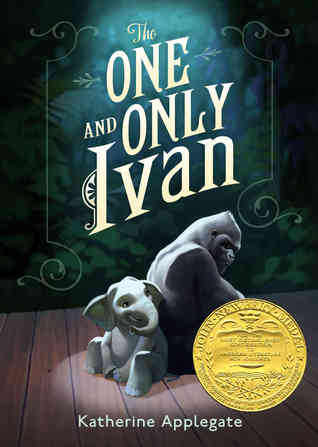
- The One and Only Ivan
Katherine Applegate
4.3 (141k) average on GoodreadsFantasyFeatures an animal protagonist in an unusual setting, with themes of freedom and friendship.
- Harry Potter and the Sorcerer's Stone
J.K. Rowling
4.5 (7M) average on GoodreadsFantasyRescued from a miserable life under the stairs, an orphaned boy discovers he's a wizard destined for a magical school, where he uncovers a dangerous secret tied to the dark wizard who murdered his parents.
- The Hunger Games
Suzanne Collins
4.3 (6.4M) average on GoodreadsFantasyIn a future where children fight to the death on live television, Katniss Everdeen volunteers for the arena, turning a death sentence into a fight for survival and a spark of rebellion.
- 1984
George Orwell
4.2 (3.1M) average on GoodreadsPoliticsIn a future where surveillance and thought control are absolute, a man's search for truth clashes with the Party, showing that hope can be a form of rebellion.
- Divergent
Veronica Roth
4.2 (2.9M) average on GoodreadsFantasyIn a society divided by virtues, a sixteen-year-old's difference from the norm starts a rebellion that threatens her world.
- The Hobbit, or There and Back Again
J.R.R. Tolkien
4.3 (2.9M) average on GoodreadsFantasyA comfort-loving hobbit named Bilbo Baggins is whisked away by a mischievous wizard and a band of dwarves on an unexpected journey to reclaim stolen treasure from a fearsome dragon, discovering courage and a magical ring along the way.





Enjoyed the summary?
A summary gives you the shape of the book. The book itself has the detail, the examples and the voice.
Find The Wild Robot Escapes on AmazonAs an Amazon Associate, BookBrief earns from qualifying purchases. How we're funded