
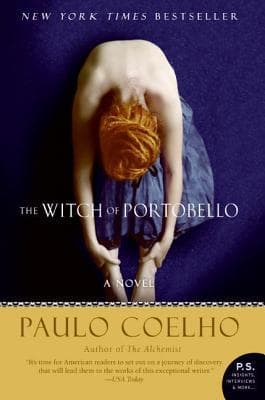
Synopsis
Covers the whole plot, including the ending.
- Difficulty
- Medium
- Pacing
- Moderate
- Mood
- Philosophical, Spiritual, Reflective, Mysterious
- Read it if
- You are interested in spiritual journeys, philosophical discussions on identity, and narratives about embracing individuality against societal expectations. Fans of Paulo Coelho's other works will find familiar themes.
- Skip it if
- You prefer a strong, linear plot with clear conflict resolution, or if you dislike narratives told through multiple perspectives and extensive philosophical introspection.
The Witch of Portobello Plot Summary
Covers the whole plot, including the ending.
Introduction to Athena's Enigma
The novel opens with an unusual narrative, showing interviews and accounts from people who knew Athena, or Sherine Khalil, her birth name. These individuals – her adoptive mother, boyfriend, a journalist, a priest, and an actress – give fragmented views of her life, hinting at her extraordinary nature and eventual, unexplained death. The first testimonies show Athena as a captivating, mysterious figure who challenged norms, leaving a lasting impression on everyone she met. The reader is immediately drawn into a mystery about her identity, spiritual path, and the events that led to her death, creating a tone of intrigue and philosophical thought.
Sherine's Early Life and Adoption
Sherine Khalil is born to a Romani mother in Transylvania and left in an orphanage. She is adopted by a wealthy Lebanese couple, a Maronite Christian father and a Druze mother, and grows up in Beirut. From a young age, Sherine feels displaced and yearns for something beyond her upbringing. She is unusually sensitive and intuitive, often feeling like an outsider even within her loving family. Her adoptive mother, Nabila, talks about Sherine's early difficulties with conformity and her constant questions about her origins, showing Sherine's innate spiritual curiosity and early resistance to expectations.
Marriage, Motherhood, and Early Spiritual Stirrings
At 19, Sherine marries her university professor, Lucas, and soon has her son, Fábio. Despite the conventional happiness this brings, Sherine feels a growing spiritual emptiness. She realizes her marriage, though comfortable, does not satisfy her deeper longings. Her talks with Lucas often turn to philosophical and spiritual topics, which he struggles to fully grasp. This period marks the start of her conscious search for meaning beyond the material world. She questions societal norms and her own purpose, feeling a strong, almost primal call to explore her true self. Her experiences as a mother deepen her connection to life's mysteries.
The Quest for Self in London
After divorcing Lucas, Sherine moves to London with Fábio, seeking a new environment for her spiritual quest. She studies literature at a university but soon finds herself drawn to various esoteric and New Age groups. She tries different spiritual paths, including Wicca, meditation, and ancient rituals. In London, she begins to shed her conventional identity and embrace her more authentic, free-spirited self. She finds belonging among other seekers, though her intensity and unique approach often set her apart. She starts to be known as Athena, a name she adopts to signify her rebirth.
The Discovery of the Mother Goddess and Dance
Athena meets Andrea McCain, an elderly ceramicist who becomes her spiritual mentor. Andrea introduces Athena to the Mother Goddess and ancient earth-based spiritual traditions. Andrea teaches Athena the importance of sacred dance as a way to express spirituality and connect to the divine. Athena discovers a deep ability to channel energy and communicate through movement. She finds that dance lets her access deeper consciousness and express emotions words cannot convey. This discovery is a turning point, as she begins to combine her spiritual insights with physical expression, embodying her beliefs rather than just thinking about them.
Embracing Her Gifts and Teaching
As Athena's spiritual powers grow, she begins to show various gifts, including healing, sensing auras, and glimpsing future events. She attracts followers drawn to her presence and teachings. She holds workshops and gatherings where she encourages people to connect with their inner divinity through dance, intuition, and embracing their true selves. Despite initial doubt and resistance from some, her message resonates with many who feel stifled by modern society. She teaches a path of joy, freedom, and self-expression, emphasizing the power of the feminine divine within everyone.
The Controversy and Public Scrutiny
Athena's growing visibility and the unusual nature of her teachings attract public attention, not all of it good. Some call her a 'witch', and religious authorities and the media examine her methods. Her boyfriend, Deidre O'Neill, a journalist, initially tries to protect her but also documents her life. While many are inspired by her, others fear her power and the challenge she poses to established norms. This period shows the tension between individual spiritual freedom and societal expectations, as Athena stays firm in her mission despite criticism and misunderstanding.
The Search for Her Biological Mother
Driven by a need to understand her roots, Athena travels to Transylvania, Romania, to search for her biological mother. This journey is not just about finding a person but about connecting with her spiritual heritage and understanding the source of her innate gifts. She learns about her Romani ancestry and the ancient traditions of her people, which confirms her intuitive sense of belonging to a long line of spiritual women. While the exact details of meeting her mother are left somewhat ambiguous or symbolic, the journey itself gives Athena a deep sense of completion and validates her unique spiritual path, cementing her identity as a 'daughter of the earth'.
The Culmination of Her Teachings and the Last Dance
Athena's teachings end in a series of increasingly intense and transformative dance rituals. She encourages her followers to let go of inhibitions, connect with their primal energy, and experience divine ecstasy through movement. These gatherings become powerful, almost shamanic experiences, where participants report deep spiritual awakenings and healing. She pushes the boundaries of acceptable spiritual practice, leading to accusations of cult-like behavior from outsiders. The final dance she leads is described as particularly potent, a release of pure energy and a complete surrender to the divine, leaving many of her followers changed forever.
Athena's Disappearance and Legacy
The novel ends with Athena's mysterious disappearance and presumed death. The various interviewees offer different theories about what happened – some believe she was murdered, others that she simply transcended her physical form or chose to withdraw from the world. Her body is never found, leaving the circumstances of her end open to interpretation. Regardless of her physical fate, Athena leaves a powerful legacy. Her life story, as told by those who knew her, shows the courage of living authentically, embracing one's spiritual gifts, and challenging societal norms in the pursuit of truth and self-discovery. Her absence makes her mythical status stronger.
Principal Figures
Athena (Sherine Khalil)
Protagonist
A mysterious and charismatic spiritual teacher who challenges societal norms.
Born Sherine Khalil in Transylvania to a Romani mother, Athena is adopted by a Lebanese couple. From childhood, she feels a profound sense of being different, driven by an innate spiritual yearning. She seeks her true self through diverse spiritual paths, eventually embracing sacred dance as her primary mode of connection to the divine. She is charismatic, intelligent, and fiercely independent, often seen as a 'witch' or a visionary depending on the observer. Her quest is to find and express her authentic self, inspiring others to do the same, even in the face of judgment and misunderstanding. She is a conduit for ancient wisdom and the feminine divine.
Relationships: Nabila Khalil (Adoptive mother, initially worried but ultimately understanding); Lucas (Ex-husband, intellectual but unable to fully grasp her spiritual depth); Fábio (Son, a source of grounding and unconditional love); Andrea McCain (Spiritual mentor, introduces her to the Mother Goddess and sacred dance); Deidre O'Neill (Journalist and boyfriend, documents her life and struggles with her unconventional path)
Nabila Khalil
Supporting
Athena's adoptive mother, a loving and protective woman who struggles to understand her daughter's path.
Nabila is a kind and conventional Druze woman who adopts Sherine and raises her with immense love and care in Beirut. She represents the traditional, protective maternal figure who initially struggles to comprehend Athena's unconventional spiritual journey and her rejection of societal norms. Despite her worries and occasional frustrations, Nabila's love for her daughter is unwavering. Her perspective offers insight into Athena's early life and the challenges she faced in reconciling her innate spiritual nature with the expectations of her family and culture. She is a grounding presence in Athena's life, even as Athena ventures far from her roots.
Relationships: Athena (Sherine Khalil) (Adoptive daughter, subject of her deep love and concern); Father of Sherine (Husband, Maronite Christian, shares her love for Athena)
Deidre O'Neill
Supporting
A journalist and Athena's former boyfriend, who documents her life and struggles with her spiritual extremism.
Deidre is an Irish journalist who becomes romantically involved with Athena and is tasked with writing her story after her disappearance. He is intelligent and initially captivated by Athena's charisma and unique perspective. However, as Athena delves deeper into her spiritual path and becomes more unconventional, Deidre struggles to reconcile her methods with his rational, journalistic worldview. He represents the skeptical but ultimately intrigued outsider, providing a critical yet intimate perspective on Athena's life and the impact she had on others. His interviews form a significant portion of the narrative, attempting to piece together the enigma of Athena.
Relationships: Athena (Sherine Khalil) (Boyfriend and subject of his journalistic investigation); Hermine (Colleague, who helps him gather information)
Andrea McCain
Supporting
Athena's spiritual mentor, a wise ceramicist who introduces her to ancient feminine wisdom and sacred dance.
Andrea is an elderly, wise ceramicist living in London who becomes a pivotal figure in Athena's spiritual development. She introduces Athena to the concept of the Mother Goddess, ancient earth-based traditions, and the transformative power of sacred dance as a means of connecting to the divine. Andrea sees Athena's true potential and helps her unlock her innate spiritual gifts. She is a patient and insightful guide, representing a lineage of feminine wisdom and spiritual practice. Her teachings are fundamental to Athena's growth and her understanding of her unique role in the world, providing a crucial bridge to ancient knowledge.
Relationships: Athena (Sherine Khalil) (Spiritual mentor, teacher of sacred dance and ancient wisdom)
Lucas
Supporting
Athena's ex-husband, a university professor who represents a more conventional, intellectual approach to life.
Lucas is Athena's former university professor and first husband, with whom she has her son, Fábio. He is an intelligent and rational man, comfortable with academic pursuits and conventional societal structures. While he loves Athena, he struggles to understand her deep spiritual yearnings and her eventual rejection of a traditional life. His perspective highlights the contrast between intellectual understanding and intuitive spiritual experience. He remains a caring father to Fábio and offers a grounded, if somewhat bewildered, account of Athena's early transformation and her departure from their shared life.
Relationships: Athena (Sherine Khalil) (Ex-husband, father of Fábio); Fábio (Son)
Fábio
Supporting
Athena's son, a grounding presence in her life and a witness to her unconventional path.
Fábio is Athena's son, born during her marriage to Lucas. He is a constant, loving presence in Athena's life, representing her connection to the tangible world and her responsibilities as a mother. Despite Athena's unconventional lifestyle and spiritual explorations, Fábio remains a source of unconditional love and a point of stability. His perspective, though brief, highlights the human element of Athena's journey – that she is not just a spiritual entity but also a mother. He embodies the innocence and acceptance that sometimes eludes the adults around Athena.
Relationships: Athena (Sherine Khalil) (Son, loved unconditionally); Lucas (Father)
Edda
Supporting
An actress and one of Athena's devoted followers, who deeply embraces her teachings.
Edda is an actress who becomes one of Athena's most devoted disciples. She is deeply affected by Athena's teachings, particularly the sacred dance, and finds profound personal transformation through them. Edda's account emphasizes the liberating and empowering aspects of Athena's message, especially for women seeking to reclaim their sensuality and spiritual power. She sees Athena as a true visionary and a force for positive change, representing the profound impact Athena had on those who fully embraced her path. Her testimony is filled with admiration and a deep understanding of Athena's spiritual purpose.
Relationships: Athena (Sherine Khalil) (Devoted follower and friend)
Father Henrik
Supporting
A Catholic priest who offers a theological perspective on Athena, viewing her as a potential saint or a dangerous heretic.
Father Henrik is a Catholic priest who becomes aware of Athena's activities and offers a theological perspective on her life. He grapples with whether Athena is a saint, a heretic, or simply a misguided soul. His account highlights the tension between established religious dogma and individual spiritual experience. He is both intrigued and cautious, acknowledging the power Athena wields while trying to reconcile it with his own faith. Father Henrik represents the institutional response to unconventional spirituality, showcasing both fear and a reluctant admiration for Athena's profound connection to the divine.
Relationships: Athena (Sherine Khalil) (Observer, attempts to understand her from a religious perspective)
Cornelia
Mentioned
Athena's biological Romani mother, whose heritage influences Athena's spiritual gifts.
Cornelia is Athena's biological mother, a Romani woman in Transylvania. Although Athena's direct interaction with her is brief or symbolic, Cornelia's Romani heritage and the ancient traditions associated with it are crucial to understanding Athena's innate spiritual gifts and her deep connection to the earth and intuition. Her existence provides the genetic and ancestral link that explains many of Athena's extraordinary abilities and her feeling of being 'different'. The journey to find Cornelia is a significant part of Athena's self-discovery, connecting her to a powerful lineage of women.
Relationships: Athena (Sherine Khalil) (Biological mother)
Themes & Insights
Identity and Self-Discovery
The main theme is Athena's lifelong search to understand who she is, beyond societal expectations and her adopted identity. From her early feelings of displacement in Beirut to adopting the name 'Athena' and finding her biological mother in Transylvania, each step is a search for her true self. The book shows that true identity is not given but created through introspection, spiritual exploration, and the courage to embrace one's unique path, even if it means being an outsider. Her spiritual practices, especially sacred dance, help her shed false selves and reveal her core essence.
“If we are not allowed to dance, we are not allowed to be ourselves.”
Spirituality and the Divine Feminine
The novel explores spirituality outside traditional religious dogma, focusing on an intuitive, earth-based connection to the divine, especially the Mother Goddess. Athena's journey is a reawakening of ancient feminine wisdom. It emphasizes intuition, sensuality, and creative expression through dance. She challenges traditional spiritual structures by promoting a direct, personal, and embodied experience of the sacred. The theme highlights balancing masculine and feminine energies, with Athena advocating for reclaiming the feminine as a source of power, healing, and spiritual enlightenment for everyone.
“The Mother is not an abstract concept, but a living presence that can be felt in the earth, in the dance, in the body.”
Conformity vs. Authenticity
A recurring tension in the book is the conflict between societal expectations and the individual's need to live authentically. Athena consistently rejects conventional paths – marriage, career, social norms – to follow her spiritual calling. This choice brings her both deep fulfillment and intense scrutiny. Some call her a 'witch' or 'madwoman'. The narrative, told through multiple perspectives, shows how hard it is for society to accept those who live outside the established order. It also shows the courage needed to stay true to oneself despite judgment and misunderstanding. Athena's life shows the power of unwavering self-belief.
“She learned that the search for happiness is a personal journey, not a collective one.”
The Power of Dance and Embodiment
Sacred dance is not just a hobby for Athena; it is a deep spiritual practice and a central theme. It is her main way of connecting with the divine, expressing her inner self, and channeling energy. Andrea McCain teaches her that dance allows for an embodied spirituality, bypassing intellectual barriers and connecting directly to primal, instinctual wisdom. Through dance, Athena experiences ecstatic states, heals, and teaches others to unlock their spiritual potential. This theme emphasizes the body as a vessel for spiritual experience and a tool for self-expression and liberation.
“When I dance, I am not trying to be better than anyone else. I am only trying to be myself. I am trying to communicate with God.”
The Nature of Reality and Perception
The novel questions traditional ideas of reality by showing Athena's story through multiple, often conflicting, perspectives. Each narrator offers a different view of Athena, showing how individual biases, beliefs, and experiences shape one's understanding of truth. This narrative structure suggests that 'truth' is subjective and multifaceted, especially when it comes to unusual individuals or spiritual phenomena. It asks the reader to question what is real, what is magical, and how much of our reality is built by our own perceptions. This makes Athena's 'witchcraft' a matter of belief as much as objective fact.
“Truth is not what a man says, but what he is.”
Plot Devices & Literary Techniques
Multiple Narrators/Polyphonic Structure
Athena's story is told through a collection of testimonies from various characters.
The entire novel is constructed as a series of interviews and accounts from individuals who knew Athena – her adoptive mother, ex-husband, son, spiritual mentor, journalist, priest, and followers. This polyphonic structure provides diverse, often conflicting, perspectives on Athena's life, character, and spiritual journey. It creates a sense of mystery and ambiguity around her, allowing the reader to piece together her story while simultaneously highlighting the subjective nature of truth and perception. This device also allows the author to present different facets of Athena's personality and the impact she had on various people, making her a more complex and enigmatic figure.
The Enigmatic Protagonist
Athena's true nature and fate remain largely mysterious, even after her story is told.
Athena herself functions as a key plot device. Her mysterious origins, her unconventional spiritual path, and her unexplained disappearance and presumed death serve to drive the narrative. She is a character who defies easy categorization, constantly challenging the perceptions of those around her. Her enigma forces the other characters (and the reader) to confront their own beliefs about spirituality, reality, and human potential. The lack of a definitive explanation for her end reinforces the novel's themes of transcending the mundane and the limits of rational understanding, making her a mythical figure rather than just a person.
Sacred Dance
A recurring symbol and a central mechanism for spiritual awakening and expression.
Sacred dance is more than just an activity; it is a profound plot device and a symbol of Athena's spiritual path. It serves as the primary method through which Athena connects to the divine, expresses her authentic self, and empowers others. The descriptions of these dances are often vivid and mystical, conveying a sense of transcendence and raw spiritual energy. As Athena's teachings evolve, the dances become increasingly powerful, culminating in transformative experiences for her followers. This device visually and emotionally conveys the novel's core message about embodied spirituality and the liberation found in physical expression.
The 'Witch' Archetype
Athena embodies and redefines the historical archetype of the 'witch' or 'wise woman'.
Athena's character draws heavily on the archetype of the 'witch' or 'wise woman,' but reclaims and redefines it. She is labeled a 'witch' by society due to her unconventional spiritual practices and perceived powers, but the novel presents this as a positive, empowering force connected to ancient feminine wisdom and a deep connection to nature. This device challenges negative stereotypes associated with the term, portraying Athena not as evil, but as a spiritual pioneer who dares to embrace her power and intuition. Her story serves to demystify and re-sacralize the figure of the 'witch' as a keeper of forgotten knowledge and a guide to self-discovery.
The Witch of Portobello Quotes
“The problem is that we are not prepared for both good and bad. We are only prepared for what we imagine.”
“Don’t give up. Normally it is the last key on the ring which opens the door.”
“There are two kinds of people in this world: those who have an objective and those who don’t. The ones who have an objective are the ones who are going to achieve something.”
“Every day is a new day. It is better to be lucky. But I would rather be exact. Then when luck comes, you are ready.”
“Freedom is not the absence of commitments, but the ability to choose – and commit myself to – what is best for me.”
“If you want to understand what a person is, don’t listen to what he says. Look at what he does.”
“The greatest gift God gave us is the ability to make choices.”
“Love is an act of faith, not an exchange.”
“People are always afraid of what they don't understand.”
“When you want something, all the universe conspires in helping you to achieve it.”
“Only those who are prepared to take risks can be truly free.”
“A mistake is an experience, and the only way to learn is by making mistakes.”
“The world is changed by your example, not by your opinion.”
“To be happy, you must be your own person.”
Quiz
10 questions on the plot and the characters. Each answer comes with a short explanation.
Question 1
Who is the central character whose story is told through multiple perspectives in 'The Witch of Portobello'?
- Deidre O'Neill
- Athena
- Sherine Khalil
- Andrea McCain
Show answer
B. Athena The book centers around the life and experiences of Athena, whose story is pieced together through interviews with those who knew her.
Question 2
What is Athena's nationality by birth, despite being adopted and raised elsewhere?
- Romanian
- Lebanese
- Irish
- British
Show answer
A. Romanian Athena was born in Transylvania (Romania), though she was adopted by a Lebanese couple and raised in Beirut.
Question 3
What significant personal event happens to Athena at a young age, shaping her early life?
- She travels the world as a spiritual seeker.
- She gets married and has a child, then divorces.
- She becomes a renowned academic.
- She discovers a hidden magical lineage.
Show answer
B. She gets married and has a child, then divorces. Athena marries and has a son, Fábio, at a young age, but her marriage ends in divorce, leaving her to raise her son largely on her own.
Question 4
Which of these is NOT a key theme explored in 'The Witch of Portobello'?
- The search for self-identity
- The conflict between science and religion
- The nature of the Divine Feminine
- Embracing one's true nature and gifts
Show answer
B. The conflict between science and religion While spirituality is central, the book focuses more on personal spiritual growth and the divine feminine rather than a direct conflict between science and religion.
Question 5
What unique teaching method does Athena develop and practice, particularly in London?
- Traditional academic lectures on ancient history.
- Teaching spiritual concepts through dance and movement.
- Leading silent meditation retreats in remote monasteries.
- Writing philosophical treatises for publication.
Show answer
B. Teaching spiritual concepts through dance and movement. Athena becomes known for her unique approach to teaching spirituality, often involving dance and expressive movement to connect with the divine.
Question 6
Who is Andrea McCain, the journalist who compiles the interviews about Athena?
- Athena's adopted mother.
- Athena's ex-husband.
- A close friend and student of Athena's.
- The narrator and interviewer piecing together Athena's story.
Show answer
D. The narrator and interviewer piecing together Athena's story. Andrea McCain is the fictional journalist who gathers the various testimonies and interviews that make up the narrative structure of the book.
Question 7
What is the significance of the 'Mother' or 'Great Mother' in Athena's spiritual journey?
- It represents her biological mother whom she never knew.
- It symbolizes the nurturing aspect of the Divine Feminine, a key focus of her teachings.
- It refers to a specific religious figure she follows.
- It is the title of her spiritual master.
Show answer
B. It symbolizes the nurturing aspect of the Divine Feminine, a key focus of her teachings. The Great Mother or Divine Feminine is a central concept in Athena's spiritual practice, representing the nurturing, creative, and intuitive aspects of divinity.
Question 8
Where does Athena spend a significant period of her childhood after being adopted?
- London, England
- Dublin, Ireland
- Beirut, Lebanon
- Portobello, Scotland
Show answer
C. Beirut, Lebanon Athena's adopted parents are Lebanese, and she grows up in Beirut, a significant setting for her early life experiences.
Question 9
How do many people perceive Athena, especially those who don't understand her spiritual path?
- As a brilliant scholar and philosopher.
- As a conformist and traditionalist.
- As eccentric, controversial, or even dangerous.
- As a quiet and unassuming spiritual guide.
Show answer
C. As eccentric, controversial, or even dangerous. Due to her unconventional methods and strong personality, Athena is often seen as controversial or even a threat by those who prefer more traditional paths or fear what they don't understand.
Question 10
What is the ultimate fate of Athena in the narrative?
- She lives a long, peaceful life in seclusion.
- She disappears without a trace, leaving her followers to wonder.
- She is found dead, a victim of violence, which prompts the investigation into her life.
- She achieves worldwide fame and recognition for her teachings.
Show answer
C. She is found dead, a victim of violence, which prompts the investigation into her life. The book opens with the premise that Athena has died, likely murdered, and the entire narrative is an attempt to understand her life leading up to this tragic event.
The Witch of Portobello FAQ
What is 'The Witch of Portobello' about?
'The Witch of Portobello' tells the story of Athena, a mysterious woman with a unique spiritual journey, through the eyes of various people who knew her. It explores her quest for self-discovery, her unconventional path, and the challenges she faces in embracing her true identity as a modern-day witch.
Why should I read 'The Witch of Portobello'?
You should read 'The Witch of Portobello' if you are interested in themes of self-discovery, spirituality, and challenging societal norms. Coelho's narrative structure, told through multiple perspectives, offers a multifaceted view of a complex character and provokes thought on authenticity and personal freedom.
What is the background/setting of 'The Witch of Portobello'?
The story is primarily set in contemporary London, with Athena having roots in Transylvania and an upbringing in Beirut. This diverse background influences her spiritual journey and provides a rich tapestry of cultural and mystical references that shape her development.
What are the most memorable quotes?
Memorable quotes often revolve around Athena's philosophy, such as 'The only way to learn is by acting' or observations about her nature like 'Athena was not a woman who could be easily defined.' These quotes encapsulate her active pursuit of spiritual knowledge and her enigmatic persona.
What writing style does the author use?
Paulo Coelho employs a unique narrative style in 'The Witch of Portobello,' presenting the story as a series of interviews, testimonies, and documents from various characters. This fragmented, multi-perspective approach allows for diverse interpretations of Athena and her actions, reflecting the subjective nature of truth.
What minor details add significant meaning?
Minor details such as Athena's adoption story and her early experiences with a Romani woman named Edda subtly hint at her innate spiritual gifts and her destiny. Her constant movement between different cities also signifies her search for belonging and a spiritual home.
What are some subtle foreshadowing moments?
Subtle foreshadowing occurs early on through the observations of characters like Deidre O'Neill, who notes Athena's unusual aura and intensity, suggesting she is destined for an extraordinary path. Her early fascination with dance and movement also foreshadows her later embrace of the Mother's Dance as a spiritual practice.
What unexpected character connections exist?
An unexpected connection is between Athena and her former husband, Lukas, who remains deeply fascinated by her even after their separation, becoming one of her most insightful chroniclers. Also, the connection between her adoptive mother, Sylvia, and the Romani woman Edda, who recognized Athena's gifts, bridges her past and her mystical future.
What are unspoken character motivations?
Athena's unspoken motivation is a deep-seated longing for spiritual truth and connection, which drives her beyond conventional societal expectations. Her adoptive mother, Sylvia, is silently motivated by a desire to protect Athena from a world she doesn't fully understand, often clashing with Athena's free spirit.
What psychological complexities do characters exhibit?
Athena exhibits the psychological complexity of an individual torn between societal conformity and an overwhelming inner calling. She struggles with self-doubt and the fear of judgment, even as she embraces her spiritual power, showcasing the internal conflict of a trailblazer.
What are the major emotional turning points?
A major emotional turning point is Athena's decision to leave her conventional life and pursue spiritual studies, which marks her commitment to her true self. Another is her experience with the Mother's Dance, which allows her to fully connect with her spiritual essence and become a teacher.
How do relationship dynamics evolve?
Relationship dynamics evolve significantly, particularly between Athena and her adoptive parents, moving from typical family bonds to a strained understanding as Athena pursues her unconventional path. Her relationship with her son, Brida, also evolves, becoming a source of mutual spiritual growth and understanding rather than just maternal connection.
Which parts remain ambiguous or open-ended?
The precise nature of Athena's 'miracles' and her final moments remain somewhat ambiguous, leaving readers to interpret the extent of her spiritual powers and the ultimate meaning of her death. The book focuses more on the journey and impact than a definitive explanation of supernatural events.
What are controversial scenes or decisions?
Athena's decision to leave her son, Brida, in the care of her ex-husband, Lukas, to pursue her spiritual quest is a controversial decision. It challenges traditional notions of motherhood and sparks debate about the sacrifices made for personal spiritual fulfillment.
'The Witch of Portobello' ending explained: how it ends & what it means
The book ends with Athena's death, which is described as a mystical 'disappearance' during a ritual, leaving behind a profound legacy and a sense of wonder. Her ending signifies her complete transcendence and ultimate embrace of her spiritual identity, becoming a legend whose story continues to inspire and challenge perceptions of reality and faith.
About the author

Paulo Coelho de Souza is a Brazilian lyricist and novelist and a member of the Brazilian Academy of Letters since 2002. His novel The Alchemist became an international best-seller and he has published 30 more books since then.
Similar books
- THE ALCHEMIST
Paulo Coelho
3.6 (3k) average on GoodreadsFictionExplores a spiritual journey of self-discovery and destiny, with a focus on following one's personal legend.
- Siddhartha
Hermann Hesse
4.0 (583k) average on GoodreadsHistorical FictionFollows a protagonist's quest for enlightenment and understanding through various life experiences and spiritual paths.
- Harry Potter and the Sorcerer's Stone
J.K. Rowling
4.5 (7M) average on GoodreadsFantasyRescued from a miserable life under the stairs, an orphaned boy discovers he's a wizard destined for a magical school, where he uncovers a dangerous secret tied to the dark wizard who murdered his parents.
- The Hunger Games
Suzanne Collins
4.3 (6.4M) average on GoodreadsFantasyIn a future where children fight to the death on live television, Katniss Everdeen volunteers for the arena, turning a death sentence into a fight for survival and a spark of rebellion.
- 1984
George Orwell
4.2 (3.1M) average on GoodreadsPoliticsIn a future where surveillance and thought control are absolute, a man's search for truth clashes with the Party, showing that hope can be a form of rebellion.
- Divergent
Veronica Roth
4.2 (2.9M) average on GoodreadsFantasyIn a society divided by virtues, a sixteen-year-old's difference from the norm starts a rebellion that threatens her world.





Enjoyed the summary?
A summary gives you the shape of the book. The book itself has the detail, the examples and the voice.
Find The Witch of Portobello on AmazonAs an Amazon Associate, BookBrief earns from qualifying purchases. How we're funded