

Synopsis
Covers the whole plot, including the ending.
- Difficulty
- Medium
- Pacing
- Moderate
- Mood
- Intense, dramatic, reflective, tragic, complex, captivating
The Women Plot Summary
Covers the whole plot, including the ending.
A New Beginning, A New Love
The novel opens with Frank Lloyd Wright, a celebrated architect, living with his first wife, Catherine Tobin, and their six children in Oak Park, Illinois. He is commissioned to design a house for Edwin Cheney, and during this process, he meets Cheney's wife, Mamah Borthwick. An immediate and intense intellectual and emotional connection forms between Frank and Mamah, despite their marriages. This connection quickly escalates into a passionate affair, conducted discreetly at first, but soon becoming an open secret. The affair is a significant turning point in Wright's life, leading to the eventual abandonment of his family and the beginning of a scandalous new chapter, much to the dismay of his conventional society.
Escape to Europe
Facing public scrutiny and social ostracism in Oak Park, Frank Lloyd Wright and Mamah Borthwick make the decision to leave their families and escape to Europe in 1909. This move is an attempt to find peace and freedom to pursue their controversial relationship away from judgment. They spend time in Italy and Germany, where Wright continues his architectural work, refining his ideas and collaborating on a portfolio of his designs. Mamah, meanwhile, translates the works of Swedish feminist writer Ellen Key. Their time in Europe is a period of creativity and personal liberation, but it also solidifies their status as outcasts to many back home.
Return to America and Taliesin's Birth
After their European trip, Frank Lloyd Wright and Mamah Borthwick return to America. Unable to reconcile with Catherine, Wright begins construction on a new home and studio in Spring Green, Wisconsin, which he names Taliesin. This estate is envisioned not just as an architectural masterpiece, but as a retreat where he and Mamah can live freely and artistically, unburdened by societal conventions. Taliesin becomes a symbol of their defiance and Wright's revolutionary vision. Mamah, embracing her new role, helps to establish the household and entertains the growing number of apprentices and admirers who flock to Taliesin, creating an artistic community.
The Taliesin Tragedy
The idyllic existence at Taliesin is shattered in August 1914 by a horrific act of violence. Julian Carlton, a disgruntled servant, sets fire to the living quarters of Taliesin and, as residents attempt to escape the flames, murders Mamah Borthwick, her two children (who were visiting), and four others with an axe. Frank Lloyd Wright is away on business in Chicago at the time, narrowly escaping the massacre. The tragedy is a devastating blow, destroying the physical manifestation of his dreams and taking the life of the woman he loved. The event sends shockwaves through the nation, cementing the public perception of Wright's life as one fraught with scandal and misfortune.
Grief and New Obsession: Miriam Noel
Following the horrific murders at Taliesin, Frank Lloyd Wright is plunged into grief and despair. The loss of Mamah Borthwick leaves an immense void in his life. In the midst of this sorrow, he meets Miriam Noel, a sculptor and artist, who is drawn to his genius and his suffering. Miriam, a charismatic but emotionally volatile woman, offers Wright a distraction from his pain and a new source of artistic inspiration. Their relationship quickly becomes intense and tumultuous, marked by passionate highs and dramatic lows. Miriam's presence fills the void left by Mamah, but also introduces a new kind of chaos into Wright's already fractured existence, hinting at future troubles.
The Rebuilding of Taliesin and Miriam's Decline
Despite the tragedy, Frank Lloyd Wright is determined to rebuild Taliesin, seeing it as a continuation of his vision. He pours his energy into its reconstruction, a monumental task both physically and emotionally. During this period, his relationship with Miriam Noel becomes increasingly strained. Miriam's reliance on drugs, particularly morphine, escalates, and her mental and emotional stability deteriorates. Her erratic behavior and possessiveness create constant conflict and tension at Taliesin, overshadowing Wright's creative endeavors and making his home a place of both artistic striving and domestic turmoil. Their union is characterized by a cycle of intense love and bitter arguments.
Olgivanna Lloyd Wright Enters
As his relationship with Miriam Noel spirals into increasingly toxic territory, Frank Lloyd Wright encounters Olgivanna Lazovich, a Montenegrin mystic and dancer. Olgivanna is a disciple of G.I. Gurdjieff and brings a strong spiritual and philosophical presence into Wright's life. She is a stark contrast to Miriam's chaotic energy, offering a sense of order and intellectual companionship. Despite the fact that Olgivanna is also married and has a young daughter, a powerful connection forms between her and Wright. This new relationship further complicates Wright's already entangled personal life, setting the stage for another scandalous affair and the eventual end of his tumultuous union with Miriam.
Divorce Battles and Public Scrutiny
The burgeoning relationship between Frank Lloyd Wright and Olgivanna Lazovich inevitably leads to the bitter dissolution of his marriage to Miriam Noel. Miriam, feeling betrayed and abandoned, refuses to go quietly. She initiates highly publicized legal battles, accusing Wright of various transgressions and demanding financial support. These divorce proceedings are sensationalized by the press, further cementing Wright's reputation as a controversial figure whose private life was as dramatic as his architectural designs were innovative. The legal and public scrutiny takes a toll on Wright, but he remains resolute in his desire to build a life with Olgivanna, even as the scandals continue.
Taliesin Fellowship and a Stable Partnership
Frank Lloyd Wright and Olgivanna Lazovich, after much struggle and public outcry, eventually marry and establish a more stable partnership. Together, they found the Taliesin Fellowship in 1932, an architectural apprenticeship program based at Taliesin. This institution becomes a vital part of Wright's legacy, providing a structured environment for young architects to learn and contribute to his vision. Olgivanna plays a role in managing the fellowship, bringing her organizational skills and spiritual guidance to the community. While not without its own challenges, their union represents a period of domestic tranquility and sustained creative output for Wright, marking a significant shift from his earlier tumultuous relationships.
Later Years and Enduring Legacy
In his later years, Frank Lloyd Wright, with Olgivanna by his side, continues to produce some of his most iconic works, including Fallingwater and the Solomon R. Guggenheim Museum. Despite his advanced age, his creative energy remains undiminished. The Taliesin Fellowship thrives, becoming a significant architectural institution. Wright's personal life, while still subject to public fascination, achieves a degree of calm compared to his earlier decades. He dies in 1959, leaving behind an unparalleled architectural legacy and a life story as complex and dramatic as his designs. Olgivanna continues to lead the Taliesin Fellowship after his death, ensuring the perpetuation of his vision and work.
The Women Characters
Frank Lloyd Wright
Protagonist
The visionary, controversial architect at the center of the narrative.
Frank Lloyd Wright is portrayed as a genius of architecture, driven by an insatiable creative urge and an equally powerful emotional need. He is charismatic, often self-centered, and utterly uncompromising in both his art and his personal life. He possesses an almost magnetic quality that draws people to him, particularly women, but also a capacity for emotional detachment and a disregard for conventional morality when it conflicts with his desires. His relentless pursuit of beauty and his own vision often leads to chaos and heartbreak for those around him, yet he remains a figure of immense talent and resilience.
Relationships: Mamah Borthwick (lover, intellectual companion); Miriam Noel (wife, tumultuous relationship); Olgivanna Lloyd Wright (wife, partner, spiritual guide); Catherine Tobin (first wife, abandoned)
Mamah Borthwick
Supporting
Wright's intellectual and passionate mistress, a feminist and translator.
Mamah Borthwick is depicted as an intelligent, independent woman who, despite being married with children, finds herself irresistibly drawn to Frank Lloyd Wright's genius and unconventional spirit. She is a translator of Ellen Key's feminist works, suggesting a progressive mindset that allows her to embrace a scandalous relationship. Mamah is presented as Wright's intellectual equal and his most profound emotional connection, sharing his vision for a life unconstrained by societal norms. Her tragic death at Taliesin is a pivotal moment, leaving an indelible mark on Wright and the narrative.
Relationships: Frank Lloyd Wright (lover, intellectual companion); Edwin Cheney (husband)
Miriam Noel
Supporting
Wright's second wife, a volatile and drug-addicted artist.
Miriam Noel is introduced as a captivating but deeply troubled sculptor who enters Wright's life during his period of intense grief after Mamah's death. She is characterized by her dramatic flair, emotional intensity, and increasing reliance on drugs, particularly morphine. Miriam's relationship with Wright is a whirlwind of passion and conflict, marked by her possessiveness, jealousy, and erratic behavior. She represents a period of chaotic entanglement for Wright, ultimately leading to a bitter and public divorce. Her character highlights the destructive aspects of Wright's emotional needs and the consequences of his choices.
Relationships: Frank Lloyd Wright (wife, tumultuous relationship)
Olgivanna Lloyd Wright (Lazovich)
Supporting
Wright's third wife, a spiritual and grounding force.
Olgivanna Lazovich, later Olgivanna Lloyd Wright, is depicted as a strong, intelligent, and spiritually-minded woman from Montenegro, a disciple of G.I. Gurdjieff. She brings a sense of order, philosophy, and a more structured approach to Wright's life. Unlike Miriam, Olgivanna is portrayed as a stabilizing influence, capable of managing Wright's complex personality and the practicalities of his life and work. She becomes his partner in establishing the Taliesin Fellowship, providing a framework for his later creative endeavors and offering a more enduring and collaborative partnership. Her presence marks a shift towards greater stability for Wright.
Relationships: Frank Lloyd Wright (wife, partner, spiritual guide)
Catherine Tobin
Supporting
Wright's first wife, a conventional and devoted mother.
Catherine Tobin is Frank Lloyd Wright's first wife and the mother of his six children. She represents the conventional societal expectations that Wright ultimately rejects. Catherine is portrayed as a devoted wife and mother, who initially supports Wright's architectural ambitions. Her character embodies the pain and betrayal experienced by those left in the wake of Wright's passionate pursuits. Despite her suffering, she maintains a certain dignity, refusing to grant him an easy divorce and standing as a symbol of the domestic life he abandoned for his artistic and romantic freedoms.
Relationships: Frank Lloyd Wright (first wife, abandoned)
Julian Carlton
Antagonist
The deranged servant who commits the Taliesin murders.
Julian Carlton is a minor but pivotal character, serving as the catalyst for the novel's most horrific event. He is depicted as a cook and handyman at Taliesin whose quiet demeanor belies a deeply disturbed mind. His actions, driven by unknown motives but possibly linked to perceived slights or mental instability, lead to the brutal murder of Mamah Borthwick and several others, as well as the burning of Taliesin. Carlton embodies the sudden, unpredictable violence that can shatter even the most carefully constructed lives, representing an external force of chaos that irrevocably alters Wright's path.
Relationships: Mamah Borthwick (victim); Frank Lloyd Wright (employer (indirectly))
Edwin Cheney
Supporting
Mamah Borthwick's first husband, an architect.
Edwin Cheney is Mamah Borthwick's husband and a client of Frank Lloyd Wright. He is portrayed as a respectable, somewhat conventional man whose life is upended by the affair between his wife and Wright. While not extensively developed, his character serves as a stark contrast to Wright's flamboyant personality and highlights the societal norms that Wright so brazenly defied. Cheney's experience underscores the profound impact of Wright's actions on the lives of others, particularly the men whose wives were drawn into Wright's orbit.
Relationships: Mamah Borthwick (husband); Frank Lloyd Wright (architect, rival)
Ellen Key
Supporting
Swedish feminist writer whose works Mamah translates.
Ellen Key is a Swedish feminist and social reformer whose writings on love, marriage, and individual freedom deeply influence Mamah Borthwick. Although she does not appear as a physical character, her philosophical presence is significant. Her ideas provide a theoretical framework for Mamah's decision to pursue her unconventional relationship with Frank Lloyd Wright, suggesting that their affair is not merely a transgression but an act of liberation and self-realization. Key's influence underscores the intellectual and progressive underpinnings of Mamah's character and choices.
Relationships: Mamah Borthwick (intellectual influence)
The Women Themes
The Nature of Genius and Its Cost
The novel explores the idea that genius, particularly in a figure like Frank Lloyd Wright, often comes with immense personal and social costs. Wright's architectural brilliance is linked to his egocentricity, his disregard for societal conventions, and his capacity to inflict pain on those closest to him. His relentless pursuit of his artistic vision often necessitates the sacrifice of conventional domesticity and personal loyalty. The theme questions whether such extraordinary talent can exist without an accompanying trail of human wreckage, suggesting that the qualities that make him a great artist also make him a difficult, often destructive, man.
“He was an avalanche, a force of nature, and everything in his path was swept aside.”
Love, Passion, and Obsession
Central to the narrative are the intense and often destructive romantic relationships that define Frank Lloyd Wright's life. The novel explores the intoxicating power of passionate love, the complexities of infidelity, and the fine line between love and obsession. Each relationship, from his intellectual bond with Mamah to his tumultuous entanglement with Miriam and his eventual partnership with Olgivanna, is characterized by extreme emotional highs and lows. The theme highlights how Wright's need for connection and inspiration drives him from one intense affair to another, often leaving a trail of broken hearts and public scandal in his wake.
“He was a man who lived for love, or perhaps, for the idea of it, perpetually searching for the perfect muse.”
Societal Conventions vs. Individual Freedom
The novel portrays the clash between Frank Lloyd Wright's desire for individual freedom and the rigid societal conventions of the early 20th century. Wright's public affairs and abandonment of his family challenge Victorian morality, leading to widespread condemnation and ostracism. His creation of Taliesin is an attempt to build a sanctuary where he and his partners can live authentically, unburdened by judgment. This theme explores the consequences of defying social norms, both the liberation it offers to the individual and the severe repercussions faced from a disapproving society, particularly for the women involved.
“They were outcasts, living beyond the pale, and for a time, that was exactly where they wanted to be.”
Tragedy, Resilience, and Rebirth
A recurring theme is the cyclical nature of tragedy and the human capacity for resilience and rebirth. Frank Lloyd Wright's life is marked by profound loss, most notably the horrific murders at Taliesin. Yet, despite these devastating setbacks, he consistently rebuilds, both physically and emotionally. The repeated destruction and reconstruction of Taliesin is a powerful metaphor for this theme. The novel explores how individuals cope with grief and how, even in the face of adversity, the drive to create, to love, and to continue living can prevail, leading to new beginnings and renewed purpose.
“He built and rebuilt, a monument to defiance, to a refusal to be broken by fire or by sorrow.”
Plot Devices & Literary Techniques
Multiple Perspectives
Told through the eyes of the women in Wright's life.
The novel employs a shifting narrative perspective, primarily told through the viewpoints of the significant women in Frank Lloyd Wright's life: Mamah Borthwick, Miriam Noel, and Olgivanna Lloyd Wright. This device offers a multifaceted and intimate portrayal of Wright, not just as an architect, but as a husband, lover, and muse-requirer, seen through the eyes of those most affected by his genius and his flaws. It allows the reader to understand the emotional impact of his choices, the allure he held, and the sacrifices made by these women, thereby enriching the psychological depth of the story and challenging a singular, heroic view of the protagonist.
Foreshadowing
Hints of future tragedy and turmoil throughout the narrative.
Foreshadowing is subtly woven throughout the narrative, particularly concerning the impending tragedies and the tumultuous nature of Wright's relationships. Early descriptions of his volatile personality, his disregard for convention, and the simmering resentments among his staff or within his domestic sphere often hint at future conflicts or disasters. The initial idyllic portrayal of Taliesin, for instance, carries an undercurrent of fragility, preparing the reader for the eventual devastation. This device creates a sense of dramatic irony and builds suspense, making the reader acutely aware that moments of peace are often temporary and precarious in Wright's world.
Symbolism of Taliesin
The house as a reflection of Wright's life and artistic vision.
Taliesin, Frank Lloyd Wright's self-designed home and studio, serves as a powerful symbol throughout the novel. Initially, it represents his utopian vision, a sanctuary of art and unconventional love, a physical manifestation of his genius and defiance. Its repeated destruction by fire and subsequent rebuilding symbolizes Wright's resilience, his capacity for rebirth, and the cyclical nature of tragedy and renewal in his life. Taliesin ultimately embodies Wright himself: ambitious, beautiful, controversial, and constantly evolving, reflecting the profound interplay between his personal life and his architectural legacy.
Historical Intercalation
Weaving historical facts into the fictionalized narrative.
The novel masterfully integrates well-documented historical facts about Frank Lloyd Wright's life, his architectural projects, and his scandalous personal affairs with fictionalized internal monologues and emotional experiences of the characters. This device grounds the narrative in reality, adding authenticity and depth to the story. By adhering closely to the known timeline and major events, the author allows the reader to explore the emotional and psychological dimensions behind the public record, making the historical figures feel intimately human and their struggles profoundly relatable, blurring the lines between biography and fiction.
Quiz
10 questions on the plot and the characters. Each answer comes with a short explanation.
Question 1
Who is the central figure whose life and work are explored in T. Coraghessan Boyle's novel "The Women"?
- Frank Lloyd Wright
- T. Coraghessan Boyle
- An unnamed architect
- A fictionalized artist
Show answer
A. Frank Lloyd Wright The provided text explicitly states that the novel explores the life of "Frank Lloyd Wright."
Question 2
What genre best describes "The Women" based on the provided synopsis?
- Science Fiction
- Mystery
- Literary Fiction and Historical Fiction
- Romance
Show answer
C. Literary Fiction and Historical Fiction The synopsis mentions "Literary Fiction, Historical Fiction, Creativity" as genres, and the content describes historical events and character drama.
Question 3
The novel depicts Frank Lloyd Wright as a man of what characteristics?
- Calm and reserved
- Extremes in work and private life, a force of nature
- Solely focused on his architecture
- Shy and introverted
Show answer
B. Extremes in work and private life, a force of nature The text describes him as "a man of extremes in both his work and his private life: at once a force of nature and an avalanche of need and emotion."
Question 4
What kind of events are described as occurring within the novel's depiction of Frank Lloyd Wright's world?
- Peaceful retreats and quiet contemplation
- Routine and predictable daily life
- Scandalous affairs, broken hearts, and fires
- Artistic collaborations and academic discussions
Show answer
C. Scandalous affairs, broken hearts, and fires The synopsis mentions "Scandalous affairs rage behind closed doors, broken hearts are tossed aside, fires rip through the wings of the house."
Question 5
The description of Wright's personality includes being "an avalanche of need and emotion that sweeps aside everything in its path." This suggests his character is:
- Self-controlled and considerate
- Detached and unemotional
- Impulsive and overwhelming
- Meticulous and organized
Show answer
C. Impulsive and overwhelming The metaphor of an "avalanche" implies a powerful, uncontrollable force that disregards obstacles, indicating impulsiveness and an overwhelming emotional nature.
Question 6
The phrase "Sharp, savage and subtle in equal measure" is used to describe Boyle's approach to:
- The architectural designs
- The journalistic reporting of events
- The exploration of chaos, horrors, and passions
- The personal relationships of the architect's wives
Show answer
C. The exploration of chaos, horrors, and passions The sentence immediately following this phrase states, "'The Women' plumbs the chaos, horrors and uncontainable passions of a formidable American icon."
Question 7
The novel aims to explore the "chaos, horrors and uncontainable passions" of a "formidable American icon." This suggests the book delves into:
- The mundane aspects of daily life
- The architect's lesser-known artistic failures
- The tumultuous and intense elements of his life
- The positive impact of his work on society
Show answer
C. The tumultuous and intense elements of his life The words "chaos," "horrors," and "uncontainable passions" clearly indicate a focus on the turbulent and intense aspects of the icon's life, rather than mundane or solely positive elements.
Question 8
The presence of "paparazzi" waiting outside the front door implies that Frank Lloyd Wright's life was:
- Completely private and unnoticed
- Subject to public scrutiny and media attention
- A subject of academic study only
- A quiet and secluded existence
Show answer
B. Subject to public scrutiny and media attention Paparazzi are photographers who pursue celebrities to take candid pictures. Their presence indicates that the architect's life was a matter of public interest and media attention.
Question 9
Considering the description of "scandalous affairs" and "broken hearts," the novel likely focuses on:
- The purely professional achievements of the architect
- The architect's relationships and their emotional consequences
- The historical context of early 20th-century architecture
- The financial dealings of the architectural firm
Show answer
B. The architect's relationships and their emotional consequences The mention of "scandalous affairs" and "broken hearts" directly points to the personal relationships and the emotional turmoil associated with them as a significant theme in the novel.
Question 10
The phrase "at once a force of nature and an avalanche of need and emotion that sweeps aside everything in its path" suggests a duality in Wright's character, where his creative power is:
- Balanced by his emotional stability
- Inseparable from his destructive emotional impact
- Constrained by societal expectations
- Driven by logical reasoning and planning
Show answer
B. Inseparable from his destructive emotional impact The metaphor of an "avalanche" sweeping aside everything implies that his powerful emotions and needs, while perhaps linked to his creative "force of nature," had a destructive impact on those around him, suggesting an inseparable connection between his creative power and his emotional turmoil.
The Women FAQ
What is 'The Women' by T. Coraghessan Boyle about?
The novel 'The Women' by T. Coraghessan Boyle offers a fictionalized account of the tumultuous private life of architect Frank Lloyd Wright. It delves into his scandalous affairs, personal tragedies, and the intense emotional storms that defined him, all set against the backdrop of his iconic architectural creations.
Who is the main character in 'The Women'?
While the narrative centers on the life and relationships of the famous architect Frank Lloyd Wright, the story is told through the perspectives of the women in his life, exploring their experiences and how they were impacted by him.
What historical period does 'The Women' cover?
The novel is set during the early to mid-twentieth century, a period of significant architectural innovation and social change, reflecting the era in which Frank Lloyd Wright rose to prominence.
Is 'The Women' a biography of Frank Lloyd Wright?
No, 'The Women' is a work of historical fiction. While inspired by the life of Frank Lloyd Wright, T. Coraghessan Boyle takes creative liberties to explore the emotional landscape and relationships, rather than providing a strictly factual biography.
What are the major themes in 'The Women'?
Key themes include the destructive nature of genius, the complexities of love and marriage, the societal roles of women in the early 20th century, and the intersection of art, passion, and personal chaos.
Who are the 'women' in the title of the book?
The title 'The Women' refers to the various wives, mistresses, and female figures who played significant roles in Frank Lloyd Wright's life, each experiencing his extreme personality and passions in their own way.
What is the writing style of T. Coraghessan Boyle in 'The Women'?
Boyle's writing is described as sharp, savage, and subtle. He employs vivid prose to capture the intensity of the characters' emotions and the dramatic events of their lives, making for a compelling and often unflinching read.
What kind of reader would enjoy 'The Women'?
Readers who enjoy character-driven historical fiction, explorations of complex personalities, and novels that delve into the personal lives of famous figures will likely appreciate 'The Women'. Fans of T. Coraghessan Boyle's distinctive style will also find much to enjoy.
About the author

T. Coraghessan Boyle is an American author known for his fiction that often explores themes of culture and society. His notable works include "The Tortilla Curtain," which addresses issues of immigration, "Drop City," set in a 1970s commune, and "The Women," a fictional portrayal of the life of architect Frank Lloyd Wright. Boyle's writing is characterized by its rich narrative style and social commentary.
Similar books
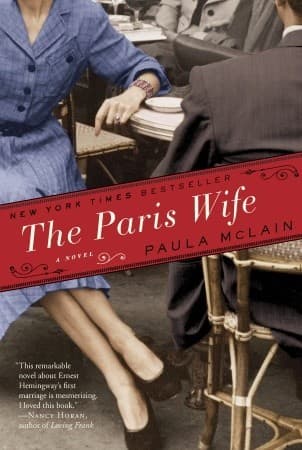
- The Paris Wife
Paula McLain
3.8 (267k) average on GoodreadsHistorical FictionMcLain's 'The Paris Wife' similarly explores the life of a famous male artist (Ernest Hemingway) through the eyes of one of his wives (Hadley Richardson). Both 'The Women' and 'The Paris Wife' delve into the challenges of being married to a genius with a large ego and a penchant for infidelity. However, McLain's novel maintains a singular, first-person perspective from Hadley, allowing for an incredibly intimate and emotionally resonant exploration of her inner world and the gradual erosion of her marriage. Boyle's multi-perspective approach in 'The Women' offers a broader, more objective, and at times more detached view of the women's collective experiences, rather than the intensely personal journey of one.
- The Old Man and the Sea
Ernest Hemingway
3.8 (831k) average on GoodreadsLiterary FictionA Cuban fisherman's long struggle with a giant marlin becomes a story of endurance and dignity, now retold for young adults with illustrations, phonetic guides, and writing prompts in Traditional Chinese.
- One Hundred Years of Solitude
Gabriel García Márquez
4.1 (753k) average on GoodreadsLiterary FictionThrough the multi-generational story of the Buendía family, a mythical town deals with the repeating patterns of time, love, and solitude, as the extraordinary mixes with the ordinary.
- The Goldfinch
Donna Tartt
3.9 (720k) average on GoodreadsLiterary FictionHaunted by a tragic explosion and clutching a stolen Dutch masterpiece, a young orphan navigates the opulent drawing rooms of New York and the gritty underbelly of the art world, desperately seeking connection and redemption amidst a life spiraling into crime and obsession.
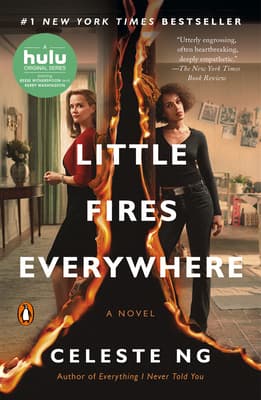
- Little Fires Everywhere
Celeste Ng
4.1 (713k) average on GoodreadsLiterary FictionIn Shaker Heights, an artist and her daughter move in, and their free-spirited lives clash with a rule-bound matriarch, revealing hidden conflicts beneath a perfect surface.
- Eleanor Oliphant Is Completely Fine
Gail Honeyman
4.3 (708k) average on GoodreadsLiterary FictionA lonely woman's structured life changes when an IT guy and an elderly man help her learn to open her heart.



Enjoyed the summary?
A summary gives you the shape of the book. The book itself has the detail, the examples and the voice.
Find The Women on AmazonAs an Amazon Associate, BookBrief earns from qualifying purchases. How we're funded