
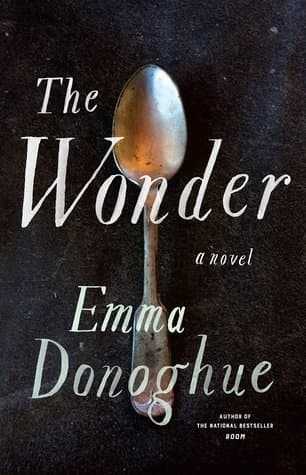
Synopsis
Covers the whole plot, including the ending.
- Difficulty
- Medium
- Pacing
- Moderate
- Mood
- Atmospheric, Suspenseful, Dark, Intense, Thought-provoking
- Read it if
- You enjoy atmospheric historical fiction with a strong sense of place, psychological tension, and a focus on moral dilemmas and the clash between faith and reason.
- Skip it if
- You prefer fast-paced thrillers with constant action, or find stories about religious extremism and child suffering too disturbing.
The Wonder Plot Summary
Covers the whole plot, including the ending.
Arrival in the Midlands
In 1859, English nurse Elizabeth 'Lib' Wright travels from London to a remote village in the Irish Midlands. A local committee, made up of a doctor, a priest, and other prominent men, has hired her to observe eleven-year-old Anna O'Donnell. Anna is a local sensation, claiming to have survived without food for four months, sustained only by 'manna from heaven.' Lib, a pragmatic woman scarred by her past experiences in the Crimean War, is skeptical of miracles and approaches the case with a scientific, dispassionate resolve. She is tasked with a two-week watch, sharing the duty with a nun, Sister Michael, to determine if Anna is truly fasting or if there's a trick involved. The O'Donnell family, including Anna's parents Rosaleen and Malachy, and older brother Daniel, live in a small, impoverished cottage, which is already a pilgrimage site for curious onlookers.
Initial Observation and Skepticism
Lib begins her observation, meticulously documenting Anna's every movement and interaction. She finds Anna to be a quiet, pious child who genuinely believes in her divine sustenance. Lib's initial suspicion is that Anna is secretly being fed by her family, particularly her mother, Rosaleen. She implements strict rules: no one is to be alone with Anna, and the cottage is searched for hidden food. Despite these measures, Anna continues to show no signs of hunger or physical deterioration, baffling Lib. The local community, steeped in religious fervor, views Anna as a saint, and Lib's scientific approach is met with suspicion and resistance, especially from Father Thaddeus and Sister Michael, who are more inclined to believe in the miraculous.
The Journalist's Arrival and Public Scrutiny
William Byrne, a journalist from the 'Dublin Examiner,' arrives in the village to cover the 'wonder.' He is initially cynical but becomes increasingly intrigued by Anna's resilience and the fervor around her. Byrne attempts to interview Lib, who remains tight-lipped and professional, unwilling to compromise her investigation. His presence, however, intensifies the public's focus on Anna, making the O'Donnell cottage an even greater spectacle. The committee, eager for a definitive answer, pressures Lib to either confirm the miracle or expose the fraud, highlighting the conflict between faith and science that fills the village.
Unraveling the Truth
As the days pass, Anna's condition, though seemingly stable, begins to subtly deteriorate. Lib notices a slight weakening, a loss of vitality. Through careful observation and a growing rapport with Anna, Lib eventually uncovers the horrifying truth: Anna is not being secretly fed by her family in the traditional sense. Instead, Anna's mother, Rosaleen, has been chewing food and then kissing Anna goodnight, passing the masticated food into her daughter's mouth. This 'kiss-feeding' is done under the guise of maternal affection, and Anna herself believes it to be part of God's sustenance, unaware of its true nature. The revelation is a profound shock to Lib, confirming her suspicions of deception but revealing a far more insidious and tragic form of abuse.
Anna's Deterioration and Lib's Desperation
Upon discovering the 'kiss-feeding,' Lib immediately confronts Rosaleen and alerts the committee. However, the committee, particularly Father Thaddeus, is reluctant to publicly expose the family, fearing scandal and the shattering of the community's faith. They insist on maintaining the observation, hoping for a 'natural' explanation or a divine intervention. With the cessation of even the minimal sustenance from the kiss-feeding, Anna's health rapidly declines. She becomes increasingly frail, weak, and begins to show clear signs of starvation. Lib, witnessing Anna's slow death, becomes desperate. Her professional detachment erodes, replaced by a fierce protective instinct towards the innocent child.
The Weight of the Past
Lib's own tragic past, particularly the death of her infant son, surfaces as Anna's life hangs in the balance. The memory of her child, whom she felt she failed to protect, fuels her determination to save Anna. She sees in Anna a chance for redemption, a way to atone for her past grief and perceived failures. This personal connection deepens her commitment, transforming her from a detached observer into an active participant. She begins to openly defy the committee's passive stance, arguing for immediate intervention, even if it means exposing the family and shattering the community's faith in the 'miracle.'
A Plan for Salvation
Realizing that the committee will not act in time, Lib forms a desperate plan. She confides in William Byrne, sharing the full truth of Anna's situation and the committee's inaction. Byrne, initially hesitant due to his journalistic ethics and the potential for public outrage, is ultimately moved by Lib's conviction and Anna's plight. Together, they concoct a scheme to rescue Anna. The plan involves faking Anna's death to free her from her family and the suffocating scrutiny of the village, allowing her to start a new life under a different identity.
The Fire and the Escape
Lib, with William's help, sets the O'Donnell cottage on fire, creating a diversion. Before the fire consumes the house, she takes Anna out, carrying her to a pre-arranged meeting point. The fire is reported, and the village believes Anna has perished in the flames, a tragic end to their 'miracle.' Lib, however, has secretly substituted a small, weighted doll for Anna's body, ensuring that the 'remains' found in the fire are unidentifiable. This dramatic act allows Lib to disappear with Anna, effectively erasing her old identity and the circumstances of her suffering. The escape is fraught with danger and emotional intensity, marking a complete break from Lib's professional duties and societal expectations.
New Beginnings
Lib and Anna, now calling themselves 'Niamh' and 'Lily' respectively, travel to Dublin. With William Byrne's assistance, they secure passage to Australia, seeking a completely fresh start. Lib, who had previously been a rigid and emotionally guarded woman, has transformed into a loving, protective mother figure for Anna. Anna, though traumatized, begins to recover physically and emotionally under Lib's care. The journey symbolizes their shared escape from the oppressive past and the restrictive societal norms of 19th-century Ireland. They envision a life free from judgment and the suffocating grip of misguided faith.
A Future Forged
On the ship to Australia, Lib and Anna solidify their bond. Lib has fully embraced her role as Anna's guardian, and Anna, in turn, trusts Lib implicitly. The shared trauma and the act of defiance have forged an unbreakable connection between them. The narrative concludes with a sense of cautious optimism. While the past cannot be entirely erased, they have chosen to create a new future, free from the 'wonder' that nearly destroyed Anna. Lib, once a strict proponent of scientific fact, has learned the power of compassion and the lengths one must go to protect the innocent, finding a new purpose in her life as a mother to Anna.
The Wonder Characters
Lib Wright
Protagonist
A pragmatic English nurse tasked with observing Anna O'Donnell.
Lib Wright is a trained nurse from London, a veteran of the Crimean War, and a staunch rationalist. She is intelligent, meticulous, and initially emotionally detached, often using her professional demeanor as a shield against personal grief and past trauma, particularly the death of her infant son. Her skepticism of miracles and her commitment to scientific observation drive her initial approach to Anna's case. She values truth and evidence above all else, which puts her at odds with the deeply religious community.
Relationships: Anna O'Donnell (Observer turned guardian/surrogate mother); William Byrne (Skeptical journalist turned reluctant accomplice/ally); Rosaleen O'Donnell (Antagonist, Anna's mother, complicit in the abuse); The Committee (Employers, increasingly at odds with Lib's findings)
Anna O'Donnell
Central Figure
An 11-year-old girl believed to be surviving without food by divine intervention.
Anna is an eleven-year-old girl, quiet, pious, and seemingly innocent. She genuinely believes she is sustained by 'manna from heaven' and is unaware of the true nature of her 'fasting.' Deeply religious and influenced by her family's fervent Catholicism, she sees her ordeal as a spiritual test. She is a victim of both familial manipulation and the community's desperate need for a miracle. Despite her fragility, she possesses an inner resilience and a yearning for connection.
Relationships: Lib Wright (Patient turned surrogate daughter); Rosaleen O'Donnell (Mother, unknowingly 'kiss-feeding' her); Malachy O'Donnell (Father, passive enabler of the situation); Daniel O'Donnell (Older brother, who died under mysterious circumstances)
William Byrne
Supporting
A cynical journalist covering Anna's story.
William Byrne is a journalist for the 'Dublin Examiner,' initially sent to cover the 'wonder' with a cynical eye. He is intelligent, observant, and possesses a moral compass, though he is also driven by professional ambition. He represents the voice of secular reason and the outside world, contrasting with the insular, faith-driven village. His interactions with Lib challenge his journalistic objectivity and draw him into the moral dilemma of Anna's fate.
Relationships: Lib Wright (Initial antagonist/skeptic turned ally/confidant); Anna O'Donnell (Subject of his reporting, later a child he helps save)
Rosaleen O'Donnell
Antagonist/Supporting
Anna's mother, who unknowingly 'kiss-feeds' her daughter.
Rosaleen O'Donnell is Anna's mother, a deeply religious and grief-stricken woman. She is complicit in Anna's 'fasting' by unknowingly 'kiss-feeding' her, believing it to be a form of divine sustenance or a necessary penance for her family's sins, particularly the death of her son Daniel. She is not overtly malicious but is misguided by fervent faith, grief, and a desperate desire for a miracle, making her a tragic figure driven by a warped sense of love and duty.
Relationships: Anna O'Donnell (Mother, unknowingly causing her daughter's starvation); Lib Wright (Opponent, her deception is uncovered by Lib); Malachy O'Donnell (Husband, also complicit in the family dynamic)
Malachy O'Donnell
Supporting
Anna's father, a passive enabler of the 'fasting.'
Malachy O'Donnell is Anna's father, a quiet and somewhat passive man. He is a farmer, devoutly religious, and deeply affected by the loss of his son Daniel. He seems overwhelmed by the situation surrounding Anna and is largely an enabler, allowing his wife's actions and the community's beliefs to dictate events. He is less actively involved in the deception than Rosaleen but does not intervene to stop it, reflecting the patriarchal and religiously conservative society.
Relationships: Anna O'Donnell (Father, passively allowing her starvation); Rosaleen O'Donnell (Husband, complicit in her actions)
Father Thaddeus
Supporting
A local priest who supports the belief in Anna's miracle.
Father Thaddeus is the local Catholic priest and a member of the committee overseeing Anna's observation. He is a devout man who genuinely believes in the possibility of miracles and is deeply invested in the spiritual interpretation of Anna's fast. He represents the institutional church and the pervasive influence of religion in the community. His priority is often the preservation of faith and the community's spiritual well-being, even at the expense of scientific truth or Anna's physical safety.
Relationships: Lib Wright (Opponent, representing faith versus science); Anna O'Donnell (Spiritual guide, believing her to be a saint)
Sister Michael
Supporting
A nun who shares observation duties with Lib.
Sister Michael is a nun who is assigned to share observation duties with Lib. She is kind-hearted and compassionate but also deeply religious and less questioning than Lib. She is torn between her faith in miracles and her growing concern for Anna's well-being. She represents a softer, more traditional aspect of faith, initially finding it difficult to reconcile the scientific method with her spiritual beliefs.
Relationships: Lib Wright (Observation partner, initially at odds over beliefs); Anna O'Donnell (Caretaker, with a spiritual connection)
Dr. McBrearty
Supporting
The local doctor on the committee.
Dr. McBrearty is the local doctor and a member of the committee. He is a man of science but is also deeply embedded in the community and its prevailing religious beliefs, making him somewhat hesitant to challenge the 'miracle' outright. He represents the scientific community's struggle to assert reason in the face of fervent faith and societal pressure. He is generally well-meaning but lacks Lib's courage and conviction to act decisively.
Relationships: Lib Wright (Colleague on the committee, but less decisive); The Committee (Member, representing a cautious medical viewpoint)
The Wonder Themes
Faith vs. Reason
This is the central conflict of the novel, shown by Lib Wright's scientific skepticism clashing with the fervent religious belief of the Irish village and the O'Donnell family. The community desperately wants to believe in Anna's miracle, seeing it as a sign of divine intervention and a source of hope in their impoverished lives. Lib, a nurse trained in modern medicine, insists on empirical evidence and rational explanation. The 'kiss-feeding' twist shows how faith can be manipulated or misinterpreted, leading to tragic consequences when it overrides reason and human welfare. The committee's reluctance to expose the truth, fearing the shattering of faith, further highlights this tension, especially when Lib confronts Father Thaddeus about Anna's deteriorating health.
“What is the truth, Lib? Is it what we see, or what we are told to believe?”
Manipulation and Deception
The novel explores various forms of manipulation and deception, from the subtle, unintentional 'kiss-feeding' by Rosaleen O'Donnell to the community's collective self-deception in embracing the 'miracle.' Anna herself is manipulated, believing her starvation is divine sustenance. The committee also engages in a form of deception by prolonging the observation and attempting to suppress the truth to protect the community's faith. Lib's final act of faking Anna's death is also a deception, but one born out of compassion and a desperate attempt to save a life, highlighting the moral complexities of such acts. This theme is particularly clear when Lib finally understands the 'kiss-feeding' mechanism, revealing the insidious nature of the deception.
“A miracle is only a deception if you know it to be so.”
Motherhood and Sacrifice
The theme of motherhood is explored through multiple lenses. Lib Wright's past grief over her deceased infant son influences her growing attachment to Anna and her fierce determination to save her, transforming her into a surrogate mother. Rosaleen O'Donnell, though misguided, believes her 'kiss-feeding' is an act of maternal sacrifice and piety, however tragically flawed. The novel questions the nature of maternal love, duty, and the sacrifices parents make for their children, whether born of genuine care or distorted belief. Lib's ultimate sacrifice of her professional life and identity to save Anna exemplifies this theme, culminating in their shared journey to a new life.
“She had lost one child. She would not lose another.”
The Power of Story and Narrative
The novel shows how stories—whether religious narratives, local legends, or journalistic accounts—shape reality and influence perception. Anna's 'fasting' becomes a powerful story, a 'wonder' that captivates and defines the village. William Byrne, the journalist, is tasked with crafting this story for a wider audience. Lib's struggle is to dismantle the prevailing narrative with scientific fact. Ultimately, Lib and Anna must create a new story for themselves, assuming new identities and fabricating a past to escape the suffocating power of the old narrative. The choice of 'Niamh' and 'Lily' as new names for Lib and Anna signifies their conscious construction of a new, empowering story.
“People will believe what they want to believe, Nurse. It's the nature of man.”
Redemption and Transformation
Lib Wright's journey is one of personal redemption. Haunted by the death of her own child, she finds a new purpose and a chance to atone for her past by saving Anna. Her initial detached professionalism gives way to deep compassion and a willingness to defy societal norms, sacrificing her career and identity for the child. Anna also undergoes a transformation, from a passive victim to a survivor given a second chance at life. Their shared escape and new identities symbolize a rebirth, a radical transformation from their former selves and circumstances, offering a hopeful, if challenging, vision of new beginnings.
“She was not Lib Wright anymore. She was Niamh, and this child was Lily, and they were beginning again.”
Plot Devices & Literary Techniques
The Unreliable Observation
The act of observation itself becomes a flawed and manipulated process.
The core premise of the novel is Lib's observation of Anna. However, this observation is inherently unreliable due to the hidden 'kiss-feeding' and the constant presence of a community invested in a particular outcome. The device highlights the limitations of purely external observation when dealing with human deception and complex emotional/spiritual factors. It forces Lib to move beyond mere watching to empathetic engagement and deduction, ultimately revealing that the 'objective' scientific method can be insufficient in certain human contexts.
The Confined Setting
The isolated cottage and village amplify the psychological tension.
The story is primarily set within the small, claustrophobic O'Donnell cottage and the surrounding, equally insular Irish village. This confined setting intensifies the psychological drama, creating a pressure cooker environment where Lib's rationalism clashes directly with the community's fervent faith. The lack of escape or external influence amplifies the stakes for Anna and forces the characters into direct confrontation, mirroring the internal confinement felt by Anna and Lib's own emotional walls.
The 'Wonder' as a MacGuffin
Anna's 'fasting' is the central mystery driving the plot, but its true nature is less important than its effects.
Anna's 'wonder' – her alleged miraculous fasting – serves as the primary hook and central mystery that draws Lib, William, and the committee into the story. While the eventual revelation of the 'kiss-feeding' is crucial, the true nature of the 'wonder' itself is less significant than the profound effects it has on all the characters and the conflict it generates between faith and reason. It acts as a catalyst for Lib's personal transformation and the moral dilemmas faced by the community.
Symbolism of Names
The changing of names signifies new identities and liberation.
The act of Lib and Anna adopting new names – Niamh and Lily – at the end of the novel is a powerful symbolic device. 'Lib' (Elizabeth) suggests a formal, perhaps constrained identity, while 'Niamh' (meaning 'bright' or 'radiant' in Irish mythology) signifies a new, hopeful, and culturally integrated identity. Similarly, 'Anna' (meaning 'grace') is tied to her past suffering, while 'Lily' (a symbol of purity and new beginnings) represents her liberation and fresh start. This device underscores the theme of transformation and the creation of a new future.
Foreshadowing through Anna's Brother
The mysterious death of Anna's brother hints at underlying family secrets and abuse.
Early in the novel, it is mentioned that Anna's older brother, Daniel, died under mysterious circumstances, vaguely attributed to an illness or accident. This detail serves as subtle foreshadowing, creating an undercurrent of unease and hinting at deeper, unaddressed family secrets and potential trauma within the O'Donnell household. It adds to the sense that Anna's 'fasting' is not a simple miracle but rather a symptom of a more complex and troubling family dynamic, which is eventually revealed to be related to sexual abuse and religious penance.
The Wonder Quotes
“The child’s body was a city under siege, and she, Lib, was the lone, exhausted defender.”
“Faith, she thought, was a kind of blindness, a willed ignorance.”
“Sometimes the hardest truths were the ones that dressed themselves up in the most comforting lies.”
“A miracle, she knew, was simply a story that people wanted to believe.”
“The world was full of wonders, but most of them were terrible.”
“She had always thought of hunger as an animal thing, a brute force. But this was different. This was a slow, deliberate erosion.”
“To save a life, sometimes you had to break every rule.”
“The child was a mirror, reflecting back all their own fears and desires.”
“She was a witness, and a witness had a responsibility.”
“God, she decided, was a terrible artist, endlessly repeating the same few dismal themes.”
“The silence in the room was not empty; it was thick with unspoken words, with prayers and accusations.”
“What was the good of a God who demanded such a price?”
“It was not a lie if you believed it with all your heart.”
“The human body was a marvel, but also a prison.”
Quiz
10 questions on the plot and the characters. Each answer comes with a short explanation.
Question 1
What is the primary reason Lib Wright, an English nurse, is summoned to the Irish Midlands?
- To investigate a series of mysterious disappearances in the village.
- To observe a girl who is claimed to have survived without food for an extended period.
- To provide medical assistance during a severe epidemic.
- To document local folklore and spiritual practices.
Show answer
B. To observe a girl who is claimed to have survived without food for an extended period. Lib Wright is brought to the village specifically to observe Anna O'Donnell, who is claimed to have been fasting for months, to determine if it's a medical anomaly or a miracle.
Question 2
What is the name of the eleven-year-old girl Lib is tasked with observing?
- Kitty O'Donnell
- Anna O'Donnell
- Mary O'Donnell
- Bridget O'Donnell
Show answer
B. Anna O'Donnell The central figure of the 'wonder' is the eleven-year-old girl, Anna O'Donnell.
Question 3
Who is the journalist who comes to the village to cover the sensation surrounding Anna O'Donnell?
- Mr. Byrne
- Mr. McHugh
- Mr. Seán Ryan
- Mr. Gallagher
Show answer
C. Mr. Seán Ryan Seán Ryan is the journalist sent to report on the purported miracle of Anna O'Donnell's fasting.
Question 4
What is the specific timeframe Lib Wright and the nun are given to observe Anna and determine the truth?
- One week
- Ten days
- Two weeks
- One month
Show answer
C. Two weeks Lib and the nun are given two weeks to observe Anna O'Donnell's condition and determine if she is truly surviving without food.
Question 5
What is the true method by which Anna O'Donnell has been receiving sustenance?
- She secretly leaves the cabin at night to find food.
- Her mother, Rosaleen, has been feeding her chewed food through kisses.
- Her older brother, Michael, brings her food when no one is looking.
- She has a hidden stash of food under her bed.
Show answer
B. Her mother, Rosaleen, has been feeding her chewed food through kisses. Lib eventually uncovers the truth: Anna's mother, Rosaleen, has been secretly feeding her chewed food through kisses, making it appear as if Anna is fasting.
Question 6
What is Lib Wright's personal tragedy that makes her initially resistant to forming emotional connections?
- She lost her parents in a fire.
- She lost her husband in the Crimean War.
- She lost her infant child to illness.
- She was abandoned by her fiancé.
Show answer
C. She lost her infant child to illness. Lib's backstory reveals that she lost her infant daughter to illness, a traumatic event that has left her emotionally guarded and wary of attachment.
Question 7
Which of these is a central theme explored in 'The Wonder'?
- The triumph of industrialization over rural life.
- The conflict between scientific reason and religious faith.
- The importance of class distinctions in Victorian society.
- The impact of the potato famine on Irish society.
Show answer
B. The conflict between scientific reason and religious faith. A core tension in the novel is the clash between Lib's scientific, rational approach to observation and the villagers' deep-seated religious beliefs and desire for a miracle.
Question 8
What extreme measure does Lib take to save Anna's life after realizing the truth about her 'fasting'?
- She forces Anna's family to confess by threatening legal action.
- She stages Anna's death and helps her escape to a new life.
- She publicly exposes the O'Donnell family's deception to the village.
- She calls for a doctor from Dublin to perform an immediate intervention.
Show answer
B. She stages Anna's death and helps her escape to a new life. In a desperate act to save Anna, Lib stages her death, setting fire to the cabin and creating a new identity and life for Anna as 'Nan'.
Question 9
What is the ultimate fate of Anna O'Donnell's family after Lib's intervention?
- They are arrested and imprisoned for child endangerment.
- They are ostracized by the village and forced to leave.
- They genuinely believe Anna died in the fire and mourn her.
- They confess their deception and seek forgiveness from the church.
Show answer
C. They genuinely believe Anna died in the fire and mourn her. Lib's plan ensures that Anna's family believes she truly died in the fire, allowing them to mourn her and preventing further harm or exposure of their deception.
Question 10
What becomes of Lib Wright and Seán Ryan at the end of the novel?
- They both return to their previous lives, never seeing each other again.
- They marry and adopt Anna, living together in the Irish Midlands.
- They leave Ireland together with Anna (now Nan) to start a new life.
- Seán exposes Lib's actions, leading to her arrest.
Show answer
C. They leave Ireland together with Anna (now Nan) to start a new life. After saving Anna, Lib and Seán decide to leave Ireland together with Anna, adopting her and starting a new life as a family, symbolizing the transformation of their lives.
The Wonder FAQ
What is the central premise of 'The Wonder'?
'The Wonder' centers on Lib Wright, an English nurse, who is brought to a remote Irish village in 1859 to observe Anna O'Donnell, an 11-year-old girl who claims to have survived for four months without eating. Lib must determine if Anna's fasting is a genuine miracle, a medical anomaly, or a deliberate deception, all while battling the fervent beliefs of the local community.
Who is Lib Wright and what is her background?
Lib Wright is an English nurse, specifically a veteran of the Crimean War, where she witnessed immense suffering and developed a pragmatic, scientific approach to medicine. She carries the personal grief of losing her own child, which contributes to her initially detached and professional demeanor when faced with Anna's mysterious condition.
Who is Anna O'Donnell and what is her family situation?
Anna O'Donnell is an 11-year-old Irish girl, presented as deeply pious and seemingly surviving without food. She comes from a poor, devout Catholic family, including her parents, Rosaleen and Malachy, and a deceased older brother, all of whom are central to the village's perception of Anna's 'miracle.'
What role does the local community and religion play in the story?
The local community, particularly the O'Donnell family and the parish priest, Father Thaddeus, views Anna's fasting as a divine miracle, drawing tourists and offerings. Their deep-seated religious beliefs and superstitions create a hostile environment for Lib's scientific inquiry, making it difficult for her to uncover the truth without causing offense or outrage.
What is the true nature of Anna's 'fasting'?
Anna's 'fasting' is revealed to be a form of 'silent feeding' orchestrated by her mother, Rosaleen, and later by Anna herself, who interprets her survival as a spiritual act. Rosaleen would discreetly pass chewed food from her mouth to Anna's during 'holy kisses,' a secret kept to maintain the illusion of a miracle.
What is the significance of the journalist, William Byrne?
William Byrne is a Dublin journalist sent to cover the 'miracle,' initially skeptical but intrigued by the sensation. He develops a romantic connection with Lib, offering her an intellectual and emotional ally against the village's closed-mindedness, and ultimately assists her in her desperate plan to save Anna.
What is the tragic secret involving Anna's deceased brother, Michael?
It is revealed that Anna was sexually abused by her older brother, Michael, before his death. This trauma, combined with a distorted understanding of religious penance and a desire to be 'worthy' of heaven, contributes to Anna's complicity in the fasting deception and her willingness to sacrifice herself.
How does Lib's past grief influence her actions regarding Anna?
Lib's unresolved grief over the death of her own infant daughter makes her fiercely protective of Anna, seeing a reflection of her lost child. This personal connection transcends her professional detachment, fueling her determination to save Anna's life, even if it means defying authority and risking her own reputation.
Analyze Anna's psychological state and motivations for her 'fasting.'
Anna's fasting is driven by a complex mix of religious fervor, guilt from the abuse by her brother, and a desperate desire for salvation and attention within her family's strict religious framework. She genuinely believes she is performing a holy act, influenced by her mother's actions and her own interpretation of Catholic teachings, leading to a self-sacrificing delusion.
How does the novel explore the conflict between faith and reason?
The novel starkly contrasts Lib's scientific, empirical reasoning with the villagers' unwavering religious faith. Lib demands evidence and logical explanation, while the community embraces the inexplicable as divine. This conflict highlights the dangers of blind belief versus the limitations of pure rationality when confronted with deeply ingrained cultural and spiritual convictions.
Discuss the psychological manipulation at play, particularly by Rosaleen O'Donnell.
Rosaleen O'Donnell psychologically manipulates Anna by initiating the 'silent feeding' and reinforcing the idea of a miracle, driven by her own grief, guilt, and the financial benefits from the pilgrims. She exploits Anna's piety and vulnerability, blurring the lines between protection and perpetration, making Anna an unwilling participant in her own slow starvation.
What is the ethical dilemma Lib faces in her final plan to save Anna?
Lib faces an extreme ethical dilemma: to save Anna, she must deceive the entire community, including the girl's parents and the observation committee, and essentially 'abduct' Anna to a new life. This involves fabricating Anna's death and assuming a new identity, actions that are morally ambiguous but presented as necessary to preserve a child's life.
Is Lib's solution to Anna's plight morally justifiable?
Lib's solution—faking Anna's death and taking her away under a new identity—is highly debatable. From a utilitarian perspective, it saves Anna's life, arguably the greatest good. However, it involves deception, breaking laws, and severing Anna from her past, raising questions about the ethics of such extreme intervention, even for a noble cause.
How does the novel critique societal attitudes towards women and children in 19th-century Ireland?
The novel critiques the limited agency of women and children, particularly Anna, who is a victim of both familial abuse and societal religious fervor. It exposes how women like Lib struggle for professional respect, and how children's welfare can be sacrificed to superstition, patriarchal authority, and the interests of the community over individual well-being.
What is the significance of the title 'The Wonder'?
The title 'The Wonder' refers to multiple aspects: the 'miracle' of Anna's fasting, which captivates the villagers; the wonder and awe that Lib feels for Anna's resilience and spirit; and the profound wonder of human connection and the lengths one will go to for love. It also hints at the shocking truth behind the 'wonder' of Anna's survival.
Does the ending offer a truly happy resolution for Lib and Anna?
The ending offers a hopeful, but not entirely unblemished, resolution. Lib and Anna escape to a new life as 'Mrs. and Miss Smith,' free from the immediate threat. However, they carry the trauma of their past, live under assumed identities, and face an uncertain future, suggesting a complex happiness tempered by the sacrifices made and the secrets kept.
How does the book use the setting of the Irish Midlands in 1859 to enhance its themes?
The remote, impoverished Irish Midlands in 1859, still reeling from the Famine and deeply steeped in Catholic tradition, provides a perfect backdrop for the conflict between superstition and science. The isolation fosters insular beliefs, making it plausible for a 'miracle' to gain traction and for outsiders like Lib to be viewed with suspicion.
What is the underlying commentary on the nature of 'truth' in the novel?
The novel constantly questions the nature of 'truth,' showing how it can be subjective, culturally constructed, and manipulated. For the villagers, Anna's fasting is a divine truth; for Lib, it's a medical lie. The book suggests that objective truth is often obscured by belief, fear, and personal agendas, making it a challenging and fluid concept.
About the author

Emma Donoghue is an Irish author known for her fiction, often exploring complex themes of identity and human relationships. Her notable works include "Room," which was shortlisted for the Man Booker Prize, "The Wonder," "Frog Music," "The Pull of the Stars," "Slammerkin," and "The Sealed Letter." Donoghue's writing often blends historical and contemporary elements, showcasing her versatility as a storyteller.
Similar books
- Room
Emma Donoghue
4.1 (714k) average on GoodreadsThrillerExplores themes of confinement, survival, and a child's unique perspective in a harrowing situation, with a strong female protagonist.
- Alias Grace
Margaret Atwood
4.0 (111k) average on GoodreadsLiterary FictionHistorical fiction set in the 19th century, featuring a female protagonist suspected of a crime, psychological depth, and societal scrutiny.
- The Silent Patient
Alex Michaelides
4.1 (507k) average on GoodreadsThrillerA psychological mystery centered on a silent woman and an observer trying to uncover her truth, with an intense, twisty plot.
- The Weight of Water
Anita Shreve
3.6 (26k) average on GoodreadsHistorical FictionBoth 'The Wonder' and 'The Weight of Water' blend historical elements with a mystery, often exploring secrets within isolated communities. Shreve's novel, however, employs a dual narrative structure, intertwining a contemporary murder investigation with a historical account of a 19th-century crime. 'The Wonder' maintains a more singular, focused narrative perspective (Lib's) and its central mystery is less about a past crime and more about an ongoing deception and a child's survival.
- The Old Man and the Sea
Ernest Hemingway
3.8 (831k) average on GoodreadsLiterary FictionA Cuban fisherman's long struggle with a giant marlin becomes a story of endurance and dignity, now retold for young adults with illustrations, phonetic guides, and writing prompts in Traditional Chinese.
- One Hundred Years of Solitude
Gabriel García Márquez
4.1 (753k) average on GoodreadsLiterary FictionThrough the multi-generational story of the Buendía family, a mythical town deals with the repeating patterns of time, love, and solitude, as the extraordinary mixes with the ordinary.



Enjoyed the summary?
A summary gives you the shape of the book. The book itself has the detail, the examples and the voice.
Find The Wonder on AmazonAs an Amazon Associate, BookBrief earns from qualifying purchases. How we're funded