
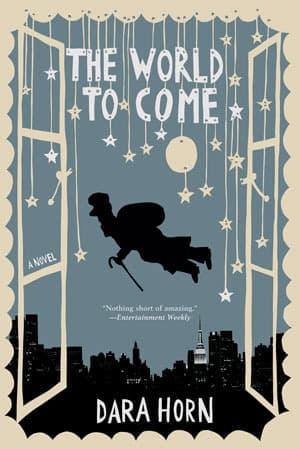
Synopsis
Covers the whole plot, including the ending.
- Difficulty
- Medium
- Pacing
- Variable
- Mood
- Introspective, Poignant, Mysterious, Historical
- Read it if
- You enjoy historical fiction that intertwines art, family secrets, and a sense of mystery, with a focus on Jewish history and the immigrant experience.
- Skip it if
- You prefer straightforward narratives without multiple timelines or deep dives into cultural and historical contexts.
The World to Come Plot Summary
Covers the whole plot, including the ending.
The Heist at the Jewish Museum
The story begins at the Jewish Museum in New York City during a singles' cocktail hour. Benjamin Ziskind, once a child prodigy but now a struggling architect, attends the event. Distracted and feeling out of place, he notices a Marc Chagall painting, 'The Study of a Fallen Angel.' He feels a strong sense of recognition, believing it once hung in his parents' living room. Benjamin impulsively steals it, leaving the museum unnoticed with the valuable artwork. This act starts a series of events that will reveal his family's hidden history and change his understanding of his past. The theft, though it seems random, comes from a deep, almost unconscious belief.
The Painting's Past and Benjamin's Conviction
After the theft, Benjamin hides the Chagall painting in his small apartment, feeling both excited and scared. He studies art catalogs and history books, trying to find where 'The Study of a Fallen Angel' came from. His belief that the painting belonged to his family grows stronger, even without official records. He remembers clear details of a similar painting from his childhood, especially how light hit it in his parents' New Jersey home. This memory, however, is unclear because his parents, especially his mother, Esther, rarely talked about their past or her family's origins.
The Revelation of Grandfather Pinchas
Benjamin's research eventually uncovers a surprising family secret: his maternal grandfather, Pinchas, was an orphan in a Jewish orphanage in Vitebsk, Soviet Russia, in the early 20th century. Marc Chagall himself taught art at this orphanage for a short time. This discovery is the first real link between his family and the stolen painting, strengthening Benjamin's belief that 'The Study of a Fallen Angel' came from his ancestors. This revelation starts to explain his mother's emotional distance and her family's reluctance to discuss their past, pointing to a history of trauma and displacement.
Pinchas's Youth in Vitebsk
The story explores Pinchas's early life in the Vitebsk orphanage. We learn about his artistic talent and his admiration for Chagall, who, despite his short time there, left a lasting impression on the young orphans. Pinchas and the other orphans learn art as a way to express themselves and survive the harsh realities of post-revolutionary Russia. During this time, a small, unfinished Chagall painting, possibly a study, comes into Pinchas's possession. This detail becomes important to Benjamin's search. The orphanage setting shows the strength of the human spirit and art's power in difficult times.
Esther's Childhood and the Painting's Presence
The story returns to Benjamin's mother, Esther, and her childhood in suburban New Jersey. We see the painting, or a very similar one, hanging in her parents' living room, just as Benjamin remembers. Esther, however, sees it as just a family heirloom, unaware of its possible value or the extraordinary story behind how it was acquired. She grows up under the shadow of her parents' unspoken past, inheriting their quiet strength and emotional reserve. Her childhood helps explain Benjamin's upbringing and his parents' reserved nature, which made him feel disconnected from his family history.
Benjamin's Vietnam War Experience
The story introduces Benjamin's father, Paul, a Vietnam War veteran. Paul's war experiences deeply affected him, leading to a quiet, often withdrawn personality. His trauma contributes to the emotional distance in the Ziskind family, making it hard for Benjamin to connect with his parents. Paul's post-war struggles, including depression and difficulty adjusting to civilian life, cast a long shadow over Benjamin's childhood. The war is another layer of unspoken history and trauma that shapes the family's dynamics and contributes to Benjamin's search for identity.
The Search for Provenance and the Art World
Driven by his discoveries, Benjamin tries to prove the stolen painting's origin, facing major difficulties. He consults art historians and experts, but his lack of official documents and the unusual circumstances of the painting's disappearance make his claims hard to prove. The art world, focused on authenticity and verifiable records, is intimidating and often unhelpful. Benjamin's journey shows the conflict between personal memory and historical record, and how truth about art and heritage can be subjective. He deals with the possibility that his memories might not be accurate.
A Confrontation with Esther
Benjamin finally confronts his mother, Esther, about the Chagall painting and her family's hidden history. Esther, at first resistant and defensive, must revisit her own painful past and the secrets she has kept for decades. Her reluctance comes from wanting to protect her children from her trauma and a long habit of silence. This confrontation is a key moment, as Esther slowly begins to share fragmented memories and confirms parts of Benjamin's research, especially about her father, Pinchas, and the painting in their home. The emotional weight of their shared history begins to surface.
The Painting's True Journey
Through Esther's fragmented memories and Benjamin's continued investigation, the full story of 'The Study of a Fallen Angel' emerges. The painting was indeed an early work by Chagall, a study or a gift to Pinchas from his time at the orphanage. Pinchas carried it through his difficult life, through displacement and immigration, as a tangible link to his past and a sign of hope. The painting's journey mirrors the family's own odyssey, surviving wars, revolutions, and personal struggles, eventually reaching America and the Ziskind household. Its value was not initially monetary, but deeply personal and symbolic.
Reconciliation and Understanding
With the full truth known, Benjamin begins to understand his family's silence, their strength, and history's deep impact on their lives. He comes to terms with his parents, especially his mother, Esther, gaining a deeper appreciation for their struggles and sacrifices. The stolen painting, now seen not just as valuable art but as a powerful family artifact, helps them heal and connect. Benjamin's own identity becomes clearer; he is no longer a detached observer but an inheritor of a rich and complex legacy. The theft, initially impulsive, becomes an act of rediscovery and self-understanding.
The World to Come Characters
Benjamin Ziskind
Protagonist
A former child prodigy turned architect who steals a Chagall painting.
Benjamin is a sensitive, intellectually curious, and somewhat melancholic individual. Once hailed as a child prodigy, he now feels adrift and unfulfilled in his architectural career. He is driven by a deep, almost subconscious yearning for connection to his family's past, which he perceives as shrouded in silence. His impulsive theft of the Chagall painting is an act of desperation and a catalyst for uncovering his hidden heritage. He struggles with feelings of inadequacy and a sense of being an outsider, even within his own family.
Relationships: Esther Ziskind (Son, seeking answers about her past); Paul Ziskind (Son, seeking connection and understanding of his father's trauma); Pinchas (Grandson, uncovering his grandfather's artistic legacy)
Esther Ziskind
Supporting
Benjamin's reserved mother, who harbors deep family secrets.
Esther is Benjamin's mother, a woman characterized by her emotional guardedness and stoicism. She inherited a history of trauma and displacement from her own parents, particularly her father, Pinchas, and has chosen to protect her children by largely remaining silent about her past. This silence, while born of love and protection, creates a distance between her and Benjamin. Her quiet strength and resilience are evident as she slowly begins to confront her memories and share her family's story.
Relationships: Benjamin Ziskind (Mother, initially withholding information but eventually revealing family history); Paul Ziskind (Wife, sharing a quiet, understanding bond despite unspoken traumas); Pinchas (Daughter, deeply influenced by his artistic and traumatic past)
Paul Ziskind
Supporting
Benjamin's father, a Vietnam War veteran haunted by his experiences.
Paul is Benjamin's father, a Vietnam War veteran whose experiences in combat have left him with deep emotional scars. He is a quiet, often withdrawn man, whose trauma contributes to the emotional distance within the Ziskind family. Despite his struggles, he is a loving father, though his expressions of affection are often understated. His post-war struggles, including depression, influence the family's dynamics and contribute to Benjamin's feeling of a missing narrative.
Relationships: Benjamin Ziskind (Father, struggling to connect due to his own war trauma); Esther Ziskind (Husband, sharing a life marked by unspoken understanding and resilience)
Pinchas
Supporting/Ancestral
Benjamin's maternal grandfather, an orphan and a student of Chagall.
Pinchas is Benjamin's maternal grandfather, a figure whose life story is central to the mystery of the Chagall painting. He grew up as an orphan in Vitebsk, Soviet Russia, where he briefly studied art under Marc Chagall. Pinchas is depicted as a resilient and artistically sensitive individual, carrying the small Chagall painting through years of displacement and hardship. He represents the survival of art and culture amidst political turmoil and personal suffering, and his experiences profoundly shaped his daughter, Esther.
Relationships: Esther Ziskind (Father, whose past profoundly impacts her life); Benjamin Ziskind (Grandfather, whose artistic legacy Benjamin unknowingly seeks)
Marc Chagall
Mentioned/Influential
The renowned artist whose painting is at the center of the story.
Marc Chagall is the celebrated artist whose painting, 'The Study of a Fallen Angel,' is stolen by Benjamin. Though not a direct character in the present-day narrative, his presence is deeply felt throughout the novel. He taught art at the Vitebsk orphanage where Pinchas resided, making him a crucial link in the family's history. His art, with its themes of memory, displacement, and Jewish identity, mirrors the core themes of the book. The painting itself acts as a tangible symbol of heritage and the enduring power of art.
Relationships: Pinchas (Teacher, inspiring and influencing Pinchas's early artistic life); Benjamin Ziskind (The artist whose work unlocks Benjamin's family history)
Elsa
Supporting
Benjamin's ex-girlfriend, an art restorer.
Elsa is Benjamin's ex-girlfriend, an art restorer who occasionally provides him with insights into the art world and the technical aspects of paintings. She represents a more pragmatic and professional approach to art, contrasting with Benjamin's emotional and personal connection. While their romantic relationship is over, she offers a sounding board and a dose of reality for Benjamin's increasingly obsessive quest. Her expertise helps Benjamin understand the physical properties of the painting.
Relationships: Benjamin Ziskind (Ex-girlfriend, offering professional advice and a past connection)
The Museum Curator
Mentioned
The person responsible for the stolen Chagall painting.
The Museum Curator, though not a named character, represents the institutional aspect of the art world. They embody the established authority and the official provenance of artworks. The curator's perspective would be one of loss and the desire for the painting's return, highlighting the conflict between Benjamin's personal claim and the museum's legal ownership. This character symbolizes the forces Benjamin is implicitly working against in his quest.
The World to Come Themes
The Power of Art and Memory
The novel shows how art holds memory, history, and personal identity. The stolen Chagall painting is not just a valuable item but a real link to Benjamin's family's past, especially his grandfather Pinchas's life in a Soviet orphanage. The painting contains the unspoken histories and traumas passed down. Benjamin's recognition of the painting, even before knowing its full story, highlights a deep connection to inherited memory. Art here connects people to their ancestors and reveals hidden truths, as Benjamin's research confirms his feeling about the artwork.
“A painting, Benjamin thought, was a kind of memory, a record of something seen, something felt, something passed on.”
The Weight of Unspoken History and Trauma
A main theme is the lasting effect of historical trauma and the silence around it. Both Esther's parents, particularly Pinchas's experiences in Soviet Russia, and Paul's service in the Vietnam War, create unspoken pain within the Ziskind family. This silence, meant to protect, instead causes emotional distance for Benjamin. The novel shows how such unaddressed histories can subtly shape later generations, appearing as emotional reserve and a desire for understanding. Slowly uncovering these secrets helps the family heal and connect, showing that acknowledging the past, even if painful, is necessary for true connection.
“Silence was not empty; it was a container, holding all the things no one dared to say.”
Identity and Belonging
Benjamin's journey is a search for identity and belonging. Feeling lost, his impulsive act of stealing the Chagall painting is a subconscious effort to reclaim part of his heritage. As he uncovers his family's history, especially his Jewish roots and his grandfather's artistic past, Benjamin begins to understand where he comes from and who he is. The painting symbolizes his inherited identity, linking him to a line of strength, art, and survival. This search for self is tied to understanding his family's place in history and the world.
“He hadn't stolen a painting; he had stolen a question, and the answer was himself.”
The Nature of Truth and Authenticity
The novel explores the complex nature of truth, especially concerning art and personal stories. Benjamin's 'truth' about the painting—that it belonged to his family—first conflicts with the official 'truth' of the art world, which relies on documented origins. The story highlights the tension between objective historical facts and subjective personal memories, and how both contribute to a full understanding. The authenticity of the Chagall, whether a finished masterpiece or a study, becomes less important than its real connection to the Ziskind family's experience, suggesting that true value can be more than market price.
“Truth wasn't a single clear line, but a tapestry woven from memory and fact, from what was said and what remained silent.”
Plot Devices & Literary Techniques
The Stolen Chagall Painting
A priceless artwork that acts as the central mystery and catalyst.
The Chagall painting, 'The Study of a Fallen Angel,' is the primary plot device. It serves as both the inciting incident (Benjamin's theft) and the object of his quest. The painting is a MacGuffin in that its immediate value is less important than what its pursuit reveals. It is a tangible link to Benjamin's family history, particularly his grandfather Pinchas's connection to Chagall. The painting's provenance, its journey through time, and its symbolic significance drive the entire narrative, connecting disparate timelines and characters.
Flashbacks and Interwoven Narratives
The story shifts between Benjamin's present and his family's past.
The novel employs a non-linear narrative structure, frequently shifting between Benjamin's present-day investigation and detailed flashbacks to his family's past, particularly Pinchas's youth in Soviet Russia and Esther's childhood. This device slowly reveals layers of family history and trauma, mirroring Benjamin's own process of discovery. The interwoven narratives create suspense and allow the reader to piece together the mystery alongside Benjamin, enriching the understanding of how historical events profoundly shape individual and familial identities across generations.
The Unreliable Narrator/Memory
Benjamin's initial memories and assumptions about the painting are questioned.
Early in the novel, Benjamin's certainty about the painting's origin in his parents' home is presented as a strong, almost instinctual memory. However, the narrative subtly questions the absolute reliability of this memory, particularly in the face of the art world's skepticism and his family's silence. This device creates suspense and forces Benjamin (and the reader) to critically evaluate what is remembered versus what is fact. It highlights how personal narratives can be shaped by desire, trauma, and the passage of time, making the eventual revelation of the 'true' story all the more impactful.
The Jewish Museum Setting
The initial location of the theft, symbolic of cultural heritage.
The Jewish Museum in New York City serves as more than just a setting for the initial theft; it is a symbolic plot device. As an institution dedicated to preserving Jewish culture and history, it subtly underscores the novel's themes of heritage, identity, and the importance of remembering the past. Benjamin's act of stealing the Chagall from such a place, rather than a private gallery, adds a layer of irony and complexity to his quest, suggesting a deeper, almost ancestral claim to what is housed within its walls.
The World to Come Quotes
“The past, she thought, was not a story to be told, but a landscape to be inhabited.”
“Perhaps the only true immortality was not in being remembered, but in being misunderstood.”
“Every object, every artifact, carried a ghost of its maker, a whisper of its journey.”
“Grief was a language spoken in silence, a country where everyone was a foreigner.”
“To create was to invite chaos, to impose order on a universe that preferred entropy.”
“The future was merely the past, rearranged and re-costumed, but still playing the same old tunes.”
“Love, she realized, was not a destination but a constant act of translation.”
“The greatest mysteries were not out in the cosmos, but hidden within the folds of a single human heart.”
“Every secret kept was a small death, a piece of oneself walled off from the light.”
“Art was not an escape from reality, but a deeper dive into its most hidden currents.”
“To forget was not to forgive, but to surrender to the slow erosion of meaning.”
“The world was full of echoes, if only you knew how to listen for them.”
“Perhaps the true miracle was not in rising from the dead, but in finding a way to live among the living after having been touched by death.”
Quiz
10 questions on the plot and the characters. Each answer comes with a short explanation.
Question 1
What kind of event is taking place at the museum when the Chagall painting is stolen?
- A formal gala
- A children's art workshop
- A singles' cocktail hour
- A private auction viewing
Show answer
C. A singles' cocktail hour The book explicitly states that the million-dollar Chagall is stolen from a museum during a singles' cocktail hour.
Question 2
Who is the unlikely thief of the Chagall painting?
- The museum's head curator
- A professional art forger
- Benjamin Ziskind
- An anonymous art collector
Show answer
C. Benjamin Ziskind The description identifies the unlikely thief as former child prodigy Benjamin Ziskind.
Question 3
What is Benjamin Ziskind's primary motivation for stealing the Chagall painting?
- To sell it for a large profit
- He believes it once belonged to his parents
- To protest the museum's policies
- He was hired by a third party
Show answer
B. He believes it once belonged to his parents Benjamin Ziskind is convinced that the painting once hung in his parents' living room, which is his motivation for the theft.
Question 4
Where did the Chagall painting's history begin for Benjamin's family, according to the book's premise?
- A wealthy estate in pre-war France
- An orphanage in Soviet Russia
- A struggling artist's studio in New York
- A Jewish community center in Poland
Show answer
B. An orphanage in Soviet Russia The painting 'opens a door through which we discover his family's startling history--from an orphanage in Soviet Russia where Chagall taught.'
Question 5
What role did Marc Chagall play in the orphanage mentioned in Benjamin's family history?
- He was a benefactor and donor
- He was a student there in his youth
- He taught at the orphanage
- He curated its art collection
Show answer
C. He taught at the orphanage The book states Benjamin's family history began 'from an orphanage in Soviet Russia where Chagall taught.'
Question 6
The book's description implies the Chagall painting serves as a catalyst for what kind of exploration?
- A police procedural investigation
- A detailed analysis of Chagall's artistic techniques
- Benjamin Ziskind's family history and heritage
- The ethics of art ownership and repatriation
Show answer
C. Benjamin Ziskind's family history and heritage The text states the painting 'opens a door through which we discover his family's startling history.'
Question 7
Which of the following locations is NOT mentioned as part of Benjamin's family's journey or history?
- Soviet Russia
- Suburban New Jersey
- The jungles of Vietnam
- Post-war Berlin
Show answer
D. Post-war Berlin The description specifies the family history spans 'from an orphanage in Soviet Russia... to suburban New Jersey and the jungles of Vietnam.' Post-war Berlin is not mentioned.
Question 8
Given the genres of 'Historical Fiction, Creativity, Mystery,' what thematic element is most likely explored through Benjamin's belief about the painting?
- The economic impact of art theft on museums
- The subjective nature of memory and personal connection to objects
- The legal ramifications of claiming stolen art
- The technical challenges of authenticating artworks
Show answer
B. The subjective nature of memory and personal connection to objects Benjamin's conviction that the painting belonged to his parents, despite its museum presence, strongly suggests themes of memory, personal history, and the emotional connection to objects, aligning with 'Creativity' and 'Mystery' in uncovering this personal truth.
Question 9
How does Benjamin Ziskind's past as a 'former child prodigy' likely influence his character or the narrative's direction?
- It suggests he has a highly developed criminal mind for planning the theft.
- It implies a unique intellect or sensitivity that allows him to perceive a hidden connection to the painting.
- It indicates a past career in art restoration, making him familiar with paintings.
- It explains his financial need, driving him to steal for money.
Show answer
B. It implies a unique intellect or sensitivity that allows him to perceive a hidden connection to the painting. Being a 'child prodigy' suggests exceptional abilities, which in the context of a mystery about a stolen painting and a deep family history, points towards a unique insight or intuition about the painting's true provenance and its connection to him, rather than purely criminal intent or financial motivation.
Question 10
The phrase 'This work of art opens a door' metaphorically suggests the painting is primarily a conduit for what?
- A new career opportunity for Benjamin
- A journey into Benjamin's family's past and secrets
- International art diplomacy
- The establishment of new museum security protocols
Show answer
B. A journey into Benjamin's family's past and secrets The description states, 'This work of art opens a door through which we discover his family's startling history.' This clearly indicates the painting is a symbolic key to unlocking the past.
The World to Come FAQ
What is the central mystery driving the plot of 'The World to Come'?
The central mystery revolves around the theft of a million-dollar Chagall painting from a museum by Benjamin Ziskind. Benjamin believes the painting rightfully belongs to his family, having once hung in his parents' living room, leading him to uncover the painting's true history and its connection to his lineage.
Who is Benjamin Ziskind and what is his background?
Benjamin Ziskind is a former child prodigy, now an adult working as a museum guard. Despite his past brilliance, he lives a somewhat unremarkable life until he orchestrates the theft of a Chagall painting, convinced of its personal significance to his family.
How does the stolen Chagall painting connect to Benjamin's family history?
The stolen Chagall painting acts as a crucial link, opening a portal to Benjamin's family's startling history. Its journey from a Soviet Russian orphanage, where Chagall himself taught, to suburban New Jersey and the jungles of Vietnam, mirrors the complex and often tragic path of his ancestors.
What historical periods and locations does the narrative explore?
The narrative spans several significant historical periods and locations, including early 20th-century Soviet Russia, particularly an orphanage where Chagall taught, post-World War II suburban New Jersey, and the Vietnam War era. This allows for a rich exploration of Jewish diaspora and trauma.
What role does creativity play in the lives of the characters, particularly in relation to the Chagall painting?
Creativity, particularly through the Chagall painting, serves as both a source of beauty and a means of survival and expression for the characters. It's not just a physical object but a vessel for memory, identity, and the transmission of family stories across generations, impacting artists and those who appreciate art.
What is the significance of the Soviet Russian orphanage in the family's past?
The Soviet Russian orphanage is a pivotal location where Benjamin's ancestors, specifically his great-uncle Lazar, had direct contact with Marc Chagall. This is where the painting's origins are rooted, and it represents a period of both hardship and unexpected artistic influence that shaped the family's connection to art.
How does the novel explore the theme of 'lost' or 'hidden' family members?
The novel subtly explores lost family members through Benjamin's quest, revealing ancestors like Lazar who were thought to be lost or whose stories were obscured. It highlights how trauma and displacement can lead to fragmented family histories, which Benjamin attempts to piece together.
Are there any symbolic recurring motifs or objects besides the Chagall painting?
Beyond the Chagall painting, the novel features recurring motifs such as the idea of 'doubles' or doppelgängers, reflecting fragmented identities and lost connections. Also, specific objects like photographs or letters often serve as catalysts for memory and discovery, linking different generations.
How does Benjamin's past as a child prodigy influence his adult actions and perception of the world?
Benjamin's past as a child prodigy leaves him with a profound sense of unfulfilled potential and a unique, often isolated, perspective. This background fuels his conviction about the Chagall painting and his willingness to defy norms, as he trusts his extraordinary intuition over conventional logic.
What psychological impact does generational trauma have on Benjamin and his family members?
Generational trauma profoundly impacts Benjamin and his family, manifesting as a deep-seated sense of loss, displacement, and a yearning for connection to their past. This inherited trauma drives Benjamin's obsessive pursuit of the painting, as it symbolizes a way to heal historical wounds and reclaim identity.
How do the characters grapple with questions of identity and belonging?
Characters in the novel grapple with identity and belonging through their ancestral narratives, often feeling disconnected from their heritage or struggling to define themselves in new environments. Benjamin's quest for the painting is a direct manifestation of his search for identity and a place within his family's complex history.
What role does memory, both personal and collective, play in the narrative?
Memory, both personal and collective, is central to the narrative, shaping characters' perceptions and driving their actions. Benjamin's personal memories of the painting merge with the collective memories of his family's history, demonstrating how past events continue to influence the present and define identity.
Is Benjamin Ziskind a reliable narrator, and how does the author use his perspective?
Benjamin Ziskind is not entirely a reliable narrator, as his deep conviction and personal biases often color his interpretation of events. The author uses his subjective perspective to create ambiguity and invite readers to question the nature of truth, memory, and obsession, making his journey more complex.
How does the author use the historical settings to comment on broader themes of displacement and the Jewish experience?
The author masterfully uses historical settings like Soviet Russia and the Vietnam War era to highlight themes of displacement, persecution, and resilience inherent in the Jewish experience. These backdrops emphasize the constant search for home, identity, and the enduring power of cultural heritage amidst adversity.
What is the ultimate significance of the Chagall painting beyond its monetary value?
Beyond its monetary value, the Chagall painting symbolizes the enduring power of art to carry history, memory, and identity across generations. It represents a tangible link to a lost past, a testament to survival, and a catalyst for Benjamin to understand his family's legacy and his own place within it.
Does the novel offer a definitive answer to the painting's true ownership, or is it left ambiguous?
The novel offers a complex exploration of ownership, both legal and emotional, rather than a simple definitive answer. While Benjamin believes it's his family's, the narrative delves into the nuanced concept of who truly 'owns' a piece of history and art, leaving some ambiguity for reader interpretation.
How does the novel explore the tension between artistic creation and personal suffering?
The novel deeply explores the tension between artistic creation and personal suffering, particularly through the context of Chagall's work and Benjamin's family history. It suggests that profound suffering can often fuel artistic expression, yet art also serves as a means of processing, preserving, and even transcending that pain.
What message does the ending convey about the nature of family legacy and the search for truth?
The ending conveys that family legacy is a complex, often fragmented tapestry woven from both truth and myth, and that the search for truth is an ongoing, deeply personal journey. It suggests that understanding one's past is less about finding definitive answers and more about embracing the stories and connections that define us.
About the author

Dara Horn is a critically acclaimed author known for her insightful and often humorous fiction that explores themes of Jewish identity and history. Her novel, 'The World to Come,' was a finalist for the National Book Award. Horn holds a PhD in comparative literature from Harvard University and has received numerous accolades for her work.
Similar books
- The History of Love
Nicole Krauss
3.9 (121k) average on GoodreadsLiterary FictionExplores Jewish history, lost manuscripts, and interconnected lives across generations with a blend of humor and poignancy.
- A Gentleman in Moscow
Amor Towles
4.3 (293k) average on GoodreadsLiterary FictionFeatures a rich historical setting, a focus on resilience, and a deep appreciation for art and culture amidst political upheaval.
- The Plot Against America
Philip Roth
3.8 (48k) average on GoodreadsLiterary FictionOffers an alternative historical perspective on Jewish American life, exploring themes of identity and belonging in a tumultuous era.
- The Amazing Adventures of Kavalier & Clay
Michael Chabon
4.2 (184k) average on GoodreadsLiterary FictionWhile both explore Jewish identity and WWII impact, Chabon's work uses a more adventurous, pulpy lens focused on comics, whereas Horn's is more introspective and concerned with internal lives and subtle historical reverberations.
- To Kill a Mockingbird
Harper Lee
4.3 (4.5M) average on GoodreadsHistorical FictionIn the 1930s Jim Crow South, Harper Lee writes about racial injustice, moral growth, and the quiet courage of a lawyer father, Atticus Finch, as seen through his young daughter's eyes.
- The Great Gatsby
F. Scott Fitzgerald
3.9 (3.8M) average on GoodreadsHistorical FictionIn the opulent Roaring Twenties, a mysterious millionaire's lavish parties hide his desperate, tragic pursuit of a lost love, exposing the emptiness within the American Dream.




Enjoyed the summary?
A summary gives you the shape of the book. The book itself has the detail, the examples and the voice.
Find The World to Come on AmazonAs an Amazon Associate, BookBrief earns from qualifying purchases. How we're funded