

Synopsis
Covers the whole plot, including the ending.
- Difficulty
- Medium
- Pacing
- Moderate
- Mood
- Epic, Nostalgic, Bittersweet, Ambitious, Melancholy
- Read it if
- You love rich, character-driven historical fiction with a strong sense of place, exploring themes of art, identity, escapism, and the American dream against the backdrop of WWII and the golden age of comic books.
- Skip it if
- You prefer fast-paced thrillers or minimalist prose; this book is long, dense, and takes its time developing characters and plot.
The Amazing Adventures of Kavalier & Clay Plot Summary
Covers the whole plot, including the ending.
Prague to Brooklyn: Joe's Escape and Sammy's Ambition
In October 1939, Josef Kavalier, a nineteen-year-old Jewish magician and artist, is smuggled out of Nazi-occupied Prague in a coffin and arrives in New York City. His aunt and uncle in Brooklyn take him in, where he meets his younger cousin, Sammy Clay (born Klayman), a writer with big plans in the new comic book industry. Sammy works for the Empire Novelty Company, run by Sheldon Anapolis. He sees Joe's artistic talent and knowledge of escapology and magic as a good match for his own storytelling. They decide to work together, driven by Joe's wish for a hero who can fight real evil and Sammy's skill with pulp fiction. Their first ideas create the foundation for their most famous character.
The Birth of the Escapist and Empire Comics
Joe and Sammy create their main character, the Escapist, a masked crime-fighter whose powers come from illusion and the ability to escape any trap. The Escapist becomes a sign of hope against oppression, showing Joe's experiences in Europe and his wish for revenge against the Nazis. They also create other characters, like Luna Moth and the Monitor. Sheldon Anapolis sees the potential and gives them their own imprint, Empire Comics. The Escapist's first appearance in 'Amazing Midget Radio Comics' is a hit, quickly leading to his own comic title. Their work together succeeds, mixing Joe's dramatic art with Sammy's clever stories, making them important figures in the Golden Age of comics.
Rosa Saks Enters Their Lives
As the Escapist gets popular, Joe and Sammy move into an apartment in Greenwich Village, joining the artistic and intellectual community there. They meet Rosa Saks, a beautiful and smart young woman who wants to be an artist and becomes Joe's art student. Rosa quickly inspires both cousins, influencing the character of Luna Moth and their work. Joe is very attracted to her, and she to him, leading to a passionate relationship. Sammy, who is secretly gay and struggles with his identity in a restrictive time, also has strong feelings for Rosa, though she does not acknowledge his complex emotions.
Love, Betrayal, and the Golem
Joe and Rosa's relationship grows, and they marry. Meanwhile, Sammy struggles with his developing gay identity, finding comfort in the underground queer scene but staying closeted to most people. Joe, increasingly desperate to save his younger brother, Thomas, from Nazi-occupied Czechoslovakia, becomes focused on the legend of the Golem. He thinks he can bring a clay Golem to life to smuggle Thomas out of Europe. He builds a large clay figure in his studio, putting his desperate hope into it. The cousins' personal lives become more and more connected with their creative work, as their worries and desires fuel the Escapist's stories.
The Escapist vs. the Nazis and Personal Tragedy
As World War II gets worse, the Escapist becomes a strong symbol against fascism, fighting characters like Nazis in the comics. This shows Joe's personal pain and wish for revenge. Joe and Sammy, with Rosa, go to a big party at Salvador Dalí's home, a surreal event that shows their involvement in the artistic avant-garde. However, a telegram brings bad news: Joe's brother, Thomas, has been killed in the Holocaust. This news breaks Joe, leading him into a deep sadness and making him want to act directly against the Nazis, feeling his comic book heroism is not enough.
Joe Joins the War Effort and Sammy's Secret
Overwhelmed by sadness and feeling helpless, Joe quickly joins the Navy after Pearl Harbor, leaving behind a pregnant Rosa and a shocked Sammy. He goes absent without leave during basic training, trying to steal a battleship to sail to Europe and fight the Nazis directly, but he is caught and sent to an isolated base in Alaska. Back in New York, Rosa gives birth to a son, Thomas Kavalier, named after Joe's dead brother. Sammy feels a strong responsibility and deep love for Rosa and the baby, stepping in as a father, raising Thomas as his own and keeping Joe's desertion a secret from the child. He continues to run Empire Comics, making sure they have money.
Life in Alaska and the Search for Joe
For years, Joe Kavalier lives alone on a remote naval base in Alaska, working as a radio operator. He continues to draw, creating his own dark, personal comics that show his inner struggles and grief. He carefully plans his escape, wanting to return to his family. Meanwhile, Sammy and Rosa raise Thomas in New York, keeping up the appearance of a normal family. Sammy becomes a successful, if somewhat unhappy, comic book writer and executive, while Rosa becomes a successful photographer. They sometimes receive unclear postcards from Joe, hinting at his location but never saying when he will return, leaving them always wanting and unsure.
The Comic Book Inquisition and Joe's Return
In the mid-1950s, the comic book industry faces strong public criticism and moral panic, led by figures like Dr. Fredric Wertham, who blames comics for juvenile delinquency. Empire Comics, like others, must follow the strict Comics Code Authority. During this time, Joe Kavalier finally returns to New York, having successfully escaped his military post in Alaska. He is a changed man, toughened by his experiences but still having his artistic passion. His unexpected return immediately creates tension and problems in the carefully built lives of Sammy, Rosa, and their son, Thomas, who has grown up believing Sammy is his biological father.
Reunion and Revelation
Joe's return makes them confront the past. He struggles to reconnect with Rosa and to understand his son, Thomas, who sees him as a stranger. The truth of Thomas's parentage, kept secret by Sammy and Rosa for years, slowly starts to come out. Sammy, very attached to Thomas, faces the painful chance of losing the boy he has raised. The reunion is full of unspoken resentments, complicated feelings, and the lasting shadow of Joe's disappearance. Despite the difficulties, they make a tentative attempt to rebuild their broken family, centered on their shared history and the Escapist's legacy.
The Escapist's Last Stand and a New Beginning
As the comic book industry changes, Joe and Sammy decide to work together on one last, big Escapist story, a graphic novel that finishes their creative partnership and shows their personal journeys. This project allows them to work through their unsolved problems, finding some understanding and forgiveness. Joe finally accepts Sammy's role in raising Thomas, and Sammy acknowledges Joe's lasting connection to Rosa and their son. The story ends with a bittersweet resolution, as the Kavalier and Clay story, both personal and professional, reaches a moving end, suggesting new beginnings and the lasting power of their shared creations.
Principal Figures
Josef Kavalier (Joe)
Protagonist
A gifted artist and magician, refugee from Prague, driven by a desire for justice and escape.
Joe Kavalier is a nineteen-year-old Jewish artist and escape artist who flees Nazi-occupied Prague. He is intensely focused, driven by a deep sense of justice, and haunted by the fate of his family in Europe. His artistic talent is prodigious, bringing the Escapist to life with dynamic, powerful imagery. Joe is a man of action and passion, often impulsive, as seen in his enlistment in the Navy and his subsequent AWOL attempt. He struggles with grief, survivor's guilt, and a longing for retribution, which he channels into his art. He is complex, often remote, but deeply loving towards Rosa and, eventually, his son, Thomas.
Relationships: Sammy Clay (Cousin and creative partner); Rosa Saks (Wife and muse); Thomas Kavalier (Son); Thomas Kavalier (brother) (Deceased younger brother, a constant motivation)
Sammy Clay (Klayman)
Protagonist
Joe's Brooklyn cousin, a talented writer and shrewd businessman, grappling with his hidden sexuality.
Sammy Clay is Joe's younger cousin, a sharp, witty, and ambitious writer who dreams of making it big in the comic book world. He is the more grounded and pragmatic of the two, handling the business side of Empire Comics and navigating the social complexities of the era. Sammy is secretly gay, a fact that causes him immense internal conflict and shapes his relationships, particularly his deep, unspoken love for Rosa and his profound paternal bond with Thomas. He is loyal, caring, and ultimately selfless, taking on the responsibility of raising Thomas in Joe's absence. His character provides much of the narrative's emotional depth and humor.
Relationships: Joe Kavalier (Cousin and creative partner); Rosa Saks (Close friend, unrequited love, co-parent); Thomas Kavalier (Adoptive father figure); Tracy Bacon (Lover and fellow artist)
Rosa Saks
Supporting
Joe's wife and Sammy's confidante, an artist and photographer who becomes a central figure in both cousins' lives.
Rosa Saks is a beautiful, intelligent, and independent young woman who becomes Joe's art student, muse, and eventually his wife. She is artistic and spirited, inspiring the character of Luna Moth. Rosa is drawn to Joe's intensity and passion but also develops a deep, enduring bond with Sammy. She endures the pain of Joe's disappearance and the societal pressure of raising a child out of conventional wedlock, relying on Sammy's support. She is resilient and resourceful, eventually becoming a successful photographer. Rosa represents stability and continuity for both men, holding their fractured family together.
Relationships: Joe Kavalier (Husband, father of her child); Sammy Clay (Close friend, co-parent, confidante); Thomas Kavalier (Son)
Thomas Kavalier
Supporting
Joe and Rosa's son, raised by Sammy, whose identity is entwined with the family's secrets.
Thomas Kavalier is the son of Joe and Rosa, named after Joe's deceased brother. He grows up believing Sammy is his biological father, creating a complex web of identity and loyalty. Thomas is a sensitive and intelligent boy, deeply attached to Sammy. His existence is a testament to the family's resilience and the compromises made in the wake of war and loss. His eventual discovery of his true parentage is a pivotal moment, forcing him to reconcile his understanding of his family with a hidden past. He represents the future and the legacy of both Kavalier and Clay.
Relationships: Joe Kavalier (Biological father); Rosa Saks (Mother); Sammy Clay (Adoptive father figure, beloved 'dad')
Sheldon Anapolis
Supporting
Owner of Empire Novelty and Empire Comics, a shrewd and opportunistic businessman.
Sheldon Anapolis is the owner of Empire Novelty, the company that gives Joe and Sammy their start in the comic book business. He is a pragmatic and often ruthless businessman, primarily interested in profit. While he recognizes and exploits the talents of Joe and Sammy, he is also representative of the exploitative aspects of the early comic industry. He provides the initial opportunity for the cousins but also serves as a source of friction, particularly when it comes to creative control and financial dealings. He is a key figure in the infrastructure that allows the Escapist to flourish.
Relationships: Joe Kavalier (Employee); Sammy Clay (Employee)
Tracy Bacon
Supporting
A charismatic radio personality and actor, Sammy's lover.
Tracy Bacon is a charming and openly flamboyant radio personality and actor who becomes Sammy's lover. He offers Sammy a glimpse into a more liberated life and a space where he can be himself, away from the constraints of his family and profession. Tracy is confident and embraces his identity, providing a stark contrast to Sammy's internal struggles. Their relationship is significant for Sammy's character development, allowing him to explore his sexuality and find emotional intimacy outside of his complicated family dynamic. He represents the hidden queer world of 1940s New York.
Relationships: Sammy Clay (Lover)
George Deasey
Supporting
Empire Comics' art director and a supportive friend to Joe and Sammy.
George Deasey is the art director at Empire Comics, a kind and steady presence in the chaotic world of comic book production. He is a loyal friend and colleague to Joe and Sammy, often acting as a mediator and providing a sense of stability. George appreciates their artistic vision and helps them navigate the demands of Sheldon Anapolis. He is a witness to their triumphs and struggles, offering quiet support and professional guidance. His character embodies the camaraderie and passion within the early comic book industry.
Relationships: Joe Kavalier (Colleague and friend); Sammy Clay (Colleague and friend)
Longman Harkaway
Supporting
A fellow comic book writer and friend of Sammy's.
Longman Harkaway is a fellow writer at Empire Comics and a friend of Sammy's. He is part of the broader community of creators, sharing the excitement and struggles of the nascent industry. Harkaway provides a sounding board for Sammy's ideas and frustrations, offering a sense of peer companionship. He represents the larger landscape of creative talent surrounding Kavalier and Clay, contributing to the vibrant, competitive atmosphere of early comic books.
Relationships: Sammy Clay (Colleague and friend)
Dr. Fredric Wertham
Mentioned
Real-life psychiatrist and critic of comic books.
Dr. Fredric Wertham is a real historical figure whose anti-comic book crusade significantly impacted the industry in the 1950s. In the novel, he is mentioned as the primary antagonist of the comic book world, symbolizing the moral panic and censorship that Kavalier and Clay, along with their peers, had to face. His influence leads to the Comics Code Authority, forcing changes in the content and tone of their work.
Themes & Insights
Identity and Self-Discovery
The novel looks at how characters create and understand who they are, both personally and creatively. Joe deals with his Jewish background, his past as a refugee, and his role as an artist and avenger. Sammy struggles deeply with his hidden homosexuality and his desire for a normal life, leading him to create a new identity as Thomas's father. Rosa also looks for her identity as an artist and a woman managing unusual relationships. Making the Escapist itself is a way of finding oneself, letting Joe and Sammy put their inner selves onto a hero.
“For the superhero was, by his nature, an outlaw. An outlaw with a badge, a cop who worked outside the system, but an outlaw nonetheless.”
Escape and Freedom
Escape is a main idea in the novel, both literally and figuratively. Joe's escape from Prague starts the story, and his training as an escape artist shapes his character and the creation of the Escapist. The Escapist shows the wish for freedom from oppression, whether from Nazi rule or everyday limits. Sammy seeks escape from social expectations about his sexuality. The characters constantly try to escape their pasts, their sadness, and the limits placed on them, finding comfort and freedom in their art and, sometimes, in each other.
“The secret to escaping any trap, Joe Kavalier had explained, was to make the trap part of you.”
The Power of Art and Storytelling
The novel shows how art and storytelling, especially comic books, can change things. For Joe and Sammy, creating the Escapist is not just a job; it is a way to deal with trauma, fight injustice, and express their deepest desires and fears. Their comics offer a form of wish fulfillment and a voice for those without one. The Escapist becomes a cultural phenomenon, bringing hope and showing resistance during wartime. The act of creation also connects the cousins, giving them a shared purpose and a legacy that goes beyond their personal struggles.
“He drew his heroes with an almost painful exactitude, as if by giving them definition, by giving them flesh and bone and muscle and costume, he could, by force of will, make them real.”
Family and Legacy
Family, in different forms, is a main idea. The novel looks at the complex bonds between cousins Joe and Sammy, their adoptive family with Rosa and Thomas, and the sad loss of Joe's original family in the Holocaust. The idea of legacy is explored through names (Thomas Kavalier), the lasting impact of the Escapist, and the connections between generations made through love and sacrifice. The characters deal with what it means to be a family, often changing traditional roles and finding strength in unusual arrangements.
“He loved the boy with the ferocity of a father, and with the desperate, guilty devotion of a man who had stolen a child from his true father.”
The American Dream and Assimilation
The novel looks at the immigrant experience and the pursuit of the American Dream in the mid-20th century. Joe, a Jewish refugee, comes to America looking for safety and opportunity, finding both in the new comic book industry. He and Sammy, both from immigrant backgrounds, achieve great success, creating an iconic American superhero. However, the dream is complicated by the prejudices of the time, the pressures of fitting in, and the lasting effects of the European war. The story shows the promise and the difficulties of building a new life and identity in a new country.
“He knew that in America, a man could be anything, even a superhero. Especially a superhero.”
Plot Devices & Literary Techniques
The Escapist (Superhero)
A fictional superhero who embodies themes of freedom, justice, and personal struggle.
The Escapist is the central creation of Joe and Sammy, a masked magician-hero whose powers are rooted in escape and illusion. He serves as a powerful symbol throughout the novel, reflecting Joe's desire for revenge against the Nazis and Sammy's yearning for freedom. The Escapist's adventures parallel the real-world struggles of the characters, acting as a wish-fulfillment fantasy and a means for them to process their trauma and desires. He also represents the creative legacy that binds the cousins together and influences their lives long after his initial creation.
The Golem
A mystical clay figure from Jewish folklore, representing Joe's desperate hope and grief.
The Golem is a figure from Jewish mysticism, a clay automaton brought to life to protect the Jewish people. Joe becomes obsessed with the legend, believing he can animate a Golem to rescue his brother from Nazi Europe. He constructs a large clay figure in his studio, pouring his grief and desperate hope into it. The Golem symbolizes Joe's helplessness and his yearning for a magical solution to real-world horrors. It also connects him to his Jewish heritage and the ancient power of his people, even as it ultimately fails to fulfill its intended purpose, underscoring the limits of magical thinking against the brutality of war.
Magic and Illusion
A recurring motif that blurs the lines between reality and fantasy, reflecting characters' desires and the nature of comics.
Magic, particularly stage magic and escapology, is a significant motif. Joe's background as an escape artist and his fascination with Houdini directly influence the Escapist. This motif extends beyond the literal, permeating the characters' lives as they use illusion to cope with reality – Sammy's closeted life, the illusion of a traditional family, and the fantasy worlds they create in their comics. Magic represents both the power of imagination to transform and the ways in which people construct elaborate deceptions, for themselves and others, to navigate difficult truths. It highlights the blurred boundary between the mundane and the extraordinary, much like the comics themselves.
The Comic Book Industry
The historical backdrop and a dynamic force shaping the characters' lives and the narrative.
The burgeoning comic book industry of the Golden Age and its subsequent decline and transformation serves as both the setting and a major plot device. It provides the opportunity for Joe and Sammy to achieve success, but also subjects them to its commercial pressures, censorship (via Dr. Wertham and the Comics Code Authority), and evolving trends. The industry's history parallels the characters' personal trajectories, reflecting periods of optimism, struggle, and adaptation. It grounds the fantastical elements of the story in a specific historical and cultural context, showing how art forms emerge and evolve in response to societal forces.
The Amazing Adventures of Kavalier & Clay Quotes
“Every man has a compass in his heart, and that compass always points north, but it is up to him to decide what direction north is.”
“The world was a puzzle, and it was up to him to put the pieces together, and if he couldn't find the right pieces, he would make them.”
“There were two kinds of people in the world, those who were afraid of the dark, and those who were afraid of the light.”
“He understood then that the truest magic was not in the illusion, but in the belief.”
“The greatest trick the devil ever pulled was convincing the world he didn't exist. The greatest trick the superhero ever pulled was convincing the world he did.”
“What are the two most important things in life? Love and magic. Without magic, there is no love. Without love, there is no magic.”
“He had always believed that the world was a kind of story, and that if you paid close enough attention, you could hear its plot unfolding.”
“That's the thing about escape. It only works if you have somewhere to go.”
“Every secret is a kind of magic, a way of bending the rules of the world.”
“He knew then that the only way to truly escape was to create something new, something that had never existed before.”
“The past is a foreign country; they do things differently there.”
“You can't save the world, but you can save a piece of it.”
“There are some things you can only learn in the dark.”
“The thing about stories, the thing about art, is that it's a way of making sense of the chaos.”
Quiz
10 questions on the plot and the characters. Each answer comes with a short explanation.
Question 1
What is Joe Kavalier's primary artistic skill that he brings to the comic book partnership?
- Writing intricate plotlines
- Mastering the business side of publishing
- Drawing detailed and dynamic illustrations
- Composing musical scores for comic adaptations
Show answer
C. Drawing detailed and dynamic illustrations Joe Kavalier is an artist, described as bringing his skill in drawing to the partnership with Sammy Clay, who handles the writing and conceptualization.
Question 2
From what European city does Joe Kavalier escape at the beginning of the novel?
- Berlin
- Warsaw
- Prague
- Vienna
Show answer
C. Prague The book description explicitly states that Joe Kavalier smuggled himself out of Nazi-invaded Prague.
Question 3
What is the name of the superhero duo created by Kavalier and Clay that becomes their most famous creation?
- The Sentinel
- The Escapist
- Captain Liberty
- The Golem
Show answer
B. The Escapist The book description clearly names 'the Escapist' as one of the heroes created by Kavalier and Clay.
Question 4
Besides his artistic talent, what unique skill set does Joe Kavalier possess, inspired by a famous historical figure?
- Stage magic and illusion
- Houdini-esque escape artistry
- Mastery of disguise and espionage
- Advanced cryptography
Show answer
B. Houdini-esque escape artistry The description states Joe Kavalier 'has also been trained in the art of Houdini-esque escape,' which becomes a significant motif and skill throughout the novel.
Question 5
What role does Rosa Saks play in the lives and creative endeavors of Kavalier and Clay?
- She is their business manager and agent.
- She is a rival comic book artist.
- She serves as inspiration for characters like Luna Moth and becomes deeply linked to both men.
- She is Sammy's estranged sister.
Show answer
C. She serves as inspiration for characters like Luna Moth and becomes deeply linked to both men. Rosa Saks is described as the inspiration for Luna Moth and someone 'who will become linked by powerful ties to both men,' indicating her central role in their personal and creative lives.
Question 6
What major historical event forms the backdrop for the early parts of the novel, influencing Joe's arrival in America?
- The Great Depression
- World War I
- The rise of Nazism and World War II
- The Cold War
Show answer
C. The rise of Nazism and World War II Joe Kavalier's escape from 'Nazi-invaded Prague' directly places the novel's initial setting against the backdrop of the rise of Nazism and the beginning of World War II.
Question 7
How does Sammy Clay primarily contribute to the creation of their comic book heroes?
- He designs the costumes and visual aesthetics.
- He writes the stories and concepts for the characters.
- He acts as their primary model for the heroes.
- He handles the distribution and marketing.
Show answer
B. He writes the stories and concepts for the characters. The description implies Sammy is 'looking for a partner to create heroes, stories, and art,' with Joe bringing the art. This suggests Sammy's role is primarily in the story and concept development.
Question 8
The novel is set in New York City, specifically mentioning Brooklyn. What does this setting contribute to the overall 'American romance and possibility' theme?
- It highlights the isolation of immigrants in a new country.
- It emphasizes the pre-eminence of Hollywood in creative industries.
- It showcases New York as a melting pot of cultures and a hub for emerging industries like comic books, embodying the American Dream for immigrants.
- It focuses on the decline of urban centers during wartime.
Show answer
C. It showcases New York as a melting pot of cultures and a hub for emerging industries like comic books, embodying the American Dream for immigrants. New York City, particularly Brooklyn, serves as a quintessential setting for immigrant stories and the birth of new cultural phenomena like comic books, symbolizing the opportunities and diverse experiences that define 'American romance and possibility.'
Question 9
How does the training in 'Houdini-esque escape' likely serve as a thematic element within the larger narrative of the book?
- It's a literal skill Joe uses to escape from various physical traps throughout the plot.
- It symbolizes the characters' attempts to escape from personal struggles, historical oppression, and the constraints of their identities.
- It's a red herring, having no significant thematic relevance beyond an initial plot point.
- It primarily serves as a comedic device, leading to humorous situations.
Show answer
B. It symbolizes the characters' attempts to escape from personal struggles, historical oppression, and the constraints of their identities. Given the historical context of Joe's escape from Nazi-invaded Prague and the broader themes of 'American romance and possibility,' Houdini-esque escape likely functions as a powerful metaphor for escaping oppression, personal demons, and finding freedom and new identity.
Question 10
The book is described as 'exhilarating' and an 'unforgettable story about American romance and possibility.' What does 'romance and possibility' primarily refer to in this context?
- The literal love affairs between the main characters and their romantic partners.
- The idealized, often fantastical, nature of the superhero stories they create.
- The dream of reinvention, freedom, and success available in America, particularly for immigrants, and the creative potential of a new art form.
- The nostalgic longing for a simpler, pre-war America.
Show answer
C. The dream of reinvention, freedom, and success available in America, particularly for immigrants, and the creative potential of a new art form. Considering Joe's background as an escapee from Nazi-invaded Prague and the context of creating a new industry (comic books) in America, 'romance and possibility' refers to the opportunities for new beginnings, creative expression, and the pursuit of dreams in a land of freedom.
The Amazing Adventures of Kavalier & Clay FAQ
What is 'The Amazing Adventures of Kavalier & Clay' about?
'The Amazing Adventures of Kavalier & Clay' chronicles the lives of two Jewish cousins, Josef Kavalier, a refugee from Nazi-occupied Prague and an escape artist, and Sam Clay, a Brooklyn native and aspiring writer. Together, in 1939 New York, they enter the nascent comic book industry, creating the superhero 'The Escapist' as a means of processing their personal traumas, ambitions, and the looming global conflict, exploring themes of identity, escapism, and the American dream.
Why should I read 'The Amazing Adventures of Kavalier & Clay'?
You should read this book for its rich historical detail of the Golden Age of comic books, its profound character studies, and its blend of adventure, tragedy, and romance. Chabon's prose is vibrant and evocative, crafting a deeply human story about the power of art to confront real-world horrors, the complexities of love and family, and the search for belonging in a new world.
What is the background/setting of 'The Amazing Adventures of Kavalier & Clay'?
The novel is primarily set in New York City, particularly Brooklyn, from 1939 through the early 1950s, a period that encompasses the outbreak of World War II, the rise of the comic book industry, and the McCarthy era. The historical backdrop of the Holocaust deeply influences Joe Kavalier's motivations, while the burgeoning pop culture scene provides Sammy Clay with an outlet for his creativity.
What writing style does Michael Chabon use in 'Kavalier & Clay'?
Chabon employs a lush, highly descriptive, and often nostalgic prose style that blends literary elegance with elements of pulp fiction and comic book narrative. His writing is characterized by intricate metaphors, vivid imagery, and a keen sense of historical detail, often shifting between the grand sweep of history and intimate character perspectives, evoking a sense of magical realism within a historical context.
What minor details add significant meaning in the book?
Joe's ongoing, often futile, attempts to bring his family out of Nazi-occupied Europe through various escape schemes, like the Golem, underscore his profound guilt and helplessness, giving a tragic weight to his escapist art. Also, the recurring motif of magic and illusion, inherited from his mentor Bernard Kornblum, highlights the contrast between the fantastical world of comics and the harsh realities Joe faces.
What are some subtle foreshadowing moments?
Early mentions of Joe's escape artistry and his fascination with Houdini subtly foreshadow his later, more desperate attempts to 'escape' his grief and responsibility, both literally (like his desertion from the Navy) and metaphorically through his art. Sammy's initial, almost dismissive, comments about his own physical weakness and the strength of his mind hint at his later struggles with polio and his reliance on his intellect and creativity.
What unexpected character connections exist?
An unexpected connection is between Joe Kavalier and Tracy Bacon, the actor who portrays the Escapist on the radio. Their brief, intense affair, driven by their shared passion and hidden desires, reveals a different side of Joe's sexuality and emotional complexity, diverging from his more conventional relationship with Rosa.
What are unspoken character motivations?
Sammy Clay's unspoken motivation for initially pushing the Escapist to be a stronger, more masculine hero, despite his own timid nature, is partly to project an idealized version of himself and to find a surrogate for his unacknowledged romantic feelings for Joe. His drive to create is also a way to gain acceptance and escape his own feelings of inadequacy and otherness.
What psychological complexities do characters exhibit?
Joe Kavalier exhibits deep survivor's guilt and trauma from leaving his family in Prague, which manifests in his intense, almost obsessive dedication to 'The Escapist' as a vehicle for justice and revenge. Sammy Clay struggles with his hidden homosexuality and physical vulnerabilities, channeling his anxieties and desires into his writing and the creation of fantastical worlds, often using humor as a defense mechanism.
What are the major emotional turning points?
A major emotional turning point is the news of Joe's brother Thomas's death in the Holocaust, which shatters Joe's remaining hope and propels him into a period of profound grief and self-destructive behavior, including his enlistment in the Navy and subsequent desertion. Another is Sammy's contracting polio, which forces him to confront his physical limitations and re-evaluate his life and relationship with Rosa and Joe.
How do relationship dynamics evolve?
The relationship between Joe and Sammy evolves from a professional partnership based on shared ambition to a complex familial bond marked by unspoken love, resentment, and profound loyalty. Their connection is further complicated by their shared love for Rosa Saks, who becomes Sammy's wife and Joe's lover, intertwining their lives in a way that blurs traditional boundaries and tests their definitions of family and commitment.
Which parts remain ambiguous or open-ended?
The ultimate fate of Joe's family in Europe, particularly his brother Thomas, is left somewhat ambiguous for a long time, allowing Joe to cling to hope, but the devastating confirmation of their deaths leaves a permanent scar. Also, the true extent of Joe and Sammy's reconciliation and the future of their unconventional family unit with Rosa, while seemingly resolved, retains a subtle ambiguity regarding the lasting impact of their shared past and secrets.
What are controversial scenes or decisions?
Joe's decision to desert from the Navy after Pearl Harbor and his subsequent exile in Antarctica, while understandable given his profound grief and trauma over his family's fate, is a controversial choice that impacts his life and relationships for years. Another is the complex romantic entanglement between Joe, Sammy, and Rosa, particularly the revelation of Joe and Rosa's affair and the paternity of their son, Thomas, which challenges conventional morality within the narrative.
'The Amazing Adventures of Kavalier & Clay' ending explained: how it ends & what it means
The book ends with Joe returning to New York from his self-imposed exile in Antarctica, reconnecting with Sammy, Rosa, and his son, Thomas. Sammy and Rosa have built a life together, but their bond with Joe is undeniably strong. The ending signifies a form of reconciliation and a mature acceptance of their unconventional family, suggesting that while the grand adventures and battles of their youth are over, the quiet heroism of enduring love, family, and the legacy of their art continues. It means finding solace and a kind of redemption not in grand escapes, but in human connection and the enduring power of creation.
About the author

Michael Chabon is an American novelist, screenwriter, columnist, and short story writer. Born in Washington, D.C., he spent a year studying at Carnegie Mellon University before transferring to the University of Pittsburgh, graduating in 1984. He subsequently received a Master of Fine Arts in creative writing from the University of California, Irvine.
Similar books
- A Tree Grows in Brooklyn
Betty Smith
4.3 (388k) average on GoodreadsHistorical FictionCaptures the immigrant experience and the struggles of artistic ambition in early 20th-century Brooklyn.
- Middlesex
Jeffrey Eugenides
4.0 (581k) average on GoodreadsLiterary FictionA sprawling, multi-generational saga exploring identity, family secrets, and the American experience with a touch of magical realism.
- Jonathan Strange & Mr Norrell
Susanna Clarke
3.8 (198k) average on GoodreadsFantasyFeatures a similar blend of historical detail with a fantastical element (magic vs. superheroes) and explores the nature of creation and legacy.
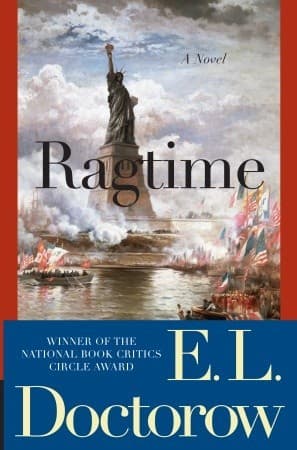
- Ragtime
E.L. Doctorow
3.9 (38k) average on GoodreadsLiterary FictionBoth Kavalier & Clay and Ragtime are exemplary works of historical fiction that blend fictional characters with real historical figures to illuminate a specific American era. Doctorow's Ragtime uses a more episodic structure to capture the diverse social and political currents of early 20th-century New York, while Chabon's novel maintains a tighter focus on the intertwined lives of Joe and Sammy and the comic book industry. Kavalier & Clay offers a more intimate character study within its historical canvas, whereas Ragtime provides a broader, panoramic view of an era through a larger ensemble cast.
- The Old Man and the Sea
Ernest Hemingway
3.8 (831k) average on GoodreadsLiterary FictionA Cuban fisherman's long struggle with a giant marlin becomes a story of endurance and dignity, now retold for young adults with illustrations, phonetic guides, and writing prompts in Traditional Chinese.
- One Hundred Years of Solitude
Gabriel García Márquez
4.1 (753k) average on GoodreadsLiterary FictionThrough the multi-generational story of the Buendía family, a mythical town deals with the repeating patterns of time, love, and solitude, as the extraordinary mixes with the ordinary.





Enjoyed the summary?
A summary gives you the shape of the book. The book itself has the detail, the examples and the voice.
Find The Amazing Adventures of Kavalier & Clay on AmazonAs an Amazon Associate, BookBrief earns from qualifying purchases. How we're funded