
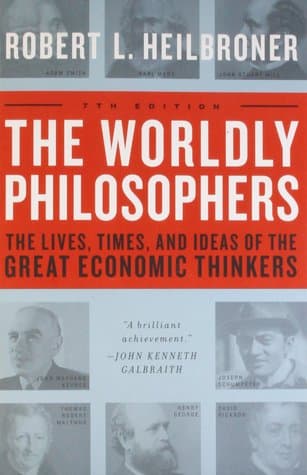
Core Idea
- Difficulty
- Medium
- Read it if
- You want an engaging, narrative-driven introduction to the foundational ideas and key figures in economic thought, framed within their historical and philosophical contexts.
- Skip it if
- You are looking for a technical deep dive into modern economic models or quantitative analysis, or prefer a purely academic, less biographical approach to economic history.
Key Takeaways from The Worldly Philosophers
The Grand Inquiry: How Capitalism Works
Economics as a quest to understand the complex machinery of market society.
Heilbroner presents the history of economic thought not as a dry academic subject, but as a continuous effort to answer how society organizes its material life under capitalism. This goes beyond supply and demand, looking at how human behavior, institutions, power, and history shape our economic future. Each 'worldly philosopher' offered a unique way to understand these mechanisms, predict their path, and often suggest how to guide them. This main idea connects different thinkers and shows how relevant their insights remain as we still deal with capitalism's challenges.
“The worldly philosophers, from Adam Smith to the present, share a common purpose: to understand how a capitalist society works.”
In the book: The entire structure of the book, which dedicates chapters to individual economists, consistently brings their theories back to their contribution to understanding the capitalist system. For example, Smith on the 'invisible hand,' Marx on class struggle, or Keynes on aggregate demand, all serve this central investigative purpose.
Try this: When encountering economic news or policy debates, don't just look at the surface-level issues. Ask: 'How does this particular event or policy proposal relate to the fundamental question of how our capitalist system operates? What underlying mechanisms or power structures are at play?' This encourages a deeper, more critical analysis.
Related ideas: capitalism, economic-systems, historical-materialism
The Invisible Hand's Paradox
Adam Smith's genius and the enduring tension between self-interest and societal good.
Adam Smith's 'invisible hand' is perhaps the most important idea in economics. It suggests that individual self-interest, in a competitive market, unintentionally benefits society. Heilbroner highlights Smith's new idea about how markets regulate themselves, moving past the old mercantilist view of fixed wealth. However, Heilbroner also shows that the 'invisible hand' is not perfect. It can lead to inequality, market failures, and crises, issues that later economists would study. Smith's genius was identifying the core driver of market society, but its limits became the focus for future economic thought.
“It is not from the benevolence of the butcher, the brewer, or the baker that we expect our dinner, but from their regard to their own interest.”
In the book: Heilbroner details Smith's articulation of the division of labor, the propensity to truck, barter, and exchange, and the self-correcting mechanisms of supply and demand, all contributing to the 'invisible hand' metaphor. He explains how this provided a revolutionary explanation for economic order without central planning.
Try this: When evaluating market-based solutions, consider both the potential efficiencies driven by self-interest and the potential for unintended negative consequences like externalities or monopolies. Don't assume the 'invisible hand' will solve all problems; recognize where its limitations might necessitate regulation or intervention.
Related ideas: invisible-hand, free-markets, self-interest, laissez-faire
Malthus's Bleak Arithmetic
The chilling demographic trap and its lasting influence on resource scarcity debates.
Malthus brought a stark, mathematical pessimism to economic thought. He argued that population grows faster than food supply, leading to constant poverty, hunger, and disease, unless stopped by 'moral restraint' or 'positive checks' like war. While his predictions of widespread famine have not fully happened due to technology, Malthus's main idea about the tension between population growth and resource limits is still very important. It supports modern environmental economics, sustainability discussions, and concerns about carrying capacity. His work reminds us that economic systems operate within biological and environmental limits.
“The power of population is so superior to the power of the earth to produce subsistence for man, that premature death must in some shape or other visit the human race.”
In the book: Heilbroner explains Malthus's famous ratios: population doubling every 25 years (geometric) versus food supply increasing linearly. He details Malthus's proposed 'checks' and how this grim outlook challenged the optimistic view of progress prevalent during the Enlightenment.
Try this: When discussing issues like climate change, resource depletion, or food security, remember Malthus's fundamental warning. Consider the long-term implications of exponential growth (population, consumption) against finite or slowly regenerating resources. Advocate for policies that promote sustainable resource management and responsible consumption.
Related ideas: malthusianism, population-growth, resource-scarcity, sustainability
Marx's Revolutionary Critique
Capitalism's inherent contradictions and its inevitable path to self-destruction.
Karl Marx is capitalism's strongest critic, offering a broad historical and economic analysis that predicted its downfall. Heilbroner shows Marx not just as a revolutionary, but as a brilliant, though flawed, economist who carefully analyzed capitalism's inner logic. Marx argued that capitalism, driven by the search for profit and the exploitation of labor, has internal conflicts that would lead to more class struggle, economic crises (from too much production or too little consumption), and eventually, its overthrow by the working class. His ideas, though often used wrongly, forced a close look at power, inequality, and the dehumanizing parts of market forces, greatly influencing 20th-century thought and politics.
“The history of all hitherto existing society is the history of class struggles.”
In the book: Heilbroner details Marx's concepts of historical materialism, surplus value, the alienation of labor, and the falling rate of profit, explaining how these elements build towards his prediction of capitalism's collapse. He emphasizes Marx's focus on the dynamic, crisis-prone nature of capitalism.
Try this: When analyzing economic crises or social unrest, consider Marx's framework of class struggle and inherent contradictions. Ask who benefits and who loses under current economic arrangements. While not necessarily endorsing his solutions, understanding his critique helps reveal the structural inequalities and power imbalances within capitalism.
Related ideas: marxism, class-struggle, capitalism-critique, alienation-of-labor
The Veblenian Leisure Class
Unmasking conspicuous consumption and the social psychology of economic behavior.
Thorstein Veblen offered a very different view, moving beyond traditional economic rationality to explore the social and psychological bases of economic behavior. He coined 'conspicuous consumption' and 'conspicuous leisure,' arguing that much economic activity, especially among the rich, is driven not by usefulness or need, but by a desire for status, imitation, and social distinction. Veblen's work questions the idea of the rational economic actor and highlights the strong role of culture, tradition, and social hierarchy in shaping demand and economic institutions. He exposed the irrationalities and waste in seeking social standing, offering a sharp critique of the American Gilded Age that is still relevant today.
“The end of acquisition and accumulation is not consumption but the invidious distinction of possession.”
In the book: Heilbroner elaborates on Veblen's concept of 'pecuniary emulation' and his analysis of the 'leisure class' who engage in non-productive activities to demonstrate wealth. He explains how Veblen saw institutions, not just markets, as shaping economic life.
Try this: Before making a purchase, ask yourself if it's driven by genuine need or by a desire for social status or to 'keep up with the Joneses.' Recognize how marketing often exploits these psychological tendencies. Critically examine societal values that equate wealth with inherent worth or success.
Related ideas: conspicuous-consumption, leisure-class, institutional-economics, social-status
Keynes's Call for Intervention
Challenging classical dogma and advocating for state management of aggregate demand.
John Maynard Keynes changed economic thought after the Great Depression, challenging the old belief that markets would naturally fix themselves to full employment. Heilbroner emphasizes Keynes's key insight: that overall demand, not just supply, drives economic activity, and that in crises, a 'liquidity trap' or lack of confidence can cause long-term unemployment and underused resources. Keynes supported active government involvement — through fiscal and monetary policy — to boost demand, manage economic cycles, and ensure full employment. His ideas formed the basis of post-WWII economic policy, showing that capitalism could be managed and stabilized, rather than left to its own destructive tendencies.
“The outstanding faults of the economic society in which we live are its failure to provide for full employment and its arbitrary and inequitable distribution of wealth and incomes.”
In the book: Heilbroner explains Keynes's break from Say's Law and his focus on effective demand, the role of animal spirits, and the multiplier effect. He details how Keynesian policies, like government spending during recessions, countered the prevailing wisdom of austerity.
Try this: During economic downturns, understand the rationale behind government stimulus packages or interest rate adjustments. Recognize that a purely 'hands-off' approach may not always be optimal for achieving full employment and economic stability. Engage in informed discussions about the role of government in stabilizing the economy.
Related ideas: keynesian-economics, aggregate-demand, fiscal-policy, monetary-policy, great-depression
The Worldly Philosophers' Enduring Relevance
Historical perspectives are crucial for navigating contemporary economic challenges.
Heilbroner's main point is that understanding the history of economic thought is not just an academic task, but a vital way to make sense of our current economy. The debates started by Smith, Marx, Keynes, and others — about markets, wealth, inequality, and growth limits — are still very important. By seeing how these 'worldly philosophers' dealt with their own challenges, we get a way to analyze today's issues, from financial crises to climate change. Their different views offer a rich set of tools for critical thinking, helping us avoid narrow, current beliefs and encouraging a broader view of economic life.
“The past is not dead. It is not even past.”
In the book: Heilbroner consistently draws parallels between the problems faced by historical economists and modern issues. The recurring theme of understanding 'how capitalism works' is explicitly linked to navigating 'confusing economic headlines' in the present day.
Try this: When confronted with complex economic problems, seek out diverse viewpoints, including historical ones. Don't dismiss older theories as outdated; instead, try to understand the core problem they were trying to solve and how their insights might still apply or inform current debates. Avoid intellectual fads and embrace a multi-faceted approach.
Related ideas: economic-history, critical-thinking, interdisciplinary-approach, historical-context
The 'End' of Worldly Philosophy?
A warning against the over-scientification of economics and losing sight of its human purpose.
In his final chapter, Heilbroner worries that modern economics, in its search for scientific accuracy and mathematical precision, might lose its 'worldly' philosophical side. He fears that too much focus on models and numbers might make economists miss important social, political, and ethical questions that are central to human well-being and society. The original 'worldly philosophers' were first moral philosophers, historians, and social critics. Heilbroner's 'call to action' asks economists to reconnect with the broader human purpose of their field, to remember that economics is ultimately about people, not just numbers, and to engage with the complex realities of power, justice, and societal values.
“The word 'end' refers to both the purpose and limits of economics.”
In the book: Heilbroner's new concluding chapter, 'The End of the Worldly Philosophy?', directly addresses this concern, contrasting the broad, philosophical scope of earlier economists with what he perceives as the narrower, more technical focus of contemporary economics.
Try this: When evaluating economic research or policy proposals, ask: 'What human values or social impacts are being prioritized or overlooked?' Be wary of purely technocratic solutions that ignore broader ethical or political considerations. Advocate for an economics that is socially engaged and addresses real-world problems with a humanistic perspective.
Related ideas: economic-philosophy, humanistic-economics, ethical-economics, social-justice
Economics as a Moral Science
Beyond efficiency: the enduring quest for justice and a 'good society'.
A subtle but important idea throughout Heilbroner's story is that economics, for its greatest thinkers, was never just about describing things as they are, but about imagining and working toward how things should be. From Smith's concern for the 'wealth of nations' (and its people) to Marx's vision of a classless society, and Keynes's aim for full employment, these philosophers were deeply involved in moral questions. They sought not just efficiency, but also justice, stability, and societal well-being. This view challenges the modern idea of economics as a purely neutral science, reminding us that all economic theories are based on assumptions about human nature and visions of the 'good society.'
“The worldly philosophers were not content to describe the world; they wanted to change it.”
In the book: Heilbroner consistently highlights the normative aspects of each economist's work. For instance, Smith's 'Theory of Moral Sentiments' is mentioned as a precursor to 'Wealth of Nations,' demonstrating his holistic ethical framework. Marx's entire project is driven by a moral outrage against exploitation.
Try this: When discussing economic policies, always consider their ethical implications and their impact on different segments of society. Don't accept 'efficiency' as the sole criterion for a good outcome. Actively question the underlying values and assumptions embedded in economic arguments, and advocate for policies that align with principles of fairness and justice.
Related ideas: moral-philosophy, normative-economics, social-welfare, distributive-justice
The Worldly Philosophers Quotes
“The great ideas of the worldly philosophers are not so much products of abstract thought as they are the incisive comments and analyses of men deeply immersed in the problems of their day.”
“It was not the benevolence of the butcher, the brewer, or the baker that we expect our dinner, but from their regard to their own interest.”
“The theory of communism may be summed up in one sentence: Abolish all private property.”
“The history of all hitherto existing society is the history of class struggles.”
“The ideas of economists and political philosophers, both when they are right and when they are wrong, are more powerful than is commonly understood. Indeed the world is ruled by little else.”
“The problem of capitalism is that it doesn't know what to do with its wealth.”
“It is not from the benevolence of the capitalist that we expect our jobs, but from his regard to his own profit.”
“The ultimate solution is not for the masses to become like the elite, but for the elite to become like the masses.”
“The most important thing for government to do is to get out of the way.”
“Economics is not a body of conclusions but a method of analysis.”
“The future of capitalism lies not in its ability to produce wealth, but in its ability to distribute it.”
“The machine process requires the adaptation of the workman to the machine, not the adaptation of the machine to the workman.”
“The difficulty lies not in the new ideas, but in escaping from the old ones.”
“Capitalism is not just an economic system but a cultural system that constantly reshapes human values and desires.”
Quiz
10 questions on the main ideas. Each answer comes with a short explanation.
Question 1
According to Heilbroner, what is the unifying theme connecting diverse thinkers like Adam Smith and Karl Marx in 'The Worldly Philosophers'?
- Their shared belief in the invisible hand of the market.
- Their common focus on understanding how a capitalist society works.
- Their advocacy for state intervention in economic affairs.
- Their prediction of the inevitable collapse of capitalism.
Show answer
B. Their common focus on understanding how a capitalist society works. Heilbroner explicitly states in the description of the seventh edition that the new theme connecting thinkers like Smith and Marx is their common focus on 'the search to understand how a capitalist society works.'
Question 2
What is the primary concern Heilbroner expresses in the concluding chapter 'The End of the Worldly Philosophy?' regarding modern economics?
- That it has become too focused on historical analysis.
- That it overlooks fundamental social and political issues due to its increasing 'scientific' nature.
- That it has failed to provide accurate predictions for economic crises.
- That it has become too accessible to the general public.
Show answer
B. That it overlooks fundamental social and political issues due to its increasing 'scientific' nature. The description states that the chapter 'conveys a concern that today’s increasingly “scientific” economics may overlook fundamental social and political issues that are central to economics.'
Question 3
Which of the following describes the nature of 'The Worldly Philosophers'?
- A purely theoretical treatise on economic models.
- A collection of primary source documents from economists.
- A blend of biography, reference, history, economics, and philosophy.
- A textbook focused solely on contemporary economic policy.
Show answer
C. A blend of biography, reference, history, economics, and philosophy. The book's description explicitly lists its genres as 'Biography, Reference, History, Economics, Philosophy,' indicating a blend of these areas.
Question 4
Heilbroner suggests that understanding the 'worldly philosophers' helps us not only see into our history but also better understand what?
- The future of technological advancements.
- The intricacies of personal finance.
- Our own times, especially with confusing economic headlines.
- The philosophical roots of political science.
Show answer
C. Our own times, especially with confusing economic headlines. The description states the book 'not only enables us to see more deeply into our history but helps us better understand our own times. It is a focus never more needed than in this age of confusing economic headlines.'
Question 5
What dual meaning does Heilbroner attribute to the word 'end' in the title of his concluding chapter, 'The End of the Worldly Philosophy?'
- The beginning and conclusion of economic thought.
- The purpose and limits of economics.
- The destruction and rebirth of capitalism.
- The theoretical and practical applications of economics.
Show answer
B. The purpose and limits of economics. The description clearly states, 'Heilbroner reminds us that the word “end” refers to both the purpose and limits of economics.'
Question 6
How does the seventh edition of 'The Worldly Philosophers' differ from its predecessors, according to the provided text?
- It focuses exclusively on contemporary economists.
- It omits any discussion of Karl Marx's contributions.
- It provides not just an illumination of the past but also a call to action for the future.
- It presents a purely optimistic view of the global economy.
Show answer
C. It provides not just an illumination of the past but also a call to action for the future. The text states, 'Thus, unlike its predecessors, this new edition provides not just an indispensable illumination of our past but a call to action for our future,' primarily due to the concerns raised in the final chapter.
Question 7
Which specific challenge of the current age does Heilbroner suggest the insights of 'The Worldly Philosophers' are particularly relevant for?
- Navigating geopolitical conflicts.
- Understanding confusing economic headlines.
- Addressing global climate change.
- Managing personal financial portfolios.
Show answer
B. Understanding confusing economic headlines. The description highlights the relevance of the book's focus, stating it is 'a focus never more needed than in this age of confusing economic headlines.'
Question 8
Given Heilbroner's concern about modern economics overlooking 'fundamental social and political issues,' which historical economic approach would he likely implicitly advocate for, based on the themes of the book?
- A purely quantitative, mathematical approach to economic modeling.
- An approach that integrates economic thought with broader historical, social, and philosophical contexts.
- A focus solely on microeconomic behavior and individual choice.
- An emphasis on developing predictive algorithms for market fluctuations.
Show answer
B. An approach that integrates economic thought with broader historical, social, and philosophical contexts. The book itself is a blend of history, philosophy, and biography alongside economics. Heilbroner's concern about 'scientific' economics overlooking social and political issues suggests he advocates for a more holistic, integrated approach, akin to the 'worldly philosophers' he profiles.
Question 9
If a reader were primarily interested in a detailed analysis of contemporary monetary policy, would 'The Worldly Philosophers' be the most direct resource, based on its description?
- Yes, because it provides an indispensable illumination of our past, which includes monetary policy.
- Yes, because it is a call to action for our future, which implies policy recommendations.
- No, because its main theme is understanding how capitalist society works through historical thinkers, not specific current policy details.
- No, because it only covers economists up to Karl Marx.
Show answer
C. No, because its main theme is understanding how capitalist society works through historical thinkers, not specific current policy details. While the book helps understand 'our own times' and 'confusing economic headlines,' its core focus is on historical thinkers and the fundamental understanding of capitalism. It's not described as a deep dive into specific contemporary policy analysis, but rather the broader philosophical and historical context of economic thought.
Question 10
Heilbroner's inclusion of a 'call to action for our future' in the seventh edition implies what about the role of economics?
- That economics should remain a purely descriptive science.
- That economists have a responsibility to engage with and address societal challenges beyond mere analysis.
- That economic theory is inherently flawed and should be abandoned.
- That the study of economics is primarily for academic pursuit, not practical application.
Show answer
B. That economists have a responsibility to engage with and address societal challenges beyond mere analysis. A 'call to action' suggests a prescriptive element, implying that economics, and economists, should actively address future challenges and not merely observe or analyze, especially given the concern about overlooking social and political issues.
The Worldly Philosophers FAQ
What is 'The Worldly Philosophers' about?
The Worldly Philosophers by Robert L. Heilbroner is a non-fiction book that explores the lives and ideas of influential economists and philosophers throughout history, from Adam Smith to Karl Marx. It traces their attempts to understand how capitalist society functions and how their insights continue to shape our world.
Does 'The Worldly Philosophers' provide practical investment advice?
No, 'The Worldly Philosophers' is not a guide for practical investment advice. Instead, it offers a historical and philosophical overview of economic thought, focusing on the foundational theories and societal impacts rather than short-term financial strategies.
What is the common theme connecting the diverse thinkers in 'The Worldly Philosophers'?
The unifying theme throughout the book is the shared quest of these diverse economists and philosophers to comprehend the inner workings of a capitalist society. Heilbroner highlights their varied approaches to analyzing economic systems and their societal implications.
How is the seventh edition of 'The Worldly Philosophers' different from previous editions?
The seventh edition introduces a new overarching theme connecting the thinkers and a bold concluding chapter titled 'The End of the Worldly Philosophy?'. This new chapter reflects on the purpose and limits of economics, cautioning against an overly scientific approach that might neglect social and political dimensions.
What kind of readers would benefit most from 'The Worldly Philosophers'?
Readers interested in the history of economic thought, the evolution of capitalism, and the philosophical underpinnings of our modern financial world will find this book highly beneficial. It's suitable for students of economics, history, and philosophy, as well as general readers seeking to understand economic headlines better.
What is 'scientific' economics as discussed in the book's conclusion?
In the concluding chapter, 'scientific' economics refers to a modern approach that might prioritize quantitative models and abstract theories, potentially overlooking the fundamental social, political, and human elements central to economic realities. Heilbroner expresses concern that this focus could obscure broader societal implications.
How does 'The Worldly Philosophers' compare to a standard economics textbook?
'The Worldly Philosophers' differs from a standard economics textbook by taking a biographical and narrative approach to economic history and thought, rather than a systematic presentation of economic principles and models. It focuses on the individuals and their ideas within their historical context, offering a more philosophical and less technical perspective.
Does the book offer solutions to current economic problems?
While the book provides profound historical context and critical insights into how economic systems work, it does not offer specific solutions to current economic problems. Instead, it encourages readers to understand the historical roots and philosophical debates behind contemporary economic challenges, fostering a more informed perspective.
Who are some of the key figures discussed in 'The Worldly Philosophers'?
The book delves into the lives and theories of pivotal figures such as Adam Smith, known for his work on the invisible hand; David Ricardo and his theories of rent; Thomas Malthus and population growth; and Karl Marx, with his critique of capitalism and theories of class struggle, among others.
About the author
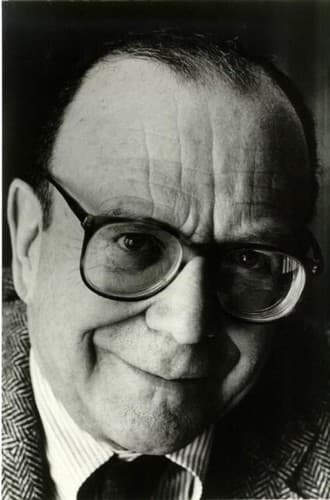
Robert L. Heilbroner was an American economist and author, best known for his work in economic theory and history. His notable book, The Worldly Philosophers, explores the lives and ideas of influential economic thinkers throughout history. Heilbroner's writings often focus on the interplay between economics and society, making complex concepts accessible to a general audience.
Similar books
- Economic Facts and Fallacies
Thomas Sowell
4.2 (4k) average on GoodreadsBusinessExplores how economic principles apply to real-world issues, though with a different ideological lens.
- The Diary of a Young Girl
Anne Frank
4.2 (2.7M) average on GoodreadsBiographyDuring the Nazi occupation, a teenage girl's diary, written from a secret annex, shares observations on humanity, hope, and the wait for freedom.
- Eat, Pray, Love
Elizabeth Gilbert
3.6 (1.5M) average on GoodreadsLifestyleA heartbroken writer leaves her conventional life for a year-long global search for pleasure in Italy, spiritual devotion in India, and unexpected love and balance in Bali.
- Night
Elie Wiesel
4.3 (970k) average on GoodreadsBiographyIn the darkness of Auschwitz and Buchenwald, a teenage Elie Wiesel faces the extermination of his family, the loss of his faith, and the lasting scars of humanity's deepest cruelty.
- Steve Jobs
Walter Isaacson
4.1 (957k) average on GoodreadsBusinessSteve Jobs was a visionary who fused creativity and technology to revolutionize six industries and shape our digital world.
- The Glass Castle
Jeannette Walls
4.3 (903k) average on GoodreadsBiographyJeannette Walls's memoir describes her unusual childhood with brilliant, free-spirited parents whose poverty-stricken life shaped her independence and love despite family problems.




Enjoyed the summary?
A summary gives you the shape of the book. The book itself has the detail, the examples and the voice.
Find The Worldly Philosophers on AmazonAs an Amazon Associate, BookBrief earns from qualifying purchases. How we're funded