
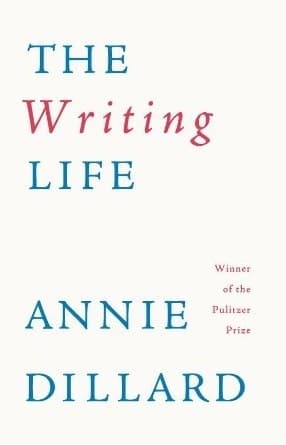
Core Idea
- Difficulty
- Medium
- Read it if
- You are a writer, aspiring writer, or artist seeking a raw, honest, and unsentimental account of the creative process, emphasizing the discipline and struggle over inspiration.
- Skip it if
- You are looking for practical writing exercises, a 'how-to' guide, or a romanticized view of artistic creation.
Key Takeaways from The Writing Life
The Brutal Act of Writing
Writing isn't just difficult; it's a destructive, self-immolating act.
Dillard says writing is not gentle but a fierce, almost violent process of using up oneself. Writers must be ready to give up everything—every good idea, every elegant phrase—in the current draft, trusting that new insights and better material will appear. This is not about being perfect; it is about a steady commitment to the current work, using one's creative resources without holding back. Writing is a continuous giving, a willingness to destroy what was to make room for what will be. It requires a kind of creative excess, refusing to save one's best material for a future 'better' project or 'later' chapter, because that later moment may never come, or the material will lose its freshness. This immediate use is key to finding deeper, more original thought.
“One of the few things I know about writing is this: spend it all, shoot it, play it, lose it, all, right away, every time. Do not hoard what seems good for a later place in the book, or for another book; give it, give it all, give it now. The impulse to save something good for a better place later is the signal to spend it now. Something more will arise for later, something better.”
In the book: Dillard's repeated metaphor of 'spending it all' and 'shooting it' like ammunition, emphasizing the finite nature of creative energy that must be fully deployed, not conserved.
Try this: When working on a draft, resist the urge to 'save' a brilliant idea or turn of phrase for a different section or future project. Deploy it immediately and fully where it feels most impactful now. Trust that the creative well will replenish.
Related ideas: creative-profligacy, self-immolation, drafting-philosophy
The Carpenter's Mindset
Writing is less about divine inspiration and more about diligent, often tedious, craft.
Dillard clarifies the romantic idea of the writer, comparing the process more to carpentry than to a sudden spiritual outpouring. Most writing involves careful, often unglamorous work: cutting, fitting, measuring, sanding. It is about patiently adding small, precise actions, not waiting for a sudden idea. This means respecting the materials (words) and the tools (grammar, syntax, structure). A writer, like a carpenter, must know how to build, how to join different parts into a whole, and how to refine until the object works well and lasts. This view puts writing in reality, stressing the value of consistent effort and learned skill over natural talent, suggesting that mastery comes from repeated, focused work with the craft.
“Appealing work is not what you do for money. It is what you do with your heart, with your soul, with your spirit, with your mind, with your body. It is what you do when you are not working.”
In the book: Dillard's detailed descriptions of the painstaking revision process, moving sentences around, and the sheer volume of discarded material, contrasting sharply with any idea of effortless creation.
Try this: Approach writing tasks with a 'carpenter's toolkit' mentality. Focus on the mechanics: outlining, structuring sentences, choosing precise words, and ruthlessly editing. Don't wait for inspiration; build the structure first, then refine the details.
Related ideas: craftsmanship, discipline, revision-process
The Peril of the Perfect Sentence
A beautifully crafted sentence can be a trap, hindering the larger narrative flow.
Dillard warns against the appeal of a perfectly built sentence that, while good on its own, does not help the overall goal of the text. Writers often love their own elegant phrases, only to find that these 'darlings' stop the story's flow or hide the intended meaning. The challenge is to know when a piece of writing, no matter how good on its own, needs to be cut for the sake of the whole. This needs a sharp objectivity and a willingness to let go of one's ego. The goal is not just to write beautiful sentences, but to write sentences that together build a clear, effective argument or story. The main work's integrity must always come before the brief glory of a single, showy phrase.
“When you write, you make a point, you make an argument, you make a story. You make a line of words. You make a line of thought. You make a line of feeling. You make a line of music. You make a line of light. You make a line of life.”
In the book: Dillard's personal anecdotes about cutting beloved passages and the agony involved, illustrating that even seasoned writers struggle with this necessary act of sacrifice.
Try this: During editing, critically evaluate every sentence. Ask if it serves the larger paragraph, chapter, and book. Be prepared to cut even 'good' sentences if they don't advance the core message or narrative.
Related ideas: editing-ruthlessness, narrative-flow, writer's-ego
The Writer's Solitary War
Writing is an intensely lonely battle against distraction, doubt, and the blank page.
Dillard describes a writer's life as one of deep solitude. It is a daily meeting with an empty page, where the only company is one's own mind, wrestling with ideas and language. This is not just physical isolation; it is an intellectual and emotional solitude, as the writer explores thoughts and feelings that others may not fully understand or share. The 'war' is fought against inner and outer forces: the pull of putting things off, the sting of self-doubt, the sheer difficulty of turning complex thoughts into clear writing. There is no audience, no immediate feedback, only the constant inner pressure to create something meaningful from nothing. This isolation is both needed for deep work and a heavy burden.
“The writer's job is to turn the world into words, to make the world make sense. The writer's job is to make the world out of words. The writer's job is to make the words out of the world.”
In the book: Dillard's descriptions of her own writing routine, often isolated in cabins or remote studies, and the internal struggles she details in her essays.
Try this: Embrace periods of deep, uninterrupted solitude for writing. Recognize and plan for the mental and emotional toll of this isolation, perhaps by scheduling social interaction or breaks after intense writing sessions.
Related ideas: solitude-in-writing, creative-struggle, blank-page-syndrome
The Long Haul of Meaning
True impact in writing often comes from years of persistent, often unrewarded, effort.
Dillard stresses that important writing rarely comes from quick success or brief inspiration. It is the combined result of years of dedicated, often unglamorous, daily work. The real 'reward' might not be immediate recognition or money, but the slow, deep satisfaction of having struggled with complex ideas and shaped them into lasting form. This view encourages resilience and a long-term outlook, understanding that each day's effort, no matter how small, adds to a larger, more meaningful body of work. It is about building a career and a legacy bit by bit, rather than hoping for a sudden, big breakthrough. The commitment is to the process itself, trusting that meaning will build up over time.
“How we spend our days is, of course, how we spend our lives. What we do with this hour, and with that one, is what we are doing. A schedule permits us to do what we want to do. It is a structure for freedom.”
In the book: Dillard's own extensive career and her reflections on the many years she spent writing, often without immediate public acclaim for individual works, but building a substantial body of literature.
Try this: Cultivate patience and a long-term perspective in your creative endeavors. Focus on consistent daily effort rather than chasing instant gratification or viral success. Understand that true mastery and impact take time.
Related ideas: persistence, long-term-vision, creative-legacy
The Unseen Work Beneath the Surface
The visible text is merely the tip of an iceberg of discarded material and mental wrestling.
What readers see in a published book is a very refined and shortened version of a much larger, often messy, creative process. Dillard shows that behind every polished sentence lies a graveyard of discarded drafts, failed attempts, and hours of intense thought that never made it to the page. This 'unseen work' is not wasted; it is the necessary structure and digging needed to find the true core of the message. The writer must be willing to create far more material than will ever be used, to explore side topics, and to write 'badly' to find the good. This highlights that writing is mainly a process of discovery through removal, where clarity comes from chaos, and precision from abundance. The final product shows the editor's cuts as much as the writer's words.
“There is no shortage of words. There is a shortage of words that matter.”
In the book: Dillard's descriptions of her own extensive notes, research, and multiple drafts for her books, highlighting the sheer volume of material that never sees publication.
Try this: Embrace the process of generating far more material than you'll ultimately use. Don't be afraid to write 'bad' first drafts or explore dead ends; these are crucial steps in finding the core of your message.
Related ideas: drafting-process, creative-waste, hidden-labor
The Reader as Co-Creator
A truly engaging text invites the reader to actively participate in its meaning-making.
Dillard suggests that effective writing is not just about giving information; it is about starting a conversation in the reader's mind. The writer does not give every detail but leaves intentional gaps, unclear parts, and challenges that make the reader think, question, and connect ideas. This active involvement turns reading from passive consumption into a shared act of creation. The text's meaning is not only in the words on the page but grows in the interaction between the author's purpose and the reader's understanding and experience. This approach leads to deeper understanding and a more lasting impact, as the reader feels personally involved in the unfolding story or argument.
“The writer is a conductor, not a composer. The words are the instruments, the reader is the audience, and the music is made by the interplay of the two.”
In the book: Dillard's own prose often employs evocative imagery and relies on the reader to make conceptual leaps, rather than explicitly spelling out every connection, as seen in 'Pilgrim at Tinker Creek'.
Try this: When writing, consider what you can *omit* to engage the reader more deeply. Instead of explaining everything, present compelling details and let the reader infer, connect, and participate in constructing meaning.
Related ideas: reader-engagement, active-reading, interpretive-space
The Necessity of Ritual and Habit
Consistent, almost ritualistic, daily practice is the bedrock of a productive writing life.
Dillard, despite focusing on the wildness of creation, also supports the power of routine and habit. For her, freedom in writing is not in sudden bursts of inspiration, but in disciplined following of a schedule. Setting a consistent time and place for writing creates a mental and physical space where creative work can reliably happen. This routine reduces decision fatigue and putting things off, signaling to the mind that 'now is the time for writing.' It changes writing from an occasional hobby into a serious practice, building a sense of professionalism and commitment. The daily effort, however unglamorous, is what allows for breakthroughs and steady output, providing the stable base for the more fleeting parts of creativity to grow.
“A schedule permits us to do what we want to do. It is a structure for freedom.”
In the book: Dillard's personal accounts of her strict daily writing schedule, often involving specific hours and locations, regardless of inspiration.
Try this: Establish a non-negotiable daily or weekly writing routine. Treat it as a professional appointment. Show up at your desk at the same time, even if you don't feel inspired, and engage with the work.
Related ideas: writing-discipline, creative-routine, habit-formation
The Fear of the Unwritten
The greatest obstacle isn't lack of talent, but the terror of failing to capture one's vision.
Dillard explores the deep fear that often stops writers: not the fear of writing poorly, but the fear of failing to do justice to the great, unformed vision in one's mind. The blank page is not an absence, but a huge gap between the ideal and the real. This fear can lead to putting things off, endless changes, or completely giving up projects. It is a battle against feeling overwhelmed when trying to turn complex, many-layered thoughts and feelings into clear writing. Overcoming this needs courage, a willingness to make mistakes, and an acceptance that written words will always be an imperfect version of the original idea. The writer must learn to push past this fear, understanding that an imperfectly expressed idea is better than a perfectly imagined but unwritten one.
“The great thing about writing is that you can make it up as you go along. The terrible thing about writing is that you have to make it up as you go along.”
In the book: Dillard's poignant descriptions of the mental anguish and self-doubt that accompany the writing process, even for accomplished authors.
Try this: Recognize and acknowledge the fear of not living up to your own internal vision. Start writing anyway, even if it feels inadequate. Focus on getting the ideas down, knowing that refinement comes later.
Related ideas: writer's-block, creative-anxiety, perfectionism
The Unpredictability of Inspiration
Inspiration is fleeting and must be seized, not waited for, through diligent presence.
While Dillard supports routine, she also knows that true inspiration is hard to find. It does not come when called but often appears as a quick glance, a sudden connection, or an unexpected insight. A writer's job is not to passively wait for this muse but to be always present, observant, and ready to catch these brief moments when they happen. This needs a strong awareness of the world, a deep connection with one's topic, and the mental flexibility to change and follow an unexpected thought. The 'gift' of inspiration is less about a divine message and more about the lucky reward for steady, active work with the craft and the world. It is about earning the right to receive these moments through sustained effort and openness.
“The dedicated life is the life of the writer. It is a life of dedication to a craft, a dedication to a purpose, a dedication to a way of seeing the world. It is a life of dedication to truth.”
In the book: Dillard's own vivid descriptions of observing nature and life, and how these observations often spark profound philosophical or narrative insights.
Try this: Cultivate a practice of active observation and deep presence in your daily life. Keep a notebook handy to capture sudden thoughts, images, or connections, as these are the seeds of inspiration. Don't rely solely on scheduled writing time; be ready for ideas at any moment.
Related ideas: inspiration-capture, observational-skills, creative-serendipity
The Writing Life Quotes
“How we spend our days is, of course, how we spend our lives.”
“A schedule protects you from the chaos of the day and the demands of others. It is a fence around your creative time.”
“One of the things I know about writing is this: spend it all, shoot it, play it, lose it, all, right away, every time. Do not hoard what seems good for a later place in the book or for another book; give it, give it all, give it now.”
“The writer is a professional daydreamer.”
“The feeling that the work is never good enough is the engine of perfectionism, and the fuel of excellence.”
“Writing a book is like building a house, then living in it, then tearing it down and building it again.”
“Why do you write? Because you have to. Because you must. Because you are driven.”
“The writing life is a life of solitude. It is a life of discipline. It is a life of faith.”
“Appealing work is not what you think. It is not necessarily what you enjoy. It is what you are compelled to do.”
“You do not so much write a book as it writes you.”
“The most important thing about a book is that it be well-made.”
“The soul of a writer is a very strange animal indeed.”
“A writer is a person who spends a good deal of time watching his own mind work.”
Quiz
10 questions on the main ideas. Each answer comes with a short explanation.
Question 1
Annie Dillard frequently uses the metaphor of a 'cathedral' or 'temple' to describe the act of writing. What specific structure does she often compare the writer's work to, emphasizing its slow, meticulous, and sometimes destructive process?
- A meticulously organized library
- A stone building constructed and then torn down to be rebuilt
- A vast, sprawling garden
- A complex, interwoven tapestry
Show answer
B. A stone building constructed and then torn down to be rebuilt Dillard famously compares writing to building a stone building, only to tear it down and rebuild it with the same stones, emphasizing the iterative, often destructive, and painstaking nature of revision and the writing process itself.
Question 2
In 'The Writing Life,' Dillard discusses the importance of a writer's 'schedule.' What is her primary advice regarding maintaining a consistent writing routine?
- Write only when inspiration strikes, regardless of the time of day.
- Write every day at the same time, even if nothing useful comes out.
- Set weekly word count goals and meet them, even if it means cramming.
- Prioritize reading over writing to constantly refill the creative well.
Show answer
B. Write every day at the same time, even if nothing useful comes out. Dillard stresses the importance of showing up to the page every day at the same time, treating writing like a job, regardless of inspiration. She believes consistency builds the habit and allows the work to happen.
Question 3
What does Dillard suggest is the most common reason writers fail to produce significant work, despite having talent?
- Lack of natural talent or innate ability.
- Insufficient life experience to draw upon.
- An unwillingness to endure the solitude and hard labor of the craft.
- Failure to network with other successful writers.
Show answer
C. An unwillingness to endure the solitude and hard labor of the craft. Dillard emphasizes that writing is a solitary and demanding labor. Many writers, despite talent, are unwilling to face the isolation and relentless effort required, leading to their failure.
Question 4
Dillard describes a specific kind of 'pain' associated with the writing process. What is this pain primarily related to?
- The physical discomfort of sitting for long hours.
- The emotional sting of rejection from publishers.
- The intellectual struggle of trying to force meaning onto recalcitrant material.
- The financial insecurity inherent in a writing career.
Show answer
C. The intellectual struggle of trying to force meaning onto recalcitrant material. Dillard speaks of the 'pain' of the intellectual struggle, the constant wrestling with ideas and language, trying to make the material yield its meaning, which she describes as a fundamental aspect of the writing life.
Question 5
What is Dillard's view on the importance of having a clear outline or plan before beginning a piece of writing?
- An outline is essential for all serious writing to maintain structure and coherence.
- Outlines are useful for nonfiction but stifle creativity in fiction.
- The act of writing itself often reveals the true path, rendering initial plans obsolete.
- Writers should always start with a detailed outline, but be prepared to deviate slightly.
Show answer
C. The act of writing itself often reveals the true path, rendering initial plans obsolete. Dillard suggests that while a writer might start with an idea, the actual writing process often dictates its own direction. The 'real' writing begins when the initial plan falters, and the writer discovers the true shape of the work as they go.
Question 6
Dillard argues against the romantic notion of 'inspiration' as the sole driver of writing. What does she propose is a more reliable and crucial element for sustained creative output?
- Frequent travel and new experiences.
- Sheer persistence and the daily grind of showing up.
- Engaging in spirited debates with other intellectuals.
- Reading widely across diverse genres.
Show answer
B. Sheer persistence and the daily grind of showing up. Dillard consistently emphasizes the importance of persistence, discipline, and the daily commitment to the work, rather than waiting for sporadic bursts of inspiration.
Question 7
In her discussion of revision, Dillard compares the writer to a 'miner.' What specific action does this metaphor highlight?
- Digging for new, untouched veins of inspiration.
- Extracting the raw, unpolished ore of ideas from the mind.
- Sifting through the excavated material to find the true gold.
- Building elaborate tunnels and shafts to access hidden depths.
Show answer
C. Sifting through the excavated material to find the true gold. The miner metaphor in the context of revision suggests the arduous task of sifting through what has already been written, discarding the waste, and finding the precious few elements that genuinely shine, much like a miner sifts for gold.
Question 8
Dillard asserts that a writer's primary audience should be whom, above all others?
- A specific, ideal reader who embodies intelligence and curiosity.
- The self, as the first and most critical reader.
- Other respected writers in their field.
- The general public, to ensure broad appeal.
Show answer
B. The self, as the first and most critical reader. Dillard argues that the writer must satisfy themselves first. The work must meet their own rigorous standards and vision, as they are the ultimate arbiter of its success.
Question 9
When Dillard advises writers to 'kill your darlings,' what specific aspect of the writing process is she primarily referring to?
- Eliminating characters or plotlines that are too predictable.
- Removing beautifully written but ultimately irrelevant sentences or paragraphs.
- Abandoning a project entirely if it isn't working.
- Avoiding clichés and overused metaphors.
Show answer
B. Removing beautifully written but ultimately irrelevant sentences or paragraphs. The phrase 'kill your darlings' (often attributed to William Faulkner, though Dillard uses it) refers to the difficult but necessary act of cutting out favorite phrases, sentences, or even paragraphs that, while well-written, do not serve the overall purpose or flow of the piece.
Question 10
Dillard often speaks of the 'sacred' aspect of writing. What does she imply by this, particularly in relation to the writer's relationship with the work?
- That writing is a spiritual act meant to bring one closer to God.
- That the act of creation demands total dedication and reverence, almost like a religious calling.
- That only certain subjects are worthy of being written about.
- That a writer should seek solitude in places of worship to find inspiration.
Show answer
B. That the act of creation demands total dedication and reverence, almost like a religious calling. For Dillard, the 'sacred' nature of writing implies a profound reverence for the craft itself, demanding absolute dedication, sacrifice, and a deep, almost spiritual commitment to the arduous process of bringing something new into existence.
The Writing Life FAQ
What is 'The Writing Life' by Annie Dillard about?
Annie Dillard's 'The Writing Life' is a profound meditation on the solitary, often arduous, and sometimes exhilarating process of writing. It delves into the dedication, discipline, and occasional despair that authors face while crafting their work, offering insights into the creative mind.
Does Annie Dillard offer practical writing advice in this book?
While not a 'how-to' guide with exercises, Dillard provides invaluable insights into the mindset and commitment required for writing. Her observations about perseverance, revision, and the importance of passion serve as a form of indirect, yet powerful, practical advice for aspiring and established writers alike.
What is the 'creative process' according to Annie Dillard in 'The Writing Life'?
Dillard portrays the creative process as a demanding, often messy, and deeply personal journey. She emphasizes the necessity of relentless effort, the courage to discard imperfect work, and the profound joy found in moments of breakthrough, likening it to a spiritual or even physical struggle.
How does 'The Writing Life' differ from other books on writing, like Stephen King's 'On Writing'?
'The Writing Life' is less instructional than King's 'On Writing,' which offers more direct craft advice and personal anecdotes. Dillard's book is a more philosophical, poetic, and introspective exploration of the mental and emotional landscape of a writer, focusing on the existential aspects rather than mechanics.
Is 'The Writing Life' suitable for all types of writers?
Yes, while Dillard writes from her perspective as a literary non-fiction author, the fundamental struggles, joys, and dedication she describes are universal to anyone engaged in serious writing. Its themes resonate with poets, novelists, journalists, and academics alike.
Does Dillard discuss writer's block in 'The Writing Life'?
While not explicitly using the term 'writer's block,' Dillard vividly describes the periods of stagnation, frustration, and the immense effort required to push through creative barriers. She implicitly addresses the challenge of continuing to write even when inspiration wanes, advocating for persistent labor.
What role does 'discipline' play in Dillard's view of the writing life?
Discipline is paramount in Dillard's perspective; she views writing as a demanding craft requiring unwavering commitment and regular effort, not just sporadic bursts of inspiration. It's the daily grind, the willingness to show up and work, that ultimately leads to meaningful creation.
Does 'The Writing Life' include personal anecdotes from Annie Dillard's own writing experiences?
Yes, interwoven throughout the book are Dillard's personal observations and experiences from her own writing journey. These anecdotes are not presented as a memoir, but rather as illustrative examples supporting her broader reflections on the universal challenges and rewards of the writing life.
How does 'The Writing Life' compare to 'Bird by Bird' by Anne Lamott?
While both are highly regarded books on writing, Dillard's 'The Writing Life' is more philosophical and abstract in its contemplation of the creative act. Lamott's 'Bird by Bird' is generally more direct, humorous, and offers more concrete, encouraging advice on overcoming writing hurdles and getting words on the page.
About the author

Annie Dillard is a Pulitzer Prize-winning author celebrated for her lyrical prose and profound explorations of nature, faith, and the human condition. Her notable works include "Pilgrim at Tinker Creek," "An American Childhood," and "The Writing Life." Dillard's essays and books often blend personal reflection with philosophical inquiry, earning her a significant place in contemporary American non-fiction.
Similar books
- On Writing: A Memoir of the Craft
Stephen King
4.3 (222k) average on GoodreadsBiographyOffers a blend of memoir and craft advice with an emphasis on discipline and the daily grind of writing.
- The Diary of a Young Girl
Anne Frank
4.2 (2.7M) average on GoodreadsBiographyDuring the Nazi occupation, a teenage girl's diary, written from a secret annex, shares observations on humanity, hope, and the wait for freedom.
- Eat, Pray, Love
Elizabeth Gilbert
3.6 (1.5M) average on GoodreadsLifestyleA heartbroken writer leaves her conventional life for a year-long global search for pleasure in Italy, spiritual devotion in India, and unexpected love and balance in Bali.
- Night
Elie Wiesel
4.3 (970k) average on GoodreadsBiographyIn the darkness of Auschwitz and Buchenwald, a teenage Elie Wiesel faces the extermination of his family, the loss of his faith, and the lasting scars of humanity's deepest cruelty.
- Steve Jobs
Walter Isaacson
4.1 (957k) average on GoodreadsBusinessSteve Jobs was a visionary who fused creativity and technology to revolutionize six industries and shape our digital world.
- The Glass Castle
Jeannette Walls
4.3 (903k) average on GoodreadsBiographyJeannette Walls's memoir describes her unusual childhood with brilliant, free-spirited parents whose poverty-stricken life shaped her independence and love despite family problems.





Enjoyed the summary?
A summary gives you the shape of the book. The book itself has the detail, the examples and the voice.
Find The Writing Life on AmazonAs an Amazon Associate, BookBrief earns from qualifying purchases. How we're funded