

Synopsis
Covers the whole plot, including the ending.
- Difficulty
- Medium
- Pacing
- Moderate
- Mood
- Reflective, Witty, Melancholy, Romantic
- Read it if
- You enjoy classic Jazz Age literature, coming-of-age stories, or exploring themes of disillusionment and social commentary through the lens of a privileged protagonist.
- Skip it if
- You prefer fast-paced plots, strong female characters, or protagonists who are immediately likable and morally unambiguous.
This Side of Paradise Plot Summary
Covers the whole plot, including the ending.
Early Life and Education
Amory Blaine, a rich and bright boy from Lake Geneva, Wisconsin, is introduced with his socialite mother, Beatrice, who gives him everything he wants. He goes to several prep schools, including St. Regis, where he struggles with schoolwork despite being smart. His early life is marked by a romantic view of himself and the world, often imagining himself as a hero. He becomes interested in literature and poetry, but his studies are less important than his social goals and a growing sense of his unique future. His time at prep school shows both his arrogance and his wish for acceptance, hinting at his later struggles.
Princeton University
Amory arrives at Princeton University with high hopes of becoming important. He initially struggles to fit in, feeling out of place among the more established students. He joins a literary club, the Triangle Club, and tries different activities, but his attempts at social and academic success have mixed results. He deals with the university's traditions and the pressure to conform, often feeling disappointed. His early years at Princeton are a time of self-discovery and the painful realization that his idealized vision of college life does not match reality.
The War and Rosalind Connage
World War I interrupts Amory's college life, and he joins the army, serving briefly as an instructor. When he returns, he meets Rosalind Connage, a beautiful, witty, and sophisticated flapper from a wealthy New York family. They fall deeply in love, sharing a passionate and intense romance. Rosalind, however, is practical and materialistic, valuing money and social status above all else. She admires Amory's charm and intelligence but cannot commit to a future with him because he lacks money, leading to their painful separation. This relationship deeply affects Amory, leaving him heartbroken and more cynical.
New York and Financial Struggles
After graduating from Princeton, Amory moves to New York City, trying to start a career in advertising. He lives a bohemian life, going to social gatherings and trying to keep his image as a charming intellectual. However, he struggles financially, often relying on his family's shrinking inheritance. His attempts at professional success are half-hearted, and he feels increasingly disappointed with the superficiality of the social world he lives in. He longs for deeper meaning and purpose, but his lack of direction and practical skills hinder his progress, leading to a period of aimlessness and self-doubt.
Clara Page and Isabelle Borgé
Before Rosalind, Amory has two other notable romantic experiences. During his prep school days, he falls for Isabelle Borgé, a charming but somewhat shallow girl. Their relationship is a young, idealized romance, with innocent flirting and a growing understanding of love. Later, during his Princeton years, he is briefly involved with Clara Page, a more intellectual and thoughtful woman. Their relationship involves deep conversations and a shared interest in literature, but it ends due to Amory's immaturity and inability to commit. These early relationships give Amory different views on love and women, preparing him for the intensity of his relationship with Rosalind.
Meeting Eleanor Savage
After his heartbreak with Rosalind, Amory travels to Maryland and meets Eleanor Savage, a fiery, intelligent, and unconventional young woman. Their relationship involves intense intellectual discussions, shared cynicism, and a mutual appreciation for beauty and art. They spend their time debating philosophy, literature, and the meaning of life, forming a deep intellectual and emotional bond. Their connection is more spiritual and less materialistic than his previous relationships. However, their shared sadness and existential worry, along with Eleanor's unstable nature, prevent their relationship from becoming a stable partnership, and they eventually separate.
The Declining Fortune and Loss
Amory's financial situation steadily worsens. His family's once large fortune shrinks, leaving him with very little. He faces the harsh realities of poverty and struggles to maintain his former lifestyle. Adding to his financial problems, he experiences several significant losses: his mother, Beatrice, dies, followed by his close friend, Dick Humbird, who is killed in the war. These deaths, combined with his failed romances and lack of professional success, contribute to Amory's growing sense of isolation, disappointment, and existential crisis. He feels increasingly lost in a world that offers him no comfort or purpose.
Disillusionment and Existential Crisis
As Amory deals with his personal losses and financial ruin, he becomes increasingly disappointed with his generation's values and hopes. He questions the meaning of life, love, and success, finding himself unable to match his romantic ideals with the harsh realities of the modern world. He has long philosophical discussions, often showing a deep cynicism about society and human nature. His once bright idealism is replaced by a deep sense of aimlessness and a desperate search for an authentic self and a purpose beyond superficiality. This period marks his deepest intellectual and emotional struggle.
The Walk to Princeton
In a key moment, Amory decides to walk from Philadelphia to Princeton, a journey that symbolizes his attempt to return to his roots and face his past. During this solitary walk, he thinks about his life, his failed relationships, his unfulfilled ambitions, and the lessons he has learned. He meets various people along the way, having brief, often philosophical, conversations that further shape his perspective. This journey is a time of intense self-reflection, allowing him to process his grief, his disappointments, and his changing understanding of himself and the world around him.
Meeting Myra St. Claire
During his walk, Amory meets Myra St. Claire, an older, wealthy woman who had known his mother. She offers him a ride and talks to him about his past and future. Myra represents a different generation and a more traditional view of life, contrasting with Amory's modern cynicism. Their interaction is brief but important, as Myra offers Amory some comfort and a sense of connection to his past, even as he struggles to build a new identity. She embodies a kind of stability and experience that Amory, in his youthful confusion, has yet to find.
The Socialist and the Car Ride
While walking, Amory hitches a ride with a man who identifies as a socialist. They have a lively debate about societal inequality, wealth distribution, and America's future. This conversation exposes Amory to radical political ideas that challenge his privileged upbringing and conventional views. Although he doesn't fully embrace socialism, the encounter forces him to consider other perspectives on social justice and the economic differences of the Jazz Age. This interaction marks a further step in his intellectual development, pushing him beyond his personal concerns to a broader understanding of societal issues.
The Return to Princeton and Self-Realization
Amory finally arrives back at Princeton, finding the campus mostly empty. He sits alone, thinking about his journey and his future. In this moment of solitude, he has a deep realization: he is no longer defined by his social class, his past failures, or others' expectations. He recognizes his own individuality and the need to create his own path, independent of the inherited wealth and status that once defined him. He accepts his losses and embraces a new sense of self-reliance, saying, 'I know myself... but that is all.' This marks a significant turning point, suggesting a mature acceptance of his identity and an uncertain but hopeful future.
This Side of Paradise Characters
Amory Blaine
Protagonist
An idealistic, charming, and self-absorbed young man searching for identity and purpose.
Amory Blaine is a privileged, intelligent, and exceptionally handsome young man from a wealthy family. He is initially portrayed as a romantic idealist, prone to self-dramatization and a desire for social prominence. Throughout the novel, he grapples with his own ego, the superficiality of the Jazz Age, and the search for authentic meaning. He is highly introspective, often analyzing his own thoughts and feelings, and possesses a strong intellectual curiosity. However, his lack of practical ambition and his reliance on inherited wealth lead to significant disillusionment and hardship.
Relationships: Beatrice Blaine (Overly doting and indulgent mother); Rosalind Connage (Passionate but ultimately doomed romantic interest); Eleanor Savage (Intense intellectual and emotional connection); Isabelle Borgé (First youthful romantic interest); Clara Page (Brief intellectual romantic interest); Dick Humbird (Close college friend)
Rosalind Connage
Love Interest
A beautiful, witty, and materialistic flapper who breaks Amory's heart.
Rosalind Connage is a captivating and sophisticated young woman, a quintessential flapper of the Jazz Age. She is beautiful, intelligent, and possesses a sharp wit, making her highly desirable. Despite her charm, she is deeply pragmatic and materialistic, prioritizing financial security and social standing above all else. She genuinely loves Amory but ultimately chooses wealth and stability over a life of uncertainty with him. Her decision profoundly impacts Amory, serving as a catalyst for his disillusionment and his reevaluation of societal values.
Relationships: Amory Blaine (Intense romantic relationship, leading to heartbreak)
Eleanor Savage
Love Interest
A passionate, intellectual, and melancholic young woman who shares a deep connection with Amory.
Eleanor Savage is an unconventional and highly emotional young woman whom Amory meets after his breakup with Rosalind. She is intelligent, artistic, and shares Amory's cynical view of the world. Their relationship is characterized by intense philosophical discussions, shared melancholy, and a deep intellectual bond rather than superficial romance. Eleanor is prone to dramatic outbursts and a certain instability, which ultimately prevents a lasting relationship with Amory. She represents a different kind of love for Amory – one based on shared intellect and existential angst.
Relationships: Amory Blaine (Deep intellectual and emotional connection)
Beatrice Blaine
Supporting
Amory's wealthy, indulgent, and somewhat eccentric mother.
Beatrice Blaine is Amory's sophisticated and highly indulgent mother. She is depicted as a socialite who lives a life of leisure and intellectual pursuits, though often with a dramatic flair. Beatrice spoils Amory, fostering his sense of uniqueness and privilege. She is well-read and encourages Amory's intellectual development but also contributes to his lack of practical ambition. Her death marks a significant loss for Amory, both emotionally and financially, forcing him to confront the realities of his dwindling inheritance.
Relationships: Amory Blaine (Mother-son relationship, characterized by indulgence and a shared intellectual bent)
Isabelle Borgé
Mentioned
Amory's first youthful romantic interest during his prep school years.
Isabelle Borgé is one of Amory's earliest romantic interests, encountered during his prep school days. She is described as charming and pretty, representing a youthful and somewhat idealized version of romance. Their relationship is characterized by innocent flirtation and the excitement of a first love. While not deeply profound, her presence marks Amory's initial forays into romantic relationships and helps shape his early understanding of women and attraction.
Relationships: Amory Blaine (First youthful romantic interest)
Clara Page
Mentioned
An intellectual young woman with whom Amory has a brief, uncommitted relationship.
Clara Page is another of Amory's early romantic interests, encountered during his time at Princeton. She is more intellectual and introspective than Isabelle, engaging Amory in deeper conversations. Their relationship is marked by shared interests in literature and philosophy, but Amory's immaturity and inability to commit prevent it from developing into something serious. Clara represents a more thoughtful and less superficial connection for Amory, though he is not yet ready for it.
Relationships: Amory Blaine (Brief intellectual romantic interest)
Dick Humbird
Supporting
Amory's close friend from Princeton who dies in the war.
Dick Humbird is one of Amory's closest friends at Princeton. He represents the more traditional, athletic, and socially integrated side of college life, contrasting with Amory's more introspective nature. Dick's death in World War I is a significant event for Amory, contributing to his growing sense of loss and the futility of war. His character highlights the impact of the war on Amory's generation and the personal costs of global conflict.
Relationships: Amory Blaine (Close college friend)
Myra St. Claire
Supporting
An older, wise woman who offers Amory guidance during his walk.
Myra St. Claire is an older, wealthy woman Amory encounters during his walk to Princeton. She knew his mother, Beatrice, and offers Amory a ride and a brief conversation. Myra represents a connection to Amory's past and a more traditional, stable perspective on life. Her brief appearance provides a moment of comfort and reflection for Amory, offering him a glimpse of a different kind of wisdom and experience than he typically encounters among his peers.
Relationships: Amory Blaine (Brief mentor-like encounter); Beatrice Blaine (Acquaintance)
This Side of Paradise Themes
The Search for Identity and Purpose
Amory Blaine's journey is a long search to define himself amid the changing values of the early 20th century. He constantly tries on different roles – the intellectual, the lover, the socialite – but finds each ultimately unsatisfying. His disappointment with inherited wealth and social expectations, especially after his financial ruin and Rosalind's rejection, forces him to face his true self. The novel ends with his realization, 'I know myself... but that is all,' showing he accepts his individuality, even if his purpose is still unclear. This theme is central to the 'Lost Generation' experience.
“I know myself, but that is all.”
Disillusionment and the Decline of Idealism
The novel shows Amory's gradual disappointment with his youthful romantic ideals and the superficiality of the Jazz Age. His early idealistic views of love, success, and college life are systematically broken down by real-world experiences. Rosalind's materialism shatters his romantic illusions, the war takes his friend Dick Humbird, and his family's financial decline forces him to face harsh realities. This theme reflects the larger societal shift after World War I, where traditional values were questioned, and a sense of cynicism spread among the younger generation. His intellectual debates with Eleanor further explore this widespread sense of aimlessness.
“I don't want to be a product of my environment. I want my environment to be a product of me.”
Love, Romance, and Materialism
Love is a central but often painful theme, explored through Amory's various relationships. His idealized, romantic ideas of love are repeatedly challenged by the practicalities and materialism of the women he meets. Isabelle Borgé represents youthful infatuation, Clara Page a more intellectual connection, but Rosalind Connage shows the conflict between love and wealth. Her choice of financial security over Amory's charm highlights the era's growing focus on material success. Even his deep connection with Eleanor Savage, while intellectual, cannot escape the limits of their shared sadness and lack of stability, suggesting that love alone is not enough in a changing world.
“Rosalind was a product of the Jazz Age, and Amory, for all his fine phrases, was a product of Rosalind.”
The Jazz Age and the 'Lost Generation'
The novel clearly shows the cultural setting of the Jazz Age, marked by a sense of freedom, pleasure-seeking, and moral uncertainty, especially among the wealthy youth. Amory and his friends go to parties, drink, and generally question traditional values. This era also gives rise to the 'Lost Generation' – young people disappointed by World War I and struggling to find meaning in a world that seemed to have lost its way. Amory's aimlessness, his philosophical thoughts, and his eventual financial ruin are all typical of this generation's search for identity and purpose in a rapidly changing, often superficial, society.
“We're all so lost, so lost – and we're so young.”
Class and Wealth
The theme of class and wealth is woven throughout the story, defining Amory's initial privilege and his later struggles. Born into a wealthy family, Amory takes his social standing for granted, but his inherited wealth shrinks, forcing him to face the harsh realities of financial insecurity. Rosalind's rejection of Amory because he lacks money clearly shows how class and wealth determine social mobility and romantic possibilities in this era. Amory's eventual acceptance of his lack of fortune means he detaches from superficial signs of success and moves toward a more authentic self, free from the constraints of his inherited class.
“It was Rosalind's practicality which was her undoing, and Amory's lack of it which was his.”
Plot Devices & Literary Techniques
Bildungsroman
A coming-of-age story tracking Amory Blaine's moral and psychological growth.
The novel is a quintessential Bildungsroman, following Amory Blaine from his privileged youth through his college years and into early adulthood. It meticulously chronicles his intellectual, emotional, and moral development as he navigates various relationships, academic challenges, and societal changes. Amory's journey is characterized by a series of disillusionments and self-discoveries, ultimately leading him to a mature, albeit cynical, understanding of himself and the world. The narrative structure emphasizes his internal growth and the lessons learned through experience.
Stream of Consciousness / Interior Monologue
Narrative technique that reveals Amory's thoughts and feelings directly.
Fitzgerald frequently employs elements of stream of consciousness and interior monologue, especially in depicting Amory's introspective nature. The reader gains direct access to Amory's thoughts, philosophical musings, and emotional turmoil, often presented in a less structured, more fluid manner. This device allows for a deep psychological exploration of the protagonist, revealing his idealism, his self-doubt, and his evolving worldview. It underscores Amory's intellectualism and his constant self-analysis, making his journey of self-discovery more intimate and profound.
Symbolism of Princeton
Princeton represents idealized youth, tradition, and Amory's personal growth.
Princeton University serves as a powerful symbol throughout the novel. Initially, it embodies Amory's idealized vision of academic and social success, a place where he expects to achieve greatness. As his time there progresses, it becomes a symbol of his disillusionment with traditional institutions and the limitations of his own ambitions. His final walk back to Princeton, deserted and quiet, symbolizes his return to a place of origin, but with a new, more mature perspective. It represents the crucible where his youthful ideals are tested and ultimately transformed into a more realistic self-awareness.
Epistolary Elements
Incorporation of letters and poems to reveal character and advance plot.
Fitzgerald occasionally incorporates letters and poems written by characters, particularly Amory and Eleanor, into the narrative. These epistolary elements serve multiple functions: they provide direct insight into the characters' inner lives, their intellectual capabilities, and their emotional states; they advance the plot by revealing key developments or decisions; and they enhance the novel's literary quality by showcasing Fitzgerald's prose and poetic sensibility. The letters between Amory and Eleanor, for example, highlight the depth of their intellectual connection.
This Side of Paradise Quotes
“I know myself, but that is all.”
“He was a great deal too brilliant to be an American.”
“I don't want to be a product of my environment. I want my environment to be a product of me.”
“It was always the becoming he loved best. The becoming of things, people, and, above all, himself.”
“Youth is a dream, a form of intoxication, a fever of the mind.”
“The only thing he could do was stand still and let the world roll over him.”
“She was beautiful, but not like those girls in the magazines. She was beautiful, like a hurricane.”
“I'm not a romantic, I'm a realist. I don't believe in fairy tales. I believe in money.”
“He knew that in the end he would be a failure—that the best he could hope for was a sort of dignified mediocrity.”
“The world was a blur, a haze of alcohol and bright lights.”
“Life was a damned muddle... a-muddle of love and pain and hope and fear and sex and hunger and thirst.”
“He had discovered that the only way to be happy was to be unhappy.”
“There was a great deal of the 'sad young man' about him.”
“I was within and without, simultaneously enchanted and repelled by the inexhaustible variety of life.”
Quiz
10 questions on the plot and the characters. Each answer comes with a short explanation.
Question 1
What is the name of the protagonist in 'This Side of Paradise'?
- Tom Buchanan
- Amory Blaine
- Jay Gatsby
- Nick Carraway
Show answer
B. Amory Blaine The protagonist of 'This Side of Paradise' is Amory Blaine, whose experiences form the core of the novel's narrative.
Question 2
Which university does Amory Blaine attend in the novel?
- Yale
- Harvard
- Princeton
- Columbia
Show answer
C. Princeton Amory Blaine attends Princeton University, mirroring F. Scott Fitzgerald's own alma mater, which is central to the semi-autobiographical nature of the story.
Question 3
What literary era is 'This Side of Paradise' considered a significant work of?
- The Lost Generation
- The Beat Generation
- The Victorian Era
- The Roaring Twenties
Show answer
A. The Lost Generation The novel is described as offering a poignant portrait of the 'Lost Generation,' a term often associated with writers and artists who came of age during World War I.
Question 4
Who is Amory's first significant love interest, known for her beauty and flirtatious nature?
- Rosalind Connage
- Eleanor Savage
- Isabelle Borgé
- Clara Page
Show answer
C. Isabelle Borgé Isabelle Borgé is Amory's first major romantic entanglement, a beautiful and somewhat superficial girl from his youth.
Question 5
Which character serves as Amory's intellectual and somewhat cynical friend at Princeton?
- Dick Humbird
- Burne Holiday
- Tom D'Invilliers
- Kerry Dale
Show answer
C. Tom D'Invilliers Tom D'Invilliers is Amory's close friend at Princeton, often engaging in intellectual discussions and representing a more world-weary perspective.
Question 6
What significant personal event deeply affects Amory's financial situation later in the novel?
- A failed business venture
- His mother's death and the loss of her fortune
- A gambling addiction
- Disinheritance by his father
Show answer
B. His mother's death and the loss of her fortune Amory's mother's death and the subsequent loss of her fortune (due to poor investments) leave him in a much more precarious financial position.
Question 7
Which of Amory's love interests is described as an 'egotist' and ultimately marries someone else, leading to Amory's profound disillusionment?
- Clara Page
- Eleanor Savage
- Rosalind Connage
- Isabelle Borgé
Show answer
C. Rosalind Connage Rosalind Connage is Amory's most intense and significant love. She is portrayed as beautiful and self-absorbed, eventually choosing wealth over love with Amory, which deeply impacts him.
Question 8
What is the primary theme explored through Amory Blaine's journey from an indulged youth to a disillusioned young man?
- The triumph of American capitalism
- The decline of the American aristocracy
- The loss of innocence and the search for identity in a changing world
- The unchanging nature of human ambition
Show answer
C. The loss of innocence and the search for identity in a changing world Amory's journey is a quintessential 'Lost Generation' narrative, exploring the disillusionment, loss of romantic ideals, and the struggle to find meaning and identity in the post-WWI era.
Question 9
Which of these events does NOT occur during Amory's time at Princeton?
- He becomes involved in literary clubs and writes poetry.
- He has a brief, intense affair with a married woman.
- He experiences a period of academic and social success.
- He engages in deep philosophical discussions with friends.
Show answer
B. He has a brief, intense affair with a married woman. While Amory has several romantic encounters and deep discussions, the affair with a married woman (Eleanor Savage) occurs after he leaves Princeton, during his time in the army.
Question 10
What is the significance of the novel's title, 'This Side of Paradise'?
- It refers to the idyllic beauty of the Princeton campus.
- It suggests that true happiness can only be found in the afterlife.
- It implies that the paradise of youth and idealism is fleeting and eventually lost.
- It is a direct quote from a poem Amory writes about his first love.
Show answer
C. It implies that the paradise of youth and idealism is fleeting and eventually lost. The title, drawn from a Rupert Brooke poem, evokes the fleeting nature of youthful idealism and the eventual disillusionment and loss of innocence that Amory experiences, suggesting that the perfect 'paradise' is always just out of reach or already passed.
This Side of Paradise FAQ
What is the central premise of 'This Side of Paradise'?
'This Side of Paradise' follows the journey of Amory Blaine, a charming and intelligent young man, from his privileged childhood through his years at Princeton University and into early adulthood. The novel explores his romantic entanglements, intellectual development, and disillusionment with the ideals of his youth, set against the backdrop of the emerging Jazz Age and the 'Lost Generation.'
Who are the primary romantic interests of Amory Blaine in the novel?
Amory Blaine experiences several significant romantic relationships throughout the book. His most notable loves include Isabelle Borgé, a beautiful but somewhat superficial debutante; Clara Page, a more mature and intellectual woman who challenges his perspectives; and Rosalind Connage, a captivating and ambitious socialite who ultimately breaks his heart due to her desire for wealth.
What role does Princeton University play in Amory's development?
Princeton University serves as a crucible for Amory's intellectual and social awakening. He grapples with academic expectations, engages in philosophical debates with friends like Thomas Parke D'Invilliers, and experiences both popularity and alienation. His time at Princeton shapes his early worldview, even as he later grows disillusioned with some of its inherent snobbery and traditionalism.
How does World War I impact Amory Blaine and the narrative?
While Amory does not see direct combat, World War I significantly affects the psychological landscape of the characters and the societal mood. It contributes to the sense of disillusionment and moral ambiguity that defines the 'Lost Generation,' leaving Amory and his peers adrift and searching for new meanings in a post-war world that has lost its former certainties.
What is the significance of the title 'This Side of Paradise'?
The title, drawn from a line by Rupert Brooke, reflects Amory's initial idealistic view of life, particularly his privileged youth and early experiences. It suggests a world that seems perfect and attainable. However, as Amory matures and faces rejection, loss, and disillusionment, he comes to realize that true paradise, or lasting happiness, remains elusive and perhaps unattainable on 'this side' of existence.
Are there any autobiographical elements of F. Scott Fitzgerald in Amory Blaine's character?
Yes, 'This Side of Paradise' is highly semi-autobiographical. Amory Blaine's experiences at Princeton, his social ambitions, his romantic pursuits, and his eventual disillusionment closely mirror Fitzgerald's own early life. His unrequited love for Ginevra King, for example, is widely seen as the inspiration for Rosalind Connage, who rejects Amory due to his lack of wealth, much like Ginevra rejected Fitzgerald.
What is the implied fate of Dick Humbird, Amory's friend, after he enlists in the army?
Dick Humbird's fate is tragically implied to be death in World War I. His enlistment is portrayed as an idealistic, almost romantic, gesture, but his subsequent absence and the general tone regarding the war suggest he did not survive. His loss contributes to Amory's growing sense of the fragility of life and the futility of certain youthful ideals.
How does Fitzgerald use the motif of 'youth' throughout the novel, and how does it evolve?
Fitzgerald portrays youth initially as a period of boundless optimism, self-indulgence, and romantic idealism, particularly through Amory's early experiences. However, as the novel progresses, youth transforms into a time of growing disillusionment, moral ambiguity, and the painful recognition of lost opportunities and the harsh realities of the world, culminating in Amory's feeling of being part of a 'Lost Generation.'
What is the significance of the character Monsignor Darcy in Amory's life?
Monsignor Darcy serves as a recurring mentor figure and intellectual guide for Amory, particularly during his Princeton years. He represents a blend of spiritual wisdom, intellectual rigor, and worldly charm, offering Amory a stable, if somewhat traditional, moral compass. Their philosophical discussions help shape Amory's early thoughts on religion, morality, and ambition, even as Amory later drifts away from organized faith.
Analyze Amory Blaine's narcissism and how it impacts his relationships.
Amory exhibits significant narcissistic traits, evident in his preoccupation with his own appearance, intellect, and social standing. This narcissism often makes him self-absorbed and prevents him from truly understanding or empathizing with others, leading to superficiality in his relationships, particularly with Isabelle Borgé, and ultimately contributing to his inability to sustain deep, lasting connections.
How does Amory's search for identity manifest psychologically throughout the book?
Amory's search for identity is a central psychological theme, characterized by constant introspection, self-reinvention, and a fluctuating sense of purpose. He tries on various personas—the aesthete, the intellectual, the lover—in an attempt to define himself, often driven by external validation and an underlying anxiety about his place in the world, particularly after losing his fortune.
Discuss the psychological impact of Rosalind Connage's rejection on Amory.
Rosalind Connage's rejection, primarily due to Amory's lack of wealth, delivers a profound psychological blow. It shatters his romantic idealism, his self-esteem, and his belief in love's ability to transcend material concerns. This heartbreak contributes significantly to his later cynicism and his sense of being 'lost,' forcing him to confront the harsh realities of a materialistic society.
What psychological factors contribute to Amory's disillusionment by the novel's end?
Amory's disillusionment stems from a confluence of psychological factors: repeated romantic failures, the trauma of war (even if indirect), the loss of his family fortune, and the failure of his youthful ideals to withstand the test of reality. He experiences a profound sense of anomie, feeling disconnected from traditional values and struggling to find meaning or purpose in a changed world.
Is Amory Blaine a sympathetic character, or is he merely a product of his privilege?
This is debatable. While Amory undeniably benefits from privilege, which initially makes him seem self-absorbed, his journey through genuine heartbreak, intellectual struggle, and profound disillusionment elicits sympathy. His ultimate vulnerability and search for meaning, despite his flaws, often lead readers to view him as a complex and ultimately sympathetic, if imperfect, representation of a generation's struggles.
How does the novel serve as a critique of the Jazz Age, despite being a product of it?
While capturing the glamour and excitement of the Jazz Age, the novel simultaneously critiques its underlying materialism, moral ambiguity, and superficiality. Through Amory's disillusionment with wealth, social climbing, and fleeting romances, Fitzgerald implicitly points to the spiritual emptiness and lack of lasting values that characterized some aspects of the era, foreshadowing its eventual collapse.
Does Amory Blaine achieve any form of redemption or understanding by the end of the novel?
Amory does not achieve traditional redemption, but he reaches a crucial point of self-awareness and understanding. His famous concluding line, 'I know myself, but that is all,' signifies a profound realization of his own identity, flaws, and the challenges ahead. While he is still 'lost' in many ways, he has shed his youthful illusions and is ready to confront reality, which can be interpreted as a form of intellectual and emotional growth.
Compare and contrast Amory's relationships with Isabelle Borgé and Rosalind Connage.
Amory's relationship with Isabelle Borgé is characterized by superficial charm and mutual vanity; it's a youthful infatuation based more on appearances than deep connection. In contrast, his love for Rosalind Connage is far more intense and genuine, representing his ideal of romantic love, yet it is ultimately undone by Rosalind's pragmatic choice for financial security, highlighting a deeper societal conflict.
What is the lasting legacy or message of 'This Side of Paradise' for contemporary readers?
The lasting legacy of 'This Side of Paradise' lies in its poignant exploration of youth, idealism, and disillusionment, themes that remain universally relevant. It offers insights into the psychological toll of societal change, the search for identity, and the enduring tension between love and materialism, resonating with readers who grapple with similar questions in any era. It also serves as a vivid historical document of the 'Lost Generation.'
About the author
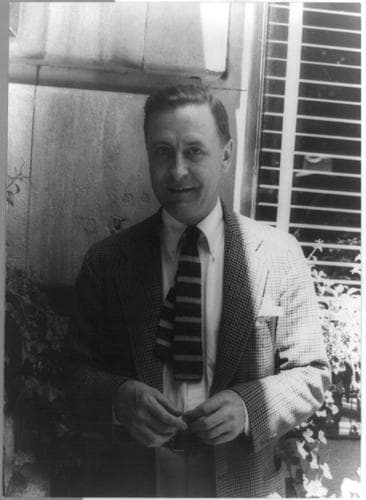
Francis Scott Key Fitzgerald was an American novelist, essayist, and short story writer. He is best known for his novels depicting the flamboyance and excess of the Jazz Age—a term he popularized in his short story collection Tales of the Jazz Age. During his lifetime, he published four novels, four story collections, and 164 short stories. Although he achieved temporary popular success and fortune in the 1920s, Fitzgerald received critical acclaim only after his death and is now widely regarded as one of the greatest American writers of the 20th century.
Similar books
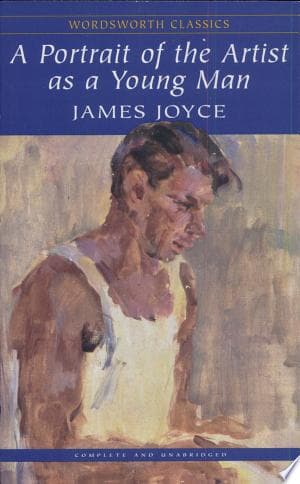
- A Portrait of the Artist as a Young Man
James Joyce
3.6 (128k) average on GoodreadsLiterary FictionA classic modernist coming-of-age novel focusing on an artist's intellectual and spiritual development.
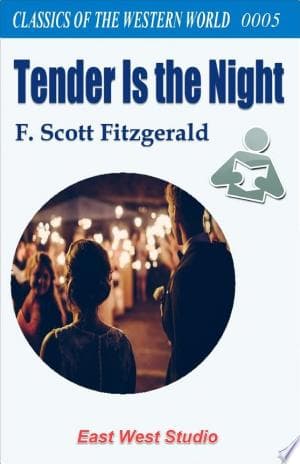
- Tender is the Night
F. Scott Fitzgerald
3.8 (114k) average on GoodreadsLiterary FictionAnother Fitzgerald novel delving into the lives of the wealthy, complex relationships, and psychological depth.
- The Sun Also Rises
Ernest Hemingway
3.8 (366k) average on GoodreadsHistorical FictionWhile both Fitzgerald's novel and Hemingway's 'The Sun Also Rises' (1926) capture the disillusionment of the post-WWI generation, their approaches differ significantly. Fitzgerald focuses on the internal, often romanticized, struggles of a young American man coming of age amidst affluence and shifting social mores. Amory Blaine's 'disillusionment' is largely intellectual and emotional, rooted in unfulfilled romantic ideals and a search for meaning. Hemingway, conversely, depicts the 'Lost Generation' of expatriates in Europe, their disillusionment manifesting as a profound sense of aimlessness, emotional numbness, and physical trauma, often expressed through laconic dialogue and understated emotion. Hemingway's characters are often defined by their physical experiences and stoicism in the face of suffering, whereas Fitzgerald's are more prone to introspection and self-analysis. Fitzgerald's style is more florid and descriptive, while Hemingway's is famously sparse and direct.
- The Old Man and the Sea
Ernest Hemingway
3.8 (831k) average on GoodreadsLiterary FictionA Cuban fisherman's long struggle with a giant marlin becomes a story of endurance and dignity, now retold for young adults with illustrations, phonetic guides, and writing prompts in Traditional Chinese.
- One Hundred Years of Solitude
Gabriel García Márquez
4.1 (753k) average on GoodreadsLiterary FictionThrough the multi-generational story of the Buendía family, a mythical town deals with the repeating patterns of time, love, and solitude, as the extraordinary mixes with the ordinary.
- The Goldfinch
Donna Tartt
3.9 (720k) average on GoodreadsLiterary FictionHaunted by a tragic explosion and clutching a stolen Dutch masterpiece, a young orphan navigates the opulent drawing rooms of New York and the gritty underbelly of the art world, desperately seeking connection and redemption amidst a life spiraling into crime and obsession.




Enjoyed the summary?
A summary gives you the shape of the book. The book itself has the detail, the examples and the voice.
Find This Side of Paradise on AmazonAs an Amazon Associate, BookBrief earns from qualifying purchases. How we're funded