
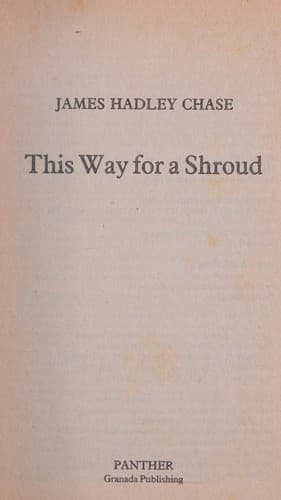
Core Idea
- Difficulty
- Medium
- Read it if
- You enjoy classic hardboiled crime fiction with a focus on psychological descent, femme fatales, and the grim consequences of greed.
- Skip it if
- You prefer optimistic narratives, stories with clear moral victories, or less violent and gritty themes.
Key Takeaways from This Way for a Shroud
The Allure of the Femme Fatale
A beautiful woman often signals imminent danger and moral compromise.
Chase creates female characters who are not just desired but also cause destruction. In 'This Way for a Shroud,' a stunning, mysterious woman immediately raises the stakes, pulling the protagonist into a web of lies, lust, and violence. Her beauty is a weapon, used to manipulate and control, pushing men past their ethical limits and into inescapable situations. This archetype is central to noir, where the femme fatale embodies both temptation and ruin. Her motives are often hidden, making her an unpredictable and dangerous force. This reflects a cynical view of love and relationships in a corrupt world. The protagonist's fatal attraction to her is less about real connection and more about a downward slide into moral ambiguity and crime.
“She was the kind of woman who made you want to break every rule you ever lived by, and then some.”
In the book: The initial encounter between the protagonist and the enigmatic woman, where her stunning appearance immediately captivates him, setting the stage for his subsequent entanglement in her schemes.
Try this: Be wary of immediate, overwhelming attraction, especially when it feels too good to be true. Recognize when someone's charm is being used as a tool for manipulation rather than genuine connection.
Related ideas: femme-fatale, noir-archetypes, seduction-as-weapon
The Inevitability of the Downward Spiral
One bad decision often leads to a series of escalating, irreversible consequences.
A mark of Chase's style is how events move quickly once the protagonist makes a key mistake. 'This Way for a Shroud' shows how a small error or moment of weakness can start a chain reaction, pulling the character deeper into a criminal underworld with no way out. The story builds tension by showing the protagonist's growing desperation as his options shrink and the risks increase. This downward spiral is not just about outside events but also about the internal decay of the character's morality. Each decision, made under pressure, further compromises his integrity, making redemption a distant fantasy. It is a bleak portrayal of human error and the unforgiving nature of fate in a corrupt world.
“Once you step onto that slippery slope, it’s a hell of a job to find your footing again. Most times, you don’t.”
In the book: The protagonist's initial involvement in a seemingly simple scheme, which quickly unravels into murder, blackmail, and a desperate flight from justice, demonstrating the rapid escalation of events.
Try this: Consider the long-term implications of seemingly small ethical compromises. Understand that once a line is crossed, it's exponentially harder to return to a previous state of normalcy or innocence.
Related ideas: downward-spiral, consequence-escalation, moral-compromise
The Illusion of Control
Characters often believe they are in charge, only to discover they are pawns in a larger game.
Chase is good at creating situations where his protagonists, often driven by ambition or desperation, think they can outsmart their enemies or control the chaos. However, 'This Way for a Shroud' constantly breaks this illusion, showing how easily even the cleverest plans can fall apart. The protagonist often reacts to unexpected events, double-crosses, and the schemes of more powerful or ruthless people. This theme emphasizes a fatalistic view of human choice in a world ruled by chance and the predatory instincts of others. It is a stark reminder that in the criminal underworld, true control is a brief fantasy, and even those who plan schemes can become victims of their own designs or their unpredictable partners.
“Every time he thought he had the upper hand, the game just changed, and he was back to being the hunted.”
In the book: Multiple instances where the protagonist's meticulously planned escape or counter-move is thwarted by an unexpected twist, a betrayal, or the intervention of an unknown party.
Try this: Be realistic about the extent of your influence in high-stakes situations. Always anticipate unforeseen variables and the potential for betrayal, especially when dealing with untrustworthy individuals.
Related ideas: illusion-of-control, fatalism, unpredictability-of-crime
The Pervasiveness of Betrayal
Trust is a luxury few can afford, and betrayal is an ever-present threat.
Betrayal is a core part of the noir world Chase paints in 'This Way for a Shroud.' Every alliance, every partnership, seems to have an end date, often ending in a literal or metaphorical stab in the back. Characters are constantly suspicious of each other, and for good reason, as friends become enemies, lovers become manipulators, and even seemingly loyal henchmen switch sides. This common theme highlights the dog-eat-dog nature of the criminal world, where self-preservation is more important than all other loyalties. It creates an atmosphere of constant paranoia, making it impossible for the protagonist to truly rely on anyone, further isolating him and speeding up his downfall. It is a cynical comment on human nature when societal norms are removed.
“In their world, loyalty was just a word people used until they found a better offer.”
In the book: The multiple double-crosses within the criminal group, where characters switch allegiances based on immediate self-interest or a perceived advantage, leading to violent confrontations.
Try this: Cultivate a healthy skepticism, especially in environments where personal gain is prioritized over integrity. Understand that trust must be earned over time and through consistent actions, not just words.
Related ideas: betrayal, trust-issues, criminal-loyalty
The Futility of Escape
Running only delays the inevitable; the past always catches up.
Despite frantic efforts to escape justice or past mistakes, Chase's characters in 'This Way for a Shroud' often find themselves trapped, either by their own actions or by relentless pursuers. The story strongly conveys that true escape is an illusion. Every new city, every new identity, only offers a temporary break before the consequences of their deeds reappear. This theme reinforces the fatalistic tone of the novel, suggesting that once a character starts on a criminal path, their fate is sealed. The constant pressure of being hunted and the psychological cost of guilt and paranoia become as inescapable as physical chains. This shows that internal torment is often stronger than external pursuit. It is a chilling reminder that some choices leave permanent scars.
“You can run, but you can’t hide from what you’ve done. It follows you like a shadow.”
In the book: The protagonist's repeated attempts to flee after committing crimes, only to find himself recognized, tracked, or cornered by unexpected adversaries in seemingly safe havens.
Try this: Confront problems directly rather than attempting to evade them, as unresolved issues tend to resurface with greater intensity. Accept responsibility for past actions to break free from their psychological grip.
Related ideas: futility-of-escape, past-consequences, inevitability-of-fate
The Corrupting Power of Greed
The pursuit of illicit wealth blinds individuals to morality and personal safety.
At the heart of many of Chase's plots, and certainly clear in 'This Way for a Shroud,' is the endless desire for money. Greed drives characters to commit terrible acts, betray loved ones, and risk everything they have. The promise of quick wealth distorts their judgment, making them underestimate dangers and overestimate their own cleverness. This theme highlights how material desires can completely corrupt the human spirit, turning people into ruthless predators focused only on getting more. The pursuit of illegal wealth rarely brings happiness or security; instead, it often leads to violence, paranoia, and ultimately, ruin. Chase presents greed not just as a motivation but as a destructive force that unravels the moral fabric of society and individuals.
“Money was a drug, and they were all addicts, willing to do anything for another fix.”
In the book: The central plot revolving around a scheme to acquire a large sum of money, leading to a series of murders and betrayals among the conspirators, each driven by their desire for a larger share.
Try this: Reflect on your motivations for financial gain and ensure they align with your ethical principles. Recognize the dangers of prioritizing wealth above all else, as it can lead to moral bankruptcy and self-destruction.
Related ideas: corrupting-greed, illicit-wealth, moral-decay
The Unforgiving Nature of the Underworld
There are no second chances or safe exits once you enter the criminal world.
Chase's portrayal of the criminal underworld in 'This Way for a Shroud' is brutal and uncompromising. It is a world where rules are enforced through violence, trust is a weakness, and mercy is a fault. The story clearly shows that once a character enters this world, they are marked for life. Attempts to leave or reform are met with severe punishment, often death. This theme reinforces the idea of an inescapable fate for those who choose a life of crime, highlighting the irreversible consequences of their choices. It paints a stark picture of society's dark side, where justice is given not by law but by the strongest and most ruthless, and survival is a constant, exhausting struggle against overwhelming odds.
“Once you're in, you're in. And the only way out is usually in a box.”
In the book: The ruthless elimination of any character who tries to back out of a deal, double-crosses a more powerful figure, or threatens to expose the criminal enterprise.
Try this: Understand that involvement in criminal activities carries severe and often irreversible consequences. Recognize that the allure of quick gains can lead to a life with no safe exit.
Related ideas: criminal-underworld, no-second-chances, violent-justice
The Psychological Toll of Crime
Guilt, paranoia, and fear slowly erode the minds of those who break the law.
Beyond the physical dangers, 'This Way for a Shroud' explores the devastating psychological impact of a life of crime. The protagonist and other characters are plagued by paranoia, constantly looking over their shoulders, unable to trust anyone, including themselves. Guilt, though sometimes suppressed, comes to the surface, appearing as nightmares or growing desperation. The constant stress of being hunted, the fear of exposure, and the moral compromises made take a severe toll on their mental state, often leading to erratic behavior, addiction, or complete breakdown. Chase effectively shows how the mind, even more than the body, becomes a prison, demonstrating that true freedom is impossible for those burdened by their wrongdoings.
“The hardest part wasn't the running, it was the knowing. The knowing that every shadow held a threat, every knock on the door meant the end.”
In the book: The protagonist's increasing sleeplessness, obsessive checking of his surroundings, and moments of intense fear and panic as the pressure mounts, leading to poor decisions.
Try this: Recognize that actions have psychological consequences beyond immediate legal repercussions. Prioritize mental well-being by living with integrity and addressing guilt constructively.
Related ideas: psychological-toll, paranoia-and-guilt, mental-decay
The Illusion of Redemption
For some, the path chosen is irreversible, and redemption remains an elusive fantasy.
While many stories offer a glimmer of hope for redemption, 'This Way for a Shroud' largely denies its characters this comfort. Once deeply involved in crime and violence, the chance of a 'clean slate' becomes a cruel illusion. Characters might briefly dream of escaping their past and starting fresh, but the story consistently shows that their deeds have created an unbreakable chain, linking them to their fate. This dark perspective fits the fatalistic nature of noir, suggesting that some actions have such deep consequences that they permanently change a person's path, making true atonement or a return to innocence impossible. It is a powerful statement on the permanent marks left by moral transgressions.
“He often dreamed of a clean slate, a quiet life, but the blood on his hands was too deep to ever wash away.”
In the book: Despite opportunities or fleeting thoughts of escaping the criminal life, the protagonist is consistently pulled back into the cycle of violence and deceit, often by external forces or the lingering consequences of past acts.
Try this: Understand the profound and lasting impact of significant ethical choices. Recognize that while personal growth is possible, some actions may carry consequences that preclude a complete return to a previous state of innocence or freedom.
Related ideas: illusion-of-redemption, irreversible-choices, fatalistic-fate
The Fragility of Life in the Fast Lane
A life of crime often leads to a swift and violent end.
James Hadley Chase clearly illustrates how uncertain life is for those operating outside the law. In 'This Way for a Shroud,' death is a constant, threatening presence, often sudden, brutal, and unexpected. Characters who live by the gun often die by it, and those who scheme for illegal gains often find their lives cut short. This theme emphasizes the high risks and dangers of the criminal world, where every decision could be a last one. It is a grim comment on the self-destructive nature of such a lifestyle, where power and wealth are often short-lived, and the ultimate price is paid in blood. The story reinforces the idea that the 'fast lane' of crime is a short one, leading inevitably to a violent end.
“They lived fast, they died fast. That was the only rule that really mattered.”
In the book: The frequent and often abrupt deaths of key characters, including antagonists and even allies, highlighting the brutal and unforgiving nature of their world and the constant threat of violence.
Try this: Consider the real and often brutal consequences of high-risk, illegal activities. Value safety and stability over the fleeting allure of dangerous thrills or illicit gains.
Related ideas: fragility-of-life, violent-end, high-stakes-crime
This Way for a Shroud Quotes
“There are some women who can make a man forget the world, and she was one of them.”
“Money is like a sixth sense without which you cannot make a complete use of the other five.”
“The trouble with life is that there’s no background music. You never know when to make your entrance.”
“Fear is a great motivator, but it's a poor guide.”
“A man's got to do what a man's got to do, and sometimes it ain't pretty.”
“When you're dealing with people, always expect the worst. You'll rarely be disappointed.”
“Conscience is a luxury few can afford when survival is at stake.”
“The past is never dead. It's not even past.”
“There's no justice in the world, only varying degrees of injustice.”
“Love, like a good cigar, can burn you if you're not careful.”
“He had a face that could stop a clock and a smile that could start a riot.”
“The best way to keep a secret is to pretend you don't have one.”
“Every man has his price. The trick is finding out what it is.”
“Sometimes the only way out is through, no matter how much it hurts.”
Quiz
10 questions on the main ideas. Each answer comes with a short explanation.
Question 1
What is the name of the protagonist who gets embroiled in the murder plot?
- Vic Malloy
- Vic Lansing
- Vic Chandler
- Vic Weston
Show answer
B. Vic Lansing The protagonist's name is Vic Lansing, a struggling private detective who takes on the case that leads to his entanglement.
Question 2
What is the initial crime Vic Lansing is hired to investigate, which quickly escalates?
- A simple blackmail scheme
- The disappearance of a valuable jewel
- A suspected infidelity case
- The murder of wealthy businessman Fred Hilton
Show answer
D. The murder of wealthy businessman Fred Hilton Vic Lansing is hired to investigate the murder of Fred Hilton, which sets the entire complex plot in motion.
Question 3
Who is the femme fatale who manipulates Vic Lansing throughout the story?
- Lois Hilton
- Iris Hilton
- Lorna Hilton
- Brenda Hilton
Show answer
C. Lorna Hilton Lorna Hilton is the manipulative femme fatale who uses her charm and cunning to ensnare Vic Lansing in her web of deceit.
Question 4
What is the primary motivation behind the elaborate murder plot orchestrated by Lorna and her accomplice?
- Revenge for past grievances
- To frame Vic Lansing for a separate crime
- To inherit Fred Hilton's substantial fortune
- To cover up a drug trafficking operation
Show answer
C. To inherit Fred Hilton's substantial fortune Lorna Hilton and her lover, Lou Reardon, meticulously plan Fred Hilton's murder to gain control of his vast inheritance.
Question 5
What specific object becomes a crucial piece of evidence that Vic Lansing initially overlooks or misinterprets?
- A unique cigarette lighter
- A torn photograph
- A distinctive tie pin
- A coded letter
Show answer
C. A distinctive tie pin A distinctive tie pin, left at the scene, is a key piece of evidence that eventually points towards the true culprit, though Vic struggles to connect the dots early on.
Question 6
How does Vic Lansing's personal code of ethics (or lack thereof) influence his decisions and ultimately his fate?
- His unwavering moral compass leads him to expose the criminals despite personal risk.
- His desire for quick money and susceptibility to manipulation blinds him to the true dangers.
- He prioritizes justice above all else, even when it means betraying his clients.
- His strict adherence to legal procedures prevents him from falling into traps.
Show answer
B. His desire for quick money and susceptibility to manipulation blinds him to the true dangers. Vic Lansing is portrayed as a man easily swayed by money and women, making him vulnerable to Lorna's manipulations and leading him deeper into the dangerous plot.
Question 7
What role does the character of Lou Reardon play in Lorna Hilton's scheme?
- He is an innocent bystander who accidentally gets involved.
- He is Lorna's secret lover and co-conspirator in the murder.
- He is a rival detective attempting to solve the same case.
- He is Fred Hilton's estranged business partner seeking revenge.
Show answer
B. He is Lorna's secret lover and co-conspirator in the murder. Lou Reardon is Lorna Hilton's lover and the actual perpetrator of Fred Hilton's murder, working in tandem with Lorna to secure the inheritance.
Question 8
Which specific narrative technique does Chase frequently employ in 'This Way for a Shroud' to heighten tension and portray Vic's deteriorating situation?
- Extensive use of internal monologue and Vic's desperate, paranoid thoughts.
- Frequent shifts in point of view to reveal the villains' plans directly.
- Detailed flashbacks to Vic's past to explain his current predicament.
- The introduction of supernatural elements to foreshadow doom.
Show answer
A. Extensive use of internal monologue and Vic's desperate, paranoid thoughts. Chase excels at immersing the reader in Vic's increasingly desperate and paranoid mental state through extensive internal monologue, highlighting his isolation and the tightening noose of the plot.
Question 9
How does the ending of 'This Way for a Shroud' exemplify a common trope in hardboiled detective fiction, particularly concerning the protagonist's fate?
- The protagonist successfully brings all criminals to justice and receives a reward.
- The protagonist finds personal redemption and a new, peaceful life.
- The protagonist, despite solving the crime, ends up ruined, imprisoned, or dead.
- The protagonist forms an unexpected alliance with the villains to escape.
Show answer
C. The protagonist, despite solving the crime, ends up ruined, imprisoned, or dead. In classic hardboiled fashion, Vic Lansing's efforts to solve the crime ultimately lead to his downfall, ending in his capture and likely demise, reinforcing the genre's bleak outlook on justice and fate.
Question 10
What is the significance of the title 'This Way for a Shroud' in relation to the novel's central theme and Vic Lansing's journey?
- It refers to a literal funeral procession Vic observes early in the story.
- It metaphorically indicates the path Vic takes leads directly to his own destruction and death.
- It is a clue left by the killer, referring to the burial of evidence.
- It symbolizes the wrapping of a valuable treasure that Vic seeks.
Show answer
B. It metaphorically indicates the path Vic takes leads directly to his own destruction and death. The title 'This Way for a Shroud' is a grim foreshadowing, indicating that the path Vic Lansing chooses, driven by greed and lust, inevitably leads him to his own demise and ruin.
This Way for a Shroud FAQ
What is 'This Way for a Shroud' about?
'This Way for a Shroud' is a classic hardboiled detective novel by James Hadley Chase. It follows private investigator Vic Malloy as he gets entangled in a dangerous web of murder, blackmail, and betrayal after taking on a seemingly simple case of infidelity.
Who is the main character in 'This Way for a Shroud'?
The main character is Vic Malloy, a tough and cynical private detective operating in the seedy underworld. He's a quintessential Chase protagonist, often finding himself in over his head but determined to see things through.
Does Vic Malloy find love in 'This Way for a Shroud'?
While romantic entanglements are often part of the noir landscape, Malloy's focus in this story is primarily on survival and solving the complex mystery. Relationships tend to be fleeting or dangerous in the world he inhabits.
What kind of crimes are central to 'This Way for a Shroud'?
The narrative revolves around a series of escalating crimes, including murder, blackmail, and various forms of deception. Malloy uncovers a conspiracy that goes far beyond the initial case he was hired for.
How does 'This Way for a Shroud' compare to other James Hadley Chase novels?
It exemplifies Chase's signature style: fast-paced, gritty, and often cynical, with ordinary people drawn into extraordinary criminal situations. Fans of his works like 'No Orchids for Miss Blandish' will find similar themes of greed, lust, and violence.
Is 'This Way for a Shroud' a standalone novel?
Yes, 'This Way for a Shroud' is a standalone novel. While James Hadley Chase wrote many books, most of them feature unique characters and plots, allowing readers to jump in at any point.
What is the primary setting of 'This Way for a Shroud'?
The story is set in a typical American urban landscape, reminiscent of 1940s-1950s noir fiction. It features smoky bars, shady offices, and dark streets that perfectly complement the grim tone of the narrative.
Is 'This Way for a Shroud' suitable for readers new to James Hadley Chase?
Absolutely. It's an excellent entry point into Chase's work, showcasing his classic style, compelling plot, and memorable characters. New readers will quickly grasp the essence of his hardboiled thrillers.
Does 'This Way for a Shroud' have a satisfying ending?
Chase is known for his often bleak and realistic endings that fit the noir genre. While the mystery is resolved, the resolution often comes with a dose of cynicism and the lingering consequences of the characters' actions.
About the author
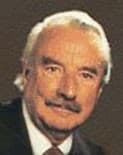
James Hadley Chase was a British author known for his crime and thriller novels. His notable works include "No Orchids for Miss Blandish," "This Way for a Shroud," and "Goldfish Have No Hiding Place," which often explore themes of violence and moral ambiguity. Chase's writing gained popularity in the mid-20th century, particularly in the realm of pulp fiction.
Similar books
- The Postman Always Rings Twice
James M. Cain
3.8 (32k) average on GoodreadsThrillerExplores a passionate, destructive affair leading to crime and an inevitable downfall.
- The Big Sleep
Raymond Chandler
4.0 (126k) average on GoodreadsThrillerWhile both Chase and Chandler excel in crafting hardboiled mysteries, Chandler's The Big Sleep features more complex, morally ambiguous characters and a richer, more poetic prose style. His detective, Philip Marlowe, often navigates a labyrinthine plot with a cynical wit, whereas Chase's protagonists in This Way for a Shroud are typically more passive victims of circumstance and the femme fatale's machinations, leading to a more direct, less nuanced narrative of downfall.
- The Diary of a Young Girl
Anne Frank
4.2 (2.7M) average on GoodreadsBiographyDuring the Nazi occupation, a teenage girl's diary, written from a secret annex, shares observations on humanity, hope, and the wait for freedom.
- Twisted 1. Twisted love
Ana Huang
3.7 (1.7M) average on GoodreadsA quiet billionaire with a difficult past finds his guarded heart opening to the woman he must protect, but their growing passion uncovers dangerous secrets and a shared, traumatic history.
- Eat, Pray, Love
Elizabeth Gilbert
3.6 (1.5M) average on GoodreadsLifestyleA heartbroken writer leaves her conventional life for a year-long global search for pleasure in Italy, spiritual devotion in India, and unexpected love and balance in Bali.
- Night
Elie Wiesel
4.3 (970k) average on GoodreadsBiographyIn the darkness of Auschwitz and Buchenwald, a teenage Elie Wiesel faces the extermination of his family, the loss of his faith, and the lasting scars of humanity's deepest cruelty.






Enjoyed the summary?
A summary gives you the shape of the book. The book itself has the detail, the examples and the voice.
Find This Way for a Shroud on AmazonAs an Amazon Associate, BookBrief earns from qualifying purchases. How we're funded