

Synopsis
Covers the whole plot, including the ending.
- Difficulty
- Medium
- Pacing
- Slow
- Mood
- Atmospheric, Eerie, Somber, Supernatural
- Read it if
- You enjoy classic Gothic horror, tales of rural superstition, or explorations of faith versus reason.
- Skip it if
- You prefer fast-paced modern horror or dislike stories with ambiguous supernatural elements.
Thrawn Janet Plot Summary
Covers the whole plot, including the ending.
The Arrival of Mr. Murdoch
The story begins with Mr. Murdoch, a new minister, arriving in the Scottish parish of Balweary. He is a devout and scholarly man, but also seems uneasy and eager to escape his past. The villagers, at first wary of his reserved nature, gradually respect his intelligence and dedication. However, a shadow hangs over his interactions, especially his dislike for anything superstitious, a sharp contrast to the locals' deep folk beliefs. His predecessor, a cheerful but less strict man, had let many old traditions continue.
The Case of Thrawn Janet
The main conflict arises when Mr. Murdoch must deal with Janet M'Clour, an old woman known as 'Thrawn Janet' because of her twisted neck and generally mean manner. Villagers widely believe her to be a witch, accusing her of various misfortunes like illness and blight. The kirk elders, reflecting the superstitions of the time, demand Murdoch excommunicate her. Despite his personal disbelief in witchcraft, he feels he must confront Janet due to his duty and the congregation's pressure. This confrontation challenges his rational view.
Murdoch's Rational Confrontation
Mr. Murdoch, using his theological training and skepticism, confronts Janet M'Clour in her cottage. He tries to reason with her, dismissing the witchcraft accusations as superstition and ignorant fear. He urges her to confess any sins and repent, offering God's grace. Janet, however, remains defiant and unyielding, her twisted neck and piercing gaze unsettling the minister. She speaks in riddles and curses, hinting at a darker connection to forces beyond human understanding, further disturbing Mr. Murdoch, who tries to stay calm.
The Excommunication and Janet's Demise
Despite his doubts, Mr. Murdoch excommunicates Thrawn Janet. The ceremony is somber, with villagers watching in fear and grim satisfaction. Soon after, Janet M'Clour is found dead, hanging from a tree by her red plaid, her body strangely twisted. The official explanation is suicide, but villagers whisper of demonic intervention and a pact with the Devil. The way she died, especially her unnaturally twisted neck, strengthens their belief in her supernatural dealings and the terrifying power she held even in death.
The Night of the Storm
A violent storm hits Balweary, mirroring Mr. Murdoch's inner turmoil. As wind howls and rain lashes his manse, he is tormented by disturbing visions and sounds. He believes he sees Janet's ghost, her twisted form appearing in his study, her eyes fixed on him. The rational minister finds his convictions shaken as the supernatural seems to appear before him. The storm outside intensifies the terror and isolation, blurring the lines between reality and nightmare, pushing him to the edge of sanity and making him question everything he believed.
The Devil's Bargain
During the storm, a spectral figure, the Devil, appears to Mr. Murdoch. This encounter reveals a horrifying truth: Thrawn Janet had made a pact with the Devil, cursing herself and Murdoch's family line. The Devil reveals that one of Murdoch's ancestors was involved in the original pact, binding his family to this dark legacy. This revelation shatters Murdoch's rational view, forcing him to face a personal connection to the evil he had denied and dismissed as superstition.
The Mark of the Devil
Mr. Murdoch awakens the next morning, exhausted and deeply changed by his night of terror. He finds a physical sign of his spectral encounter: his own neck is now strangely twisted, like Thrawn Janet's. This physical mark serves as undeniable proof, to himself and later to observant villagers, of the supernatural event. The once rational minister is now linked to the dark forces he had denied, his body showing the grim reality of his harrowing experience and the Devil's influence in Balweary.
Murdoch's Transformation
After his ordeal, Mr. Murdoch is a changed man. His former health and rational manner are replaced by a haunted, melancholic mood. He continues his duties, but with a deep and somber understanding of the world's darker aspects. His sermons become more intense, filled with a newfound, almost fearful, reverence for the spiritual realm. The villagers notice the change, especially the subtle twist in his neck, and a silent understanding passes between them. He has seen what they always believed, and it has broken him, but also given him a deeper, if terrifying, faith.
A Life of Somber Piety
Mr. Murdoch lives out his days in Balweary, serving his congregation with quiet, grim piety. He never openly discusses the events of that night or the true cause of his twisted neck. However, his life shows the reality of the supernatural, embodying the struggle between good and evil. He preaches with an intensity that suggests a deep personal knowledge of the demonic, leaving a lasting impression on the parish. His story becomes a cautionary tale, passed down, solidifying belief in witches and the Devil's power in Balweary.
The Enduring Legend
Years after Mr. Murdoch's death, the story of Thrawn Janet and the minister's change continues in Balweary. It becomes a deep part of local folklore, a chilling reminder of hidden forces in the world. The tale, passed down by the narrator's grandmother, highlights how even learned and skeptical individuals are vulnerable to ancient evils in the Scottish landscape. Mr. Murdoch's twisted neck is a physical sign of the supernatural encounter, ensuring the legend of Thrawn Janet lasts for generations.
Principal Figures
Mr. Murdoch
Protagonist
A rationalist minister haunted by the supernatural.
Mr. Murdoch is introduced as a highly educated and rational minister, newly arrived in the superstitious parish of Balweary. He prides himself on his enlightenment and dismisses local folklore and beliefs in witchcraft as ignorant superstition. Initially reserved and somewhat detached, he strives to bring a more reasoned approach to his ministry. His intellectual arrogance and scientific worldview are profoundly challenged by the events surrounding Thrawn Janet, leading to a dramatic internal struggle and a complete re-evaluation of his beliefs. He represents the clash between enlightenment and ancient superstition.
Relationships: Thrawn Janet (Antagonist; Murdoch initially dismisses her as a deluded old woman, then becomes her unwilling victim and a recipient of her demonic legacy.); The Parishioners of Balweary (His congregation; they initially view him with skepticism, then respect, and ultimately see him as a man touched by the very evil they feared.); The Devil (The ultimate antagonist, who confronts Murdoch directly and reveals his family's dark pact.)
Thrawn Janet (Janet M'Clour)
Antagonist
A deformed old woman accused of witchcraft, with a dark secret.
Thrawn Janet is a central figure, an old, impoverished woman with a twisted neck, which earned her the nickname 'Thrawn Janet.' She is ostracized and feared by the villagers of Balweary, who believe her to be a witch responsible for various misfortunes. Her appearance is unsettling, and her demeanor is defiant and cryptic, hinting at a deeper, malevolent power. She embodies the ancient, pagan forces that persist in the remote Scottish landscape, a stark contrast to Mr. Murdoch's modernity. Her death is as mysterious and unsettling as her life, cementing her legendary status.
Relationships: Mr. Murdoch (Her accuser and the minister who excommunicates her; she later curses and physically marks him.); The Parishioners of Balweary (Feared and ostracized by them; they believe she is a witch.); The Devil (Her master, with whom she made a pact.)
The Devil
Antagonist
The supernatural force behind Thrawn Janet's power and Murdoch's curse.
The Devil is the unseen, yet ultimately manifest, antagonist of the story. He is the source of Thrawn Janet's power and the orchestrator of the curse that afflicts Mr. Murdoch. He appears to Murdoch during the terrifying storm, revealing the intricate web of demonic influence that extends back through generations of Murdoch's family. He represents the ancient evil that defies human reason and challenges the very foundations of faith and enlightenment. His presence confirms the reality of the supernatural and the terrifying consequences of pacts with dark forces, leaving an indelible mark on Balweary.
Relationships: Thrawn Janet (Her master, with whom she made a pact, granting her powers.); Mr. Murdoch (The entity who directly confronts and curses Murdoch, linking him to a dark family legacy.)
The Parishioners of Balweary
Supporting
The superstitious villagers whose beliefs drive the plot.
The parishioners of Balweary are a collective character, representing the deeply superstitious and traditional populace of rural Scotland. They are devout in their Presbyterian faith but also firmly believe in the reality of witchcraft, the Devil, and other supernatural phenomena. Their fear and conviction regarding Thrawn Janet's powers are the catalyst for the conflict with Mr. Murdoch. They serve as a foil to Murdoch's rationalism, embodying the ancient beliefs that he initially dismisses. Their reactions and whispers drive much of the initial tension and serve to validate the supernatural elements of the story.
Relationships: Mr. Murdoch (His congregation; they respect his office but initially clash with his modern views, later witnessing his transformation.); Thrawn Janet (They fear her as a witch and demand her excommunication.)
The Narrator's Grandmother
Mentioned
The keeper of the local folklore and the source of the story.
The narrator's grandmother is a mentioned character, serving as the primary source of the tale of Thrawn Janet and Mr. Murdoch. She represents the oral tradition of storytelling and the deep-seated belief in the supernatural within Scottish culture. Her role is to pass down the legend, emphasizing its truth and the impact it had on the community. She is the bridge between the historical events and the present-day reader, authenticating the narrative and underscoring its cultural significance. Her voice lends an air of authenticity and ancient wisdom to the grim tale.
Relationships: The Narrator (Her grandson, to whom she tells the story.)
Themes & Insights
The Clash Between Rationalism and Superstition
This theme is central, exploring the conflict between Mr. Murdoch's rational view and the Balweary villagers' deep superstitions. Murdoch initially dismisses witchcraft belief as ignorance, trying to apply reason to a community steeped in folklore. However, his personal encounter with the supernatural shatters his rationalism, forcing him to face the limits of his understanding. The story suggests that even educated minds are vulnerable to forces beyond their grasp, and that old beliefs may hold a terrifying truth. This is clear when Murdoch, a man of reason, falls victim to the 'folly' he preached against.
“For years he had toiled to awaken their minds, and now his own mind was awake to something he had not dreamed of in his philosophy.”
The Enduring Power of Evil
The story explores the lasting and malevolent power of evil, especially in its supernatural form. Thrawn Janet is a vessel for this evil, having made a pact with the Devil. Even after her death, her influence torments and transforms Mr. Murdoch, showing that evil can go beyond physical presence. The Devil's direct involvement and the revelation of a generational curse highlight that evil is not just a moral failing but a strong, active force that can corrupt individuals and families. Murdoch's twisted neck symbolizes the lasting mark left by this enduring evil, suggesting some darkness cannot be reasoned away or defeated by human will.
“And the man of God, that had been so feared to meet the Devil, was now to be feared himself.”
The Nature of Faith and Doubt
This theme examines how faith is tested and changed by extraordinary events. Mr. Murdoch begins with a faith rooted in doctrine and rational understanding, dismissing the more mystical or fearful parts of belief. His confrontation with Thrawn Janet and subsequent demonic encounter cause a crisis of faith, challenging his assumptions about God, the Devil, and reality. His transformation leads to a new, more somber, and perhaps more authentic, piety — one born not just of doctrine, but of terrifying personal experience. His initial doubt in the supernatural is replaced by a profound, if fearful, certainty.
“He had come to Balweary to preach the Gospel; he was now to learn that there were more things in heaven and earth than were dreamed of in his theology.”
The Corrupting Influence of the Past
The story shows how past sins and dark legacies can haunt and corrupt future generations. The revelation that Mr. Murdoch's ancestors were involved in the Devil's pact ties him directly to the evil around Thrawn Janet. This suggests that the past is not easily escaped, and that the consequences of historical wrongdoings can affect individuals who believe they are separate from it. Murdoch's twisted neck is a physical sign of this inherited curse, a reminder that he cannot outrun his lineage's dark history or the land he serves. It speaks to the idea of ancestral sin.
“And the Devil said to him, 'Thou art of the blood that spilled the blood of the righteous, and thou art bound to me by a bond that cannot be broken.'”
Plot Devices & Literary Techniques
Foreshadowing
Hints of future events and the supernatural.
Foreshadowing is used throughout the story to build suspense and prepare the reader for the supernatural elements. From Mr. Murdoch's initial unease and aversion to superstition, to the villagers' unwavering belief in Thrawn Janet's witchcraft, subtle hints suggest that his rational worldview will be challenged. Janet's twisted neck and malevolent gaze are early indicators of her connection to dark forces. The storm that engulfs Balweary before Murdoch's direct encounter with the Devil also serves as a powerful foreshadowing of the spiritual turmoil and terror to come, creating an atmosphere of dread.
Physical Manifestation of the Supernatural
A bodily mark signifying spiritual corruption.
The physical manifestation of the supernatural is a crucial device, most notably with Mr. Murdoch's twisted neck. This deformity, mirroring Thrawn Janet's, serves as undeniable, tangible proof of his encounter with demonic forces. It's not just a psychological trauma; it's a bodily inscription of the curse, making the supernatural undeniably real for both Murdoch and the reader. This device grounds the abstract concept of evil in a concrete, visible way, ensuring that the impact of the supernatural is lasting and undeniable, transforming Murdoch into a living testament to the tale's grim truth.
Oral Tradition/Frame Narrative
The story told through generations.
The story is framed as a tale passed down through oral tradition, specifically recounted by the narrator's grandmother. This device lends an air of authenticity and historical weight to the supernatural events, suggesting that the story is not mere fiction but a piece of local history and folklore. It also emphasizes the enduring power of these legends within the community. By presenting the narrative as a generational tale, Stevenson enhances its chilling impact, implying that these dark events are deeply embedded in the cultural memory and continue to influence the present.
Pathetic Fallacy
The weather mirroring the emotional and supernatural turmoil.
Pathetic fallacy is employed to heighten the dramatic tension and reflect the internal and external conflicts. The terrible storm that rages outside Mr. Murdoch's manse directly mirrors the spiritual and psychological torment he experiences during his encounter with the Devil. The howling winds, lashing rain, and dark skies amplify the sense of dread, isolation, and chaos. This device blurs the line between the natural and supernatural, suggesting that the very environment is complicit in the unfolding horror, making the atmosphere oppressive and intensifying the impact of Murdoch's terrifying visions and revelations.
Thrawn Janet Quotes
“The devil, they say, is a gentleman, and has a good taste in wine.”
“It was a wild, bleak, God-forsaken country, where the wind blew unceasingly and the rain lashed down with a fury that seemed to mock at human habitation.”
“There was a something in her eyes, a kind of smouldering fire, that made men uneasy.”
“The minister, a young man fresh from the university, was full of new ideas and a great contempt for the old superstitions.”
“But the devil is not to be mocked, and he pays his debts in his own coin.”
“She was a woman of a strange, uncanny beauty, like a flower that had bloomed in the shadow of a grave.”
“The wind was howling like a banshee, and the rain was beating against the panes like the fists of an angry ghost.”
“Fear is a great master, and teaches many lessons.”
“He had come to scoff, but he remained to pray.”
“For there are more things in heaven and earth, Horatio, than are dreamt of in your philosophy.”
“The minister was a changed man; his youth was gone, and in its place was a haggard, haunted look.”
“And the devil got his due, as he always does in the end.”
“It was a story told in whispers, in the dark corners of peat fires, and never in the full light of day.”
“The very air seemed thick with ancient malice and the scent of brimstone.”
Quiz
10 questions on the plot and the characters. Each answer comes with a short explanation.
Question 1
What is the name of the minister who comes to the village of Balweary and encounters Thrawn Janet?
- Mr. Maclean
- Mr. Murdoch Soulis
- Mr. John Knox
- Mr. David Hume
Show answer
B. Mr. Murdoch Soulis The story centers around the experiences of the new minister, Mr. Murdoch Soulis, in Balweary.
Question 2
What is Thrawn Janet's physical appearance described as?
- Tall and graceful with flowing red hair
- A stooping, wizened old woman with a twisted neck
- A plump, cheerful woman with rosy cheeks
- A young, pale girl with large, frightened eyes
Show answer
B. A stooping, wizened old woman with a twisted neck The name 'Thrawn Janet' itself refers to her 'twisted' or 'crooked' appearance, particularly her neck.
Question 3
What is the initial public perception of Thrawn Janet in the village of Balweary?
- She is respected as a wise elder.
- She is seen as a kind and charitable person.
- She is feared and shunned as a witch.
- She is ignored and considered harmless.
Show answer
C. She is feared and shunned as a witch. From the very beginning, Janet is associated with witchcraft and viewed with suspicion and fear by the villagers.
Question 4
What unusual detail does Mr. Soulis notice about Janet's shadow?
- It is much larger than her body.
- It moves independently of her.
- It is always present, even in complete darkness.
- She does not cast one.
Show answer
D. She does not cast one. A key supernatural element is that Janet casts no shadow, a traditional sign of a witch or someone in league with the devil.
Question 5
What is the primary reason Mr. Soulis initially takes Thrawn Janet into his service?
- He feels pity for her destitution.
- He needs a knowledgeable local guide.
- He is attempting to convert her to Christianity.
- He is fascinated by her reputation as a witch.
Show answer
A. He feels pity for her destitution. Despite the villagers' warnings, Mr. Soulis, being a compassionate man, feels sorry for Janet's poverty and offers her work.
Question 6
What happens to Janet's body after she is found hanged?
- It is buried in consecrated ground.
- It is burned at the stake by the villagers.
- It is discovered to be a wooden effigy.
- It is still warm and twitches, then turns into a 'bundle of sticks and rags' in Mr. Soulis's arms.
Show answer
D. It is still warm and twitches, then turns into a 'bundle of sticks and rags' in Mr. Soulis's arms. This is the climax of the story, where Mr. Soulis attempts to cut down her body, only for it to transform, confirming the supernatural horror.
Question 7
What is the ultimate fate of Mr. Murdoch Soulis after the events with Thrawn Janet?
- He leaves Balweary and becomes a renowned scholar.
- He remains in Balweary, but is forever changed, living with the memory of the supernatural.
- He is driven mad and institutionalized.
- He dies shortly after, haunted by the experience.
Show answer
B. He remains in Balweary, but is forever changed, living with the memory of the supernatural. The story concludes by stating that Soulis continued as minister in Balweary, but was a 'changed man' who never spoke of the incident but carried the burden of his experience.
Question 8
The story is narrated in what particular style or voice, characteristic of Scottish folklore?
- A formal, academic historical account.
- A first-person journal entry from Mr. Soulis.
- An omniscient, detached third-person perspective.
- A colloquial, gossipy, and oral storytelling style, often using Scots dialect.
Show answer
D. A colloquial, gossipy, and oral storytelling style, often using Scots dialect. Stevenson employs a distinctive narrative voice, mimicking a spoken tale from Scottish tradition, rich with dialect and local color, enhancing the eerie atmosphere.
Question 9
Which of the following themes is most prominent in 'Thrawn Janet'?
- The triumph of scientific reason over superstition.
- The conflict between religious faith and ancient pagan beliefs/evil.
- The importance of community solidarity in times of crisis.
- The corrupting influence of power on individuals.
Show answer
B. The conflict between religious faith and ancient pagan beliefs/evil. The central conflict revolves around Mr. Soulis, a man of God, confronting a seemingly unholy and ancient evil embodied by Janet, challenging his rational faith.
Question 10
What is the significance of the black cock that appears in the story?
- It is a pet owned by Thrawn Janet.
- It is a symbol of good luck for the villagers.
- It is implied to be a familiar or embodiment of the devil associated with Janet.
- It serves as a warning signal for impending weather changes.
Show answer
C. It is implied to be a familiar or embodiment of the devil associated with Janet. The black cock is a recurring, unsettling detail, often associated with witchcraft and the devil as a familiar spirit, reinforcing Janet's unholy connections.
Thrawn Janet FAQ
What is the central premise of 'Thrawn Janet'?
'Thrawn Janet' tells the chilling tale of how the Reverend Murdoch Soulis, a pious minister, becomes entangled in the suspected witchcraft of an old woman named Janet. When Janet dies under mysterious circumstances and her coffin is found empty, Soulis is haunted by the spectral figure of Janet, leading to his eventual madness and death by suicide.
Who is Thrawn Janet, and why is she significant?
Thrawn Janet is an elderly, impoverished woman in the Scottish village, ostracized and feared by the community due to her 'thrawn' (twisted or contrary) nature and suspected dealings with the devil. Her death and subsequent disappearance from her coffin are the catalysts for the supernatural events that plague Reverend Soulis, making her the central figure of the horror.
Who is Reverend Murdoch Soulis, and what is his initial role in the story?
Reverend Murdoch Soulis is the newly appointed minister of the parish, initially portrayed as a devout and somewhat stern man, dedicated to his faith and duty. He is called upon to minister to Janet in her final days, and it is his interaction with her—and his subsequent inability to save her soul—that marks the beginning of his terrifying ordeal.
What is the primary conflict in the story?
The primary conflict is the struggle between Reverend Soulis's Christian faith and the overwhelming, terrifying evidence of supernatural evil personified by Thrawn Janet. He grapples with doubt, fear, and the perceived failure of his spiritual authority to combat the dark forces he encounters, ultimately leading to his psychological breakdown.
How does the story conclude for Reverend Soulis?
Reverend Soulis's story concludes tragically with his descent into madness and eventual suicide. After years of being haunted by the specter of Janet, described as a 'black thing' in his study, he is found dead, having hanged himself. This grim end solidifies the tale's dark and unforgiving atmosphere.
What is the significance of the empty coffin found after Janet's death?
The empty coffin is a pivotal 'hidden detail' that confirms the supernatural horror. It suggests that Janet's body was not merely buried but was taken by an unholy force, strongly implying her pact with the devil and setting the stage for her spectral haunting of Reverend Soulis. It's the first undeniable sign of the supernatural.
Are there any clues in the text about Janet's 'thrawn' nature beyond her appearance?
Beyond her physical description, Janet's 'thrawn' nature is hinted at through the villagers' deep-seated fear and avoidance of her, and her defiant, unrepentant demeanor even on her deathbed. She resists Soulis's spiritual ministrations, suggesting a will already aligned with darker forces, rather than merely eccentricity.
What is implied by the 'black thing' that haunts Reverend Soulis's study?
The 'black thing' is a direct manifestation of Thrawn Janet's spectral presence, heavily implying her return from the dead as a demonic entity. It represents the devil's claim over her soul and his continued torment of Soulis, serving as a constant, terrifying reminder of his perceived failure and the power of evil.
How does Reverend Soulis's initial piety contribute to his downfall?
Soulis's fervent piety and belief in his ability to combat evil through faith make him particularly vulnerable. When confronted with a force he cannot overcome or understand, his worldview shatters. His pride in his spiritual strength is undermined, leading to profound doubt and psychological collapse when he realizes he is powerless.
Discuss the psychological impact of isolation on Reverend Soulis.
Reverend Soulis experiences extreme psychological isolation. The villagers fear him after Janet's death, and he is unable to confide in anyone about his supernatural torment. This lack of support, combined with the constant haunting, exacerbates his mental decline, pushing him further into madness and despair, as he bears his burden alone.
How does fear manifest in Reverend Soulis, and what are its consequences?
Fear manifests in Soulis as a creeping, pervasive dread that slowly erodes his sanity. Initially, it's fear of the unknown and the demonic, but it evolves into a terror of his own mind and the relentless haunting. The consequence is his complete psychological breakdown, culminating in his tragic suicide, unable to escape the terror.
What role does superstition play in the community's reaction to Janet and Soulis?
Superstition plays a dominant role, shaping the community's fear and ostracism of Janet, whom they readily believe is a witch. This same superstition then turns against Soulis, as his association with Janet and his subsequent strange behavior lead them to believe he is also tainted by evil, isolating him further and fueling his torment.
Is Thrawn Janet truly a witch, or is there an alternative interpretation of her character?
While the story strongly presents Janet as a witch in league with the devil, an alternative interpretation could view her as a victim of societal prejudice and poverty, with her 'thrawn' nature being a coping mechanism. The supernatural elements could then be seen as manifestations of the villagers' and Soulis's own deep-seated fears and guilt.
What is the story's commentary on the nature of good and evil?
The story suggests a stark, uncompromising view of good and evil, where evil is a tangible, powerful force that can corrupt and destroy even the most devout. It questions the limits of faith in combating such forces, implying that some evils are beyond human or even spiritual intervention, leading to tragic outcomes.
Could Reverend Soulis's haunting be interpreted as a psychological breakdown rather than a purely supernatural event?
Yes, while presented as supernatural, Soulis's haunting could be interpreted as a psychological breakdown. His guilt over Janet's death, the community's judgment, and the immense pressure of his religious duties could manifest as hallucinations and paranoia, with the 'black thing' being a symbol of his internal torment and shattered faith.
What is the significance of the story being told as a local legend rather than a direct narrative?
The framing as a local legend enhances the horror and gives it a timeless, almost historical authenticity. It allows for ambiguity and the embellishment of details, making the events feel more profound and ingrained in the fabric of the community's history, rather than just a single, isolated incident. This narrative distance also emphasizes the enduring impact of the tragedy.
How does the Scottish setting contribute to the story's atmosphere?
The remote, superstitious Scottish setting, with its harsh landscape and deep-rooted folklore, significantly contributes to the story's bleak and eerie atmosphere. It grounds the supernatural elements in a cultural context where belief in witches and the devil was prevalent, making the horror feel more visceral and believable for the characters.
What literary devices does Stevenson employ to create suspense and horror?
Stevenson masterfully uses foreshadowing, particularly through the villagers' reactions and descriptions of Janet, to build suspense. He employs vivid, unsettling imagery, like the empty coffin and the 'black thing,' and relies on psychological terror to convey horror, focusing on Soulis's internal decay rather than explicit gore. The ambiguity of the haunting also heightens dread.
About the author
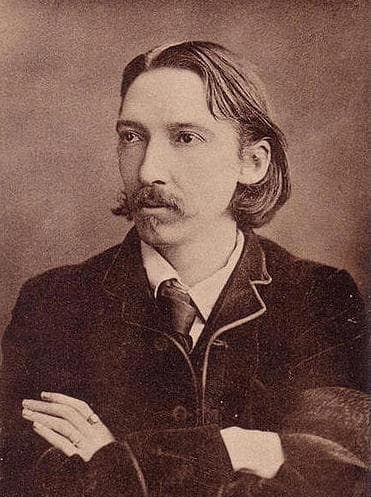
Robert Louis Stevenson was a Scottish novelist, essayist, poet and travel writer. He is best known for works such as Treasure Island, Strange Case of Dr Jekyll and Mr Hyde, Kidnapped and A Child's Garden of Verses.
Similar books
- The Turn of the Screw
Henry James
3.4 (104k) average on GoodreadsMysteryExplores psychological horror and ambiguous supernatural events through a governess's perspective.
- The Black Cat
Edgar Allan Poe
4.0 (28k) average on GoodreadsMysteryFeatures a descent into madness intertwined with supernatural or psychological horror.
- Waverley
Walter Scott
3.4 (5k) average on GoodreadsHistorical FictionScott's Waverley is a foundational work of historical fiction, rich in historical detail and character development. However, it largely avoids overt supernatural elements, focusing instead on political and social conflicts. "Thrawn Janet" distinguishes itself by integrating a literal, confronting supernatural horror within a similarly rigorous historical setting, offering a different kind of engagement with the past's anxieties.
- Wuthering Heights
Emily Brontë
3.9 (1.3M) average on GoodreadsHistorical FictionBrontë's Wuthering Heights shares a strong sense of place and explores psychological depths, often employing gothic elements and a haunting atmosphere. However, its supernatural aspects are generally more symbolic or atmospheric, rather than the explicit, literal manifestation of evil and a devil's bargain found in "Thrawn Janet." Stevenson's novella presents a more direct and unambiguous confrontation with the uncanny.
- To Kill a Mockingbird
Harper Lee
4.3 (4.5M) average on GoodreadsHistorical FictionIn the 1930s Jim Crow South, Harper Lee writes about racial injustice, moral growth, and the quiet courage of a lawyer father, Atticus Finch, as seen through his young daughter's eyes.
- The Great Gatsby
F. Scott Fitzgerald
3.9 (3.8M) average on GoodreadsHistorical FictionIn the opulent Roaring Twenties, a mysterious millionaire's lavish parties hide his desperate, tragic pursuit of a lost love, exposing the emptiness within the American Dream.





Enjoyed the summary?
A summary gives you the shape of the book. The book itself has the detail, the examples and the voice.
Find Thrawn Janet on AmazonAs an Amazon Associate, BookBrief earns from qualifying purchases. How we're funded