
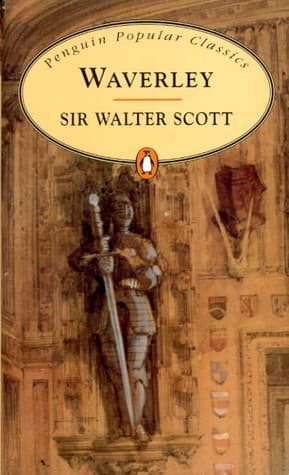
Synopsis
Covers the whole plot, including the ending.
- Difficulty
- Medium
- Pacing
- Moderate
- Mood
- Historical, Romantic, Reflective, Adventurous
- Read it if
- You enjoy classic historical fiction with a focus on character development and cultural immersion, particularly stories set during pivotal historical moments.
- Skip it if
- You prefer fast-paced plots and modern prose, or have little patience for detailed descriptions and historical context.
Waverley Plot Summary
Covers the whole plot, including the ending.
Edward Waverley's Idyllic Upbringing and Military Commission
Edward Waverley, a young man from a respectable English family, grows up with a mix of classical education and romantic literature, which makes him dreamy and imaginative. His uncle, Sir Everard Waverley, a strong Tory and Jacobite supporter, and his Whig father, Richard Waverley, have different ideas about his education, leading to an unplanned intellectual development. After some time with his uncle, Edward gets a commission in the army as a captain of dragoons, mainly through his father's influence. He is ordered to join his regiment in Dundee, Scotland, a place he sees with romantic interest and a wish for adventure, not knowing the political tensions hidden in the seemingly peaceful country.
Introduction to the Lowlands and Baron Bradwardine
When Edward arrives in Scotland, his regiment is in the Lowlands. With a letter of introduction, he visits Tully-Veolan, the home of Baron Bradwardine, a family friend and an eccentric but honorable Lowland laird. The Baron, a man focused on old customs, heraldry, and Latin phrases, shows Edward the charming, old-fashioned life of the Scottish gentry. Edward likes the Baron's daughter, Rose Bradwardine, a sensible and kind young woman, and observes the local customs and the Baron's unique household, including the loyal but superstitious gardener, David Gellatley. This period is Edward's first experience with Scottish culture, different from his English upbringing.
Journey into the Highlands and Meeting Fergus Mac-Ivor
Out of curiosity and a wish for more 'real' Scottish experiences, Edward gets leave from his regiment and travels into the Highlands. A mysterious figure, supposedly a poacher named Donald Bean Lean, but later found to be a spy, guides him. Edward eventually reaches Glennaquoich, the home of Fergus Mac-Ivor Vich Ian Vohr, a strong Highland chief with Jacobite sympathies. Fergus, who knew Edward was coming, welcomes him with grand Highland hospitality, showing him the clan system and the fierce loyalty of his followers. Edward is captivated by the wild beauty of the Highlands and the romantic, almost feudal, life of its people.
Highland Culture and Flora Mac-Ivor's Influence
At Glennaquoich, Edward becomes deeply involved in Highland culture. He sees clan gatherings, traditional dances, and the fighting spirit of Fergus's men. He is especially impressed by Flora Mac-Ivor, Fergus's beautiful, smart, and patriotic sister. Flora, a devoted Catholic and a strong Jacobite, represents the noble, romantic ideas of the Highlands. She impresses Edward with her knowledge, artistic skills, and firm belief in the Stuart cause. Edward finds himself increasingly drawn to Flora and the Jacobite ideas she stands for, a sharp contrast to his previous life and his duties as an English officer. This time marks a big change in his loyalties and how he sees the world.
Accusations of Desertion and Imprisonment
While Edward enjoys his time in the Highlands, a series of misunderstandings and bad coincidences cause his downfall. An anonymous letter, faked by the bad guy Balmawhapple (an enemy of Baron Bradwardine), is sent to Edward's commanding officer, saying he has Jacobite sympathies and accusing him of desertion. At the same time, Edward's leave ends, and his long absence is seen as defection. He hears that he has lost his commission and is declared a deserter. On his way back to the Lowlands to clear his name, English soldiers arrest him and take him prisoner, facing charges of treason. His romantic Highland adventure has become a dangerous situation.
Rescue by Evan Dhu and Joining the Jacobite Cause
Edward is rescued from prison by a group of Highlanders led by Evan Dhu Maccombich, Fergus Mac-Ivor's loyal officer. Evan Dhu, following Fergus's orders, frees Edward during a fight, showing the fierce loyalty and military skill of the clans. Unhappy with how the English army treated him and very grateful to Fergus and his people, Edward feels a strong pull towards the Jacobite cause. He decides to formally join the uprising, seeing it as a noble and romantic effort, and promises his loyalty to Prince Charles Edward Stuart. This decision solidifies his break from his old life and places him firmly with the rebels.
The Jacobite Rising and the Battle of Prestonpans
Edward Waverley actively participates in the 1745 Jacobite Rising. He sees the enthusiastic gathering of the clans and the arrival of Prince Charles Edward Stuart, 'Bonnie Prince Charlie,' who inspires his followers with his charm and royal manner. Edward, now wearing Highland clothes, serves well in the Jacobite army. He takes part in the march south and experiences the initial successes of the rebellion. The main point of this period is the Battle of Prestonpans, where the Jacobite forces, though outnumbered, win a clear victory over the British government troops. Edward fights bravely, earning the respect of his Highland comrades and further strengthening his commitment to the cause.
The Retreat and Growing Doubts
After the Prestonpans victory, the Jacobite army moves into England, but their momentum soon decreases. Edward sees the growing disagreements among the Highland chiefs and the lack of support from English Jacobites. The decision to retreat from Derby, despite Prince Charles's wish to go on to London, deeply discourages him. Edward begins to see the harsh realities and uselessness of war, the suffering it causes, and the problems in the Jacobite leadership and plan. His early romantic idealism starts to fade, replaced by a feeling of coming trouble and a growing doubt about the final success and rightness of the cause he has joined.
Culloden and its Aftermath
The Jacobite army eventually retreats north, leading to the devastating Battle of Culloden. Edward fights in this final, brutal battle, seeing the complete destruction of the Highland forces. The battle is a catastrophic defeat for the Jacobites, ending the Stuart cause and the traditional Highland way of life. In the chaos after the battle, Edward is separated from Fergus and other friends. He sees the brutal suppression that follows, as English forces hunt down and punish the remaining rebels. The romantic vision he once had of the Highlands and the Jacobite cause is shattered by the grim reality of defeat and persecution.
Fergus and Evan Dhu's Capture and Execution
After Culloden, Edward learns that Fergus Mac-Ivor and Evan Dhu Maccombich have been captured. Despite the great personal risk, Edward, disguised and helped by the kind Lowlander, Mr. Morton, tries to help them. He travels to London and asks for help from his influential uncle, Sir Everard, and his father, who use their connections to try and get a pardon. However, their efforts fail. Edward is at the trial and sees the dignified and defiant last moments of Fergus and Evan Dhu, who are sentenced and executed for treason. Their deaths deeply affect Edward, showing the tragic cost of loyalty and rebellion.
Reconciliation and Return to Tully-Veolan
Through his family's help and the statements of people like Colonel Talbot, who says Edward's intentions were misguided but not bad, Edward is eventually cleared of the charges of treason and desertion. He receives a pardon and can resume his life. He returns to Scotland, specifically to Tully-Veolan, to find Baron Bradwardine, who was also involved in the uprising, now in hiding and his estate taken away. Edward's return to the Lowlands is marked by sadness, as the land and its people show the scars of the recent conflict. He thinks about his journey and the deep changes within himself and the country.
Restoration, Marriage, and a New Beginning
Using his family's influence and his new maturity and determination, Edward works hard to help Baron Bradwardine get back his family estate, Tully-Veolan. He navigates the complex legal and political situation of Scotland after the rebellion. During this time, his affection for Rose Bradwardine grows, as he sees her steady character and gentle nature, a clear contrast to the more passionate but ultimately tragic appeal of Flora Mac-Ivor. Edward eventually marries Rose, settling down at Tully-Veolan. The novel ends with Edward, now wiser and more stable, living a peaceful life, having found stability and happiness after his difficult adventures, representing the success of home life and reason over romantic idealism.
Principal Figures
Edward Waverley
Protagonist
A romantic and impressionable young English gentleman caught between two cultures.
Edward Waverley is a young English gentleman, raised with a blend of classical learning and romantic literature, which fosters a vivid imagination and a somewhat indecisive nature. Initially naive and idealistic, he is easily swayed by new experiences and charismatic figures. His journey from an English officer to a Jacobite sympathizer and then to a settled Lowland laird highlights his search for identity and purpose. He is driven by curiosity, a desire for adventure, and a romanticized view of the world, which is ultimately tempered by the harsh realities of war and political upheaval. He learns to value steadfastness and domestic peace over fleeting passion and grand ideals.
Relationships: Sir Everard Waverley (Uncle, Jacobite sympathizer, influential); Richard Waverley (Father, Whig politician, distant); Baron Bradwardine (Family friend, mentor, eventual father-in-law); Rose Bradwardine (Love interest, eventual wife, sensible and kind); Fergus Mac-Ivor (Highland chieftain, friend, inspiring but ultimately tragic figure); Flora Mac-Ivor (Object of romantic admiration, ardent Jacobite, intellectual counterpart)
Fergus Mac-Ivor Vich Ian Vohr
Supporting/Antagonist (to the Crown)
A charismatic and proud Highland chieftain, leader of the Jacobite cause.
Fergus Mac-Ivor is a powerful and charismatic Highland chieftain, fiercely proud of his clan and heritage. He is an ardent Jacobite, driven by a deep sense of loyalty to the Stuart cause and a desire to restore the traditional Highland way of life. He is a man of action, a natural leader, and possesses a commanding presence. While he can be manipulative and ambitious, he also displays genuine affection and loyalty to those he considers his own, including Edward. His character embodies the romantic, yet ultimately doomed, spirit of the Jacobite rebellion.
Relationships: Flora Mac-Ivor (Sister, confidante, shares his Jacobite zeal); Edward Waverley (Friend, protégé, fellow Jacobite); Evan Dhu Maccombich (Loyal lieutenant)
Flora Mac-Ivor
Supporting
Fergus's intelligent, beautiful, and fiercely patriotic sister, an ardent Jacobite.
Flora Mac-Ivor is Fergus's beautiful and highly accomplished sister. She is intelligent, well-educated, and possesses a strong, principled character. A devout Catholic and an unwavering Jacobite, she embodies the noble and romantic ideals of the Highland cause. She captivates Edward with her intellect, artistic talents, and passionate commitment to her beliefs, but her dedication to the Stuart cause is absolute, leaving no room for personal attachments that would compromise her principles. She represents the unyielding, almost spiritual, devotion to the Jacobite dream.
Relationships: Fergus Mac-Ivor (Brother, shares deep familial and political bonds); Edward Waverley (Object of his romantic admiration, intellectual companion)
Baron Bradwardine (Cosmo Comyne Bradwardine)
Supporting
An eccentric but honorable Lowland laird and Jacobite sympathizer.
Baron Bradwardine is an elderly Lowland laird, a family friend of the Waverleys. He is a man of great learning, particularly in ancient Scottish law, heraldry, and Latin, which he frequently quotes. His character is marked by an endearing eccentricity, adherence to old customs, and a deep sense of honor. Despite his pedantry, he is a kind and loyal man, devoted to his daughter, Rose, and his ancestral estate, Tully-Veolan. He is a moderate Jacobite, drawn into the rebellion more by loyalty and tradition than fervent political conviction, enduring significant hardship for his beliefs.
Relationships: Rose Bradwardine (Daughter, deeply devoted to her); Edward Waverley (Family friend, mentor, eventual son-in-law); David Gellatley (Faithful but eccentric servant)
Rose Bradwardine
Supporting
The sensible, sweet, and steadfast daughter of Baron Bradwardine.
Rose Bradwardine is the daughter of Baron Bradwardine. In contrast to Flora Mac-Ivor's passionate idealism, Rose represents practicality, sweetness, and domestic virtue. She is gentle, kind, and possesses a quiet strength. Her sensible nature and unwavering loyalty make her a comforting and stable presence in Edward's tumultuous life. She is deeply devoted to her father and her home. Edward eventually recognizes her enduring qualities and marries her, finding lasting happiness and stability in her companionship.
Relationships: Baron Bradwardine (Father, deeply loved and cared for); Edward Waverley (Love interest, eventual wife, provides stability)
Evan Dhu Maccombich
Supporting
Fergus Mac-Ivor's loyal and brave Highland lieutenant.
Evan Dhu is Fergus Mac-Ivor's loyal and courageous lieutenant. He embodies the fierce loyalty and martial spirit of the Highland clansmen. He is a man of few words but decisive action, utterly devoted to Fergus and the Jacobite cause. He plays a crucial role in rescuing Edward from imprisonment and demonstrates the unwavering commitment of the Highlanders to their chief. His steadfastness and willingness to sacrifice for his lord underscore the feudal bonds that define Highland society.
Relationships: Fergus Mac-Ivor (Chief, to whom he is utterly loyal); Edward Waverley (Initially a charge, later a comrade-in-arms)
Prince Charles Edward Stuart (Bonnie Prince Charlie)
Mentioned/Supporting
The charismatic but ultimately flawed leader of the Jacobite Rising.
Prince Charles Edward Stuart, though not a central character, is the symbolic heart of the Jacobite Rising. He is depicted as charismatic, handsome, and inspiring, capable of rousing fervent loyalty among his Highland followers. However, he is also shown to be somewhat naive, overconfident, and lacking in strategic foresight, especially as the campaign progresses. His presence galvanizes the rebellion, but his ultimate failure underscores the futility of the Jacobite cause.
Relationships: Fergus Mac-Ivor (Loyal supporter and military leader); Edward Waverley (Commander-in-chief, inspires loyalty)
Colonel Talbot
Supporting
An honorable English officer who shows fairness and compassion.
Colonel Talbot is an English officer who represents the more honorable and understanding side of the British government. He encounters Edward at various points and, despite Edward's involvement with the rebels, treats him with a degree of fairness and respect. He is instrumental in clearing Edward's name after the rebellion, recognizing that Edward was more misguided than malicious. Talbot serves as a bridge between the warring factions, embodying the potential for reconciliation and justice even amidst conflict.
Relationships: Edward Waverley (Acquaintance, later instrumental in his pardon)
Donald Bean Lean
Supporting
A cunning Highland robber and spy, initially guides Edward.
Donald Bean Lean is a notorious Highland robber and a shrewd, opportunistic figure. He initially appears as Edward's guide into the Highlands, but is later revealed to be a spy and a man deeply involved in the illicit activities of the region. He represents the darker, more lawless side of Highland life, operating outside the formal clan structure but still connected to the Jacobite network through his intelligence gathering. His actions contribute to the complications that lead to Edward's arrest.
Relationships: Edward Waverley (Initial guide, later an indirect antagonist)
Themes & Insights
Identity and Self-Discovery
The novel follows Edward Waverley's journey of self-discovery as he experiences different cultures and political loyalties. Edward starts as a passive, easily influenced young man, shaped by romantic literature and without a clear purpose. His experiences in the Lowlands and especially the Highlands show him contrasting ways of life, forcing him to consider his own values and loyalties. He changes from his English military uniform to Highland dress, which symbolizes his shift in identity. In the end, he finds that true identity is not in romantic ideas or inherited status, but in making mature choices and finding stability, leading him to a settled life with Rose.
“He was a boy of that romantic cast of mind, who are ever most delighted with what is wonderful and new, and whom a wild and solitary life has taught to give way to the flow of an imagination which had never been disciplined by the ordinary course of study.”
The Clash of Cultures and Civilizations
A main theme is the clear difference between the 'civilized' Lowlands and England and the 'barbaric' yet noble Highlands. Scott details the different customs, laws, social structures, and values of these regions. The Lowlands, seen through Baron Bradwardine, represent an older, more formal Scottish gentry, while the Highlands, seen through Fergus Mac-Ivor, show a feudal, patriarchal, and warrior society about to disappear. Edward's time in both lets Scott explore the good and bad points of each, showing the unavoidable conflict that led to the Jacobite Rising and the later suppression of Highland culture.
“The mind of Waverley was at first irresistibly attracted by the novelty of a life which seemed to combine the social pleasures of a court with the wild freedom of a native tribe.”
Romantic Idealism vs. Harsh Reality
Edward's character shows the struggle between romantic ideas and the hard facts of life, especially war. He first sees the Jacobite cause and Highland life romantically, inspired by Flora Mac-Ivor's strong patriotism and Fergus's appeal. He imagines glory and adventure. However, as the rebellion continues, he sees the brutality of battle, the suffering of ordinary people, the political disagreements, and the final uselessness of the cause at Culloden. His romantic notions are broken, replaced by a clear understanding of the tragic results of rebellion and the value of peace and order. The novel criticizes uncontrolled romanticism.
“He had imagined a hero in the Prince, a second Bayard in Fergus, and a Minerva in Flora; and it was with some difficulty that he could, by degrees, familiarize himself with the truth, that the Prince was a rash youth, Fergus an ambitious chief, and Flora a woman of an exalted imagination, rather than a superior understanding.”
Loyalty and Betrayal
Loyalty is explored in many ways: personal loyalty to family and friends, clan loyalty to a chief, and political loyalty to a crown or cause. Edward struggles with divided loyalties, torn between his duty to the English crown and his growing affection for his Jacobite friends. The strong loyalty of characters like Evan Dhu to Fergus, and Fergus's own devotion to the Stuart Prince, show the powerful bonds within Highland society. On the other hand, betrayal appears in the accusations against Edward and the eventual failure of some Jacobite supporters to fully commit. The novel suggests that while loyalty is good, putting it in the wrong place can lead to tragedy.
“Had he been a native Highlander, a thought of desertion would never have occurred to him.”
The End of an Era
Waverley is deeply sad, mourning the end of traditional Highland society and the Jacobite cause. The novel is set at the start of modern times, showing the last, desperate fight of a feudal system against the growing power of the British state. The defeat at Culloden is shown not just as a military loss, but as the death of a unique culture, with its old customs, clan loyalties, and romantic spirit. Characters like Fergus and Flora represent this fading world, and their tragic fates symbolize the irreversible changes brought by the Hanoverian victory and the later 'pacification' of the Highlands. The novel is a historical record and a tribute to a lost way of life.
“The last hopes of the Stuarts had been broken in the field of Culloden, and with them had perished, for ever, the patriarchal system of the Highlands.”
Plot Devices & Literary Techniques
The Bildungsroman (Coming-of-Age Story)
Edward's journey of personal growth and maturation.
The novel follows Edward Waverley's psychological and moral growth from an impressionable, naive young man to a mature, self-aware individual. His experiences in Scotland, particularly his involvement in the Jacobite Rising, serve as a crucible for his development. He learns about the complexities of human nature, the realities of war, and the importance of making responsible choices. His journey culminates in his marriage to Rose and his settled life at Tully-Veolan, signifying his successful integration into society and his acquisition of wisdom. This narrative structure allows Scott to explore themes of identity and the shaping influence of environment and experience.
Historical Romance
Blends fictional characters and plot with real historical events and settings.
Waverley is considered the first true historical novel, meticulously blending a fictional protagonist (Edward Waverley) and his personal journey with the authentic backdrop of the 1745 Jacobite Rising. Scott incorporates real historical figures (like Bonnie Prince Charlie) and events (like the Battle of Prestonpans and Culloden) into the narrative, while using fictional characters to explore the human impact of these grand historical forces. The 'romance' aspect comes from the idealization of the past, the focus on adventure, and the exploration of strong emotions and conflicts, particularly between cultures. This device allows Scott to both educate and entertain, bringing history to life through personal stories.
Foil Characters
Characters who highlight each other's qualities through contrast.
Scott extensively uses foil characters to illuminate the protagonist's development and to emphasize thematic contrasts. Most notably, Flora Mac-Ivor and Rose Bradwardine serve as foils for Edward's affections and moral choices. Flora represents passionate idealism, unwavering Jacobite loyalty, and a tragic, doomed beauty, while Rose embodies sensible practicality, domestic virtue, and enduring stability. Edward's eventual choice of Rose over Flora signifies his maturation and his embrace of a more grounded reality. Similarly, the eccentric Baron Bradwardine contrasts with the wild Fergus Mac-Ivor, highlighting the differences between Lowland and Highland gentry.
The Noble Savage Trope
Portrayal of Highlanders as 'primitive' yet honorable and uncorrupted.
Scott employs elements of the 'noble savage' trope in his portrayal of the Highlanders. While acknowledging their 'barbaric' customs, fierce independence, and sometimes brutal methods, he also imbues them with admirable qualities such as unwavering loyalty, courage, hospitality, and a strong sense of honor. Characters like Fergus Mac-Ivor and Evan Dhu exemplify this, living by a strict code of conduct unique to their culture. This device allows Scott to romanticize a dying way of life, contrasting it with the perceived corruption and artifice of modern English society, even as he acknowledges its historical inevitability.
The Unreliable Narrator (Subtle)
Edward's subjective and evolving perspective influences the narrative.
While the overall narration is third-person omniscient, much of the story is filtered through Edward Waverley's subjective and often romanticized perspective. His initial idealization of the Highlands and the Jacobite cause shapes how events are presented to the reader. As he matures and experiences the harsh realities of war, his perspective shifts, making the earlier romantic descriptions seem naive in retrospect. This subtle unreliability allows Scott to explore the theme of idealism versus reality, as the reader experiences the disillusionment alongside Edward, rather than being presented with a purely objective historical account from the outset.
Waverley Quotes
“It is wonderful how the whole world is put in motion by the mysterious love of power.”
“The memory of man is an imperfect record. It is sometimes wonderfully tenacious of trifles, and will let things of importance escape.”
“Prejudice... is a mist, which in our journey through life, often dims the brightest, and obscures the best, of objects.”
“There are some feelings so sacred, that to display them to the gaze of the world were to profane them.”
“The eye of a lover sees many beauties which are hid from other spectators.”
“Custom... is the law of fools, but it is the guide of wise men.”
“Every man has his own pleasure, and mine is to hear a good story, and tell it again.”
“It is in vain to say that we ought to be contented with our lot; for, in this world, discontent is the parent of almost every improvement.”
“The past, the present, and the future, are but one connected chain of events.”
“There is a romance in danger, which fascinates the young and the imaginative.”
“Man is a creature of habit, and the more so in proportion as he is removed from the influence of society.”
“It is not the fashion for ladies to be learned; and I hope it never will.”
“The course of human affairs is like a river, which, while it flows on, is perpetually changing its banks.”
“A man who is always in a hurry is always behind.”
“Every country has its own peculiarities, which are best understood by those who have been born and bred in it.”
Quiz
10 questions on the plot and the characters. Each answer comes with a short explanation.
Question 1
What historical event forms the central backdrop for the plot of 'Waverley'?
- The Glorious Revolution
- The Jacobite Rising of 1745
- The English Civil War
- The Act of Union 1707
Show answer
B. The Jacobite Rising of 1745 The book explicitly states that Waverley is 'set during the Jacobite Rising of 1745,' which is the central historical conflict Edward Waverley becomes entangled in.
Question 2
Who is the main protagonist of 'Waverley'?
- Bonnie Prince Charlie
- Baron Bradwardine
- Edward Waverley
- Fergus Mac-Ivor
Show answer
C. Edward Waverley The description clearly identifies 'Edward Waverley' as 'a young dreamer and English soldier' and the central figure whose story the novel relates.
Question 3
Where does Edward Waverley begin his journey before heading to Scotland?
- London, England
- Waverley-Honour, his aristocratic family home in the south of England
- Edinburgh, Scotland
- A military barracks in northern England
Show answer
B. Waverley-Honour, his aristocratic family home in the south of England The text states he journeys 'North from his aristocratic family home, Waverley-Honour, in the south of England,' indicating this as his starting point.
Question 4
What is the primary goal of the Jacobite Rising of 1745?
- To establish Scotland as an independent republic
- To restore the Stuart dynasty to the British throne
- To expand the British Empire's colonial reach
- To unify the Scottish clans under a single king
Show answer
B. To restore the Stuart dynasty to the British throne The description explicitly states the Rising 'sought to restore the Stuart dynasty in the person of Charles Edward Stuart (or 'Bonnie Prince Charlie').'
Question 5
Who is 'Bonnie Prince Charlie' in the context of the Jacobite Rising?
- A leader of the English forces opposing the Jacobites
- The current reigning monarch of Great Britain
- The Stuart claimant to the British throne
- Edward Waverley's commanding officer
Show answer
C. The Stuart claimant to the British throne The text identifies 'Bonnie Prince Charlie' as the person 'Charles Edward Stuart' in whom the Jacobite Rising sought to restore the Stuart dynasty.
Question 6
Which region of Scotland does Edward Waverley visit first after leaving the south of England?
- The Scottish Highlands
- The Isle of Skye
- The Scottish Lowlands
- The Scottish Borders
Show answer
C. The Scottish Lowlands The text describes his journey as 'first to the Scottish Lowlands and the home of family friend Baron Bradwardine, then into the Highlands.'
Question 7
What is Edward Waverley's initial profession when he is sent to Scotland?
- A diplomat
- A scholar
- An English soldier
- A merchant
Show answer
C. An English soldier The description refers to Edward Waverley as 'an English soldier' who was sent to Scotland, indicating his initial role.
Question 8
The description mentions 'Waverley-Honour' is 'alleged in an English Heritage notice to refer to Waverley Abbey in Surrey.' What does this detail primarily suggest about the novel?
- The author, Walter Scott, had a direct connection to Surrey.
- The novel incorporates elements of real-world locations, even for fictional settings.
- Waverley Abbey plays a significant role in the plot's resolution.
- Edward Waverley's family has historical ties to monastic orders.
Show answer
B. The novel incorporates elements of real-world locations, even for fictional settings. This detail shows how fictional places in the novel can be inspired by or linked to actual historical sites, adding a layer of realism and depth to the historical fiction genre, even if not directly impacting the plot.
Question 9
Edward Waverley is described as a 'young dreamer'. How might this character trait influence his involvement in the Jacobite uprising?
- It makes him a highly pragmatic and cautious military strategist.
- It allows him to maintain strict loyalty to his English regiment throughout.
- It could make him susceptible to the romantic ideals and allure of the Jacobite cause.
- It ensures he remains an impartial observer, never truly taking sides.
Show answer
C. It could make him susceptible to the romantic ideals and allure of the Jacobite cause. A 'dreamer' is often characterized by imagination and idealism. In a novel about a historical uprising, this trait would make Edward more likely to be swayed by the romantic or heroic narratives surrounding the Jacobite cause, rather than remaining strictly pragmatic or loyal to his initial allegiances.
Question 10
What is the significance of Edward Waverley moving 'into the Highlands and the heart of the 1745 Jacobite uprising' after his time in the Lowlands?
- It signifies his retreat from any involvement in the conflict.
- It places him directly at the center of the conflict and the culture of the Jacobite supporters.
- It indicates he is abandoning his military duties to become a farmer.
- It suggests he is moving to a more secure and neutral location.
Show answer
B. It places him directly at the center of the conflict and the culture of the Jacobite supporters. Moving 'into the Highlands and the heart of the 1745 Jacobite uprising' suggests that Edward is becoming deeply immersed in the conflict, placing him directly among the Jacobite forces and their cultural environment, rather than retreating or seeking neutrality.
Waverley FAQ
What is "Waverley" about?
"Waverley" follows the journey of Edward Waverley, a young, idealistic English soldier, as he travels to Scotland in 1745. He becomes entangled in the Jacobite Rising, a rebellion aiming to restore Bonnie Prince Charlie to the British throne, forcing him to choose between his loyalty to the Hanoverian government and his growing sympathies for the Scottish Highlanders and their cause.
Why should I read "Waverley"?
You should read "Waverley" for its groundbreaking blend of historical detail with romantic adventure, establishing the historical novel genre. It offers a nuanced portrayal of a pivotal moment in British history through the eyes of an impressionable protagonist, exploring themes of national identity, loyalty, and the clash of cultures between the English and the Highland Scots.
What is the background/setting of "Waverley"?
The novel is set in Scotland during the Jacobite Rising of 1745, a historical rebellion led by Charles Edward Stuart (Bonnie Prince Charlie) to reclaim the British throne for the Stuart dynasty. The setting transitions from Edward's ancestral English home, Waverley-Honour, to the Scottish Lowlands at Baron Bradwardine's estate, and finally deep into the Scottish Highlands, immersing readers in the distinct cultures and landscapes of the period.
What are the most memorable quotes?
While the novel is rich in descriptive prose, one memorable sentiment is Edward's internal struggle: 'It was a strange chaos of thoughts and feelings which whirled through his mind.' Another impactful line, reflecting the historical context, is 'The Gael, while he has the means of defence, and the hope of revenge, is not to be conquered.'
What writing style does the author use?
Walter Scott employs a rich, descriptive, and somewhat formal narrative style characteristic of early 19th-century literature. He masterfully blends historical exposition with vivid characterizations and romantic adventure, often including detailed descriptions of landscapes, customs, and military maneuvers, sometimes interspersing Scottish dialect into dialogue to enhance authenticity.
What minor details add significant meaning?
The repeated mention of Edward's romantic and somewhat impractical reading habits, particularly of poetry and chivalric tales, subtly explains his initial naivety and susceptibility to the allure of the Highland cause. This detail underscores his eventual disillusionment, as reality clashes with his idealized notions of heroism and loyalty.
What are some subtle foreshadowing moments?
Early descriptions of Edward's indecisive nature and his tendency to be swayed by external influences subtly foreshadow his vacillation between the English and Jacobite causes. Additionally, the initial, seemingly harmless jesting about his potential involvement with the Jacobites at his uncle's home hints at the serious predicament he will soon face.
What unexpected character connections exist?
An unexpected connection arises through Fergus Mac-Ivor, the charismatic Jacobite chieftain, whose sister Flora Mac-Ivor captivates Edward. Though not a direct blood relation, Fergus becomes a surrogate mentor and rival for Edward's loyalty, deeply influencing his choices and exposing him to the passionate, yet ultimately doomed, Jacobite cause.
What are unspoken character motivations?
Edward Waverley's unspoken motivation is a search for identity and purpose beyond his sheltered aristocratic upbringing. His initial attraction to the Jacobite cause, particularly through the romanticized image of Flora and the chieftain Fergus, stems from a desire for adventure and a sense of belonging that his structured English life lacked.
What psychological complexities do characters exhibit?
Edward exhibits significant psychological complexity through his internal conflict between duty and personal affection, and his struggle with moral relativism. He grapples with the 'rightness' of both sides of the conflict, demonstrating how an individual's loyalties can be shaped by personal relationships and experiences rather than abstract principles, leading to deep personal turmoil.
What are the major emotional turning points?
A major emotional turning point occurs when Edward witnesses the harsh realities of war and the subsequent defeat of the Jacobites, shattering his romanticized view of the rebellion. Another is his realization of Flora's unyielding devotion to her cause, which contrasts with his own wavering loyalties and ultimately leads to his pursuit of Rose Bradwardine.
How do relationship dynamics evolve?
Edward's relationship with Baron Bradwardine evolves from a formal guest-host dynamic to a deeply paternal bond, as the Baron becomes a steadfast, if eccentric, father figure. His initial infatuation with the fierce and intellectual Flora Mac-Ivor transforms into admiration, while his more grounded affection for the gentle Rose Bradwardine deepens into lasting love, reflecting his journey from idealism to maturity.
Which parts remain ambiguous or open-ended?
While Edward's personal fate is resolved, the long-term future of the Scottish Highlands and its unique culture after the Jacobite defeat remains somewhat open-ended. The novel hints at the inevitable decline of the traditional Highland way of life but doesn't fully detail the extent of its transformation, leaving readers to ponder the lasting impact of the '45.
What are controversial scenes or decisions?
Edward's decision to join the Jacobite army, even if somewhat accidental and driven by circumstance, could be considered controversial from a contemporary English perspective. His wavering loyalty, and his eventual return to the Hanoverian side, might also spark debate among readers regarding his moral fortitude and the authenticity of his convictions.
"Waverley" ending explained: how it ends & what it means
The novel concludes with the defeat of the Jacobite Rising and Edward Waverley's eventual pardon and restoration to his English estate. He marries Rose Bradwardine, and they dedicate themselves to rebuilding the life of her father, Baron Bradwardine, who also receives a pardon. The ending signifies Edward's maturation, his acceptance of a more stable, domestic life, and the triumph of reconciliation and order over the chaos of rebellion, while acknowledging the tragic loss of the Highland culture.
About the author

Sir Walter Scott, 1st Baronet, was a Scottish historian, novelist, poet, and playwright. Many of his works remain classics of European and Scottish literature, notably the novels Ivanhoe (1819), Rob Roy (1817), Waverley (1814), Old Mortality (1816), The Heart of Mid-Lothian (1818), and The Bride of Lammermoor (1819), along with the narrative poems Marmion (1808) and The Lady of the Lake (1810). He had a major impact on European and American literature.
Similar books
- Rob Roy
Walter Scott
3.7 (10k) average on GoodreadsAnother Walter Scott novel set in Scotland with themes of clan loyalty and historical upheaval.
- Kidnapped
Robert Louis Stevenson
3.8 (58k) average on GoodreadsHistorical FictionFeatures a young protagonist caught in the Jacobite aftermath and explores Scottish landscapes and loyalties.
- Outlander
Diana Gabaldon
4.2 (824k) average on GoodreadsFantasyContemporary historical fiction set during the same Jacobite period, blending romance and adventure.
- The Last of the Mohicans
James Fenimore Cooper
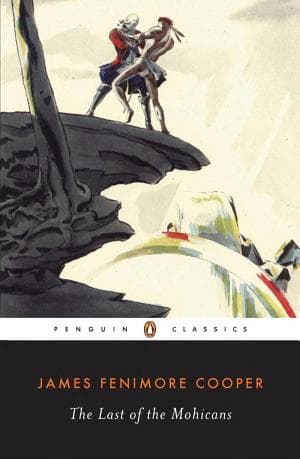
3.7 (89k) average on GoodreadsHistorical FictionCooper's novel, published a decade after Waverley, shares Scott's interest in depicting a specific historical period and the clash of cultures (American frontier, French and Indian War). Both feature a somewhat naive protagonist navigating a complex, violent landscape. However, Cooper's prose is often considered more overtly adventurous and less concerned with detailed historical exposition than Scott's. Cooper's characters, particularly his Native American figures, while influential, are often viewed as more idealized or stereotypical compared to Scott's more nuanced, if still romanticized, Highlanders. Scott's focus is more on the internal and societal conflicts, while Cooper leans into external action.
- Ivanhoe
Walter Scott
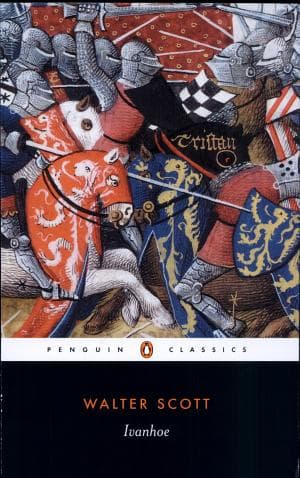
3.8 (87k) average on GoodreadsHistorical FictionIvanhoe (1819), another of Scott's own works, offers an interesting comparison. While Waverley deals with a relatively recent historical event and local Scottish identity, Ivanhoe ventures into medieval England, focusing on broader themes of national unity, religious tolerance, and the Norman-Saxon conflict. Ivanhoe is often seen as more overtly romantic and adventurous, with a more archetypal hero, compared to Waverley's more introspective and less decisive protagonist. Waverley is arguably more 'realistic' in its historical portrayal, whereas Ivanhoe leans more heavily into grand romance and chivalry, further solidifying the conventions of historical romance that Scott himself helped create.
- To Kill a Mockingbird
Harper Lee
4.3 (4.5M) average on GoodreadsHistorical FictionIn the 1930s Jim Crow South, Harper Lee writes about racial injustice, moral growth, and the quiet courage of a lawyer father, Atticus Finch, as seen through his young daughter's eyes.

Enjoyed the summary?
A summary gives you the shape of the book. The book itself has the detail, the examples and the voice.
Find Waverley on AmazonAs an Amazon Associate, BookBrief earns from qualifying purchases. How we're funded