
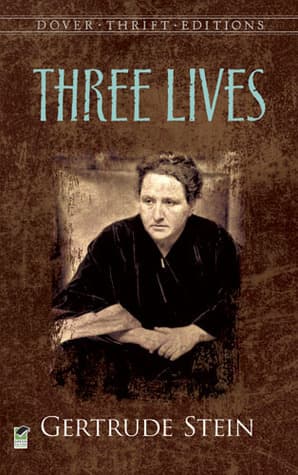
Synopsis
Covers the whole plot, including the ending.
- Difficulty
- Medium
- Pacing
- Slow
- Mood
- Introspective, Melancholy, Detailed, Observational
- Read it if
- You are interested in early 20th-century experimental literary fiction, character studies of ordinary women, or an accessible introduction to Gertrude Stein's work.
- Skip it if
- You prefer fast-paced plots, strong narrative arcs with clear resolutions, or find repetitive language challenging.
Three Lives Plot Summary
Covers the whole plot, including the ending.
The Good Anna: Early Life and Service
Anna, a German immigrant, starts her life as a servant in America. She has an almost obsessive need for order and cleanliness. She works for different families, especially the rich and kind Miss Mathilda, who values Anna's hard work and loyalty. Anna's life is defined by her work, her pets (especially her dogs, which she loves greatly), and her strict rules. She always worries about money, even when she has enough, and often scolds others for what she sees as mistakes or moral failures. Her interactions with other servants, especially younger, less experienced ones, show her bossy but often well-meaning nature. Her early experiences set up her later struggles with control and her deep-seated worries.
The Good Anna: Relationships and Responsibilities
Anna continues working, mainly for Miss Mathilda, but also takes on more duties, like caring for her sister's children and various animals. Her relationships are often strained by her demanding personality and her need to be in charge. She often criticizes the children, believing she knows best, but also shows real affection. Her dogs, especially the terrier 'Baby,' are her constant friends and get her kindest feelings. She forms a close, though somewhat co-dependent, bond with a younger maid, Mrs. Lehntman, whom she often scolds but also relies on. Anna's life is a constant cycle of work, worry, and occasional generosity, always within her strict view of the world.
The Good Anna: Declining Health and Obsessions
As Anna gets older, her health starts to fail, and her worries, especially about money and her own death, become stronger. She gets various illnesses, which she carefully describes and often makes sound worse. Despite Miss Mathilda's continued kindness and help, Anna believes she will die poor. Her focus on saving money leads her to make more and more unreasonable choices, often hurting herself. She becomes more isolated, pushing away those who try to help her, including Miss Mathilda and Mrs. Lehntman. Her dogs remain her only comfort, and she worries intensely about them after she dies. Her final years are marked by deep loneliness and a losing fight against her own mental and physical decline.
The Good Anna: The End
Anna's health keeps getting worse, with more pain and mental confusion. Her once sharp mind becomes cloudy with worries and physical suffering. Despite the efforts of Miss Mathilda and doctors, Anna dies from her illness. Her death is quiet, showing the lonely nature of her later life. Her careful savings and her beloved dogs are left behind, showing her unique and often conflicting character. Her story ends with thoughts on her life of service, her strong belief in her own rules, and her unfulfilled desires for safety and control that shaped her life. Her death marks the end of a life lived with strong, though often mistaken, conviction.
Melanctha: Early Life and Relationships
Melanctha Herbert, a young Black woman from Bridgepoint, is introduced as sensitive and thoughtful, always trying to understand life, love, and human nature. She has a series of early relationships, marked by strong emotions and a repeating pattern of seeking and then questioning her partners' honesty. Her relationship with Jane Harden is important, as Jane introduces Melanctha to a more worldly view and challenges her usual understanding of right and wrong. Melanctha's deep need for honesty and her curiosity lead her to constantly analyze her feelings and others', often causing complex and difficult romantic situations.
Melanctha: Rose and Jeff's Love
Melanctha's friend, Rose Johnson, starts a relationship with Jeff Campbell, a good-natured but somewhat simple Black man. Melanctha watches their courtship and marriage with a critical and analytical eye. She questions the shallow nature of Rose's love for Jeff, seeing it as based more on comfort and social expectation than deep emotional connection. Melanctha herself finds Jeff appealing in his sincerity, but she cannot match his simple nature with her own complex need for honest thought and emotion. This time shows Melanctha's unique view on love, contrasting her intense, questioning nature with the simpler affections of those around her.
Melanctha: The Tumultuous Love with Jeff Campbell
Melanctha and Jeff Campbell, even with his marriage to Rose, begin a complex and very intellectual love affair. Their relationship is marked by long, detailed talks where Melanctha constantly questions Jeff about his feelings, his understanding of love, and his commitment. She always pushes him to say what he feels and to look deeper into their connection. Jeff, though at first unsure and confused by Melanctha's intensity, becomes very drawn to her unique mind and spirit. Their love is strong but full of misunderstandings, as Melanctha's need for complete honesty clashes with Jeff's simpler, more traditional view of love and faithfulness. They spend many hours talking, arguing, and trying to define their feelings for each other.
Melanctha: The Inevitable Parting
Despite their deep connection, Melanctha and Jeff's relationship does not last. Melanctha's constant questioning and her inability to fully trust Jeff's simple statements of love eventually wear him down. He struggles to meet her intellectual and emotional demands, feeling not good enough when she is around. Melanctha, in turn, becomes more and more frustrated by what she sees as his lack of depth and his inability to truly understand her. Their constant arguments and the emotional cost of their intensity lead to a painful but unavoidable separation. The split leaves both of them deeply hurt, with Melanctha withdrawing further into her thoughtful and lonely life, still looking for deep understanding.
Melanctha: Later Life and Decline
After splitting from Jeff, Melanctha continues her wandering life, moving from place to place and having other relationships, none of which give her the lasting understanding or connection she wants. Her health begins to decline, and she gets consumption (tuberculosis). She keeps thinking about her past and the nature of love, but her physical weakness and loneliness lessen her strong spirit. She eventually moves to a faraway city, looking for a change of scenery and maybe a cure, but her condition worsens. Her story ends with her lonely death, a sad end for a woman who so strongly tried to understand and experience life's deepest truths.
The Gentle Lena: Early Life and Immigration
Lena, a young German immigrant, arrives in America to live with her aunt and uncle. From the start, Lena is known for her extreme gentleness, her quiet nature, and a very simple mind. She is often called 'stupid' by others, though her lack of sharp thinking is always balanced by her natural goodness and willingness to please. She struggles to adapt to the new language and customs, often staying silent and passive. Her aunt and uncle, though kind, find her hard to manage because she lacks initiative and understanding. Lena's early life in America is quiet, marked by her inability to truly grasp the complexities of her new surroundings.
The Gentle Lena: Marriage to Herman
Lena's aunt and uncle arrange her marriage to Herman, a serious and hard-working German tailor. Herman is drawn to Lena's quiet beauty and gentle manner, but he quickly becomes frustrated by her passivity and her inability to keep their home clean or manage household tasks well. Lena tries her best to be a good wife, but her basic lack of understanding and her slow movements make her unsuited for the demanding role. Herman often scolds her, but Lena rarely responds, simply accepting her fate with quiet resignation. Their marriage shows Lena's constant obedience and Herman's growing frustration.
The Gentle Lena: Motherhood and Continued Passivity
Lena has several children, a process she goes through with the same quiet passivity as everything else in her life. She is a gentle mother, but her natural simplicity means she struggles with the practical parts of raising children and managing the home. Herman's frustration deepens as their family grows, and the burden of supporting and managing the household falls almost entirely on him. Lena's children, like their father, learn to expect little action from her. Her life settles into a boring routine of having children and quiet living, defined by her unchanging nature and her inability to engage deeply with the world around her. She remains 'gentle Lena,' always in the background of her own life.
The Gentle Lena: The Unchanging End
Lena's story does not end with a big event or a major change. Instead, it concludes with her continuing to live her life as she always has: quiet, gentle, and very simple. She keeps having children, and her home remains a source of frustration for Herman. There is no growth for Lena; she stays the same person she was at the beginning. Her life shows the strength of an unchanging nature, a quiet acceptance of fate, and the big impact of simplicity in a world that often asks for complexity. Her story simply stops, leaving her in her unchanging, gentle life.
Principal Figures
Anna
Protagonist
A meticulous, rigid, and ultimately anxious German-American serving woman.
Anna is a German immigrant who dedicates her life to service, characterized by an almost obsessive need for order, cleanliness, and control. She is fiercely loyal to her employers, particularly Miss Mathilda, but her domineering personality and constant worrying often strain her relationships. She loves animals deeply, especially her dogs, and treats them with a tenderness she rarely shows to humans. Despite her financial prudence, she is plagued by deep-seated anxieties about poverty and illness, which intensify with age. Her moral code is strict, and she is quick to judge others, though often with good intentions.
Relationships: Miss Mathilda (Employer, benefactor, and long-suffering friend); Mrs. Lehntman (Younger maid, subordinate, and reluctant companion); Baby (dog) (Beloved pet, source of unconditional affection)
Melanctha Herbert
Protagonist
A sensitive, questioning, and intellectually driven young Black woman constantly seeking honesty and understanding in love.
Melanctha is a complex and introspective young Black woman from Bridgepoint, characterized by her intense intellectual curiosity and her relentless pursuit of honesty in relationships. She is deeply sensitive and analytical, constantly dissecting her own feelings and those of others. Her need for profound understanding often leads her to challenge conventional notions of love and morality, making her relationships tumultuous and short-lived. She is restless and prone to wandering, embodying a spirit that refuses to settle for superficiality. Her journey is one of continuous searching, often leading to isolation and heartbreak.
Relationships: Jeff Campbell (Complex and intense romantic partner); Rose Johnson (Friend and rival for Jeff's affection); Jane Harden (Early mentor and influence on her worldview)
Lena
Protagonist
A gentle, simple-minded, and perpetually passive German immigrant maid and mother.
Lena is a young German immigrant characterized by her extreme gentleness, quiet demeanor, and profound simplicity of mind. She is often perceived as 'stupid' due to her lack of initiative and difficulty understanding complex situations. Lena is deeply passive, accepting her circumstances without complaint or active engagement. She struggles with practical tasks, particularly household management, but is inherently good-natured and willing to please. Her life is defined by her quiet obedience and her inability to develop or change, making her a static character whose story highlights the impact of an unchanging nature.
Relationships: Herman (Husband, often frustrated by her passivity); Aunt and Uncle (Guardians who arrange her marriage); Her children (Objects of her gentle, if unengaged, motherhood)
Miss Mathilda
Supporting
Anna's kind and patient employer, who endures Anna's eccentricities with generosity.
Miss Mathilda is a wealthy and benevolent woman who serves as Anna's primary employer for many years. She is patient, understanding, and remarkably generous, often overlooking Anna's demanding nature and excessive worrying. She genuinely cares for Anna and tries to support her, both financially and emotionally, especially during Anna's decline. Miss Mathilda represents a stable and comforting presence in Anna's chaotic life, offering a counterpoint to Anna's anxieties.
Relationships: Anna (Employer-employee, with a deep bond of mutual, if strained, affection)
Jeff Campbell
Supporting
A good-natured but simpler Black man, torn between conventional love and Melanctha's intellectual intensity.
Jeff Campbell is a kind, earnest, and somewhat conventional young Black man. He initially marries Rose Johnson, but becomes deeply entangled in a passionate and intellectually demanding affair with Melanctha. He is drawn to Melanctha's unique mind and spirit, but struggles to meet her relentless emotional and intellectual demands. Jeff represents a more straightforward approach to love and life, which ultimately clashes with Melanctha's complex nature, leading to their painful separation. He is capable of deep affection but lacks Melanctha's capacity for constant introspection.
Relationships: Melanctha Herbert (Complex and intense romantic partner); Rose Johnson (Wife, representing a more conventional love)
Rose Johnson
Supporting
Melanctha's friend and Jeff Campbell's wife, representing conventional, less introspective love.
Rose Johnson is a friend of Melanctha and later becomes Jeff Campbell's wife. She is depicted as more conventional and less introspective than Melanctha, valuing comfort and societal expectations in her relationships. Melanctha often observes Rose's love for Jeff with a critical eye, seeing it as superficial. Rose represents a contrast to Melanctha's intense emotional and intellectual quest, embodying a more typical and less complicated approach to life and love.
Relationships: Melanctha Herbert (Friend, with Melanctha often observing and judging her); Jeff Campbell (Husband, in a conventional marriage)
Herman
Supporting
Lena's hardworking German tailor husband, frustrated by her passivity.
Herman is a serious and diligent German tailor who marries Lena. He is attracted to her quiet beauty but quickly becomes exasperated by her profound passivity and inability to manage a household efficiently. Herman is a practical man who values order and hard work, making Lena's gentle simplicity a constant source of frustration for him. He often scolds her but learns to accept her unchanging nature, bearing the brunt of their household and financial responsibilities.
Relationships: Lena (Husband, often exasperated by her but resigned to their life together)
Mrs. Lehntman
Supporting
A younger, often-scolded maid who works with Anna and provides companionship.
Mrs. Lehntman is a younger maid who works alongside Anna, often serving as the recipient of Anna's scolding and advice. Despite Anna's domineering nature, Mrs. Lehntman provides companionship and a degree of assistance to Anna, especially as Anna's health declines. She is a more conventional and less anxious character, highlighting Anna's eccentricities.
Relationships: Anna (Fellow servant, often subordinate and recipient of Anna's advice/criticism)
Themes & Insights
The Nature of Love and Honesty
This theme is most clearly seen in 'Melanctha,' where the main character constantly looks for a deep, honest, and intellectually satisfying connection. Melanctha's endless questioning of Jeff Campbell's feelings and her inability to accept simple statements of love show her belief that true love needs complete openness and deep understanding. She struggles to make her complex inner world fit with the more common and often shallow ways of showing affection she finds. Her journey suggests that for some, love is less about comfort and more about a constant search for truth, even if it leads to pain and loneliness.
“She was always seeking, seeking to know what it was that she was always wanting, and what it was that she was always having, and what it was that she was always losing.”
The Burden of Obsession and Anxiety
Anna's story deeply explores how obsession and worry can destroy. Her carefulness, at first a good trait, turns into a disabling focus on order, cleanliness, and money. Despite having steady work and kind employers like Miss Mathilda, Anna is always consumed by fears of poverty and illness. This theme shows how unchecked worries can isolate someone, twist their view of reality, and ultimately lead to lonely, self-inflicted suffering, even with outside help. Her constant worrying about her dogs and her savings defines her later years.
“Always she was worrying, always she was wanting to be having things regular, and always she was fearing that she would not have them so, and so she was always worrying.”
The Static vs. Developing Self
This theme is clearly shown by the sharp difference between Melanctha and Lena. Melanctha is a character who is always changing intellectually and emotionally, always questioning, seeking, and growing, even if her search ultimately leads to sadness. Her life is a series of intense experiences and thoughts. In contrast, Lena represents a static self. Despite marriage, motherhood, and immigration, Lena's basic nature—her gentleness, simplicity, and passivity—remains the same. Her story suggests that some people, no matter what happens outside, have an inherent, unchanging core, showing different ways of existing within the human experience.
“Lena was patient, Lena was gentle, Lena was simple, Lena was good. Lena was gentle and good and simple and patient. She was always good and gentle and simple and patient.”
The Limitations of Communication
In all three stories, characters struggle to truly understand and be understood by others. In 'Melanctha,' her endless questioning of Jeff highlights how hard it is to put complex emotions into words and the gap between inner experience and what is said. Jeff often cannot meet her intellectual demands, leading to frustration. In 'The Good Anna,' her rigid view of the world and habit of scolding prevent real connection, even with those who care for her. In 'The Gentle Lena,' her inherent simplicity makes deep communication almost impossible, as she often fails to grasp the details of conversation, leading to misunderstandings and loneliness. This theme emphasizes the natural barriers to true understanding between people.
“It was hard for him always to be understanding just what Melanctha was always wanting that he should be always understanding.”
Plot Devices & Literary Techniques
Repetition and Cumulative Sentence Structure
Stein's distinctive prose style that builds meaning through reiteration and extended clauses.
Gertrude Stein's signature use of repetition, particularly in 'Melanctha,' serves to emphasize character traits, emotional states, and thematic ideas. Phrases and clauses are repeated with slight variations, creating a rhythmic, incantatory effect that deepens the reader's understanding of a character's internal world. This technique, combined with long, cumulative sentences that layer descriptive details and thoughts, mirrors the characters' internal monologues and the slow, deliberate unfolding of their lives. It forces the reader to dwell on specific ideas, much like the characters themselves, especially Melanctha's relentless questioning or Anna's persistent worrying.
Internal Monologue and Stream of Consciousness (Proto-)
Accessing characters' inner thoughts and perceptions through narrative voice.
While not a full-blown stream of consciousness in the Joycean sense, Stein's narrative style in 'Three Lives' often delves deeply into the internal worlds of her characters, particularly Melanctha and Anna. The narration frequently mimics the rhythm and preoccupations of their thoughts, allowing the reader direct access to their anxieties, questions, and emotional processes. This device helps to establish the unique psychological landscape of each woman, revealing their motivations and struggles from an intimate perspective. It creates a sense of immediacy and psychological realism, despite the somewhat detached narrative voice.
Foil Characters
Characters who highlight the distinct traits of others through contrast.
The novel effectively uses foil characters to illuminate the protagonists' defining traits. Rose Johnson serves as a foil to Melanctha, highlighting Melanctha's intellectual intensity and complex emotional needs by presenting a more conventional, simpler approach to love. Similarly, Miss Mathilda's calm generosity contrasts sharply with Anna's obsessive anxieties, making Anna's internal struggles more pronounced. Herman's hardworking and practical nature acts as a foil to Lena's passive simplicity, underscoring Lena's unchanging essence. These contrasts enrich the characterizations and deepen the thematic exploration of different human natures.
Limited Omniscient Narration
A narrator who knows the thoughts and feelings of one character at a time, but maintains a somewhat detached, observational tone.
The narrative voice in 'Three Lives' is primarily limited omniscient, focusing intimately on the inner lives of Anna, Melanctha, and Lena in their respective stories. However, it maintains a certain distance, presenting their thoughts and actions with a careful, almost clinical observation. This allows the reader deep insight into each woman's psychology without fully merging with their perspective, creating a unique balance of empathy and objective analysis. This narrative choice supports the experimental nature of Stein's writing, allowing for detailed psychological portraits while retaining an authorial voice that shapes perception.
Three Lives Quotes
“Rose Johnson was a tall, robust, rather handsome woman, with a strong, though to most people, a pleasing personality.”
“She was a good woman, and she was often happy, but she was not a bright one.”
“Melanctha always loved too hard and too much, and then she always had to suffer.”
“It is a funny thing about women, how they are always wanting to know what men are thinking.”
“She was a woman who always had a strong feeling for what was right and what was wrong.”
“She was always very careful, and she was always very clean, and she always did her work well.”
“She was a good woman, and she was always doing good, but she was never quite happy.”
“She was a big, strong, clumsy, German woman, and she was always very good.”
“It was a very hard thing to be a woman and to be alone, and to have to earn your living.”
“She was one of those women who are always wanting to make things be the way they should be.”
“She was always seeking to find out what it was that she really wanted.”
“She had always been a very careful woman, and she had always been a very quiet woman.”
“Melanctha, she was always seeking to be a real, true, honest one, and she was always seeking to find out what it was that she wanted.”
Quiz
10 questions on the plot and the characters. Each answer comes with a short explanation.
Question 1
Which of the following characters from 'Three Lives' is described as a 'conscientious but rigid serving woman'?
- Melanctha
- Lena
- Anna
- Helen
Show answer
C. Anna The introduction to 'Three Lives' explicitly describes Anna as 'a conscientious but rigid serving woman.'
Question 2
Gertrude Stein's 'Three Lives' is noted as being her first published book. What is unique about its stylistic approach compared to much of her later work?
- It features extensive use of stream-of-consciousness narration.
- It is fairly conventional in style and quite accessible.
- It heavily relies on experimental punctuation and syntax.
- It is written entirely in verse.
Show answer
B. It is fairly conventional in style and quite accessible. The provided text states that 'the present volume is fairly conventional in style and quite accessible,' contrasting with her later work's 'innovative experimentation with language and sound.'
Question 3
Which of the three women in 'Three Lives' is characterized as a 'gentle but feeble-minded maid'?
- Melanctha
- Anna
- Lena
- Bertha
Show answer
C. Lena The description identifies Lena as 'a gentle but feeble-minded maid,' distinguishing her from the other two characters.
Question 4
Gertrude Stein's literary theories are said to have strongly influenced a generation of young American writers. Which prominent author is specifically mentioned as being influenced by her?
- F. Scott Fitzgerald
- Ernest Hemingway
- William Faulkner
- John Steinbeck
Show answer
B. Ernest Hemingway The text explicitly states that her theories 'strongly influenced a generation of young American writers (notably Hemingway).'
Question 5
Despite the characters being 'relatively ordinary women,' what does the text suggest Stein achieves in her portrayal of their lives and minds?
- She highlights their revolutionary political actions.
- She demonstrates their extraordinary interest through her careful crafting.
- She reveals their hidden aristocratic lineage.
- She transforms them into symbols of American exceptionalism.
Show answer
B. She demonstrates their extraordinary interest through her careful crafting. The text states, 'Although these are relatively ordinary women, in Stein's hands their lives and minds take on extraordinary interest.'
Question 6
How is the character Melanctha described in 'Three Lives'?
- A quiet, studious librarian
- A worldly-wise and sensitive black girl
- A wealthy socialite with many secrets
- A naive, impressionable young artist
Show answer
B. A worldly-wise and sensitive black girl Melanctha is specifically characterized as 'a worldly-wise and sensitive black girl' in the summary of the book's characters.
Question 7
What is the primary reason 'Three Lives' is considered an 'excellent entree' to Stein's later work?
- It introduces all the major characters that reappear in her subsequent novels.
- Its conventional style makes it accessible, providing a bridge to her more experimental writing.
- It explicitly outlines the literary theories she would later develop.
- It is her shortest work, making it a quick read before tackling her longer books.
Show answer
B. Its conventional style makes it accessible, providing a bridge to her more experimental writing. The text explains that 'Three Lives' is an 'excellent entree to Stein's later work' because its 'clear, carefully crafted prose' makes it accessible, implying it eases readers into her more experimental style.
Question 8
Given Stein's later reputation for 'innovative experimentation with language and sound,' what does the 'fairly conventional' style of 'Three Lives' suggest about her early approach to writing?
- She had not yet developed her distinctive experimental voice.
- She was deliberately mimicking popular authors of her time.
- The conventional style was a commercial decision, not an artistic one.
- She only used experimental styles for specific genres.
Show answer
A. She had not yet developed her distinctive experimental voice. The contrast between 'fairly conventional' in 'Three Lives' and 'innovative experimentation' in 'much of her own work' implies that her unique, experimental voice evolved after her first published book.
Question 9
What commonality exists among the three main characters, Anna, Melanctha, and Lena, in 'Three Lives'?
- They are all members of the upper class.
- They are all working-class women.
- They are all aspiring artists.
- They all experience grand romantic tragedies.
Show answer
B. They are all working-class women. The text states that Stein 'tells the stories of three working class women,' establishing their shared social status.
Question 10
How does Gertrude Stein's portrayal of 'relatively ordinary women' in 'Three Lives' challenge typical literary conventions of her time, given her later influence on modernist writers?
- By focusing on the internal lives and psychological depth of everyday individuals, rather than just grand events or heroic figures.
- By exclusively using dialogue to advance the plot, eschewing all narration.
- By incorporating elements of magical realism into their mundane existence.
- By presenting their lives as a direct critique of global political systems.
Show answer
A. By focusing on the internal lives and psychological depth of everyday individuals, rather than just grand events or heroic figures. The text highlights that 'in Stein's hands their lives and minds take on extraordinary interest,' suggesting a focus on the inner world and significance of 'ordinary' people, a hallmark of modernist literature that often moved away from traditional epic narratives.
Three Lives FAQ
What is the central premise of Gertrude Stein's 'Three Lives'?
'Three Lives' presents three novellas, each focusing on the life of a working-class woman in Bridgepoint. Stein meticulously details their inner thoughts, daily routines, and relationships, offering a deep psychological portrait of Anna, Melanctha, and Lena as they navigate their limited social spheres and personal struggles.
Who are the three main characters in 'Three Lives'?
The book features Anna, a German immigrant housekeeper known for her rigid conscientiousness; Melanctha Herbert, a sensitive and 'worldly-wise' young Black woman navigating complex relationships; and Lena Kuchelbacher, a gentle but 'feeble-minded' German maid who drifts through life with little agency. Each character's story explores distinct facets of human experience.
What makes 'Melanctha' particularly significant within the collection?
'Melanctha' is often considered the most experimental and psychologically complex of the three stories. It delves into the intricate and often tumultuous emotional life of its Black protagonist, exploring themes of race, sexuality, and the search for authentic connection through its distinctive repetitive prose and lengthy dialogues.
How does Stein portray the character of Anna in 'The Good Anna'?
Anna is depicted as an extremely dutiful and self-sacrificing German maid, devoted to her employers and her numerous pets. Her conscientiousness, however, borders on rigidity and control, leading to a life filled with worry and a constant need to manage those around her, ultimately resulting in her physical decline.
What is the primary conflict in Lena's story, 'Gentle Lena'?
Lena's primary conflict stems from her inherent passivity and lack of inner will. She is easily swayed by others, particularly her German family and later her husband Herman, leading her into a marriage and motherhood for which she feels ill-equipped. Her story highlights her inability to assert herself or find personal fulfillment.
Are there any subtle connections or recurring motifs between the three women's stories?
While the stories are distinct, a recurring motif is the women's struggle for agency and self-understanding within restrictive social roles. All three are working-class maids, and their narratives subtly explore themes of class, gender, and the limitations imposed on them by their environments, albeit through very different psychological lenses.
How does Stein's background as a medical student influence her character portrayals?
Stein's medical training, particularly in psychology, is evident in her meticulous and almost clinical observation of her characters' inner lives and thought processes. She dissects their consciousness with precision, presenting their emotional states and repetitive mental patterns with an almost scientific detachment, especially in 'Melanctha.'
What is the significance of the repetition in Stein's prose, particularly in 'Melanctha'?
The extensive repetition in 'Melanctha' is not mere stylistic flourish; it aims to mimic the actual process of human thought and conversation, where ideas and emotions are often re-examined and rephrased. It allows Stein to delve deeper into psychological nuances, showing the characters' attempts to articulate complex feelings and the circular nature of their internal debates.
Does the setting of 'Bridgepoint' hold any specific symbolic meaning?
Bridgepoint, a fictional city, serves as a microcosm for the limited worlds these women inhabit, symbolizing a place of transition or connection that often fails to offer them true liberation or upward mobility. It represents the ordinary, often unglamorous backdrop against which their profound inner lives unfold, highlighting their isolation despite being in a community.
How does Anna's conscientiousness become a psychological burden rather than a virtue?
Anna's extreme conscientiousness transforms into a psychological burden because it is coupled with an inability to delegate or trust others, leading to constant worry and overwork. Her rigid adherence to duty and cleanliness, while admirable, isolates her and prevents her from experiencing genuine joy or relaxation, ultimately contributing to her early demise.
Analyze the psychological complexity of Melanctha's relationship with Jeff Campbell.
Melanctha's relationship with Jeff is a tumultuous psychological battleground, marked by her intense need for understanding and his cautious, often conventional nature. She constantly tests him, seeking a deeper, more 'real' connection and understanding of 'what it is to be good,' while he struggles to meet her intellectual and emotional demands, leading to their eventual estrangement.
What does Lena's 'feeble-mindedness' signify psychologically?
Lena's 'feeble-mindedness' is less about intellectual deficiency and more about a profound lack of inner will, initiative, and self-awareness. Psychologically, she exists in a state of passive receptivity, allowing life to happen to her without internal resistance or strong personal desires, which makes her vulnerable and limits her capacity for growth or happiness.
How do the characters' relationships with their employers reflect their psychological states?
Anna's devoted yet controlling relationship with her employers reflects her need for purpose and her anxieties about order. Melanctha's more detached and often critical view of her employers underscores her intellectual independence and her search for genuine connection outside of hierarchical roles. Lena's passive acceptance of her employers' directives mirrors her general lack of self-assertion.
In what ways can 'Three Lives' be seen as a precursor to modernist psychological fiction?
'Three Lives' pioneers modernist psychological fiction by its deep dive into the subjective consciousness of its characters, employing stream-of-consciousness-like techniques and repetitive prose to explore internal states rather than external plot. Stein's focus on the 'continuous present' of thought and emotion, particularly in 'Melanctha,' anticipates later experimental narratives.
Is Stein's portrayal of Melanctha controversial, particularly regarding race?
Stein's portrayal of Melanctha is indeed controversial. While some praise it as an early, nuanced depiction of a Black woman's complex inner life, others criticize it for potentially perpetuating racial stereotypes through its focus on her 'primitive' emotionality and her 'wanderings' and 'trouble,' reflecting Stein's own biases and the racial attitudes of her time.
How does Stein's 'theory of the continuous present' manifest in the narratives?
The 'continuous present' manifests through Stein's deliberate use of present participles and repetitive phrasing, aiming to capture the ongoing, unfolding experience of thought and emotion without traditional narrative progression. This style makes the reader feel immersed in the immediate moment of the characters' consciousness, emphasizing their internal states over external events.
To what extent do the women in 'Three Lives' achieve self-realization or personal growth?
The women in 'Three Lives' largely fail to achieve significant self-realization or personal growth in a conventional sense. Anna dies exhausted and unfulfilled, Melanctha drifts into an early death after a life of emotional turmoil, and Lena remains passively submissive. Stein focuses more on the detailed portrait of their existing states of being rather than a journey of transformation.
What might be Stein's broader comment on the lives of working-class women through these stories?
Stein's broader comment suggests the often-unseen complexity and profound interiority of ordinary, working-class women's lives, which are frequently constrained by their social circumstances. She highlights their struggles for meaning, connection, and agency within limited spheres, arguing that even seemingly 'simple' lives hold deep psychological interest worthy of meticulous examination.
About the author
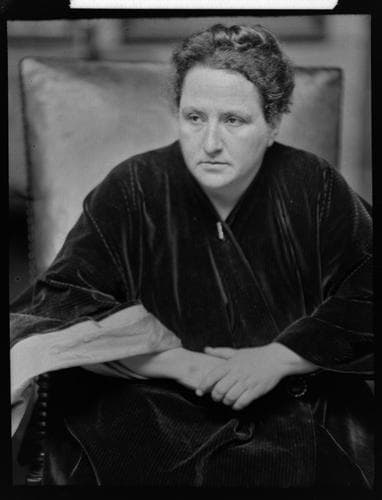
Gertrude Stein was an American novelist, poet, playwright, and art collector. Born in Allegheny, Pennsylvania, and raised in Oakland, California, Stein moved to Paris in 1903, and made France her home for the remainder of her life. She hosted a Paris salon, where the leading figures of modernism in literature and art, such as Pablo Picasso, Ernest Hemingway, F. Scott Fitzgerald, Sinclair Lewis, Ezra Pound, Sherwood Anderson and Henri Matisse, would meet.
Similar books
- Dubliners
James Joyce
3.9 (123k) average on GoodreadsLiterary FictionCollection of short stories focusing on the lives of ordinary people, with a similar observational and introspective style.
- Sister Carrie
Theodore Dreiser
3.8 (37k) average on GoodreadsLiterary FictionDreiser's novel focuses on social realism, meticulously detailing external circumstances, societal pressures, and conventional plot development. Stein, conversely, largely ignores external context to focus almost exclusively on internal states and linguistic construction of character, emphasizing psychological texture over social commentary.
- The Portrait of a Lady
Henry James
3.8 (73k) average on GoodreadsHistorical FictionWhile James also explores interiority, he does so with highly sophisticated, often convoluted syntax to dissect moral and social dilemmas within an aristocratic setting. Stein uses a deceptively simple, almost childlike vocabulary and repetitive structures to explore fundamental aspects of consciousness among marginalized figures, prioritizing linguistic rhythm over complex social analysis.
- The Old Man and the Sea
Ernest Hemingway
3.8 (831k) average on GoodreadsLiterary FictionA Cuban fisherman's long struggle with a giant marlin becomes a story of endurance and dignity, now retold for young adults with illustrations, phonetic guides, and writing prompts in Traditional Chinese.
- One Hundred Years of Solitude
Gabriel García Márquez
4.1 (753k) average on GoodreadsLiterary FictionThrough the multi-generational story of the Buendía family, a mythical town deals with the repeating patterns of time, love, and solitude, as the extraordinary mixes with the ordinary.
- The Goldfinch
Donna Tartt
3.9 (720k) average on GoodreadsLiterary FictionHaunted by a tragic explosion and clutching a stolen Dutch masterpiece, a young orphan navigates the opulent drawing rooms of New York and the gritty underbelly of the art world, desperately seeking connection and redemption amidst a life spiraling into crime and obsession.



Enjoyed the summary?
A summary gives you the shape of the book. The book itself has the detail, the examples and the voice.
Find Three Lives on AmazonAs an Amazon Associate, BookBrief earns from qualifying purchases. How we're funded