

Synopsis
Covers the whole plot, including the ending.
- Difficulty
- Medium
- Pacing
- Slow
- Mood
- Melancholy, Reflective, Poignant, Philosophical
- Read it if
- You enjoy introspective, philosophical literary fiction told from an unconventional perspective, exploring themes of companionship, death, and the human condition.
- Skip it if
- You prefer fast-paced plots, clear-cut resolutions, or are uncomfortable with narratives centered around homelessness and loss.
Timbuktu Plot Summary
Covers the whole plot, including the ending.
The Last Days in Brooklyn
The story begins with Mr. Bones, a mutt with a thoughtful inner voice, thinking about his life with his owner, Willy G. Christmas. Willy, a homeless and unusual poet, is quickly getting sicker. He knows he will die soon and needs to find a new home for Mr. Bones before then. They spend their last days in Brooklyn, moving through streets and shelters. Willy is often lost in thought, and Mr. Bones watches the world through his dog senses. Willy starts to carefully plan their trip to Baltimore, where he hopes to leave Mr. Bones with his former high school English teacher, Beatrice Swanson.
The Journey Begins
Willy gets enough money from odd jobs and begging, then buys two bus tickets to Baltimore – one for himself and one for Mr. Bones, hidden in a duffel bag. The bus ride is difficult for both. Mr. Bones endures being confined and the fear of being found, while Willy, growing weaker, uses the time to think and review his life and poems one last time. He drifts in and out of awareness, his thoughts a mix of memories, philosophical ideas, and worries about Mr. Bones's future. The trip is tense because of their secret passenger and Willy's quickly fading health.
Arrival in Baltimore and a New Quest
They arrive in Baltimore, and Willy's health gets much worse. He is confused and weak, struggling to find his way in the new city. Mr. Bones, always watchful, senses his master's decline. Willy's first plan to find Beatrice Swanson is made harder by his poor memory and physical weakness. They wander the streets, looking for shelter and food, with Mr. Bones acting more and more as a protector. Willy's need to secure Mr. Bones's future becomes more desperate, as he knows his time is short. He holds a small, folded piece of paper with Beatrice's last known address, his only hope.
A Fleeting Encounter and Willy's Demise
Willy and Mr. Bones finally find the street where Beatrice Swanson is supposed to live. However, Willy is too weak to walk further. He collapses in an alley, his strength gone. In his last moments, he speaks to Mr. Bones, trying to show his love and the importance of finding a new home. Mr. Bones, though not fully understanding the words, grasps the deep sadness and finality in Willy's voice. Willy G. Christmas dies in the alley, leaving Mr. Bones alone and confused beside his body. The dog stays by his master's side for a time, mourning.
A New Beginning, Sort Of
After Willy's death, a young boy named Henry, playing nearby, finds Mr. Bones. Henry, drawn to the dog, takes him home. Mr. Bones meets Henry's family, the Johnsons, a large and lively African American family in a small but busy house. Mr. Bones, still sad about Willy, struggles to get used to this new place. The Johnsons are kind but noisy, and Mr. Bones, used to Willy's quiet ways, finds their constant activity overwhelming. He misses Willy's familiarity, even as he is fed and cared for.
The Ghost of Willy
Life with the Johnsons is very different from his life with Willy. Mr. Bones is given a new name, Sparky, which he dislikes. He often thinks back to his memories of Willy, replaying their talks and adventures. He misses Willy's intellectual company and their special bond. Despite the Johnsons' real affection, Mr. Bones feels like an outsider, a guest. He watches their family life, their joys and struggles, from a distance, always comparing it to his past with Willy. The book shows Mr. Bones's inner struggle to connect his past with his present.
A Brief Escape
Feeling overwhelmed and disconnected from his new name, Sparky, Mr. Bones finds a chance to escape the Johnson house. He runs through Baltimore's streets, driven by a desire to return to his old life, or at least to escape the overwhelming newness. This short time of freedom is marked by longing and a desperate search for something familiar. He meets other stray dogs and sees the harshness of street life, but his heart stays with Willy. The escape shows his deep sense of loss and his inability to fully accept his new situation.
Reunion and Acceptance
After his short escape, Henry, upset by his disappearance, finds Mr. Bones. Henry's real concern and the family's relief at his return start to break down Mr. Bones's resistance. He slowly begins to realize that while the Johnsons are not Willy, they offer a different kind of love and stability. He starts to find comfort in their routines and their affection. The inner conflict between his past and present begins to ease, as he cautiously accepts his new name and his place with the Johnson family, though Willy's memory remains a constant, cherished part of him.
The Literary Legacy
Throughout Mr. Bones's journey and thoughts, Willy G. Christmas's poetic talent is quietly shown. Mr. Bones remembers parts of Willy's poems and his intellectual talks, showing how much Willy affected him. Even after Willy's death, his artistic spirit lives on, mainly through Mr. Bones's memories. The story itself, told from Mr. Bones's view, shows the lasting power of Willy's unique way of seeing the world.
A Dog's Understanding
As Mr. Bones gets used to life with the Johnsons, his observations of people deepen. He thinks about the complexities of family life, the subtleties of human feelings, and the different ways people show love and sadness. His inner thoughts show a complex understanding of human nature, seen through his dog's perspective. He learns that love can come in many forms, and that while he will always remember Willy, he can also form new bonds. The book ends with Mr. Bones, now called 'Sparky,' accepting his present while always cherishing his past.
Principal Figures
Mr. Bones
Protagonist
Willy G. Christmas's loyal, philosophical mutt and the story's narrator.
Mr. Bones is a mutt of indeterminate breed, distinguished by his profound inner life. He is highly intelligent, observant, and possesses a rich inner monologue filled with philosophical musings, memories, and anxieties. His primary drive is his unwavering loyalty and love for Willy, and later, his struggle to adapt to a new life while grieving his former master. He is the lens through which the reader experiences Willy's final days and the subsequent adjustments to a new home. He is both a dog and a sentient being grappling with existential questions.
Relationships: Willy G. Christmas (Master and deeply cherished companion; a bond of mutual understanding and affection.); Henry Johnson (His rescuer and new boy owner; a burgeoning bond of affection and acceptance.); The Johnson Family (His new, albeit chaotic, family; a source of care, but also initial discomfort and longing for his past.)
Willy G. Christmas
Supporting/Deceased Protagonist
A brilliant, eccentric, and homeless poet battling a terminal illness.
Willy G. Christmas is a complex character, a former academic turned homeless poet, whose mind is a torrent of words, ideas, and memories. He is dying from an unspecified illness, and his primary concern is finding a safe home for Mr. Bones before his death. Willy is a visionary, often lost in his own intellectual world, but deeply loving towards his dog. He carries the weight of past failures and unfulfilled artistic ambitions, yet his spirit remains vibrant, particularly in his poetic expressions. He represents the unacknowledged genius and the fragility of human existence.
Relationships: Mr. Bones (His most trusted confidant and beloved companion; a profound, almost spiritual bond.); Beatrice Swanson (His former high school English teacher and his last hope for Mr. Bones' future.)
Henry Johnson
Supporting
The young boy who discovers Mr. Bones after Willy's death and takes him in.
Henry is a kind-hearted and observant young boy who finds Mr. Bones next to Willy's deceased body. He is immediately drawn to the dog and convinces his family to take him in. Henry represents innocence and compassion, offering Mr. Bones a new chance at life. He is patient and persistent in trying to connect with Mr. Bones, even when the dog is resistant. His presence is crucial in Mr. Bones' journey toward acceptance and healing.
Relationships: Mr. Bones (His new pet; a bond of care and growing affection.); The Johnson Family (His family, with whom he shares a lively home.)
Beatrice Swanson
Mentioned
Willy G. Christmas's former high school English teacher.
Beatrice Swanson is Willy's last hope for Mr. Bones' future. She is a figure from Willy's past, representing a connection to his more stable, academic life. Though she never appears in the story, her existence drives Willy's final journey to Baltimore. She symbolizes the potential for human connection and the hope that someone from Willy's past might offer kindness and a home to his beloved companion. Her role is primarily symbolic, a destination rather than a character with agency.
Relationships: Willy G. Christmas (Former student and teacher; a connection from Willy's past.)
The Johnson Family (collectively)
Supporting
The large, boisterous, and kind family who adopt Mr. Bones.
The Johnson family consists of Henry, his parents, and several siblings and relatives. They are depicted as a lively, somewhat chaotic, but ultimately loving and generous household. They offer Mr. Bones a stark contrast to his solitary life with Willy. Their warmth and acceptance, despite Mr. Bones' initial reluctance, provide him with a sense of belonging. They represent the everyday realities of family life, with its noise, affection, and occasional frustrations, which Mr. Bones gradually learns to appreciate.
Relationships: Mr. Bones (His new family; a source of food, shelter, and affection.); Henry Johnson (Son and primary caretaker of Mr. Bones within the family.)
Themes & Insights
Loyalty and Unconditional Love
The main theme is the deep and strong loyalty between Mr. Bones and Willy G. Christmas. Mr. Bones's whole life is centered on Willy, and his sadness after Willy's death is clear. Willy, in turn, shows his love by spending his last days making sure Mr. Bones has a future. This theme also includes Henry's loyalty to Mr. Bones, as he patiently works to earn the dog's trust and affection. The book shows how love, especially between humans and animals, can cross species and situations, offering comfort and meaning.
“He was a dog, but he was also a man, and he was both at the same time. He was a dog-man, a man-dog, and there was no separating one from the other.”
Mortality and Legacy
The book directly addresses themes of death and the human desire to leave a lasting impression. Willy G. Christmas knows he will die soon, and his main worry is not his own legacy, but his companion's future. His poems, though mostly unknown, are his attempt to create something that lasts. Mr. Bones, by remembering Willy and his words, becomes a living keeper of Willy's legacy. The book explores how a life, even if it seems unimportant to the wider world, can deeply affect those closest to it, giving a form of immortality.
“He was a vessel, a repository, a place where Willy Christmas could dump his words and thoughts and feelings.”
Identity and Belonging
Mr. Bones struggles with his identity throughout the story. He is 'Mr. Bones' with Willy, a companion and intellectual equal, but becomes 'Sparky' with the Johnsons, a simple pet. His inner conflict reflects the human need for self-definition and belonging. He first resists his new name and environment, holding onto his past identity. The book's journey is his slow, difficult process of adapting to a new identity and finding a new place where he belongs, without forgetting where he came from. This theme is universal, showing how people adapt to new situations and form new connections while keeping who they are.
“He was no longer Mr. Bones. He was Sparky. And Sparky was a different dog altogether.”
The Nature of Consciousness and Language
Auster explores Mr. Bones's unique consciousness, blurring the lines between animal instinct and human-like thought. Mr. Bones's inner thoughts are rich with philosophical ideas, showing a deep understanding of human behavior and complex emotions. Language itself is a key part, especially through Willy's poetry and Mr. Bones's understanding of human speech. The book explores how language shapes perception and how even a non-human character can have a complex inner world, challenging usual ideas about intelligence and communication.
“He understood what Willy was saying, not the words themselves, but the music of the words, the feeling behind them.”
Plot Devices & Literary Techniques
Animal Point of View
The entire story is narrated from the perspective of Mr. Bones, a dog.
This device is central to the novel's unique charm and depth. By narrating through Mr. Bones' consciousness, Auster provides a fresh, often poignant, and sometimes humorous perspective on human behavior, societal norms, and the profound bond between a human and an animal. It allows for philosophical insights into life, death, and loyalty that would be difficult to achieve from a human perspective. The canine viewpoint also emphasizes the sensory world and the unspoken communication that exists between species, making the emotional core of the story deeply resonant.
Stream of Consciousness (Canine)
Mr. Bones' thoughts flow freely, mimicking the associative nature of a dog's mind while imbued with human-like introspection.
This device allows the reader direct access to Mr. Bones' internal world, which is a rich tapestry of memories, observations, anxieties, and philosophical musings. It blends a dog's sensory experiences (smells, sounds, instincts) with sophisticated intellectual processing, creating a unique narrative voice. This technique not only characterizes Mr. Bones as highly intelligent but also enables the author to explore complex themes like mortality and identity through an unconventional lens, blurring the lines between animal and human thought processes.
The Journey as Metaphor
Willy and Mr. Bones' bus trip to Baltimore symbolizes a final passage and a search for meaning.
The physical journey from Brooklyn to Baltimore serves as a powerful metaphor for Willy's journey towards death and Mr. Bones' transition into a new phase of life. It represents a quest for a safe haven and a final act of love and responsibility. The challenges of the journey—Willy's declining health, the secrecy of Mr. Bones—mirror the larger struggles of life and the inevitability of change. It underscores the themes of mortality, belonging, and the search for a place in the world.
Unreliable Narrator (Subtle)
While seemingly reliable, Mr. Bones' interpretation of human events is filtered through a canine understanding.
Although Mr. Bones is highly intelligent, his understanding of human motivations and complex societal structures is inherently limited by his nature as a dog. He interprets human conversations, emotions, and decisions through his own unique, often literal, or instinct-driven lens. This subtle unreliability adds layers of meaning, inviting the reader to consider the gaps between human intention and animal perception, and highlighting the subjective nature of truth. It also allows for moments of gentle humor and profound insight into the disconnects and connections between species.
Timbuktu Quotes
“All he could think was that he didn't want to die. Not like this. Not alone, in the cold, with a dog as his only witness.”
“Every dog is a lion at home.”
“The past was a country he had no desire to revisit.”
“He understood that life, even a dog's life, was a series of losses.”
“A man without a dog is a man alone.”
“The world was a vast and terrifying place, and he was just a small dog in it.”
“Death was not an end but a transformation, a shedding of the old skin for something new.”
“He had always been a solitary creature, but it was a solitude he had chosen.”
“Every step was an effort, every breath a struggle.”
“To be forgotten was the worst kind of death.”
“He had given his life to a man who had given his life to words.”
“The future was a blank page, and he had no idea what would be written on it.”
“Love was a complicated thing, full of joy and sorrow, and sometimes, a little bit of madness.”
“There was a reason for everything, even if he couldn't grasp it.”
Quiz
10 questions on the plot and the characters. Each answer comes with a short explanation.
Question 1
What is the name of the canine hero in Paul Auster's 'Timbuktu'?
- Willy G. Christmas
- Mr. Bones
- Baltimore
- Brooklyn
Show answer
B. Mr. Bones Mr. Bones is explicitly identified as the canine hero and sidekick in the book's description.
Question 2
Where does Willy G. Christmas originally hail from?
- Baltimore
- Timbuktu
- Brooklyn
- Manhattan
Show answer
C. Brooklyn Willy G. Christmas is described as a 'brilliant and troubled homeless man from Brooklyn'.
Question 3
What is Willy G. Christmas's primary goal for Mr. Bones as he approaches his own death?
- To teach him how to speak human language
- To find him a new, safe home
- To write a book with him
- To return him to his original owners
Show answer
B. To find him a new, safe home Willy G. Christmas sets off to find a 'new home for his companion' Mr. Bones.
Question 4
Who is Willy G. Christmas specifically looking for in Baltimore?
- His estranged family members
- A famous veterinarian for Mr. Bones
- His high school English teacher
- A publisher for his writings
Show answer
C. His high school English teacher Willy G. Christmas travels to Baltimore 'in search of his high school English teacher'.
Question 5
What is the primary narrative perspective through which the story of 'Timbuktu' is told?
- A third-person omniscient narrator
- Willy G. Christmas's first-person account
- Mr. Bones's thoughts and perceptions
- The high school English teacher's perspective
Show answer
C. Mr. Bones's thoughts and perceptions The description states, 'Mr. Bones is our witness during their journey, and out of his thoughts, Paul Auster has spun one of the richest, most compelling tales'.
Question 6
Which of the following best describes Willy G. Christmas's health condition during the journey?
- He is in peak physical condition, full of energy.
- He is slowly dying and his body is expiring.
- He suffers from a minor, temporary illness.
- He is recovering from a recent injury.
Show answer
B. He is slowly dying and his body is expiring. The text explicitly states, 'As Willy's body slowly expires, he sets off with Mr. Bones'.
Question 7
What kind of relationship do Willy G. Christmas and Mr. Bones share?
- Master and unwilling pet
- Distant acquaintances
- Sidekick and confidant
- Rivals in survival
Show answer
C. Sidekick and confidant Mr. Bones is described as 'the sidekick and confidant of Willy G. Christmas'.
Question 8
The title 'Timbuktu' most likely alludes to which of the following themes in the novel?
- The literal journey to a specific African city
- A mythical, distant, or unattainable place representing a final destination or peace
- The historical significance of ancient trade routes
- A metaphor for the bustling, modern city life of Brooklyn
Show answer
B. A mythical, distant, or unattainable place representing a final destination or peace In literary context, 'Timbuktu' often symbolizes a remote, almost mythical place at the end of the earth, fitting for a story about a journey towards an ultimate end or new beginning for a dying man and his companion.
Question 9
Given the description, what literary device is central to the novel's unique storytelling approach?
- Extensive use of epistolary narration
- Anthropomorphism and a non-human narrator's perspective
- Frequent shifts between multiple human first-person narrators
- A purely objective, journalistic style
Show answer
B. Anthropomorphism and a non-human narrator's perspective The novel is told 'out of his [Mr. Bones's] thoughts', making the dog a central, thinking consciousness, which is a form of anthropomorphism and a unique narrative perspective.
Question 10
How does the 'homeless' status of Willy G. Christmas contribute to the novel's thematic depth, based on the provided synopsis?
- It primarily serves to highlight economic inequality in America.
- It emphasizes themes of transience, rootlessness, and the search for belonging or a final resting place.
- It suggests a critique of the healthcare system for the mentally ill.
- It is merely a background detail with no significant thematic implication.
Show answer
B. It emphasizes themes of transience, rootlessness, and the search for belonging or a final resting place. Willy's homelessness, combined with his journey and impending death, strongly suggests themes of transience and the search for a 'home' or peace, both for himself and for Mr. Bones.
Timbuktu FAQ
What is the central premise of 'Timbuktu'?
'Timbuktu' centers on Willy G. Christmas, a brilliant but troubled homeless writer from Brooklyn, and his loyal canine companion, Mr. Bones. As Willy's health rapidly declines, he embarks on a final journey to Baltimore, hoping to find his former high school English teacher, Professor Baumgartner, to ensure Mr. Bones has a new home after his passing.
Who is Mr. Bones and what is his role in the narrative?
Mr. Bones is a mongrel dog, Willy G. Christmas's devoted companion and the primary narrator of the story. Through his unique perspective, the reader experiences Willy's final days, his philosophical musings, and the harsh realities of their transient life. Mr. Bones's internal monologue provides a poignant and often humorous lens on humanity.
What is Willy G. Christmas's background and why is he homeless?
Willy G. Christmas was once a promising writer, a 'poet laureate of the street,' who chose a life of deliberate poverty and intellectual freedom over conventional success. His homelessness is not due to inability but a conscious rejection of societal norms and a dedication to his unique artistic vision, often fueled by his internal struggles and a deep sense of detachment.
Where does Willy intend to go, and why that specific destination?
Willy intends to go to Baltimore to find his former high school English teacher, Professor Baumgartner. He believes Baumgartner, a kind and understanding man, is the only person he can trust to provide a loving and stable home for Mr. Bones after Willy's death, fulfilling his final responsibility to his beloved companion.
What is the significance of the title 'Timbuktu'?
Timbuktu represents Willy G. Christmas's imagined afterlife, a utopian place where he believes all good dogs go after death and where he hopes to reunite with Mr. Bones. It's a symbolic destination, a personal heaven that contrasts with the harsh realities of his earthly existence and provides a comforting vision for his impending end.
Are there any subtle allusions to other literary works or authors within Willy's thoughts?
Willy's internal monologues are rich with literary allusions, though often fragmented or reinterpreted. He frequently references American poets and philosophers, and his own writing style, as described by Mr. Bones, echoes beat generation writers and existentialists. These allusions underscore his intellectual depth despite his outward circumstances.
How does the author use Mr. Bones's senses to convey information that Willy might miss?
Mr. Bones's heightened canine senses provide a unique layer of detail, picking up on subtle smells, sounds, and shifts in human demeanor that Willy often overlooks due to his deteriorating health or preoccupation. This allows the reader to perceive dangers, emotional states, and environmental nuances before Willy does, adding tension and depth to their journey.
What is the role of the dream sequences or hallucinations Willy experiences?
Willy's dream sequences and hallucinations, particularly as his health worsens, serve to blur the line between reality and his internal world. They often feature figures from his past, philosophical debates, or visions of Timbuktu, offering glimpses into his subconscious fears, desires, and the disintegration of his mental state as his body fails.
Is there a deeper meaning behind Willy's obsession with his 'masterpiece' that he never finishes?
Willy's unfinished 'masterpiece' symbolizes the unfulfilled potential and fragmented nature of his life. It represents his struggle to articulate his profound insights and his ultimate inability to fully integrate his genius with the demands of the world. The act of writing, even if unfinished, is his way of imposing order on chaos.
How does Willy G. Christmas cope with his impending death?
Willy copes with his impending death through a mix of philosophical acceptance, a deep concern for Mr. Bones's future, and a retreat into his internal world of thoughts and memories. He finds solace in the idea of Timbuktu and attempts to maintain a semblance of control by planning for his dog's welfare, often masking his fear with intellectual detachment.
What psychological insight does Mr. Bones offer into human nature?
Through Mr. Bones's observations, the novel offers profound psychological insights into human nature, particularly our capacity for both cruelty and kindness, our complex emotional lives, and our often-irrational behaviors. He sees humans as both mysterious and predictable, often driven by needs similar to his own but with far greater complexity.
How does the novel explore themes of loyalty and companionship through Willy and Mr. Bones?
The novel deeply explores loyalty and companionship through the unbreakable bond between Willy and Mr. Bones. Mr. Bones's unwavering devotion to Willy, even in dire circumstances, mirrors Willy's ultimate act of selfless love in seeking a safe future for his dog. Their relationship is a testament to unconditional love and mutual dependence.
What is the psychological impact of homelessness on Willy, beyond the physical hardships?
Beyond physical hardships, homelessness profoundly impacts Willy's psychology by isolating him from conventional society, fostering a unique blend of intellectual freedom and profound loneliness. It reinforces his detachment, allowing him to observe humanity from the periphery but also exacerbating his mental fragility and sense of being an outsider.
Is Willy G. Christmas a tragic figure or a triumphant one?
Willy G. Christmas can be interpreted as both tragic and triumphant. His life is tragic due to his struggles, homelessness, and premature death, yet he achieves a form of triumph through his intellectual freedom, unwavering love for Mr. Bones, and his commitment to his unique vision of life, even if it leads to suffering. He chooses his own path.
How does the novel challenge conventional notions of intelligence and sanity?
'Timbuktu' challenges conventional notions by presenting Willy, a homeless man, as highly intelligent and philosophical, while those in 'sane' society often appear superficial or unfeeling. It suggests that sanity and intelligence are not confined to societal norms and that a profound, unconventional perspective can be mistaken for madness.
What is the ultimate message or moral of the story regarding human-animal bonds?
The ultimate message regarding human-animal bonds is one of profound, unconditional love and mutual understanding that transcends species. The bond between Willy and Mr. Bones is portrayed as one of the purest and most meaningful relationships, highlighting how animals can offer companionship, solace, and a reason for living that humans sometimes fail to provide.
Does the ending offer a sense of closure or is it deliberately ambiguous?
The ending offers a bittersweet sense of closure for Mr. Bones, as he finds a new home and purpose with the Baumgartners, but it is also tinged with the lingering ambiguity of loss and the vast unknown of Willy's 'Timbuktu.' It provides resolution for Mr. Bones's immediate future while leaving Willy's ultimate fate, beyond his death, to the reader's imagination.
How does the novel use humor to balance its darker themes?
The novel skillfully uses humor, primarily through Mr. Bones's naive yet astute observations of human behavior and his internal monologues. His often literal interpretations of human actions and his simple desires provide moments of levity and charm, balancing the darker themes of homelessness, death, and mental decline without trivializing them.
About the author

Paul Benjamin Auster is an American writer and film director. His notable works include The New York Trilogy (1987), Moon Palace (1989), The Music of Chance (1990), The Book of Illusions (2002), The Brooklyn Follies (2005), Invisible (2009), Sunset Park (2010), Winter Journal (2012), and 4 3 2 1 (2017). His books have been translated into more than forty languages.
Similar books
- A Dog's Purpose
W. Bruce Cameron
4.3 (114k) average on GoodreadsFantasyFeatures a dog's perspective on life and its human companions, though Auster's is more literary and philosophical.
- The Art of Racing in the Rain
Garth Stein
4.2 (452k) average on GoodreadsFictionNarrated by a dog with deep insights into human life and relationships, dealing with themes of loss and loyalty.
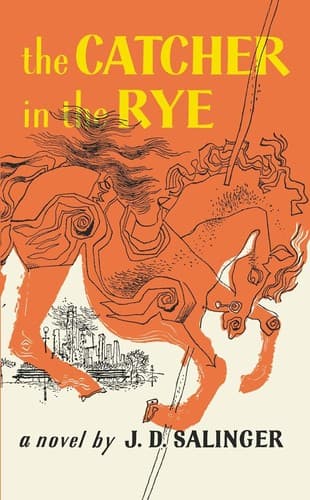
- The Catcher in the Rye
J.D. Salinger
3.8 (2.7M) average on GoodreadsYoung Adult"Timbuktu" shares themes of urban alienation and existential angst with Salinger's work but offers a more mature and less cynical contemplation, particularly through the lens of a dying man and his dog, rather than a disaffected teenager.
- Siddhartha
Hermann Hesse
4.0 (583k) average on GoodreadsHistorical FictionBoth novels chronicle journeys of self-discovery and the search for meaning. However, Auster's approach in "Timbuktu" is distinctly contemporary and grounded in the mundane realities of American life, contrasting with Hesse's more spiritual and allegorical narrative.
- The Old Man and the Sea
Ernest Hemingway
3.8 (831k) average on GoodreadsLiterary FictionA Cuban fisherman's long struggle with a giant marlin becomes a story of endurance and dignity, now retold for young adults with illustrations, phonetic guides, and writing prompts in Traditional Chinese.
- One Hundred Years of Solitude
Gabriel García Márquez
4.1 (753k) average on GoodreadsLiterary FictionThrough the multi-generational story of the Buendía family, a mythical town deals with the repeating patterns of time, love, and solitude, as the extraordinary mixes with the ordinary.




Enjoyed the summary?
A summary gives you the shape of the book. The book itself has the detail, the examples and the voice.
Find Timbuktu on AmazonAs an Amazon Associate, BookBrief earns from qualifying purchases. How we're funded