
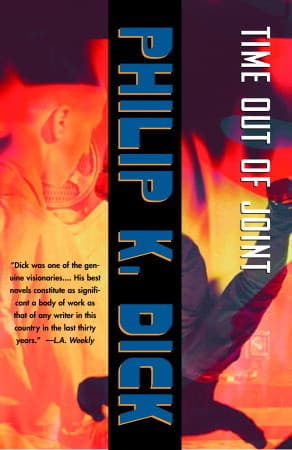
Synopsis
Covers the whole plot, including the ending.
- Difficulty
- Medium
- Pacing
- Moderate
- Mood
- Disorienting, Suspenseful, Existential, Paranoia
- Read it if
- You enjoy mind-bending science fiction that questions the nature of reality, features a protagonist discovering a grand deception, and explores themes of free will versus manipulation.
- Skip it if
- You prefer straightforward narratives without existential twists or slow-burn mysteries, or if you dislike stories where the protagonist is isolated and manipulated.
Time Out of Joint Plot Summary
Covers the whole plot, including the ending.
A Life of Puzzles
Ragle Gumm lives in a quiet, suburban American town in what he believes is 1959. His daily routine revolves around solving a complex newspaper puzzle called 'Where Will The Black Box Go Today?', which he consistently wins, earning a modest income from the newspaper. He lives with his sister, Margo, and her husband, Victor Nielson. Ragle finds comfort in the familiar rhythms of his life, though he occasionally notices odd discrepancies: a phone book with strange entries, anachronistic items, or misremembered details from his past. These fleeting moments of unease are quickly dismissed, attributed to his own absentmindedness or the quirks of small-town life. He is a local celebrity for his puzzle-solving prowess, a fact that gives him purpose and identity.
Cracks in Reality
Ragle's comfortable existence begins to unravel when he experiences increasingly frequent and vivid hallucinations. Objects appear and disappear, or transform into bizarre, non-functional items. A soda bottle becomes a piece of paper with 'soda' written on it, a light switch turns into a cardboard cutout. He hears strange, unidentifiable sounds and sees glimpses of technology that don't belong in 1959. These incidents are deeply unsettling, causing Ragle to question his sanity. He tries to confide in Margo and Victor, but they dismiss his concerns, suggesting he's overworked or imagining things. The newspaper puzzles themselves also start to show subtle, unsettling changes, hinting at a reality beyond his comprehension.
A Growing Suspicion
Driven by his escalating experiences, Ragle begins to investigate the inconsistencies in his world. He finds an old telephone book with entries for businesses that don't exist in his town and discovers a modern-looking transistor radio in a junk heap. He tries to access parts of the town he's never been to, only to be subtly redirected or prevented by Margo and Victor. His suspicions grow that his entire environment, including the people in it, is artificial or controlled. He starts to view Margo and Victor's reassurances as part of a larger deception, leading to a growing sense of isolation and paranoia. He realizes the newspaper puzzle isn't just a game, but something far more significant.
The Escape Attempt
Convinced that his town is a prison, Ragle decides to escape. He tries to drive out, but finds the roads inexplicably blocked or leading back to his starting point. He attempts to leave on foot, but is intercepted by Victor and other townspeople, who gently but firmly guide him back home, explaining his actions as a temporary delusion. During one such attempt, he sees a glimpse of a futuristic vehicle and hears strange, mechanical sounds, further confirming his belief that something is wrong. The attempts solidify his understanding that his 'family' are not merely concerned relatives, but active participants in his confinement, though their motives remain unclear.
Confrontation and Revelation
After another failed escape attempt, Margo and Victor finally confront Ragle. They reveal that it is not 1959, but 1998, and that Ragle Gumm is not who he thinks he is. He is a crucial figure in a future war, a man with a unique psychic ability to predict the movements of a rebel organization. The 1959 environment is a carefully constructed simulation, a 'sanctuary' designed to keep him stable and productive, as his mind broke under the stress of the real war. The 'Black Box' puzzle he solves daily is actually a coded projection of the rebel's next target, which Ragle subconsciously deciphers. His hallucinations are 'breakdowns' in the simulation, glitches in the carefully maintained facade.
The Real World
Margo and Victor explain the ongoing war between the 'Ones' (the ruling government) and the 'Separatists' (the rebels). Ragle, in his true identity, is a key asset for the Ones, capable of predicting Separatist attacks. The simulated 1959 world was created by the Ones to protect his fragile mental state and ensure his continued output. This revelation shatters Ragle's sense of self. He struggles to reconcile the peaceful, puzzle-solving man he believed himself to be with the reality of being a weapon in a future war. He is shown glimpses of the real 1998, a desolate, war-torn landscape, which horrifies and disorients him.
A Divided Loyalty
Ragle is taken to the real world and introduced to Colonel Glenn, his handler, who tries to integrate him into the war effort. However, Ragle finds it difficult to adjust. He misses the simplicity and familiarity of his simulated 1959 life. He begins to question the morality of the Ones and the Separatists, realizing that both sides are capable of great cruelty. He also starts to wonder if the 1959 world was truly for his benefit, or merely a means to exploit his abilities. His identity is now split between the Ragle Gumm of the past and the weapon of the future, leaving him deeply conflicted and searching for a genuine sense of purpose.
Contact with the Separatists
Through a series of events, Ragle makes contact with the Separatists. He learns that they view the Ones as oppressive and that the war is a fight for freedom and self-determination. The Separatists explain that they were aware of Ragle's role and the simulated environment. They offer him a different perspective on the war, painting the Ones as manipulative and tyrannical. This new information further complicates Ragle's loyalties. He realizes that the truth is more nuanced than he was initially led to believe, and that both sides have valid, yet flawed, arguments. He is now caught between two warring factions, unsure of where his true allegiance lies.
The Choice
Ragle is now fully aware of the stakes and the moral ambiguities of the war. He understands that his unique ability makes him a powerful asset, and that both sides desperately want him. He grapples with the decision of whether to continue aiding the Ones, who created his false reality, or to defect to the Separatists, who promise freedom but are also engaged in violent conflict. He also considers the possibility of rejecting both sides and trying to find a way to live a normal life, free from the war. This internal struggle represents his ultimate crisis of identity and purpose, forcing him to define himself beyond his predetermined role.
A New Beginning
After much introspection, Ragle makes a decisive choice. He realizes that neither side truly represents his own values. He decides to side with the Separatists, believing their cause for self-determination is more just, and also because he feels betrayed by the Ones who manipulated his entire life. His defection is a major blow to the Ones and a significant victory for the Separatists. His unique abilities, now consciously directed, provide the Separatists with a crucial advantage. The novel ends with Ragle having embraced his true self and actively working to shape his own destiny, even within the ongoing conflict, finding a new sense of purpose in fighting for what he believes is right.
Time Out of Joint Characters
Ragle Gumm
Protagonist
A man living in a fabricated reality, unaware of his true identity and purpose.
Ragle Gumm is presented as an ordinary, mild-mannered man living in a seemingly idyllic 1959 suburban town. He is intelligent and methodical, evidenced by his consistent success in solving the daily newspaper puzzle. Initially complacent and somewhat naive, he possesses a deep-seated curiosity and an inability to ignore inconsistencies, which ultimately leads him to question his reality. He is driven by a need for truth and a desire to understand his place in the world, even when confronted with overwhelming evidence that shatters his identity.
Relationships: Margo (Sister and primary caretaker in the simulated reality; later revealed as his handler.); Victor Nielson (Brother-in-law and secondary caretaker in the simulated reality; later revealed as his handler.); Colonel Glenn (His handler and superior officer in the real world, representing the 'Ones'.); Separatists (The rebel faction he eventually aligns with, initially his 'enemies'.)
Margo
Supporting
Ragle's sister in the simulated reality, a key figure in maintaining his false world.
Margo is Ragle's caring, yet subtly controlling, sister in the 1959 simulation. She embodies the domestic tranquility of his fabricated world, always reassuring him and dismissing his concerns about reality glitches. Her true role is that of a dedicated operative for the 'Ones', tasked with maintaining Ragle's mental stability and ensuring his continued output for the war effort. She genuinely cares for Ragle in her own way, but her primary loyalty is to the mission, making her a complex figure caught between her assigned duty and a manufactured familial bond.
Relationships: Ragle Gumm (Simulated sister; actual handler/caretaker.); Victor Nielson (Simulated husband; actual colleague/handler.)
Victor Nielson
Supporting
Ragle's brother-in-law, another operative involved in the simulation.
Victor Nielson is Margo's husband in the simulated 1959 world, portrayed as a straightforward, somewhat gruff individual. Like Margo, he plays a crucial role in maintaining the illusion, often subtly redirecting Ragle or providing rationalizations for the anomalies he observes. Victor is more pragmatic and less emotionally invested in the 'family' facade than Margo, focusing primarily on the operational aspects of their mission. He represents the more direct, authoritative side of Ragle's confinement, especially during escape attempts, and is a loyal operative for the 'Ones'.
Relationships: Ragle Gumm (Simulated brother-in-law; actual handler/caretaker.); Margo (Simulated husband; actual colleague/handler.)
Colonel Glenn
Supporting
Ragle's direct superior in the real world, representing the government faction.
Colonel Glenn is a high-ranking officer in the 'Ones' organization, responsible for overseeing Ragle Gumm's critical role in the war. He is a pragmatic and authoritative figure, driven by the necessity of winning the war against the Separatists. Glenn is the one who fully debriefs Ragle on his true identity and the nature of the conflict. While he tries to integrate Ragle into the real world, his approach is often cold and utilitarian, viewing Ragle more as a valuable asset than an individual with complex emotional needs. He embodies the military and governmental control over Ragle's life.
Relationships: Ragle Gumm (Superior officer/handler.); Margo (Colleague/subordinate.)
Separatists (various members)
Antagonist/Supporting
The rebel faction fighting against the 'Ones', challenging the established order.
The Separatists are the opposing faction in the future war, fighting against the 'Ones' for self-determination and freedom. Initially portrayed as the 'enemy', Ragle eventually learns their perspective and motivations. They are a diverse group, but united by their desire to break free from the centralized government. They are aware of Ragle's existence and his importance, and actively seek to either neutralize him or turn him to their side. Their interactions with Ragle reveal the moral ambiguities of the war, challenging the black-and-white narrative presented by the 'Ones'.
Relationships: Ragle Gumm (Initial target/enemy; later ally.)
Bill Black
Mentioned
A minor character in Ragle's simulated reality, representing the normalcy of 1959.
Bill Black is a casual acquaintance of Ragle Gumm in the simulated 1959 town. He represents the average, unsuspecting citizen within the fabricated reality, going about his daily life without questioning the inconsistencies that plague Ragle. His interactions with Ragle are brief and serve to reinforce the illusion of normalcy, acting as a foil to Ragle's growing paranoia. He is a minor character, primarily functioning as part of the background scenery of Ragle's constructed world.
Relationships: Ragle Gumm (Casual acquaintance.)
Junior
Mentioned
The young son of Margo and Victor in the simulated reality.
Junior is Margo and Victor's son in the simulated 1959 setting. He is a typical child, providing a sense of domesticity and family life within the illusion. His presence helps to ground the fabricated reality for Ragle, making it feel more complete and believable. Like other background characters, Junior is part of the elaborate stage set, unknowingly participating in the deception. His innocence contrasts with the complex and manipulative reality unfolding around Ragle.
Relationships: Ragle Gumm (Simulated nephew.)
Time Out of Joint Themes
The Nature of Reality and Illusion
The central theme explores the thin line between what is real and what is fabricated. Ragle's entire world is a constructed illusion, designed to manipulate him. The novel constantly challenges the reader (and Ragle) to question the authenticity of their own perceptions. The 'breakdowns' in the simulation, where objects dissolve or transform, are stark reminders that reality can be a fragile construct. This theme is clear when Ragle sees a soda bottle turn into a slip of paper with 'soda' written on it, highlighting the arbitrary nature of his perceived reality.
“What was real? What was not real? He could not tell, not any more.”
Identity and Self-Deception
Ragle Gumm's identity is fabricated, a persona created to keep him stable and productive. His journey is one of shedding this false self and grappling with who he truly is: a powerful psychic asset in a future war. The struggle to reconcile his peaceful, puzzle-solving past with his violent, exploited present forms the core of his internal conflict. This theme is evident in Ragle's deep distress when Margo and Victor reveal his true role, forcing him to confront a self he never knew existed.
“He was not Ragle Gumm. He was not a man who solved puzzles. He was a weapon.”
Control and Manipulation
The 'Ones' exert absolute control over Ragle's life, from his environment and memories to his very purpose. The entire 1959 simulation is a grand scheme of manipulation, designed to harness his abilities without his conscious consent. This theme extends to the broader political conflict, where both factions seek to control individuals and outcomes. Ragle's journey is an act of rebellion against this manipulation, as he strives to reclaim agency over his own life and choices, culminating in his decision to align with the Separatists based on his own moral compass.
“They had built a whole world for him, a world of lies, to make him do their bidding.”
The Price of Peace/Security
The novel explores the ethical cost of maintaining peace or security through deception and coercion. The 'Ones' justify their elaborate manipulation of Ragle as a necessary evil to win the war and protect their society. However, this 'peace' comes at the expense of an individual's freedom, truth, and sanity. The story forces readers to consider whether the end justifies the means, especially when the means involve stripping someone of their fundamental reality and identity. The contrast between the idyllic 1959 and the desolate 1998 highlights the stark choices made in the name of survival.
“Some things are more important than an individual's peace of mind, Ragle. The survival of an entire civilization, for instance.”
Plot Devices & Literary Techniques
The Simulated Reality
A meticulously constructed 1959 environment designed to house and manipulate the protagonist.
The simulated 1959 world is the primary plot device, serving as both a prison and a catalyst for Ragle's awakening. It is a highly detailed, immersive environment created by the 'Ones' to stabilize Ragle's fragile psyche and exploit his unique precognitive abilities. The glitches and 'breakdowns' in this simulation are crucial to the plot, as they are the first clues Ragle receives that his reality is false. This device allows for exploration of themes of reality, identity, and manipulation, as Ragle slowly peels back the layers of his artificial existence.
'Where Will The Black Box Go Today?' Puzzle
A daily newspaper puzzle that is secretly a coded projection of future events.
The newspaper puzzle is a brilliant plot device that cleverly integrates Ragle's unique ability into the narrative. What appears to be a mundane intellectual exercise is, in fact, a complex system for Ragle to subconsciously predict the movements of the Separatist forces. His consistent success isn't just a sign of intelligence, but a manifestation of his psychic gift. The puzzle provides a seemingly innocent framework for his critical function, and its true nature is a key reveal that dramatically shifts Ragle's understanding of his own life and purpose.
Anachronisms and Hallucinations
Discrepancies and sensory distortions that reveal the instability of the simulated world.
These elements are crucial in driving Ragle's initial suspicion and eventual realization of the truth. Anachronistic items (like modern technology in 1959) and Ragle's vivid hallucinations (objects dissolving, turning into paper with labels) are the 'glitches' in the simulated reality. They serve as direct evidence that his world is not what it seems, pushing him to question his sanity before he questions his environment. They create a growing sense of unease and paranoia, building tension and propelling Ragle's investigation into the true nature of his existence.
The War Between the 'Ones' and the 'Separatists'
The overarching conflict in the true future reality that provides context for Ragle's situation.
This future war is the driving force behind the creation of Ragle's simulated reality and his exploitation. It provides the high stakes and moral dilemmas that Ragle must eventually confront. The ambiguity of the conflict, with both sides having valid yet flawed arguments, challenges simplistic notions of good versus evil. It serves as the ultimate backdrop for Ragle's personal journey of self-discovery and his eventual decision to choose a side, giving his individual story a larger, societal significance.
Time Out of Joint Quotes
“Perhaps the world was such a place, after all. A place of peace and quiet. A place where nothing happened.”
“The past is gone, you can’t change it. The future…well, the future is what you make it.”
“If you want to know what a man is like, take a good look at how he treats his inferiors, not his equals.”
“The greatest prison where men live is the fear of their own minds.”
“He felt a vast, weary, empty desolation. The world was nothing. Nothing but a stage for his torment.”
“It’s a peculiar thing about the human mind, that it can hold two contradictory ideas at the same time and believe them both.”
“How can you tell what’s real and what isn’t, when the only thing you have to go by is what you see?”
“The entire world was a construct, a fabrication for his benefit, or rather, for his exploitation.”
“We’re living in a world made up of words, not things.”
“Every man has a right to his own delusion. But not to impose it on others.”
“The problem with living in a perfect world is that it’s not real.”
“What if everything you knew, everything you trusted, was just… a lie?”
“Sometimes the greatest freedom is to know you are not free, and to act accordingly.”
“There was a world outside his world, and that world was at war.”
Quiz
10 questions on the plot and the characters. Each answer comes with a short explanation.
Question 1
What year does Ragle Gumm *believe* it is at the beginning of the novel?
- 1945
- 1998
- 1959
- 2009
Show answer
C. 1959 Ragle Gumm lives in a simulated 1959, unaware of the true present year.
Question 2
What is Ragle Gumm's primary occupation or talent that makes him important to the 'real' world?
- He is a brilliant physicist who solves complex equations.
- He is the long-standing champion of newspaper puzzle contests.
- He is a military strategist who predicts enemy movements.
- He is a gifted artist whose work inspires the population.
Show answer
B. He is the long-standing champion of newspaper puzzle contests. Ragle Gumm's unique ability to solve newspaper puzzles is actually a method for him to unconsciously predict targets for the future war.
Question 3
What is one of the initial 'hallucinations' or anomalies that makes Ragle Gumm question his reality?
- His car suddenly transforms into a hovercraft.
- He sees a television broadcast from the future.
- A soda bottle label changes from 'Delicious Refreshing' to 'Delicious Refreshing, 33 1/3 cents'.
- A newspaper stand vanishes, leaving behind a slip of paper with '33 1/3 cents' on it.
Show answer
D. A newspaper stand vanishes, leaving behind a slip of paper with '33 1/3 cents' on it. One of the first unsettling incidents is when a newspaper stand disappears, leaving behind only the price slip, indicating a glitch in his fabricated reality.
Question 4
What is the true purpose of the 'newspaper puzzles' Ragle Gumm solves daily?
- They are a form of entertainment for the population of his simulated town.
- They are a psychological test to monitor his mental stability.
- They are encoded messages that identify targets for an ongoing war.
- They are part of a government propaganda program to keep him distracted.
Show answer
C. They are encoded messages that identify targets for an ongoing war. The puzzles Ragle Gumm solves are actually a sophisticated method for him to subconsciously determine the locations for targeting in the war between Earth and the Lunar colonists.
Question 5
Who is Bill Black, and what is his role in Ragle Gumm's life?
- He is Ragle's best friend and fellow puzzle enthusiast, unaware of the truth.
- He is a security agent assigned to monitor Ragle and maintain the illusion.
- He is Ragle's brother-in-law, who eventually helps him escape.
- He is a rebel leader from the 'real' world trying to contact Ragle.
Show answer
B. He is a security agent assigned to monitor Ragle and maintain the illusion. Bill Black is one of the 'operators' tasked with maintaining Ragle's simulated reality and ensuring he continues his 'puzzle-solving' duties without realizing the truth.
Question 6
What is the primary conflict in the 'real' world that necessitates Ragle Gumm's unique ability?
- An economic depression causing widespread social unrest.
- A war between Earth and the Lunar colonists.
- An alien invasion threatening humanity's survival.
- A global pandemic that requires a cure.
Show answer
B. A war between Earth and the Lunar colonists. Ragle Gumm's ability to intuitively predict targets is crucial for Earth's defense in the ongoing war against the Lunar colonists.
Question 7
What happens to the objects in Ragle Gumm's simulated world when they are no longer needed or become too complex to maintain?
- They are replaced by newer, more advanced versions.
- They simply 'wink out' of existence or dissolve.
- They are collected by sanitation workers and disposed of.
- They are stored in a hidden warehouse outside his town.
Show answer
B. They simply 'wink out' of existence or dissolve. As Ragle's reality begins to fray, objects that are not actively being perceived or maintained by the simulation's operators tend to disappear or 'wink out'.
Question 8
What is the ultimate revelation Ragle Gumm discovers about his own identity and past?
- He is an alien sent to observe humanity.
- He is a clone created specifically for the war effort.
- He is a former Lunar colonist who defected to Earth.
- He is a regular person from the 1998 world whose memory was altered and placed in the simulation.
Show answer
D. He is a regular person from the 1998 world whose memory was altered and placed in the simulation. Ragle Gumm isn't a native of the 1959 simulation; he's a person from 1998 whose memories were suppressed and who was placed into the elaborate setup to utilize his unique abilities.
Question 9
What is the philosophical theme primarily explored through Ragle Gumm's experiences?
- The ethics of artificial intelligence.
- The nature of reality and perception, and the disparity between them.
- The dangers of unchecked technological advancement.
- The importance of historical accuracy.
Show answer
B. The nature of reality and perception, and the disparity between them. The core theme of 'Time Out of Joint' is the unsettling question of whether our perceived reality is truly objective or if it can be manipulated and fabricated, highlighting the disparity between what we believe and what is real.
Question 10
What is the ultimate fate of Ragle Gumm at the end of the novel?
- He is recaptured and reinserted into a new simulation.
- He successfully escapes to the Lunar colonies and joins their side.
- He becomes the new leader of Earth's defense forces.
- He dies trying to expose the truth to the public.
Show answer
B. He successfully escapes to the Lunar colonies and joins their side. After realizing the full extent of his manipulation, Ragle Gumm manages to escape his handlers and defect to the Lunar colonies, deciding to side with them against Earth.
Time Out of Joint FAQ
What is the central premise of 'Time Out of Joint'?
The novel centers on Ragle Gumm, a man living in what he believes is 1959, who earns a living by winning a daily newspaper puzzle contest. He gradually discovers that his reality is an elaborate fabrication designed to keep him solving these puzzles, which are actually predicting the targets for a future war.
Who is Ragle Gumm, and what is his perceived role in his community?
Ragle Gumm is presented as a mild-mannered, slightly eccentric man living in a quiet suburban town. He is widely known and celebrated locally for his consistent victories in a newspaper puzzle contest, a role that gives him a sense of purpose and local fame.
What triggers Ragle's initial suspicions about his reality?
Ragle's suspicions are triggered by a series of anachronisms and impossible occurrences, such as a 1950s soda fountain morphing into a modern bathroom fixture, and a 'Yancy' candy wrapper appearing and disappearing. These glitches make him question the solidity and consistency of his perceived world.
Who are Vic and Margo Nielson, and what is their relationship to Ragle?
Vic and Margo Nielson are presented as Ragle's friendly neighbors and close companions in his fabricated 1959 world. They are, in fact, his handlers, tasked by the future government to maintain the illusion and ensure Ragle continues to solve his puzzles.
What is the true nature of Ragle Gumm's 'puzzle contest'?
The 'puzzle contest' is a sophisticated mechanism for Ragle to subconsciously identify strategic targets for the 'Loyalist' forces in a future civil war. His unique ability to predict where the 'Rebs' will strike is exploited by the government, who present these predictions as a game.
What specific 'anachronisms' or 'glitches' does Ragle encounter that hint at the truth?
Beyond the soda fountain incident, Ragle sees a 'Yancy' candy wrapper that is anachronistic and then vanishes, and hears strange, modern-sounding music. These small but persistent inconsistencies chip away at his constructed reality, making him doubt his sanity and his surroundings.
How do Vic and Margo attempt to 'patch' the reality when Ragle notices discrepancies?
Vic and Margo often use gaslighting and subtle manipulation, explaining away Ragle's observations as hallucinations, stress, or misinterpretations. They might quickly remove anomalous objects or divert his attention, trying to maintain the illusion that his world is normal.
What is the significance of the character 'Yancy' in the larger narrative?
Yancy is a fictional character within the fabricated 1959 world, a popular figure whose image appears on various products. He represents a pervasive, government-created cultural construct designed to fill Ragle's world with seemingly authentic details, but becomes a clue when his image appears on anachronistic items.
How does Ragle Gumm's journey reflect themes of identity and self-discovery?
Ragle's journey is a profound exploration of identity, as he must dismantle his entire perceived self and history to uncover the truth. He grapples with the idea that his memories, accomplishments, and even his personality were largely constructed for a specific purpose, forcing him to redefine who he is.
What psychological impact does the realization of a false reality have on Ragle?
The realization profoundly disorients Ragle, leading to intense paranoia, anxiety, and a feeling of betrayal. He struggles with a deep sense of unreality, questioning his sanity and the trustworthiness of everyone around him, leading to significant psychological distress.
How does the novel explore the concept of free will versus determinism?
The novel strongly explores this by showing Ragle's life as entirely determined by the government's needs, with his 'free will' to solve puzzles being the very mechanism of his control. His eventual escape represents a struggle to reclaim agency against a deterministic, manipulated existence.
What role does memory play in Ragle Gumm's struggle to understand his reality?
Memory is central to Ragle's struggle, as he relies on his memories to define his past and present. When these memories are shown to be false or manipulated, he loses his anchor to reality, highlighting how crucial memory is to our sense of self and the world.
Is the ending of 'Time Out of Joint' optimistic or pessimistic regarding humanity's future?
The ending is arguably pessimistic. While Ragle escapes his prison, he finds himself in a wartorn future where humanity is still engaged in conflict, and he is still seen as a valuable tool. His personal freedom comes at the cost of facing a bleak, unresolved future.
What philosophical questions does the novel raise about the nature of reality?
The novel challenges our perception of objective reality, suggesting that what we perceive as real can be an elaborate construct. It prompts questions about how much of our reality is shared, how much is individual, and the potential for manipulation by external forces.
How does 'Time Out of Joint' compare to other Philip K. Dick works exploring similar themes?
Like 'Ubik' or 'The Matrix' (which it predates and influenced), 'Time Out of Joint' explores simulated realities and the fragility of human perception. It shares a common thread with Dick's oeuvre in its focus on paranoia, identity crises, and the blurring lines between reality and illusion, often through the lens of a protagonist discovering a grand deception.
What is the significance of the title 'Time Out of Joint'?
The title, a direct quote from Shakespeare's Hamlet, signifies a world where fundamental order and natural progression are disrupted. For Ragle Gumm, it literally means his perception of time is incorrect, and metaphorically, his entire reality is disjointed and unnatural.
Could Ragle Gumm's ability to predict targets be considered a form of prescience or intuition?
Ragle's ability appears to be a unique, almost subconscious form of prescience, where his mind can intuitively grasp patterns and outcomes that others cannot. The government exploits this innate talent, framing it as a puzzle-solving skill rather than a genuine precognitive gift.
What is the ultimate fate of Vic and Margo Nielson after Ragle's escape?
After Ragle's escape, Vic and Margo are left in a precarious position. Their mission has failed, and their future under the government that employed them is uncertain. They are likely to face severe repercussions for their inability to maintain the illusion and control Ragle.
About the author
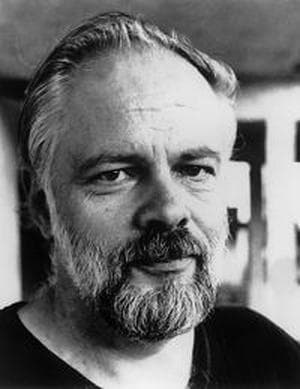
Philip Kindred Dick, often referred to by his initials PKD, was an American science fiction writer. He wrote 44 novels and about 121 short stories, most of which appeared in science fiction magazines during his lifetime. His fiction explored varied philosophical and social questions such as the nature of reality, perception, human nature, and identity, and commonly featured characters struggling against elements such as alternate realities, illusory environments, monopolistic corporations, drug abuse, authoritarian governments, and altered states of consciousness.
Similar books
- Harry Potter and the Sorcerer's Stone
J.K. Rowling
4.5 (7M) average on GoodreadsFantasyRescued from a miserable life under the stairs, an orphaned boy discovers he's a wizard destined for a magical school, where he uncovers a dangerous secret tied to the dark wizard who murdered his parents.
- The Hunger Games
Suzanne Collins
4.3 (6.4M) average on GoodreadsFantasyIn a future where children fight to the death on live television, Katniss Everdeen volunteers for the arena, turning a death sentence into a fight for survival and a spark of rebellion.
- 1984
George Orwell
4.2 (3.1M) average on GoodreadsPoliticsIn a future where surveillance and thought control are absolute, a man's search for truth clashes with the Party, showing that hope can be a form of rebellion.
- Divergent
Veronica Roth
4.2 (2.9M) average on GoodreadsFantasyIn a society divided by virtues, a sixteen-year-old's difference from the norm starts a rebellion that threatens her world.
- The Hobbit, or There and Back Again
J.R.R. Tolkien
4.3 (2.9M) average on GoodreadsFantasyA comfort-loving hobbit named Bilbo Baggins is whisked away by a mischievous wizard and a band of dwarves on an unexpected journey to reclaim stolen treasure from a fearsome dragon, discovering courage and a magical ring along the way.
- Animal Farm
George Orwell
4.0 (2.7M) average on GoodreadsPoliticsA farm animals' rebellion against humans turns into a pig-led dictatorship, showing how power corrupts and revolutionary ideals are betrayed.






Enjoyed the summary?
A summary gives you the shape of the book. The book itself has the detail, the examples and the voice.
Find Time Out of Joint on AmazonAs an Amazon Associate, BookBrief earns from qualifying purchases. How we're funded