
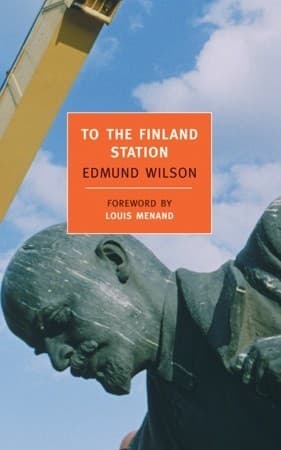
Core Idea
- Difficulty
- Hard
- Read it if
- You are deeply interested in the intellectual origins of communism and socialism, the history of revolutionary thought, and how philosophical ideas translate into political action. Ideal for those who appreciate detailed historical and biographical analysis of complex thinkers.
- Skip it if
- You are looking for a light introduction to political history, prefer a purely narrative historical account without extensive intellectual biography, or are not interested in the philosophical underpinnings of 19th and early 20th-century revolutionary movements.
Key Takeaways from To the Finland Station
The Revolutionary Ideal: A Continuous Thread
Modern revolutionary thought is a direct descendant of the Enlightenment's quest for human liberation.
Wilson traces the intellectual origins of revolutionary passion, showing that movements from the French Revolution to the Bolshevik Revolution share a common philosophical root. This root lies in the Enlightenment's belief in human perfectibility and inherent goodness, corrupted only by oppressive societal structures. Revolutionaries, from Babeuf to Marx, were not just reacting to immediate injustices but were driven by a deep, almost utopian, vision of a transformed society. This continuity reveals that the search for a 'new man' and a 'new world' is a recurring theme in modern history, often leading to both inspiring progress and tragedy as ideals meet reality.
“The great revolutions have been born of the conviction that man is by nature good, and that if he is only freed from the corrupting influence of institutions, he will be able to live in peace and harmony with his fellows.”
In the book: Wilson begins with Vico's cyclical view of history and Rousseau's concept of the 'noble savage' and the social contract, showing how these ideas laid the groundwork for Babeuf's Conspiracy of the Equals, which sought to implement absolute equality through revolutionary means.
Try this: When analyzing contemporary social movements, consider their underlying philosophical assumptions about human nature and the ideal society. Are they seeking incremental change or a fundamental societal re-engineering, and what historical precedents might inform their approach?
Related ideas: enlightenment-ideals, utopianism, social-contract
The Myth of the 'Finland Station'
The journey to a revolutionary future is often imagined as a direct, inevitable trajectory, but reality is far more convoluted.
The title itself is a strong metaphor for Lenin's arrival in Petrograd, symbolizing the end of a long intellectual and political journey toward a revolutionary peak. Wilson explains how this 'arrival' was not a sudden, isolated event but the meeting point of centuries of thought, struggle, and intellectual growth. He argues that revolutionaries often see history as a straight path toward a set, ideal end, like a train reaching its final stop. However, the reality of revolutionary change is much messier, marked by detours, false starts, and unexpected results. This point highlights the romanticized, yet often dangerous, simplification of complex historical forces into a story of inevitable progress.
“The 'Finland Station' is not merely a physical destination but a metaphor for the arrival at a revolutionary apotheosis, a point of no return where the past is definitively shed and the future begins.”
In the book: The entire structure of the book, moving chronologically from early French revolutionaries to the Bolsheviks, builds towards Lenin's arrival at the Finland Station, presenting it as the symbolic culmination of this historical trajectory.
Try this: Be wary of historical narratives that present complex events as inevitable or purely linear. Seek out the contingencies, the alternative paths, and the human choices that shaped outcomes, rather than accepting a teleological view of history.
Related ideas: historical-teleology, revolutionary-climax, historical-narrative
The Intellectual as Revolutionary Catalyst
Key figures, through their rigorous thought and synthesis, provided the indispensable theoretical frameworks for revolution.
Wilson dedicates much of his work to the lives and ideas of intellectuals like Michelet, Renan, Taine, and especially Marx and Engels. He shows that revolutions are not just spontaneous uprisings of the oppressed but are often preceded and shaped by intense intellectual work. These thinkers combined existing philosophical ideas, observed societal problems, and created theories that provided both the diagnosis of societal ills and the plan for revolutionary change. Without their intellectual foundation, the practical movements might have lacked direction or unity. This emphasizes the important, often underestimated, role of abstract thought in causing concrete historical events, showing the power of ideas to change the world.
“The intellectual, in an age of transition, can be the most potent force for change, capable of forging disparate ideas into a coherent program for action.”
In the book: Wilson's detailed analysis of Marx's development of historical materialism and his collaboration with Engels to produce the Communist Manifesto is central here, showing how their theories provided a 'scientific' basis for revolutionary action.
Try this: Recognize that profound societal shifts often begin as intellectual currents. Pay attention to emerging philosophical and theoretical frameworks, as they can be harbingers of future political and social movements. Engage with complex ideas, even if they seem abstract.
Related ideas: intellectual-history, theory-of-revolution, historical-materialism
The Personal Cost of Commitment
The lives of revolutionaries reveal immense personal sacrifice and often tragic isolation in pursuit of an ideal.
Beyond the broad sweep of history and ideas, Wilson looks into the personal lives of revolutionaries, revealing their deep sacrifices. Figures like Bakunin, Lassalle, and Lenin often lived lives of exile, poverty, and constant struggle, often separated from conventional society and even their families. Their dedication to the revolutionary cause consumed them, leaving little room for personal happiness or stability. This humanizes the historical narrative, showing the immense psychological and emotional cost of such single-minded commitment. It makes the reader face the ethical dilemmas of prioritizing a collective ideal over individual well-being, and the often harsh reality behind the heroic image.
“The revolutionary is often a man consumed by an idea, willing to sacrifice everything—personal comfort, family, even life itself—for the realization of a grander vision.”
In the book: Wilson details the tumultuous personal life of Bakunin, his constant flight and imprisonment, and his unwavering, if often chaotic, commitment to anarchism. He also touches upon Marx's perpetual financial struggles and the tragic deaths in his family, overshadowed by his intellectual work.
Try this: When evaluating historical figures or contemporary activists, consider the personal sacrifices and motivations behind their actions. Understand that ideological commitment often comes with a steep personal cost, and this cost shapes both their methods and their outcomes.
Related ideas: revolutionary-biography, personal-sacrifice, ideological-commitment
The Dialectic of Violence and Progress
Revolutionary change, while aiming for liberation, frequently relies on and perpetuates cycles of violence.
Wilson does not avoid the brutal realities of revolutionary change. From the Reign of Terror in France to the early Red Terror in Russia, he shows how the pursuit of utopian ideals often leads to violent repression. The belief that a perfect society can only be created by ruthlessly eliminating its enemies causes great human suffering. This point highlights a key contradiction: movements born from a desire for freedom and justice often use authoritarian and violent methods to achieve their goals. It challenges the romantic view of revolution, making readers confront the moral compromises and tragic outcomes that often come with attempts to remake society through force.
“The history of revolution, for all its high ideals, is also a history of terror, of the guillotine and the firing squad, of the suppression of dissent in the name of a greater good.”
In the book: Wilson describes the Jacobin terror during the French Revolution, the suppression of the Paris Commune, and anticipates the violent trajectory of the Bolsheviks, showing how each movement, despite different ideologies, resorted to eliminating opposition.
Try this: Critically examine any movement that advocates for radical change through violent means. Question the assumption that violence is a necessary or effective path to a more just society, and consider the long-term consequences of such methods on civil liberties and human rights.
Related ideas: revolutionary-violence, reign-of-terror, moral-compromise
The German Contribution: From Philosophy to Practice
German philosophy and social theory provided the intellectual rigor to transform revolutionary dreams into 'scientific' programs.
Wilson gives significant attention to the role of German thought, especially Hegel, Feuerbach, Marx, and Engels, in shaping modern revolutionary theory. He argues that while the French provided the initial spark of revolutionary action and ideals, the Germans provided the strong philosophical and economic frameworks that turned utopian hopes into what was presented as a 'scientific' and inevitable process. Hegel's dialectic, Feuerbach's materialism, and Marx's historical materialism together offered a comprehensive worldview that explained societal evolution and outlined the path to communism. This intellectual depth gave the socialist movement a powerful theoretical base, making it a strong force capable of mobilizing millions and changing the course of history.
“It was in Germany that the revolutionary idea acquired its most formidable intellectual apparatus, moving from the realm of abstract rights to a 'scientific' analysis of historical forces.”
In the book: Wilson’s detailed exposition of Hegel's philosophy, its inversion by Feuerbach, and then its re-synthesis and application by Marx to economics and history in works like 'Das Kapital' are central to this argument.
Try this: When studying the development of major political ideologies, always trace their philosophical origins and understand how abstract ideas are translated into concrete political programs. Recognize the profound influence of academic and philosophical discourse on real-world events.
Related ideas: german-idealism, historical-materialism, dialectical-thought
The Role of the Utopians: Visionaries and Their Limits
Early socialist thinkers, though often impractical, laid essential groundwork by envisioning radically different societies.
Wilson dedicates chapters to figures like Robert Owen, Saint-Simon, and Fourier, the 'Utopian Socialists.' While later Marxists often dismissed them as unscientific and naive, Wilson shows their important role. These thinkers, despite their sometimes unusual and impractical ideas for ideal communities, were important in criticizing industrial capitalism and imagining alternative social arrangements. They highlighted the dehumanizing aspects of emerging industrial society and dared to dream of cooperation, equality, and human flourishing. Their failures, in many ways, informed the more 'scientific' socialists, showing what approaches did not work and pushing intellectual development toward more robust, if also more rigid, theories. They were the key dreamers who first imagined a different world.
“The Utopians, for all their fantastical schemes, possessed the vital faculty of imagining a world beyond the present, thereby fertilizing the ground for more systematic critiques.”
In the book: Wilson describes Owen's New Lanark experiments and his later, less successful, communal efforts in the United States, highlighting both his visionary zeal and the practical difficulties of implementing his ideas on a larger scale.
Try this: Do not dismiss seemingly 'impractical' ideas out of hand. Often, radical visions, even if flawed, stimulate critical thinking and open pathways for future, more refined solutions. Embrace the importance of imaginative thinking in addressing societal problems.
Related ideas: utopian-socialism, social-experimentation, critique-of-capitalism
The Inevitability Fallacy: History as Human Agency
While historical forces are powerful, human choices and individual genius remain critical in shaping revolutionary outcomes.
Despite Marx's focus on historical inevitability and the determining forces of economic production, Wilson's narrative subtly but strongly reasserts the role of individual action. He shows how the specific personalities, intellectual breakthroughs, and strategic decisions of figures like Lenin, Marx, and even earlier revolutionaries, fundamentally changed the course of events. While they acted within specific historical contexts, their unique contributions—the combining of ideas, the articulation of a program, the seizing of a moment—were not merely predetermined. This point challenges a purely deterministic view of history, arguing that while structural forces are important, the actions of talented and determined individuals can act as catalysts, shaping history in specific, often unforeseen, ways.
“History is not a train on a fixed track; it is a landscape shaped by the paths chosen by powerful individuals, even if those choices are framed by larger social currents.”
In the book: Wilson's detailed focus on Lenin's strategic genius, his ability to adapt Marxist theory to the specific conditions of Russia, and his decisive actions in 1917, demonstrate how individual leadership can seize and shape revolutionary moments.
Try this: Avoid reducing historical events to purely deterministic forces. Always consider the interplay between large-scale social, economic, and political structures and the specific choices and actions of key individuals. Recognize your own agency within broader contexts.
Related ideas: historical-agency, determinism-vs-free-will, leadership-in-revolution
The Prophetic Power of Literature
Literary figures and their works often reveal societal truths and revolutionary undercurrents before political theorists.
Wilson, a literary critic himself, implicitly argues for the deep insight literature offers into the human condition and societal unrest. While not explicitly a literary history, his narrative includes an understanding of how writers like Zola, Dostoevsky, and various journalists and pamphleteers captured the spirit of their age, the anxieties of the people, and the emerging revolutionary impulses. These literary works, through their portrayal of characters, social conditions, and moral dilemmas, often provided a more immediate understanding of the forces driving revolution than dry theoretical writings. This point emphasizes that art is not just entertainment but a source of historical and social understanding, often anticipating or reflecting changes that later appear in political action.
“The artist, with his sensitive antennae, often apprehends the coming storms of history before the political scientist has even charted the clouds.”
In the book: Wilson frequently references the atmosphere and intellectual currents captured in the novels of the period, particularly in his discussions of figures like Renan or Taine, who were deeply engaged with contemporary literature.
Try this: Engage with literature and other forms of art as essential sources of understanding human experience and societal trends. Recognize that artists often possess a unique ability to diagnose cultural shifts and tensions before they become overtly political.
Related ideas: literature-and-history, social-commentary, art-as-prophecy
The Unfinished Symphony of Revolution
The journey to a truly liberated society remains an ongoing, complex, and often fraught endeavor.
Wilson's narrative ends with Lenin's arrival, a moment of triumph for the Bolsheviks, but the reader knows the later history of the Soviet Union. This implicit understanding adds a layer of tragic irony to the entire work. The 'Finland Station' is not the promised utopia but just another, often more brutal, chapter in the revolutionary story. This point emphasizes that the search for a 'perfect' society is a complex and perhaps never-ending process. Each 'final' revolution often brings new problems, new oppressions, and new struggles. Wilson leaves the reader with a deep sense of the cyclical nature of human striving for freedom and justice, and the ongoing challenge of balancing revolutionary ideals with the realities of power and human nature.
“The 'Finland Station' is less an end than a new beginning, a point from which the future, with all its hopes and horrors, stretches out unknown.”
In the book: The entire arc of the book, leading to the Bolshevik revolution, is presented as a culmination, but the reader's external knowledge of subsequent Soviet history provides the tragic context of an 'unfinished' or deeply flawed outcome.
Try this: Approach grand historical narratives with a critical eye, understanding that 'endings' are often merely new beginnings. Recognize that societal progress is rarely linear and that complex problems often require ongoing vigilance and adaptation, rather than a single, definitive 'solution.'
Related ideas: revolutionary-legacy, historical-cycles, utopian-failure
To the Finland Station Quotes
“The human mind, whether in the individual or in society, is always trying to organize the world around it, and to give it a meaning.”
“It is one of the paradoxes of Marxism that, in attempting to be purely scientific, it has often been most unscientific in its dogmatism.”
“The world in which we live is like a great unfinished symphony, and the human race is trying to compose it.”
“When a society has reached a certain stage of development, it creates its own myths and legends to explain itself to itself.”
“Every great movement, whether in politics or in art, begins with a protest against something that has become intolerable.”
“The true revolutionary is not simply one who wants to change the world, but one who understands the forces that make it what it is.”
“History is not a straight line, but a labyrinth of human choices and unforeseen consequences.”
“The intellectual's role is not merely to interpret the world, but to help change it.”
“Ideas, no matter how profound, must eventually confront the stubborn realities of human nature and social structure.”
“The ultimate aim of science, as of revolution, is to make the world more rational and more human.”
“It is difficult for us, who have lived through the disillusionments of the twentieth century, to recapture the hope and confidence of the nineteenth.”
“The impulse to create a better society is one of the most persistent and powerful forces in human history.”
“Every age has its characteristic delusions, and the greatest delusion of our own has been the belief in the absolute efficacy of political solutions.”
Quiz
10 questions on the main ideas. Each answer comes with a short explanation.
Question 1
Which major historical event does Edmund Wilson identify as the starting point of the revolutionary tradition he traces in 'To the Finland Station'?
- The Glorious Revolution of 1688
- The American Revolution of 1776
- The French Revolution of 1789
- The Industrial Revolution
Show answer
C. The French Revolution of 1789 Wilson begins his narrative with the French Revolution, viewing it as the genesis of the modern revolutionary impulse that culminates in the Bolshevik Revolution.
Question 2
Which early socialist thinker, often associated with utopian communities and ideas like 'phalansteries,' is prominently featured in Wilson's early chapters?
- Robert Owen
- Charles Fourier
- Henri de Saint-Simon
- Pierre-Joseph Proudhon
Show answer
B. Charles Fourier Charles Fourier's imaginative and often eccentric utopian visions, including his concept of phalansteries, are explored by Wilson as part of the early socialist tradition.
Question 3
Edmund Wilson dedicates significant attention to the intellectual development of Karl Marx. What central concept, developed by Marx and Engels, does Wilson emphasize as a pivotal shift from earlier socialist thought?
- The social contract
- Utopian socialism
- Historical materialism
- Anarcho-syndicalism
Show answer
C. Historical materialism Wilson highlights historical materialism as Marx's groundbreaking contribution, moving away from moralistic or utopian appeals to a 'scientific' understanding of history driven by economic forces and class struggle.
Question 4
Which event, occurring in 1871, serves as a crucial point of analysis for Wilson regarding the practical application and ultimate failure of revolutionary ideals prior to 1917?
- The Spring of Nations (Revolutions of 1848)
- The Franco-Prussian War
- The Paris Commune
- The First International's dissolution
Show answer
C. The Paris Commune The Paris Commune is extensively discussed by Wilson as an early, albeit short-lived, attempt at a workers' government, offering lessons and critiques for subsequent revolutionary movements.
Question 5
Wilson portrays which Russian revolutionary as the ultimate culmination of the revolutionary tradition, arriving at the 'Finland Station' to lead the Bolsheviks?
- Leon Trotsky
- Joseph Stalin
- Vladimir Lenin
- Alexander Kerensky
Show answer
C. Vladimir Lenin The book's title directly refers to Lenin's arrival at the Finland Station in Petrograd in April 1917, marking the decisive moment for the Bolshevik Revolution.
Question 6
Wilson meticulously examines the philosophical influences on Marx. Which German philosopher's dialectical method does Wilson show Marx adapting and 'standing on its head'?
- Immanuel Kant
- Georg Wilhelm Friedrich Hegel
- Arthur Schopenhauer
- Friedrich Nietzsche
Show answer
B. Georg Wilhelm Friedrich Hegel Wilson details how Marx took Hegel's idealist dialectic and inverted it, applying it to material conditions and economic development rather than the evolution of ideas.
Question 7
Beyond political theory, Wilson often delves into the personal lives and psychological motivations of key figures. Which character's transformation from a relatively privileged background to a radical revolutionary, driven by a profound sense of injustice, is particularly emphasized in the context of early Russian nihilism?
- Mikhail Bakunin
- Alexander Herzen
- Sergey Nechayev
- Pyotr Kropotkin
Show answer
B. Alexander Herzen Wilson dedicates considerable attention to Herzen's personal journey, exile, and intellectual development, portraying him as a crucial link between Russian intellectual ferment and European revolutionary thought.
Question 8
Wilson suggests that the revolutionary movement, particularly in its later Marxist phases, developed a 'scientific' rigor. How does he contrast this with earlier, more 'utopian' socialist thinkers?
- Utopian socialists focused on individual liberty, while Marxists prioritized collective good.
- Utopian socialists relied on moral persuasion and ideal models, whereas Marxists claimed to derive their program from historical and economic analysis.
- Utopian socialists were primarily French, while Marxists were predominantly German.
- Utopian socialists advocated for violent revolution, while Marxists believed in peaceful reform.
Show answer
B. Utopian socialists relied on moral persuasion and ideal models, whereas Marxists claimed to derive their program from historical and economic analysis. Wilson argues that Marx and Engels distinguished their 'scientific socialism' from the 'utopian socialism' of earlier figures by asserting that their theories were based on an objective analysis of historical and economic laws, rather than merely moral or ideal prescriptions.
Question 9
Wilson critically examines the role of revolutionary propaganda and organization. He highlights the development of the 'professional revolutionary' concept, particularly in the work of which Russian figure?
- Georgi Plekhanov
- Julius Martov
- Vladimir Lenin
- Nikolai Chernyshevsky
Show answer
C. Vladimir Lenin Lenin's treatise 'What Is To Be Done?' is central to Wilson's discussion of the disciplined, professional revolutionary vanguard, a concept he sees as crucial to the Bolshevik success.
Question 10
In his concluding reflections, what is Wilson's overarching assessment of the revolutionary tradition he has traced, particularly in light of its culmination in Russia?
- He celebrates it as the inevitable triumph of human reason and justice.
- He views it as a tragically misguided path, leading to authoritarianism.
- He acknowledges its profound intellectual ambition and humanitarian impulse, while also recognizing its often brutal and problematic practical outcomes.
- He dismisses it as a series of unrelated historical accidents.
Show answer
C. He acknowledges its profound intellectual ambition and humanitarian impulse, while also recognizing its often brutal and problematic practical outcomes. Wilson's work is not a simple endorsement or condemnation. He deeply appreciates the intellectual power and moral drive behind the revolutionary figures, but he also presents a nuanced and often critical view of the human cost and authoritarian tendencies that emerged from their efforts.
To the Finland Station FAQ
What is the central theme of Edmund Wilson's 'To the Finland Station'?
'To the Finland Station' explores the intellectual and historical lineage of revolutionary thought, tracing its evolution from the French Revolution through various utopian socialists and Marxist thinkers, culminating in Lenin's arrival at the Finland Station in 1917, symbolizing the culmination of these ideas in the Bolshevik Revolution.
Does 'To the Finland Station' offer a biased perspective on communism?
While Wilson, like many intellectuals of his time, was deeply engaged with socialist ideas, his work is less a partisan endorsement and more a detailed intellectual history. He aims to understand the motivations and philosophical underpinnings of revolutionary figures, presenting their ideas and actions within their historical context, rather than simply promoting a single ideology.
What is the significance of the 'Finland Station' in the book's title?
The Finland Station refers to the Petrograd (St. Petersburg) railway station where Vladimir Lenin arrived in April 1917, after his exile, to lead the Bolshevik Revolution. It serves as a symbolic endpoint for Wilson's historical narrative, representing the practical realization and climax of the revolutionary theories he meticulously details throughout the book.
How does 'To the Finland Station' differ from typical historical accounts of the Russian Revolution?
Unlike traditional histories that might focus solely on political events or military campaigns, Wilson's book places a strong emphasis on the intellectual and philosophical currents that drove revolutionary movements. It delves deeply into the lives and ideas of key thinkers like Marx, Engels, and Lenin, exploring how their philosophies shaped historical outcomes.
Does 'To the Finland Station' provide a comprehensive overview of the French Revolution?
While the French Revolution serves as a foundational starting point for Wilson's exploration of revolutionary ideas, the book does not offer an exhaustive account of its events. Instead, it focuses on the intellectual figures and philosophical shifts that emerged from it, setting the stage for subsequent revolutionary thought.
What kind of reader would most appreciate 'To the Finland Station'?
Readers interested in intellectual history, the philosophy of revolution, and the biographical context of major political thinkers will find this book particularly rewarding. It appeals to those who wish to understand the origins and development of socialist and communist ideas from a broad historical and philosophical perspective.
Does 'To the Finland Station' cover the impact of the Bolshevik Revolution on the 20th century?
The book concludes with the Bolshevik seizure of power in 1917, effectively marking the culmination of the intellectual journey Wilson chronicles. While it sets the stage for the 20th century's revolutionary movements, it doesn't extensively detail the subsequent global impact or long-term consequences of the Russian Revolution.
Is 'To the Finland Station' considered a primary or secondary historical source?
'To the Finland Station' is a work of secondary history, as Edmund Wilson is interpreting and synthesizing primary sources and existing historical accounts. However, its depth of research and unique intellectual perspective make it a significant and influential work in its own right for understanding the history of revolutionary thought.
How does Wilson's approach to biography enhance the historical narrative?
Wilson masterfully weaves biographical details of figures like Marx, Engels, and Lenin into the broader historical narrative, illustrating how their personal experiences, intellectual development, and relationships shaped their revolutionary theories. This approach humanizes complex ideas and makes the historical progression more engaging and understandable.
About the author
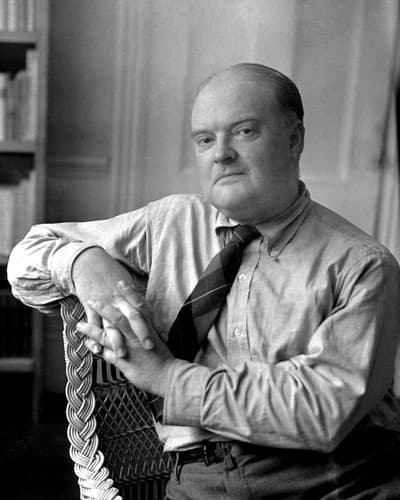
Edmund Wilson Jr. was an American writer, literary critic and journalist. He is widely regarded as one of the most important literary critics of the 20th century. Wilson began his career as a journalist, writing for publications such as Vanity Fair and The New Yorker. He helped to edit The New Republic, served as chief book critic for The New Yorker, and was a frequent contributor to The New York Review of Books. Wilson was the author of more than twenty books, including Axel's Castle, Patriotic Gore, and a work of fiction, Memoirs of Hecate County. He was a friend of many notable figures of the time, including F. Scott Fitzgerald, Ernest Hemingway, and John Dos Passos. His scheme for a Library of America series of national classic works came to fruition through the efforts of Jason Epstein after Wilson's death. He was a two-time winner of the National Book Award and received the Presidential Medal of Freedom in 1964.
Similar books
- 1984
George Orwell
4.2 (3.1M) average on GoodreadsPoliticsIn a future where surveillance and thought control are absolute, a man's search for truth clashes with the Party, showing that hope can be a form of rebellion.
- Animal Farm
George Orwell
4.0 (2.7M) average on GoodreadsPoliticsA farm animals' rebellion against humans turns into a pig-led dictatorship, showing how power corrupts and revolutionary ideals are betrayed.
- Freakonomics: A Rogue Economist Explores the Hidden Side of Everything
Steven D. Levitt
4.0 (709k) average on GoodreadsBusinessThis book uses economic principles to reveal the surprising incentives behind everything from drug dealing and real estate to cheating teachers and the decline of crime.
- I Am Malala: The Story of the Girl Who Stood Up for Education and Was Shot by the Taliban
Malala Yousafzai
4.1 (419k) average on GoodreadsPoliticsA teenage girl from a Taliban-controlled valley refuses to give up her books, becoming a global voice for education even after an assassination attempt.
- Atlas Shrugged
Ayn Rand
3.7 (354k) average on GoodreadsPoliticsIn a dystopian America where innovators vanish, a brilliant heiress races to uncover the truth behind the disappearing industrialists and the enigmatic John Galt, who vows to stop the world's progress.
- The Art of War
Sun Tzu
4.0 (330k) average on GoodreadsBusinessLearn ancient strategies for outsmarting rivals, whether on the battlefield or in the boardroom.






Enjoyed the summary?
A summary gives you the shape of the book. The book itself has the detail, the examples and the voice.
Find To the Finland Station on AmazonAs an Amazon Associate, BookBrief earns from qualifying purchases. How we're funded