
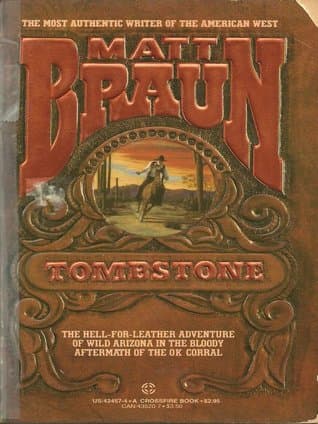
Core Idea
- Difficulty
- Medium
- Read it if
- You are fascinated by the true history behind the myths of the American Old West, particularly the Earp brothers and the Gunfight at the O.K. Corral, and want a detailed, character-driven account of the events leading up to and following the conflict.
- Skip it if
- You prefer a purely fictional, action-oriented Western without deep historical analysis or are looking for a book that unequivocally champions one side of the O.K. Corral conflict as heroic.
Key Takeaways from Tombstone
The Allure of the Silver Rush
How the promise of wealth transformed a desolate landscape into a boomtown.
The discovery of silver near what would become Tombstone started a classic American boom-and-bust cycle, drawing a diverse and often desperate population. This discovery was about the myth of instant wealth that pulled in every type of person, from legitimate business owners to outlaws. The rapid influx of people created an instant, chaotic society, where infrastructure lagged behind population, and law and order struggled to keep pace with the ambitions and vices of its new residents. This set the stage for the conflicts that would define Tombstone's brief, legendary existence, showing how resource booms are often less about the resource and more about the human scramble for it.
“In 1878, a struggling prospector found silver in the jagged mountains of Arizona. Within a year the town of Tombstone was filling up with merchants, tradesmen, gamblers, whores, and gunslingers.”
In the book: The rapid growth of Tombstone from a desolate area to a bustling town teeming with various characters (merchants, gamblers, gunslingers) within a single year after the initial silver strike.
Try this: Understand that rapid economic opportunities, while creating prosperity, also attract instability and a diverse array of characters, often leading to social friction and a challenging environment for governance.
Related ideas: boom-town-economy, frontier-expansion, resource-rush
The Earp Family's Ambiguous Morality
Wyatt Earp and his brothers operated on a blurred line between law enforcement and self-interest.
The Earp brothers, particularly Wyatt, are often romanticized as symbols of frontier justice, but Braun's portrayal suggests a more complex reality. They arrived in Tombstone not purely as lawmen, but as opportunists seeking to profit from the boom, often using their positions for personal gain. Their association with Doc Holliday and other 'thieves' indicates a willingness to bend or break the law when it suited their interests, blurring the lines between sheriff and outlaw. This challenges the simple hero/villain narrative, painting them as pragmatic, ruthless individuals who understood the power dynamics of the frontier and were adept at navigating them, even if it meant operating in a morally gray area. Their actions were driven by a blend of self-preservation, ambition, and a unique interpretation of justice.
“Along with Doc Holliday and a band of thieves, Wyatt Earp treated the Arizona territory as his personal stomping grounds...”
In the book: The description of Wyatt Earp treating the Arizona territory as his 'personal stomping grounds' and his association with 'a band of thieves' and Doc Holliday.
Try this: Question established narratives and seek out the complexities of historical figures, recognizing that motivations are often multi-faceted and moral lines can be blurred, especially in lawless environments.
Related ideas: frontier-justice, moral-relativism, historical-revisionism
The Catalyst of Corporate Intervention
Wells Fargo's pursuit of justice brought external forces to bear on Tombstone's lawlessness.
The intervention of Wells Fargo is a moment that shifts the narrative from internal town squabbles to a larger, more organized conflict. Unlike local sheriffs who might be influenced by town politics or personal allegiances, Wells Fargo represented a powerful, external corporate entity with significant resources and a clear goal: protect their assets and ensure the safe passage of their stagecoaches. Their decision to dispatch a private detective like Luke Starbuck indicates the failure of local law enforcement to maintain order and highlights the economic impact of crime. This corporate push for accountability introduced a new, formidable player into Tombstone, escalating the stakes and leading directly to the central conflict.
“...until Wells Fargo decided to put an end to a string of savage stage robberies.”
In the book: Wells Fargo's direct decision to intervene and send Luke Starbuck to address the 'string of savage stage robberies,' suggesting a breakdown in local law and order.
Try this: Recognize how external pressures, particularly from powerful economic entities, can dramatically alter local power dynamics and force a confrontation with entrenched problems.
Related ideas: corporate-power, private-investigation, economic-impact-of-crime
The OK Corral: Legend vs. Reality
The shootout's mythologized status obscures the intricate truths and personal vendettas behind it.
The shootout at the O.K. Corral is arguably the most famous gunfight in American history, yet Braun implies that its legend grew quickly, overshadowing the complex reality. The 'truth' that Starbuck seeks suggests that the popular narrative of a clear-cut good vs. evil confrontation was likely a simplification. The gunfight was not a random act but the culmination of escalating tensions, personal grudges, and competing interests between the Earps and the McLaurys/Clantons. The legend simplifies a messy, human conflict, transforming it into a definitive moment of frontier justice, when in reality, it was a brutal, chaotic event born from a web of personal and economic grievances. This contrast between legend and truth is a central theme, highlighting how history is often shaped by popular perception rather than objective fact.
“With the legend of the OK Corral shootout fanning out across the frontier, private detective Luke Starbuck was sent to Tombstone to find the truth.”
In the book: The mention of the 'legend of the OK Corral shootout fanning out' and Starbuck's mission 'to find the truth,' implying a discrepancy between the two.
Try this: Approach historical accounts with skepticism, always looking beyond the popular narrative to uncover the underlying complexities, motivations, and human elements that shaped events.
Related ideas: historical-mythology, gunfight-at-ok-corral, truth-vs-narrative
Luke Starbuck's Personal Obsession
A professional mission morphs into a deeply personal quest for vengeance.
Luke Starbuck's transformation from a detached private detective to a man consumed by a personal obsession to kill Wyatt Earp is a powerful narrative arc. This shift shows the intensely personal nature of frontier conflicts, where professional duties often gave way to deeply rooted personal vendettas. It suggests that the environment of Tombstone, with its heightened tensions and lawlessness, had a psychological impact on individuals, drawing them into its violent whirlpool. Starbuck's journey highlights how the pursuit of justice can easily become intertwined with, and eventually subsumed by, a desire for personal retribution, complicating the moral landscape and driving the plot towards its inevitable, violent conclusion. His obsession mirrors the raw, untamed emotions that defined the era.
“And when he got there, Starbuck's mission turned into one burning, personal obsession: to kill Wyatt Earp....”
In the book: The explicit statement that Starbuck's initial mission 'turned into one burning, personal obsession: to kill Wyatt Earp.'
Try this: Be aware of how personal biases and emotions can derail professional objectives, especially in high-stakes or emotionally charged environments. Recognize that the line between justice and vengeance can be thin.
Related ideas: personal-vendetta, obsession, frontier-justice
The Author's Connection to the West
Matt Braun's heritage provides an authentic lens into the frontier era.
Matt Braun's deep personal connection to the American West, being a fourth-generation Westerner and raised among Native American tribes, is important to the authenticity and depth of his writing. This isn't just a historical account; it's filtered through a lifetime steeped in the culture, traditions, and philosophies of the frontier. His background allows him to imbue his narratives with a sense of lived experience and nuanced understanding that a purely academic historian might miss. This intimate knowledge likely contributes to the complex portrayal of characters like the Earps, moving beyond simple black-and-white morality to capture the 'truths' of the bygone time, which often involved shades of gray. His perspective is valuable in understanding the motivations and societal norms of the era.
“MATT BRAUN is a fourth generation Westerner, steeped in the tradition and lore of the frontier era. His books reflect a heritage rich with the truths of that bygone time.”
In the book: Author bio stating Braun is a 'fourth generation Westerner,' 'steeped in the tradition and lore,' and 'raised among the Cherokee and Osage tribes,' learning their traditions and philosophy.
Try this: When evaluating historical or culturally specific narratives, consider the author's background and connection to the subject matter, as it can significantly influence the depth, accuracy, and perspective of the work.
Related ideas: authorial-voice, historical-authenticity, cultural-heritage
The Rawness of Frontier Life
Tombstone embodies the unforgiving and chaotic nature of untamed territories.
Tombstone, as depicted, is a microcosm of the American frontier: a place of immense opportunity but also extreme danger and moral ambiguity. The rapid influx of diverse characters—from legitimate merchants to 'whores and gunslingers'—illustrates the chaotic mix of ambition, desperation, and vice that characterized these boomtowns. Law and order were nascent and often ineffective, leading to a reliance on personal strength, reputation, and violence for survival and prosperity. This environment fostered a culture where conflicts were often resolved with deadly force, and justice was frequently dispensed outside formal legal channels. It is a stark reminder of how thin the veneer of civilization was in these nascent settlements, where human nature was often stripped bare.
“Within a year the town of Tombstone was filling up with merchants, tradesmen, gamblers, whores, and gunslingers.”
In the book: The rapid and diverse population growth of Tombstone, including 'gamblers, whores, and gunslingers,' indicating a lack of established social order and a prevalence of high-risk individuals.
Try this: Reflect on how environmental conditions (like a lawless frontier) can shape human behavior and societal structures, leading to a reliance on informal rules and personal power.
Related ideas: frontier-society, lawlessness, social-chaos
The Enduring Power of Western Lore
The frontier era continues to captivate, fueled by tales of heroes, villains, and moral struggles.
The fact that Matt Braun, through his contributions to Western literature, was appointed a 'Territorial Marshal' by the Governor of Oklahoma speaks volumes about the enduring power and cultural significance of the American West. This genre, and the historical period it chronicles, continues to resonate deeply in the American psyche, representing fundamental struggles of good vs. evil, civilization vs. wilderness, and individual freedom vs. societal order. Stories like 'Tombstone' tap into this fascination, offering narratives that explore the formation of law, the nature of courage, and the complexities of human ambition in a formative period of national identity. The West is not just a historical setting; it is a foundational myth that continues to inform our understanding of American character and values, making these stories relevant.
“His heritage and his contribution to Western literature resulted in his appointment by the Governor of Oklahoma as a Territorial Marshal.”
In the book: Matt Braun's appointment as a 'Territorial Marshal' by the Governor of Oklahoma, acknowledging his significant contribution to Western literature and its cultural impact.
Try this: Consider how historical genres, like Westerns, serve as cultural touchstones that explore universal themes of justice, morality, and identity, offering insights into both the past and present.
Related ideas: western-genre, american-mythology, cultural-significance
The Cycle of Violence and Retribution
Frontier conflicts often spiraled into endless cycles of revenge.
Starbuck's personal obsession to kill Wyatt Earp exemplifies the pervasive cycle of violence and retribution inherent in many frontier conflicts. In an environment with weak legal structures, personal affronts and perceived injustices often led to escalating feuds rather than formal legal resolution. The 'truth' Starbuck sought likely uncovered layers of past grievances, each demanding satisfaction, perpetuating a chain reaction of violence. This cycle was a defining characteristic of the untamed West, where honor, reputation, and the ability to defend oneself or one's family were paramount. The narrative suggests that even attempts at justice could easily devolve into personal vendettas, making true peace elusive and pushing individuals to take the law into their own hands, often with deadly consequences.
“And when he got there, Starbuck's mission turned into one burning, personal obsession: to kill Wyatt Earp....”
In the book: Starbuck's mission evolving into a 'burning, personal obsession to kill Wyatt Earp,' indicating a shift from a professional duty to a deeply personal quest for retribution.
Try this: Analyze how the absence of strong institutions can lead to informal, often violent, mechanisms for dispute resolution, perpetuating cycles of conflict and revenge.
Related ideas: cycle-of-violence, blood-feud, retributive-justice
The Frontier's Cast of Characters
Tombstone attracted a volatile mix of individuals, each seeking fortune or escape.
The rapid population growth of Tombstone with its diverse array of inhabitants—'merchants, tradesmen, gamblers, whores, and gunslingers'—highlights the magnetic pull of the frontier for a specific type of individual. These were often people seeking a fresh start, quick wealth, or simply a place beyond the reach of established law. This volatile mix created a dynamic, unpredictable social landscape where different moral codes clashed. The presence of both legitimate business owners and outright criminals, often operating in close proximity, underscores the unique challenges of building a society from scratch in a lawless territory. It is a testament to the allure of the unknown and the desperate hope for opportunity, regardless of the risks or the company one might keep.
“Within a year the town of Tombstone was filling up with merchants, tradesmen, gamblers, whores, and gunslingers.”
In the book: The specific list of diverse individuals who populated Tombstone within a year of its founding: 'merchants, tradesmen, gamblers, whores, and gunslingers.'
Try this: Recognize that boom-and-bust environments often attract a wide spectrum of society, leading to complex social dynamics and challenges for establishing order and community.
Related ideas: frontier-demographics, social-diversity, boomtown-culture
Tombstone Quotes
“Wyatt Earp was a man of his time, and his time was a violent one. He sought peace, but was often forced to find it through the barrel of a gun.”
“The dusty streets of Tombstone held more than just silver; they held the ambitions, the greed, and the simmering resentments of men on the edge.”
“Doc Holliday, a gentleman by birth, a gambler by trade, and a killer by necessity, walked a line few others dared to cross.”
“Justice in the Arizona Territory often came not from a judge's gavel, but from the quickness of a man's draw.”
“The O.K. Corral was more than a shootout; it was the culmination of months of simmering hatred and a clash of two irreconcilable ways of life.”
“For some, Tombstone was a promise of riches; for others, it was a grave waiting to be dug.”
“A man's reputation in the West was his most valuable possession, and the easiest to lose.”
“The Clantons and McLaurys were not just outlaws; they were a force unto themselves, carved from the harsh reality of the borderlands.”
“In the end, even the most legendary gunfighters found that the bullet had no respect for a man's name.”
“The desert sun beat down on Tombstone, a silent witness to the drama unfolding within its dusty confines.”
“Wyatt Earp's resolve was a steel rod, unbending even in the face of overwhelming odds.”
“The pursuit of law and order in Tombstone was a lonely and often deadly endeavor.”
“Every man who rode into Tombstone carried a past, and many found that past catching up with them.”
“The legend of Tombstone was forged in blood and gunsmoke, a testament to a time when men lived and died by their own code.”
Quiz
10 questions on the main ideas. Each answer comes with a short explanation.
Question 1
What event in 1878 directly led to the founding and rapid growth of Tombstone?
- A major cattle drive established a new route through the area.
- The discovery of a significant silver lode by a prospector.
- The establishment of a new Wells Fargo regional office.
- A treaty with local Native American tribes opening land for settlement.
Show answer
B. The discovery of a significant silver lode by a prospector. The book states that 'In 1878, a struggling prospector found silver in the jagged mountains of Arizona. Within a year the town of Tombstone was filling up...'
Question 2
Which group of individuals is explicitly mentioned as filling Tombstone within a year of its founding?
- Farmers, ranchers, and blacksmiths
- Miners, geologists, and assayers
- Merchants, tradesmen, gamblers, whores, and gunslingers
- Lawmen, judges, and government officials
Show answer
C. Merchants, tradesmen, gamblers, whores, and gunslingers The description clearly lists 'merchants, tradesmen, gamblers, whores, and gunslingers' as those who filled the town.
Question 3
What was Wyatt Earp's perceived attitude or behavior in the Arizona territory, according to the book's synopsis?
- He was dedicated to establishing law and order.
- He treated it as his personal stomping grounds, engaging in illicit activities.
- He was a reclusive figure, avoiding public attention.
- He focused on legitimate business ventures and prospecting.
Show answer
B. He treated it as his personal stomping grounds, engaging in illicit activities. The text states: 'Wyatt Earp treated the Arizona territory as his personal stomping grounds-until Wells Fargo decided to put an end to a string of savage stage robberies.'
Question 4
What specific problem prompted Wells Fargo to send someone to Tombstone?
- An increase in bank robberies within Tombstone itself.
- A string of savage stage robberies affecting their operations.
- Disputes over mining claims that were disrupting their business.
- The need to establish a new express route through the territory.
Show answer
B. A string of savage stage robberies affecting their operations. Wells Fargo's involvement is directly linked to their decision 'to put an end to a string of savage stage robberies.'
Question 5
Who was sent to Tombstone by Wells Fargo, and what was his initial mission?
- Wyatt Earp, to investigate the silver mines.
- Doc Holliday, to negotiate with local outlaws.
- Luke Starbuck, to find the truth behind the OK Corral shootout and other events.
- A federal marshal, to establish a permanent law enforcement presence.
Show answer
C. Luke Starbuck, to find the truth behind the OK Corral shootout and other events. The text states: 'private detective Luke Starbuck was sent to Tombstone to find the truth.' This truth is implied to be related to the OK Corral and the stage robberies.
Question 6
What transformed Luke Starbuck's mission once he arrived in Tombstone?
- He discovered a new silver vein and decided to become a prospector.
- He became obsessed with establishing a legitimate business in the town.
- His objective shifted to a 'burning, personal obsession: to kill Wyatt Earp.'
- He decided to join Wyatt Earp's group and become an outlaw.
Show answer
C. His objective shifted to a 'burning, personal obsession: to kill Wyatt Earp.' The synopsis clearly states: 'And when he got there, Starbuck's mission turned into one burning, personal obsession: to kill Wyatt Earp....'
Question 7
Which historical event is specifically mentioned as fanning out across the frontier and influencing Starbuck's mission?
- The Apache Wars
- The California Gold Rush
- The legend of the OK Corral shootout
- The construction of the transcontinental railroad
Show answer
C. The legend of the OK Corral shootout The text states: 'With the legend of the OK Corral shootout fanning out across the frontier, private detective Luke Starbuck was sent to Tombstone to find the truth.'
Question 8
According to the author bio, what cultural background influenced Matt Braun's beliefs and writing?
- German immigrants and their farming traditions.
- Spanish missionaries and their religious philosophy.
- Cherokee and Osage tribes, their traditions, culture, and philosophy.
- Eastern European settlers and their industrial innovations.
Show answer
C. Cherokee and Osage tribes, their traditions, culture, and philosophy. The author bio explicitly states: 'Raised among the Cherokee and Osage tribes, Braun learned their traditions and culture, and their philosophy became the foundation of his own beliefs.'
Question 9
What specific honor did Matt Braun receive from the Governor of Oklahoma, reflecting his heritage and literary contributions?
- He was made a lifetime member of the Oklahoma Historical Society.
- He was appointed as a Territorial Marshal.
- He was given a key to the city of Oklahoma City.
- He was recognized as the official Oklahoma State Historian.
Show answer
B. He was appointed as a Territorial Marshal. The author bio mentions: 'His heritage and his contribution to Western literature resulted in his appointment by the Governor of Oklahoma as a Territorial Marshal.'
Question 10
Which of Matt Braun's works was adapted into a CBS miniseries, and which received the Spur Award?
- "Tombstone" was a miniseries, and "The Kincaids" received the Spur Award.
- "Black Fox" was a miniseries, and "The Kincaids" received the Spur Award.
- "The Kincaids" was a miniseries, and "Black Fox" received the Spur Award.
- "Tombstone" was a miniseries, and "Black Fox" received the Spur Award.
Show answer
B. "Black Fox" was a miniseries, and "The Kincaids" received the Spur Award. The author bio states: 'BLACK FOX, which was made into a CBS miniseries' and 'Western Writers of America awarded Braun the prestigious Spur Award for his novel THE KINCAIDS.'
Tombstone FAQ
What is the primary focus of Matt Braun's book 'Tombstone'?
Matt Braun's 'Tombstone' delves into the tumultuous history of the Arizona boomtown, focusing on the arrival of the Earp family, Doc Holliday, and the ensuing conflicts, particularly the events leading up to and following the legendary O.K. Corral shootout.
Does 'Tombstone' offer a different perspective on Wyatt Earp than traditional narratives?
Yes, the book presents a more critical view of Wyatt Earp, portraying him and his associates as figures who exploited the Arizona territory. It highlights the perspective of private detective Luke Starbuck, who is driven by a personal obsession to kill Earp.
What role does Luke Starbuck play in the story?
Luke Starbuck is a private detective sent to Tombstone by Wells Fargo to investigate a series of stage robberies. His mission evolves into a deeply personal quest to uncover the truth about Wyatt Earp and ultimately, to seek his demise.
How does this book differ from other historical accounts or fictional works about Tombstone?
Unlike many romanticized versions, Braun's 'Tombstone' aims to strip away some of the myth surrounding the Earp legend, offering a grittier, more critical examination of their actions and the true motivations behind the conflicts in the town. It introduces a compelling antagonist in Luke Starbuck.
Is 'Tombstone' a purely historical account or does it contain fictional elements?
While 'Tombstone' is a non-fiction work by Matt Braun, known for his historical accuracy, it is presented as a narrative that immerses the reader in the historical period and events. It blends factual research with a compelling storytelling approach.
What kind of historical research did Matt Braun conduct for 'Tombstone'?
Matt Braun, a fourth-generation Westerner steeped in frontier lore, draws upon his deep understanding of the era and his personal heritage. His works reflect extensive research into the truths of that bygone time, aiming for an authentic portrayal of the West.
Does the book cover the famous O.K. Corral shootout in detail?
Yes, the legend of the O.K. Corral shootout is a central event in the narrative, serving as a catalyst for much of the tension and the subsequent investigation by Luke Starbuck. The book explores the circumstances and aftermath of this pivotal confrontation.
Who would enjoy reading 'Tombstone' by Matt Braun?
Readers who enjoy historical Westerns, true crime narratives, and stories that challenge established legends will find 'Tombstone' particularly engaging. It appeals to those interested in a more nuanced and critical look at iconic figures of the American frontier.
Similar books
- Lonesome Dove
Larry McMurtry
4.5 (149k) average on GoodreadsHistorical FictionCaptures the raw, often brutal, essence of frontier life and its diverse cast of characters, though it is fiction.
- The Diary of a Young Girl
Anne Frank
4.2 (2.7M) average on GoodreadsBiographyDuring the Nazi occupation, a teenage girl's diary, written from a secret annex, shares observations on humanity, hope, and the wait for freedom.
- Twisted 1. Twisted love
Ana Huang
3.7 (1.7M) average on GoodreadsA quiet billionaire with a difficult past finds his guarded heart opening to the woman he must protect, but their growing passion uncovers dangerous secrets and a shared, traumatic history.
- Eat, Pray, Love
Elizabeth Gilbert
3.6 (1.5M) average on GoodreadsLifestyleA heartbroken writer leaves her conventional life for a year-long global search for pleasure in Italy, spiritual devotion in India, and unexpected love and balance in Bali.
- Night
Elie Wiesel
4.3 (970k) average on GoodreadsBiographyIn the darkness of Auschwitz and Buchenwald, a teenage Elie Wiesel faces the extermination of his family, the loss of his faith, and the lasting scars of humanity's deepest cruelty.
- Steve Jobs
Walter Isaacson
4.1 (957k) average on GoodreadsBusinessSteve Jobs was a visionary who fused creativity and technology to revolutionize six industries and shape our digital world.






Enjoyed the summary?
A summary gives you the shape of the book. The book itself has the detail, the examples and the voice.
Find Tombstone on AmazonAs an Amazon Associate, BookBrief earns from qualifying purchases. How we're funded