
Core Idea
- Difficulty
- Hard
- Read it if
- You are interested in Freud's speculative theories on the origins of society, religion, and morality, and how he connects them to individual psychological development and neurosis.
- Skip it if
- You prefer empirically supported theories or find speculative, anthropological psychoanalysis unconvincing, or if you are looking for a straightforward historical or scientific account of human origins.
Key Takeaways from Totem and Taboo
The Oedipal Origin of Society
Primitive parricide as the foundational act of human civilization.
Freud suggests that the primal horde, ruled by a powerful father who had all the women, eventually rebelled. The brothers, wanting what the father had, together killed and ate him. This act, called parricide, started society. The guilt and regret that followed led to two main rules: no incest (replacing the father's control) and the sacredness of the totem (a symbol for the murdered father). This story, even if not historically true, explains the psychological basis of social structures, religion, and morality. It shows how shared guilt and the need for repair can create community bonds and ethical rules.
“The beginnings of religion, morals, society and art converge in the Oedipus complex.”
In the book: Freud draws parallels between the behavior of the primal horde and the 'totemic meal' rituals observed in some indigenous cultures, where the totem animal (representing the father) is ritually killed and eaten, suggesting a reenactment of the original parricide and reconciliation.
Try this: Understanding this Freudian concept helps to deconstruct the deep-seated, often unconscious, psychological dynamics at play in authority figures, societal rules, and even our personal relationships, particularly those involving power and competition within family structures. It encourages reflection on how guilt and reparation continue to shape collective behavior.
Related ideas: oedipus-complex, primal-horde, parricide
Totemism: The Ancestral Father
The totem as a symbolic stand-in for the murdered primal father.
After the father's murder, the brothers' regret and wish to prevent another powerful ruler led to the totem. The totem animal, often strong or respected, became a sacred symbol for the murdered father. It was a substitute, something to respect and identify with, showing both the awe and the guilt from the original act. The totemic system, with its rules about marrying outside the totem group and sacred food restrictions, managed the unresolved problems and worries from the original crime, strengthening social unity and preventing a return to uncontrolled desires.
“The totem is the first father, and the totemic animal is his substitute.”
In the book: Freud examines ethnographic accounts of totemic societies, noting common features such as the sacredness of the totem animal, the belief in descent from the totem, and the strict taboos surrounding its consumption or harming, except during specific ritualistic meals.
Try this: This concept provides a framework for understanding how symbolic representations and collective rituals can manage profound psychological conflicts and fears within a community. It highlights the enduring power of symbolism in maintaining social order and transmitting cultural values across generations, even in seemingly secular societies.
Related ideas: totemism, exogamy, symbolism
The Incest Taboo's Deep Roots
A universal prohibition rooted in the primal father's monopoly and subsequent guilt.
Freud says that the incest taboo, a rule against incest found in almost all cultures, is not just a social rule but has deep psychological roots connected to the primal horde story. The powerful father's exclusive access to the group's women made them the main objects of desire for the sons. After the murder, the brothers, feeling guilty and wanting to stop more fighting over women, gave up their claim to the 'mother-figures' and created the incest taboo. This giving up was a step towards social organization, making men find partners outside their immediate family, which helped create alliances and expand the social network.
“The incest taboo, universally binding, is the most powerful and primitive of human prohibitions.”
In the book: Freud points to the universality and intensity of the incest taboo across diverse human societies, arguing that such a pervasive and potent prohibition must stem from a fundamental psychological conflict rather than purely rational or genetic considerations.
Try this: Recognizing the deep psychological roots of the incest taboo helps us understand its enduring power and the profound societal disruption that occurs when it is violated. It also illuminates how fundamental taboos, born from primal conflicts, serve to regulate sexual desire and maintain social cohesion, shaping the very structure of family and community.
Related ideas: incest-taboo, sexual-repression, social-cohesion
Neurosis as a Cultural Echo
Individual psychological conflicts mirroring humanity's primal history.
Freud compares the psychological processes in individual mental problems to the historical development of cultural institutions. He suggests that mental problems often mean repressed desires and conflicts are returning. This is like how humanity's past—specifically the primal murder and its aftermath—continues to be seen in cultural practices and beliefs. Just as a person with mental problems deals with unresolved childhood issues, humanity as a whole, through religion and morality, deals with the 'original sin' of killing the primal father. This view sees cultural development not just as progress, but as a complex process of managing deep, often unconscious, primal urges and guilt.
“The neuroses are, so to speak, the negative of perversions.”
In the book: Freud compares the obsessive rituals of neurotics (e.g., compulsive hand-washing) to the ceremonial rites of primitive religions, arguing both serve to alleviate unconscious guilt and anxiety through symbolic acts, often related to forbidden desires or perceived transgressions.
Try this: This takeaway encourages us to look beyond superficial explanations for cultural phenomena and individual psychological distress. It suggests that many of our societal norms, religious practices, and even personal anxieties might be distant echoes of ancient, unresolved conflicts, providing a deeper, more challenging understanding of human nature and civilization.
Related ideas: neurosis, repression, cultural-evolution
Animism: The Dawn of Thought
Early attempts to control the world through magical thinking.
Freud outlines the stages of human thought, starting with animism. In this early worldview, people believed that objects and nature had spirits, intentions, and consciousness. This belief system included the idea that thoughts could directly affect reality. Animism shows humanity's early attempts to understand and control an unpredictable world, before scientific inquiry and organized religion. While it seems simple, it was a step in developing abstract thought and a coherent, though magical, understanding of the universe.
“Animism is the first complete worldview, which makes it possible for man to understand the world.”
In the book: Freud discusses the prevalence of magical practices, sorcery, and belief in spirits in primitive cultures, where rituals are performed to influence weather, hunt animals, or heal sickness, all based on the premise that mental acts can exert control over external reality.
Try this: Understanding animism helps us appreciate the origins of human curiosity and our innate desire to find meaning and exert control over our environment. It also offers a lens through which to view remnants of magical thinking that persist in modern society, from superstitions to the belief in the power of positive thinking, reminding us of the enduring human need for coherence and agency.
Related ideas: animism, magical-thinking, omnipotence-of-thoughts
Obsessive Actions & Taboo
The psychological link between personal neuroses and societal prohibitions.
Freud connects the 'compulsive actions' seen in people with mental problems and the idea of taboo in early societies. He says both involve a strong inner conflict: an unconscious desire for something forbidden, along with an equally strong, often irrational, rule against it. A compulsive person's rituals try to prevent an imagined punishment for a hidden wish, similar to how an early person follows taboos to avoid supernatural revenge. This comparison shows how guilt, mixed feelings, and the need for symbolic repair work on both individual and group levels, shaping both personal problems and cultural rules about what is sacred and what is forbidden.
“What is taboo is alien and hostile, but at the same time, it is something to which one feels a strong attraction.”
In the book: Freud details case studies of his neurotic patients, observing their compulsive rituals and intrusive thoughts, and compares these to the strict, often seemingly arbitrary, prohibitions and purification rites found in anthropological accounts of taboo-ridden cultures.
Try this: This insight allows for a deeper understanding of why certain societal rules and personal anxieties are so potent and resistant to rational explanation. It suggests that many prohibitions, whether personal or cultural, are not simply logical dictates but are deeply rooted in emotional conflicts and the management of forbidden desires, encouraging a more empathetic and nuanced view of both individual struggles and cultural practices.
Related ideas: obsessive-compulsive, taboo, ambivalence
The Ambivalence of Emotions
Love and hate inextricably linked in the origins of taboo.
A main idea in Freud's Totem and Taboo is emotional ambivalence, especially having both love and hate for the same thing or person. This mixed feeling is important to understanding how the totem and taboo system started. The brothers, while hating and envying the powerful father for his control and exclusive access to women, also loved and admired him. So, the murder was followed by strong regret, turning the hated father into a respected totem. This double emotional response—wanting to destroy and then idealizing—gives taboos their lasting power and underlies many complex human relationships and societal structures, where respect and resentment often exist together.
“Ambivalence is an inherent characteristic of all human relations.”
In the book: Freud describes how mourning rituals in primitive cultures often involve both expressions of grief and a subtle, underlying hostility towards the deceased, particularly if the relationship was fraught with power dynamics or unresolved conflicts.
Try this: Recognizing the inherent ambivalence in our emotions, especially towards authority figures, loved ones, or societal institutions, offers a more realistic and forgiving perspective on human relationships. It helps explain why we can simultaneously adore and resent, respect and rebel, and how these conflicting feelings drive both personal and collective behaviors.
Related ideas: ambivalence, love-hate, mourning
Religion as Collective Neurosis
Shared rituals and beliefs as a way to manage primal guilt.
Extending his comparison between individual mental problems and cultural phenomena, Freud calls religion a 'universal compulsive mental problem of humanity.' He claims that religious beliefs and rituals, especially those with sacrifice, atonement, and respect for a god (the 'Father-God'), are group attempts to manage the unresolved guilt and repressed desires from the primal murder. The 'original sin' in religious stories, for Freud, is a symbol of this founding crime. Religious practices provide a structured, group way to deal with these unconscious conflicts, offering comfort and a sense of order, much like a compulsive person's rituals temporarily ease worry, but without fully solving the underlying psychological tension.
“Religion is a universal obsessional neurosis of humanity.”
In the book: Freud points to the centrality of the 'Father' figure in monotheistic religions, the emphasis on sin and redemption, and the ritualistic nature of worship as parallels to the totem system and the management of parricidal guilt.
Try this: This controversial but insightful perspective prompts a critical examination of religious practices, not as literal truths, but as powerful psychological mechanisms. It encourages us to explore the emotional and social functions of belief systems, understanding how they address fundamental human anxieties and collective guilt, regardless of one's personal faith.
Related ideas: religion, collective-neurosis, original-sin
The Return of the Repressed
Unconscious desires and conflicts resurfacing in disguised forms.
A core Freudian principle shown throughout Totem and Taboo is the 'return of what is repressed.' This idea explains how unconscious desires, traumatic memories, and unresolved conflicts, though pushed out of conscious awareness, do not disappear. Instead, they appear in disguised ways in dreams, mental problems, cultural practices, myths, and even jokes. For Freud, the lasting power of the primal murder and its guilt comes from its repression from conscious historical memory, forcing it to reappear symbolically in the totem system, the incest taboo, and religious stories. This shows the powerful, often unseen, influence of the unconscious on both individual psychology and group human experience.
“What has been repressed always returns in some form.”
In the book: Freud illustrates this through the persistent, irrational fear and reverence for the totem animal, which, despite being a substitute, still carries the emotional charge of the original, repressed crime against the father.
Try this: This takeaway is fundamental to understanding not only psychoanalysis but also the deeper currents of human culture. It encourages us to look for symbolic meanings and underlying psychological dynamics in seemingly irrational behaviors, persistent societal problems, or recurring cultural themes, recognizing that what is unacknowledged often exerts the strongest influence.
Related ideas: return-of-the-repressed, unconscious, symbolism
From Magic to Science
Humanity's intellectual journey through animism, religion, and scientific inquiry.
Freud describes a progression of human thought in trying to understand and control the world: from animistic magical thinking, where thoughts are believed to directly affect reality; to the religious stage, where spirits or gods are asked for help; and finally, to the scientific stage, with rational observation, experiments, and the search for natural laws. This progression shows a move from subjective, self-centered views to more objective, reality-focused approaches. While Totem and Taboo focuses on the earlier stages, Freud implies that scientific thought, despite its successes, still deals with the same basic human desires for control and understanding, though through different methods, pushing the limits of human knowledge and control.
“Magic, religion, and science are three successive world-views, or rather, three successive stages in man's attempt to master the world.”
In the book: Freud contrasts the 'omnipotence of thoughts' in animism with the supplication to gods in religion, and ultimately to the empirical investigation of science, each representing a different mode of engagement with the external world.
Try this: This historical-psychological framework provides a compelling meta-narrative for human intellectual development. It encourages us to appreciate the evolutionary journey of human thought and to recognize that even in our scientific age, echoes of earlier modes of thinking can persist, influencing our understanding of the world and our attempts to shape it.
Related ideas: animism, religion, science, intellectual-evolution
Totem and Taboo Quotes
“The beginnings of religion, morals, society and art converge in the totemism.”
“The ambivalent emotional attitude, which to-day still causes the son to love his father and at the same time to hate him, was extended to the totem animal.”
“The taboo is itself an ambivalent word, and signifies on the one hand, sacred, consecrated; on the other, uncanny, dangerous, forbidden.”
“The two crimes, the primal parricide and the primal incest, remain at the core of all human guilt.”
“In the beginning was the deed.”
“The killing of the father by the brothers, the cannibalistic meal, and the establishment of the totem are all linked together.”
“The first form of human society was a horde ruled over despotically by a powerful male.”
“The neurotic is a person who has remained in childhood, or has returned to it.”
“The omnipotence of thoughts, the overvaluation of psychical acts, is a characteristic feature of primitive thinking.”
“Magic, the most ancient and for a long time the only technique of mankind, is permeated by this belief in the omnipotence of thoughts.”
“The totem meal, which is perhaps mankind’s oldest festival, would thus be a repetition and a commemoration of this memorable criminal deed.”
“Animism, religion and the scientific outlook correspond to three stages of the human attitude towards the world.”
“The sense of guilt of mankind is derived from the Oedipus complex and was acquired at the killing of the father by the brothers in the primal horde.”
“The primitive savage is thus a sort of neurotic, and the neurotic is an archaic man.”
Quiz
10 questions on the main ideas. Each answer comes with a short explanation.
Question 1
According to Freud in 'Totem and Taboo,' what is the primary psychological origin of the incest taboo?
- A natural aversion to genetic defects that evolved over time.
- The Oedipal complex and the subsequent repression of incestuous desires.
- Societal laws and religious commandments imposed by early leaders.
- A pragmatic agreement among early humans to avoid internal conflict.
Show answer
B. The Oedipal complex and the subsequent repression of incestuous desires. Freud famously argues that the incest taboo stems from the Oedipal complex, where the son's desire for the mother and rivalry with the father leads to the repression of these desires, which then forms the basis of the taboo.
Question 2
Which of the following does Freud propose as the historical origin of totemism and the subsequent development of religion and social organization?
- The observation of animal behavior and the imitation of strong alpha males.
- A prehistoric 'primal horde' event involving the murder of the primal father.
- The gradual emergence of abstract thought and symbolic representation.
- Fear of natural phenomena and the desire to appease powerful spirits.
Show answer
B. A prehistoric 'primal horde' event involving the murder of the primal father. Freud's central thesis in 'Totem and Taboo' is the 'primal horde' theory, where the sons conspire to kill and eat the primal father, leading to collective guilt, the institution of the totem feast, and the development of the incest taboo and exogamy.
Question 3
In 'Totem and Taboo,' Freud draws parallels between the psychological states of 'savages' (primitive peoples) and which clinical condition?
- Depression
- Hysteria
- Obsessive neurosis
- Schizophrenia
Show answer
C. Obsessive neurosis Freud frequently compares the thought processes and taboos of primitive peoples to the symptoms of obsessive neurosis, suggesting a shared psychological mechanism of repressed impulses and guilt.
Question 4
Which specific animal is often associated with the totem in 'Totem and Taboo' and represents the primal father?
- Lion
- Wolf
- Bear
- No single specific animal, it varies by tribe and represents a substitute for the father.
Show answer
D. No single specific animal, it varies by tribe and represents a substitute for the father. While the totem animal is a substitute for the primal father, Freud emphasizes that the specific animal varies greatly among different primitive tribes and cultures; it's the symbolic role, not the animal itself, that is consistent.
Question 5
What is the significance of the 'totem meal' or 'totem feast' in Freud's theory?
- It is a ritual to honor the animal spirits for a successful hunt.
- It symbolizes the communal reenactment of the primal father's murder and subsequent identification with him.
- It serves as a bonding ritual to strengthen alliances between different tribes.
- It is a practical way to distribute food equally among all members of the clan.
Show answer
B. It symbolizes the communal reenactment of the primal father's murder and subsequent identification with him. The totem meal is a crucial element, representing the sons' ambivalent feelings towards the primal father. By consuming the totem animal, they both identify with and symbolically repeat the act of killing the father, incorporating his strength and confirming their solidarity.
Question 6
Freud argues that the two main taboos of totemism, the incest taboo and the taboo against killing the totem animal, are ultimately derived from which two fundamental human impulses?
- Survival and procreation.
- Love and hunger.
- Ambivalence towards the father (hatred and admiration).
- Fear of the unknown and desire for power.
Show answer
C. Ambivalence towards the father (hatred and admiration). Freud emphasizes the ambivalence of the sons towards the primal father – their hatred leading to his murder, and their love/admiration leading to guilt and the subsequent institution of taboos to prevent a repeat of the act and to honor him symbolically.
Question 7
What is the primary function of 'exogamy' as explained by Freud in the context of 'Totem and Taboo'?
- To prevent genetic weaknesses from inbreeding.
- To establish alliances and trade routes between different groups.
- To reinforce the incest taboo by forcing individuals to seek partners outside their immediate family/clan.
- To ensure a wider distribution of labor and resources within the community.
Show answer
C. To reinforce the incest taboo by forcing individuals to seek partners outside their immediate family/clan. Exogamy, the practice of marrying outside one's own group, is presented by Freud as a direct consequence and reinforcement of the incest taboo, compelling individuals to seek sexual gratification and partnership beyond the forbidden family circle.
Question 8
Freud suggests that the collective guilt stemming from the primal parricide led to the development of which foundational aspect of human culture?
- The invention of agriculture.
- The establishment of democratic governance.
- Religion, morality, and social organization.
- The development of written language.
Show answer
C. Religion, morality, and social organization. The book argues that the collective guilt and subsequent reaction to the primal parricide are the bedrock upon which religion, morality, and all forms of social organization were built, as attempts to prevent a recurrence and to appease the figure of the lost father.
Question 9
How does Freud primarily use anthropological and ethnographic data in 'Totem and Taboo'?
- As definitive proof of his historical reconstruction of the primal horde.
- To illustrate and support his psychoanalytic theories about the origins of culture and neurosis.
- To critique the inherent irrationality of primitive belief systems.
- To propose alternative, non-psychoanalytic explanations for cultural phenomena.
Show answer
B. To illustrate and support his psychoanalytic theories about the origins of culture and neurosis. Freud employs anthropological and ethnographic accounts of primitive societies not as literal historical evidence, but as 'analogies' and 'illustrations' that resonate with and lend support to his psychoanalytic theories regarding the unconscious origins of cultural phenomena.
Question 10
One of the major criticisms leveled against 'Totem and Taboo' since its publication often concerns:
- Its overly optimistic view of human nature.
- Its lack of engagement with philosophical traditions.
- Its speculative historical reconstruction and universal application of Oedipal dynamics to all cultures.
- Its exclusive focus on individual psychology rather than societal structures.
Show answer
C. Its speculative historical reconstruction and universal application of Oedipal dynamics to all cultures. A significant criticism of 'Totem and Taboo' is its highly speculative and unverified historical account of the primal horde, and the universal application of the Oedipal complex as the sole origin for complex cultural institutions across all societies, often accused of being ethnocentric and lacking empirical support.
Totem and Taboo FAQ
What is the main idea behind Freud's 'Totem and Taboo'?
Freud's 'Totem and Taboo' explores the origins of religion, morality, society, and the incest taboo through a psychoanalytic lens. He posits that these foundational aspects of human culture stem from an ancient, primal parricide and the subsequent guilt and remorse.
Does Freud's theory of the primal horde still hold relevance today?
While the historical accuracy of Freud's 'primal horde' theory is widely debated and lacks empirical evidence, its conceptual framework continues to influence discussions in anthropology, sociology, and psychoanalysis regarding the psychological roots of social structures and prohibitions.
What is the Oedipal complex as explained in 'Totem and Taboo'?
In 'Totem and Taboo,' the Oedipal complex is presented as a universal psychological stage where a child develops unconscious sexual desires for the parent of the opposite sex and feelings of rivalry towards the parent of the same sex. Freud links it to the primal parricide and the origins of guilt and morality.
How does 'Totem and Taboo' differ from contemporary anthropological views on totemism?
'Totem and Taboo' differs significantly from contemporary anthropological views by offering a purely psychoanalytic and speculative origin story for totemism, rooted in a single, mythical event. Modern anthropology typically emphasizes diverse social, ecological, and symbolic functions of totemism without relying on a universal primal crime.
What is the incest taboo according to Freud, and why is it important?
Freud views the incest taboo as a fundamental prohibition derived from the guilt and remorse following the primal parricide, serving to prevent a recurrence of the original crime and maintain social order. It's crucial for the development of civilization and the repression of primitive desires.
How did 'Totem and Taboo' influence later thinkers and disciplines?
'Totem and Taboo' profoundly influenced later thinkers across various disciplines, including anthropology, literary criticism, and philosophy, by introducing psychoanalytic concepts to the study of culture, myth, and religion. Its themes resonate in discussions about the subconscious motivations behind social norms and taboos.
Is 'Totem and Taboo' considered a scientific work?
'Totem and Taboo' is generally not considered a scientific work in the empirical sense due to its speculative nature and lack of verifiable evidence for its historical claims. Instead, it is valued more as a foundational text in psychoanalytic theory and a significant contribution to cultural critique and speculative anthropology.
What practical insights can be gained from reading 'Totem and Taboo'?
Reading 'Totem and Taboo' can offer practical insights into understanding the deep-seated psychological roots of human behavior, societal rules, and cultural phenomena. It encourages critical reflection on the origins of morality, religion, and the enduring power of taboos in contemporary society.
About the author
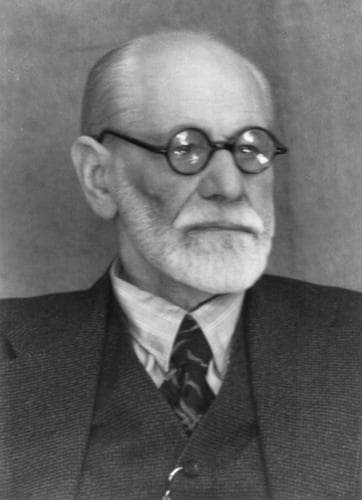
Sigmund Freud was an Austrian neurologist and the founder of psychoanalysis, a clinical method for treating psychopathology through dialogue between a patient and a psychoanalyst. His notable works include "Civilization and Its Discontents," "Totem and Taboo," and "The Psychopathology of Everyday Life," which explore the complexities of human behavior and the unconscious mind. Freud's theories have significantly influenced psychology, literature, and the arts.
Similar books
- The Golden Bough
James George Frazer
4.0 (8k) average on GoodreadsReferenceExplores myths, rituals, and religion in primitive societies, which Freud heavily references and builds upon.
- Civilization and Its Discontents
Sigmund Freud
3.8 (32k) average on GoodreadsPsychologyFurther develops Freud's ideas on the tension between individual drives and societal demands, echoing themes of repression and the origins of culture.
- The Perks of Being a Wallflower
Stephen Chbosky
4.2 (1.3M) average on GoodreadsPsychologyThrough letters, a shy high school freshman learns to navigate first love, trauma, and self-discovery, stepping off the sidelines and into life.
- Eleanor Oliphant Is Completely Fine
Gail Honeyman
4.3 (708k) average on GoodreadsLiterary FictionA lonely woman's structured life changes when an IT guy and an elderly man help her learn to open her heart.
- One Flew Over the Cuckoo's Nest
Ken Kesey
4.2 (631k) average on GoodreadsPsychologyIn a mind-bending asylum, the boisterous Randle McMurphy wages a defiant war against the tyrannical Nurse Ratched, inspiring his fellow inmates, including the seemingly catatonic Chief Bromden, to reclaim their lost humanity.
- The Bell Jar
Sylvia Plath
4.0 (591k) average on GoodreadsPsychologyIn the suffocating grip of 1950s expectations, a brilliant young woman's descent into mental illness is painted with such vivid, internal clarity that her 'insanity' feels terrifyingly rational and inevitable.




Enjoyed the summary?
A summary gives you the shape of the book. The book itself has the detail, the examples and the voice.
Find Totem and Taboo on AmazonAs an Amazon Associate, BookBrief earns from qualifying purchases. How we're funded