

Synopsis
Covers the whole plot, including the ending.
- Difficulty
- Medium
- Pacing
- Moderate
- Mood
- Philosophical, Melancholy, Introspective, Ethereal
- Read it if
- You enjoy experimental narratives, philosophical musings on time and memory, and a unique, spectral narrative voice.
- Skip it if
- You prefer straightforward plots, traditional character development, or find metafiction distracting.
Transparent Things Plot Summary
Covers the whole plot, including the ending.
The Narrators' Premonition and Hugh's First Visit
The novel opens with an omniscient, collective narration, stating their intention to follow Hugh Person's life. They hint at his eventual death by fire. Hugh, a young American publisher, arrives in Switzerland for the first time on a business trip to interview the reclusive novelist, Mr. R. He checks into a hotel and immediately feels a connection to the landscape. During his stay, he meets Armande Chamar, a striking, enigmatic woman who captivates him. This initial visit sets the stage for the events of his life, largely defined by his pursuit of Armande and the tragic consequences that follow.
Hugh's Obsession and the Pursuit of Armande
Hugh Person is deeply smitten with Armande Chamar. He observes her constantly, and is tormented by her apparent indifference and the presence of a grinning Scandinavian rival, whom he calls 'the Scandinavian.' Hugh's attempts to court Armande are clumsy. He struggles with his awkwardness and her aloof, almost cruel, demeanor. The narrators emphasize Armande's elusive nature and her tendency to manipulate, highlighting Hugh's vulnerability. Despite the obstacles, Hugh is determined to make Armande his own, driven by a powerful love.
Marriage and Its Discontents
Against the odds, Hugh manages to marry Armande, bringing her back to New York. However, their marriage is not easy. Armande remains distant and enigmatic, often refusing to engage with Hugh emotionally. She has fits of temper and a general lack of interest in domestic life. Hugh, despite his deep love, feels isolated and frustrated by her unresponsiveness. The narrators frequently interject with observations about Armande's 'transparent' nature, hinting at an emptiness or a deliberate withholding of self, which prevents true intimacy.
The Tragic Incident and Its Aftermath
During a tense argument, Hugh accidentally smothers Armande with a pillow. The narrators clarify that it was an unintended act, a tragic culmination of their dysfunctional relationship rather than premeditated murder. The shock of Armande's death, coupled with guilt and stress, sends Hugh into a mental breakdown. He is arrested, tried, and, due to his disturbed mental state, is committed to an asylum rather than serving a traditional prison sentence. This period marks a significant turning point, separating him from his former life and plunging him into prolonged grief and psychological distress.
Hugh's Release and Return to Switzerland
Eight years after Armande's death and his institutionalization, Hugh Person is released from the asylum. Scarred, he decides to travel alone back to Switzerland, where his life with Armande began. His motivation is complex: a blend of nostalgia, a desire to confront his past, and perhaps to find closure. This return is a pilgrimage, a deliberate revisiting of the sites of his joy and sorrow, as he tries to piece together his memories and the events that led to his downfall.
Revisiting the Past: Memories and Objects
Upon his return to Switzerland, Hugh revisits the hotels, streets, and natural landscapes he shared with Armande. Each location, each 'transparent thing' he encounters—a hotel room, a mountain path, an object—acts as a way to access his memories. The narrators emphasize these objects' power to evoke the past, highlighting how ordinary items gain significance through human experience. Hugh grapples with memory's elusive nature, how the past can seem both real and out of reach, as he tries to reconstruct his first visit and his relationship with Armande.
Encounter with Mr. R.
During his return trip, Hugh finally achieves his original objective from years ago: he meets the reclusive novelist, Mr. R. This encounter is important, as Mr. R. is a philosophical counterpoint to Hugh's emotional journey. Mr. R. is a detached intellectual, offering observations on time, memory, and reality, often through literature. His musings, while abstract, reflect the themes Hugh experiences firsthand, providing a meta-commentary on the narrative and the human condition. Their brief conversation leaves a lasting impression on Hugh, offering a different perspective on his tragedy.
The Fire and Hugh's Death
Hugh Person checks into a hotel, the same one where he had stayed on his first visit to Switzerland. The narrators' initial premonition of his death by fire comes true. A fire breaks out in the hotel, and Hugh, perhaps due to a mental fog or resignation, does not escape. His death is both an accident and a fated conclusion, a final act in a life defined by tragedy and a relentless pursuit of an elusive past. The fire, a destructive force, also illuminates his existence, bringing his journey to an end.
Posthumous Reflections
Following Hugh's death, the narrators offer final reflections, reinforcing their role as cosmic observers. They continue to dissect Hugh's life, his choices, and the interplay of fate and free will that shaped his destiny. They revisit the concept of 'transparent things,' emphasizing how every object, every moment, holds within it the past's ghosts and the potential for future events. Their commentary expands beyond Hugh's story, touching upon broader philosophical questions about time, memory, and the human attempt to find meaning in a world where everything eventually becomes transparent, revealing its inherent past and future.
The Cycle of Time and Memory
The novel's conclusion reinforces the idea that time is not linear but cyclical, and that memories, like 'transparent things,' persist and influence the present. The narrators suggest that Hugh's story, though ended, continues to resonate, becoming part of the larger human experience. The narrative voice, which has guided the reader through Hugh's life and death, emphasizes that even after an individual's demise, their past continues to exist, accessible through the objects and places they touched. The final words leave the reader contemplating the interconnectedness of all things and the impact of even small moments.
Transparent Things Characters
Hugh Person
Protagonist
A melancholic and awkward American publisher haunted by love and tragedy.
Hugh Person is the central character, an American publisher characterized by his awkwardness, sensitivity, and profound capacity for love, which often manifests as obsession. He is prone to melancholic introspection and is deeply affected by the people and places around him. His life is defined by his infatuation with Armande, his accidental role in her death, and his subsequent journey to reconcile with his past. He struggles with self-doubt and is often a passive recipient of fate, though he actively seeks meaning in his experiences.
Relationships: Armande Chamar (Obsessive love interest and wife, leading to tragedy.); Mr. R. (Intellectual inspiration and philosophical guide, met years after initial attempt.); The Narrators (Subject of their detached, omniscient observation and commentary.)
Armande Chamar
Love Interest/Catalyst
Hugh's enigmatic and elusive wife, whose 'transparency' leads to tragedy.
Armande Chamar is Hugh's beautiful and maddeningly enigmatic wife. She is portrayed as elusive, self-absorbed, and almost cruel in her indifference to Hugh's affections. The narrators frequently describe her as 'transparent,' suggesting a lack of inner depth or a deliberate withholding of her true self. Her beauty and inscrutability captivate Hugh, yet her inability or unwillingness to form a genuine connection ultimately contributes to the tragic circumstances of her death. She remains a mystery, more a projection of Hugh's desires and the narrators' observations than a fully revealed character.
Relationships: Hugh Person (Object of his obsessive love, wife, and victim of his accidental act.)
Mr. R.
Supporting/Philosophical Voice
A reclusive novelist who offers intellectual and existential insights.
Mr. R. is the reclusive Swiss novelist whom Hugh initially travels to interview. He represents the intellectual and philosophical counterpoint to Hugh's emotional turmoil. Mr. R. is portrayed as a detached, analytical figure, prone to musings on time, memory, and the nature of reality. His literary theories and observations about the 'transparency' of things provide a meta-commentary on the novel's themes, offering a different lens through which to view Hugh's experiences. He acts as a guide, albeit an indirect one, providing a framework for understanding the novel's complex ideas.
Relationships: Hugh Person (The object of Hugh's initial professional interest, later a source of philosophical insight.)
The Narrators
Omniscient Entity
A collective, disembodied consciousness that observes and comments on Hugh's life and the nature of reality.
The narrators are a unique and integral 'character' in the novel, a collective, omniscient, and often intrusive consciousness. They possess foreknowledge of Hugh's fate and frequently interject with philosophical observations, literary theories, and direct addresses to the reader. They are detached yet deeply invested in Hugh's story, dissecting his life with a blend of scientific precision and poetic insight. They are the primary agents for introducing and exploring the novel's central themes of time, memory, and the 'transparency' of objects, guiding the reader's understanding of Hugh's world.
Relationships: Hugh Person (The subject of their detailed, fated narrative.)
The Scandinavian
Mentioned/Minor Antagonist
Hugh's initial rival for Armande's affections.
The Scandinavian is a minor character who serves primarily as a source of jealousy and frustration for Hugh during his initial pursuit of Armande. He is depicted as a 'grinning' rival, an obstacle Hugh must overcome. While not a fully developed character, his presence highlights Hugh's insecurity and the competitive nature of his desire for Armande. He represents a fleeting challenge, soon eclipsed by the deeper complexities of Hugh and Armande's relationship.
Relationships: Hugh Person (Romantic rival for Armande's affection.)
Transparent Things Themes
The Transparency of Things
The central theme is that every object, every moment, is inherently 'transparent,' revealing its past and hinting at its future. The narrators constantly emphasize how mundane items—a pencil, a hotel room, a specific path—are filled with layers of memory and potential. For Hugh, revisiting Switzerland makes these objects intensely transparent, each one a window into his past with Armande, showing him what was and what could have been. This theme suggests that reality is not static but a constantly shifting record of time and experience.
“When we concentrate on a material object, whatever its nature... the thing is with a little more attention, a little more knowledge, a little more tenderness, becomes transparent, as it were, and we see a blush of its past and an intimation of its future.”
Memory and Time
The novel explores memory's non-linear and elusive nature, and how time is seen not as a straight line but as a complex, interconnected web. Hugh's journey back to Switzerland is a deliberate act of memory retrieval, but he finds that memories are fragmented, often distorted, and linked to specific places and objects. The narrators frequently disrupt the story's chronological flow, jumping between past, present, and future, showing how all moments coexist. This theme questions memory's reliability and suggests that the past is never truly gone but merely hidden.
“The past is a series of transparent layers, and these layers, like the skin of an onion, can be peeled off to reveal what lies beneath.”
Love, Obsession, and Isolation
Hugh's love for Armande is a central driving force, but it quickly becomes an obsessive, isolating experience. Armande's enigmatic and distant nature prevents true intimacy, leaving Hugh feeling alone even within their marriage. His love is largely unrequited, and her 'transparency' mirrors his inability to truly know her. This theme highlights how intense emotional attachment, when not reciprocated or understood, can lead to devastating personal consequences, culminating in tragedy and Hugh's subsequent isolation.
“He loved her with a passion that was both noble and absurd.”
Fate vs. Free Will
From the beginning, the narrators foreshadow Hugh's death by fire, suggesting a predetermined fate. However, Hugh's actions, his pursuit of Armande, and his accidental involvement in her death, imply elements of free will and personal responsibility. The novel constantly moves between these two concepts, questioning whether Hugh is merely playing out a script or if his choices contribute to his destiny. This ambiguity adds philosophical depth, inviting the reader to consider the interplay between external forces and individual agency in shaping a life.
“It was not a murder in the accepted sense of the term, but an accident, or rather the logical end of a chain of events set in motion long ago.”
Plot Devices & Literary Techniques
Omniscient, Collective Narration
A disembodied 'we' that observes, comments, and foretells events.
The novel is narrated by a unique, collective 'we' that possesses complete knowledge of Hugh Person's past, present, and future. This device allows for constant meta-commentary on the story, its characters, and its themes. The narrators frequently break the fourth wall, directly addressing the reader and offering philosophical insights. Their foreknowledge of Hugh's death by fire establishes a sense of tragic inevitability, shaping the reader's perception of events and adding a layer of cosmic irony to Hugh's struggles. This narrative voice is crucial for exploring the novel's complex ideas about time and memory.
Foreshadowing
Hints and explicit statements about future events, particularly Hugh's death.
Foreshadowing is a prominent device, used from the very first paragraph when the narrators explicitly state Hugh will die in a hotel fire. This creates a sense of impending doom and allows the reader to observe Hugh's journey with a tragic awareness. Subtle hints about Armande's 'transparency' also foreshadow the lack of genuine connection in their marriage and the eventual fragility of her existence. This device reinforces the theme of fate and adds dramatic tension, even when the outcome is known.
Metafiction/Self-reflexivity
The novel comments on its own construction and the nature of storytelling.
Transparent Things frequently engages in metafiction, with the narrators openly discussing the process of storytelling, the choices they make in presenting Hugh's life, and the very nature of fiction itself. Mr. R.'s literary theories also contribute to this, offering a commentary on the construction of narrative and the relationship between author, character, and reader. This device draws attention to the artificiality of the narrative while simultaneously deepening its philosophical impact, inviting the reader to consider the act of reading and interpretation.
Symbolism of 'Transparent Things'
Ordinary objects imbued with profound meaning and layers of time.
The concept of 'transparent things' is both a central theme and a powerful symbolic device. Ordinary objects—a pencil, a room, a landscape—become symbolic conduits for memory, emotion, and the passage of time. For Hugh, these items are not merely physical objects but repositories of his past with Armande, each revealing glimpses of what was and what could be. This device allows the novel to explore the interconnectedness of all things and how the material world is constantly imbued with human experience and subjective meaning.
Transparent Things Quotes
“The only way to solve the problem of existence is to stop trying to solve it.”
“In the beginning, all was a blur. The end, too, is a blur, but of a different kind.”
“Every object has a aura, a past, a potential future, a soul almost.”
“We are all transparent things, in a way, through which light and darkness pass.”
“Memory, after all, is a form of invention.”
“The present is a film of the past, run at dizzying speed.”
“One never really knows another person, only the stories they tell about themselves.”
“Death is but a change of focus.”
“The greatest art is to conceal art.”
“To be truly alive is to be aware of the constant possibility of non-existence.”
“Words are but shadows of thoughts.”
“Every secret contains a universe.”
“The future is merely the past rearranged.”
“A writer's true subject is always himself.”
Quiz
10 questions on the plot and the characters. Each answer comes with a short explanation.
Question 1
What is the primary reason Hugh Person makes his first visit to Switzerland?
- To escape a scandal in New York
- To interview the writer R. as a young publisher
- To attend a literary conference with Armande
- To recover from a period of madness in a sanatorium
Show answer
B. To interview the writer R. as a young publisher Hugh Person's initial trip to Switzerland is in his capacity as a young publisher, assigned to interview the reclusive writer R.
Question 2
Who does Hugh Person fall in love with and marry during his first visit to Switzerland?
- Madame R.
- Julia Moore
- Armande
- Ernestine
Show answer
C. Armande On his way to interview R., Hugh falls in love with and eventually marries Armande, wresting her from a 'grinning Scandinavian'.
Question 3
What significant event occurs in Hugh Person's life between his first and second visits to Switzerland, leading to a period of madness?
- He loses all his money in a bad investment.
- He commits a murder.
- He publishes a critically panned novel.
- His wife Armande leaves him for another man.
Show answer
B. He commits a murder. Eight years after his first visit, Hugh returns to Switzerland following a murder he committed, a subsequent period of madness, and a brief imprisonment.
Question 4
What role does the character R. play in Hugh Person's life and the novel's structure?
- R. is Hugh's estranged father, whom he seeks to reconcile with.
- R. is the author Hugh is sent to interview, and his literary theories provide a thematic counterpoint.
- R. is the Scandinavian rival Hugh wrestles Armande from.
- R. is Hugh's therapist during his period of madness.
Show answer
B. R. is the author Hugh is sent to interview, and his literary theories provide a thematic counterpoint. R. is the writer Hugh is initially sent to interview, and his 'literary theorizing' is mentioned as a key element setting off against the main narrative, implying a meta-fictional or thematic role.
Question 5
The novel 'Transparent Things' frequently juxtaposes strands of 'dream, memory, and time' with what other element?
- Political commentary on Swiss neutrality
- The observable world of physical objects
- Detailed descriptions of culinary arts
- Complex mathematical equations
Show answer
B. The observable world of physical objects The text explicitly states that 'the several strands of dream, memory, and time [are] set off... against the world of observable objects.' This highlights a central theme of perception and reality.
Question 6
What is the primary motivation for Hugh Person's 'lone sentimental journey' eight years after his first visit to Switzerland?
- To finalize a book deal with R.
- To confront the 'grinning Scandinavian' who pursued Armande.
- To 'wheedle out his past' and revisit places associated with it.
- To seek medical treatment for his recurring madness.
Show answer
C. To 'wheedle out his past' and revisit places associated with it. The description states Hugh makes a 'lone sentimental journey to wheedle out his past,' indicating a quest for understanding and revisiting his history.
Question 7
How many total visits does Hugh Person make to Switzerland throughout the narrative?
- Two
- Three
- Four
- Five
Show answer
C. Four The opening sentence of the summary states, 'Transparent Things revolves around the four visits of the hero - sullen, gawky Hugh Person - to Switzerland.'
Question 8
What specific characteristic is attributed to the Scandinavian rival Hugh wrestles Armande from?
- He is described as 'taciturn'.
- He is described as 'grinning'.
- He is described as 'impecunious'.
- He is described as 'elderly'.
Show answer
B. He is described as 'grinning'. The text specifically mentions Hugh 'wrests her, after multiple humiliations, from a grinning Scandinavian'. This detail adds to the characterization of the rival.
Question 9
Beyond the events, what intellectual framework is presented as a counterpoint to Hugh Person's experiences in 'Transparent Things'?
- Detailed historical accounts of Switzerland
- Literary theorizing by the character R.
- Philosophical debates on the nature of good and evil
- Scientific explanations of human psychology
Show answer
B. Literary theorizing by the character R. The summary explicitly states that the narrative strands are 'set off against the literary theorizing of R.' This suggests a meta-narrative or intellectual layer to the novel.
Question 10
What is Hugh Person's general demeanor described as at the beginning of the summary?
- Exuberant and outgoing
- Sullen and gawky
- Confident and charming
- Reserved and intellectual
Show answer
B. Sullen and gawky The summary introduces Hugh as 'the hero - sullen, gawky Hugh Person', providing an immediate characterization of his personality.
Transparent Things FAQ
What is the central premise of 'Transparent Things'?
'Transparent Things' follows the life and repeated visits of Hugh Person to Switzerland, focusing on his encounters with the elusive writer Mr. R., his tumultuous relationship and marriage to Armande, and the tragic events that unfold, including her death and his subsequent madness and imprisonment. The narrative is framed by a group of deceased narrators who observe and comment on Hugh's life, weaving together past, present, and future.
Who is Hugh Person and what are his defining characteristics?
Hugh Person is portrayed as a somewhat awkward, sullen, and often passive individual, prone to melancholy and a certain clumsiness in his interactions. He is a young publisher who initially travels to Switzerland for work, but his life becomes inextricably linked to the country through his love for Armande and his recurring attempts to revisit or understand his past.
Describe Armande Chamar and her role in Hugh's life.
Armande Chamar is Hugh's enigmatic and somewhat cruel lover and later wife. She is depicted as beautiful but capricious, prone to teasing and inflicting small torments upon Hugh. Her accidental death, involving a pillow and a dream, is the central tragic event that profoundly impacts Hugh's mental state and leads to his subsequent misfortunes.
What is the significance of Mr. R. in the story?
Mr. R. is an elderly, reclusive writer whom Hugh is initially sent to interview. He serves as a kind of philosophical and literary anchor in the narrative, offering reflections on time, memory, and the nature of reality. His presence, though often peripheral to Hugh's immediate actions, provides a theoretical framework for the novel's exploration of these themes.
How does the novel play with the concept of time and memory?
The novel explicitly manipulates time, jumping backward and forward, and often reveals future events before they occur, creating a sense of predestination. The deceased narrators have foreknowledge of Hugh's entire life, allowing them to interweave memories, dreams, and present observations, blurring the lines between different temporal states and emphasizing the subjective nature of recollection.
Who are the 'transparent things' referred to in the title?
The 'transparent things' are primarily the observable objects of the world that, when viewed with sufficient focus, reveal their past states and the history of their creation and use. This concept is extended metaphorically to people and events, suggesting that with enough insight, their underlying truths and trajectories can also be perceived, especially by the omniscient narrators.
What is the nature of the narration and who are the narrators?
The narration is highly unusual, delivered by a chorus of deceased entities who possess complete knowledge of Hugh's past, present, and future. They are disembodied voices, observing Hugh from a post-mortem vantage point, often interjecting with philosophical musings and direct addresses to the reader, demonstrating a unique form of omniscience and detachment.
Are there any subtle clues about Armande's true feelings for Hugh?
Armande's feelings for Hugh are consistently ambiguous and laced with a teasing cruelty. While she does marry him, her constant playful torments and the 'grinning Scandinavian' incident suggest a lack of deep affection or respect. Her actions often hint at a manipulation or a detached amusement rather than genuine love, leaving Hugh perpetually uncertain and vulnerable.
What is the 'grinning Scandinavian' incident and its significance?
Early in their relationship, Hugh has to 'wrest' Armande from a 'grinning Scandinavian,' implying a rival for her affection or a situation where Armande deliberately plays Hugh against another man. This incident establishes Armande's manipulative nature and Hugh's willingness to endure humiliation for her, setting a pattern for their unbalanced relationship.
How does Hugh's madness manifest after Armande's death?
Hugh's madness after Armande's death is characterized by a profound disassociation from reality, hallucinations, and a complete breakdown of his mental faculties, leading to his imprisonment. The exact nature of his delusions is not always explicitly detailed, but it's clear his psychological state is shattered by the trauma of her accidental demise and his perceived culpability.
What psychological impact does Armande's teasing have on Hugh?
Armande's constant teasing and emotional manipulation deeply affect Hugh's self-esteem and contribute to his submissive nature in their relationship. It fosters an environment of insecurity and dependence, making him more susceptible to her whims and increasing his eventual despair when she dies. His inability to fully 'possess' her, even in marriage, is a constant psychological burden.
How does the novel explore themes of fate versus free will through Hugh's experiences?
The omniscient narrators, with their complete foreknowledge of Hugh's life, strongly suggest a predetermined fate for him, as they reveal future events before they happen. However, Hugh's struggles, choices, and reactions, particularly his attempts to revisit his past, imply a yearning for agency or understanding within that predetermined path, creating a tension between the two concepts.
What is the psychological effect of the 'transparent things' concept on the reader?
The 'transparent things' concept, especially when applied to human lives and destinies by the narrators, can create a sense of fatalism and detachment for the reader. It encourages a view of characters not just as individuals, but as predictable patterns or historical objects, potentially diminishing emotional engagement while heightening intellectual curiosity about their predetermined trajectories.
Is Armande's death truly an accident, or is there a deeper interpretation?
While Armande's death is presented as an accidental suffocation with a pillow during a dream, the narrators' detached tone and the preceding events involving Hugh's frustration and her teasing allow for deeper interpretation. One could argue it's a tragic culmination of their dysfunctional relationship, or even a symbolic act where Hugh, albeit unconsciously, silences her torment, though the text maintains its accidental nature.
How does the novel's meta-fictional aspect influence its meaning?
The novel's meta-fictional elements, particularly the self-aware narrators who comment on the act of storytelling and the nature of literary creation (often echoing R.'s theories), invite the reader to consider the constructed nature of reality and narrative. This approach suggests that the 'truth' of Hugh's story is not just observed but actively shaped by the perspective of the storytellers.
What is the significance of Hugh's 'sentimental journey' to 'wheedle out his past'?
Hugh's final 'sentimental journey' represents his desperate, albeit futile, attempt to regain control over his past, to understand or perhaps even alter the events that led to his ruin. It signifies a profound human need to reconcile with personal history and trauma, even when the narrators have already revealed the tragic outcome, highlighting his enduring, if doomed, search for meaning.
Does 'Transparent Things' offer any hope or redemption for Hugh Person?
The novel offers little in the way of conventional hope or redemption for Hugh Person. His life is framed by tragedy, madness, and a sense of predetermined sorrow, culminating in his death. While his final journey is an attempt at understanding, the detached, omniscient narration seems to preclude any true escape from his fate, presenting a rather bleak outlook.
How does Nabokov's writing style contribute to the novel's themes?
Nabokov's precise, often ornate prose, rich with sensory detail and intellectual playfulness, enhances the novel's themes of observation, memory, and the intricate nature of reality. His careful word choice and structural complexities mirror the 'transparent things' concept, inviting readers to look beyond the surface and appreciate the layers of meaning embedded within the narrative.
About the author
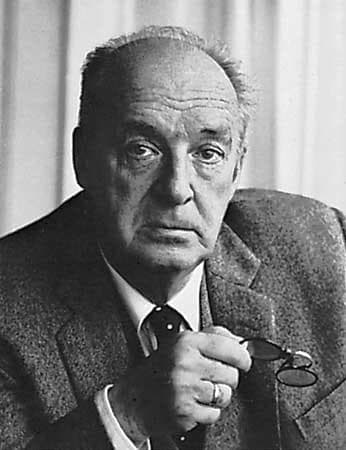
Vladimir Vladimirovich Nabokov, also known by the pen name Vladimir Sirin, was an expatriate Russian and Russian-American novelist, poet, translator, and entomologist. Born in Imperial Russia in 1899, Nabokov wrote his first nine novels in Russian (1926–1938) while living in Berlin, where he met his wife. He achieved international acclaim and prominence after moving to the United States, where he began writing in English. Nabokov became an American citizen in 1945 and lived mostly on the East Coast before returning to Europe in 1961, where he settled in Montreux, Switzerland.
Similar books
- Pale Fire
Vladimir Nabokov
4.1 (43k) average on GoodreadsLiterary FictionShares Nabokov's distinctive prose, narrative experimentation, and themes of memory and literary artifice.
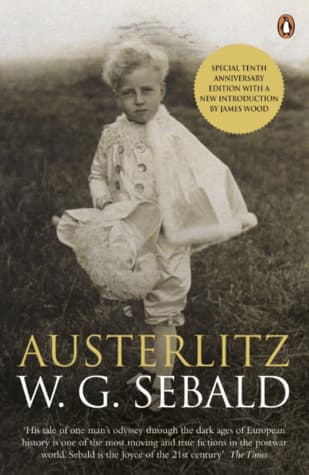
- Austerlitz
W.G. Sebald
4.0 (14k) average on GoodreadsHistorical FictionExplores memory, the past, and a protagonist's journey to reconstruct his history, with a contemplative tone.
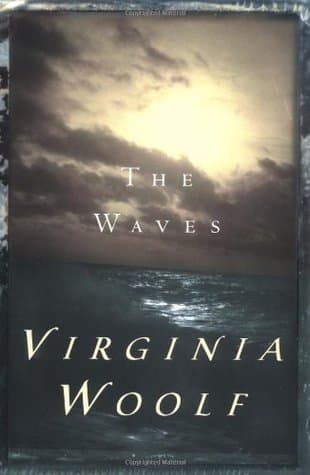
- The Waves
Virginia Woolf
4.2 (28k) average on GoodreadsLiterary FictionFeatures a chorus of voices and a focus on inner life, time, and the passage of existence.
- Mrs Dalloway
Virginia Woolf
3.8 (361k) average on GoodreadsFictionMrs Dalloway explores memory and internal lives through stream-of-consciousness from within living characters, offering immediate emotional access. Transparent Things, in contrast, uses a detached, posthumous narration, creating a more ethereal and less emotionally direct experience, as noted by literary critics like Hermione Lee (1996) in her biography of Woolf.
- One Hundred Years of Solitude
Gabriel García Márquez
4.1 (753k) average on GoodreadsLiterary FictionOne Hundred Years of Solitude also delves into generational memory and cyclical time, but grounds these themes in a vibrant, sprawling family saga with a clear, albeit magical realist, plot progression. Transparent Things offers a more focused, almost claustrophobic examination of one man's life through disembodied observations, making it distinct from Márquez's broader epic scope, as discussed by scholars of magical realism like Lois Parkinson Zamora (1995).
- Nineteen Eighty-Four
George Orwell
4.2 (5.5M) average on GoodreadsFictionWinston Smith dreams of truth and rebellion in a world where Big Brother watches all, but he confronts the terrifying power of a regime that controls not just actions, but thoughts.




Enjoyed the summary?
A summary gives you the shape of the book. The book itself has the detail, the examples and the voice.
Find Transparent Things on AmazonAs an Amazon Associate, BookBrief earns from qualifying purchases. How we're funded