

Synopsis
Covers the whole plot, including the ending.
- Difficulty
- Medium
- Pacing
- Moderate
- Mood
- Gritty, Defiant, Atmospheric, Tragic, Immersive
- Read it if
- You appreciate historical fiction that delves deep into character psyche and challenges official narratives, with a strong, distinctive narrative voice.
- Skip it if
- You prefer straightforward historical accounts or dislike unconventional prose and a lack of traditional paragraph breaks.
True History of the Kelly Gang Plot Summary
Covers the whole plot, including the ending.
The Early Years and Father's Death
Ned Kelly, the narrator, begins his "true history" for his unborn daughter, describing his childhood in rural Victoria, Australia. He details his family's poverty and constant struggle, especially his Irish immigrant mother, Ellen. His father, John 'Red' Kelly, a former convict, dies when Ned is twelve, leaving the family poor and vulnerable. This event affects Ned deeply, forcing him to take on the role of man of the house and creating a strong distrust of the colonial authorities, especially the police, who he believes wrongly persecuted his father. The family's reputation as 'felons' is set, making their lives even harder in the prejudiced society.
The Apprenticeship of a Bushranger
After his father's death, Ned's mother, Ellen, has relationships with several men, including Harry Power, a known bushranger. Ned, still young, becomes an apprentice to Power, learning horse theft, bush survival, and how to avoid the police. This period shapes him, exposing Ned to outlaw life and further strengthening his dislike for the British-controlled justice system. He sees firsthand the corruption and brutality of the police, especially officers like Constable Fitzpatrick, and starts to understand the cycle of poverty and crime that traps families like his. These experiences form his view of the world and prepare him for his later life as a gang leader.
The Fitzpatrick Incident
A key event happens when Constable Fitzpatrick, a police officer who has mistreated the Kelly family before, visits their home. The exact details are unclear, but a fight breaks out involving Fitzpatrick, Ned, his brother Dan, and other family members. Fitzpatrick claims he was shot, while the Kellys say he was drunk and aggressive. Regardless, the incident leads to warrants for Ned and Dan's arrest. To Ned's shock, his mother, Ellen, is arrested and sentenced to three years in prison, largely based on Fitzpatrick's testimony. This injustice makes Ned furious and strengthens his resolve to fight against the corrupt system that has persecuted his family for generations.
Forming the Kelly Gang
With warrants for their arrest and their mother imprisoned, Ned and Dan Kelly hide in the Wombat Ranges. They are soon joined by two friends, Joe Byrne and Steve Hart, forming the Kelly Gang. The four young men live a difficult life in the bush, constantly avoiding police patrols. Ned, using his earlier experiences with Harry Power and his natural leadership, takes charge. They begin to plan their actions, not just for survival, but with a growing sense of rebellion against the authorities who have wronged them. This marks the real start of their outlaw career, driven by a desire for justice and revenge for their family.
The Stringybark Creek Murders
While hiding in the bush, the Kelly Gang learns that a police group is looking for them at Stringybark Creek. Ned plans to ambush the officers. The confrontation results in the deaths of three policemen — Sergeant Kennedy, Constable Scanlon, and Constable Lonigan. This act changes the gang's status from wanted men to murderers, making them the most infamous outlaws in Victoria. Ned says their actions were self-defense and a necessary response to constant police harassment. The incident shocks the colony and increases the police hunt, making the gang's survival even harder and more dangerous.
The Jerilderie Letter
After the Stringybark Creek murders, the Kelly Gang robs several banks, including one in Jerilderie. During this robbery, Ned dictates a long letter, known as the Jerilderie Letter, to Joe Byrne. This document is Ned's statement, detailing his family's history of persecution, the injustices by the police, and his reasons for becoming an outlaw. He speaks against the squatter class and the colonial government, portraying himself and his gang as champions of the poor and oppressed. The letter is a strong expression of Ned's view, aiming to sway public opinion in his favor and justify his actions as a fight against a corrupt system.
Public Support and Growing Legend
Despite the murders, the Kelly Gang gains support from the Irish-Catholic farming community, who see them as heroes standing up against the Anglo-Protestant establishment and the oppressive police. Ned's acts of defiance, such as burning mortgage documents during bank robberies, appeal to struggling farmers. The gang becomes legendary, with stories spreading their fame. However, this support is also a challenge, as it makes authorities even more determined to catch them. Ned deals with his growing fame and increasing pressure, while still trying to protect his family and community.
The Glenrowan Siege: The Plan
Facing constant pursuit and a reward on their heads, Ned plans a bold and desperate move. The gang decides to derail a police special train, which they believe carries many police and a judge, at Glenrowan. Their goal is to capture the officials, hold them hostage, and negotiate for their mother's release and a pardon. To do this, they take over the Glenrowan Inn, holding its occupants captive. Ned's vision is a dramatic confrontation that will finally show the injustices of the system and force change, even if it means sacrificing themselves.
The Glenrowan Siege: The Climax
The plan fails when a local schoolmaster, Thomas Curnow, escapes the inn and warns the approaching police train. The train stops just before the damaged track, and the police surround the Glenrowan Inn. A long and violent siege follows. The Kelly Gang, wearing their homemade bulletproof armor, engage in a fierce shootout with the police. The inn is eventually set on fire. Joe Byrne is killed, and Dan Kelly and Steve Hart are believed to have died in the burning building. Ned, though badly wounded, emerges from the smoke, still fighting, a figure of almost mythical resistance.
Capture and Trial
Severely wounded and barely conscious, Ned Kelly is eventually overcome and captured by the police during the Glenrowan siege. He is taken to Melbourne, where he receives medical care and awaits trial. Despite a public request for mercy, Ned is tried for murder. The trial is quick, led by Judge Redmond Barry, whom Ned had long considered an enemy of his family. Ned uses the chance to again voice his complaints against the colonial government and the police, but his pleas are ignored. He is found guilty and sentenced to hang, his final words defiant.
Execution and Legacy
Ned Kelly is executed by hanging at Melbourne Gaol on November 11, 1880, at age 25. His last reported words are famously, 'Such is life.' His death ends the Kelly Gang's period of outlawry for authorities, but for many, it confirms his status as a martyr and folk hero. His story, told through his own fragmented and passionate voice in the novel, becomes a strong narrative of class struggle, Irish identity, and resistance against colonial oppression. The novel ends with Ned's final thoughts, leaving the reader to consider the complex legacy of this Australian figure.
Principal Figures
Ned Kelly
Protagonist
The legendary bushranger and narrator of his own 'true history'.
Ned Kelly is a complex figure, an outlaw driven by a fierce sense of family loyalty, a burning desire for justice, and a deep-seated hatred for the corrupt colonial police and squatter class. He is intelligent, articulate, and charismatic, capable of inspiring loyalty in his gang and sympathy among the common people. Despite his violent actions, he sees himself as a champion of the oppressed, fighting against a system designed to keep his family and others like them in poverty and subjugation. His narrative voice is raw, passionate, and often poetic, revealing his inner turmoil and his struggle to define his own identity amidst the chaos.
Relationships: Ellen Kelly (Devoted son, deeply influenced by her resilience and suffering.); Dan Kelly (Protective older brother, co-conspirator.); Joe Byrne (Closest friend, confidante, and fellow gang member.); Harry Power (Early mentor in the ways of bushranging.); Constable Fitzpatrick (Bitter enemy, catalyst for the Kelly Gang's formation.)
Ellen Kelly
Supporting
Ned's resilient, fiercely protective, and long-suffering mother.
Ellen Kelly is the matriarch of the Kelly family, a strong-willed Irish immigrant woman who endures immense hardship and injustice. She is a survivor, constantly fighting to keep her family together in the face of poverty, prejudice, and police persecution. Her resilience and defiance are deeply ingrained in Ned. Her imprisonment, a direct result of the Fitzpatrick incident, is a major catalyst for Ned's transformation into a full-fledged outlaw. She embodies the struggles of the Irish Catholic community in colonial Australia, constantly battling against a system that seems determined to crush her family.
Relationships: Ned Kelly (Mother, her suffering is a major motivator for Ned.); Red Kelly (Wife, her initial struggles begin with his death.); Dan Kelly (Mother, she is protective of all her children.)
Dan Kelly
Supporting
Ned's younger brother and a member of the Kelly Gang.
Dan Kelly is Ned's younger brother and a loyal member of the Kelly Gang. He is often depicted as more impulsive and less intellectually driven than Ned, but equally committed to their cause. Dan shares Ned's hatred for the police and the injustices they face, and he follows his brother into the life of an outlaw. His presence in the gang highlights the familial bond and shared destiny that binds the Kellys. He is present for many of the gang's major events, including the Stringybark Creek murders and the Glenrowan siege, where he meets his end.
Relationships: Ned Kelly (Loyal younger brother, fellow gang member.); Ellen Kelly (Son, involved in the Fitzpatrick incident that leads to her arrest.)
Joe Byrne
Supporting
Ned's closest friend, confidante, and fellow gang member.
Joe Byrne is Ned's most trusted friend and the intellectual of the Kelly Gang, often serving as the gang's scribe and poet. He is articulate, well-read, and shares Ned's political consciousness regarding the injustices faced by the Irish selectors. Joe is instrumental in drafting the Jerilderie Letter, helping Ned articulate his grievances and justifications. His loyalty to Ned is unwavering, and he often provides a sounding board for Ned's ideas and frustrations. He is a crucial figure in the gang's operations and a tragic figure who dies early in the Glenrowan siege.
Relationships: Ned Kelly (Closest friend, confidante, and fellow gang member.)
Steve Hart
Supporting
A young, spirited member of the Kelly Gang.
Steve Hart is the youngest member of the Kelly Gang, known for his youthful exuberance and his distinctive cross-dressing in a police uniform during some of the gang's escapades. He is a loyal follower of Ned and Dan, and his presence adds a touch of youthful recklessness to the gang. Like the others, he comes from a background of poverty and police harassment, making him sympathetic to Ned's cause. He participates in all the major events of the gang's outlaw career, including the Stringybark Creek murders and the Glenrowan siege, where he dies alongside Dan.
Relationships: Ned Kelly (Fellow gang member and follower.); Dan Kelly (Close friend and fellow gang member.)
Constable Fitzpatrick
Antagonist
The corrupt police officer whose actions ignite Ned's full rebellion.
Constable Fitzpatrick is a key antagonist in Ned's story, representing the corrupt and biased arm of the colonial police force. His visit to the Kelly home and the subsequent violent confrontation, coupled with his perjured testimony, directly leads to Ellen Kelly's imprisonment and the warrants for Ned and Dan. Fitzpatrick embodies the petty tyranny and injustice that Ned and his family have suffered for generations. He is a symbol of the oppressive system that Ned ultimately rebels against, and his actions serve as a major turning point in the narrative.
Relationships: Ned Kelly (Arch-enemy, directly responsible for Ned's outlaw status.)
Red Kelly (John Kelly)
Supporting
Ned's father, a former convict whose early death shapes Ned's life.
Red Kelly is Ned's father, an Irish convict transported to Australia. His early death, when Ned is just twelve, leaves the family vulnerable and Ned feeling a deep sense of injustice regarding his father's treatment by the authorities. Red's past as a convict and the ongoing police harassment he endured deeply influence Ned's worldview and his distrust of the law. Though he dies early in the narrative, his memory and the circumstances of his life and death are a constant presence, fueling Ned's desire for retribution and justice for his family's name.
Relationships: Ned Kelly (Father, his death and legacy profoundly impact Ned.); Ellen Kelly (Husband, his absence leaves her struggling to support the family.)
Judge Redmond Barry
Antagonist
The judge who presides over Ned Kelly's trial and sentences him to death.
Judge Redmond Barry represents the pinnacle of the colonial justice system that Ned Kelly despises. He is portrayed as an unyielding and stern figure, a symbol of the British establishment that Ned believes is inherently biased against the Irish and the poor. Barry's conviction and sentencing of Ned to death, despite Ned's eloquent pleas and justifications, underscore the perceived impossibility of justice for the Kellys within the existing legal framework. His presence at the trial highlights the clash between Ned's raw, personal narrative of injustice and the rigid, impersonal authority of the law.
Relationships: Ned Kelly (Adversary in the legal system, condemns Ned to death.)
Themes & Insights
Justice vs. Law
The novel explores the conflict between legal right and moral justice. Ned Kelly and his family are always on the wrong side of the law, but Ned argues that their actions respond to systemic injustice, police corruption, and class prejudice. He believes the law, as enforced by British colonial authorities, is biased against poor Irish farmers. The Stringybark Creek murders, for example, are presented by Ned as self-defense against relentless, unfair pursuit. The Jerilderie Letter is a long argument for his 'true history' of justice, contrasting it with the 'lies and silence' of the official story.
“I lost my own father at 12 yr. of age and know what it is to be raised on lies and silence...”
Identity and Narrative Control
Ned Kelly's main reason for writing his 'true history' is to control his own story, to counter the official portrayal of him as a common criminal. He knows that history is written by winners and wants his unborn daughter to know the truth of his life. His fragmented, passionate, and often ungrammatical voice is an attempt to express his true self against the labels given by authorities. The homemade armor at Glenrowan can also be seen as a physical sign of this desire for self-definition and protection against outside forces, both literally and figuratively.
“I am a babbler of my own history and I have no other voice.”
Colonialism and Class Struggle
The novel shows the harsh realities of colonial Australia, especially the deep divisions between British landowners and impoverished Irish Catholic farmers. The Kelly family's constant struggle against eviction, poverty, and police harassment represents this broader class conflict. Ned sees his actions as a rebellion against a system designed to keep the 'poor man' down. The police are often shown as agents of this oppression, serving the interests of the powerful rather than upholding fair justice. The Jerilderie Letter directly points out the injustices suffered by the 'poor people of this country'.
“I have been hunted like a dog by the police since I was a boy...”
Family Loyalty and Sacrifice
At the core of Ned Kelly's reasons is a strong loyalty to his family, especially his mother, Ellen. Her imprisonment is the main reason for his becoming an outlaw. Ned's actions, though violent, are shown as attempts to protect his family's honor, secure their future, and get revenge for the injustices they suffered. The bond between Ned and his siblings, especially Dan, is central to the gang's formation and unity. This theme highlights the sacrifices people make for their relatives in a harsh world, even if it means extreme measures.
“I would not see my mother disgraced nor her children hungry.”
Masculinity and Violence
The novel explores different sides of masculinity in the harsh frontier environment. Ned, as the oldest son, is forced to take on the role of man of the house at a young age, leading to a life defined by physical strength, resilience, and a willingness to use violence for protection and revenge. His violent acts, while condemned by law, are often presented in the narrative as necessary responses to a brutal system. The bushranger life requires a certain kind of masculine toughness, but Ned also deals with the emotional cost and moral implications of his actions, showing the complexities beneath his tough exterior.
“I am not a coward. I have never been a coward.”
Plot Devices & Literary Techniques
First-Person Epistolary Narrative
The entire novel is presented as Ned Kelly's fragmented, handwritten account to his unborn daughter.
This device immediately immerses the reader in Ned's subjective experience, allowing his voice, his passions, and his justifications to dominate the story. The 'handwritten' style, with its lack of punctuation and idiosyncratic spelling, creates an intimate and authentic feel, mirroring the raw, unpolished nature of Ned himself. It challenges the reader to empathize with an outlaw and question established historical narratives, as we are privy only to Ned's perspective, forcing us to consider his 'true history' against the official record. The direct address to his daughter adds a layer of vulnerability and a sense of legacy to his desperate act of storytelling.
The Jerilderie Letter
A real historical document within the fictional narrative, serving as Ned's manifesto.
The Jerilderie Letter, dictated by Ned and written by Joe Byrne, functions as a powerful plot device by allowing Ned to explicitly articulate his grievances, political beliefs, and justifications for his actions. Within the novel, it serves as a central piece of evidence for Ned's claim to be fighting for justice rather than merely committing crimes. Its inclusion grounds the fictional account in historical fact while also providing a structural moment for Ned to step back from the action and present his ideological stance, framing the gang's actions as a form of rebellion against a corrupt system, rather than simple criminality.
The Armor
Homemade bulletproof suits worn by the Kelly Gang at Glenrowan.
The iconic armor serves multiple symbolic and practical functions. Practically, it is an attempt at protection against the overwhelming firepower of the police. Symbolically, it transforms the gang members into almost mythical, invulnerable figures, reinforcing their legend. It represents Ned's ingenuity and defiance, a physical manifestation of his refusal to surrender. The armor also highlights the absurdity and desperation of their final stand, making them appear both formidable and tragically doomed. It becomes a lasting image of the Kelly Gang, embodying their unique blend of invention, violence, and doomed heroism.
Flashbacks and Anachronisms
Ned's narrative often shifts between past and present, and incorporates future knowledge.
While not strictly a linear narrative, the story largely progresses chronologically, but Ned frequently interjects with reflections on his past or hints at his future fate, including his impending death. This device creates a sense of foreboding and tragic inevitability. Knowing Ned's ultimate end from the outset allows the reader to appreciate the nuances of his struggle and the depth of his motivations. The anachronistic style of his narration – a voice that feels both of his time and surprisingly modern – allows for a deeper philosophical exploration of his actions and legacy, transcending a simple historical retelling.
True History of the Kelly Gang Quotes
“I am a bastard I was never a son.”
“Before I was shot I was a bushranger. After I was shot I was a legend.”
“If my life was a book it would be a tragedy.”
“A man who is not afraid of the gallows is a dangerous man.”
“We were not just stealing horses we were stealing justice.”
“The law is a net that catches only the small fish.”
“My mother she taught me how to read and write and how to hate the police.”
“Every man has a right to defend his own life and property.”
“They called us outlaws but we were just fighting for our own.”
“A man's character is his fate.”
“The past is never dead It's not even past.”
“I saw that the world was full of men who would do anything to save their own skins.”
“To be a Kelly was to be a target.”
“The truth is a hard thing to nail down.”
Quiz
10 questions on the plot and the characters. Each answer comes with a short explanation.
Question 1
What is the primary format Ned Kelly uses to tell his 'true history' in the novel?
- A series of newspaper interviews
- Letters written to his mother
- A collection of handwritten manuscripts for his daughter
- Oral confessions dictated to a priest
Show answer
C. A collection of handwritten manuscripts for his daughter Ned Kelly's narrative is presented as a series of handwritten 'jeremiads' or manuscripts intended for his unborn daughter, to explain his life and actions.
Question 2
What significant event leads to Ned's first major encounter with the law and subsequent imprisonment as a young boy?
- Stealing cattle from a prominent squatter
- Being involved in a horse theft with Harry Power
- Assaulting a police officer who harassed his family
- Burning down a neighbour's barn in retaliation
Show answer
B. Being involved in a horse theft with Harry Power Ned's early imprisonment is a result of his association with bushranger Harry Power and his involvement in horse theft, which Ned describes as a formative experience.
Question 3
Which character serves as a mentor figure to young Ned Kelly, teaching him about bushranging and survival?
- Aaron Sherritt
- Joe Byrne
- Harry Power
- Dan Kelly
Show answer
C. Harry Power Harry Power, an experienced bushranger, takes Ned under his wing for a period, teaching him many skills and influencing his early life.
Question 4
What is the primary motivation Ned expresses for writing his 'true history'?
- To secure a pardon from the governor
- To prove his innocence in court
- To counteract the lies and silence about his family and actions
- To inspire other oppressed Australians to revolt
Show answer
C. To counteract the lies and silence about his family and actions The opening line of the book, 'I lost my own father at 12 yr. of age and know what it is to be raised on lies and silence,' explicitly states Ned's desire to set the record straight for future generations, particularly his daughter.
Question 5
How does Ned Kelly acquire the distinctive armor that becomes a symbol of the Kelly Gang?
- It is stolen from a police armory during a raid.
- It is purchased from a blacksmith in Melbourne.
- It is forged from ploughshares by local sympathizers.
- It is found abandoned in a deserted gold mine.
Show answer
C. It is forged from ploughshares by local sympathizers. The iconic armor is crafted by Ned and his gang, with help from sympathizers, using plough mouldboards as the primary material, highlighting their resourcefulness.
Question 6
What is the significance of the police shooting at Stringybark Creek?
- It marks the first time the Kelly Gang robs a bank.
- It is where Ned Kelly first dons his famous armor.
- It results in the deaths of three police officers, making the gang outlaws with a high bounty.
- It is the event that leads to the capture of Ned's mother.
Show answer
C. It results in the deaths of three police officers, making the gang outlaws with a high bounty. The ambush and killing of three police constables at Stringybark Creek transforms the Kelly Gang from petty criminals into notorious outlaws with a massive reward on their heads.
Question 7
The novel often blurs the line between historical fact and Ned Kelly's subjective interpretation. What literary device does Peter Carey primarily use to achieve this?
- Third-person omniscient narration
- Multiple unreliable narrators
- First-person epistolary narration from Ned Kelly's perspective
- Extensive historical footnotes and appendices
Show answer
C. First-person epistolary narration from Ned Kelly's perspective The entire novel is narrated in the first person by Ned Kelly himself, presented as his personal 'true history.' This inherently makes the narrative subjective and potentially unreliable, blending his personal truth with historical events.
Question 8
What is the ultimate fate of the Kelly Gang at Glenrowan?
- They successfully escape the siege and flee to America.
- They are all captured and sentenced to life imprisonment.
- Ned is captured, while the rest of the gang are killed in the siege and fire.
- They surrender peacefully after negotiations with the police.
Show answer
C. Ned is captured, while the rest of the gang are killed in the siege and fire. At the climactic siege of Glenrowan, Ned Kelly, wearing his armor, is eventually captured after being wounded, while Dan Kelly, Steve Hart, and Joe Byrne are killed when the hotel catches fire.
Question 9
A recurring theme in the novel is the conflict between the 'selectors' (small farmers) and the 'squatters' (wealthy landowners) and the police who uphold the latter's interests. This conflict primarily represents which broader societal issue?
- Religious persecution
- Class struggle and social injustice
- Racial discrimination against indigenous Australians
- The conflict between urban and rural lifestyles
Show answer
B. Class struggle and social injustice The novel deeply explores the class divisions and systemic injustices faced by the poor Irish Catholic selectors at the hands of the Protestant English establishment, represented by the squatters and the police force.
Question 10
How does Ned Kelly's perception of his father's legacy influence his own actions and sense of identity throughout the book?
- He tries to live a law-abiding life to redeem his father's criminal past.
- He feels a strong need to avenge his father's death, which was a result of police brutality.
- He believes his father was unjustly persecuted and sees himself as continuing a family struggle against oppressive authority.
- He views his father as a weak figure and strives to be the opposite.
Show answer
C. He believes his father was unjustly persecuted and sees himself as continuing a family struggle against oppressive authority. Ned strongly feels his father, a transported convict, was unfairly treated and persecuted by the authorities. This legacy fuels Ned's own defiance and his belief that he is fighting against systemic injustice, not just committing crimes.
True History of the Kelly Gang FAQ
What is the central premise of 'True History of the Kelly Gang'?
The novel retells the life of Australian bushranger Ned Kelly through a fictionalized first-person narrative, presented as Ned's own manuscript written for his unborn daughter. It aims to correct the historical record and present his perspective on the events that led to his outlaw status, particularly focusing on the injustices faced by his family and the Irish poor.
Who is Ned Kelly writing his 'true history' for, and what is his motivation?
Ned Kelly is writing his story for his unborn daughter, though he acknowledges it may be read by others. His primary motivation is to ensure she understands his actions and the circumstances that shaped his life, believing the official accounts are filled with lies and silence. He wants to leave behind a legacy of truth, not infamy.
How does the novel portray Ned Kelly's relationship with his mother, Ellen Kelly?
Ned's relationship with Ellen is complex and deeply influential, marked by fierce loyalty and a sense of inherited burden. She is a strong, resilient figure who teaches him about survival and the harsh realities of their existence, but also implicitly guides him towards a life outside the law through her own struggles and defiance against authority.
What role does Sergeant Steele play in Ned Kelly's early life and eventual radicalization?
Sergeant Steele is a corrupt and antagonistic figure who embodies the oppressive colonial authority Ned despises. Steele's relentless harassment of the Kelly family, including the unjust arrest of Ned's mother and the impounding of their horses, directly contributes to Ned's growing resentment and his eventual decision to embrace an outlaw life, seeing it as the only form of justice available to him.
How does the novel depict the famous Glenrowan siege?
The Glenrowan siege is portrayed as a chaotic, desperate, and ultimately tragic climax. Ned and his gang, clad in their homemade armor, attempt a final stand, believing they are fighting for a greater cause. The narrative emphasizes the futility and the bloody outcome, highlighting Ned's near-superhuman efforts and his ultimate capture, juxtaposed with the fear and confusion of the hostages.
What is the significance of the 'jerilderie letter' in the context of the novel?
The 'Jerilderie Letter' in the novel is a fictionalized version of Ned Kelly's real manifesto. It serves as a powerful articulation of his grievances, his political philosophy, and his justification for his actions, particularly his vision of an independent Republic of North-Eastern Victoria. It's a key moment where Ned attempts to control his own narrative and appeal directly to the public.
How does the narrative's use of Ned's unpunctuated, run-on sentences contribute to his characterization?
The unpunctuated, stream-of-consciousness style reflects Ned's raw, untamed intellect and his passionate, often unfiltered emotional state. It immerses the reader directly into his mind, conveying a sense of urgency, authenticity, and the relentless flow of his thoughts, mirroring his life lived on the run and his struggle to articulate complex injustices.
Are there any subtle allusions to Ned Kelly's literary aspirations beyond simply telling his story?
Yes, Ned's meticulous attention to language, his references to 'the truth' and 'lies,' and his conscious crafting of his narrative suggest a deeper literary ambition. He not only wants to record history but to shape it, using his words as a weapon and a legacy, perhaps even seeing himself as a kind of bush poet or chronicler of his people's suffering.
How does Ned's relationship with Joe Byrne evolve throughout the story?
Joe Byrne is Ned's closest confidant and intellectual equal, sharing his artistic sensibilities and his contempt for authority. Their relationship is one of deep loyalty and partnership, with Joe often acting as Ned's scribe and sounding board. Joe's death at Glenrowan is a profound loss for Ned, highlighting the isolation Ned faces as his gang dwindles.
To what extent does Ned Kelly exhibit traits of a 'tragic hero' in the novel?
Ned embodies many tragic hero traits: he is a man of exceptional capabilities and strong moral convictions, yet his fatal flaw—his unwavering pride and his inability to compromise with oppressive authority—leads to his downfall. His pursuit of justice, while noble, inevitably sets him against an insurmountable system, culminating in his death.
How does the novel explore the psychological impact of poverty and social injustice on Ned and his family?
The novel vividly portrays the constant anxiety, degradation, and desperation induced by poverty and systemic injustice. Ned's actions are often a direct response to the psychological trauma of seeing his family suffer, fostering a deep-seated paranoia towards authority and a fierce protectiveness that drives his outlaw life. The constant threat of destitution fuels his rage.
What role does Ned's inherited trauma from his father's convict past play in his psychological makeup?
Ned is deeply affected by the legacy of his father, John 'Red' Kelly, a transported convict. He carries the shame and the burden of that history, feeling an inherited sense of injustice and an obligation to defy the same system that broke his father. This inherited trauma fuels his distrust of authority and his fierce determination to avoid a similar fate.
How does Ned's hyper-masculinity and perceived invincibility contribute to his ultimate demise?
Ned's strong sense of masculinity, often expressed through physical prowess and an unwillingness to back down, is a double-edged sword. While it inspires loyalty and fear, it also blinds him to the limits of his own mortality and the overwhelming power of the state. His belief in his invincibility, particularly when wearing the armor, ultimately leads him to take risks that prove fatal.
Is Ned Kelly presented as a hero, a villain, or something more nuanced?
The novel deliberately presents Ned as a complex and nuanced figure, challenging simplistic categorizations. While he commits violent acts, his narrative frames them as responses to extreme provocation and injustice, positioning him as a reluctant outlaw fighting for his family and community. He is a victim of circumstance and a perpetrator of violence, making him neither purely hero nor villain.
How does the novel challenge the concept of 'official history'?
Carey's novel fundamentally challenges 'official history' by presenting an alternative, subjective narrative from the perspective of the condemned. It critiques the dominant historical record as biased, incomplete, and serving the interests of the powerful. By giving voice to Ned, it suggests that truth is often contested and that history is shaped by those who write it, not just those who live it.
What is the significance of the novel being described as a 'dazzling act of ventriloquism'?
This description highlights Peter Carey's remarkable achievement in inhabiting Ned Kelly's voice so completely and authentically. It suggests that Carey, as the author, is speaking through Ned, giving voice to a historical figure whose own words were largely suppressed. It underscores the novel's imaginative power and its ability to resurrect a historical consciousness.
Does the novel ultimately endorse Ned Kelly's actions, or does it offer a more critical perspective?
The novel doesn't explicitly endorse all of Ned's actions but rather seeks to explain them within his specific historical and personal context. It invites empathy for his plight and understanding for his motivations, while still allowing the reader to recognize the violence and tragedy inherent in his choices. It's more about understanding than outright endorsement.
How does the novel explore themes of Irish identity and colonial oppression in Australia?
The novel deeply explores the plight of the Irish immigrant community in colonial Australia, who faced systemic discrimination, poverty, and prejudice from the Anglo-Protestant establishment. Ned's story becomes a microcosm of this larger struggle, highlighting the injustices, the constant surveillance, and the feeling of being an outsider in their own land, which fueled much of his rebellion.
What is the enduring legacy of Ned Kelly, as presented by the novel?
The novel suggests Ned Kelly's enduring legacy is that of a complex folk hero, a symbol of resistance against injustice for the oppressed, and a figure whose story continues to provoke debate. His 'true history' aims to ensure he is remembered not merely as a criminal, but as a man who fought fiercely for his dignity and family against overwhelming odds, leaving behind a powerful, if controversial, narrative.
About the author

Peter Carey may refer to:Peter Carey, Australian rules player for Glenelg Peter Carey, English footballer Peter Carey (historian), British historian of south-east Asia Peter Carey (novelist), Australian novelist Peter Carey (umpire), Australian rules umpire "Black Peter" Carey, a fictional character in The Adventure of Black Peter, a Sherlock Holmes story by Sir Arthur Conan Doyle
Similar books
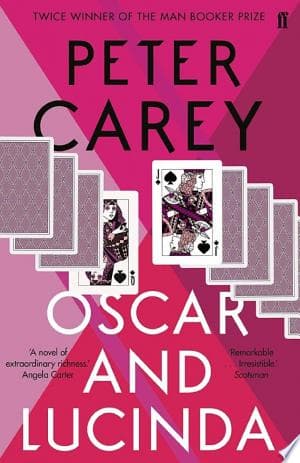
- Oscar and Lucinda
Peter Carey
3.7 (20k) average on GoodreadsLiterary FictionShares Carey's distinctive literary style, historical setting, and exploration of Australian identity.
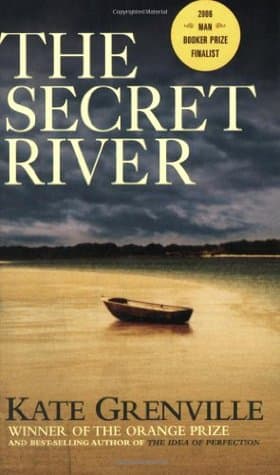
- The Secret River
Kate Grenville
3.8 (18k) average on GoodreadsLiterary FictionExplores themes of colonial Australia, hardship, and the complex relationship with the land and indigenous people.
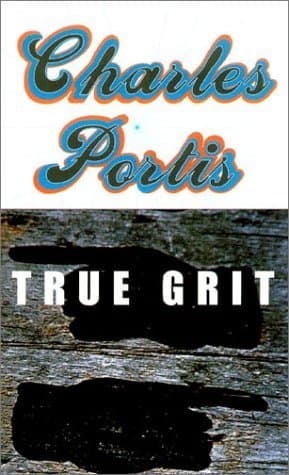
- True Grit
Charles Portis
4.1 (44k) average on GoodreadsHistorical FictionFeatures a strong, unique narrative voice recounting a quest for justice in a harsh, lawless frontier setting.
- The Old Man and the Sea
Ernest Hemingway
3.8 (831k) average on GoodreadsLiterary FictionA Cuban fisherman's long struggle with a giant marlin becomes a story of endurance and dignity, now retold for young adults with illustrations, phonetic guides, and writing prompts in Traditional Chinese.
- One Hundred Years of Solitude
Gabriel García Márquez
4.1 (753k) average on GoodreadsLiterary FictionThrough the multi-generational story of the Buendía family, a mythical town deals with the repeating patterns of time, love, and solitude, as the extraordinary mixes with the ordinary.
- The Goldfinch
Donna Tartt
3.9 (720k) average on GoodreadsLiterary FictionHaunted by a tragic explosion and clutching a stolen Dutch masterpiece, a young orphan navigates the opulent drawing rooms of New York and the gritty underbelly of the art world, desperately seeking connection and redemption amidst a life spiraling into crime and obsession.



Enjoyed the summary?
A summary gives you the shape of the book. The book itself has the detail, the examples and the voice.
Find True History of the Kelly Gang on AmazonAs an Amazon Associate, BookBrief earns from qualifying purchases. How we're funded