
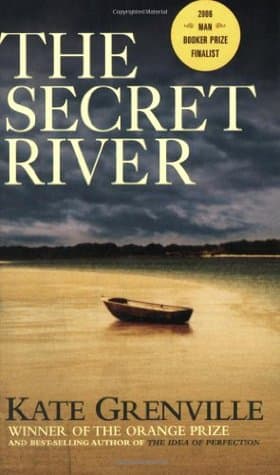
Synopsis
Covers the whole plot, including the ending.
- Difficulty
- Medium
- Pacing
- Moderate
- Mood
- Atmospheric, Reflective, Somber, Unsettling
- Read it if
- You are interested in the moral complexities of colonial settlement, historical fiction set in early Australia, or character-driven stories about ambition and difficult choices.
- Skip it if
- You prefer fast-paced plots with clear-cut heroes and villains, or find detailed explorations of historical injustice too heavy.
The Secret River Plot Summary
Covers the whole plot, including the ending.
The Thames and a Life of Poverty
William Thornhill grows up poor in London, working on the Thames. He lives in poverty and struggles to survive. He marries Sal, a childhood friend, hoping for a better future. But William's quick temper and desperation lead him to steal. After being caught stealing wood, he is sent to the penal colony of New South Wales in Australia. Sal, pregnant, chooses to go with him, facing a new life in an unknown land.
Arrival in New South Wales
After a difficult voyage, William, Sal, and their children arrive in Sydney. The colony is harsh, far from England. William is assigned to a master, Mr. King, and begins his service. Sal struggles with the basic conditions and the constant threat of illness and violence. They see the harshness of colonial life, including cruelty towards convicts and the distant, often unfriendly, Aboriginal people. William wants to serve his time and make a future for his family, even if it means great hardship.
Serving His Time
William serves his seven-year sentence, working hard and seeing opportunities in the new colony. He learns about land grants and how former convicts can become landowners. He saves what little money he can, driven by a strong desire to escape the poverty of his past. Sal, though she misses England, supports his goal, understanding that land ownership is their only real chance for their children's future. They endure hard conditions, always looking to the day William will be free.
Seeking a Place of His Own
Once William receives his freedom papers, he looks for land to claim. He travels up the Hawkesbury River, drawn by the promise of good soil. He finds a beautiful, hidden cove he thinks is perfect for his family. But a group of Aboriginal people already lives on this land. William watches them from afar, aware of their presence but at first ignoring their claim, seeing the land as empty and ready to be taken. This first meeting sets the stage for the conflict that will shape his settlement.
Establishing Thornhill's Point
William brings Sal and their children to the cove, which he names Thornhill's Point. They begin the hard work of clearing land and building a home. The Aboriginal people, whom William calls 'Blackwood's mob,' continue to visit the area, watching the settlers with a mix of curiosity and growing worry. Early interactions are careful, sometimes involving small trades, but tension is clear. William's desire to claim and farm the land directly conflicts with the Aboriginal people's traditional use and ownership of it, leading to misunderstandings and small clashes.
Escalating Tensions
As the Thornhills expand their farm, cutting trees and fencing land, the Aboriginal people's frustration grows. They take corn from William's fields and fish from the river. William sees these acts as theft. William's neighbors, like Smasher Sullivan, push for harsh revenge against the Aboriginal people. Sal becomes more afraid for her children. William tries to manage the situation, sometimes attempting to bribe or warn the Aboriginal people away, but the cultural differences and ideas about ownership make peaceful life together impossible.
The Killing of the Dog
The tension peaks when one of William's dogs is found speared. William sees this as a deliberate challenge and a direct threat, which strengthens his resolve. It pushes him closer to the violent solutions his neighbors suggest. Sal is terrified, urging William to leave the land, but his pride and deep wish for a permanent home keep him there. This event marks a turning point, making it clear that the conflict can no longer be contained by passive resistance or small fights.
The Retaliatory Raid
Driven by fear, anger, and pressure from other settlers, William joins a group led by Smasher Sullivan. They track the Aboriginal group to Blackwood's Lagoon and attack them by surprise. William, despite his first hesitation and inner struggle, takes part in the killing, seeing and contributing to the violence against men, women, and children. This act forever stains his soul and seals his fate as a colonizer who committed terrible acts to get his land. The 'secret river' becomes a symbol of the hidden truth and the violence upon which his new life is built.
Aftermath and Guilt
After the killing, William tries to forget his guilt, focusing on the material success of his land. He becomes a wealthy landowner, building a large house and securing his family's future. But the memory of the violence bothers him. Sal, deeply affected by the events and the brutality of their new life, withdraws, never fully recovering. The children grow up mostly unaware of the full horror of their father's actions, but the silence and unspoken truths create a lasting divide in the family.
A Legacy of Silence
Years pass, and William Thornhill becomes a respected man in the community, a sign of his ambition and hard work. He expands his land and ensures his children's wealth. Still, he is never truly at peace. He sometimes sees the ghost of an old Aboriginal man, a recurring image of his conscience. He tries to explain his actions to his children, but they cannot fully understand the moral choices he made. The 'secret river' of the title represents the hidden history of violence and displacement upon which the colony was founded, a truth that William carries until his death.
The Secret River Characters
William Thornhill
Protagonist
An English bargeman transported to Australia, driven by a desire for land and security.
William Thornhill is a man of humble origins, marked by the poverty of his London upbringing. He possesses a quick temper but also a deep love for his family and a fierce ambition to provide for them. Initially a petty criminal, his transportation to New South Wales transforms him into a determined, hardworking settler. He is pragmatic and resourceful, but his moral compass is slowly eroded by the brutal realities of colonization and his desire to secure his land. He struggles with guilt and the weight of his actions, particularly the massacre.
Relationships: Sal Thornhill (Devoted wife, his anchor and conscience); Dick Thornhill (Son, represents a potential bridge between cultures); Smasher Sullivan (Fellow settler, represents the brutal, racist aspect of colonization)
Sal Thornhill
Supporting
William's wife, a gentle woman who yearns for England and struggles with the harshness of colonial life.
Sal is William's beloved wife, a woman of delicate constitution but immense loyalty and resilience. She deeply misses England and struggles to adapt to the primitive and often violent conditions of the New South Wales colony. She acts as William's moral compass, often expressing fear and advocating for peace or retreat. Her spirit is gradually broken by the brutality she witnesses, particularly the massacre, leading to a quiet despair and a longing for the past. She represents the human cost of colonization on the settlers themselves.
Relationships: William Thornhill (Husband, her protector and provider, but also the source of her deepest fears); Her children (Her primary concern and reason for enduring the hardships)
Dick Thornhill
Supporting
William and Sal's son, who shows an unusual affinity for the Aboriginal way of life.
Dick is one of William and Sal's sons, and he stands apart from his siblings and parents in his interactions with the Aboriginal people. He is curious and less prejudiced, often observing them with a degree of understanding and respect that his father lacks. He learns some of their language and practices, suggesting a potential for cross-cultural connection that is ultimately stifled by the colonial violence. He represents the lost opportunity for peaceful coexistence and a different kind of future for the colony.
Relationships: William Thornhill (Father, whose actions ultimately alienate Dick from his natural inclinations); The Aboriginal people (Objects of his fascination and respect)
Smasher Sullivan
Antagonist/Supporting
A brutal and racist settler who advocates for the extermination of the Aboriginal people.
Smasher Sullivan is a fellow settler and neighbor to William Thornhill, embodying the most violent and prejudiced aspects of the colonial mindset. He openly despises the Aboriginal people, viewing them as vermin to be eradicated. He actively participates in and instigates acts of violence and encourages other settlers, including William, to do the same. He represents the destructive force of unbridled racism and the justification of atrocity in the name of progress and land ownership. His influence helps push William towards his darkest actions.
Relationships: William Thornhill (Neighbor and co-conspirator in violence); The Aboriginal people (Targets of his hatred and aggression)
Blackwood (The Aboriginal Elder)
Mentioned/Symbolic
The leader of the Aboriginal group inhabiting Thornhill's Point, representing the original inhabitants.
Blackwood is the elder or leader of the Aboriginal group whose traditional lands William Thornhill claims. While not a named character in the Western sense, his presence and the actions of his 'mob' are central to the conflict. He represents the dignified and resilient original inhabitants, whose way of life is systematically destroyed by the encroaching settlers. He is a symbolic figure, embodying the ancient connection to the land and the tragic fate of his people in the face of colonial expansion. His ghost later haunts William, representing his conscience.
Relationships: William Thornhill (Opponent in the struggle for land); His 'mob' (Leader and protector of his community)
Mr. King
Supporting
William's master during his servitude, a pragmatic and somewhat cynical colonial figure.
Mr. King is William Thornhill's master when he first arrives in New South Wales as a convict. He is a practical and somewhat detached figure who provides William with his first glimpse into the realities of colonial life and the opportunities available to those who work hard and understand the system. He represents the established colonial order, neither overtly cruel nor particularly compassionate, but solely focused on his own interests and the pragmatic functioning of the penal colony. He provides William with the initial framework for understanding how to navigate this new world.
Relationships: William Thornhill (Master and convict, later a source of advice)
Mrs. Herring
Supporting
An older, experienced settler woman who offers Sal advice and represents the hardening of colonial women.
Mrs. Herring is an older woman in the colony who offers Sal advice, often grim and pragmatic, about surviving in the harsh new land. She represents the hardened female settler, accustomed to the brutality and isolation, and she often encourages Sal to adopt a similar resilience, even at the cost of her softer sensibilities. Her perspective highlights the toll the colonial experience takes on women, forcing them to shed their gentler natures to cope with the relentless challenges and dangers of the frontier.
Relationships: Sal Thornhill (Mentor/advisor, offering a grim perspective on colonial life)
Thomas Blackwood
Supporting
A settler who attempts to live peacefully with the Aboriginal people, offering an alternative path.
Thomas Blackwood is a settler who, unlike most, attempts to live in relative harmony with the Aboriginal people. He learns some of their language and customs and advocates for a more peaceful approach, often warning William about the consequences of conflict. He represents an alternative, more humane path that colonization could have taken, highlighting the choices made by William and others. His presence serves as a foil to Smasher Sullivan and a reminder that not all settlers were uniformly brutal, though his efforts are ultimately marginalized.
Relationships: William Thornhill (Neighbor, offering a contrasting perspective on Aboriginal relations); The Aboriginal people (Attempted ally and mediator)
The Secret River Themes
The Price of Possession
This theme looks at the moral cost of taking land and starting a new life through displacement and violence. William Thornhill's journey from a poor Londoner to a rich Australian landowner is directly linked to the displacement and killing of Aboriginal people. The 'secret river' itself stands for the hidden, violent truth beneath colonial success. The novel makes readers face the idea that modern Australia was built on destroying an existing culture, and that William's personal success comes at a great moral price, as shown by his lasting guilt after Blackwood's Lagoon.
“A man's heart was a secret river, its own life. He had gone where he had to go, and done what he had to do.”
Cultural Clash and Misunderstanding
The novel clearly shows the deep and unresolvable clash between European settlers' idea of land ownership and Aboriginal people's spiritual connection to their ancestral lands. William and Sal see land as something to be 'taken,' 'cleared,' and 'owned' for farming, a way to gain security. The Aboriginal people, however, see the land as a living thing, a provider, and a core part of their identity. This basic misunderstanding, made worse by fear and bias, fuels the growing conflict, as when William sees the Aboriginal people hunting and gathering on 'his' land as theft, while they are simply living as they always have.
“This was how it was: the two ways of being in the world, side by side.”
The Corrupting Influence of Power
As William Thornhill gains more control over his land and future, he also becomes harder and more capable of cruelty. The power dynamic shifts from William being a powerless convict to him being a powerful landowner. This new power, along with common colonial attitudes and pressure from people like Smasher Sullivan, allows him to justify and take part in terrible acts. His first hesitation to use violence slowly disappears, showing how the desire for ownership and security can corrupt even a basically good man, leading him to commit unforgivable acts for progress.
“He knew, with a certainty that was like a stone in his gut, that if he did not take the land, someone else would.”
Memory and Historical Silence
The novel explores how history is told and how uncomfortable truths are often hidden or forgotten. William Thornhill, later in life, actively tries to bury the memory of the killing, building a grand house and a successful life on the very land stained by violence. Sal also retreats into silence, her trauma unspoken. The 'secret river' symbolizes these hidden histories and the collective forgetting around the terrible acts committed during colonization. The story questions the romantic view of early Australian settlement, insisting on remembering the violent beginnings and the deep effect on the Indigenous population, so the past is never truly gone for William.
“There were some things that had to be forgotten if a man was to go on living.”
Plot Devices & Literary Techniques
The Secret River (Metaphor)
A central metaphor representing hidden truths and the unspoken history of violence.
The 'secret river' of the title serves as a powerful metaphor throughout the novel. On a literal level, it refers to the Hawkesbury River, the waterway that leads William Thornhill to his chosen land. Metaphorically, it represents the hidden, often violent, undercurrents of colonial history—the unspoken atrocities, the suppressed guilt, and the truth of dispossession that lies beneath the surface of apparent prosperity. It also symbolizes the 'secret river' within William's own heart, the unacknowledged guilt and the moral compromises he makes to secure his future, which he carries to his grave.
Foreshadowing
Hints and clues that suggest future conflicts and tragic outcomes.
Foreshadowing is used effectively to build tension and indicate the inevitable clash between William and the Aboriginal people. Early descriptions of the Aboriginal people's watchful presence, the settlers' casual racism, and William's own growing possessiveness of the land all hint at the violent confrontations to come. For instance, the constant warnings from other settlers about the 'savages' and the initial skirmishes over resources gradually prepare the reader for the eventual massacre. This creates a sense of dread and inevitability, highlighting that the path to violence was not sudden, but a gradual escalation.
Juxtaposition
The contrasting of two elements to highlight their differences or create tension.
Juxtaposition is used to highlight the stark differences between English and Aboriginal cultures, as well as William's past and present. The novel juxtaposes William's impoverished London life with the vast, seemingly empty Australian wilderness, emphasizing his desperate desire for land. More critically, it juxtaposes the Aboriginal people's deep, spiritual connection to the land with the settlers' utilitarian view of it as property to be exploited. This contrast underscores the fundamental misunderstanding and the irreconcilable differences that drive the conflict, making the tragedy feel almost inevitable due to these opposing worldviews.
Symbolism of the House
The Thornhill's house as a symbol of aspiration, ownership, and the 'cost' of settlement.
The house William Thornhill builds on his land at Thornhill's Point is a powerful symbol. Initially, it represents his aspiration for security, permanence, and a better life for his family, a stark contrast to his childhood poverty. As it grows larger and more elaborate, it becomes a symbol of his prosperity and his successful claim to the land. However, it also subtly symbolizes the moral cost of that success; it is built on the land taken from the Aboriginal people, and its grandeur is a monument to the violence and dispossession that enabled its existence. It is a physical manifestation of his 'secret river' of guilt.
The Secret River Quotes
“The past was a river, and it flowed in every direction, not just forward.”
“He had come to the edge of the world, and found it was not the edge at all, but only the beginning.”
“This was not a place to make a living, but a place to make a life.”
“Every man carried his own secret river within him, and it was always flowing towards the sea of his own making.”
“The land was not empty. It was full of invisible lines, ancient stories, and spirits that watched every step.”
“What a man did, that was what he was.”
“He had learned to fear the silence, for in it he could hear the unspoken words of the land itself.”
“The past was a rope, and it pulled him back even as he tried to walk forward.”
“There was no going back. Only forward, into whatever lay ahead, even if it was darkness.”
“The river was a mirror, reflecting not just the sky, but all the things that had happened on its banks.”
“He had wanted a piece of land, but the land had taken a piece of him.”
“The world was not fixed. It was always changing, always flowing, like the river.”
“He had built his house on the bones of others, and he knew it.”
“The silence was not empty. It was full of ghosts.”
Quiz
10 questions on the plot and the characters. Each answer comes with a short explanation.
Question 1
What crime does William Thornhill commit that leads to his deportation to New South Wales?
- Theft of a horse
- Smuggling contraband goods
- Theft of a load of wood
- Assault and battery
Show answer
C. Theft of a load of wood William Thornhill is deported for stealing a load of wood, a crime for which he receives a relatively lenient sentence of transportation.
Question 2
What is William Thornhill's profession in England before his deportation?
- A farmer
- A bargeman
- A blacksmith
- A tailor
Show answer
B. A bargeman William Thornhill works as an illiterate bargeman on the Thames before his conviction and deportation.
Question 3
What is the name of William Thornhill's wife?
- Mary
- Elizabeth
- Sal
- Catherine
Show answer
C. Sal William's beloved wife, who accompanies him to New South Wales, is named Sal.
Question 4
What is the primary motivation for William Thornhill's desire to claim land in the new colony?
- To gain political power in the colony
- To prove his superiority over other convicts
- To establish a secure and prosperous home for his family
- To exploit the colony's natural resources for quick wealth
Show answer
C. To establish a secure and prosperous home for his family William's deepest desire is to make a permanent, secure home for his family, a stark contrast to his precarious life in London.
Question 5
Which river is central to the location where William Thornhill attempts to establish his new home?
- The Hawkesbury River
- The Murray River
- The Darling River
- The Lachlan River
Show answer
A. The Hawkesbury River The 'secret river' of the title refers to the Hawkesbury River, where Thornhill stakes his claim.
Question 6
What is the initial attitude of the Indigenous Australians towards William Thornhill and his family when they first settle on the land?
- Immediate violent hostility
- Complete indifference
- A mix of curiosity and cautious observation
- Eagerness to trade and form alliances
Show answer
C. A mix of curiosity and cautious observation Initially, the Indigenous people observe the Thornhills with curiosity and a degree of caution, not immediate aggression.
Question 7
What significant internal conflict does William Thornhill experience regarding his claim to the land?
- Whether to grow crops or raise livestock
- The moral dilemma of dispossessing the Indigenous inhabitants
- His desire to return to England versus staying in the colony
- Which of his children should inherit the property
Show answer
B. The moral dilemma of dispossessing the Indigenous inhabitants A central theme of the novel is William's internal struggle with the ethical implications of taking land that rightfully belongs to others.
Question 8
How does Sal Thornhill's perspective on their new life in Australia often differ from William's?
- She is more eager to embrace the wildness of the bush and its native inhabitants.
- She longs for the comforts and familiarities of England and feels isolated in the bush.
- She is more ruthless in her dealings with the Indigenous people.
- She actively encourages William to expand their land holdings aggressively.
Show answer
B. She longs for the comforts and familiarities of England and feels isolated in the bush. Sal often expresses a deep longing for England and struggles with the harshness and unfamiliarity of the Australian bush, contrasting with William's ambition to root himself there.
Question 9
What is the ultimate 'price' William Thornhill pays, beyond material costs, for establishing his home on the Hawkesbury?
- He loses all his children to illness.
- He is haunted by the moral compromises and violence involved in claiming the land.
- He is eventually dispossessed of his land by new arrivals.
- He is forced to return to England in shame.
Show answer
B. He is haunted by the moral compromises and violence involved in claiming the land. Despite his material success, William is plagued by the memory of the violence and injustice that enabled his settlement, signifying a profound moral cost.
Question 10
The novel explores the concept of 'ownership' in vastly different ways. How do the European settlers and the Indigenous Australians primarily view land ownership?
- Both groups view land as a commodity to be bought and sold.
- Europeans see land as something to be owned and exploited individually; Indigenous Australians see it as communally held and spiritually connected.
- Europeans believe land should be shared equally; Indigenous Australians believe it should be controlled by a single leader.
- Neither group has a concept of land ownership, only usage.
Show answer
B. Europeans see land as something to be owned and exploited individually; Indigenous Australians see it as communally held and spiritually connected. The clash of cultures is largely driven by these fundamentally different understandings of land: European individual, exploitative ownership versus Indigenous communal, spiritual custodianship.
The Secret River FAQ
What is the central conflict William Thornhill faces upon arriving in New South Wales?
William Thornhill's central conflict is the moral dilemma between his desire to establish a permanent home and secure a future for his family on his own land, and the violent necessity of dispossessing the Aboriginal inhabitants who already occupy that land. He grapples with the injustice of taking what is not 'empty' and the brutal actions required to 'settle' it.
How does Sal Thornhill's experience of the new colony differ from William's?
Sal experiences the colony with a deep sense of longing for England, often feeling isolated, fearful of the 'otherness' of the land and its people, and resentful of the harsh conditions. Unlike William, who finds a strange sense of belonging and ambition in the land itself, Sal primarily views it as a temporary exile and a threat to her family's safety and gentility.
What role does Smasher Sullivan play in William's moral descent?
Smasher Sullivan acts as a catalyst and a dark mirror for William, embodying the brutal, unrepentant violence inherent in the colonial enterprise. He pressures William to participate in acts of aggression against the Aboriginal people, normalizes their dehumanization, and ultimately pushes William towards complicity in the climactic massacre, eroding William's initial moral reservations.
Describe the significance of the 'secret river' itself.
The 'secret river' refers to the Hawkesbury River, which becomes William's chosen home and the site of his greatest ambitions and deepest moral compromises. It symbolizes both the promise of a new beginning and the hidden, violent acts upon which the colony was founded, carrying the unspoken history of dispossession and the blood spilled to claim the land.
What is the primary motivation behind William's decision to 'take' land?
William's primary motivation is a profound desire for security and independence, stemming from his impoverished past in London where he never owned anything. He yearns to provide his family with a stable home and a legacy, believing that owning land is the only way to escape the cycle of poverty and vulnerability he experienced as an English bargeman.
How does the 'whispering' sound William often hears connect to his psychological state?
The 'whispering' sound William hears, often attributed to the wind or the river, can be interpreted as the voice of his conscience or the unspoken truths of the land itself. It represents the lingering guilt and unease over his actions, a constant reminder of the Aboriginal presence and the moral cost of his settlement, even when he tries to suppress it.
What is the symbolic meaning of the 'tar-black boy' William encounters in London?
The 'tar-black boy' William sees in London foreshadows his future encounters with Aboriginal people and the racial prejudices he will internalize. It subtly introduces the theme of 'otherness' and the dehumanizing gaze of the colonizer, hinting at the moral compromises he will make regarding those deemed different or inferior.
How does the recurring image of the 'line' or 'boundary' function throughout the novel?
The 'line' or 'boundary' symbolizes the arbitrary divisions drawn by settlers on land already occupied, and the psychological barriers William constructs to justify his actions. It represents the artificial separation between 'civilized' and 'savage,' between 'mine' and 'theirs,' highlighting the colonial mindset that disregards indigenous ownership and cultural connection to the land.
What is the significance of the final scene where William sits on his verandah, unable to fully enjoy his 'success'?
The final scene signifies William's enduring psychological burden and the hollowness of his material success. Despite achieving his ambition of owning land and establishing a family legacy, he is haunted by the past violence and the silent emptiness of the dispossessed land, indicating that his moral compromises have left him permanently scarred and unable to find true peace.
How does William's early life of poverty and criminality influence his later actions in Australia?
William's early life instilled in him a deep-seated fear of poverty and a fierce desire for security and self-sufficiency, driving his ambition to own land at any cost. His past experience with the harshness of the English class system and his own brushes with the law also desensitized him to certain moral boundaries, making him more susceptible to justifying violent actions for personal gain.
Discuss the psychological impact of the 'silence' William often experiences when confronted with his actions.
The 'silence' William experiences is a manifestation of his psychological defense mechanisms, particularly denial and repression. It allows him to avoid confronting the full horror of his actions and the moral implications of dispossession, creating a mental void where guilt should reside, though it often manifests as a pervasive unease or a sense of things unsaid.
How does Sal's fear and desire for 'Englishness' contribute to the family's isolation and William's decisions?
Sal's intense fear of the 'other' and her longing for English customs and comforts create a psychological barrier between the Thornhills and the indigenous population, reinforcing their isolation. Her constant anxieties about safety and respectability, and her pressure on William to create a 'proper' English home, inadvertently push him to more aggressively assert his claim to the land, often through violent means, to quell her fears.
Analyze the role of collective guilt versus individual responsibility in William's character arc.
William initially struggles with individual responsibility, feeling personal guilt for specific acts of violence, but he gradually succumbs to the collective mindset of the colonizers, where brutal actions are normalized and justified as necessary for progress. His arc demonstrates how individual moral boundaries can erode under the pressure of societal norms and the perceived benefits of collective action, blurring the lines between personal culpability and shared colonial guilt.
Is William Thornhill a sympathetic character, despite his actions?
This is debatable. Many readers find William sympathetic due to his initial good intentions, his deep love for his family, and his internal struggles with conscience. However, his ultimate complicity in violence and his failure to truly confront the injustice of his actions make him a morally ambiguous figure, representing the complex nature of colonial perpetrators who were often driven by desperation and ambition rather than pure malice.
Does the novel offer any hope for reconciliation or understanding between colonizers and indigenous people?
The novel offers little direct hope for reconciliation within its narrative timeframe, largely depicting a tragic and violent clash of cultures with irreversible consequences. While William has moments of fleeting connection or regret, these are ultimately overshadowed by the systemic violence and his own moral failures, suggesting a deep chasm that remains unbridged, at least in the immediate aftermath of settlement.
How does Grenville use language to convey the differing perspectives of the land?
Grenville uses evocative, often sensory language to describe the land's beauty and mystery from William's perspective, highlighting its allure and potential. Conversely, she employs stark, unsettling descriptions to convey Sal's fear and alienation, and through William's internal monologue, hints at the land's ancient, indifferent presence, suggesting it holds a history beyond the settlers' comprehension and possession.
What is the novel's stance on the concept of 'progress' in a colonial context?
The novel critically questions the concept of 'progress' when it is built upon dispossession and violence. While it depicts the material 'progress' of settlers establishing farms and communities, it simultaneously reveals the immense human and moral cost, suggesting that such 'progress' is inherently tainted and leaves an enduring legacy of injustice and psychological burden, rather than unadulterated advancement.
To what extent is William's fate predetermined by his background, and to what extent is it a result of his choices?
William's background as an impoverished, uneducated bargeman certainly predisposes him to seize opportunities for land ownership, making him vulnerable to the colonial mindset. However, the novel emphasizes his specific choices—to ignore warnings, to participate in violence, to prioritize personal gain over empathy—indicating that while circumstances were influential, his moral trajectory was ultimately shaped by a series of active decisions, making him accountable.
About the author

Kate Grenville is an Australian author known for her historical fiction. Her notable work, The Secret River, explores themes of colonization and identity in early Australia. Grenville's writing often reflects her interest in the complexities of Australian history and culture.
Similar books
- Burial Rites
Hannah Kent
4.0 (89k) average on GoodreadsLiterary FictionFeatures a strong sense of place and atmosphere, exploring difficult moral choices in a historical setting.
- Cloudstreet
Tim Winton
4.0 (20k) average on GoodreadsLiterary FictionWhile both are iconic Australian literary fiction, Kate Grenville's The Secret River and Tim Winton's Cloudstreet (1991) diverge significantly in their thematic focus and historical scope. The Secret River is a stark, historical novel directly confronting the dark origins of settler colonialism, focusing on dispossession, violence, and the burden of guilt. Winton's Cloudstreet, while rooted in Australian history and the lives of working-class families, is more concerned with themes of resilience, family, community, and the search for belonging in a more contemporary (albeit still historical) setting. Winton often employs magical realism and a more lyrical, optimistic tone, even amidst hardship, contrasting sharply with Grenville's grittier, more morally ambiguous, and ultimately tragic exploration of foundational violence. Grenville's work is a direct challenge to romanticized views of Australian settlement, whereas Winton's celebrates the enduring spirit of its people.
- The Old Man and the Sea
Ernest Hemingway
3.8 (831k) average on GoodreadsLiterary FictionA Cuban fisherman's long struggle with a giant marlin becomes a story of endurance and dignity, now retold for young adults with illustrations, phonetic guides, and writing prompts in Traditional Chinese.
- One Hundred Years of Solitude
Gabriel García Márquez
4.1 (753k) average on GoodreadsLiterary FictionThrough the multi-generational story of the Buendía family, a mythical town deals with the repeating patterns of time, love, and solitude, as the extraordinary mixes with the ordinary.
- The Goldfinch
Donna Tartt
3.9 (720k) average on GoodreadsLiterary FictionHaunted by a tragic explosion and clutching a stolen Dutch masterpiece, a young orphan navigates the opulent drawing rooms of New York and the gritty underbelly of the art world, desperately seeking connection and redemption amidst a life spiraling into crime and obsession.
- Little Fires Everywhere
Celeste Ng
4.1 (713k) average on GoodreadsLiterary FictionIn Shaker Heights, an artist and her daughter move in, and their free-spirited lives clash with a rule-bound matriarch, revealing hidden conflicts beneath a perfect surface.




Enjoyed the summary?
A summary gives you the shape of the book. The book itself has the detail, the examples and the voice.
Find The Secret River on AmazonAs an Amazon Associate, BookBrief earns from qualifying purchases. How we're funded