
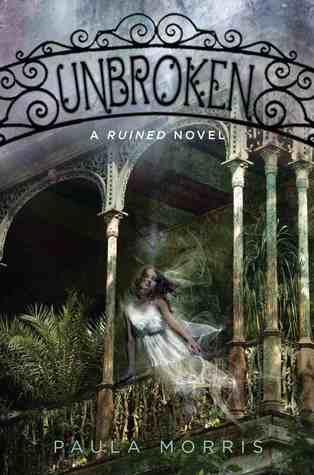
Synopsis
Covers the whole plot, including the ending.
- Difficulty
- Medium
- Pacing
- Moderate
- Mood
- Atmospheric, Mysterious, Romantic, Suspenseful, Haunting
- Read it if
- You enjoy historical mysteries with a supernatural twist, set in the atmospheric backdrop of New Orleans, and feature a blend of romance and suspense.
- Skip it if
- You dislike ghost stories, historical fiction, or young adult romance, or prefer fast-paced thrillers without supernatural elements.
Unbroken Plot Summary
Covers the whole plot, including the ending.
Return to New Orleans
A year after her scary experience with Lisette's ghost, Rebecca Brown returns to New Orleans for the summer. She stays with her aunt and uncle, looking forward to seeing Anton Grey again, the boy she connected with supernaturally during her last visit. Almost immediately, Rebecca meets a new ghost named Alain. Alain is a young man from the late 1800s who says he was murdered and that only Rebecca can help him find the truth and peace. He is persistent and desperate, pulling Rebecca into a new mystery before she even settles back into the city or properly reunites with Anton.
Alain's Plea and Anton's Return
Alain's ghost is constant and demanding, interrupting Rebecca's attempts to enjoy her summer and restart her relationship with Anton. He gives vague hints about his past, mentioning a fire, a factory, and a rival. Meanwhile, Anton returns from his summer away, and they quickly fall back into their easy friendship, though Rebecca finds it hard to tell him everything about Alain. Anton, still dealing with his own family's history of spirits, is careful about Rebecca getting involved in another dangerous supernatural investigation. Their reunion is marked by the unspoken tension of Rebecca's new ghostly problem.
Investigating the Past
Driven by Alain's pleas, Rebecca starts researching late 19th-century New Orleans, focusing on fires and industrial accidents. She visits libraries and archives, trying to piece together Alain's story. Alain is often there, offering broken memories, but his account seems incomplete or even contradictory. Rebecca learns that Alain worked in a cigar factory owned by a prominent family, and his death was officially ruled an accident during a factory fire. However, Alain strongly denies this, claiming he was murdered. Her investigation begins to uncover rumors of rivalries and hidden plans among the city's wealthy families of that era.
The Rival Family and Suspicious Deaths
Rebecca's research leads her to discover an old rivalry between Alain's family, the Dubois, and another powerful New Orleans family, the St. Clairs. She learns that the St. Clairs also owned a rival cigar factory. Historical records suggest a time of intense competition and even sabotage between the two businesses. As Rebecca digs deeper, she finds a pattern of suspicious deaths and misfortunes affecting both families, especially around the time Alain died. She begins to suspect that Alain's death was not a single event but part of a larger, darker conflict hidden by time and influence.
Anton's Concerns and the Séances
Anton grows more concerned about Rebecca's deep involvement in Alain's mystery. He reminds her of the dangers they faced with Lisette and warns her not to trust every spirit. Despite his worries, Anton supports Rebecca by helping her research. Their investigation leads them to an old Creole medium who was active in the late 1800s. Rebecca believes this medium might have known Alain or had information about his death. She arranges a seance, hoping for direct communication and clearer answers, much to Anton's fear about the risks of such an event.
The Medium's Revelations
During the seance, the medium channels a powerful spirit that is not Alain, but one connected to the St. Clair family. This spirit reveals important information, suggesting that Alain was not the innocent victim he claimed to be. It hints at Alain's own involvement in dishonest dealings and possibly contributing to others' misfortunes. The revelations paint a more complex and morally unclear picture of Alain, challenging Rebecca's first idea of him as a purely wronged spirit. The seance also suggests that the St. Clairs were not just villains but also victims of the ongoing feud, blurring who was at fault.
Alain's True Nature
With the medium's revelations, Rebecca confronts Alain. His behavior changes, becoming defensive and evasive, eventually showing a more cunning and manipulative side. He admits to some of his past wrongdoings, including industrial spying and contributing to rivals' downfalls, though he still insists he was ultimately murdered. Rebecca realizes that Alain had selectively shared information, presenting himself as a pure victim to get her sympathy and help. This discovery shakes Rebecca's trust in him and makes her question the true nature of his death and his reasons for seeking her help.
The St. Clair Descendant
As Rebecca continues to investigate, she finds a living descendant of the St. Clair family, an elderly woman named Genevieve. Genevieve St. Clair is a private but sharp woman who deeply understands her family's history and the long feud with the Dubois. Through Genevieve, Rebecca learns the full extent of the rivalry, the tragedies suffered by both families, and the complex events that led to Alain's death. Genevieve has old journals and letters that reveal a hidden truth, a secret kept for over a century.
The Hidden Truth
Genevieve St. Clair reveals that Alain was murdered, but not by a St. Clair. He was killed by a close associate, a Dubois family member, who betrayed him during the factory fire. The associate had been working with the St. Clairs to end the destructive rivalry, but Alain's ambition and double-dealing threatened to expose their plans. His death was then covered up by both families, who, tired of the feuding and scandal, agreed to call it an accident to protect their reputations and finally end the hostilities. The truth is much more complex and tragic than simple good versus evil.
Alain's Peace and Rebecca's Resolution
With the full truth finally uncovered, Rebecca confronts Alain one last time, telling him the complete story of his death and the cover-up. The revelation, though painful, allows Alain to finally understand how he died and the roles everyone played. He accepts his fate, and finding the peace he sought, his spirit finally moves on. Rebecca, tired but relieved, thinks about the complexities of history, the blurry lines of morality, and the lasting power of secrets. Her experience deepens her bond with Anton, who supported her throughout the ordeal.
Principal Figures
Rebecca Brown
Protagonist
A young woman with the rare ability to see and communicate with ghosts.
Rebecca is an intelligent and compassionate teenager, drawn to mysteries and a strong sense of justice. She possesses a unique gift that allows her to interact with spirits, a power that often pulls her into dangerous historical investigations. Despite her initial apprehension, she feels a strong compulsion to help troubled ghosts find peace. She is observant and analytical, capable of piecing together clues from different eras. Her experiences have made her more resilient and understanding of the complexities of human nature, both living and dead.
Relationships: Anton Grey (Romantic interest and confidant, shares a supernatural connection); Alain (Troubled ghost seeking her help, their relationship evolves from trust to suspicion); Aunt and Uncle (Supportive guardians, providing a safe haven in New Orleans)
Anton Grey
Supporting
Rebecca's romantic interest and fellow supernatural enthusiast, from a family with a history of spiritual connections.
Anton is a thoughtful and protective young man, deeply connected to New Orleans and its mystical undercurrents. He comes from a family with a long history of dealing with spirits, making him knowledgeable about the supernatural world but also wary of its dangers. He is supportive of Rebecca but also cautious, often acting as her anchor and voice of reason. His quiet strength and loyalty are a constant comfort to Rebecca, and he is willing to help her investigate, even when it puts him at risk. He is perceptive and empathetic, understanding the toll Rebecca's gift takes on her.
Relationships: Rebecca Brown (Romantic interest and partner in supernatural investigations); His Family (Inheritors of a spiritual legacy, providing context for his understanding of ghosts)
Alain
Antagonist/Supporting (initially appears as a victim)
A demanding ghost from the 19th century who claims to have been murdered.
Alain is a spectral young man from the late 19th century, initially presenting himself as a wronged victim seeking justice for his murder. He is persistent, manipulative, and somewhat self-absorbed, selectively revealing information to gain Rebecca's sympathy and assistance. His initial charm masks a more complex and morally ambiguous past, including involvement in industrial espionage and contributing to the misfortunes of others. He is driven by a deep-seated desire for the truth about his death and for peace, but his methods are not always honest. His character challenges Rebecca's assumptions about good and evil in the spirit world.
Relationships: Rebecca Brown (The only living person who can help him, a relationship built on manipulation and eventual truth); Dubois Family (His family, involved in the cigar industry rivalry); St. Clair Family (Rival family, initially perceived as his enemies)
Genevieve St. Clair
Supporting
An elderly descendant of the St. Clair family, holding key historical knowledge.
Genevieve is a reclusive, sharp-witted elderly woman, the last living descendant of the powerful St. Clair family. She possesses a deep and intimate knowledge of her family's history, particularly the long-standing rivalry with the Dubois family. She guards old journals and letters that contain the true, hidden history of Alain's death and the subsequent cover-up. Genevieve is a keeper of secrets, burdened by the past but ultimately willing to reveal the truth to Rebecca, understanding that it's time for the old wounds to heal. She is a crucial source of information, providing the missing pieces of the puzzle.
Relationships: Rebecca Brown (Confidante, to whom she reveals the true history); St. Clair Family (Her ancestors, whose legacy she protects and ultimately clarifies)
The Creole Medium
Supporting
A spiritual practitioner from the past who offers cryptic but crucial information.
The Creole Medium, though not a main character, plays a pivotal role in revealing the true nature of Alain's past. She is a conduit to other spirits, her powers allowing Rebecca to access information that Alain himself withheld. Her presence highlights the rich spiritual traditions of New Orleans and the ways in which the living and the dead can interact. Her revelations are often fragmented and require interpretation, forcing Rebecca to think critically about the information she receives and to question her initial assumptions. She serves as a bridge between the present investigation and the deeper, more complex truths of the past.
Relationships: Rebecca Brown (Provides spiritual guidance and crucial information)
Lisette
Mentioned
A ghost from Rebecca's previous visit to New Orleans.
Lisette is a ghost who haunted Rebecca during her previous visit to New Orleans. Her story and the danger she posed serve as a significant point of reference and a cautionary tale for Rebecca and Anton. While not physically present in 'Unbroken,' her memory and the lessons learned from that encounter influence Rebecca's approach to Alain's mystery, making her more cautious and aware of the potential dangers of interacting with spirits. Lisette represents Rebecca's past experiences with the supernatural and the foundation of her powers.
Relationships: Rebecca Brown (Past haunting experience, formative for Rebecca's abilities)
Themes & Insights
The Elusive Nature of Truth
The novel constantly explores how truth, especially historical truth, is subjective, incomplete, and often changed. Alain's first story as a pure victim is slowly broken down, showing his own moral flaws and involvement in the conflicts he blamed others for. Rebecca learns that even spirits can lie or leave out details, and that 'justice' is rarely simple. The hidden journals and the descendant's testimony ultimately reveal a truth that is much more complex and involves a cover-up by multiple parties, showing that history is often written by winners or those trying to keep peace, rather than by objective facts.
“History is not a simple story, Rebecca. It's a tapestry woven with threads of truth and lies, and sometimes, the lies are easier to believe.”
The Burden of the Past
The past in New Orleans is not just history; it is a living presence that still affects the present. The old feud between the Dubois and St. Clair families, even a century later, casts a shadow over their descendants and the city itself. Alain's inability to move on is a direct result of the unresolved wrongs and secrets of his time. Rebecca and Anton, through their interactions with spirits, are always involved in these past burdens, tasked with bringing resolution. The novel suggests that until these past wrongs are acknowledged and understood, their echoes will continue to haunt the living.
“Some wounds never truly heal, Rebecca. Not for the living, and certainly not for the dead.”
Moral Ambiguity and Redemption
The characters, both living and dead, are rarely purely good or evil. Alain, first shown as a victim, is revealed to have been part of the schemes that led to his downfall. The St. Clairs, first appearing as bad guys, are shown to have also been victims of the rivalry and to have wanted the conflict to end. Rebecca's journey forces her to see these gray areas, understanding that actions have complex reasons and results. The novel implies that true peace for the dead comes not from simple revenge, but from accepting the full, often messy, truth of their lives.
“It's never just one side that's to blame when a feud runs that deep.”
Trust and Deception
Rebecca's ability to talk to ghosts naturally puts her in a situation where trust is vital, yet also risky. Alain's initial deception shows the danger of blindly trusting a spirit's story, especially when their memories or motives are unclear. Rebecca must learn to tell truth from manipulation, even from those who seem helpless victims. This theme extends to her relationship with Anton, where open communication and shared understanding are essential for safely navigating the supernatural world. The novel emphasizes the importance of critical thinking and seeking different viewpoints when uncovering hidden truths.
“Just because they're dead doesn't mean they're saints, Rebecca. Or that they tell the whole truth.”
Plot Devices & Literary Techniques
The Gift of Sight
Rebecca's unique ability to see and communicate with ghosts.
This is the central plot device, enabling Rebecca to interact with the supernatural world and drive the mystery forward. Her 'gift' is both a blessing and a curse, allowing her to uncover hidden truths but also placing her in danger and drawing her into complex historical conflicts. It serves as the primary catalyst for the plot, as Alain specifically seeks her out because of her ability. The gift also provides a unique perspective on New Orleans, where the past is always present through its spectral inhabitants.
Historical Documents and Archives
Journals, letters, and public records used to uncover past events.
Rebecca's investigation heavily relies on traditional research methods, such as poring over old newspaper clippings, census records, and family archives. These documents provide the factual backbone for the supernatural mystery, grounding the ghostly encounters in tangible history. They serve as crucial tools for cross-referencing Alain's fragmented memories and for uncovering the inconsistencies in his story, ultimately leading to the full revelation of the truth through Genevieve St. Clair's hidden family papers.
The Haunted City of New Orleans
The city itself functions as a character and a catalyst for supernatural events.
New Orleans is more than just a setting; its rich history, distinct atmosphere, and reputation for being a city of spirits are integral to the plot. The old houses, cemeteries, and cultural traditions provide a fertile ground for ghostly activity and historical mysteries. The city's unique blend of beauty and decay, its vibrant jazz and lingering shadows, mirrors the complex and often tragic truths Rebecca uncovers. It acts as a magnet for the supernatural, drawing Rebecca back and providing the perfect backdrop for stories of unresolved pasts.
The Séances
Spiritual gatherings used to communicate with the dead.
The séances serve as a direct means of communication with the spirit world beyond Rebecca's personal interactions. They are pivotal in advancing the plot by introducing new, often contradictory, information about Alain's past. The séance with the Creole medium is a turning point, as it reveals truths that Alain had withheld, forcing Rebecca to re-evaluate her understanding of the mystery. This device highlights the varied ways in which the living can interact with the dead and the different levels of truth that can be accessed.
Unbroken Quotes
“They’re not the same, the two of them. Not at all.”
“You can’t just walk away from things, Rosie. Not when they matter.”
“History isn’t just about dates and battles, it’s about people.”
“Sometimes the bravest thing you can do is admit you’re scared.”
“The past isn’t gone; it’s just waiting for you to find it.”
“Love isn’t always easy, but it’s always worth fighting for.”
“There’s a difference between remembering and living in the past.”
“Some stories need to be told, even if they’re difficult.”
“You can’t change what happened, but you can change how you react to it.”
“The quiet moments are often the ones that speak the loudest.”
“It’s never too late to learn something new about yourself.”
“Sometimes you have to break a few rules to do what’s right.”
“The future is built on the foundations of the past.”
“Even in the darkest times, there’s always a glimmer of hope.”
Quiz
10 questions on the plot and the characters. Each answer comes with a short explanation.
Question 1
What is the primary reason Rebecca Brown returns to New Orleans at the beginning of 'Unbroken'?
- To investigate a new supernatural phenomenon reported in the city.
- To reconnect with Anton Grey, the boy she has romantic feelings for.
- To visit her family who recently moved to the city.
- To attend a historical preservation conference.
Show answer
B. To reconnect with Anton Grey, the boy she has romantic feelings for. Rebecca returns to New Orleans primarily to see Anton Grey, indicating a romantic interest in him.
Question 2
What kind of supernatural entity does Rebecca encounter shortly after her return to New Orleans?
- A voodoo spirit seeking revenge.
- A troubled ghost who needs her help.
- A friendly poltergeist haunting her new home.
- A psychic who offers her guidance.
Show answer
B. A troubled ghost who needs her help. Upon her return, Rebecca meets a 'troubled boy who insists only she can help him,' revealing him to be a ghost.
Question 3
What historical event or crime does Rebecca become involved with through the ghost's plea?
- A century-old jewel heist.
- A murder mystery from more than a century ago.
- A missing person case from the early 1900s.
- A historical land dispute.
Show answer
B. A murder mystery from more than a century ago. The synopsis explicitly states that Rebecca 'finds herself embroiled in another murder mystery from more than a century ago.'
Question 4
What is Rebecca's previous experience in New Orleans, mentioned as having occurred 'a year ago'?
- She solved a different murder mystery.
- She escaped death in a New Orleans cemetery.
- She first met Anton Grey.
- She discovered her ability to see ghosts.
Show answer
B. She escaped death in a New Orleans cemetery. The first paragraph of the synopsis mentions, 'A year ago, Rebecca Brown escaped death in a New Orleans cemetery.'
Question 5
What is the primary internal conflict Rebecca faces regarding her involvement with the new ghost?
- Whether she should prioritize her studies over helping the ghost.
- If she can truly trust this new ghost and if it's putting her and her friends in danger.
- How to balance her time between Anton and her new supernatural quest.
- Whether the ghost's story is historically accurate.
Show answer
B. If she can truly trust this new ghost and if it's putting her and her friends in danger. The synopsis states, 'Is she putting her friends, and herself, in danger? Can she trust this new ghost?' highlighting her internal conflict and concerns.
Question 6
What aspect of New Orleans is repeatedly highlighted as a significant element of the city's atmosphere in the book's description?
- Its vibrant culinary scene and famous restaurants.
- Its role as a major port city and economic hub.
- Its jazz music, beauty, and the presence of ghosts.
- Its unique architecture and historic preservation efforts.
Show answer
C. Its jazz music, beauty, and the presence of ghosts. The description uses evocative language like 'streets swirl with jazz and beauty' and 'houses breathe with ghosts,' emphasizing these elements as central to the city's atmosphere.
Question 7
What is the main challenge Rebecca faces as she tries to solve the historical murder mystery?
- She struggles to find any historical records related to the case.
- She finds more questions than answers, suggesting the mystery is complex and elusive.
- The ghost continuously misleads her with false information.
- Anton Grey actively hinders her investigation.
Show answer
B. She finds more questions than answers, suggesting the mystery is complex and elusive. The synopsis states, 'But as she tries to right wrongs, she finds more questions than answers,' indicating the difficulty and complexity of the mystery.
Question 8
The description suggests that Rebecca's involvement in the new mystery might be more significant than she initially perceives. What phrasing indicates this potential for a larger scope?
- 'She is looking forward to seeing Anton Grey, the boy who may or may not have her heart.'
- 'And has she stumbled into something much bigger and more serious than she understands?'
- 'Soon Rebecca finds herself embroiled in another murder mystery from more than a century ago.'
- 'Where the houses breathe with ghosts.'
Show answer
B. 'And has she stumbled into something much bigger and more serious than she understands?' The question 'And has she stumbled into something much bigger and more serious than she understands?' directly implies a larger, unforeseen scope to her involvement.
Question 9
What is the nature of Rebecca's relationship with Anton Grey, as described in the synopsis?
- They are confirmed to be in a long-term, committed relationship.
- Their romantic connection is uncertain, as he 'may or may not have her heart.'
- He is her best friend, with no romantic implications.
- He is a rival investigator who also sees ghosts.
Show answer
B. Their romantic connection is uncertain, as he 'may or may not have her heart.' The phrase 'the boy who may or may not have her heart' explicitly states the ambiguous and uncertain nature of their romantic relationship.
Question 10
Considering the themes presented, what could be a central conflict that Rebecca grapples with beyond the murder mystery itself?
- The struggle to balance her academic life with her social life.
- The challenge of discerning truth from deception when dealing with supernatural entities and historical events.
- Her desire to leave New Orleans versus her duty to stay and help.
- A direct confrontation with a living antagonist who is aware of her abilities.
Show answer
B. The challenge of discerning truth from deception when dealing with supernatural entities and historical events. The questions 'Can she trust this new ghost?' and 'has she stumbled into something much bigger and more serious than she understands?' point to a deeper conflict of truth, trust, and the unknown, especially when dealing with a historical mystery influenced by a supernatural source.
Unbroken FAQ
What is the primary setting for 'Unbroken' and why is it significant?
'Unbroken' is set in New Orleans, a city renowned for its rich history, vibrant jazz culture, and strong association with the supernatural, particularly ghosts and cemeteries. This setting is significant as it provides a atmospheric backdrop for both the romance and the historical murder mystery, blurring the lines between the living and the dead.
Who is Rebecca Brown and what is her initial motivation for returning to New Orleans?
Rebecca Brown is the protagonist of 'Unbroken'. She returns to New Orleans a year after a traumatic experience in a cemetery, primarily motivated by her desire to reunite with Anton Grey, the boy with whom she shares a complicated romantic connection. Her return quickly plunges her back into the city's supernatural undercurrents.
What kind of supernatural element does Rebecca encounter shortly after her return?
Upon her return, Rebecca encounters a ghost, a troubled boy who specifically seeks her out, insisting that only she possesses the ability to help him. This encounter immediately draws her into a new historical mystery, linking her present experiences to events from over a century ago.
What is the central conflict or mystery Rebecca becomes involved in?
Rebecca becomes embroiled in a murder mystery that dates back more than a century. She endeavors to uncover the truth and right the wrongs of the past, but this investigation leads her to more questions than answers and puts her and her friends in potential danger.
Who is Anton Grey and what is his role in Rebecca's return?
Anton Grey is a boy from New Orleans with whom Rebecca has a romantic history; she considers him someone who 'may or may not have her heart.' Her desire to see him is a significant reason for her return to the city, suggesting a deep personal connection that runs alongside the supernatural plot.
How does Rebecca's past experience in a New Orleans cemetery connect to her current encounters?
Rebecca's escape from death in a New Orleans cemetery a year prior establishes her unique connection to the supernatural and the city's haunted elements. This past trauma likely primes her to be more susceptible to encountering the ghost boy and becoming involved in the historical murder, suggesting a pre-existing sensitivity.
Are there subtle clues suggesting the ghost boy's true intentions or identity early on?
The synopsis hints at the ghost boy being 'troubled' and Rebecca questioning if she can 'trust this new ghost,' suggesting early on that his motivations might not be entirely pure or straightforward. These subtle cues likely foreshadow twists regarding his past or his role in the century-old murder.
What specific historical period does the murder mystery from 'more than a century ago' likely take place in?
Given the 'more than a century ago' timeframe and the New Orleans setting, the historical murder mystery likely takes place in the late 19th or early 20th century, a period rich with distinct social norms, architecture, and potential racial or class tensions that could fuel such a crime.
How might Rebecca's connection to Anton Grey be more significant than just romance for the mystery?
Anton Grey's family or personal history in New Orleans might unknowingly hold keys or connections to the century-old murder mystery. His deep roots in the city could provide Rebecca with access to old records, family stories, or local knowledge that proves crucial to solving the cold case, making him more than just a love interest.
How does Rebecca's past trauma influence her decision-making and willingness to help the ghost?
Rebecca's past escape from death in a cemetery likely left her with a heightened sense of empathy or a lingering feeling of unfinished business regarding the dead. This trauma could make her more susceptible to the ghost's pleas for help, perhaps driven by a subconscious need to rectify past wrongs or find closure.
What psychological toll might solving a century-old murder take on a young protagonist like Rebecca?
Solving a century-old murder could expose Rebecca to grim historical injustices, the lingering pain of the past, and the moral complexities of human nature. This could lead to feelings of overwhelm, responsibility, and a questioning of her own safety and sanity, especially when interacting with the supernatural.
How does the 'trust' issue with the new ghost reflect Rebecca's own internal struggles or insecurities?
Rebecca's questioning if she can 'trust this new ghost' might reflect her own internal struggle with trust, perhaps stemming from her past trauma or uncertainties in her relationship with Anton. It could also symbolize her difficulty discerning truth from illusion, a common theme when dealing with the supernatural and subjective experiences.
In what ways might Rebecca's romantic feelings for Anton Grey complicate her focus on the mystery?
Rebecca's romantic feelings for Anton Grey could create a significant distraction, pulling her focus between her personal desires and the urgent demands of the murder mystery. This emotional entanglement might cloud her judgment, make her vulnerable, or force her to make difficult choices between love and duty.
What does the phrase 'stumbled into something much bigger and more serious than she understands' imply about the scope of the mystery?
This phrase implies that the murder mystery is not an isolated incident but rather connected to larger historical events, powerful figures, or a deeper web of secrets within New Orleans. It suggests that solving the initial crime might only be the tip of an iceberg, leading to dangerous revelations or consequences.
Could the ghost boy's request for help be a form of manipulation rather than genuine need?
Yes, the question 'Can she trust this new ghost?' strongly suggests that the ghost boy's plea for help could be a form of manipulation. His 'troubled' nature might hide ulterior motives, using Rebecca's unique abilities and compassionate nature to achieve his own, potentially harmful, ends.
How might the 'unbroken' title relate to both Rebecca's personal journey and the historical mystery?
The title 'Unbroken' could refer to Rebecca's resilience in the face of past trauma and current dangers, signifying her emotional strength. It might also refer to an unbroken chain of events, a secret lineage, or an unresolved injustice from the past that continues to affect the present, remaining 'unbroken' until Rebecca intervenes.
What is the potential significance of the houses in New Orleans 'breathing with ghosts'?
This poetic phrase suggests that the presence of ghosts is not merely an occasional occurrence but an intrinsic part of New Orleans' atmosphere and history. It implies that the past is deeply embedded in the city's architecture and identity, making it a living, breathing entity that holds countless stories and secrets.
Is it possible that Anton Grey or his family could be unknowingly connected to the historical murder victim or perpetrator?
Given the deep roots of families in New Orleans and the intertwined nature of historical events, it is highly possible that Anton Grey or his ancestors could have an unknown connection to either the victim or the perpetrator of the century-old murder. This would dramatically complicate Rebecca's romantic and investigative endeavors.
About the author

Paula Morris is a fiction author known for her works that often explore themes of identity and the supernatural. Her notable books include "Ruined," which delves into the complexities of personal and cultural history, "Dark Souls," a tale that intertwines mystery with elements of the paranormal, and "Unbroken," which examines resilience and survival.
Similar books
- A Great and Terrible Beauty
Libba Bray
3.8 (208k) average on GoodreadsFantasyWhile both 'Unbroken' and 'A Great and Terrible Beauty' are YA historical fiction with supernatural elements, Bray's series leans heavily into a fully developed alternate magical reality with tangible powers and a secret society. Morris's 'Unbroken' is more grounded, focusing on the subtle, echoing influence of ghosts and historical events on the present, maintaining a delicate balance between the tangible and the spectral rather than overt magic. Morris's supernatural elements are more about the lingering presence of the past, whereas Bray's are about an active, hidden magical world.
- Between Shades of Gray
Ruta Sepetys
4.4 (164k) average on GoodreadsHistorical FictionSepetys's 'Between Shades of Gray' is renowned for its meticulous historical research and focuses on grander, more globally significant historical events (e.g., Soviet deportations) and their devastating human impact. Morris's 'Unbroken,' while historical, zeroes in on a more intimate, familial mystery within a specific cultural context (New Orleans). Sepetys aims to educate on lesser-known historical atrocities through a personal lens, whereas Morris uses historical context primarily as a backdrop for a personal journey of discovery and a ghostly mystery, making her scope more contained and character-driven.
- To Kill a Mockingbird
Harper Lee
4.3 (4.5M) average on GoodreadsHistorical FictionIn the 1930s Jim Crow South, Harper Lee writes about racial injustice, moral growth, and the quiet courage of a lawyer father, Atticus Finch, as seen through his young daughter's eyes.
- The Great Gatsby
F. Scott Fitzgerald
3.9 (3.8M) average on GoodreadsHistorical FictionIn the opulent Roaring Twenties, a mysterious millionaire's lavish parties hide his desperate, tragic pursuit of a lost love, exposing the emptiness within the American Dream.
- Pride and Prejudice
Jane Austen
4.3 (3M) average on GoodreadsHistorical FictionIn a society focused on status and money, Elizabeth Bennet navigates love and pride, challenging Mr. Darcy and social expectations to find true affection.
- Angels & Demons
Dan Brown
3.9 (2.7M) average on GoodreadsThrillerA Harvard symbologist races through Rome's ancient sites, deciphering cryptic clues to unmask the Illuminati and stop a vengeful plot to destroy the Vatican with a stolen antimatter weapon.





Enjoyed the summary?
A summary gives you the shape of the book. The book itself has the detail, the examples and the voice.
Find Unbroken on AmazonAs an Amazon Associate, BookBrief earns from qualifying purchases. How we're funded