
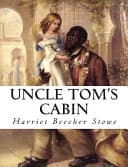
Synopsis
Covers the whole plot, including the ending.
- Difficulty
- Medium
- Pacing
- Variable
- Mood
- Sentimental, Tragic, Didactic, Hopeful (for abolition)
- Read it if
- You are interested in a foundational work of American literature that shaped the national conversation on slavery, or want to understand the sentimental novel genre.
- Skip it if
- You are sensitive to outdated racial stereotypes, overtly didactic prose, or highly emotional and tragic narratives.
Uncle Tom's Cabin Plot Summary
Covers the whole plot, including the ending.
The Shelby Plantation and Tom's Sale
On the Shelby plantation in Kentucky, Mr. Shelby, a kind but financially irresponsible owner, must sell two of his enslaved people to a cruel trader, Mr. Haley, to pay his debts. He chooses Uncle Tom, a religious and loyal man, and Harry, the young son of Eliza, Mrs. Shelby's maid. Eliza hears this news and decides to save her child. Mrs. Shelby, though benevolent, feels she cannot intervene, showing how slavery trapped even 'good' masters. This scene immediately shows the insecurity of enslaved life and sets the stage for the dramatic escapes and sales that follow.
Eliza's Desperate Escape
Learning of Harry's upcoming sale, Eliza bravely takes Harry and flees the Shelby plantation at night. She makes a desperate run for freedom, pursued by Mr. Haley and his men. Her escape ends with a dramatic crossing of the half-frozen Ohio River. She leaps from ice floe to ice floe with her child, a feat seen by sympathetic onlookers on the Ohio side. This heroic act of a mother protecting her child against huge odds is one of the novel's most iconic and emotional scenes. It shows the lengths enslaved people would go to escape bondage.
Tom's Journey South and Meeting Eva
Uncle Tom, having willingly gone with Mr. Haley to protect the remaining enslaved people on the Shelby plantation from further sales, is transported downriver. During the journey, he meets the St. Clare family: Augustine St. Clare, a kind but cynical planter, his delicate and religious daughter, Eva, and his aristocratic, often complaining wife, Marie. When Eva accidentally falls overboard, Tom bravely saves her. This act immediately makes Eva fond of him. Augustine St. Clare, impressed by Tom's character, decides to buy him, bringing Tom into a new, though still enslaved, life in New Orleans.
Life at the St. Clare Plantation
At the St. Clare plantation in New Orleans, Tom finds a period of relative comfort compared to his past. He becomes Eva's devoted caretaker and friend. Eva, with her strong Christian faith and innocent love, sees the good in everyone, regardless of race or status. She greatly influences Tom and challenges the common views on slavery within her household. Augustine St. Clare, while seeing the evils of slavery, struggles with the moral inaction and societal pressures that stop him from acting. Tom's time here involves spiritual talks with Eva and his continued strong faith.
Eva's Illness and Death
Little Eva, already weak, becomes very ill. As her condition worsens, she expresses her deep love for everyone, especially the enslaved people, and questions the injustice of their bondage. On her deathbed, she asks her father to free them. She gives locks of her hair to the enslaved household members as a sign of her affection and shared humanity. Eva's death is a key emotional moment in the novel, deeply affecting Augustine St. Clare and inspiring the enslaved people with her strong faith and compassion. Her innocence and purity highlight slavery's moral corruption.
Augustine St. Clare's Promise and Demise
Deeply moved by Eva's death and her dying wish, Augustine St. Clare finally decides to act against slavery. He begins to arrange for Tom's freedom, recognizing Tom's inherent goodness and his daughter's strong influence. However, before he can complete the legal documents for Tom's freedom, St. Clare is tragically killed in a tavern brawl. His death leaves Tom's fate uncertain again and shows how easily good intentions could be stopped by unforeseen events and the legal complexities of slavery.
Tom's Sale to Simon Legree
After Augustine St. Clare's death, his wife Marie, who lacks his compassion and does not care about Eva's dying wish, decides to sell all the enslaved people to settle the estate. Tom is put up for auction and bought by Simon Legree, a notoriously cruel and brutal plantation owner from Louisiana. This sale marks a dramatic and terrifying change in Tom's life, as he is taken to Legree's desolate and violent cotton plantation. The difference between the St. Clare household and Legree's plantation shows a descent from a relatively mild form of slavery to its most extreme and dehumanizing depths.
Life on Legree's Plantation
On Simon Legree's plantation, Uncle Tom experiences the full horror and cruelty of chattel slavery. Legree is a sadist who enjoys tormenting his enslaved workers, driving them with whips and denying them basic human dignity. Tom firmly refuses to give in to despair or to compromise his Christian faith, even under intense pressure and physical abuse. He tries to comfort and uplift his fellow sufferers, including Cassy and Emmeline, two women also enslaved by Legree. Legree, angered by Tom's strong spirit and refusal to whip another enslaved person, vows to break him.
Eliza and George's Journey to Freedom
Meanwhile, Eliza, having successfully crossed the Ohio River, reunites with her husband, George Harris, who had also escaped his cruel master. They find safety with the Quakers, a community known for their abolitionist views and their help to runaway enslaved people. With the help of the Underground Railroad, Eliza, George, and Harry continue their dangerous journey north, facing constant danger and uncertainty. Their resolve to achieve freedom and build a new life as a family provides a contrasting story of hope and successful resistance against Tom's suffering.
Tom's Martyrdom
Legree's cruelty increases, especially toward Tom, who continues to refuse to betray Cassy and Emmeline when they escape. Legree, with his overseers Sambo and Quimbo, brutally beats Tom, intending to kill him. Despite the horrific torture, Tom keeps his faith, forgiving his tormentors with his dying breath. His death is presented as a martyrdom, a sacrifice that reveals slavery's ultimate depravity and the triumph of spiritual strength over physical brutality. His final moments are witnessed by George Shelby, who arrives too late to save him.
Cassy and Emmeline's Escape and Discovery
Cassy, a strong and resourceful woman, and young Emmeline, whom Legree had bought for his own desires, manage to escape Legree's plantation. They cleverly hide in the attic of the plantation house, making Legree believe they are ghosts, thus preventing pursuit. They eventually make their way to a steamboat, where they meet Madame de Thoux, who turns out to be Eliza's long-lost sister. Through a series of coincidences, they are eventually reunited with Eliza, George, and Harry in Canada, showing how family connections, broken by slavery, can be miraculously restored.
George Shelby's Return and Abolitionist Pledge
Young George Shelby, having tracked Tom to buy him back, arrives at Legree's plantation only to find Tom dying. Deeply affected by Tom's death and the horrors he witnessed, George returns to Kentucky. Inspired by Tom's strong faith and sacrifice, and recognizing slavery's evil, George keeps his father's unfulfilled promise. He gathers all the enslaved people on his family's plantation and formally grants them their freedom. He then dedicates his life to working for the abolitionist cause, urging them to remember Tom's sacrifice and to live lives worthy of their freedom.
Life in Canada and Beyond
Eliza, George, and Harry, along with Cassy, Emmeline, and Madame de Thoux, successfully build a new life in Canada. George Harris dedicates himself to education and intellectual pursuits, eventually moving his family to Liberia, Africa, a colony for freed American enslaved people. There, he becomes a respected leader, advocating for his people's rights and dignity. The novel ends with the image of a thriving, free community, sharply contrasting with Tom's suffering, and offering a vision of hope and self-determination for Black people in a world free from slavery.
Principal Figures
Uncle Tom
Protagonist
A devoutly Christian and long-suffering enslaved man.
Uncle Tom is the central figure of the novel, a middle-aged, deeply religious enslaved man known for his unwavering faith, integrity, and gentle nature. He embodies Christian virtues of patience, self-sacrifice, and forgiveness, even in the face of unimaginable cruelty. His steadfastness under persecution is meant to represent spiritual triumph over earthly suffering, challenging the moral legitimacy of slavery itself. He is a loyal and loving husband and father, deeply committed to his family and his God.
Relationships: Chloe (Wife); Mr. Shelby (First owner, relatively kind but indebted); Augustine St. Clare (Second owner, sympathetic but indecisive); Eva St. Clare (Devoted friend and spiritual influence); Simon Legree (Third and most cruel owner, his tormentor)
Eliza Harris
Supporting
A courageous enslaved woman who escapes to save her child.
Eliza is a young, beautiful, and intelligent enslaved woman, known for her deep maternal love and fierce determination. She serves as Mrs. Shelby's maid and is Harry's mother. Her dramatic escape across the frozen Ohio River is one of the novel's most iconic scenes, showcasing the strength and resilience of enslaved people fighting for their freedom and family. She represents the desperate measures mothers would take to protect their children from the horrors of slavery.
Relationships: George Harris (Husband); Harry (Son); Mrs. Shelby (Benevolent mistress); Cassy (Eventually discovered to be her sister)
George Harris
Supporting
Eliza's intelligent and determined husband, also seeking freedom.
George Harris is Eliza's husband, a highly intelligent and resourceful enslaved man whose engineering talents are suppressed by his cruel master. His desire for freedom is fueled by a profound sense of injustice and a yearning for self-determination and education. He is articulate and passionate in his arguments against slavery, embodying the intellectual and moral arguments for abolition. His escape and eventual success in Liberia represent a hopeful vision for Black autonomy.
Relationships: Eliza Harris (Wife); Harry (Son); Mr. Wilson (Sympathetic employer)
Eva St. Clare (Little Eva)
Supporting
An angelic, deeply religious, and compassionate young girl.
Eva is Augustine St. Clare's daughter, a beautiful, delicate, and profoundly spiritual child. She possesses an innate goodness and an unwavering Christian faith that transcends racial prejudice. Eva loves everyone unconditionally, especially the enslaved people, whom she treats as equals. Her innocent questioning of slavery's morality and her dying wish for the enslaved people's freedom profoundly impact her father and those around her. She represents the pure, untainted conscience of humanity.
Relationships: Augustine St. Clare (Father); Marie St. Clare (Mother); Uncle Tom (Devoted friend and spiritual confidante)
Augustine St. Clare
Supporting
Tom's second owner, a kind but cynical and indecisive Southern gentleman.
Augustine St. Clare is a wealthy, educated, and outwardly benevolent planter from New Orleans. He is intellectually aware of the moral evils of slavery and often expresses his disdain for the institution, but he lacks the moral fortitude and will to act decisively. He is kind to his enslaved people and recognizes Tom's exceptional character, yet he remains trapped by societal norms and personal inertia. His character highlights the moral compromises made by even 'good' slaveholders.
Relationships: Eva St. Clare (Daughter, his moral compass); Marie St. Clare (Wife, whose complaining nature he tolerates); Uncle Tom (Purchased, respects Tom's character)
Simon Legree
Antagonist
A brutal, sadistic, and godless plantation owner.
Simon Legree is the embodiment of pure evil and the most cruel slave owner in the novel. He is a coarse, uneducated, and relentlessly violent man who delights in tormenting his enslaved workers, driving them to their deaths through overwork and brutal beatings. Legree rejects religion and morality, representing the absolute moral depravity and dehumanizing nature of the institution of slavery at its worst. He is driven by greed, sadism, and a desire to break the spirit of anyone under his control.
Relationships: Uncle Tom (His final, most tormented victim); Cassy (His concubine and victim); Emmeline (Purchased for his perverse desires)
Cassy
Supporting
A strong-willed, intelligent, and deeply scarred enslaved woman.
Cassy is a beautiful and intelligent enslaved woman, purchased by Simon Legree to be his concubine. She has endured immense suffering, including the loss of her children and multiple sales, which have hardened her and driven her to the brink of despair. Initially cynical and hardened, she finds a flicker of hope and spiritual solace through her interactions with Uncle Tom. She is resourceful and cunning, ultimately orchestrating her own escape and helping Emmeline.
Relationships: Simon Legree (Her tormentor and abuser); Uncle Tom (Confidante and spiritual influence); Emmeline (Protector and escape partner); Eliza Harris (Eventually discovered to be her sister)
Marie St. Clare
Supporting
Augustine St. Clare's self-absorbed and hypochondriac wife.
Marie St. Clare is Augustine's wife and Eva's mother, a self-centered, complaining, and hypochondriac woman. She treats her enslaved people with disdain and cruelty, viewing them as property and burdens rather than human beings. Her character represents the indifference and moral blindness of many Southern women who benefited from slavery without acknowledging its horrors. Her insensitivity contrasts sharply with her daughter Eva's compassion and her husband's intellectual, if inactive, moral awareness.
Relationships: Augustine St. Clare (Husband, whom she often criticizes); Eva St. Clare (Daughter, whose goodness she fails to fully comprehend)
George Shelby Jr.
Supporting
Young master who eventually frees his family's enslaved people.
George Shelby Jr. is the son of Mr. and Mrs. Shelby. As a boy, he is fond of Uncle Tom and is deeply disturbed by his father's decision to sell him. He matures into a principled young man who, after witnessing the horrors of slavery firsthand on Legree's plantation and finding Tom dying, is profoundly changed. He embodies the potential for moral awakening in the younger generation of white Southerners and ultimately takes a stand against slavery.
Relationships: Uncle Tom (Childhood friend and later, his moral inspiration); Mr. Shelby (Father, whose actions he ultimately rectifies)
Themes & Insights
The Inherent Evil and Dehumanization of Slavery
The novel clearly shows slavery's moral corruption. It portrays slavery as an institution that harms both the enslaved and the enslavers. It shows how slavery takes away people's humanity, breaks up families, and denies basic rights and dignity. Scenes like Tom's brutal treatment on Legree's plantation, the forced sales, and the constant fear of separation clearly show the systemic cruelty. Even 'kind' slaveholders like Mr. Shelby and Augustine St. Clare are shown to be part of a system that causes great suffering. This shows that the institution itself, not just individual cruelty, is the problem.
“'What a world!'' said Miss Ophelia, lifting up her hands. ''And these things go on, day after day, right in sight of us!'”
Christianity and Moral Action
Christianity is a strong force for morality and a direct challenge to slavery. Uncle Tom's strong faith, even to his death, is a moral guide. It shows that true Christian love and forgiveness can overcome earthly suffering and reveal slavery's un-Christian nature. Characters like Eva, who embodies pure Christian love, and the Quakers, who help runaway enslaved people, highlight how real faith should inspire abolitionist action and compassion. The novel contrasts this with the corrupted Christianity of slaveholders like Legree, who reject it, or those who twist scripture to justify their actions.
“'I'm a poor, helpless creature,'' said Tom, ''but I know in whom I trust.'”
The Power of Maternal Love and Family Bonds
The novel strongly emphasizes the unbreakable bonds of family, especially maternal love, as a driving force against slavery. Eliza's desperate escape across the frozen Ohio River with her son Harry is a prime example. It shows how far a mother will go to protect her child from being sold away. The constant threat of family separation, a core horror of slavery, is highlighted throughout the story, from Tom's initial sale away from his family to Cassy's traumatic loss of her own children. The reunions of Eliza's family and Cassy's discovery of her sister show the deep human need for family connection and slavery's devastating impact on these bonds.
“'I have lost my mother, and my children, and I've seen them sold, one after another, till I ha'n't got a soul in this wide world that cares for me, or that I care for!'”
The Hypocrisy of White Benevolence
Stowe criticizes the hypocrisy of white Southerners who consider themselves good while participating in or benefiting from slavery. Characters like Mr. Shelby and Augustine St. Clare, though personally kind to their enslaved people, ultimately fail to challenge the system. Shelby sells Tom due to debt, and St. Clare, despite his moral doubts, delays freeing his enslaved people until it is too late. This theme argues that individual kindness within a cruel system is not enough. True good requires active opposition to the institution itself. It also highlights how societal pressures and economic self-interest often override moral beliefs.
“'You ought to be ashamed, Augustine!'' said Miss Ophelia. ''What do you mean by owning all these people, and letting them go to destruction for want of teaching?'”
The Role of Women in Abolition
The novel implicitly and explicitly champions the role of women in the abolitionist movement. From Eliza's heroic actions to save her son, to Mrs. Shelby's quiet but deep moral distress, to Miss Ophelia's direct confrontation of slavery's immorality and her efforts to educate Topsy, women are important agents of moral change. Eva's spiritual influence is also central. Stowe, herself a woman, uses these characters to suggest that women, with their inherent compassion and moral sense, have a unique and powerful ability to challenge and ultimately dismantle slavery.
“'I would not own a slave, no, not for a kingdom!'”
Plot Devices & Literary Techniques
Sentimentalism
Appealing to readers' emotions to evoke sympathy and moral outrage.
Stowe frequently employs sentimentalism, a literary technique that aims to elicit strong emotional responses from the reader. This is evident in scenes like Eliza's dramatic escape across the ice floes with Harry, Eva's angelic death, and Tom's brutal martyrdom. By focusing on the suffering of sympathetic characters and emphasizing their pure motives and deep affections (especially familial love), Stowe intended to break down readers' indifference to slavery and cultivate a sense of moral outrage, compelling them to action against the institution. The emotional intensity serves to personalize the abstract political issue of slavery.
Christian Martyrdom
Portraying Uncle Tom's death as a Christ-like sacrifice for his faith and fellow humans.
Uncle Tom's death is presented as a Christian martyrdom, where he endures extreme suffering and ultimately dies for his faith and his refusal to betray others. His forgiveness of his tormentors, Simon Legree, Sambo, and Quimbo, with his dying breath, directly parallels the crucifixion of Jesus Christ. This device serves to elevate Tom's suffering to a sacred level, making his death a powerful moral indictment of slavery and inspiring readers with his unwavering spiritual fortitude. It aims to shock readers into recognizing the profound moral evil of a system that could produce such a 'sacrifice'.
The Noble Savage/Tragic Mulatto Stereotypes
Utilizing prevailing racial stereotypes to evoke sympathy and critique slavery.
While challenging slavery, Stowe sometimes employed and adapted existing racial stereotypes, such as the 'noble savage' (seen in George Harris's intelligence and dignity) and the 'tragic mulatto' (represented by characters like Eliza and Cassy, whose lighter skin and education often make their suffering more relatable to white audiences). These portrayals, while problematic by modern standards, were used by Stowe to highlight the humanity of enslaved people and to argue that race should not determine one's fate or rights. The 'tragic mulatto' specifically aimed to show how slavery cruelly impacted individuals who could otherwise 'pass' for white, blurring racial lines and exposing the absurdity of racial hierarchies.
Coincidence and Deus ex Machina
Employing improbable plot twists and fortunate encounters to advance the narrative.
The novel frequently relies on significant coincidences and instances of 'deus ex machina' (god from the machine) to resolve plot points or facilitate reunions. Examples include Eliza encountering her long-lost sister Cassy on a steamboat, and George Shelby's arrival at Legree's plantation just as Tom is dying. While sometimes criticized for being unrealistic, these devices serve a thematic purpose: they emphasize the hand of divine providence guiding events, particularly for the righteous, and allow for the emotional impact of character reunions and dramatic turns, underscoring the novel's Christian message of ultimate justice and hope, even amidst despair.
Uncle Tom's Cabin Quotes
“Is it right, in the sight of God, that you should keep souls out of heaven?”
“I have lost my husband, and now I'm going to lose my boy. It's too much!”
“I'm going to run away, I am, if I die for it!”
“But who, sir, makes slaves of men? Was it God? or man?”
“If I have to be a slave, I'd rather be a slave to a good master.”
“He's a Christian, and he'll be true to his word.”
“I'm a poor, helpless creature; but I know what I want, and I know what I'll do.”
“No! no! no! my soul ain't yours, Mas'r! You haven't bought it, — you can't buy it! It's been bought and paid for by a good Master up in heaven!”
“If ever I get free, I'll buy my wife and children.”
“The bitterest tears shed over graves are for words left unsaid and deeds left undone.”
“It's a great thing to be a woman; but it's a greater thing to be a mother.”
“I'm not a bad man, Tom; I'm only a man of the world.”
“What do you suppose is the reason we are to love our enemies?”
“I have been a slave, and I know what a slave feels.”
Quiz
10 questions on the plot and the characters. Each answer comes with a short explanation.
Question 1
Which character is sold by Mr. Shelby at the beginning of the novel to pay off debts?
- Eliza
- George Harris
- Uncle Tom
- Eva St. Clare
Show answer
C. Uncle Tom Uncle Tom is sold by Mr. Shelby to Haley to settle his debts, initiating Tom's journey through various owners.
Question 2
What is the name of the kind-hearted young girl who befriends Uncle Tom on the steamboat to New Orleans?
- Ophelia
- Marie St. Clare
- Eva St. Clare
- Cassie
Show answer
C. Eva St. Clare Eva St. Clare is the angelic child who forms a deep bond with Uncle Tom after he saves her from drowning.
Question 3
What significant event causes Eliza to flee with her son, Harry?
- Her husband, George, is sold to another plantation.
- She overhears that Harry is about to be sold.
- She is physically abused by Mr. Shelby.
- She decides to join a slave rebellion.
Show answer
B. She overhears that Harry is about to be sold. Eliza flees across the Ohio River with her son, Harry, after overhearing Mr. Shelby's plans to sell the child.
Question 4
What is Augustine St. Clare's primary flaw or characteristic that prevents him from freeing his slaves?
- He is extremely cruel and enjoys inflicting pain.
- He is a devout abolitionist but fears social repercussions.
- He is kind but lacks the moral resolve and practicality to act on his convictions.
- He believes slavery is a divinely ordained institution.
Show answer
C. He is kind but lacks the moral resolve and practicality to act on his convictions. Augustine St. Clare is portrayed as a kind but indolent and irresolute man who recognizes the evils of slavery but lacks the will to take definitive action.
Question 5
Which character represents the ultimate evil and brutality of the slave system, physically abusing and eventually causing Tom's death?
- Mr. Shelby
- Simon Legree
- Haley
- Augustine St. Clare
Show answer
B. Simon Legree Simon Legree is depicted as the most cruel and dehumanizing slave owner in the novel, directly responsible for Uncle Tom's suffering and death.
Question 6
What is the primary thematic role of Eva St. Clare's character in the novel?
- To demonstrate the innocence and vulnerability of white children in the South.
- To symbolize the transformative power of Christian love and moral purity against the backdrop of slavery.
- To represent the ineffectiveness of passive resistance to slavery.
- To highlight the intellectual superiority of the planter class.
Show answer
B. To symbolize the transformative power of Christian love and moral purity against the backdrop of slavery. Eva's character embodies pure Christian love and compassion, influencing those around her and representing the novel's central theme that Christian love can overcome the evils of slavery.
Question 7
What specific act of defiance does Uncle Tom refuse to do for Simon Legree, leading to his fatal beating?
- Refusing to reveal the hiding place of other runaway slaves.
- Refusing to work in the cotton fields on Sunday.
- Attempting to escape from Legree's plantation.
- Preaching Christianity to other slaves against Legree's orders.
Show answer
A. Refusing to reveal the hiding place of other runaway slaves. Tom refuses to whip other slaves and later refuses to reveal the whereabouts of Cassy and Emmeline when they escape, demonstrating his moral integrity and leading to his death.
Question 8
How does George Harris, Eliza's husband, ultimately achieve freedom and what does he advocate for?
- He buys his freedom and becomes a wealthy entrepreneur in the North.
- He escapes to Canada and later advocates for armed slave rebellion.
- He escapes to Canada, gains an education, and eventually emigrates to Liberia, advocating for black self-governance.
- He is freed by Augustine St. Clare and becomes a minister.
Show answer
C. He escapes to Canada, gains an education, and eventually emigrates to Liberia, advocating for black self-governance. George Harris successfully escapes to Canada, becomes educated, and eventually moves with his family to Liberia, where he advocates for a separate black nation.
Question 9
What is the significance of the character Topsy, Miss Ophelia's slave, and her transformation?
- She represents the inability of enslaved children to be educated.
- She illustrates the damaging psychological effects of slavery and the potential for redemption through love and education.
- She serves as comic relief to lighten the novel's serious tone.
- She is a symbol of inherent depravity that cannot be overcome.
Show answer
B. She illustrates the damaging psychological effects of slavery and the potential for redemption through love and education. Topsy, initially wild and seemingly amoral due to her upbringing in slavery, gradually transforms under Miss Ophelia's care and Eva's love, demonstrating the potential for human development when given compassion and opportunity.
Question 10
The novel explicitly argues that the institution of slavery corrupts not only the enslaved but also which other group?
- Northern abolitionists through their self-righteousness.
- The slave owners and the entire Southern society, by fostering moral decay and cruelty.
- British sympathizers who profited from slave-produced goods.
- Politicians who failed to pass effective anti-slavery legislation.
Show answer
B. The slave owners and the entire Southern society, by fostering moral decay and cruelty. Stowe's novel consistently shows how slavery dehumanizes not only the slaves but also corrupts the morality of slave owners (like Legree) and the society that supports the institution, even those who are ostensibly 'kind' like St. Clare.
Uncle Tom's Cabin FAQ
What is the central premise of 'Uncle Tom's Cabin' and who is the titular character?
'Uncle Tom's Cabin' is an anti-slavery novel that chronicles the journey and suffering of its central character, Uncle Tom, a resilient and devout enslaved man. The narrative follows Tom as he is sold away from his family in Kentucky, enduring various owners and hardships, while showcasing the brutal realities of slavery and asserting the power of Christian love.
Who are some of the key white characters in the novel and what roles do they play?
Key white characters include the kind but financially struggling Mr. Shelby, who sells Tom; the benevolent Augustine St. Clare, who buys Tom and views slavery as wrong but is too indolent to act; and the cruel Simon Legree, Tom's final owner, who embodies the absolute evil of the institution. Eva St. Clare, Augustine's angelic daughter, represents innocent purity and compassion.
Describe Eliza's escape and its significance to the plot.
Eliza, a light-skinned enslaved woman, flees with her son Harry after overhearing her sale by Mr. Shelby to the brutal Haley. Her dramatic escape across the frozen Ohio River, leaping from ice floe to ice floe, is one of the most iconic and thrilling scenes in the novel, highlighting the desperation of those seeking freedom and the inherent dangers of their flight.
How does the novel portray the institution of slavery through different slave owners?
The novel depicts a spectrum of slave ownership, from the relatively 'kind' but ultimately complicit Shelby family, to the well-meaning but inactive Augustine St. Clare, and finally to the utterly sadistic Simon Legree. This range illustrates that even under 'good' masters, slavery is inherently unjust and unstable, and under 'bad' masters, it is pure hell.
What ultimately happens to Uncle Tom and how does his fate impact the narrative's message?
Uncle Tom is tragically beaten to death by Simon Legree's overseers for refusing to reveal the whereabouts of two runaway enslaved women and for maintaining his Christian faith. His martyrdom underscores the ultimate dehumanizing and destructive power of slavery, while also presenting him as a Christ-like figure whose suffering is meant to inspire abolitionist sentiment.
What is the significance of the character Topsy and her development?
Topsy is a young, seemingly wild enslaved girl introduced into the St. Clare household. Initially mischievous and unloved, she gradually learns about affection and morality through the kindness of Eva St. Clare. Her transformation, though incomplete, suggests the potential for redemption and humanization even in those deeply scarred by slavery, given the right environment.
How does Stowe use the motif of 'passing' or light skin in characters like Eliza?
Stowe uses Eliza's light skin to emphasize the arbitrary and cruel nature of racial categorization under slavery, as well as to evoke greater sympathy from her largely white readership. Her ability to 'pass' allows her to blend into free society during her escape, highlighting the artificiality of racial barriers and the inherent humanity beneath them.
Are there any subtle connections between the fates of different families in the book?
Yes, there are subtle connections. For instance, George Shelby, Mr. Shelby's son, eventually fulfills his promise to Tom by freeing his remaining enslaved people and advocating for abolition. This shows a generational shift and a direct link between Tom's suffering and the eventual moral awakening and action of the younger Shelby.
What role do the Quakers play in the novel, and what do they represent?
The Quakers, such as the Hallidays and Rachel, provide crucial assistance to Eliza and other runaway enslaved people on the Underground Railroad. They represent a community guided by strong moral and religious convictions, actively defying unjust laws to practice Christian charity and compassion, offering safe haven and practical aid to those seeking freedom.
How does Uncle Tom's unwavering Christian faith impact his psychological state throughout his trials?
Uncle Tom's deep Christian faith provides him with immense psychological resilience, allowing him to endure horrific abuse and loss without succumbing to despair or hatred. It gives him an inner strength and moral compass, enabling him to forgive his tormentors and maintain his dignity, even in the face of death.
Analyze Augustine St. Clare's psychological conflict regarding slavery.
Augustine St. Clare is psychologically conflicted; he intellectually understands the immorality of slavery and despises its cruelty, yet he is too enervated and cynical to take decisive action. His paralysis stems from a combination of Southern upbringing, personal indolence, and a fatalistic view of society, leading to a profound internal struggle between his conscience and his inaction.
How does Simon Legree's character embody the psychological impact of unchecked power?
Simon Legree embodies the corrupting psychological impact of unchecked power and moral depravity. His cruelty stems from a complete lack of empathy, fueled by alcoholism, greed, and a deep-seated hatred. He delights in inflicting suffering, demonstrating how absolute power can strip an individual of their humanity and transform them into a monster.
What is the psychological significance of Eva St. Clare's idealized purity and early death?
Eva's idealized purity and early death serve a significant psychological function: she represents an innocent, uncorrupted conscience that sees the inherent wrongness of slavery without societal biases. Her death is a catalyst for reflection and grief, particularly for her father, Augustine, and for Tom, emphasizing the fragility of goodness in a brutal world and serving as a spiritual call to action.
To what extent is 'Uncle Tom's Cabin' a work of propaganda, and does this diminish its literary value?
While 'Uncle Tom's Cabin' is undeniably a work with a strong abolitionist agenda, functioning as propaganda, its literary value is a subject of debate. Critics argue that its clear moral purpose and often simplistic characterizations (e.g., purely good or purely evil) can overshadow its artistic merit. However, its immense historical impact and powerful emotional resonance demonstrate its effectiveness as a narrative, regardless of its didactic intent.
How does the novel's focus on Christian love and redemption influence its anti-slavery message?
The novel's emphasis on Christian love and redemption is central to its anti-slavery message. Stowe argues that slavery is a profound sin against God and humanity, directly contradicting Christian teachings of charity and brotherhood. Through characters like Tom and Eva, she suggests that genuine Christian love is the only force capable of overcoming the destructive evil of enslavement and inspiring moral action.
Discuss the controversial legacy of the 'Uncle Tom' character in later generations.
The character of Uncle Tom, initially revered for his resilience and faith, later became a controversial figure, with 'Uncle Tom' evolving into a pejorative term. This shift reflects a critique of his perceived passivity and subservience, particularly by later civil rights movements, who saw him as an embodiment of accommodation rather than resistance, despite Stowe's original intent to portray him as a heroic martyr.
What is the significance of the novel's ending, particularly George Shelby's actions?
The novel's ending, with George Shelby freeing his enslaved people and encouraging them to emigrate to Liberia, is significant. It represents a hopeful, albeit paternalistic, vision for the future, suggesting that white Southerners can achieve moral redemption by dismantling slavery and providing a path to freedom. It also implies that true freedom for formerly enslaved people might lie outside the United States.
How did the initial reception of 'Uncle Tom's Cabin' differ in the North and South?
The reception of 'Uncle Tom's Cabin' was starkly divided. In the North, it was widely embraced and celebrated as a powerful indictment of slavery, fueling abolitionist sentiment and becoming a bestseller. In the South, however, it was vehemently condemned as inaccurate, slanderous, and inflammatory, leading to numerous 'anti-Tom' novels that attempted to refute its portrayal of slavery.
About the author
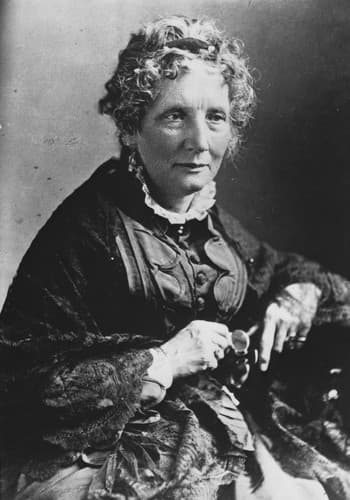
Harriet Elisabeth Beecher Stowe was an American author and abolitionist. She came from the religious Beecher family and became best known for her novel Uncle Tom's Cabin (1852), which depicts the harsh conditions experienced by enslaved African Americans. The book reached an audience of millions as a novel and play, and became influential in the United States and in Great Britain, energizing anti-slavery forces in the American North, while provoking widespread anger in the South. Stowe wrote 30 books, including novels, three travel memoirs, and collections of articles and letters. She was influential both for her writings as well as for her public stances and debates on social issues of the day.
Similar books
- The Adventures of Huckleberry Finn
Mark Twain
3.8 (1.2M) average on GoodreadsHistorical FictionExplores themes of race and freedom on the Mississippi River, though with a different tone.
- Beloved
Toni Morrison
3.9 (325k) average on GoodreadsLiterary FictionA powerful and harrowing exploration of the trauma and legacy of slavery in America.
- To Kill a Mockingbird
Harper Lee
4.3 (4.5M) average on GoodreadsHistorical FictionIn the 1930s Jim Crow South, Harper Lee writes about racial injustice, moral growth, and the quiet courage of a lawyer father, Atticus Finch, as seen through his young daughter's eyes.
- The Great Gatsby
F. Scott Fitzgerald
3.9 (3.8M) average on GoodreadsHistorical FictionIn the opulent Roaring Twenties, a mysterious millionaire's lavish parties hide his desperate, tragic pursuit of a lost love, exposing the emptiness within the American Dream.
- Pride and Prejudice
Jane Austen
4.3 (3M) average on GoodreadsHistorical FictionIn a society focused on status and money, Elizabeth Bennet navigates love and pride, challenging Mr. Darcy and social expectations to find true affection.
- Angels & Demons
Dan Brown
3.9 (2.7M) average on GoodreadsThrillerA Harvard symbologist races through Rome's ancient sites, deciphering cryptic clues to unmask the Illuminati and stop a vengeful plot to destroy the Vatican with a stolen antimatter weapon.





Enjoyed the summary?
A summary gives you the shape of the book. The book itself has the detail, the examples and the voice.
Find Uncle Tom's Cabin on AmazonAs an Amazon Associate, BookBrief earns from qualifying purchases. How we're funded