
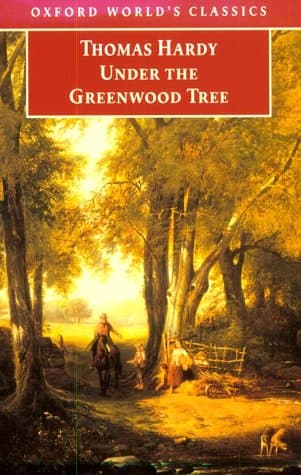
Synopsis
Covers the whole plot, including the ending.
- Difficulty
- Easy
- Pacing
- Slow
- Mood
- Pastoral, Romantic, Gentle, Whimsical
- Read it if
- You enjoy gentle, pastoral romances with a focus on rural life and charming characters, reminiscent of classic British literature.
- Skip it if
- You prefer fast-paced plots, high drama, or stories with complex psychological depth and darker themes.
Under the Greenwood Tree Plot Summary
Covers the whole plot, including the ending.
The Mellstock Quire's Christmas Eve Caroling
On Christmas Eve, the Mellstock Quire, village musicians led by Reuben Dewey and including his son Dick, carol annually. They visit houses, including Farmer Shiner's, where they are welcomed. Their last stop is the school-house, where the new schoolmistress, Fancy Day, lives. As they play 'Hark the Glad Sound!', Fancy opens her window, showing her beauty to Dick Dewey, who likes her immediately. She offers them a drink, and Dick is taken by her charm and elegance. The quire disperses, with Dick thinking of Fancy.
Dick Dewey's Growing Affection for Fancy Day
After Christmas Eve, Dick Dewey, a young carpenter, is drawn to Fancy Day. He visits the school, offering to help with repairs or walking by to see her. He watches her teaching, confirming his admiration for her intelligence and manners. Fancy notices his attention and is flattered but reserved, aware of their social differences and her own goals. Dick tells his family, especially his father, Reuben, who at first is doubtful but later supports Dick's pursuit, seeing his deep feelings.
The Church's Decision to Replace the Quire
A change affects Mellstock Church with the new vicar, Mr. Maybold. Young and modern, Mr. Maybold wants to update church services. He suggests replacing the traditional Mellstock Quire, which has provided music for generations, with a harmonium played by Fancy Day. This news upsets the quire members, especially older musicians like Reuben Dewey and Thomas Leaf, who see it as an insult to their tradition. They argue their case, but Mr. Maybold is firm, believing it will bring a more refined sound to the church. Fancy feels conflicted but agrees to play the harmonium.
Fancy's Courtship by Farmer Shiner and Mr. Maybold
Fancy Day's beauty attracts other eligible men in Mellstock. Farmer Shiner, a wealthy man, courts her with gifts, intending to marry her. Mr. Maybold also develops feelings for Fancy. He admires her intelligence, musical talent, and demeanor, seeing her as a suitable wife for his position. Fancy, while liking Dick, is also tempted by the social advancement and money marriage to Shiner or Maybold would offer. She enjoys the attention and the chance to improve her status, causing internal conflict.
The Quire's Final Performance and Fancy's Debut
The Sunday arrives for the Mellstock Quire's last performance before being replaced. The quire members, though sad, play with dignity. Their performance is met with respect. After their final hymn, Fancy Day plays the harmonium. Her playing is good, but it lacks the charm and community spirit of the old quire. The change is clear, showing the conflict between tradition and modernity in the story. Dick watches Fancy, torn between his love for her and his loyalty to his family's musical heritage.
Fancy's Dilemma and Secret Affection
Despite Farmer Shiner and Mr. Maybold's attention, Fancy Day is drawn to Dick Dewey. She knows she loves Dick, valuing his affection and honesty over the social benefits offered by the others. However, her ambition and desire for a more comfortable life make her hesitate. She considers becoming a vicar's wife, which would raise her social standing. She keeps her true feelings for Dick somewhat hidden, enjoying the power her beauty gives her over her suitors, and struggling to balance her heart's desire with her worldly goals.
Mr. Maybold's Proposal and Fancy's Acceptance
After thinking it over, Mr. Maybold, the vicar, proposes marriage to Fancy Day. He expresses his love for her, promising her a life of comfort and respect as his wife. Fancy considers her options and accepts his proposal. She sees it as a practical choice, offering the social standing and financial security she wants, even if her deepest affection is with Dick Dewey. She believes marrying the vicar will fulfill her ambitions and provide a stable future. The acceptance seems to seal her fate away from the carpenter.
Fancy Confesses to Dick and Breaks Off the Engagement
Fancy Day, after accepting Mr. Maybold's proposal, seeks out Dick Dewey. She tearfully confesses she is engaged to the vicar but loves Dick. This devastates Dick but also gives him hope. Overwhelmed by her feelings for Dick and realizing she cannot marry a man she does not love, Fancy decides to break off her engagement with Mr. Maybold. She writes to him, explaining her change of heart, a difficult decision for her.
Mr. Maybold's Noble Resignation
Mr. Maybold is hurt by Fancy's letter. However, he is a good man and understands that Fancy's happiness matters most. Knowing her heart belongs to Dick Dewey, he releases her from their engagement, putting her well-being before his own desires. He accepts her decision gracefully, wishing her happiness with Dick. This shows his character as an understanding figure, allowing Fancy to follow her true feelings without guilt, even though it is a personal loss for him.
The Wedding of Fancy and Dick
With no more obstacles, Fancy Day and Dick Dewey are free to marry. The wedding takes place in Mellstock, with their families and friends. It is a simple, rustic event, reflecting their status and the village setting. The Mellstock Quire, despite their earlier removal from the church, plays at the wedding feast, celebrating the union. Fancy, who briefly thought of a grander life, finds happiness in marrying the man she loves. The wedding is a joyful end, showing love over social ambition, and the spirit of the Mellstock community.
Under the Greenwood Tree Characters
Dick Dewey
Protagonist
A young, honest carpenter deeply in love with Fancy Day.
Dick Dewey is the earnest and somewhat naive protagonist. He is a skilled carpenter and a member of the Mellstock Quire, deeply rooted in the traditions of his village. From the moment he sees Fancy Day, he is utterly smitten, his love for her driving much of the narrative. He is straightforward, loyal, and possesses a good heart, though he sometimes struggles with the complexities of Fancy's ambitions. His love for Fancy is pure and unwavering, contrasting with the more calculated approaches of her other suitors. He represents the honest, working-class man of the village.
Relationships: Fancy Day (Love interest, later wife); Reuben Dewey (Father); Susan Dewey (Mother); Geoffrey Day (Father-in-law)
Fancy Day
Protagonist
The beautiful and ambitious new schoolmistress, torn between love and social advancement.
Fancy Day is the captivating new schoolmistress of Mellstock, known for her beauty, intelligence, and musical talent. She is refined and educated, a cut above the village folk, which makes her desirable to several suitors. Fancy is ambitious, desiring social elevation and a comfortable life, which leads her to consider proposals from wealthier men like Farmer Shiner and Mr. Maybold. Despite her worldly aspirations, she ultimately harbors a deep, genuine affection for Dick Dewey. Her internal conflict between her heart's desire and her social ambitions is central to her character.
Relationships: Dick Dewey (Love interest, later husband); Farmer Shiner (Suitor); Mr. Maybold (Suitor, briefly engaged); Geoffrey Day (Father)
Reuben Dewey
Supporting
Dick's father and the respected leader of the Mellstock Quire.
Reuben Dewey is Dick's father and the patriarch of the Dewey family. He is a respected and somewhat stubborn figure in the village, deeply committed to the traditions of the Mellstock Quire, which he leads. He initially views Fancy with suspicion due to her refined ways and the threat she poses to the quire's existence, but he eventually accepts her as his son's choice. Reuben embodies the old ways and the communal spirit of the village, and his distress over the quire's replacement highlights the changing times.
Relationships: Dick Dewey (Son); Susan Dewey (Wife); Fancy Day (Daughter-in-law)
Mr. Maybold
Supporting
The progressive young vicar who becomes Fancy's suitor.
Mr. Maybold is the new, young vicar of Mellstock Church. He is educated, progressive, and well-meaning, but somewhat detached from the deep-rooted traditions of the village. He is responsible for replacing the Mellstock Quire with a harmonium, believing it to be a modernization. He falls genuinely in love with Fancy Day, admiring her refinement and intelligence, and proposes to her. When Fancy confesses her love for Dick, Maybold acts with remarkable nobility and understanding, releasing her from their engagement for her happiness, showcasing his good character.
Relationships: Fancy Day (Suitor, briefly engaged)
Farmer Shiner
Supporting
A wealthy but somewhat crude farmer who also courts Fancy Day.
Farmer Shiner is a prosperous farmer in Mellstock and another suitor for Fancy Day's hand. He is wealthy and confident, but also a bit coarse and self-important. He attempts to win Fancy through displays of his wealth and status, offering her a comfortable life. However, he lacks the genuine sensitivity and understanding that Dick possesses, and Fancy ultimately finds him less appealing than Dick or even Mr. Maybold. He represents a purely materialistic option for Fancy, contrasting with the emotional connection she seeks.
Relationships: Fancy Day (Suitor)
Grandfather William Dewey
Supporting
The oldest member of the Mellstock Quire, a repository of village history and tradition.
Grandfather William Dewey is the oldest living member of the Mellstock Quire and Reuben's father. He is a repository of local history and tradition, often recounting tales of past times and the quire's long-standing importance. His character emphasizes the deep roots of the village's customs and the sense of continuity that the quire represents. He is a symbol of the fading generation and the changes occurring in rural life. His gentle nature and reminiscences add warmth and historical context to the narrative.
Relationships: Reuben Dewey (Son); Dick Dewey (Grandson)
Thomas Leaf
Supporting
A simple-minded and endearing member of the Mellstock Quire.
Thomas Leaf is a sweet-natured but rather simple-minded member of the Mellstock Quire. He is known for his peculiar pronouncements and his tendency to misunderstand situations, often providing comic relief. Despite his eccentricities, he is a loyal and devoted member of the quire, representing the less sophisticated but equally valued members of the village community. His character highlights the rustic charm and unpretentious nature of the traditional village life that is slowly being eroded.
Relationships: Reuben Dewey (Fellow quire member); Dick Dewey (Fellow quire member)
Geoffrey Day
Supporting
Fancy's father, a relatively prosperous woodsman.
Geoffrey Day is Fancy's father, a respected woodsman in the community. He is proud of his daughter's education and accomplishments and hopes for her to make a good, advantageous marriage. He is a practical man, and while he cares for Fancy's happiness, he also values security and social standing. He supports Fancy's initial consideration of Mr. Maybold as a suitable match, reflecting the societal pressures on young women to marry well. His character provides insight into the family background and aspirations that influence Fancy's decisions.
Relationships: Fancy Day (Daughter); Dick Dewey (Son-in-law)
Susan Dewey
Supporting
Dick's mother, a practical and caring village woman.
Susan Dewey is Dick's mother and Reuben's wife. She is a practical, kind, and supportive figure in the Dewey household. She cares deeply for her son's happiness and, despite initial reservations about Fancy's 'town' ways, comes to accept and welcome her. Susan represents the steady, nurturing presence within the traditional village family. Her common sense and warmth provide a grounded contrast to some of the more romantic or ambitious aspirations of other characters.
Relationships: Dick Dewey (Son); Reuben Dewey (Husband); Fancy Day (Daughter-in-law)
Under the Greenwood Tree Themes
Tradition vs. Modernity
This theme is clear in the conflict between the Mellstock Quire and the new vicar's desire to replace them with a harmonium played by Fancy Day. The quire represents old, communal village life, rooted in custom. The harmonium, and Fancy's role, symbolize progress and a more formalized approach. Hardy explores the bittersweet nature of this transition, noting the loss of rustic charm while acknowledging change. The quire's displacement brings a sense of nostalgia for a fading way of life.
“'And there's a good many of us have been in the quire, man and boy, for fifty year!'”
Love and Social Class
The novel explores the complexities of love intertwined with social class and ambition. Fancy Day, a schoolmistress with goals, is torn between her affection for the carpenter Dick Dewey and the allure of social advancement offered by Farmer Shiner and Mr. Maybold. Her struggle shows the societal pressures on women to 'marry well' for security and status, even if it means sacrificing true love. Dick, though of lower social standing, represents authenticity and deep emotional connection, proving more compelling than money.
“'How can I like a man who is not a gentleman?'”
The Pastoral Ideal and Rural Life
Hardy paints a vivid picture of rural life in Mellstock. The novel appreciates nature's rhythms, the close-knit community, and the simple pleasures of village life. Descriptions of the countryside, the caroling rounds, and daily lives evoke a pastoral ideal. However, this ideal is fragile, threatened by external changes (like the new vicar) and internal desires for social climbing. The book celebrates this world's charm while subtly acknowledging its vulnerability.
“'The green trees, the road, the walls, the church, the people, were all in a somnolent, yet kindly, glow.'”
Authenticity vs. Appearance
This theme is clear in Fancy Day's character. She likes the appearances of refinement and status that Mr. Maybold and Farmer Shiner represent. However, her true feelings and happiness are found in Dick Dewey's more authentic love. The novel suggests that genuine connection and inner contentment are more valuable than superficial achievements or social standing. The Mellstock Quire, with its rustic music, also shows authenticity compared to the more polished but less soulful harmonium.
“'Ah, Fancy, you are a pretty girl, and you've got a pretty way with you; but you are not a girl to be trusted too far.'”
Community and Belonging
The Mellstock community, especially the Quire, is a strong theme. The shared tradition of music-making creates a sense of belonging and identity among its members. The threat to the quire is not just about music, but about the erosion of community bonds and shared heritage. Dick's connection to his family and the village is important, and Fancy's integration into this community, despite her initial detachment, shows her choice for belonging and love over individual ambition.
“'We be the Mellstock Quire, and we've been a-singing in Mellstock Church for a hundred and fifty year, and never had no fault found with us till now.'”
Plot Devices & Literary Techniques
The Mellstock Quire
A symbol of tradition, community, and the fading rural past.
The Mellstock Quire functions as a central symbol in the novel. It represents the deeply ingrained traditions, communal spirit, and authentic folk culture of rural England. Their music is not just entertainment but an integral part of the villagers' identity and history. The quire's eventual displacement by the harmonium symbolizes the broader societal shift from traditional, communal ways to modern, more formalized, and individualistic approaches, highlighting the theme of tradition versus modernity. Their presence and eventual absence frame the narrative's exploration of change.
The Harmonium
A symbol of modernity, refinement, and the displacement of tradition.
The harmonium serves as a direct counterpoint to the Mellstock Quire. It represents modernity, progress, and a more 'refined' form of church music, championed by the new vicar, Mr. Maybold. Its introduction into the church signifies the encroachment of external, urban values upon the traditional rural community. Played by Fancy Day, it also links to her own aspirations for social elevation and her more sophisticated tastes, contrasting with the rustic simplicity of Dick Dewey and the quire. It's a key device for illustrating the central conflict of the novel.
Fancy Day's Mirror
A subtle symbol of vanity, self-awareness, and her preoccupation with appearance.
Fancy Day's mirror, though not a prominent object, subtly appears in scenes where she is contemplating her appearance or her suitors. It symbolizes her vanity, her self-awareness, and her concern with how she is perceived by others, particularly in the context of her social ambitions. Her frequent glances into it reflect her internal struggle between her genuine feelings and her desire to present a refined, advantageous image. It highlights the theme of authenticity versus appearance, suggesting her initial focus on external validation.
The Greenwood Tree Itself (Title)
An overarching symbol of nature, rustic love, and a simpler, idyllic past.
The 'Greenwood Tree' of the title, derived from a traditional folk song, functions as an overarching symbol for nature, rustic courtship, and an idealized, simpler past. It evokes a pastoral setting where love can flourish unhindered by social complexities. While not a specific physical tree in the narrative, it represents the natural, uncorrupted world of the village, contrasting with the artificiality of societal expectations. It frames the story as a celebration of genuine, natural affection that ultimately triumphs, despite Fancy's initial worldly temptations.
Under the Greenwood Tree Quotes
“The greatest pleasure of life is love.”
“The only way to get rid of a temptation is to yield to it.”
“It is better to have loved and lost than never to have loved at all.”
“Time changes everything, and everything changes in time.”
“Happiness is a myth we all believe in.”
“Love is a game that two can play and both can win.”
“The heart has its reasons, which reason knows nothing of.”
“Life is a journey, not a destination.”
“The past is never dead. It's not even past.”
“We are all in the gutter, but some of us are looking at the stars.”
“To be yourself in a world that is constantly trying to make you something else is the greatest accomplishment.”
“The future belongs to those who believe in the beauty of their dreams.”
“Every man has his secret sorrows which the world knows not; and oftentimes we call a man cold when he is only sad.”
“It is only with the heart that one can see rightly; what is essential is invisible to the eye.”
Quiz
10 questions on the plot and the characters. Each answer comes with a short explanation.
Question 1
What is the name of the main male protagonist, a member of the Mellstock church choir?
- Gabriel Oak
- Dick Dewey
- John Durbeyfield
- Clym Yeobright
Show answer
B. Dick Dewey Dick Dewey is the young church musician who falls in love with Fancy Day. The other names are protagonists from other Hardy novels.
Question 2
What is Fancy Day's profession when she first arrives in Mellstock?
- A dressmaker
- A governess
- A school mistress
- A farmer's daughter
Show answer
C. A school mistress Fancy Day is introduced as the attractive new school mistress in Mellstock, which quickly draws the attention of Dick Dewey and others.
Question 3
What musical instrument does Dick Dewey play in the church choir?
- Violin
- Clarinet
- Cello
- Oboe
Show answer
A. Violin Dick Dewey is a violinist in the Mellstock church choir, contributing to the traditional instrumental music that is eventually replaced by a harmonium.
Question 4
Why does the traditional Mellstock church choir face being disbanded?
- The villagers prefer modern secular music.
- The new vicar wishes to replace their instrumental music with a harmonium and an organist.
- Most of the choir members are moving away from the village.
- They are deemed too old to continue performing effectively.
Show answer
B. The new vicar wishes to replace their instrumental music with a harmonium and an organist. The central conflict for the choir arises when the new vicar decides to modernize the church music, replacing the traditional instrumentalists with a harmonium and Fancy Day as the organist.
Question 5
Which other suitor, besides Dick Dewey, shows significant interest in Fancy Day, representing a higher social status?
- Mr. Shinar
- Farmer Oak
- Parson Maybold
- Mr. Penny
Show answer
C. Parson Maybold Parson Maybold, the new vicar, also falls in love with Fancy Day and proposes to her, offering her a more socially advantageous match than Dick Dewey.
Question 6
What is the primary setting for most of the novel's events?
- The bustling city of Casterbridge
- The rural village of Mellstock
- A remote country estate
- A seaside town in Wessex
Show answer
B. The rural village of Mellstock The story is set in the idyllic, pastoral village of Mellstock, a fictional representation of a typical rural community in Hardy's Wessex.
Question 7
What significant personal sacrifice does Fancy Day consider making for the sake of social advancement?
- Giving up her passion for music.
- Leaving Mellstock to teach in a larger town.
- Marrying Parson Maybold despite loving Dick Dewey.
- Renouncing her family ties.
Show answer
C. Marrying Parson Maybold despite loving Dick Dewey. Fancy is torn between her genuine affection for Dick and the opportunity for social elevation offered by marrying the vicar, Parson Maybold. She nearly accepts Maybold's proposal.
Question 8
What does the 'Greenwood Tree' in the title symbolize within the context of the novel?
- The changing seasons and passage of time.
- The enduring power of nature over human endeavors.
- The traditional, rustic, and idyllic rural life that is slowly fading.
- The strict social hierarchy of Victorian England.
Show answer
C. The traditional, rustic, and idyllic rural life that is slowly fading. The 'Greenwood Tree' evokes a sense of timeless, traditional English rural life, symbolizing the pastoral charm and the old ways of the village that are implicitly contrasted with the encroaching modernity.
Question 9
How do Dick Dewey and Fancy Day eventually resolve their romantic dilemma?
- Fancy leaves Mellstock to pursue a career in music.
- Dick gives up his music to seek his fortune elsewhere.
- They elope and move to a different county.
- Fancy chooses love over social status and marries Dick.
Show answer
D. Fancy chooses love over social status and marries Dick. Despite the allure of Parson Maybold's proposal and the social advantages it offered, Fancy ultimately realizes her true feelings for Dick and chooses to marry him, embracing a simpler, loving life.
Question 10
What is a key theme explored through the conflict between the choir and the new harmonium?
- The importance of individual talent in artistic expression.
- The struggle between tradition and modernity in rural life.
- The impact of religious dogma on community harmony.
- The economic challenges faced by rural musicians.
Show answer
B. The struggle between tradition and modernity in rural life. The replacement of the traditional, homespun choir with a harmonium represents the broader theme of the clash between old, established rural traditions and the forces of modernization and change entering the village.
Under the Greenwood Tree FAQ
What is Under the Greenwood Tree about?
Under the Greenwood Tree is a pastoral romance set in the rural village of Mellstock, focusing on the courtship between Dick Dewey, a member of the village's traditional church choir, and Fancy Day, the new, educated schoolmistress. Their burgeoning love story is complicated by Fancy's aspirations for social advancement and the attentions of two other suitors: the wealthy farmer Shiner and the respected Reverend Maybold.
Why should I read Under the Greenwood Tree?
You should read Under the Greenwood Tree for its charming depiction of Victorian rural life, its gentle humor, and its exploration of the tension between tradition and modernity through the eyes of its endearing characters. It's a less tragic and more optimistic entry in Thomas Hardy's oeuvre, offering a refreshing contrast to his darker novels while still showcasing his keen observations of human nature and social customs.
What is the background/setting of Under the Greenwood Tree?
The novel is set in the fictional village of Mellstock in rural Wessex, England, during the mid-Victorian era. It vividly portrays the close-knit community, its traditional customs like the church choir's caroling, and the introduction of new ideas and social structures, particularly through the arrival of Fancy Day and the changing role of the church music.
What are the most memorable quotes?
One memorable quote is 'She was a woman who, if she had a fault at all, had the fault of being too good.' Another is the description of the Mellstock Quire's music: 'To do good for evil is the most Christian-like return; but to do evil for good, as these men did, is the most devilish return.' These quotes capture the novel's blend of gentle irony and moral reflection.
What writing style does the author use?
Thomas Hardy employs a lyrical and descriptive prose style, rich in dialect and vivid imagery that brings the rural Wessex landscape and its inhabitants to life. The narrative is often infused with gentle humor and a nostalgic tone, particularly when describing the fading traditions of the Mellstock Quire, making it one of his more accessible and light-hearted works.
What minor details add significant meaning?
The detailed descriptions of the Mellstock Quire's instruments and their passionate, if sometimes out-of-tune, performances highlight the deep connection the villagers have to their traditions. Fancy Day's meticulous attention to her appearance, particularly her fashionable hats and ribbons, subtly underscores her ambition and desire to rise above her humble origins, contrasting with Dick's more rustic simplicity.
What are some subtle foreshadowing moments?
Fancy Day's initial hesitation and her flirtatious nature with both Farmer Shiner and Reverend Maybold, even after committing to Dick, subtly foreshadow the later conflict where she nearly accepts Maybold's proposal. The church's decision to replace the traditional choir with an organist hints at the broader societal changes that challenge the old ways, paralleling Fancy's own internal struggle between tradition and progress.
What unexpected character connections exist?
While not entirely unexpected given the village setting, the close-knit familial connections within the Dewey family, particularly the strong bond and shared musical passion among Dick, his father, and grandfather, emphasize the importance of community and inherited tradition. Fancy's former teacher, Miss Wilkings, serves as an unexpected confidante and source of advice, revealing Fancy's underlying anxieties about her social standing.
What are unspoken character motivations?
Fancy Day's unspoken motivation is a deep-seated desire for social and financial security, which drives her to consider proposals from wealthier men like Farmer Shiner and Reverend Maybold, even as she genuinely loves Dick. Dick Dewey, on the other hand, is motivated by a pure, almost idealized love for Fancy, tempered by a practical understanding of his own limitations and a deep connection to his family's traditions.
What psychological complexities do characters exhibit?
Fancy Day exhibits significant psychological complexity through her internal conflict between her heart's desire for Dick and her head's yearning for social advancement and comfort. She struggles with vanity and indecision, often wavering between her suitors. Dick, while seemingly straightforward, grapples with jealousy and insecurity, particularly when confronted with Fancy's more sophisticated admirers, revealing his underlying anxieties about his own worth.
What are the major emotional turning points?
A major emotional turning point occurs when Fancy Day receives and seriously considers Reverend Maybold's proposal of marriage, despite her engagement to Dick. This moment forces her to confront her true feelings and her aspirations. Another is Dick's emotional distress and subsequent confrontation with Fancy after learning of her indecision, which pushes their relationship to a critical juncture and demands honesty.
How do relationship dynamics evolve?
The relationship between Dick and Fancy evolves from an initial, almost whimsical infatuation into a deeper, more tested love. Their dynamic shifts from simple courtship to one marked by Fancy's indecision and Dick's steadfast devotion, ultimately strengthening when Fancy chooses love over social ambition. The relationship between the Mellstock Quire and the church also evolves, from one of cherished tradition to one of eventual replacement, highlighting the broader theme of changing times.
Which parts remain ambiguous or open-ended?
While the ending provides a clear resolution to Dick and Fancy's romance, the long-term implications of Fancy's personality traits – her vanity and tendency to flirt – remain somewhat open-ended. The novel suggests she has chosen love, but whether her underlying social ambitions will ever truly subside is left for the reader to ponder, hinting at potential future challenges for the couple.
What are controversial scenes or decisions?
Fancy Day's decision to lead on both Farmer Shiner and Reverend Maybold, even while engaged to Dick, can be seen as controversial. Her nearly accepting Reverend Maybold's proposal, only to retract it and marry Dick, showcases a moral ambiguity that some readers might find manipulative or indecisive, questioning the sincerity of her affections until the very end.
Under the Greenwood Tree ending explained: how it ends & what it means
The novel ends with Dick Dewey and Fancy Day marrying in a simple, traditional ceremony, having overcome Fancy's flirtations and her temptation to marry for social advancement. Fancy ultimately chooses love and happiness with Dick over wealth and status with Reverend Maybold. The ending signifies the triumph of genuine affection and the enduring value of traditional village life, albeit with a hint that Fancy's nature might still present future challenges for their marriage.
About the author
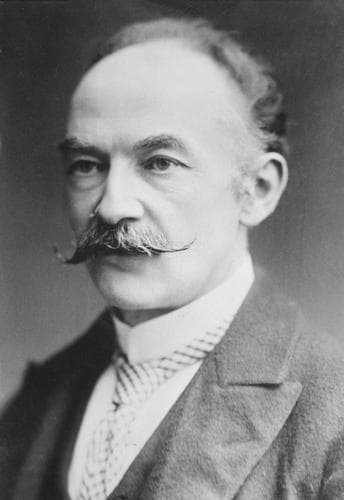
Thomas Hardy was an English novelist and poet. A Victorian realist in the tradition of George Eliot, he was influenced both in his novels and in his poetry by Romanticism, including the poetry of William Wordsworth. He was highly critical of much in Victorian society, especially on the declining status of rural people in Britain, such as those from his native South West England.
Similar books
- Far from the Madding Crowd
Thomas Hardy
3.9 (129k) average on GoodreadsHistorical FictionExplores rural life and complex romantic entanglements in a similar Victorian setting, though with more dramatic tension.
- Pride and Prejudice
Jane Austen
4.3 (3M) average on GoodreadsHistorical FictionA classic romance with social commentary, witty dialogue, and a focus on courtship and class distinctions.
- Lark Rise to Candleford
Flora Thompson
4.0 (3k) average on GoodreadsHistorical FictionWhile both Under the Greenwood Tree and Lark Rise to Candleford offer detailed, affectionate portrayals of rural English life and its traditions, Thompson's work is largely autobiographical and more directly ethnographic in its approach. Hardy's novel, though rooted in observation, is a fictional narrative with a more pronounced romantic plot. Thompson's focus is on the everyday lives, customs, and struggles of a community, often with less emphasis on individual romantic drama, whereas Hardy uses the community as a backdrop for Dick and Fancy's love story and the subtle conflict between tradition and modernity. Thompson's tone is arguably more purely nostalgic and less tinged with the underlying sense of loss and change that subtly pervades Hardy's narrative.
- To Kill a Mockingbird
Harper Lee
4.3 (4.5M) average on GoodreadsHistorical FictionIn the 1930s Jim Crow South, Harper Lee writes about racial injustice, moral growth, and the quiet courage of a lawyer father, Atticus Finch, as seen through his young daughter's eyes.
- The Great Gatsby
F. Scott Fitzgerald
3.9 (3.8M) average on GoodreadsHistorical FictionIn the opulent Roaring Twenties, a mysterious millionaire's lavish parties hide his desperate, tragic pursuit of a lost love, exposing the emptiness within the American Dream.
- Angels & Demons
Dan Brown
3.9 (2.7M) average on GoodreadsThrillerA Harvard symbologist races through Rome's ancient sites, deciphering cryptic clues to unmask the Illuminati and stop a vengeful plot to destroy the Vatican with a stolen antimatter weapon.




Enjoyed the summary?
A summary gives you the shape of the book. The book itself has the detail, the examples and the voice.
Find Under the Greenwood Tree on AmazonAs an Amazon Associate, BookBrief earns from qualifying purchases. How we're funded