
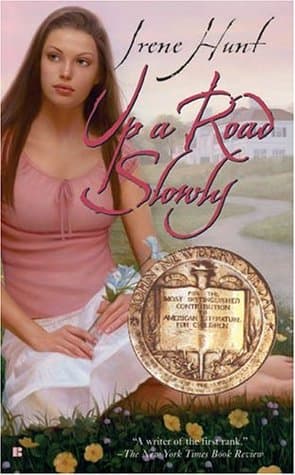
Synopsis
Covers the whole plot, including the ending.
- Difficulty
- Easy
- Pacing
- Slow
- Mood
- Reflective, Heartwarming, Nostalgic, Gentle
- Read it if
- You enjoy classic coming-of-age stories with strong female characters and a focus on personal growth.
- Skip it if
- You prefer fast-paced plots or stories with a lot of external action over internal character development.
Up a Road Slowly Plot Summary
Covers the whole plot, including the ending.
A New Home with Aunt Cordelia
At age seven, Julie moves from her comfortable city home to live with her Aunt Cordelia, a stern and scholarly spinster, in a small rural town after her mother dies. Her father, a busy professor, feels he cannot care for her and her older brother, Chris. Julie's first impression of Aunt Cordelia's home is its quiet order, a stark contrast to her old life. She struggles with the rules and expectations, often feeling lonely and misunderstood. Her cousin, Aggie, a gentle and simple woman, also lives there, offering a quiet, comforting presence amid Aunt Cordelia's strictness. This move begins Julie's journey into a new and challenging environment.
Early Years and Misadventures
Julie's early years with Aunt Cordelia are marked by various adventures and lessons. Her older brother, Chris, visits often and instigates mischief, to Aunt Cordelia's annoyance. For example, Julie tries to sell Aunt Cordelia's valuable antique watch to buy candy, showing her innocent but mistaken idea of value. Aunt Cordelia, though strict, uses these moments to teach Julie responsibility and the results of her actions. These early events highlight Julie's childish innocence and Aunt Cordelia's patient, firm approach to her upbringing, building the foundation of their changing relationship.
The Arrival of Uncle Haskell
As Julie grows, she meets her Uncle Haskell, Aunt Cordelia's brother, a brilliant but troubled poet who visits occasionally. Haskell is very different from the disciplined household; he is charming, witty, and often brings romance and chaos. However, Julie soon learns of his severe drinking problem, which causes unpredictable behavior and periods of absence. Despite his flaws, Haskell sparks Julie's imagination and introduces her to literature's beauty and human nature's complexities, leaving a lasting impression. His presence adds emotional depth and shows her the harsher realities of the adult world.
Friendships and First Crushes
During her teenage years, Julie forms close friendships, especially with her cousin Aggie and a neighbor, Suzy. She also experiences her first romantic interests. One important relationship is with Brett, a charming and somewhat rebellious boy who catches her eye. Their interactions are filled with the awkwardness and excitement of young love, marked by shared secrets and stolen moments. These relationships give Julie a sense of belonging and help her navigate her emotions outside Aunt Cordelia's strict home. These experiences are important for her social and emotional development, as she learns about loyalty, heartache, and human connection.
Aunt Cordelia's Influence and Lessons
As Julie matures, her view of Aunt Cordelia slowly changes. No longer seeing her only as a strict disciplinarian, Julie begins to recognize the deep love and wisdom behind Aunt Cordelia's strictness. Aunt Cordelia teaches her not only school subjects but also life lessons about integrity, perseverance, and kindness. She encourages Julie's love for reading and learning, shaping her curiosity. Through various interactions, Julie learns to appreciate Aunt Cordelia's steady support and the stable, nurturing environment she provides, even if it is not always openly affectionate. This evolving understanding is a significant part of Julie's coming-of-age.
The Impact of Loss and Change
Julie experiences deep losses that make her face grief and change. The death of her beloved cousin Aggie is a heartbreaking event, as Aggie had been a constant source of gentle comfort and understanding. This loss deeply affects Julie, teaching her about life's fragility and the pain of goodbyes. Later, Uncle Haskell's struggles with alcoholism lead to his decline and death, further deepening Julie's understanding of human suffering and compassion. These experiences, though painful, greatly help her emotional growth, making her more empathetic and resilient as she deals with life and loss.
Romantic Entanglements and Disappointments
Julie's romantic life continues to develop, bringing both joy and disappointment. Her relationship with Brett becomes more serious, but it also has the typical challenges of young love, including misunderstandings and different goals. She also meets other potential romantic interests, forcing her to confront her feelings and make difficult choices. These experiences teach her about relationships, the importance of communication, and the pain of unrequited love or fading affections. Each romantic event helps her understand herself and what she truly wants in a partner, shaping her views on love and commitment as she nears adulthood.
The Path to Adulthood
As Julie nears her eighteenth birthday, she begins to seriously think about her future. Aunt Cordelia, always the educator, encourages her to pursue higher education, emphasizing intellectual independence. Julie reflects on her experiences and the lessons she has learned, especially from Aunt Cordelia and Uncle Haskell. She considers her options, thinking about her passion for literature and her desire for a meaningful life. This period involves introspection and self-discovery as she transitions from girlhood to young womanhood, making choices that will define her adult path and solidify her identity, guided by the values her guardians taught her.
Aunt Cordelia's Revelation
In an important moment, Julie understands more about Aunt Cordelia's past. She learns about a lost love in Aunt Cordelia's youth, a secret heartache that shows a more vulnerable, romantic side to her stern aunt. This discovery changes Julie's previous idea of Aunt Cordelia as simply a strict, unfeeling spinster. She now sees her aunt as a complex person who has also felt deep emotions and disappointments. This discovery creates a new level of empathy and connection between them, strengthening their bond and deepening Julie's appreciation for Aunt Cordelia's sacrifices and strength.
Embracing Her Identity
By the novel's end, Julie, now eighteen, has fully become the woman she is meant to be. She acknowledges the deep impact of Aunt Cordelia, Uncle Haskell, and all the experiences, both joyful and painful, that have shaped her. She has learned to appreciate the quiet strength and constant love Aunt Cordelia provided. With a mature perspective, she understands that life is a journey 'up a road slowly,' filled with continuous learning and growth. Julie leaves Aunt Cordelia's home, not to escape, but to begin her own path, carrying the invaluable lessons and love that have prepared her for adulthood's challenges and opportunities.
Principal Figures
Julie
Protagonist
A young girl who grows into a mature woman under the care of her Aunt Cordelia.
Julie is initially a naive and somewhat rebellious seven-year-old, struggling to adapt to the strict, quiet life with Aunt Cordelia. She is intelligent, curious, and often impulsive, leading to various childhood misadventures. As she matures, she develops a deep love for literature, a keen observational sense, and a growing empathy for those around her, including her complex Uncle Haskell. She is driven by a desire for understanding and connection, and eventually, a pursuit of her own intellectual and emotional independence.
Relationships: Aunt Cordelia (guardian, mentor, eventually a figure of deep love and respect); Uncle Haskell (eccentric, alcoholic uncle who inspires her love for poetry and reveals life's complexities); Chris (older brother, often a source of mischief and connection to her past); Aggie (gentle cousin, comforting presence, and friend); Brett (first love interest, a significant romantic relationship)
Aunt Cordelia
Supporting
Julie's stern but loving spinster aunt and guardian.
Aunt Cordelia is a highly educated, disciplined, and outwardly reserved schoolteacher who takes Julie in after her mother's death. She maintains a strict household, valuing order, education, and moral rectitude above all else. Beneath her formidable exterior lies a deep well of love and wisdom, which she expresses through consistent guidance and unwavering support, rather than overt affection. She is a woman of strong character, integrity, and hidden depths, including a past heartbreak that shaped her life.
Relationships: Julie (niece and ward, whom she guides and loves deeply); Uncle Haskell (brother, with whom she shares a complicated, often strained, but ultimately loving bond); Aggie (cousin, whom she cares for)
Uncle Haskell
Supporting
Julie's brilliant but troubled poet uncle who struggles with alcoholism.
Uncle Haskell is a charming, intelligent, and artistic man, a published poet who introduces Julie to the world of literature and imagination. However, he is also deeply flawed, battling a severe addiction to alcohol that leads to periods of erratic behavior, unreliability, and eventual decline. Despite his struggles, he possesses a profound sensitivity and a capacity for great love, particularly for Julie. He represents the tragic beauty and destructive power of human vulnerability, leaving a lasting impression on Julie's understanding of life's complexities.
Relationships: Julie (niece, whom he inspires and deeply loves); Aunt Cordelia (sister, with whom he has a complex relationship of care and frustration)
Aggie
Supporting
Julie's gentle and simple-minded cousin who lives with Aunt Cordelia.
Aggie is a kind, sweet-natured woman with a childlike innocence and a mental simplicity that sets her apart. She lives with Aunt Cordelia and provides a quiet, comforting presence in the household. Aggie is deeply affectionate and serves as an emotional anchor for Julie, often understanding her feelings without needing words. Her simplicity highlights the complexities of the other characters and brings a sense of unconditional love and gentle wisdom to the narrative. Her eventual death is a significant emotional event for Julie.
Relationships: Julie (cousin and close friend, a source of comfort); Aunt Cordelia (cousin, cared for in the household)
Chris
Supporting
Julie's older brother, who often instigates mischief.
Chris is Julie's older brother, initially a frequent visitor to Aunt Cordelia's house. He is playful, mischievous, and somewhat irresponsible, often leading Julie into trouble. He represents Julie's connection to her past and her more carefree childhood. As he grows older, he becomes more focused on his own life and studies, but maintains a loving, if sometimes distant, relationship with Julie. He serves as a contrast to Julie's more introspective nature and Aunt Cordelia's strictness.
Relationships: Julie (sister, often a partner in childhood escapades); Aunt Cordelia (aunt, whose rules he often challenges)
Brett
Supporting
Julie's first serious romantic interest.
Brett is a charming and somewhat rebellious young man who becomes Julie's first significant romantic interest. He represents the excitement and confusion of young love, and his presence introduces Julie to the emotional highs and lows of relationships. Their interactions are marked by shared secrets, budding affection, and eventual misunderstandings, contributing to Julie's growth in understanding herself and the complexities of romantic attachments. He is a catalyst for Julie's emotional development in the realm of love.
Relationships: Julie (first serious boyfriend, a romantic relationship)
Suzy
Supporting
Julie's close friend during her adolescence.
Suzy is one of Julie's close friends during her teenage years. She provides companionship and a sounding board for Julie's adolescent concerns and crushes. Suzy represents the typical friendships formed during this period, offering support and shared experiences that are crucial for Julie's social development outside the family unit. Her role highlights the importance of peer relationships in navigating the challenges of growing up.
Relationships: Julie (close friend)
Themes & Insights
Coming of Age and Self-Discovery
The novel's central theme is Julie's growth from childhood to young adulthood. The story carefully details her emotional, intellectual, and moral development from age seven to eighteen. Through her experiences with loss (her mother, Aggie, Uncle Haskell), love (Brett, her family), and learning (Aunt Cordelia's lessons, her own mistakes), Julie slowly loses her childish innocence and gains a deeper understanding of herself and the world. Her growth is not direct but a 'slow' and deliberate process, showing the complexities of maturation. This theme is clear in her changing relationship with Aunt Cordelia, as she moves from resentment to deep appreciation.
“It was indeed a long road, the one I had traveled from the time I was seven until I was eighteen. It was a road up a slowly rising hill, and I had come to the top, and I could look back and see all the twists and turns and the places where I had stumbled and the places where I had run.”
The Nature of Love and Family
The novel explores the many sides of love within a family, going beyond typical expressions. Aunt Cordelia's love for Julie, though strict, is deep and constant, shown in her dedication to Julie's upbringing and education. Uncle Haskell's love, though complicated by his alcoholism, is passionate and inspiring. Aggie's quiet, unconditional love offers a comforting presence. The story suggests that love can appear in many forms—nurturing, challenging, sacrificing, and even flawed—but it is the foundation of family and personal growth. Julie learns to recognize and appreciate these different forms of love as she matures.
“Aunt Cordelia was not a demonstrative woman, but she loved me. I knew it now, as surely as I knew my own name.”
Loss and Resilience
Loss is a repeated theme throughout Julie's journey, starting with her mother's death and continuing with the deaths of Aggie and Uncle Haskell. Each loss forces Julie to face grief, impermanence, and the pain of separation. However, these experiences also build her resilience and empathy. She learns to cope with sadness, to find strength in memory, and to appreciate life's preciousness. How she processes these losses, especially her changing understanding of Uncle Haskell's struggles, shows her growing capacity for compassion and her ability to endure hardship.
“There were so many good-byes in my life. Each one tore a little piece from me, but each one also taught me something new about holding on.”
The Power of Education and Literature
Education, both formal and informal, greatly influences Julie's development. Aunt Cordelia, a schoolteacher, teaches Julie a deep respect for learning, discipline, and critical thinking. She encourages Julie's love for reading and ensures she gets a strong education. Uncle Haskell, through his poetry and intellectual discussions, sparks Julie's imagination and introduces her to literature's beauty and power. These influences shape Julie's intellectual curiosity and give her tools to understand herself and the world, guiding her toward self-improvement and personal fulfillment.
“Aunt Cordelia believed that books were the finest companions a person could have, and that learning was a treasure no one could ever steal.”
Plot Devices & Literary Techniques
Bildungsroman
A coming-of-age story that traces the protagonist's moral and psychological development.
The entire narrative structure of 'Up a Road Slowly' functions as a Bildungsroman. The story begins with Julie as a young child and follows her through various formative experiences, from adapting to a new home and navigating childhood mischief to experiencing first love, profound loss, and making decisions about her future. Each chapter marks a stage in her growth, demonstrating her intellectual, emotional, and moral development as she matures into a young woman. The title itself, 'Up a Road Slowly,' metaphorically encapsulates this gradual journey of self-discovery and maturation.
Foil Characters
Characters who contrast with the protagonist or another character to highlight their qualities.
Aunt Cordelia and Uncle Haskell serve as significant foil characters for each other and for Julie. Aunt Cordelia's strict discipline, orderliness, and intellectual rigor contrast sharply with Uncle Haskell's bohemian nature, artistic temperament, and struggles with addiction. These contrasting personalities expose Julie to different facets of life, morality, and human nature, allowing her to draw her own conclusions and form her own values. Aunt Cordelia's hidden vulnerability, revealed later, also serves as a foil to her outward sternness, deepening Julie's understanding of her.
Symbolism of the 'Road'
The 'road' as a metaphor for life's journey and personal growth.
The central metaphor of the novel, embedded in its title 'Up a Road Slowly,' symbolizes Julie's life journey. The 'road' represents the path of life, with its twists, turns, challenges, and gradual ascent towards maturity and understanding. The 'slowly' emphasizes that growth is not instantaneous but a continuous, deliberate process, filled with learning and introspection. This symbolic road encapsulates the Bildungsroman structure, suggesting that every experience, good or bad, contributes to the individual's progress along their unique path.
First-Person Retrospective Narration
The story is told from Julie's perspective, looking back on her past.
The novel is narrated by Julie herself, looking back on her experiences from the vantage point of adulthood. This first-person retrospective narration allows for a mature, reflective tone, providing insight into Julie's thoughts and feelings at different stages of her life while also offering the wisdom and understanding gained from hindsight. This narrative choice enables the reader to witness Julie's emotional and intellectual development through her own eyes, lending authenticity and depth to her coming-of-age journey and emphasizing the theme of gradual self-discovery.
Up a Road Slowly Quotes
“There are some things you can't hurry and some things you can't stop. A river in flood is one, and love is another.”
“It was a good life for a child, filled with the warmth of loving people and the quiet security of a house that had been lived in for a hundred years.”
“Aunt Cordelia believed that books were the most important things in the world, next to God and the truth.”
“Sometimes you have to let go of the life you planned, to have the life that is waiting for you.”
“It isn't what you have in your hand, but what you have in your heart.”
“Growing up is a little like climbing a road slowly, with many twists and turns, and sometimes you stumble and sometimes you fall, but you keep going.”
“There was a loneliness in me, a kind of ache that no one could quite touch.”
“The past is a part of you, but it doesn't have to be all of you.”
“It was a strange feeling, being loved and not quite knowing how to return it.”
“People change, and that's a good thing. It means you're learning.”
“Silence can be a friend, a comfort, or a terror. It all depends on what you bring to it.”
“The best kind of beauty is the one that shines from inside.”
“Sometimes the greatest lessons are learned not from what we are told, but from what we experience.”
“Love is not a thing you find. It's a thing that finds you.”
Quiz
10 questions on the plot and the characters. Each answer comes with a short explanation.
Question 1
At what age does Julie first go to live with her Aunt Cordelia?
- Five
- Seven
- Nine
- Eleven
Show answer
B. Seven The book begins with Julie, at age seven, going to live with her Aunt Cordelia after her mother's death.
Question 2
What is Aunt Cordelia's profession?
- A farmer
- A dressmaker
- A schoolteacher
- A librarian
Show answer
C. A schoolteacher Aunt Cordelia is described as a spinster schoolteacher, a detail central to her character and her influence on Julie.
Question 3
What is the name of the boy who lives on the neighboring farm and becomes Julie's first crush?
- Seth Stone
- Carl Stone
- Paul Stone
- Mark Stone
Show answer
B. Carl Stone Carl Stone is the first boy Julie develops a crush on, representing her early experiences with young romance.
Question 4
Which specific item does Aunt Cordelia forbid Julie to touch, leading to a significant conflict?
- Her grandmother's wedding dress
- Aunt Cordelia's collection of rare books
- The antique music box
- The old writing desk with its secret compartment
Show answer
D. The old writing desk with its secret compartment The old writing desk, particularly its secret compartment, is a source of temptation and a major point of contention and learning for Julie.
Question 5
What skill does Aunt Cordelia try to teach Julie that Julie initially struggles with and resents?
- Playing the piano
- Sewing and mending
- Gardening
- Baking
Show answer
B. Sewing and mending Julie initially dislikes and struggles with sewing, which Aunt Cordelia insists she learn, highlighting a theme of discipline and practical skills.
Question 6
What is the primary theme explored through Julie's relationship with Aunt Cordelia?
- The importance of wealth and status
- The contrast between urban and rural life
- The journey of self-discovery and the complexities of love and discipline
- The impact of war on a small community
Show answer
C. The journey of self-discovery and the complexities of love and discipline The novel is primarily a coming-of-age story, focusing on Julie's emotional growth, understanding of love, and learning discipline through her experiences with Aunt Cordelia.
Question 7
Who is Aggie, and what is her relationship to Julie?
- A distant cousin who visits frequently
- Aunt Cordelia's housekeeper and a source of comfort for Julie
- A school friend who often gets Julie into trouble
- A rival for Carl Stone's affection
Show answer
B. Aunt Cordelia's housekeeper and a source of comfort for Julie Aggie is a kind and steady presence in the household, serving as Aunt Cordelia's housekeeper and offering Julie a different kind of warmth and understanding.
Question 8
What significant event causes Julie to temporarily leave Aunt Cordelia's home for a period?
- She runs away after a fight with Aunt Cordelia.
- She goes to live with her father and new stepmother.
- She attends a boarding school in a nearby town.
- She takes a job in the city to earn money.
Show answer
B. She goes to live with her father and new stepmother. Julie lives with her father and his new wife for a time, which is a significant period of adjustment and reflection for her before she eventually returns to Aunt Cordelia's.
Question 9
How does Julie's perception of Aunt Cordelia evolve from the beginning to the end of the novel?
- She always sees Aunt Cordelia as strict and unloving.
- She initially resents her but comes to understand and deeply appreciate her love and wisdom.
- She grows more distant and independent, eventually leaving Aunt Cordelia behind.
- Her perception remains largely unchanged, seeing her as a necessary but often cold guardian.
Show answer
B. She initially resents her but comes to understand and deeply appreciate her love and wisdom. Julie's journey is very much about moving past her initial childish resentment to a mature understanding and deep appreciation for Aunt Cordelia's tough love and guidance.
Question 10
What does the 'road slowly' in the title metaphorically represent in Julie's life?
- The literal path leading to Aunt Cordelia's house.
- The slow progression of seasons and rural life.
- The gradual process of growing up, learning, and understanding life's complexities.
- The slow pace of communication in historical times.
Show answer
C. The gradual process of growing up, learning, and understanding life's complexities. The title is a metaphor for Julie's slow but steady journey of emotional and intellectual growth, learning about herself and the world around her.
Up a Road Slowly FAQ
What is the central premise of 'Up a Road Slowly'?
The novel follows Julie Trelling's journey from age seven to eighteen after her mother's death. She is sent to live with her strict, spinster Aunt Cordelia and scholarly Uncle Haskell, experiencing the challenges and joys of growing up in a rural setting and learning about love, loss, and self-discovery.
Who is Aunt Cordelia and what is her initial relationship with Julie?
Aunt Cordelia is Julie's mother's unmarried sister, a highly educated and disciplined schoolteacher. Initially, her relationship with Julie is strained due to her strict rules and lack of overt affection, which Julie, a lively and sometimes rebellious child, struggles to understand and accept.
How does Julie's living situation change after her mother's death?
Julie moves from her family home to her Aunt Cordelia's house, a more formal and less outwardly affectionate environment. This transition is difficult for young Julie, as she misses her parents and struggles to adapt to Aunt Cordelia's stringent expectations and the quiet, academic atmosphere.
What significant milestones does Julie experience throughout the book?
Julie experiences her first crushes, the death of beloved pets, her first job, and the complexities of sibling relationships. She also navigates academic challenges, learns to drive, and ultimately decides on her future path, including the pursuit of higher education.
What role does Uncle Haskell play in Julie's life?
Uncle Haskell, Aunt Cordelia's brother, provides a gentle, intellectual counterpoint to Aunt Cordelia's strictness. He encourages Julie's love of reading and learning, offering quiet support and understanding, and acts as a stabilizing, loving presence in her evolving life.
What is the significance of the 'road' in the title 'Up a Road Slowly'?
The 'road' symbolizes Julie's life journey, particularly her slow and often challenging path to maturity and self-understanding. It suggests the gradual nature of growing up, with its twists, turns, and lessons learned over time, rather than sudden epiphanies.
Are there any recurring symbols or motifs in the novel besides the road?
Birds, particularly their freedom and sometimes their vulnerability, appear as a motif, reflecting Julie's own desires for independence and her experiences with loss. Books and learning also serve as a recurring symbol, representing both escape and the path to knowledge and self-improvement.
How does the setting of the novel contribute to Julie's development?
The rural, somewhat isolated setting of Aunt Cordelia's farm forces Julie to find entertainment and solace within herself and her immediate surroundings. It emphasizes a slower pace of life, allowing her to observe nature, read, and reflect, fostering introspection and a strong connection to her environment.
What is the significance of the character Matthew in Julie's life?
Matthew is a young man Julie encounters who represents her first significant romantic interest and a more worldly perspective than her immediate rural circle. His presence introduces elements of young love, heartbreak, and the complexities of relationships, pushing Julie to confront new emotions.
How does Julie's perception of Aunt Cordelia evolve throughout the story?
Initially, Julie views Aunt Cordelia as harsh and unloving, a source of strict rules and endless chores. As Julie matures, she begins to understand Aunt Cordelia's deep, albeit reserved, love and the sacrifices she has made, leading to a profound appreciation and respect for her aunt.
What psychological impact does her mother's death have on young Julie?
Her mother's death leaves a profound sense of abandonment and grief, shaping Julie's early experiences with loss and making her more vulnerable. This trauma contributes to her initial rebelliousness and her search for unconditional love and acceptance in her new environment.
How does Julie cope with feelings of loneliness and isolation?
Julie often copes with loneliness through reading, writing, and spending time in nature. She finds solace in her imagination and eventually builds friendships with characters like Aggie, which help her navigate her feelings and connect with others.
In what ways does Julie's relationship with her brother, Chris, reflect typical sibling dynamics?
Julie and Chris's relationship displays typical sibling dynamics of rivalry, teasing, and occasional tenderness. They bicker and compete, but also share moments of mutual support and understanding, reflecting the complex and evolving bond between siblings.
How does the novel explore the theme of forgiveness?
Forgiveness is explored through Julie's eventual understanding and acceptance of Aunt Cordelia's stern nature, as well as her own self-forgiveness for past mistakes. It's a gradual process of empathy and maturity, recognizing that people, including herself, are flawed but capable of love.
Is 'Up a Road Slowly' primarily a coming-of-age story or a story about family dynamics?
While it is undeniably a coming-of-age story centered on Julie's personal growth, it is equally a nuanced exploration of complex family dynamics. The strained but ultimately loving relationship between Julie and Aunt Cordelia forms the emotional core, showcasing how family shapes identity.
What is the novel's stance on education and intellectual pursuits?
The novel strongly advocates for education and intellectual pursuits, primarily through Aunt Cordelia and Uncle Haskell's characters. It portrays learning as a path to independence, self-discovery, and a richer life, encouraging Julie to embrace her academic potential.
How does the book portray the transition from childhood innocence to adolescent awareness?
The book portrays this transition through Julie's gradual loss of naivety, her first experiences with love and heartbreak, and her growing understanding of adult complexities. She moves from a self-centered child to an empathetic young woman, grappling with moral dilemmas and personal responsibilities.
What lasting message does the novel convey about love?
The novel conveys that love takes many forms, not always expressed overtly. It shows that deep love can exist beneath a stern exterior, as with Aunt Cordelia, and that love involves sacrifice, understanding, and acceptance of others' imperfections, ultimately leading to profound connection.
Similar books
- A Tree Grows in Brooklyn
Betty Smith
4.3 (388k) average on GoodreadsHistorical FictionFeatures a young girl's coming-of-age in challenging circumstances with a focus on family and resilience.
- Little House on the Prairie
Laura Ingalls Wilder
4.2 (256k) average on GoodreadsChildren'sWilder's series focuses more on frontier life, family survival, and episodic events, with character development often secondary. Hunt's novel prioritizes the protagonist's internal landscape and emotional growth within a historical setting.
- Harry Potter and the Sorcerer's Stone
J.K. Rowling
4.5 (7M) average on GoodreadsFantasyRescued from a miserable life under the stairs, an orphaned boy discovers he's a wizard destined for a magical school, where he uncovers a dangerous secret tied to the dark wizard who murdered his parents.
- The Hobbit, or There and Back Again
J.R.R. Tolkien
4.3 (2.9M) average on GoodreadsFantasyA comfort-loving hobbit named Bilbo Baggins is whisked away by a mischievous wizard and a band of dwarves on an unexpected journey to reclaim stolen treasure from a fearsome dragon, discovering courage and a magical ring along the way.
- Harry Potter and the Goblet of Fire
J.K. Rowling
4.6 (2.6M) average on GoodreadsFantasyA bewildered Harry Potter, underage and thrust into a deadly Triwizard Tournament, must brave dragons, mermaids, and a resurgent dark magic to survive a year that will forever alter the wizarding world.
- Harry Potter and the Order of the Phoenix
J.K. Rowling
4.5 (2.5M) average on GoodreadsFantasyIn a year of oppressive secrets and the threat of Voldemort, Harry Potter and Dumbledore's Army secretly train for war, shown through Jim Kay and Neil Packer's dark illustrations.





Enjoyed the summary?
A summary gives you the shape of the book. The book itself has the detail, the examples and the voice.
Find Up a Road Slowly on AmazonAs an Amazon Associate, BookBrief earns from qualifying purchases. How we're funded