
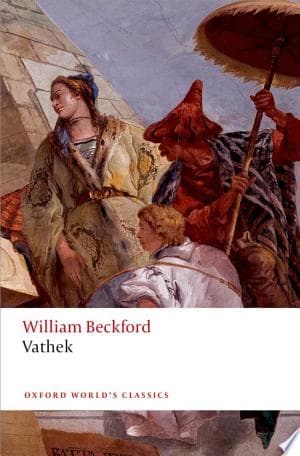
Synopsis
Covers the whole plot, including the ending.
- Difficulty
- Medium
- Pacing
- Moderate
- Mood
- Dark, Atmospheric, Morbid, Cautionary
- Read it if
- You enjoy classic orientalist fantasies with a strong moral message, gothic elements, and a focus on the corrupting nature of ambition and excess.
- Skip it if
- You prefer fast-paced modern fantasy, lighthearted stories, or dislike allegorical tales with explicit moralizing.
Vathek Plot Summary
Covers the whole plot, including the ending.
The Caliph's Excessive Nature
Caliph Vathek, ninth in line from Haroun al Raschid, rules Samarah. He has great power, wealth, and a desire for the extravagant and forbidden. With a terrifying gaze that can kill, Vathek builds five palaces for the senses and a huge tower, hoping to reach the heavens and find celestial secrets. His ambitions and curiosity push him to seek knowledge beyond human understanding, often leading to extreme and impious acts. Despite his power, he is restless, always looking for new pleasures and insights, often bordering on the sacrilegious and grotesque.
The Arrival of the Giaour
One day, a stranger, the Giaour, appears in Samarah. A storm precedes his arrival, and he carries sabers with mysterious, glowing characters that change daily. These sabers can cut any material easily. Vathek, curious about the Giaour's appearance and the sabers' power, tries to question him. However, the Giaour speaks an unknown language and then vanishes, leaving the sabers and a sense of unease. This encounter increases Vathek's obsession with the supernatural and hidden knowledge, making him believe the Giaour holds keys to deeper mysteries.
The Pursuit of the Giaour
Vathek, wanting the secrets he thinks the Giaour has, ignores warnings from his mother, Carathis, and his chief vizier, Morakanabad. He orders his people to dig for the Giaour, convinced the stranger is hiding underground. When the search fails, Vathek, in a fit of rage, orders his subjects trampled by elephants. This cruel act shows his moral decline. He then leaves to find the Giaour, determined to understand the sabers and the stranger's true nature, believing it will give him ultimate power.
The Giaour's Revelation
After a long journey, Vathek finds the Giaour again. This time, the Giaour reveals he is not mortal but a powerful efreet, a servant of Eblis, the Prince of Darkness. He promises Vathek access to the magnificent Palace of Subterranean Fire, a place of great power and treasures, where pre-Adamite sultans live. The Giaour explains that to enter, Vathek must commit terrible acts and renounce his faith. This offer, appealing to Vathek's deepest desires for power and forbidden knowledge, seals his fate and starts him on a path of moral decay and damnation.
The Journey to Istakhar
Vathek, now committed to the Giaour's dark promise, sets out with his mother, Carathis, and a large group towards the ruins of Istakhar, the gateway to the infernal palace. Carathis, a sorceress, also seeks power and encourages Vathek's pursuit of forbidden knowledge, hoping to share in his gains. Their journey involves impious acts and the sacrifice of innocent children to appease the malevolent forces they believe will grant them entry. This pilgrimage is a descent into moral depravity, each step bringing them closer to damnation, fueled by their shared ambition.
The Episode of Gulchenrouz
During their journey, Vathek and his group stop in a beautiful valley. They meet innocent and joyful children, including the beautiful Gulchenrouz. Gulchenrouz is meant for a life of spiritual devotion and purity. Vathek, briefly touched by the boy's innocence, considers saving him. However, his mother, Carathis, intervenes, ensuring Gulchenrouz is also taken as a potential sacrifice. This brief moment of humanity in Vathek quickly disappears under Carathis's influence and his own ambition, showing his continued decline into heartlessness and evil.
Nouronihar and the Emir Fakreddin
Vathek's travels bring him to Emir Fakreddin's domain, a devout and welcoming ruler. Fakreddin has a beautiful daughter, Nouronihar, whose beauty captivates Vathek. Despite Fakreddin's reluctance, Vathek, using charm and subtle threats, persuades him to let Nouronihar join his journey. Nouronihar, at first hesitant, is swayed by Vathek's power and promises. Her departure from her pious father's home marks another step away from virtue and into Vathek's corrupting influence, a choice she will regret.
Nouronihar's Temptation and Fall
Nouronihar, initially virtuous, gradually gives in to Vathek's charm and the promise of power and splendor in the Palace of Subterranean Fire. She dreams of reigning with him as a queen in this magnificent, forbidden realm. Her ambition and vanity awaken, overshadowing her earlier piety and devotion. This change shows her active role in choosing damnation, not just being a victim. She becomes a willing accomplice, mirroring Vathek's moral decline and showing how ambition can corrupt even pure souls.
Arrival at Istakhar and the Giaour's Final Instructions
Vathek, Carathis, Nouronihar, and their followers reach the ruins of Istakhar, a place with an ancient, foreboding history. The Giaour appears again, more menacing than before. He gives the final, chilling instructions for entering the infernal realm: they must give up all hope, all piety, and embrace despair. He warns that once inside, they will get all they desire but suffer eternal torment. This is the point of no return, where the characters choose eternal damnation over any chance of redemption, solidifying their pact with Eblis.
Entry into the Palace of Eblis
Following the Giaour's instructions, Vathek, Nouronihar, and Carathis enter the vast, magnificent Palace of Eblis. Its immense size, dazzling jewels, and the silent, solemn crowds of pre-Adamite sultans wandering its halls immediately impress them. The palace is a spectacle of infernal grandeur, at first fulfilling their desires for ultimate splendor and power. They marvel at the endless riches and the silent, majestic figures who seem to have eternal life. For a brief time, their ambitions seem realized, and they believe they have achieved their goal, unaware of their reward's true nature.
The Revelation of Internal Torment
As Vathek and Nouronihar explore the opulent palace, they watch the pre-Adamite sultans and their queens. They notice these majestic figures are always silent, with hands pressed to their chests. When Vathek questions one, the sultan reveals the horrifying truth: their hearts burn eternally with a silent, internal fire, a constant, agonizing torment that is the price of their forbidden knowledge and power. This revelation shatters Vathek and Nouronihar's illusions, as they realize their own hearts will soon suffer the same fate, their grand ambitions leading only to eternal suffering.
Carathis's Punishment
Carathis, upon entering the Palace of Eblis, tries to use her sorceress's power and make offerings to Eblis, hoping to secure a prominent position. However, her efforts are useless and only ensure her damnation. Like Vathek and Nouronihar, she is condemned to the same internal torment. Her heart, too, bursts into a silent, consuming flame, a direct result of her unholy ambitions and her role in leading Vathek to damnation. Her fate shows that even cunning and powerful sorcerers cannot escape the consequences of their pacts with infernal powers.
Vathek's Despair and Eternal Torment
The story ends with Vathek, Nouronihar, and Carathis joining the silent, suffering crowds in the Palace of Eblis. Their hearts, consumed by internal fire, become their eternal prison and torment. They keep their senses and awareness, fully understanding the endless duration and agony of their punishment. The once ambitious and pleasure-seeking Vathek becomes a figure of eternal despair, his grand plans ending in silent, agonizing damnation. Their punishment warns against unchecked ambition, blasphemy, and seeking forbidden knowledge at any cost, showing the futility of such endeavors.
Vathek Characters
Vathek
Protagonist
The ninth Caliph of the Abassides, obsessed with power, knowledge, and pleasure.
Vathek is a powerful, wealthy, and insatiably curious Caliph known for his terrifying gaze and immense ambition. He builds a grand tower to explore celestial secrets and indulges in every earthly pleasure, but remains restless and unfulfilled. His intelligence is matched only by his cruelty and impiety, leading him to commit heinous acts in pursuit of forbidden knowledge. He is easily swayed by the promise of ultimate power, making him vulnerable to the Giaour's temptations. He represents the dangers of unchecked ambition and the corrupting influence of power.
Relationships: Carathis (Son, influenced by her dark ambitions); Nouronihar (Lover, united in damnation); Giaour (Deceived and manipulated by him)
Carathis
Antagonist/Supporting
Vathek's mother, a formidable sorceress and an even greater instigator of evil.
Carathis is Vathek's mother, a powerful and ruthless sorceress. She is even more ambitious and wicked than her son, actively encouraging his pursuit of forbidden knowledge and dark pacts. Her intelligence is keen, but her heart is cold, and she revels in cruelty and black magic. She is a master manipulator, often pushing Vathek to commit more extreme acts. Carathis is driven by a desire for ultimate power, believing she can control even infernal forces, and ultimately shares in her son's damnation.
Relationships: Vathek (Mother, manipulates and encourages his evil deeds); Nouronihar (Rival for Vathek's attention, co-conspirator in damnation)
The Giaour
Antagonist
A mysterious, hideous stranger who is an efreet and servant of Eblis.
The Giaour is a demonic figure, initially appearing as a hideous stranger bearing enchanted sabers and speaking an unknown tongue. He is, in fact, an efreet, a powerful servant of Eblis, the Prince of Darkness. His role is to tempt and deceive mortals, luring them to their damnation with promises of immense power and forbidden knowledge. He is cunning and manipulative, guiding Vathek down a path of increasing impiety and cruelty. The Giaour embodies the seductive nature of evil and the ultimate emptiness of worldly ambition.
Relationships: Vathek (Tempter and deceiver, leads him to damnation); Eblis (Servant)
Nouronihar
Supporting
The beautiful daughter of Emir Fakreddin, who falls in love with Vathek and shares his damnation.
Nouronihar is the stunningly beautiful daughter of the pious Emir Fakreddin. Initially presented as virtuous and innocent, her character undergoes a significant transformation. She is seduced by Vathek's power, wealth, and the intoxicating promise of reigning with him in the Palace of Subterranean Fire. Her ambition and vanity are awakened, leading her to abandon her piety and willingly join Vathek on his dark quest. She represents the corrupting influence of worldly desires and the ease with which even seemingly pure souls can fall prey to temptation.
Relationships: Vathek (Lover, united in damnation); Emir Fakreddin (Daughter, abandons his piety for ambition)
Morakanabad
Supporting
Vathek's chief vizier, who attempts to counsel him against his impious pursuits.
Morakanabad is Vathek's chief vizier, a loyal and wise advisor who tries to dissuade the Caliph from his increasingly impious and destructive path. He represents reason, tradition, and moral caution in contrast to Vathek's recklessness and ambition. Despite his earnest efforts and good intentions, his warnings are consistently ignored by Vathek, highlighting the Caliph's stubborn refusal to heed good counsel. Morakanabad's character serves to emphasize Vathek's willful descent into evil.
Relationships: Vathek (Vizier, attempts to advise him, but is ignored)
Gulchenrouz
Supporting
A beautiful and innocent youth, destined for a life of spiritual devotion.
Gulchenrouz is a young, exceptionally beautiful, and innocent boy encountered by Vathek's entourage. He is destined to live a life of spiritual devotion in a secluded valley. His purity and innocence briefly touch Vathek, hinting at the Caliph's lost humanity. However, Carathis ensures his corruption or sacrifice. Gulchenrouz represents pure, uncorrupted innocence and serves as a stark contrast to the depravity of Vathek and his court, highlighting the depths of their moral fall.
Relationships: Vathek (Briefly considered for sacrifice, then spared); Carathis (Threatens his innocence for her rituals)
Emir Fakreddin
Supporting
Nouronihar's devout father, a hospitable and pious ruler.
Emir Fakreddin is the father of Nouronihar, a devout and hospitable ruler who lives a life of piety and simplicity. He initially resists Vathek's advances toward his daughter, valuing her purity and spiritual path. He represents traditional virtue and religious devotion, serving as a foil to Vathek's impious and ambitious nature. His sorrow at losing Nouronihar to Vathek's influence underscores the corrupting power of the Caliph and the tragic choice his daughter makes.
Relationships: Nouronihar (Father, deeply devoted to her well-being); Vathek (Host, unwillingly gives his daughter to him)
Eblis
Mentioned
The Prince of Darkness, ruler of the Palace of Subterranean Fire.
Eblis is the Islamic equivalent of Satan, the Prince of Darkness and the ultimate ruler of the Palace of Subterranean Fire. He is the master of the Giaour and the one who grants Vathek his ultimate, albeit agonizing, reward. Though he never appears directly, his presence and influence permeate the narrative, representing the ultimate evil and the source of the forbidden knowledge and power that Vathek so desperately seeks. He embodies the destructive consequences of making a pact with dark forces.
Relationships: Giaour (Master); Vathek (The ultimate deceiver and punisher)
Vathek Themes
The Perils of Unchecked Ambition
The main theme is the destructive results of boundless ambition. Vathek's desire for knowledge, power, and pleasure drives him to increasingly impious and cruel acts. His ambition blinds him to warnings and moral concerns, making him sacrifice his humanity for a false promise. This appears in his tower to reach heaven, his ruthless pursuit of the Giaour, and his pact with Eblis. The internal fire that consumes the hearts of the damned in the Palace of Eblis symbolizes ambition's self-destructive nature.
“He was addicted to the most splendid luxuries and the most voluptuous enjoyments; but still the unbounded love of power, and a restless curiosity, predominated in his soul.”
The Corrupting Influence of Power and Knowledge
The story explores how great power and the pursuit of forbidden knowledge corrupt the soul. Vathek, already a powerful Caliph, seeks to extend his rule beyond mortal limits, delving into the supernatural. The Giaour tempts him with promises of ultimate knowledge and control, which Vathek readily accepts, leading to his moral decline. His power allows him to commit atrocities without consequence, like trampling his subjects, showing how unchecked authority leads to tyranny and spiritual ruin. Even Nouronihar is corrupted by power's allure.
“His thirst for knowledge was such, that he pursued it through every channel, however dangerous or impure.”
The Nature of Good vs. Evil and Damnation
The story clearly contrasts good and evil. Vathek and Carathis embody wickedness, while characters like Morakanabad and Gulchenrouz represent virtue and innocence. The path to damnation is a series of choices: Vathek's repeated rejection of moral advice, his impious acts, and his final pact with Eblis. The Palace of Eblis vividly represents hell, where the damned get their desires only to suffer eternal, silent torment, their hearts consumed by internal fire. This emphasizes that true damnation is not just external punishment but an internal, self-inflicted agony.
“He, with the Caliph, was to be numbered amongst the most miserable of the damned: he was to retain his senses and his memory, and to be eternally consumed by a fire which should never be extinguished.”
The Seduction of the Supernatural and the Exotic
Vathek is drawn to the supernatural and exotic, a fascination that leads to his downfall. The Giaour's arrival, with mysterious sabers and cryptic language, ignites Vathek's restless curiosity. The promise of the Palace of Subterranean Fire, with its pre-Adamite sultans and treasures, represents the ultimate exotic and forbidden realm. The story uses lavish descriptions of oriental splendor and grotesque imagery to create an alluring yet dangerous world, reflecting 18th-century interest in the 'Orient' and its perceived mystical dangers. This allure blinds Vathek to the danger.
“This Giaour, for so he was called, was not a man of this world: but one of those formidable beings whom the magicians of former times have subjected to their power.”
Plot Devices & Literary Techniques
The Giaour
A demonic tempter who lures Vathek to his damnation.
The Giaour functions as the primary catalyst for Vathek's downfall. He appears as a mysterious, supernatural figure, bearing enchanted sabers and speaking in riddles, igniting Vathek's insatiable curiosity. He then reveals himself as an efreet, a servant of Eblis, and offers Vathek access to the infernal palace in exchange for his soul. The Giaour acts as a classic tempter, exploiting Vathek's ambition and pride, embodying the seductive nature of evil and forbidden knowledge.
The Tower of Vathek
A symbol of Vathek's hubris and ambition to transcend mortal limits.
Vathek constructs a colossal tower, aspiring to reach the heavens and uncover celestial secrets. This tower is a powerful symbol of his hubris, his desire to surpass human limitations, and his impious ambition. It represents his initial, tangible attempt to acquire forbidden knowledge and power, a precursor to his later pact with Eblis. The tower's eventual abandonment foreshadows the futility of his earthly pursuits and the spiritual void they fail to fill.
The Enchanted Sabers
Objects of mystery that initially spark Vathek's dangerous curiosity.
The sabers, inscribed with glowing, changing characters and possessing the power to cut through any substance, are the initial objects that draw Vathek into the Giaour's orbit. They serve as a macguffin, a mysterious element that captures Vathek's attention and fuels his curiosity about the supernatural. Their magical properties and cryptic inscriptions are a key element in propelling the early plot, prompting Vathek's relentless pursuit of their origin and the secrets they represent, ultimately leading him to the Giaour and his infernal pact.
The Palace of Subterranean Fire (Palace of Eblis)
The ultimate destination and symbol of eternal damnation.
The Palace of Subterranean Fire, or the Palace of Eblis, is the story's ultimate setting and a powerful symbolic plot device. It is presented as a place of immense splendor and forbidden knowledge, the fulfillment of Vathek's darkest desires. However, it is ultimately revealed to be a magnificent prison where the damned suffer eternal, internal torment. It functions as a physical manifestation of hell and the consequence of making pacts with evil, embodying the theme that unchecked ambition leads to eternal suffering rather than true fulfillment.
Internal Fire
The physical manifestation of eternal torment and self-inflicted damnation.
The internal fire that consumes the hearts of the damned in the Palace of Eblis is a potent symbolic plot device. It is not an external punishment but an agony that originates within, representing the self-destructive nature of sin and ambition. This silent, unquenchable flame signifies that the true torment of damnation is not merely the loss of happiness but the eternal, conscious suffering of one's own corrupt desires. It's a constant reminder of the choices made and the spiritual emptiness that results.
Vathek Quotes
“He was a prince, who, in early youth, had been the sport of his mother’s caresses, and the admiration of all the world.”
“His figure was pleasing, and a certain air of grandeur, diffused over his whole person, announced him to be of no common extraction.”
“The Caliph Vathek, whose pride and cruelty were not to be restrained by the laws either of God or man, had many wives, and his seraglio was filled with the most beautiful women of the East.”
“He was, indeed, a prince of a most exquisite taste; but his taste was always on the side of the extraordinary and the gigantic.”
“He had caused to be built, by the most skillful architects, a tower of such prodigious elevation, that it seemed to threaten the firmament.”
“He had a most insatiable curiosity for all kinds of knowledge, and was perpetually in search of new pleasures and new discoveries.”
“The Giaour, with his long beard, and his black eyes, that sparkled like live coals, was a most venerable and imposing figure.”
“He was not to be diverted from his purpose, but by the most violent commotions of nature, or by the most extraordinary phenomena.”
“The more he acquired, the more he desired; and the more he desired, the more he suffered.”
“Such was the Caliph Vathek, who, in the very height of his glory, was doomed to experience the most signal reverse of fortune.”
“He was now convinced that his long search after forbidden knowledge had only led him to the brink of a precipice.”
“He felt his heart, which was at first but slightly tinged with curiosity, now burning with an unquenchable thirst for the marvelous.”
“The most luxurious and voluptuous of princes, he was also the most miserable.”
“His heart, which was a prey to the most agonizing remorse, was now, for the first time, susceptible of pity.”
Quiz
10 questions on the plot and the characters. Each answer comes with a short explanation.
Question 1
Vathek, the ninth Caliph of the Abassides, is known for building a tower of how many steps?
- Seven hundred and seventy-seven
- Eight hundred and eighty-eight
- Nine hundred and ninety-nine
- One thousand and one
Show answer
C. Nine hundred and ninety-nine Vathek's tower, built to reach the heavens and explore the secrets of the stars, famously had nine hundred and ninety-nine steps.
Question 2
What is the name of Vathek's mother, who is a powerful sorceress and often advises him?
- Nouronihar
- Carathis
- Gulchenrouz
- Fakreddin
Show answer
B. Carathis Carathis is Vathek's formidable mother, a skilled sorceress who encourages his pursuit of forbidden knowledge and power.
Question 3
What is the primary motivation behind Vathek's quest that leads him to the Hall of Eblis?
- To find true love and happiness
- To gain immense wealth and worldly possessions
- To acquire forbidden knowledge and power beyond mortal limits
- To establish a vast and peaceful empire
Show answer
C. To acquire forbidden knowledge and power beyond mortal limits Vathek is driven by insatiable curiosity and a desire for forbidden knowledge and dominion, which ultimately leads him to make a pact with Eblis.
Question 4
Who is the beautiful princess Vathek falls in love with and tries to bring with him to the Hall of Eblis?
- Zulima
- Nouronihar
- Scherezade
- Fatima
Show answer
B. Nouronihar Nouronihar is the enchanting princess, niece of the Emir Fakreddin, whose beauty captivates Vathek and becomes intertwined with his damnation.
Question 5
What object does the Giaour instruct Vathek to sacrifice to gain access to the treasures of the subterranean palace?
- His most prized jewel
- The lives of fifty of his most loyal subjects
- His sacred prayer rug
- A lock of Carathis's hair
Show answer
B. The lives of fifty of his most loyal subjects The Giaour, the demonic guide, demands the sacrifice of fifty beautiful youths to appease the Jinns and open the way to the subterranean realms.
Question 6
What is the ultimate punishment inflicted upon Vathek, Nouronihar, and Carathis in the Hall of Eblis?
- They are turned into statues of gold
- Their bodies are consumed by eternal flames
- Their hearts are eternally consumed by fire, yet they remain conscious
- They are forced to eternally serve Eblis as his slaves
Show answer
C. Their hearts are eternally consumed by fire, yet they remain conscious The ultimate curse in the Hall of Eblis is that their hearts are consumed by a ceaseless fire, a symbol of their unquenched desires and remorse, yet they retain their faculties to suffer.
Question 7
What is the significance of the Giaour's appearance to Vathek in the marketplace?
- He offers Vathek a rare and valuable gem
- He provides Vathek with a map to a hidden treasure
- He is a mysterious stranger who possesses knowledge of the subterranean world and tempts Vathek towards it
- He challenges Vathek to a duel of wits
Show answer
C. He is a mysterious stranger who possesses knowledge of the subterranean world and tempts Vathek towards it The Giaour, a stranger with demonic origins, is the catalyst for Vathek's downfall, presenting him with the opportunity and means to seek forbidden knowledge and power.
Question 8
Before entering the Hall of Eblis, what warning does the Guardian of the portal give Vathek and his companions?
- That they must first solve a complex riddle
- That they will find only disappointment and despair within
- That they must leave all their earthly possessions behind
- That they will be granted one wish upon entry
Show answer
B. That they will find only disappointment and despair within The Guardian warns them that all who enter will find that their desires turn to ashes and their hopes to despair, hinting at the tragic fate awaiting them.
Question 9
How does the character of Gulchenrouz serve as a foil to Vathek and Nouronihar?
- He is equally ambitious and corrupt, mirroring their flaws.
- He represents innocence, contentment, and a simpler life, contrasting with their pursuit of forbidden power.
- He is a wise sage who attempts to guide them away from their destructive path.
- He is a powerful adversary who seeks to thwart their journey.
Show answer
B. He represents innocence, contentment, and a simpler life, contrasting with their pursuit of forbidden power. Gulchenrouz, Nouronihar's effeminate and innocent cousin, embodies a life of simple pleasures and purity, starkly contrasting with Vathek and Nouronihar's corrupted ambition and ultimate damnation.
Question 10
What is the primary thematic message conveyed by Vathek's ultimate fate in the Hall of Eblis?
- The triumph of love over evil.
- The dangers of unchecked ambition, pride, and the pursuit of forbidden knowledge.
- The ultimate power of divine intervention.
- The importance of material wealth for happiness.
Show answer
B. The dangers of unchecked ambition, pride, and the pursuit of forbidden knowledge. Vathek's story is a cautionary tale, illustrating the severe consequences of succumbing to excessive pride, insatiable curiosity, and the relentless pursuit of power and knowledge beyond human limits.
Vathek FAQ
What is the basic premise of 'Vathek'?
Caliph Vathek, a powerful but impious ruler, is obsessed with forbidden knowledge and earthly pleasures. He is lured by a mysterious Giaour, an infernal messenger, into seeking treasures and power beyond mortal reach, ultimately leading him to the subterranean palaces of Eblis, the Muslim devil, in a quest for the Throne of Solomon.
Who is the Giaour and what is his role in Vathek's downfall?
The Giaour is a grotesque, mysterious figure, a servant of Eblis, who appears to Vathek with strange, glowing scimitars and promises of untold treasures and power. He acts as the primary tempter and guide, subtly manipulating Vathek's pride and curiosity, driving him further down the path of damnation and towards the infernal realm.
Who is Carathis and how does she influence Vathek?
Carathis is Vathek's mother, a formidable and equally ambitious sorceress who encourages his pursuit of forbidden knowledge and power. She is a cruel and domineering figure, deeply involved in dark rituals and human sacrifices, and her influence reinforces Vathek's impious nature, pushing him towards greater wickedness.
What is the ultimate fate of Vathek and his followers?
Vathek, along with his consort Nouronihar and other damned followers, reaches the Halls of Eblis. There, they are granted a brief period of pleasure and knowledge before their hearts are consumed by eternal fire, a punishment for their pride, ambition, and impious deeds. They are condemned to wander the infernal realm with burning hearts.
What is the significance of the five senses in Vathek's character?
Vathek is characterized by his insatiable appetites and indulgence in all five senses. His palace, Al-Raki, is a testament to his hedonism, with lavish banquets, exquisite music, and beautiful concubines. This sensory excess reflects his earthly attachments and moral corruption, which ultimately blind him to true spiritual understanding.
Are there any subtle hints about the Giaour's true nature before his reveal?
Yes, subtle hints include his sudden appearance from nowhere, his strange, unearthly laugh, and the fact that only Vathek can fully comprehend his speech. His glowing scimitars, which emit an unnatural light, also foreshadow his infernal origin, suggesting he is more than just a mortal merchant or traveler.
What is the implied connection between the Giaour and Vathek's earlier dreams?
Vathek's early dreams of power and forbidden knowledge, particularly those involving the Throne of Solomon, are subtly implied to be influenced or even sent by Eblis through the Giaour. These dreams serve to prepare Vathek's mind, making him more receptive to the Giaour's temptations and solidifying his desire for infernal power.
Is there a deeper meaning to the 'Tower of the Four-and-Twenty Stairs'?
The tower, built by Vathek to observe the stars and pursue forbidden knowledge, symbolizes his hubris and his attempt to transcend human limitations through impious means. The 'four-and-twenty stairs' could allude to the hours of the day, suggesting his relentless and obsessive pursuit, or perhaps a symbolic number tied to esoteric traditions.
How does the architecture of Vathek's palace, Al-Raki, reflect his personality?
Al-Raki, with its excessive grandeur, numerous halls of pleasure, and the imposing Tower of the Four-and-Twenty Stairs, directly mirrors Vathek's boundless ambition, hedonism, and intellectual arrogance. Its sheer scale and opulence speak to his desire for worldly power and his disregard for moderation, reflecting his internal excess.
How does Vathek's pride contribute to his downfall?
Vathek's immense pride in his power, intellect, and ability to defy divine will makes him vulnerable to the Giaour's temptations. He believes himself superior to others and deserving of ultimate knowledge, leading him to ignore warnings and pursue a path that ultimately results in his eternal damnation, a classic example of hubris.
Analyze Nouronihar's psychological journey in the story.
Nouronihar initially resists Vathek's advances and the allure of forbidden power, showing a semblance of virtue. However, her ambition and vanity are eventually exploited by the Giaour, leading her to succumb to the temptation of eternal youth and dominion. Her psychological journey mirrors Vathek's, demonstrating the corrupting influence of unchecked desire.
What role does fear play in the characters' motivations, particularly Vathek's?
While driven by ambition, Vathek also exhibits a fear of being ordinary or limited by mortal constraints. His fear of not possessing ultimate knowledge or power fuels his relentless pursuit of the infernal realm. This underlying fear makes him susceptible to the Giaour's promises of transcending human limitations.
How does Beckford use the concept of temptation to explore human nature?
Beckford meticulously portrays how different characters, like Vathek and Nouronihar, are tempted by various desires: power, knowledge, beauty, and immortality. The story suggests that unchecked ambition and the pursuit of selfish desires, even if initially noble, can lead to moral decay and spiritual ruin, highlighting the fragility of human virtue.
Is 'Vathek' primarily a moral allegory or a critique of orientalism?
While 'Vathek' certainly functions as a moral allegory, warning against unchecked ambition and impious conduct, it also contains elements that can be interpreted as a critique of orientalism. Beckford's portrayal of the exotic East, while fantastical, also subtly critiques the European fascination with and often misrepresentation of Eastern cultures.
How does the ending, with the burning hearts, symbolize eternal punishment?
The burning hearts symbolize the internal torment and remorse that consumes the damned for eternity. It's not an external fire but a self-inflicted agony, representing the burning desire and ambition that led them to their doom, now turned into their perpetual punishment. This internal suffering is a profound psychological torture.
What is the significance of the 'Throne of Solomon' in the narrative?
The 'Throne of Solomon' symbolizes ultimate wisdom, power, and dominion, traditionally associated with Solomon's ability to command spirits. For Vathek, it represents the forbidden knowledge and control over supernatural forces he desperately craves, making it the ultimate prize in his infernal quest and a potent symbol of worldly and unholy ambition.
Could Vathek be seen as a proto-Romantic figure, despite his damnation?
Vathek embodies certain proto-Romantic traits: his pursuit of the sublime, his defiance of societal and religious norms, his intense individualism, and his embrace of the exotic and supernatural. While his fate is cautionary, his grand scale of ambition and emotional intensity resonate with the Romantic fascination with powerful, often tragic, figures.
What is the role of the 'Hall of Eblis' in the overall message of the book?
The 'Hall of Eblis' serves as the ultimate destination for the damned, a place of false promise where initial gratification gives way to eternal despair. It reinforces the book's moral message that worldly ambition and the pursuit of forbidden knowledge, even when seemingly successful, lead only to spiritual emptiness and perpetual suffering.
About the author
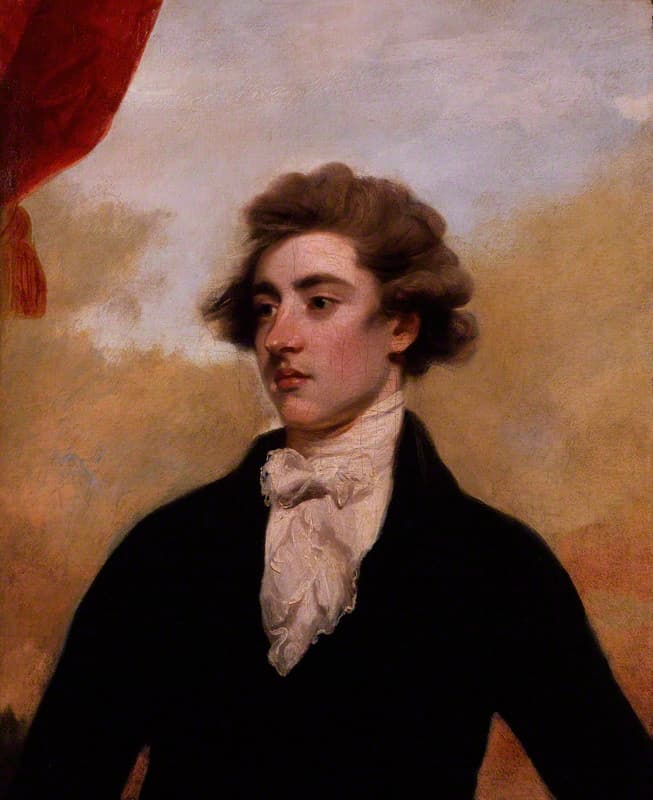
William Beckford was an English novelist and art collector active in the late 18th and early 19th centuries. He is best known for his gothic novel "Vathek," which explores themes of ambition and the supernatural. Beckford's work is notable for its rich, imaginative prose and its influence on later gothic literature.
Similar books
- The Castle of Otranto
Horace Walpole
3.2 (23k) average on GoodreadsFantasyOne of the earliest gothic novels, sharing an atmospheric, often macabre tone and focus on supernatural elements.
- Frankenstein: The 1818 Text
Mary Shelley
3.8 (1.2M) average on GoodreadsFantasyExplores themes of forbidden knowledge, unchecked ambition, and the tragic consequences of playing God, with a dark, philosophical undercurrent.
- The Picture of Dorian Gray
Oscar Wilde
4.1 (966k) average on GoodreadsFantasyFeatures a protagonist consumed by hedonism and moral decay, with supernatural consequences for their transgressions, though with a different stylistic approach.
- Harry Potter and the Sorcerer's Stone
J.K. Rowling
4.5 (7M) average on GoodreadsFantasyRescued from a miserable life under the stairs, an orphaned boy discovers he's a wizard destined for a magical school, where he uncovers a dangerous secret tied to the dark wizard who murdered his parents.
- The Hunger Games
Suzanne Collins
4.3 (6.4M) average on GoodreadsFantasyIn a future where children fight to the death on live television, Katniss Everdeen volunteers for the arena, turning a death sentence into a fight for survival and a spark of rebellion.
- 1984
George Orwell
4.2 (3.1M) average on GoodreadsPoliticsIn a future where surveillance and thought control are absolute, a man's search for truth clashes with the Party, showing that hope can be a form of rebellion.





Enjoyed the summary?
A summary gives you the shape of the book. The book itself has the detail, the examples and the voice.
Find Vathek on AmazonAs an Amazon Associate, BookBrief earns from qualifying purchases. How we're funded