
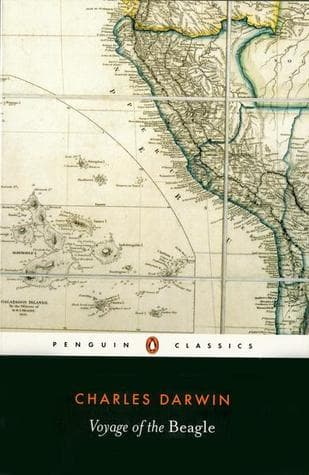
Core Idea
- Difficulty
- Medium
- Read it if
- You are fascinated by the origins of evolutionary thought, enjoy detailed travelogues rich in scientific observation, or want to understand the empirical journey that led to Darwin's groundbreaking ideas.
- Skip it if
- You prefer concise summaries over extensive descriptive prose, are looking for a purely theoretical text, or have little patience for 19th-century scientific writing styles and detailed natural history observations.
Key Takeaways from Voyage of the Beagle
The Power of Direct Observation
Darwin's journey was a masterclass in empirical data collection over theoretical speculation.
Darwin's 'Voyage of the Beagle' shows the essential role of direct, careful observation in scientific discovery. Before Darwin, much of biology and geology relied on accepted beliefs or theoretical ideas. Darwin, however, spent five years deeply involved in different ecosystems, carefully recording plants, animals, and geological formations. This hands-on approach, often in difficult conditions, allowed him to see patterns, unusual features, and relationships that purely theoretical study would never reveal. This constant interaction with the natural world, rather than abstract thought, planted the seeds of his new ideas about evolution and natural selection. His journal entries clearly show how important insights come from patient, open engagement with reality, starting a new era of scientific inquiry.
“I had during the voyage been deeply impressed with the truth of the long-acknowledged axiom, that 'the greater our knowledge of the laws of nature, the more our ideas are elevated.'”
In the book: Darwin’s detailed descriptions of the geological strata in Patagonia, the varying beaks of finches on different Galápagos Islands, or the fossil discoveries in South America, all of which he meticulously recorded and later used to formulate his theories.
Try this: Cultivate a habit of direct observation in your field. Rather than relying solely on secondary sources or existing theories, actively engage with the subject matter. For instance, if you're a writer, observe human interactions in public; if a designer, study how people interact with spaces or objects in real-time.
Related ideas: empirical-evidence, scientific-method, field-research
Geology as the Foundation of Life
Darwin's geological insights were as crucial as his biological ones, revealing Earth's dynamic history.
While often remembered for his biological work, Darwin's 'Voyage' is also a geological expedition. Influenced by Lyell's 'Principles of Geology,' Darwin became a sharp observer of Earth's processes, realizing the planet was older and more active than previously thought. His observations of earthquakes, volcanoes, uplifted marine shells, and erosion provided clear evidence for gradual geological change over long periods. This understanding of an ancient, changing Earth was vital to his later biological theories. If the Earth itself was always transforming, then life, too, must be able to adapt and change over similar vast periods. His geological work provided the necessary time and environment for evolution to unfold, showing the deep connections among Earth sciences.
“The geology of St. Jago is very interesting... The whole island has been elevated; and the successive lava streams, forming the terraces, have flowed out from the ancient craters.”
In the book: Darwin's detailed analysis of the Andes Mountains, noting evidence of successive uplifts and the presence of marine fossils at high altitudes, confirming Lyell's uniformitarian principles.
Try this: When analyzing complex systems, look beyond the immediate surface. Understand the historical and foundational elements that shaped them. For example, in business strategy, research the geological (historical) shifts in market dynamics, not just current trends.
Related ideas: uniformitarianism, geological-time, earth-sciences
Species Adaptation and Geographic Isolation
The Galápagos Islands provided a living laboratory for the mechanisms of diversification.
The Galápagos Islands are a key point in Darwin's intellectual journey, offering a small example of evolutionary processes. Here, he saw how species varied slightly from island to island, yet shared a common ancestor. The famous finches, with their different beak shapes adapted to various food sources, became a strong example of natural selection in action. Similarly, the distinct varieties of giant tortoises on each island highlighted how geographic isolation drives diversification. Darwin realized that these isolated populations, facing unique environmental pressures, slowly moved away from their mainland ancestors. This insight showed that species are not fixed but dynamic, constantly shaped by their environment and its selective pressures, leading to the rich variety of life we see.
“The most curious fact is the perfect gradation in the size of the beaks in the different species of finches, from one as large as that of a hawfinch to that of a chaffinch.”
In the book: The distinct differences in beak morphology among the Galápagos finches, each specialized for consuming different types of seeds or insects, directly correlating with the food available on their respective islands.
Try this: In problem-solving, consider how different 'environments' or constraints lead to specialized solutions. If you're designing a product, think about how variations for specific user segments (isolated 'islands') might lead to optimal adaptations.
Related ideas: natural-selection, adaptive-radiation, biogeography
The Brutality and Beauty of Nature
Darwin confronted the harsh realities of the natural world, balancing wonder with predation and struggle.
Darwin's journal is not just a collection of scientific observations; it also clearly shows nature's two sides: its beauty alongside its harshness. He saw firsthand the struggle for existence, from predators hunting prey to species competing for resources. His descriptions of the 'war of nature' are direct, detailing the tough realities of survival in various ecosystems, from Patagonia's deserts to Brazil's dense jungles. This direct experience with nature's 'red in tooth and claw' aspect was important for developing his theory of natural selection. It removed any romantic ideas of a perfectly harmonious world, instead revealing a dynamic system where life and death, creation and destruction, are closely linked, driving adaptation and change.
“It is a wonder how the South American plains, which are so fertile and produce such a profusion of life, can also be the scene of such constant struggle and death.”
In the book: His accounts of observing a puma hunting a guanaco, or the gruesome details of parasitic wasps laying eggs in living caterpillars, alongside his awe for the vibrant biodiversity of the rainforest.
Try this: Acknowledge and understand the full spectrum of reality in your endeavors. In leadership, recognize that progress often involves difficult decisions and competition, not just harmony. Embrace the challenges as part of the growth process.
Related ideas: struggle-for-existence, predation, ecological-balance
The Humbling Scale of Time and Change
Darwin's travels revealed geological and biological transformations occurring over unimaginable timescales.
One of the most important lessons from Darwin's voyage is the vastness of time and the gradual nature of change. His observations of geological processes—the slow erosion of mountains, the uplift of land over millennia, the formation of coral reefs—led him to accept that Earth was far older than common religious beliefs suggested. This deep-time perspective was essential for thinking about biological evolution. If geological changes happen over millions of years, then biological changes could also build up slowly over similar durations, leading to the immense diversity of life. The voyage made Darwin let go of human-centered ideas of time and embrace a cosmic perspective, where small, gradual changes, given enough time, could lead to major transformations in both Earth and its inhabitants.
“We are accustomed to look at the present state of the earth as the result of a long succession of changes, and to consider the agency of the actual forces as sufficient to produce these changes.”
In the book: His detailed studies of the formation of coral atolls, where he theorized that the growth of coral keeps pace with the slow subsidence of volcanic islands over vast geological periods.
Try this: Cultivate patience and a long-term perspective in your goals. Understand that significant transformations, whether personal or professional, often require sustained, incremental effort over extended periods, not instant gratification.
Related ideas: deep-time, gradualism, geological-erosion
The Interconnectedness of Life and Environment
Darwin recognized that every organism is intricately linked to its surroundings and other species.
Throughout his voyage, Darwin repeatedly found ecosystems where every part, from the smallest insect to the largest mammal, was closely connected to its environment and to other species. He observed how small changes in one element—like the availability of a certain plant—could affect an entire food web, impacting populations of herbivores, predators, and even soil composition. This complete view, long before the term 'ecology' was used, allowed him to see nature not as separate parts but as a large, active network of connections. This understanding was important for his theory of natural selection, as it highlighted how environmental pressures and relationships between species constantly shape organisms, leading them to better adapt within their specific ecological niche.
“It is interesting to contemplate an entangled bank, clothed with many plants of many kinds, with birds singing on the bushes, with various insects flitting about, and with worms crawling through the damp earth, and to reflect that these elaborately constructed forms... have all been produced by laws acting around us.”
In the book: His observations of the co-evolutionary relationships between specific plants and insects, or how the introduction of non-native species could disrupt established ecological balances in new territories.
Try this: When solving problems, adopt a systems-thinking approach. Understand that individual components are part of a larger network and that changes in one area will inevitably impact others. Consider the ripple effects of your actions.
Related ideas: ecology, ecosystem, food-web
The Role of Serendipity in Discovery
Despite meticulous planning, many profound insights emerged from unexpected encounters.
While Darwin's voyage showed methodical scientific inquiry, it also emphasized the important role of chance in major discoveries. Despite his careful plans and scientific training, many of his most significant observations and 'aha!' moments came from unexpected encounters or unforeseen situations. Whether it was finding a fossil bed in Patagonia, observing a unique species on a seemingly barren island, or having a casual talk with a local guide, these unplanned events often provided crucial pieces of the puzzle. This shows that while preparation is key, an open mind, sharp observational skills, and a willingness to change plans are equally important for true innovation. Science, like life, often rewards those who are ready for the unexpected.
“How many times have I been surprised by finding a new species, or a new geological formation, where I least expected it!”
In the book: The discovery of giant fossilized mammal remains (e.g., Megatherium, Glyptodon) in South America, which sparked his curiosity about extinct forms and their relationship to living species, was often by chance during overland expeditions.
Try this: Foster an environment that allows for unexpected discoveries. Be open to exploring tangents, following curiosities, and embracing 'failures' or detours as potential sources of new insights. Don't be rigidly bound by initial plans.
Related ideas: serendipity, scientific-discovery, unforeseen-consequences
Humanity's Place in the Natural Order
Darwin's observations subtly challenged anthropocentric views, placing humans within, not above, nature.
Though 'Voyage of the Beagle' does not directly detail his theory of human evolution, Darwin's experiences laid the unspoken groundwork for understanding humanity's place in the natural world. His encounters with different human cultures, from the Indigenous people of Tierra del Fuego to the colonial settlers, along with his observations of primate behavior and the anatomical similarities across species, began to challenge the common human-centered view. By carefully documenting the shared biological principles governing all life, he subtly suggested that humans were not divinely separate but rather products of the same evolutionary forces that shaped every other organism. This perspective, revolutionary for its time, was a quiet but strong theme throughout his travels, hinting at the profound implications of his later work on human origins.
“Man in his arrogance thinks himself a great work, worthy of the interposition of a deity. More humble and I believe truer to consider him created from animals.”
In the book: His detailed comparisons of the physical characteristics and behaviors of the 'Fuegians' with Europeans, and his later reflections on the shared anatomical structures across various mammals, including humans.
Try this: Adopt a more integrated view of humanity within the broader ecosystem. Recognize that human actions have ecological consequences and that our species is subject to natural laws, fostering greater humility and environmental responsibility.
Related ideas: anthropocentrism, human-evolution, shared-ancestry
The Indelible Mark of Colonialism and Slavery
Darwin's journal provides a stark, first-hand account of human injustice and its impact.
Beyond its scientific impact, Darwin's 'Voyage' is an important historical document, offering a frank look at 19th-century colonialism and the terrible institution of slavery. Darwin, a strong abolitionist, was deeply troubled by the cruelties he witnessed, particularly in Brazil and other slave-holding territories. His detailed accounts of the inhumane treatment of enslaved people, the devastating effect of European expansion on Indigenous populations, and the arbitrary violence of civil conflicts in places like Argentina, reveal a compassionate observer dealing with serious human injustice. These passages serve as a strong reminder that scientific exploration often happens against a background of complex human societies, and that the search for knowledge is often connected with ethical concerns and historical oppression. It shows his moral compass as much as his scientific one.
“I never saw a more striking and painful contrast than between the happy, smiling faces of the negroes I had seen in Brazil, and the sullen, dejected countenances of those in the West Indies, where slavery was still legal.”
In the book: Darwin's visceral descriptions of slave markets in Brazil, the brutal gaucho warfare in Argentina, and the profound cultural disruption faced by the Indigenous peoples of Tierra del Fuego.
Try this: When evaluating historical or contemporary issues, always consider the human element and the impact of power dynamics, exploitation, and social injustice. Educate yourself on the ethical implications of past and present actions.
Related ideas: colonialism, slavery, social-justice
Transformation Through Immersion
The voyage fundamentally reshaped Darwin from an aimless youth into a scientific visionary.
Perhaps the most personal lesson from 'Voyage of the Beagle' is the significant power of immersive experience. When Darwin began on the Beagle, he was a young, somewhat unfocused man, unsure of his path, having left medical studies and considered a career in the church. Five years of intense observation, intellectual challenge, and exposure to the world's diverse wonders and harsh realities shaped him into the disciplined, insightful scientist who would later create the theory of evolution. The constant intellectual stimulation, the need for independent thought, and the sheer amount of new data he encountered forced him to develop his critical thinking and observational skills to an extraordinary degree. This journey was not just a scientific expedition; it was a process that refined his intellect and solidified his life's purpose, showing how deep immersion can greatly change one's direction.
“The voyage of the Beagle has been by far the most important event in my life, and has determined my whole career.”
In the book: The contrast between his early journal entries, which are often descriptive, and later entries, which begin to show more analytical thought and nascent theoretical speculation, culminating in his own reflection on the voyage's impact.
Try this: Seek out immersive experiences that challenge your perspectives and force you to engage deeply with new ideas or environments. Embrace opportunities for sustained, hands-on learning, as these are often the most potent catalysts for personal and professional growth.
Related ideas: personal-growth, experiential-learning, intellectual-development
Voyage of the Beagle Quotes
“The voyage of the Beagle has been by far the most important event in my life, and has determined my whole career.”
“Everywhere we have found the indigenous races decreasing in numbers.”
“It is not the strongest of the species that survives, nor the most intelligent that survives. It is the one that is most adaptable to change.”
“The sight of a naked savage in his native island is an object which can fill a thinking mind with many reflections.”
“I had during the voyage been deeply impressed by discovering in the various animals I had examined, many points of structure in common, and others in great dissimilarity.”
“The geology of St. Jago is of a very interesting nature.”
“There is a grandeur in this view of life.”
“We were much struck with the quantity of life in the sea.”
“The most important parts of the world, in a geological sense, are those which are now undergoing change.”
“I have collected a considerable number of facts, which, I think, will throw some light on the origin of species.”
“Few people have any idea of the extent of the forest in Tierra del Fuego.”
“The perfect equality of the sexes is common to all the aboriginal tribes.”
“The zoology of the Galapagos is a subject of peculiar interest.”
“It is a grand thing to see the great ocean, with its waves, rolling in from such an immense distance.”
Quiz
10 questions on the main ideas. Each answer comes with a short explanation.
Question 1
On what date did the HMS Beagle depart from Devonport for its famous voyage?
- December 27, 1829
- December 27, 1831
- January 1, 1830
- January 1, 1832
Show answer
B. December 27, 1831 The text explicitly states, 'When the Beagle sailed out of Devonport on 27 December 1831, Charles Darwin was twenty-two and setting off on the voyage of a lifetime.'
Question 2
How old was Charles Darwin when he embarked on the voyage of the Beagle?
- Nineteen
- Twenty-two
- Twenty-five
- Thirty
Show answer
B. Twenty-two The text mentions, 'When the Beagle sailed out of Devonport on 27 December 1831, Charles Darwin was twenty-two and setting off on the voyage of a lifetime.'
Question 3
Approximately how long did the voyage of the Beagle last?
- Two years
- Three years
- Five years
- Ten years
Show answer
C. Five years The description clearly states the voyage 'was to last five years and transform him from an amiable and somewhat aimless young man into a scientific celebrity.'
Question 4
What significant scientific work, published much later, was a culmination of the intellectual currents set in motion by Darwin's voyage?
- Principles of Geology
- Philosophiae Naturalis Principia Mathematica
- The Origin of Species
- On the Tendency of Species to Form Varieties
Show answer
C. The Origin of Species The text states the voyage 'was to set in motion the intellectual currents that culminated in the arrival of The Origin of Species in Victorian drawing-rooms in 1859.'
Question 5
Besides natural history, what other types of observations did Darwin record that caught his eye during the voyage?
- Only geological formations and volcanic activity
- Meteorological data and oceanic currents
- Civil war in Argentina and colonial settlements in Australia
- Indigenous languages and ancient ruins
Show answer
C. Civil war in Argentina and colonial settlements in Australia The journal 'records many other things that caught Darwin’s eye, from civil war in Argentina to the new colonial settlements of Australia.'
Question 6
Who was Robert FitzRoy in relation to Charles Darwin and the Beagle voyage?
- Darwin's primary scientific mentor
- The ship's chief naturalist before Darwin
- Darwin's friend and captain of the Beagle
- The publisher of Darwin's journal
Show answer
C. Darwin's friend and captain of the Beagle The text mentions 'Robert FitzRoy, Darwin’s friend and captain of the Beagle,' who also contributed an essay to the Penguin Classics edition.
Question 7
What specific scientific discipline is highlighted as a primary area of Darwin's 'patient observations' in his journal?
- Botany
- Ornithology
- Geology
- Anthropology
Show answer
C. Geology His journal is 'showing us a naturalist making patient observations, above all in geology.'
Question 8
Before the voyage, how is Charles Darwin's character described in the provided text?
- A renowned and ambitious scientist
- An amiable and somewhat aimless young man
- A meticulous and disciplined researcher
- A cynical and reclusive intellectual
Show answer
B. An amiable and somewhat aimless young man The voyage was to 'transform him from an amiable and somewhat aimless young man into a scientific celebrity.'
Question 9
What is included in the Penguin Classics edition of 'Voyage of the Beagle' in addition to Darwin's journal and maps?
- An autobiography of Robert FitzRoy
- An essay on scientific geology and the Bible by Robert FitzRoy
- A complete list of all species discovered by Darwin
- Darwin's personal letters to his family
Show answer
B. An essay on scientific geology and the Bible by Robert FitzRoy The Penguin Classics edition 'also contains maps and appendices, including an essay on scientific geology and the Bible by Robert FitzRoy, Darwin’s friend and captain of the Beagle.'
Question 10
How did the voyage of the Beagle impact Darwin's personal and professional status, according to the text?
- It solidified his existing reputation as a leading geologist.
- It transformed him from an amiable, aimless young man into a scientific celebrity.
- It led to his immediate retirement from scientific pursuits.
- It caused him to abandon his interest in natural history.
Show answer
B. It transformed him from an amiable, aimless young man into a scientific celebrity. The voyage 'was to last five years and transform him from an amiable and somewhat aimless young man into a scientific celebrity.'
Voyage of the Beagle FAQ
What is the 'Voyage of the Beagle' about?
The 'Voyage of the Beagle' is Charles Darwin's journal detailing his five-year journey aboard HMS Beagle, starting in 1831. It chronicles his observations in natural history, geology, and diverse cultures across South America, Australia, and other regions, laying foundational groundwork for his later theories.
Does 'Voyage of the Beagle' include Darwin's theory of evolution?
While the 'Voyage of the Beagle' details the extensive observations and evidence that profoundly influenced Darwin's thinking, it does not explicitly present the full theory of evolution by natural selection. Those ideas were developed and published later in 'On the Origin of Species'.
What scientific contributions did Darwin make during the Beagle voyage?
During the Beagle voyage, Darwin made significant contributions primarily in geology, natural history, and zoology. His meticulous observations of fossils, geological formations, and diverse species, particularly in the Galápagos Islands, provided crucial empirical data that challenged existing scientific paradigms.
How is the 'Voyage of the Beagle' different from 'On the Origin of Species'?
The 'Voyage of the Beagle' is a descriptive journal of Darwin's travels and observations, a firsthand account of his data collection. 'On the Origin of Species', published much later, is a theoretical work where Darwin presents his fully developed argument for evolution by natural selection, based on the evidence gathered during and after the voyage.
Is 'Voyage of the Beagle' suitable for general readers, or only scientists?
The 'Voyage of the Beagle' is highly accessible to general readers, offering a captivating blend of adventure, travelogue, and scientific discovery. While it contains detailed scientific observations, Darwin's engaging writing style and accounts of diverse cultures make it enjoyable for a broad audience.
What is the significance of the Galápagos Islands in Darwin's journal?
The Galápagos Islands were profoundly significant as Darwin observed unique species, such as finches and tortoises, with variations adapted to different islands. These observations were instrumental in shaping his ideas about species adaptation and divergence, which were crucial to his theory of natural selection.
Does the book discuss Captain Robert FitzRoy's views on science and religion?
Yes, this Penguin Classics edition includes an appendix featuring an essay by Captain Robert FitzRoy on scientific geology and the Bible. This provides insight into the differing viewpoints and intellectual climate of the time, especially concerning the interplay between scientific discovery and religious belief.
What non-scientific observations did Darwin record in his journal?
Beyond natural history, Darwin recorded a wide array of non-scientific observations, including accounts of civil war in Argentina, the social structures of indigenous peoples, and the development of new colonial settlements in Australia. His journal offers a broad snapshot of the world in the early 19th century.
About the author
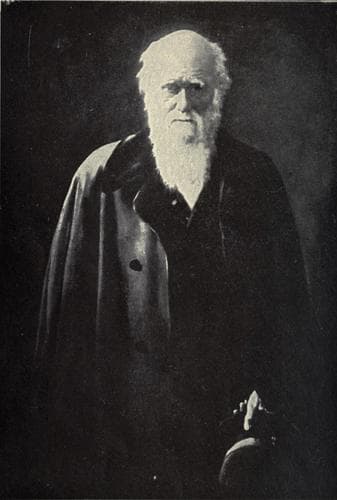
Charles Darwin was a renowned English naturalist and geologist, best known for his groundbreaking work 'On the Origin of Species.' His extensive research and observations during the voyage of the HMS Beagle led to his theory of evolution by natural selection. Darwin's other notable works include 'The Descent of Man' and 'The Expression of the Emotions in Man and Animals,' which profoundly influenced scientific thought.
Similar books
- Eat, Pray, Love
Elizabeth Gilbert
3.6 (1.5M) average on GoodreadsLifestyleA heartbroken writer leaves her conventional life for a year-long global search for pleasure in Italy, spiritual devotion in India, and unexpected love and balance in Bali.
- Wild: From Lost to Found on the Pacific Crest Trail
Cheryl Strayed
4.0 (615k) average on GoodreadsLifestyleAfter losing her mother and her marriage, a young woman impulsively hikes over a thousand miles of the Pacific Crest Trail alone, finding strength and healing in the unforgiving wilderness.
- Into Thin Air: A Personal Account of the Mount Everest Disaster
Jon Krakauer
4.2 (395k) average on GoodreadsLifestyleOn May 10, 1996, ambition and a sudden, violent storm turned Mount Everest into a deadly trap, leaving Jon Krakauer to tell the harrowing story of a disaster that took lives and shattered climbers' dreams.
- On The Road
Jack Kerouac
3.6 (349k) average on GoodreadsLifestyleDean Moriarty and Sal Paradise go on a wild, cross-country trip with jazz, drugs, and a desperate search for meaning on America's post-war roads.
- A Walk in the Woods: Rediscovering America on the Appalachian Trail
Bill Bryson
4.1 (346k) average on GoodreadsLifestyleBill Bryson humorously describes his ill-prepared yet insightful attempt to hike the Appalachian Trail, meeting unique characters and the raw beauty of the wilderness.
- Three Cups of Tea: One Man's Mission to Promote Peace ... One School at a Time
Greg Mortenson
3.6 (326k) average on GoodreadsLifestyleA lost mountaineer's promise to build a school for impoverished villagers grows into a decade-long, dangerous effort to educate girls in Taliban territory, showing one person's dedication can build peace.






Enjoyed the summary?
A summary gives you the shape of the book. The book itself has the detail, the examples and the voice.
Find Voyage of the Beagle on AmazonAs an Amazon Associate, BookBrief earns from qualifying purchases. How we're funded