
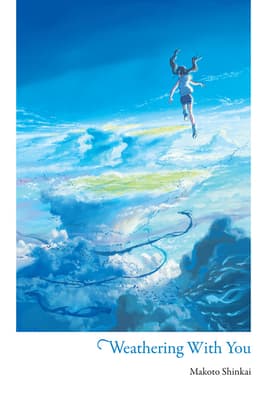
Synopsis
Covers the whole plot, including the ending.
- Difficulty
- Easy
- Pacing
- Moderate
- Mood
- Atmospheric, Melancholy, Romantic, Hopeful
- Read it if
- You enjoy bittersweet fantasy romances with a strong focus on character choices and atmospheric world-building, especially if you liked 'Your Name.'
- Skip it if
- You prefer clear-cut happy endings or dislike stories where characters make morally ambiguous choices with significant consequences.
Weathering With You Plot Summary
Covers the whole plot, including the ending.
The Runaway and the Endless Rain
Sixteen-year-old Hodaka Morishima runs away from his home on Kozushima, a small island, after an unspecified incident and family problems. He takes a ferry to Tokyo, arriving during an endless rainy season. Broke and alone, he struggles to find work and shelter, living on the streets and eating instant noodles. He meets Keisuke Suga, a somewhat shady but kind man who gave him a ride on the ferry, and later finds him again. Hodaka eventually gets a live-in job at Suga's small, struggling occult magazine company, K&A Planning. This company investigates urban legends, especially those about unusual weather. He works with Natsumi, Suga's niece, a lively young woman.
A Glimpse of Sunshine and a Mysterious Girl
While working for K&A Planning, investigating an urban legend about a 'sunshine girl,' Hodaka sees Hina Amano working at a fast-food restaurant. He sees her being harassed by two men trying to force her into a suspicious job. Hodaka steps in, which leads to a brief chase and a moment where Hina seems to calm the situation. Later, Hodaka follows Hina to an old shrine on a building. There, Hina prays, and to Hodaka's surprise, the heavy rain stops, and a patch of blue sky and sunlight appears directly above them. This confirms the urban legend and shows Hina's ability to control the weather.
The Sunshine Girl Business
Hodaka sees Hina's unique ability and suggests they start a business: Hina will be a 'Sunshine Girl,' bringing good weather to specific events for a fee. With help from Hina's younger brother, Nagi, they create a website and begin taking requests. Their services quickly become popular. They clear skies for outdoor weddings, flea markets, children's birthday parties, and even provide sun for an elderly woman to visit her deceased husband's grave. Their small business brings joy to many and gives them needed income, forming a strong bond among the three.
The Price of Power
As Hina uses her power, her body becomes more transparent and ghost-like, a subtle but worrying change. She also gets very tired. Meanwhile, Hodaka's past catches up to him. The police have been looking for him since he ran away, and a missing persons report has been filed. His picture is circulated, and he avoids being identified several times. Authorities also begin to investigate the unusual weather patterns and the 'Sunshine Girl' phenomenon, linking it to various disappearances and strange events, though they do not immediately connect it to Hina.
A Tense Encounter and Forced Separation
The police finally catch Hodaka. While he, Hina, and Nagi are staying at a love hotel, their location is found. The police raid the room, trying to arrest Hodaka. In the confusion, Hina uses her power to create a local storm, letting Hodaka escape for a moment. However, Hina and Nagi are taken into protective custody. Hodaka, desperate to reunite with them, feels great guilt and responsibility for their situation. He sees the growing danger around Hina's power and his fugitive status, making their future together seem impossible.
The Sacrifice of the Sunshine Girl
After their separation, the rain finally stops, but Hina's transparency gets worse. She realizes she is the 'weather maiden' whose sacrifice is needed to restore the world's weather balance. She sadly decides to go to the sky, becoming part of the atmosphere. This act immediately ends the constant rain over Tokyo, and the sun returns. Hodaka, heartbroken and determined to find her, is devastated by her disappearance. He learns from Suga and others about the old legends of weather maidens and their tragic fates, confirming Hina's sacrifice.
Hodaka's Desperate Search
Hodaka refuses to accept Hina's sacrifice. He escapes police custody with help from Natsumi and Suga, who, despite his first doubts, is moved by Hodaka's strong devotion. Hodaka wants to find Hina and bring her back, believing her happiness is more important than the world's convenience. He goes back to the old shrine, the place where Hina first showed her powers. He climbs to the rooftop, sure that this is the portal to where Hina has gone, despite the dangers and the overwhelming odds.
Reaching for the Sky
At the shrine, Hodaka finds a spiritual portal leading into the sky. He jumps through, entering a mystical place above the clouds where Hina exists as a spirit, connected to the weather. He faces the forces that hold her, asking her to return with him, to choose her own happiness over the world's demand for sacrifice. He finds Hina in a calm, dream-like state, but she recognizes him. His strong love and determination reach her, and she begins to reconsider her fate. He grabs her hand, pulling her back toward their world.
The Choice and Its Consequences
Hodaka successfully brings Hina back to Earth. His act of defiance has immediate and severe consequences. The moment Hina returns, the rain over Tokyo starts again, heavier and more constant than ever. The city begins to flood, and life changes dramatically as people adapt to a permanently waterlogged environment. Hodaka is eventually arrested by the police. He accepts his punishment, knowing he chose to save Hina, and is sent back to his island home, separated from Hina and Nagi, but knowing Hina is alive and safe.
Three Years Later
Three years pass. Tokyo has become a city always covered in water, with many areas flooded and people living on higher ground or in adapted buildings. Hodaka, having finished his probation and high school, returns to Tokyo. He visits Suga and Natsumi, who have also adjusted to the new normal. He searches for Hina and finds her praying at a shrine, still caring for Nagi. They reunite in a bittersweet moment, acknowledging the world they changed for their love. Hodaka realizes that despite the constant rain, the world is still beautiful, and their happiness was worth the cost.
Principal Figures
Hodaka Morishima
Protagonist
A runaway teenager seeking freedom and purpose in Tokyo.
Hodaka is a sixteen-year-old boy who runs away from his oppressive home life on a remote island. He is initially naive and somewhat reckless, driven by a strong desire for independence and a yearning for a different life. He struggles with loneliness and poverty in Tokyo but possesses a deep sense of loyalty and a strong moral compass. His determination to protect Hina and his refusal to accept her sacrifice define his character. He is an idealist who believes in the power of individual choice over collective good.
Relationships: Hina Amano (Love interest and deep emotional bond, he is fiercely protective of her.); Keisuke Suga (Employer, mentor figure, and reluctant ally.); Natsumi (Colleague and supportive friend.); Nagi Amano (Friend and protective older brother figure.)
Hina Amano
Protagonist
A mysterious girl with the power to control the weather, known as the 'Sunshine Girl'.
Hina is a kind-hearted and resilient girl who lives with her younger brother, Nagi, after their mother's death. She possesses the extraordinary ability to clear the sky and bring sunshine, a power she uses to help others and earn a living. Despite her seemingly cheerful demeanor, she carries the burden of her power and the knowledge of its potential cost. She is selfless and initially willing to sacrifice herself for the sake of the world, but Hodaka's love helps her choose her own life.
Relationships: Hodaka Morishima (Love interest, he empowers her to choose herself.); Nagi Amano (Younger brother, whom she deeply cares for and protects.); Keisuke Suga (Employer, sees her as a valuable asset.); Natsumi (Friend and colleague.)
Keisuke Suga
Supporting
Hodaka's employer, a jaded writer running a small occult magazine.
Suga is a middle-aged man who runs K&A Planning, a small, struggling company investigating urban legends. He is initially cynical and pragmatic, driven by the need to make a living and haunted by the loss of his wife. He takes Hodaka in out of a mix of pity and opportunity. While he often appears gruff and self-serving, he has a hidden kindness and a sense of responsibility. He eventually helps Hodaka, driven by his own past regrets and a desire to see a young man fight for what he believes in.
Relationships: Hodaka Morishima (Employer, reluctant mentor, and later an ally.); Natsumi (Niece and employee, they have a somewhat bickering but affectionate relationship.); Hina Amano (Employee, he is intrigued by her power.)
Natsumi
Supporting
Suga's niece and Hodaka's colleague, a spirited and adventurous young woman.
Natsumi is a lively and somewhat scatterbrained young woman who works for her uncle, Keisuke Suga. She drives a scooter and has a keen interest in urban legends, often helping with investigations. She is kind, supportive, and possesses a strong sense of justice. She quickly befriends Hodaka and Hina, offering emotional support and practical help. Her adventurous spirit and loyalty make her a valuable ally to Hodaka during his desperate search for Hina.
Relationships: Hodaka Morishima (Colleague and close friend.); Keisuke Suga (Uncle and employer, they have a familial and professional relationship.); Hina Amano (Friend and colleague.)
Nagi Amano
Supporting
Hina's younger brother, a charismatic and surprisingly mature elementary schooler.
Nagi is Hina's younger brother, an elementary school student with an unexpectedly mature and charismatic personality. He is popular with girls and offers surprisingly insightful advice. He is fiercely protective of his older sister and forms a strong bond with Hodaka. He helps manage the 'Sunshine Girl' business and provides comic relief and emotional grounding for the trio. His presence highlights Hina's responsibility and her dedication to her family.
Relationships: Hina Amano (Older sister, whom he deeply loves and relies on.); Hodaka Morishima (Friend and older brother figure.)
Yasui and Takai
Supporting
Two police detectives investigating Hodaka's disappearance and the unusual weather.
Yasui and Takai are the two police detectives assigned to locate Hodaka after he runs away from home. Yasui is the older, more experienced detective, while Takai is younger and more eager. They are dedicated to their duty and represent the law and order that Hodaka is constantly trying to evade. They are not malicious but are simply doing their job, which puts them in opposition to Hodaka's quest to save Hina. Their persistent pursuit adds significant tension and stakes to the story.
Relationships: Hodaka Morishima (They are pursuing him as a runaway and later for other offenses.); Keisuke Suga (They question him regarding Hodaka's whereabouts.)
Themes & Insights
Individual Happiness vs. Collective Good
This is the main conflict. The story asks if individual happiness and love between two people are more important than the well-being of the wider world. Hodaka's decision to bring Hina back, knowing it will cause endless rain, challenges the idea of sacrificing one for many. The film does not give an easy answer but suggests that individual love and happiness are important, even if they have a big cost to society. This shows in Hodaka's strong pursuit of Hina, even knowing the 'price' the world would pay.
“I don't care if we don't see the sun again. I want you more than any blue sky.”
The Price of Power and Sacrifice
Hina's power as the 'Sunshine Girl' comes with a high cost: her own life. The story looks at old legends of weather maidens who sacrifice themselves to restore balance. This theme explores the burden of special abilities and the expectation of self-sacrifice for the greater good. Hina first accepts this fate, becoming more transparent as she uses her power. The story questions if such a sacrifice is truly needed or if there is another way, suggesting that no one should be forced to give up their life for others.
“There are things that can only be found if you search for them, and things that can only be found if you don't.”
Finding a Place in the World
Both Hodaka and Hina feel lost and alone. Hodaka runs away looking for a place to belong, escaping an unfulfilling life. Hina, an orphan with a unique power, struggles to find her place in society while raising her brother. Their bond gives them a sense of belonging and purpose. The constant rain in Tokyo can represent their own inner struggles and the bleakness of their early lives, which they navigate together to create their own 'sunshine.'
“The world has been crazy from the start.”
Environmental Change and Adaptation
The film shows a Tokyo undergoing extreme and lasting climate change. The constant rain and flooding force the city and its people to adapt to a new normal. This theme highlights humanity's ability to adjust to big environmental changes, even if they come from supernatural forces. It also subtly suggests that nature has its own will, separate from human desires, and that people must learn to live with it, rather than trying to control it.
“The sky is a living thing. It has its own will.”
Plot Devices & Literary Techniques
The Weather Maiden Legend
An ancient myth about girls who sacrifice themselves to control the weather.
This urban legend serves as a crucial expositional and foreshadowing device. It explains the supernatural phenomenon surrounding Hina and the potential consequences of her power. It establishes the 'rules' of the world's weather balance and the tragic fate awaiting 'Sunshine Girls.' The legend creates a sense of impending doom and raises the stakes, framing Hina's abilities not just as a gift but as a heavy burden with a predetermined, sacrificial outcome. Hodaka's defiance of this legend drives the latter half of the story.
The Rooftop Shrine
A dilapidated shrine that acts as a portal to the sky realm.
The shrine on the roof of the abandoned building is more than just a setting; it's a mystical nexus. It's where Hina first demonstrates her power, and later, it becomes the literal gateway for Hodaka to enter the sky realm to retrieve her. This device symbolizes the connection between the mundane world and the supernatural, acting as a focal point for the weather maiden's power and the point of contact between humanity and the will of the sky. Its neglected state reflects how modern society has forgotten ancient connections to nature.
Hodaka's Runaway Status
Hodaka's fugitive status adds tension and isolates him from official support.
Hodaka's decision to run away from home isn't fully explained, but it immediately places him in a vulnerable and precarious position. This device ensures he cannot rely on official channels for help and makes him an easy target for police pursuit. It isolates him with Hina and Nagi, forcing them to rely solely on each other. This isolation amplifies their bond and makes their struggle against societal norms and legal authority more intense, pushing them to make desperate choices without external support.
The Continuous Rain
The relentless rain acts as a pervasive environmental and symbolic element.
The incessant rain in Tokyo is not merely a setting detail; it's a character in itself, shaping the mood, atmosphere, and plot. It reflects Hodaka's initial despair and the world's imbalance. It underscores Hina's unique ability and the joy her sunshine brings. After Hina's return, the rain becomes a permanent fixture, symbolizing the irreversible consequences of Hodaka's choice. It forces humanity to adapt, showing the enduring impact of their actions on the entire environment.
Weathering With You Quotes
“The world has been crazy from the start. It’s always been like this. It’s always been messed up. It’s always been beautiful.”
“Hey, isn’t it amazing? The sky cleared up!”
“I wanted to see you again. I wanted to talk to you. I wanted to touch you. I wanted to feel you.”
“This is my prayer. I want to see you again.”
“The sky is connected to us. The sky is connected to everyone.”
“I’m not giving up. I’m going to go to her.”
“Even if it means the world will be messed up, I want to meet her again.”
“The rain... it doesn't stop, does it?”
“There are some things you can only understand by running away.”
“The world is full of mysteries. Things that can't be explained.”
“It’s okay. We’ll be alright. We’ll just keep living.”
“What do you want to wish for?”
“This is our world. This is our story.”
“Just for a moment, I wanted to see the sunshine.”
Quiz
10 questions on the plot and the characters. Each answer comes with a short explanation.
Question 1
What is the primary reason Hodaka Morishima runs away from his island home to Tokyo?
- He wants to become a famous writer in the big city.
- He is escaping a difficult home situation and looking for a new life.
- He was offered a scholarship to a prestigious Tokyo high school.
- He is searching for a long-lost relative who lives in Tokyo.
Show answer
B. He is escaping a difficult home situation and looking for a new life. Hodaka runs away from home due to an unspecified, difficult situation, seeking to escape his island life and find independence in Tokyo.
Question 2
What unique ability does Hina Amano possess when Hodaka first meets her?
- She can instantly heal any injury.
- She can predict future weather patterns with perfect accuracy.
- She can part the clouds and bring sunshine with a prayer.
- She can make rain stop for short periods by singing.
Show answer
C. She can part the clouds and bring sunshine with a prayer. Hina is introduced as the 'Sunshine Girl,' capable of clearing the skies and bringing out the sun through her prayers.
Question 3
What kind of job does Hodaka initially find with Mr. Suga in Tokyo?
- A chef at a local restaurant.
- An assistant for an occult magazine/website.
- A delivery driver for a package service.
- A street performer.
Show answer
B. An assistant for an occult magazine/website. Hodaka is hired by Keisuke Suga to work as an assistant for his small, somewhat shady, occult-focused magazine/website.
Question 4
What is the crucial 'price' Hina must pay for consistently using her power as the Sunshine Girl?
- She loses her memories of those she helps.
- Her life force is slowly consumed, causing her to fade away and eventually become part of the sky.
- She experiences extreme pain every time she uses her ability.
- She becomes unable to feel emotions, becoming cold and distant.
Show answer
B. Her life force is slowly consumed, causing her to fade away and eventually become part of the sky. The legend of the Sunshine Girl states that she is a human sacrifice, and her repeated use of the power leads to her body becoming ethereal and eventually dissolving into the sky to restore the weather balance.
Question 5
What specific item does Hodaka give Hina as a gift, which she cherishes?
- A pair of new sneakers.
- A ring he found.
- A cheap plastic ring from a fast-food meal.
- A handmade charm for good luck.
Show answer
C. A cheap plastic ring from a fast-food meal. Hodaka gives Hina a cheap, plastic ring he got from a fast-food meal, which she treasures as a symbol of their bond.
Question 6
Why are Hodaka and Hina eventually pursued by the police and social services?
- They are accused of stealing money to fund their sunshine business.
- Hodaka is a runaway minor, and Hina is an underage girl living alone and performing illegal services.
- They accidentally caused a major flood with Hina's powers.
- They are suspected of being involved with a criminal organization.
Show answer
B. Hodaka is a runaway minor, and Hina is an underage girl living alone and performing illegal services. Hodaka is a runaway and Hina is underage and living alone with her younger brother, making them both vulnerable to social services and police intervention, especially after Hodaka's past incident and the discovery of a gun.
Question 7
What is the ultimate choice Hodaka makes regarding Hina's fate and the weather of Tokyo?
- He allows Hina to sacrifice herself to restore the weather to normal, saving Tokyo from continuous rain.
- He decides to save Hina, accepting that Tokyo will continue to experience abnormal, perpetual rain.
- He finds another 'Sunshine Girl' to take Hina's place as a sacrifice.
- He convinces Hina to use her power one last time to clear the sky permanently, then flee the city.
Show answer
B. He decides to save Hina, accepting that Tokyo will continue to experience abnormal, perpetual rain. Hodaka chooses to rescue Hina from becoming a permanent part of the sky, prioritizing her life over the immediate restoration of Tokyo's weather, thus accepting the perpetual rain.
Question 8
What does the continuous, abnormal rain in Tokyo symbolize throughout the story?
- The city's increasing pollution and environmental decay.
- The natural order being disrupted by human desires and interference, and a reflection of the characters' internal turmoil.
- A divine punishment for the moral failings of Tokyo's inhabitants.
- A metaphor for the economic recession plaguing Japan.
Show answer
B. The natural order being disrupted by human desires and interference, and a reflection of the characters' internal turmoil. The unending rain symbolizes the disruption of the natural order, the consequences of Hina's power, and often mirrors the emotional states and challenges faced by Hodaka and Hina.
Question 9
What is the significance of the old woman, Ms. Tachibana, who often requests Hina's services?
- She is Hina's grandmother and knows about the Sunshine Girl legend.
- She represents the older generation's connection to traditional beliefs and folklore, and subtly hints at the cost of Hina's power.
- She is a government agent secretly monitoring Hina's abilities.
- She is a former Sunshine Girl who lost her powers.
Show answer
B. She represents the older generation's connection to traditional beliefs and folklore, and subtly hints at the cost of Hina's power. Ms. Tachibana, with her knowledge of local legends and her requests for specific weather for specific events, represents the ingrained traditions and subtle understanding of the supernatural that the younger generation initially dismisses, hinting at the true nature of Hina's power and its consequences.
Question 10
Years after the main events, what is the state of Tokyo's weather when Hodaka returns to the city?
- It has returned to its normal, seasonal patterns.
- It is still experiencing continuous, heavy rainfall, with parts of the city submerged.
- It is experiencing an unprecedented drought.
- The weather is constantly shifting between extremes, never stable.
Show answer
B. It is still experiencing continuous, heavy rainfall, with parts of the city submerged. After Hodaka chooses to save Hina, Tokyo remains in a state of perpetual rain, with significant parts of the city flooded even years later, as he observes upon his return.
Weathering With You FAQ
What prompts Hodaka Morishima to run away from his island home and come to Tokyo?
Hodaka runs away due to an unspecified, oppressive home situation on his remote island. He is shown with a bandaged hand early on, hinting at physical abuse, and expresses a deep desire to escape and find a new, independent life in the vastness of Tokyo, feeling stifled by his previous environment.
How does Hodaka first encounter Hina Amano, and what is her initial situation?
Hodaka first sees Hina working at a McDonald's, where she shows him kindness by giving him a free burger when he is broke and starving. Later, he finds her being harassed by two men trying to force her into an adult entertainment job, leading to him intervening and them escaping together.
What is Hina's unique ability, and how does she discover it?
Hina possesses the power to clear the sky and bring sunshine with a prayer. She discovered this ability after her mother's death when she visited a small shrine on the rooftop of an abandoned building and wished for the rain to stop, inadvertently becoming a 'sunshine girl'.
Who are Keisuke and Natsumi Suga, and what role do they play in Hodaka's life?
Keisuke Suga is a struggling writer and editor who takes Hodaka in as an assistant for his odd-job magazine. Natsumi Suga is Keisuke's niece, a lively college student who helps with reporting and gives Hodaka advice, both providing a surrogate family and employment for him in Tokyo.
What 'price' is Hina paying for her sunshine ability, and how does it manifest?
Hina's power comes at the cost of her own body gradually becoming ethereal and ascending into the sky to balance the weather. As she uses her power more, her transparency increases, and she experiences moments of weightlessness, indicating her impending sacrifice as a 'weather maiden'.
Are there any subtle connections or easter eggs to Makoto Shinkai's previous film 'Your Name.'?
Yes, Taki and Mitsuha, the protagonists from 'Your Name.', make cameo appearances in 'Weathering With You.' Taki is seen as an elderly woman's grandson, and Mitsuha works at a department store where Hodaka buys a ring for Hina, subtly linking the two cinematic universes.
What is the significance of the abandoned rooftop shrine where Hina gains her powers?
The shrine is a gateway to the 'sky world' and a focal point for the weather maiden legend. Its dilapidated state reflects humanity's forgotten connection to nature and ancient traditions, and it serves as the literal and metaphorical point of Hina's ascension and sacrifice.
How do the police track Hodaka, and what specific details lead them to him?
The police track Hodaka after he is reported missing from his island home. They intensify their search after he is involved in an altercation where he brandishes a handgun, and they use CCTV footage and witness accounts from places like the McDonald's and the love hotel to pinpoint his whereabouts.
What does Hodaka's impulsive decision to run away and his subsequent actions reveal about adolescent rebellion?
Hodaka's flight from his island home and his desperate attempts to protect Hina, even resorting to violence, highlight the intense emotions and sense of injustice often felt during adolescence. His actions reflect a yearning for agency and a rejection of societal norms that threaten his personal freedom and relationships.
Analyze Hina's self-sacrificing nature and her motivations for becoming the sunshine girl.
Hina's decision to embrace her role as the sunshine girl stems from a deep desire to help others and bring joy, particularly after her mother's death. Her self-sacrificing nature is rooted in a sense of responsibility and love for her younger brother, Nagi, and the brief happiness she can provide to the people of Tokyo, even at her own expense.
How does Keisuke Suga's character arc reflect themes of responsibility and regret?
Keisuke initially struggles with responsibility, haunted by the loss of his wife and separated from his daughter. His decision to let Hodaka go to save Hina, despite the legal repercussions, signifies his redemption and acceptance of his own responsibility, choosing human connection over societal rules, mirroring his past regrets.
How does the film challenge the traditional 'heroic sacrifice' trope often seen in fantasy stories?
The film subverts the trope by having Hodaka actively reject Hina's sacrifice for the greater good. Instead of allowing her to become a martyr, he chooses her individual happiness and their personal connection over the collective well-being of Tokyo, arguing that her life is more important than temporary sunshine.
What is the ultimate message regarding humanity's relationship with nature, given Tokyo's perpetual rain?
The film suggests that humanity's attempts to control or 'fix' nature often come at a cost, and that nature will ultimately find its own balance, regardless of human intervention. The continuous rain after Hina's return implies that humans must learn to adapt and coexist with natural phenomena rather than demand perfect conditions.
Is Hodaka's decision to bring Hina back justified, considering the consequences for Tokyo?
This is a central moral debate of the story. While Hodaka's choice causes Tokyo to be perpetually submerged in rain, he prioritizes Hina's life and their happiness. The narrative leans towards justifying his decision, suggesting that individual human connection and love can be more valuable than societal convenience or 'the greater good,' even if it means altering the world.
How does the ending, three years later, reflect on the choices made by Hodaka and Hina?
Three years later, Tokyo is permanently altered by continuous rain, yet Hodaka and Hina are reunited, having matured and found acceptance. The ending suggests that their choice, while drastic, allowed them to live authentically and find happiness together, and that humanity has adapted to the new normal, highlighting resilience and the enduring power of their bond.
About the author

Makoto Shinkai is a Japanese filmmaker and author known for his work in animation and storytelling. He is recognized for his films such as "5 Centimeters per Second" and "Weathering With You," both of which explore themes of love and distance. Shinkai's distinctive visual style and emotional narratives have garnered significant attention in the realm of contemporary animation.
Similar books
- Harry Potter and the Sorcerer's Stone
J.K. Rowling
4.5 (7M) average on GoodreadsFantasyRescued from a miserable life under the stairs, an orphaned boy discovers he's a wizard destined for a magical school, where he uncovers a dangerous secret tied to the dark wizard who murdered his parents.
- The Hunger Games
Suzanne Collins
4.3 (6.4M) average on GoodreadsFantasyIn a future where children fight to the death on live television, Katniss Everdeen volunteers for the arena, turning a death sentence into a fight for survival and a spark of rebellion.
- 1984
George Orwell
4.2 (3.1M) average on GoodreadsPoliticsIn a future where surveillance and thought control are absolute, a man's search for truth clashes with the Party, showing that hope can be a form of rebellion.
- Divergent
Veronica Roth
4.2 (2.9M) average on GoodreadsFantasyIn a society divided by virtues, a sixteen-year-old's difference from the norm starts a rebellion that threatens her world.
- The Hobbit, or There and Back Again
J.R.R. Tolkien
4.3 (2.9M) average on GoodreadsFantasyA comfort-loving hobbit named Bilbo Baggins is whisked away by a mischievous wizard and a band of dwarves on an unexpected journey to reclaim stolen treasure from a fearsome dragon, discovering courage and a magical ring along the way.
- Animal Farm
George Orwell
4.0 (2.7M) average on GoodreadsPoliticsA farm animals' rebellion against humans turns into a pig-led dictatorship, showing how power corrupts and revolutionary ideals are betrayed.






Enjoyed the summary?
A summary gives you the shape of the book. The book itself has the detail, the examples and the voice.
Find Weathering With You on AmazonAs an Amazon Associate, BookBrief earns from qualifying purchases. How we're funded