

Synopsis
Covers the whole plot, including the ending.
- Difficulty
- Medium
- Pacing
- Moderate
- Mood
- Epic, Poignant, Intense, Reflective
- Read it if
- You enjoy sweeping historical sagas set against major world events, exploring themes of womanhood, family dynamics, and cultural upheaval.
- Skip it if
- You prefer fast-paced plots and shy away from detailed explorations of historical trauma and complex emotional landscapes.
What the Body Remembers Plot Summary
Covers the whole plot, including the ending.
Roop's Arranged Marriage to Sardarji
The novel starts in 1937, introducing Roop, a young Sikh girl from a poor village whose family owes a lot of money. Her father, facing poverty after his wife's death, agrees to marry Roop as a second wife to Sardarji, a rich landowner from Lahore. Sardarji's first wife, Satya, has not been able to have children after many years of marriage, making a second wife necessary for an heir. Roop is nervous about having a co-wife, but also excited about a better life away from poverty. She arrives at Sardarji's large estate, very different from her simple home, and begins her new life, aware of her main duty: to have a son.
The Complex Dynamics Between Roop and Satya
When she arrives, Roop tries to connect with Satya, her co-wife, hoping for a friend and guide. Satya, an educated woman with strong spiritual beliefs, is at first welcoming but feels deep sadness and resentment about not being able to have children. She feels the pressure of social expectations and the shame of being replaced by a younger woman. While she teaches Roop about the household and customs, a tension and rivalry exist. Satya's emotional pain shows in small ways, making Roop, despite wanting harmony, feel constant pressure from her role and the unspoken competition for Sardarji’s attention and the family's future.
Roop's Pregnancy and Satya's Growing Isolation
Roop quickly becomes pregnant, fulfilling her main duty to Sardarji. This happy news for the household is very upsetting for Satya. The initial friendliness between the two wives breaks as Satya deals with Roop having the heir she could not. Satya's grief and feeling of failure grow, causing her to withdraw from the family and spend more time in solitary prayer. Her relationship with Sardarji also suffers, as he, while caring for Satya, increasingly focuses on Roop and the coming child. Roop, despite her happiness, feels some guilt and sadness about Satya's suffering, but the social pressure to produce an heir is stronger than her personal feelings.
The Birth of Sons and Satya's Spiritual Path
Roop has a healthy son, fulfilling the family's wish. Later, she has a second son. With the family line secured, Roop's position in the household improves. Satya, meanwhile, withdraws further, dedicating her life to spiritual practices and finding comfort in her faith. She spends time with scriptures, meditation, and charity, turning her personal sorrow into a path of spiritual growth. While she remains in the household, her role changes from wife and mistress to a respected, almost spiritual figure, observing the family from a distance and offering wisdom when asked, but no longer taking part in daily married life with Sardarji.
Sardarji's Political Engagement and the Call for Independence
As years pass, the political situation in India intensifies with the growing demand for independence from British rule. Sardarji, a respected figure in Lahore, becomes involved in politics. He attends meetings, debates, and tries to understand what a divided India means for his Sikh community. He deals with the rising tensions between Hindus, Muslims, and Sikhs, and the idea of Partition, which could split his Punjab. His involvement means he is often away from home, and he tries to balance his personal loyalties with the larger political situation, often feeling caught between different ideas for India's future.
The Looming Threat of Partition
The discussions about Partition become more intense and violent, moving from abstract politics to a real threat to daily life. News of communal riots in other parts of India starts to reach Lahore, creating fear and uncertainty. Sardarji tries to protect his family, but the growing tensions are clear. Roop, at first protected from the deeper political issues, starts to understand how serious the situation is as her community faces losing their homes and lands, and their lives are threatened by the proposed division of Punjab based on religion.
The Exodus from Lahore
In August 1947, the Partition of India is announced, and Lahore is made part of the new Pakistan. This news shatters the lives of Sardarji's family and many others. The city becomes chaotic, with widespread violence, looting, and mass displacement. Sardarji, despite his wealth, realizes he cannot protect his family in their ancestral home. With great pain, he decides to leave their estate, gathering his family, including Roop, their sons, and Satya, to join millions of refugees making the dangerous journey across the new border to India. The once-grand family becomes desperate migrants.
The Perilous Refugee Journey
The journey for Sardarji's family is full of danger and suffering. They join large groups of refugees, enduring hunger, thirst, disease, and the constant threat of violence. The once-dignified Sardarji is humbled by the experience, losing his former status. Roop sees terrible acts, including kidnappings and murders, and struggles to protect her young sons. Satya, with her spiritual strength, becomes a quiet source of comfort amid the despair, offering prayers and support. The physical and emotional scars of the journey, losing their home, and seeing such widespread cruelty leave a lasting mark on each family member.
New Beginnings in India and Lingering Trauma
After reaching the safety of India, Sardarji and his family, like millions of others, begin the hard task of rebuilding their lives. Sardarji, though changed, uses his remaining resources and connections to establish a new home and business. Roop works hard to create a sense of normalcy for her children, but memories of the journey and the lost home stay with her. Satya continues her spiritual path, her wisdom now deepened by shared suffering. While they build a new life, the trauma of Partition remains, appearing in subtle ways and shaping their interactions and views on life, loss, and survival.
The Body Remembers: Roop's Enduring Legacy
In their new life, Roop fully accepts her role as the mother of Sardarji's sons and the one who continues their family line. She becomes the main storyteller, making sure her children understand their Sikh heritage, the sacrifices made during Partition, and the importance of their roots, even in a new land. She carries the physical and emotional memories of her experiences, understanding how 'the body remembers' the joys, sorrows, and traumas it has lived through. Her strength becomes the foundation of their rebuilt family, securing a future for her sons while honoring the past that shaped them.
Principal Figures
Roop
Protagonist
The young, second wife of Sardarji, who bears him sons and navigates a complex family and national upheaval.
Roop is introduced as a spirited but impoverished young girl, married into a wealthy family as Sardarji's second wife. Her primary role is to bear children, which she successfully does, providing two sons. Initially naive, she grows into a strong, resilient woman, deeply rooted in her Sikh faith and traditions. She yearns for connection with Satya but also feels the pressure of her duty. Her journey is one of profound transformation, from a simple village girl to the matriarch who ensures the family's survival and continuity after the devastation of Partition. She embodies the physical and emotional endurance of women during this tumultuous period.
Relationships: Sardarji (Husband, father of her children, source of security and later, shared trauma); Satya (Co-wife, initial mentor, later a source of complex rivalry and quiet spiritual influence); Her sons (Her primary purpose and source of love and strength)
Sardarji
Protagonist/Supporting
A wealthy and respected Sikh landowner, husband to Satya and Roop, who struggles to maintain his family and identity amidst Partition.
Sardarji is a proud, traditional Sikh landowner from Lahore, accustomed to status and order. His inability to have children with Satya leads him to take Roop as a second wife, driven by the imperative of lineage. He is a man of his time, holding traditional views on family and women, yet he deeply respects Satya's intelligence and spirituality. As political tensions rise, he becomes increasingly involved in Sikh politics, trying to protect his community and family. The Partition shatters his world, forcing him to abandon his wealth and status, and he is humbled by the experience, though he remains a determined patriarch in rebuilding his family's life.
Relationships: Roop (Second wife, mother of his sons, symbol of his family's continuity); Satya (First wife, intellectual and spiritual companion, a source of quiet wisdom); His sons (His legacy and the driving force behind his decisions)
Satya
Supporting
Sardarji's first wife, who, unable to bear children, finds solace and strength in spirituality amidst her displacement.
Satya is a cultured, intelligent, and deeply spiritual woman. Her inability to bear children is a profound source of sorrow and societal shame, ultimately leading to Roop's arrival. She initially tries to mentor Roop but struggles with the pain of her displacement and the loss of her marital role. Rather than succumbing to bitterness, Satya embarks on a path of spiritual enlightenment, dedicating herself to prayer, meditation, and service. She becomes a quiet, revered presence in the household, offering wisdom and a different kind of strength, particularly during the trauma of Partition. She represents an alternative form of womanhood and power beyond procreation.
Relationships: Sardarji (First wife, intellectual and spiritual partner, later a more distant companion); Roop (Co-wife, initial rival, later a complex, respectful coexistence); Ma (Sardarji's Mother) (Mother-in-law, a source of traditional expectations and pressure)
Ma (Sardarji's Mother)
Supporting
The matriarch of Sardarji's household, a staunch traditionalist who pressures for an heir.
Ma is Sardarji's formidable and traditional mother, the matriarch of the household. She is deeply concerned with the family's lineage and the continuation of the Sardarji line. Her unwavering focus on an heir is the primary catalyst for Sardarji taking a second wife. She holds significant authority within the domestic sphere and is often critical of Satya's childlessness, subtly or overtly pressuring her. While she represents the traditional societal expectations placed on women, she also embodies the strength and resilience of Punjabi women, especially during the upheaval of Partition, striving to maintain family traditions.
Relationships: Sardarji (Son, whom she guides and pressures regarding family duty); Satya (Daughter-in-law, a source of disappointment due to childlessness); Roop (Daughter-in-law, who fulfills her deepest desire for grandchildren)
Pishori Singh
Supporting
Sardarji's loyal and trusted foreman, representing the working class and their bond to the land.
Pishori Singh is Sardarji's loyal and long-serving foreman, overseeing the agricultural lands and workers. He represents the steadfast, hardworking rural population whose lives are intrinsically tied to the land and their employers. He is deeply devoted to Sardarji and his family, offering practical support and unwavering loyalty, particularly during the chaotic times of Partition. His character highlights the strong bonds within the Sikh community and the impact of political upheaval on all strata of society, from landowners to laborers. He symbolizes the enduring spirit of the Punjabi people.
Relationships: Sardarji (Employer and trusted friend)
The Sons (Harbans and Jagjit)
Supporting
Roop's children with Sardarji, representing the future and the legacy of the family.
Harbans and Jagjit are Roop's two sons with Sardarji, who secure the family's lineage and become the focus of Roop's and Sardarji's hopes for the future. Their births bring immense joy and solidify Roop's position. As children, they witness the horrors of Partition through their parents' eyes and experience the arduous journey to a new land. They represent the generation that must carry the memories and lessons of Partition forward. Their presence underscores the novel's themes of continuity, heritage, and the passing down of stories and trauma from one generation to the next.
Relationships: Roop (Mother, source of love and protection); Sardarji (Father, provider, and patriarch); Satya (Aunt-figure, a source of quiet affection and spiritual presence)
Amritsar
Mentioned
Satya's childhood friend, representing an alternative, more independent path for women.
Amritsar is Satya's childhood friend, who chose a different path than traditional marriage. She is mentioned as a woman who pursued education and perhaps a career, representing a more modern or independent female archetype in contrast to Satya and Roop's experiences within traditional arranged marriages. Her brief mentions highlight the limited choices available to women of that era and the societal pressures to conform to expectations of marriage and motherhood. She serves as a subtle reminder of what Satya's life might have been if not for her marriage to Sardarji.
Relationships: Satya (Childhood friend)
Themes & Insights
The Body Remembers: Trauma and Memory
This theme explores how physical and emotional experiences, especially trauma, are held and shown by the body. Roop's body remembers the pain of childbirth, the exhaustion of the refugee journey, and the longing for her ancestral home. Satya's inability to have children shows her social burden, and her spiritual practices help her move past physical limits. The displaced Punjabi people carry the scars of Partition, affecting their identities and future generations. The novel suggests that memory is not just intellectual but deeply physical, shaping individuals and communities.
“What the body remembers is what it holds close, what it cannot forget, what it becomes.”
Patriarchy, Lineage, and Female Agency
The novel shows the patriarchal structure of Sikh society in the 1930s and 40s, where a woman's worth often depends on her ability to have male heirs. Sardarji's decision to take a second wife, and Roop's main duty, are direct results of this system. However, within these limits, both Satya and Roop find ways to act. Satya finds power in spirituality and learning, while Roop, through motherhood and strength, secures her place and becomes the keeper of the family's future. Their struggles show how women navigate their roles and quietly resist or adapt in a male-dominated world.
“A woman who cannot give her husband a son is like a barren tree in the orchard. She takes up space but yields no fruit.”
Identity and Belonging Amidst Displacement
The idea of identity is explored through individual characters and the Sikh community. Roop's identity changes from a poor village girl to a rich landowner's wife, then to a refugee. Sardarji loses his status and home, forcing him to redefine himself. The forced migration during Partition breaks the sense of belonging for millions, as their ancestral lands become a foreign country. The novel looks at the pain of losing one's home, the struggle to build a new identity in a new place, and the lasting power of cultural and religious identity when facing great loss. It asks what truly defines 'home'.
“How could a man lose his land and still be a man? How could a woman lose her home and still be a wife?”
Spirituality and Resilience
Spirituality gives strength, especially to Satya. Faced with personal sorrow and social criticism for not having children, she turns inward, deepening her faith and finding purpose in meditation and devotion. During the horrors of Partition, her spiritual strength provides quiet comfort for the whole family. The novel shows how faith can be an anchor in times of chaos and loss, offering inner peace and a broader understanding of suffering. It highlights a different kind of power—spiritual power—that goes beyond physical and material losses.
“The body may break, the home may burn, but the soul, if it is true, remains whole.”
The Personal and Political Intertwined
The novel connects the personal family story of Sardarji's two wives with the historical events of Indian independence and Partition. Political decisions made by distant leaders directly affect the lives and choices of Roop, Satya, and Sardarji. The search for an heir in the family reflects the struggle for national identity. The private sorrows and joys of the household are always affected by the threat of violence and the eventual forced migration. This theme shows that history is not abstract but personal, affecting every individual life.
“The lines drawn on a map were not just lines, they were lives, cut and bleeding.”
Plot Devices & Literary Techniques
Dual Perspective/Alternating Narration
The story is primarily told through the alternating viewpoints of Roop and Satya.
The novel employs an alternating narrative structure, shifting between the perspectives of Roop and Satya. This allows the reader to deeply understand the inner lives, motivations, and emotional struggles of both women, even as they are often in conflict or emotionally distant. This device highlights the complexities of their shared situation, preventing either woman from being a simple villain or victim. It fosters empathy for both, revealing the nuanced ways they cope with their roles, societal expectations, and personal disappointments. It also underscores the theme that 'the body remembers' differently for each woman.
Symbolism of the Home/Land
The ancestral home and the land represent identity, stability, and heritage.
Sardarji's grand ancestral home in Lahore and his fertile lands are powerful symbols throughout the novel. Initially, they represent his wealth, status, and the stability of his lineage. For Roop, the home signifies her ascent from poverty; for Satya, it is her domain and a place of quiet dignity. The eventual loss of this home and land due to Partition is a profound metaphor for the loss of identity, security, and heritage for the entire family and the millions of displaced people. Rebuilding a new home in India symbolizes the attempt to reclaim a sense of belonging and continuity amidst trauma.
The Wives' Quarters
A physical and symbolic space representing female domesticity, rivalry, and solace.
The 'wives' quarters' within Sardarji's large home serve as a significant symbolic space. It is where Roop and Satya primarily interact, where their initial attempts at friendship and subsequent rivalry unfold. It represents the confined world of women within a patriarchal society, yet also a space of female solidarity, quiet rebellion, or spiritual retreat. The arrangements within these quarters, from sharing a bed to separate rooms, reflect the shifting dynamics of their relationship and their individual journeys towards acceptance or spiritual isolation. It is a microcosm of their domestic struggles and triumphs.
Oral Storytelling/Memory
The act of recounting personal and historical events reinforces the theme of memory and cultural transmission.
Oral storytelling and the act of remembering are crucial plot devices. Roop, in particular, becomes the keeper of the family's history and the memories of Partition for her sons. The narrative itself often feels like an oral account, rich in detail and emotion. This device emphasizes the importance of passing down experiences, both personal and collective, to future generations to ensure that the past is not forgotten. It reinforces the central theme of 'what the body remembers' by showing how these memories, even traumatic ones, are preserved and transmitted through narrative, shaping identity and understanding.
What the Body Remembers Quotes
“The past is never dead. It's not even past.”
“Women learn to smile, and to hide their pain behind the smile.”
“A woman's honor is in her body, and if that is stained, she is stained forever.”
“Sometimes, silence is the only language left to those who have lost too much.”
“We carry our history in our bones, in our blood, in the way we breathe.”
“Love is not always enough to heal the wounds of the past.”
“The Partition was not just a political division; it was a tearing of souls.”
“To forget is to betray those who suffered.”
“How can you build a future when your past is still bleeding?”
“The body remembers what the mind tries to forget.”
“Even in the deepest sorrow, there is a flicker of hope, a stubborn will to survive.”
“A woman's worth was often measured by the sons she bore.”
“The stories we tell, and the ones we don't, shape who we become.”
“Sometimes, the greatest strength lies in vulnerability, in allowing oneself to feel the pain.”
Quiz
10 questions on the plot and the characters. Each answer comes with a short explanation.
Question 1
Why does Roop become Sardaji's second wife?
- Sardaji was deeply in love with Roop after a chance encounter.
- Roop's father was in debt and Sardaji's first wife, Satya, had not borne children.
- Roop was an orphan with no other means of support.
- Sardaji needed a second wife to manage his large household.
Show answer
B. Roop's father was in debt and Sardaji's first wife, Satya, had not borne children. Roop becomes Sardaji's second wife due to a practical arrangement: her father's financial struggles and Satya's inability to conceive, ensuring the continuation of Sardaji's family line.
Question 2
What is the primary reason Satya, Sardaji's first wife, is unable to bear children?
- She suffered an injury in her youth that rendered her infertile.
- She secretly took herbs to prevent conception because she disliked Sardaji.
- She was cursed by a local holy man for a past transgression.
- It is revealed that Sardaji is infertile, not Satya.
Show answer
D. It is revealed that Sardaji is infertile, not Satya. A pivotal plot twist in the novel reveals that it is Sardaji, not Satya, who is infertile, making Satya's struggle to conceive a tragic misattribution of blame.
Question 3
What significant historical event forms a backdrop to the novel's events?
- The Sepoy Mutiny of 1857
- The British East India Company's rise to power
- The 1947 Partition of India
- The Bengal Famine of 1943
Show answer
C. The 1947 Partition of India The novel is explicitly set against the brutal drama of the 1947 Partition of India, a key historical event that deeply impacts the characters' lives and the narrative.
Question 4
How does the relationship between Roop and Satya evolve over the course of the novel?
- They remain bitter rivals throughout, never finding common ground.
- They initially distrust each other but eventually develop a complex, interdependent bond.
- They become immediate and lifelong friends, overcoming all obstacles together.
- Satya leaves the household early on, and Roop rarely interacts with her again.
Show answer
B. They initially distrust each other but eventually develop a complex, interdependent bond. Despite Roop's initial hope for friendship, their relationship is fraught with complexity, distrust, and power dynamics, but ultimately evolves into a profound, if challenging, interdependence, especially as they face shared struggles.
Question 5
What does the title 'What the Body Remembers' primarily refer to in the context of the novel?
- The physical scars left by the Partition's violence.
- The ancestral memories passed down through generations in Indian culture.
- The unspoken traumas, desires, and experiences that reside within individuals, particularly women, beyond conscious thought.
- The importance of physical health and well-being.
Show answer
C. The unspoken traumas, desires, and experiences that reside within individuals, particularly women, beyond conscious thought. The title speaks to the deep, often unarticulated ways the body holds onto experiences, traumas, and desires, especially for women in a patriarchal society, reflecting the novel's themes of sensuality, feminism, and the impact of societal pressures.
Question 6
Which of the following best describes Sardarji's struggle amidst the changes happening in India?
- He readily adapts to the new political landscape and thrives.
- He tries to cling to traditional ways while navigating the shifting political and social structures.
- He completely withdraws from society and politics.
- He becomes a radical revolutionary, fighting against the old order.
Show answer
B. He tries to cling to traditional ways while navigating the shifting political and social structures. Sardarji, as a wealthy Sikh landowner, represents the traditional order. The novel depicts his struggle to maintain his position and identity as India lurches toward independence, forcing him to confront drastic changes to his world.
Question 7
What is a central feminist theme explored in the novel?
- The importance of women gaining political office.
- The subversion of traditional gender roles and expectations for women in Indian society.
- The need for women to abandon all familial ties to achieve independence.
- The celebration of female virginity above all else.
Show answer
B. The subversion of traditional gender roles and expectations for women in Indian society. The novel critically examines the plight of women within a patriarchal system, particularly through the experiences of Satya and Roop, who are both defined by their ability to bear children and navigate complex power dynamics, making the subversion of these expectations a key feminist theme.
Question 8
Which of the following best describes the novel's writing style?
- Dry, factual, and journalistic.
- Sparse, minimalist, and direct.
- Lush, eloquent, poetic, and sensual.
- Fast-paced, action-driven, and suspenseful.
Show answer
C. Lush, eloquent, poetic, and sensual. The description provided for the book explicitly states it is a 'lush and eloquent debut novel' and 'at once poetic, political, feminist, and sensual,' highlighting its distinctive literary style.
Question 9
What role does the cultural richness of India play in the novel?
- It serves merely as a decorative background without influencing the plot.
- It is central to the characters' identities, traditions, and the social structures they navigate.
- It is presented as something the characters actively reject.
- It is only explored through the perspective of foreign observers.
Show answer
B. It is central to the characters' identities, traditions, and the social structures they navigate. The book is described as coming 'Out of the rich culture of India,' indicating that this cultural context is fundamental to understanding the characters, their traditions, beliefs, and the societal pressures they face.
Question 10
How does the novel portray the impact of the Partition on individuals, particularly women?
- It focuses solely on the political maneuvering without personal impact.
- It highlights the ease with which people relocated and adapted to new borders.
- It depicts the widespread trauma, displacement, and violence experienced, often disproportionately by women.
- It suggests the Partition led to an immediate improvement in women's rights.
Show answer
C. It depicts the widespread trauma, displacement, and violence experienced, often disproportionately by women. The novel is set against the 'brutal drama of the 1947 Partition,' implying a focus on its devastating human cost, including displacement, violence, and the profound trauma inflicted upon individuals, with women often bearing unique burdens.
What the Body Remembers FAQ
What is "What the Body Remembers" about?
"What the Body Remembers" tells the story of Roop, a young Sikh woman who becomes the second wife to the wealthy landowner Sardarji, because his first wife, Satya, is unable to bear children. The novel explores the complex relationships within this polygamous household and the broader political turmoil of India's 1947 Partition, examining themes of womanhood, tradition, and change.
Why should I read "What the Body Remembers"?
You should read this book for its lush prose, deep dive into Indian culture, and its poignant exploration of historical events like the 1947 Partition through a deeply personal lens. It offers a unique perspective on womanhood, tradition, and the emotional toll of societal shifts, all while presenting a compelling family drama centered on the intertwined lives of Roop, Satya, and Sardarji.
What is the background/setting of "What the Body Remembers"?
The novel is set in colonial India leading up to and during the tumultuous 1947 Partition, specifically within the Sikh community. It vividly depicts the cultural traditions, social hierarchies, and political unrest of the time, providing a rich backdrop for the personal struggles of Roop, Satya, and Sardarji as their lives are irrevocably altered by national independence and the division of the country.
What are the most memorable quotes?
While specific quotes are not provided in the summary, the book is known for its poetic language and profound observations on love, duty, and womanhood. Readers often remember lines that capture the internal struggles of Roop and Satya, or Sardarji's reflections on tradition versus modernity amidst the Partition's chaos, highlighting the body's memory of trauma and joy.
What writing style does the author use?
Shauna Singh Baldwin employs a lyrical, sensual, and meticulously researched writing style. Her prose is often described as poetic and eloquent, blending historical detail with deep emotional insight. She uses rich imagery and a feminist perspective to convey the experiences of her characters, making the historical setting feel intimately personal.
What minor details add significant meaning?
Minor details, such as the specific rituals and traditions of the Sikh household, or the subtle power dynamics in the way Roop and Satya interact with servants and each other, add significant meaning. These details underscore the cultural context and the intricate social fabric that defines the characters' lives and choices, especially concerning women's roles and expectations.
What are some subtle foreshadowing moments?
Subtle foreshadowing includes early discussions about the political instability brewing in India, hinting at the devastating impact the Partition will have on all characters, regardless of their wealth or status. Also, the initial 'friendship' Roop anticipates with Satya is subtly undermined by Satya's quiet resentment and the inherent tension of their shared husband, foreshadowing their complex and often fraught relationship.
What unexpected character connections exist?
Beyond the obvious connection between Roop and Satya through Sardarji, there are often unexpected connections revealed through shared experiences of womanhood and the constraints placed upon them by society. Despite their rivalry, moments of unspoken understanding or shared vulnerability between the two wives can emerge, hinting at a deeper, albeit complicated, bond forged by their unique circumstances.
What are unspoken character motivations?
Satya's unspoken motivation is a deep-seated desire for status and motherhood, driving her resentment towards Roop and her desperation to maintain her position as the first wife. Roop, while initially seeking security, also harbors an unspoken yearning for genuine affection and a sense of belonging, which influences her interactions and perceptions of her new life and family.
What psychological complexities do characters exhibit?
Sardarji exhibits the psychological complexity of a man torn between tradition and modernity, trying to maintain his family's honor and wealth while navigating a rapidly changing political landscape. Satya struggles with deep-seated jealousy and the psychological toll of infertility in a patriarchal society, leading to manipulative behaviors. Roop grapples with adapting to a new life, the complexities of polygamy, and finding her own voice amidst powerful personalities.
What are the major emotional turning points?
Major emotional turning points include Roop's arrival at Sardarji's house and her realization of the true nature of her relationship with Satya, rather than the friendship she envisioned. Another is the first successful pregnancy, which profoundly shifts the household dynamics. The most significant emotional turning point is the announcement and execution of the Partition, forcing the characters to confront displacement, violence, and loss on a massive scale.
How do relationship dynamics evolve?
The relationship dynamics evolve from Roop's initial naive hope for friendship with Satya to a complex interplay of rivalry, passive aggression, and occasional, reluctant understanding. Sardarji's relationship with both wives shifts as the political climate changes and children are born, challenging his authority and forcing him to adapt. The external pressures of the Partition also profoundly reshape family loyalties and dependencies.
Which parts remain ambiguous or open-ended?
The novel often leaves the ultimate emotional resolution between Roop and Satya somewhat ambiguous, reflecting the lasting scars of their shared history and the unresolved tensions of their unusual family structure. The full extent of Sardarji's internal struggles and his ultimate satisfaction or regret regarding his life choices also remain open to reader interpretation, especially concerning his balance of tradition and personal desire.
What are controversial scenes or decisions?
One controversial decision is Sardarji's choice to take a second wife, despite the emotional cost to Satya, highlighting the patriarchal norms of the time. The ensuing conflict and Satya's sometimes cruel actions towards Roop, driven by her desperation, can also be controversial. Furthermore, the depiction of the violence and displacement during the 1947 Partition, while historically accurate, presents challenging and controversial truths about human behavior during conflict.
"What the Body Remembers" ending explained: how it ends & what it means
The ending of "What the Body Remembers" typically sees the characters having endured the brutal realities of the 1947 Partition, often leading to displacement and profound loss. While specific plot points aren't detailed in the summary, the title implies that the body, and by extension the individual and collective memory, retains the trauma and experiences of these events. It signifies that despite the physical changes and new beginnings, the emotional and historical scars remain, shaping the characters' futures and underscoring the enduring impact of their past.
Similar books
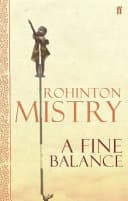
- A Fine Balance
Rohinton Mistry
4.3 (129k) average on GoodreadsLiterary FictionExplores human resilience and suffering in India during a tumultuous political period, with a focus on character-driven narratives.
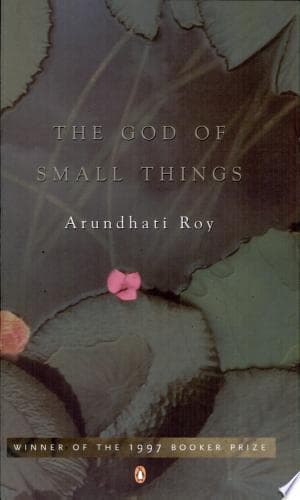
- The God of Small Things
Arundhati Roy
3.9 (244k) average on GoodreadsLiterary FictionFeatures lush prose, family secrets, and the intricate social fabric of India, with a strong focus on female experiences.
- The Space Between Us
Thrity Umrigar
4.0 (42k) average on GoodreadsLiterary FictionDelves into the complex relationships between women from different social strata in India, examining themes of class, loyalty, and betrayal.
- Train to Pakistan
Khushwant Singh
3.9 (23k) average on GoodreadsHistorical FictionSingh's work focuses on the immediate, visceral violence and the breakdown of communal harmony in a border village, offering a broader, more politically charged canvas. Baldwin, in contrast, narrows her focus to the domestic sphere and the specific plight of women, making the trauma deeply personal and internal, and exploring gendered violence more explicitly.
- The Old Man and the Sea
Ernest Hemingway
3.8 (831k) average on GoodreadsLiterary FictionA Cuban fisherman's long struggle with a giant marlin becomes a story of endurance and dignity, now retold for young adults with illustrations, phonetic guides, and writing prompts in Traditional Chinese.
- One Hundred Years of Solitude
Gabriel García Márquez
4.1 (753k) average on GoodreadsLiterary FictionThrough the multi-generational story of the Buendía family, a mythical town deals with the repeating patterns of time, love, and solitude, as the extraordinary mixes with the ordinary.


Enjoyed the summary?
A summary gives you the shape of the book. The book itself has the detail, the examples and the voice.
Find What the Body Remembers on AmazonAs an Amazon Associate, BookBrief earns from qualifying purchases. How we're funded