
Synopsis
Covers the whole plot, including the ending.
- Difficulty
- Medium
- Pacing
- Moderate
- Mood
- Atmospheric, Melancholy, Introspective, Disillusioning, Subtle Suspense
- Read it if
- You enjoy literary mysteries that prioritize psychological depth and atmosphere over traditional plot twists, and are fascinated by themes of memory, identity, and the unreliable narrator.
- Skip it if
- You prefer fast-paced detective stories with clear-cut resolutions, or find narratives that frequently question reality and memory frustrating.
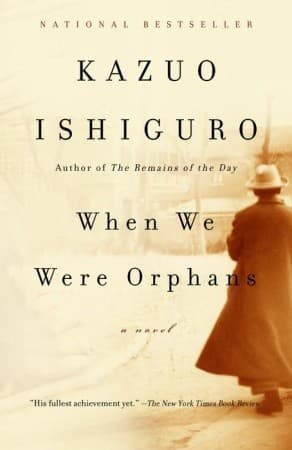
When We Were Orphans Plot Summary
Covers the whole plot, including the ending.
A Childhood in Shanghai and a Sudden Loss
Christopher Banks, an English detective, begins his memoir by describing his early life in Shanghai during the 1920s. He lives comfortably with his English father, who works for a trading company, and his mother, who speaks out against the opium trade. Christopher remembers spending time with his Japanese friend, Akira, and his uncle, Philip, who often disagrees with his mother's activism. This calm childhood ends when his father disappears. Christopher is told his father 'went away,' but the vague explanations bother him. Soon after, his mother also vanishes, leaving Christopher an orphan at nine. He is sent to England to live with his Aunt Sarah.
Life in England and a Budding Career
In England, Christopher finds it hard to adjust to his new life and often feels like an outsider. He attends boarding school, where he becomes known for being observant and smart. These skills hint at his future job. During his teenage years and early adulthood, Christopher decides to become a detective. His reason for this is the unsolved mystery of his parents' disappearances. He believes that by becoming a skilled and famous investigator, he will eventually be able to return to Shanghai and find out what happened to his family. This goal becomes the main force in his adult life.
Fame in London Society
By the 1930s, Christopher Banks is one of London's well-known private detectives. He is part of high society, admired for his intelligence and ability to solve difficult cases. Despite his professional success and awards, Christopher feels a quiet dissatisfaction. The fame and recognition do not fill the emptiness left by his parents' absence. He often attends social gatherings, frequently with his friend and socialite, Sarah Hemmings. Christopher's public image as a brilliant detective hides his private obsession with his past, which he has not yet faced.
Encountering Sarah Hemmings and Old Friends
Christopher often sees Sarah Hemmings at social events. Sarah, a spirited and independent woman, is interested in Christopher's quiet nature and his mysterious past. They develop a close, though somewhat formal, relationship. Christopher also has a short, unsettling meeting with his childhood friend, Akira, now a diplomat in London. Akira seems to avoid talking about their shared past in Shanghai, especially about Christopher's parents. This meeting makes Christopher even more determined to return to Shanghai, sensing that Akira has information he will not share, or that the past is too painful for him.
The Decision to Return to Shanghai
Despite the ongoing Sino-Japanese War and warnings from friends about the dangers, Christopher decides to return to Shanghai. His reputation as a detective matters little in the war-torn city, but his personal quest is more important than practical concerns. He is sure that only by going back to where his trauma began can he find peace. He sees his return not just as a trip to a place, but as a journey into his own broken memories and the unanswered questions that have bothered him for decades. This journey represents the goal of his life's work and his deepest personal wish.
A War-Torn City and Disillusionment
In Shanghai, Christopher finds a city destroyed by the Sino-Japanese War. The familiar streets and places from his childhood are gone or changed, making it hard for him to find his old haunts. The chaos and destruction are very different from his perfect memories, confusing him more. He struggles to find any trace of his past. The people he meets are either unhelpful, too busy surviving, or unable to understand his single mission amid the widespread suffering. This first experience is very disappointing and challenges the very basis of his search.
Encountering Jennifer and the Orphanage
During his search, Christopher meets Jennifer, another Englishwoman, who works at a local orphanage. The orphanage has many children displaced by the war, and Christopher feels drawn to their situation. He starts to help Jennifer, finding a sense of purpose beyond his personal quest. He also meets a young Chinese boy whom he thinks might be his childhood friend, Akira, or even himself as a child. This connection to the orphanage and its residents gives him a touching break from the grim reality of his mission, and a glimpse into a possible future where he is not only defined by his past.
The Search for His Family Home
Christopher eventually finds the area where his family home once stood. To his dismay, the house is mostly destroyed and occupied by an old Chinese woman, who seems confused and speaks in riddles. She appears to recognize him or at least his connection to the house, but her broken statements offer no clear answers. Christopher tries to gather clues from the ruins and the old woman's words, but the experience is more confusing than helpful. The physical destruction of his home mirrors the broken state of his memories, making his investigative work very difficult.
Confronting Uncle Philip and the Truth
Christopher finally finds his Uncle Philip, who is now a broken, opium-addicted man. In a dramatic talk, Philip tells him the truth: Christopher's parents were not kidnapped. His father, a weak man, had become involved in the opium trade, pressured by powerful warlords. His mother, horrified by his father's actions and her inability to stop the trade, chose to leave him and fight it. Both of them, in their own ways, left Christopher, rather than being kidnapped victims. Philip admits his own role in keeping the lie to protect Christopher from the painful truth.
The Shattering of Illusions and a New Path
The truth from Philip destroys Christopher's carefully built story of his past. His parents were not heroic victims but flawed people who made difficult, selfish choices. The 'case' he had spent his life trying to solve was a made-up story, a way to cope with a painful reality. Christopher realizes that his entire identity as a detective, driven by this mystery, was built on a lie. This deep disappointment forces him to face how unreliable memory is and how subjective truth can be. He begins to find a new path, focusing on the present and the children at the orphanage, instead of holding onto a romanticized, false past.
Principal Figures
Christopher Banks
Protagonist
A renowned English detective haunted by the mysterious disappearance of his parents in Shanghai.
Christopher Banks is the central figure of the novel, a celebrated London detective whose entire adult life is shaped by the unresolved mystery of his parents' vanishing act in Shanghai when he was nine. He is meticulous, intelligent, and driven, using his professional success as a means to ultimately solve his personal enigma. His character is marked by a deep sense of loss and a romanticized view of his past, which he clings to as a coping mechanism. He is a keen observer of others but often blind to his own psychological motivations and the unreliable nature of his memories. His journey is one of profound self-discovery and disillusionment.
Relationships: His Father (Absent, idealized, later revealed to be flawed); His Mother (Absent, idealized, later revealed to be flawed and an activist); Uncle Philip (Guardian figure, later revealed as complicit in the deception); Akira (Childhood friend, source of nostalgic memories and later, a brief, awkward reunion); Sarah Hemmings (Confidante, potential romantic interest, represents English society); Jennifer (Fellow expatriate in Shanghai, colleague at the orphanage, grounded in reality)
Uncle Philip
Supporting
Christopher's guardian and the keeper of a dark family secret.
Uncle Philip is Christopher's paternal uncle who, after the disappearance of Christopher's parents, takes on the role of guardian. He initially provides a comforting, if somewhat evasive, presence in Christopher's childhood. As an adult, Christopher seeks him out in war-torn Shanghai. Philip is revealed to be a deeply compromised individual, ravaged by opium addiction and guilt. He carried the burden of the truth about Christopher's parents for decades, perpetuating a comforting lie to protect his nephew from a harsher reality. His confession is the catalyst for Christopher's major revelation, exposing the moral complexities of the family.
Relationships: Christopher Banks (Nephew and ward, later the recipient of his confession); Christopher's Father (Brother, complicit in the opium trade and the subsequent cover-up); Christopher's Mother (Sister-in-law, whose activism indirectly contributed to the family's downfall)
Christopher's Mother
Mentioned
An Englishwoman and anti-opium activist whose disappearance fuels Christopher's quest.
Christopher's mother is a pivotal, though mostly absent, figure in the narrative. In Christopher's memory, she is a vibrant, principled woman fiercely opposed to the opium trade in Shanghai. Her disappearance, after his father's, is the final blow that orphans Christopher and sets him on his lifelong quest. The truth, however, reveals a more complex figure: a woman who, disillusioned by her husband's complicity in the opium trade, chose to leave and dedicate herself to her activism, effectively abandoning her son. Her actions, though perhaps morally driven, are a source of profound re-evaluation for Christopher.
Relationships: Christopher Banks (Son, whose life is shaped by her absence and the mystery surrounding it); Christopher's Father (Husband, whose involvement in the opium trade led to their estrangement); Uncle Philip (Brother-in-law, who concealed the truth about her departure)
Christopher's Father
Mentioned
An English businessman whose disappearance is the first event in Christopher's childhood trauma.
Christopher's father is the first parent to disappear, an event that marks the beginning of Christopher's lifelong trauma. In Christopher's childhood memories, he is a somewhat distant but present figure, working for a trading company. The narrative gradually reveals him to be a weak and compromised man who, under pressure, became involved in the illicit opium trade. His disappearance, initially presented as a kidnapping, is later revealed to be a departure or forced exile due to his criminal activities, orchestrated to protect his son from the truth. He represents the hidden moral failings that Christopher must eventually confront.
Relationships: Christopher Banks (Son, who idealizes him until the truth is revealed); Christopher's Mother (Wife, whose activism stood in direct opposition to his illicit activities); Uncle Philip (Brother, who was complicit in his activities and the subsequent cover-up)
Akira
Supporting
Christopher's Japanese childhood friend in Shanghai, symbolizing lost innocence and elusive memory.
Akira is Christopher's closest childhood friend in Shanghai, a Japanese boy with whom Christopher shares idyllic youthful adventures. He represents the innocence and joy of Christopher's early life before the trauma of his parents' disappearance. Christopher later encounters an adult Akira in London, who is now a Japanese diplomat. This reunion is awkward and brief, with Akira appearing evasive and unwilling to discuss their shared past in Shanghai. Akira's reluctance to engage with Christopher's memories highlights the subjective and often painful nature of recalling the past, and how different individuals process shared experiences.
Relationships: Christopher Banks (Childhood friend, briefly reunited as adults)
Sarah Hemmings
Supporting
A spirited English socialite and Christopher's confidante in London.
Sarah Hemmings is a prominent figure in Christopher's London social circle. She is portrayed as an independent, charming, and intelligent woman who is drawn to Christopher's enigmatic personality. She serves as a confidante, listening to Christopher's hints about his past and his determination to return to Shanghai, though she often expresses concern for his well-being. Sarah represents the 'normal' life Christopher leads in England, a stark contrast to his obsessive quest. She embodies a potential future for Christopher, one not solely defined by his past, but ultimately, he chooses to pursue his personal mission over a life with her.
Relationships: Christopher Banks (Close friend and confidante, potential romantic interest)
Jennifer
Supporting
An Englishwoman working at an orphanage in war-torn Shanghai, offering Christopher a new perspective.
Jennifer is an Englishwoman Christopher encounters in war-torn Shanghai. She dedicates herself to running an orphanage for children displaced by the Sino-Japanese War. Jennifer is practical, resilient, and deeply compassionate, providing a stark contrast to Christopher's often self-absorbed quest. She offers Christopher a glimpse of a different kind of purpose – one focused on the present and helping others, rather than dwelling on a personal, idealized past. Her presence helps ground Christopher and allows him to connect with the suffering around him, ultimately influencing his post-revelation path.
Relationships: Christopher Banks (Colleague at the orphanage, a source of practical support and a new perspective)
The Old Chinese Woman
Mentioned
A seemingly senile woman occupying Christopher's ruined childhood home, speaking in riddles.
The old Chinese woman is a mysterious figure Christopher encounters when he finally locates his childhood home in Shanghai, now a ruin. She appears to be senile, speaking in fragmented sentences and riddles, yet she seems to recognize Christopher or his connection to the house. Her cryptic utterances add to the novel's atmosphere of disorientation and the unreliability of memory. She embodies the lost history and the shattered remnants of Christopher's past, offering no clear answers but rather a symbolic representation of the fragmented truth he is seeking.
Relationships: Christopher Banks (Brief, perplexing encounter)
The Young Chinese Boy
Mentioned
An orphan at Jennifer's facility, whom Christopher projects his past onto.
The young Chinese boy is one of the orphans at the facility where Jennifer works. Christopher develops a particular fascination with him, projecting onto him the image of his childhood self or perhaps a reincarnation of his friend Akira. This boy serves as a symbol of lost innocence and the devastating impact of war on children. For Christopher, he represents a tangible connection to his past and a new, more immediate responsibility in the present, helping to shift his focus from his personal obsession to the wider suffering around him.
Relationships: Christopher Banks (Object of fascination and empathy)
Themes & Insights
Memory and the Unreliability of the Past
This is the novel's main theme. Christopher's identity and quest are built on his childhood memories of his parents' disappearance, which he has romanticized and changed over decades. The war-torn Shanghai he returns to looks little like his memories. Uncle Philip's revelation shatters his long-held beliefs, showing how personal stories can be created to cope with trauma. The novel constantly asks what is real versus what is remembered or imagined. It shows how memory can be a misleading, self-serving creation.
“Perhaps I had become too used to thinking of my parents as 'victims' and myself as 'the orphan', to the extent that it had become almost a comfort.”
Identity and Self-Deception
Christopher Banks' identity as a famous detective is tied to his unresolved past. His professional success is a way to an end: solving his personal mystery. However, his search for this 'truth' is a form of self-deception, as he avoids facing the painful reality of his parents' flaws and choices. The shattering of his illusions forces him to break down his carefully built identity and deal with who he is without the guiding myth of his past. His journey is about letting go of a false self to find a more real, though painful, understanding of himself.
“I had spent my entire adult life trying to solve a case that, in the end, was never a case at all.”
The Impact of War and Colonialism
The Sino-Japanese War is a chaotic background to Christopher's personal quest, showing the great suffering and destruction that overshadow individual concerns. The war-torn Shanghai physically reflects Christopher's inner brokenness and the destruction of his past. The novel also addresses the legacy of Western colonialism in China, especially through the opium trade, which is the real cause of his parents' troubles. Christopher, as an Englishman, is initially unaware of the wider political and historical context that shaped his family's fate. This shows a theme of Western lack of awareness of its own impact.
“The city I had known, the city of my childhood, had been entirely erased.”
Loss and Abandonment
At its heart, the novel explores how childhood loss and abandonment affect a person. Christopher's orphanhood is the defining trauma of his life, leading to a lifelong search for answers and peace. The revelation that his parents were not kidnapped but chose to leave him – his father through involvement in the opium trade, his mother through her single-minded activism – strengthens this theme. It makes Christopher face the reality that his parents were imperfect people who put their own desires or circumstances before their child, leaving him with a deeper, more complex understanding of his profound sense of being 'orphaned'.
“I had been abandoned, not by some faceless villain, but by my own parents.”
The Nature of Truth and Lies
The novel constantly examines the unclear line between truth and lies, especially regarding personal stories. Christopher builds his life on a comforting lie about his parents being heroic victims. Uncle Philip keeps this lie going, believing it protects Christopher. The 'truth,' when it finally appears, is messy, painful, and less dramatic than Christopher's imagined scenario. Ishiguro suggests that 'truth' is often personal, shaped by perspective, trauma, and the wish for self-preservation. Sometimes, a comforting lie can last longer than a harsh reality, until it is eventually faced.
“It was as if I had been living in a dream, and now, suddenly, I had woken up.”
Plot Devices & Literary Techniques
Unreliable Narrator
Christopher Banks' first-person narration is colored by his trauma and idealized memories.
Christopher Banks serves as the unreliable first-person narrator. His account of his childhood and his parents is heavily filtered through his later trauma and his lifelong obsession. He romanticizes his parents and constructs a heroic narrative around their disappearances, actively suppressing or misinterpreting details that don't fit his preferred story. The entire novel is a journey into his subjective reality, which is ultimately exposed as flawed and self-deceptive, making the reader question the validity of his recollections from the very beginning and throughout his investigation.
Detective Genre Conventions
Uses elements of a detective story to explore an internal, psychological mystery.
Ishiguro employs the structure and tropes of a detective novel – a protagonist with a mysterious past, a 'case' to solve, a return to the scene of the crime, and the meticulous gathering of clues. However, he subverts these conventions by making the 'mystery' an internal, psychological one rather than an external crime. The 'clues' are often fragmented memories, and the 'solution' is not a clear-cut answer but a painful reckoning with personal truth. The detective's skills, honed on external cases, prove inadequate for the labyrinthine nature of his own past and memory.
Symbolism of Shanghai
The city of Shanghai acts as a physical manifestation of Christopher's fragmented memory and trauma.
Shanghai is not merely a setting but a powerful symbol. In Christopher's memory, it represents an idyllic, lost childhood. In reality, the war-torn city he returns to is a physical manifestation of his fragmented, destroyed past. Its labyrinthine, chaotic streets mirror the convoluted and unreliable nature of his own memories. The destruction of his childhood home symbolizes the shattering of his foundational myths. The city's transformation from a colonial outpost to a war zone also reflects the broader historical forces that played a role in his family's downfall, often unacknowledged by Christopher.
Flashbacks and Memory Fragments
Non-linear narrative structure that blends past and present through Christopher's recollections.
The narrative frequently shifts between Christopher's present-day experiences in war-torn Shanghai and his childhood memories, presented as flashbacks. These are not always linear or complete, reflecting the fragmented and selective nature of his memory. As Christopher delves deeper into his past, these memory fragments become more vivid but also more contradictory, challenging his initial interpretations. This non-linear structure emphasizes the theme of memory's unreliability and allows the reader to experience Christopher's internal struggle to piece together a coherent, albeit ultimately false, narrative.
When We Were Orphans Quotes
“I was to return to Shanghai - the city of my birth, the city from which I was kidnapped - and right the wrongs that had been done.”
“The past was not simply a collection of events; it was a living thing, capable of reaching out and shaping the present.”
“Perhaps I had been wrong all along, and the truth was not a single, clear thing, but a series of shifting perspectives.”
“It was as if I had been living in a dream, and only now was I beginning to wake up.”
“We were all orphans, in a sense, adrift in a world that had lost its way.”
“The greatest detectives, I had always believed, were those who could see beyond the obvious, who could sense the hidden currents beneath the surface.”
“Memory, I had come to realise, was a treacherous thing, capable of both preserving and distorting the past.”
“There are some things, you see, that are better left undisturbed, some wounds that never truly heal.”
“Shanghai, I discovered, was a city of ghosts, haunted by the echoes of a past that refused to die.”
“Perhaps the purpose of life was not to find answers, but to live with the questions.”
“The world was not a logical place, and sometimes the most profound truths were found in the most illogical corners.”
“Every life, no matter how humble, contained its own mysteries, its own hidden narratives.”
“I had chased a phantom for so long, only to find that the real story was far more mundane, and far more tragic.”
“It was not the grand gestures that defined us, but the small, forgotten moments that accumulated over time.”
Quiz
10 questions on the plot and the characters. Each answer comes with a short explanation.
Question 1
What is Christopher Banks' profession in London society before he returns to Shanghai?
- A diplomat
- A celebrated detective/investigator
- A renowned author
- A wealthy businessman
Show answer
B. A celebrated detective/investigator Christopher Banks is famous in London for his investigative expertise, which he hopes to use to solve the mystery of his parents' disappearance.
Question 2
At what age was Christopher Banks orphaned in Shanghai?
- Seven
- Nine
- Eleven
- Thirteen
Show answer
B. Nine The book states that Banks was orphaned at the age of nine after his parents' disappearances.
Question 3
What major historical event is ravaging Shanghai when Christopher Banks returns?
- The Chinese Civil War
- The First Opium War
- The Sino-Japanese War
- The Boxer Rebellion
Show answer
C. The Sino-Japanese War Upon his return, Banks finds Shanghai ravaged by war, specifically the conflict between China and Japan, which severely impacts his investigation.
Question 4
What significant challenge does Christopher face regarding his own memories while investigating his past?
- He has amnesia and remembers nothing of his childhood.
- His memories are too vivid and overwhelm him.
- His own recollections prove difficult to trust and are unreliable.
- He can only remember events in reverse chronological order.
Show answer
C. His own recollections prove difficult to trust and are unreliable. A central theme of the novel is the 'shifting quality of memory,' and Banks finds his own recollections to be as untrustworthy as the people around him.
Question 5
What is the primary motivation for Christopher Banks' return to Shanghai?
- To escape a scandal in London
- To reconnect with his childhood friends
- To solve the mystery of his parents' disappearance
- To establish a new detective agency in the city
Show answer
C. To solve the mystery of his parents' disappearance Banks travels to Shanghai specifically 'in hopes of solving the mystery of his own, painful past' concerning his parents' alleged kidnappings.
Question 6
Which of the following best describes the genre blend of 'When We Were Orphans'?
- Science Fiction and Romance
- Fantasy and Adventure
- Literary Fiction, Historical Fiction, and Mystery
- Thriller and Legal Drama
Show answer
C. Literary Fiction, Historical Fiction, and Mystery The book description explicitly lists 'Literary Fiction, Historical Fiction, Mystery' as its genres.
Question 7
The novel explores the theme of 'avenging one’s past.' How does this primarily manifest for Christopher Banks?
- He seeks to punish those who wronged his parents directly.
- He believes solving the mystery of their disappearance will bring closure and justice.
- He wants to restore his family's lost fortune.
- He intends to expose political corruption related to his parents' fate.
Show answer
B. He believes solving the mystery of their disappearance will bring closure and justice. The book's themes include 'the possibility of avenging one’s past,' which for Banks means uncovering the truth about his parents' fate, believing that this truth will serve as a form of justice or atonement.
Question 8
How does the author use the setting of Shanghai during wartime to enhance the narrative's themes?
- The chaos of war provides a convenient alibi for the true culprits of the kidnappings.
- The destruction and transformation of the city mirror Christopher's unreliable memories and the erosion of his past.
- The war forces Christopher to abandon his investigation and focus on survival.
- The conflict allows Christopher to utilize his detective skills in military intelligence.
Show answer
B. The destruction and transformation of the city mirror Christopher's unreliable memories and the erosion of his past. The 'labyrinthine city of his memory' is 'ravaging Shanghai beyond recognition.' This physical transformation of the city parallels the shifting and untrustworthy nature of Christopher's own memories, making the past even harder to grasp.
Question 9
What is a key psychological challenge Christopher faces that is central to the novel's 'psychologically acute' nature?
- He suffers from severe agoraphobia, making his travels difficult.
- He struggles with differentiating between his childhood fantasies and actual events.
- He has a split personality, with one persona unaware of the other.
- He is constantly battling a compulsion to steal.
Show answer
B. He struggles with differentiating between his childhood fantasies and actual events. The novel is 'psychologically acute' and deals with the 'shifting quality of memory.' Christopher's investigation is complicated by his inability to fully trust his own recollections, often blurring the lines between what actually happened and what he imagined or reconstructed.
Question 10
The title 'When We Were Orphans' hints at a broader implication beyond Christopher's individual experience. What might this suggest?
- That many characters in the book are literal orphans.
- A sense of collective abandonment or loss of innocence experienced by a generation or society.
- That Christopher Banks founded an orphanage in his later life.
- A literal prediction that Christopher will eventually adopt many children.
Show answer
B. A sense of collective abandonment or loss of innocence experienced by a generation or society. While Christopher is literally an orphan, the 'we' in the title often suggests a broader, collective experience. Given the themes of war, lost pasts, and unreliable memory, it can imply a generation or society feeling 'orphaned' from their history or security.
When We Were Orphans FAQ
What is 'When We Were Orphans' about?
'When We Were Orphans' follows Christopher Banks, a renowned detective in 1930s London, who returns to his childhood home in Shanghai to investigate the mysterious disappearance of his parents decades earlier. As he navigates a city ravaged by war, Christopher confronts the unreliability of his own memories and the devastating impact of his past, blurring the lines between reality and his constructed narratives.
Why should I read 'When We Were Orphans'?
You should read 'When We Were Orphans' for its masterful blend of historical fiction, mystery, and profound psychological depth. Ishiguro crafts a haunting narrative that explores themes of memory, identity, and the lingering effects of childhood trauma, all set against the tumultuous backdrop of 1930s Shanghai. It's a compelling read for those who appreciate literary fiction with intricate character studies and ambiguous resolutions.
What is the background/setting of 'When We Were Orphans'?
The story is primarily set in the 1930s, shifting between the refined society of London and the war-torn, labyrinthine streets of Shanghai. Christopher Banks's childhood in the International Settlement of Shanghai and his later return during the Sino-Japanese War provide a vivid and unsettling historical backdrop that mirrors his internal turmoil and the fragmentation of his memories.
What writing style does Kazuo Ishiguro use in 'When We Were Orphans'?
Ishiguro employs a precise, understated, and often melancholic prose style, narrated in the first person by Christopher Banks. His writing is characterized by its subtlety, gradually revealing information and relying on implication rather than explicit statements. This style effectively conveys Christopher's detached perspective and the gradual unraveling of his perception of reality.
What minor details add significant meaning in 'When We Were Orphans'?
The recurring motif of the 'missing' child, particularly the boy Christopher believes to be his childhood friend Akira, adds significant meaning by highlighting Christopher's delusion and his desperate need to reframe his past. Also, the constant references to his detective reputation in London, juxtaposed with his inability to solve his own case, underscore his profound self-deception and professional blindness.
What are some subtle foreshadowing moments in the book?
Early in the novel, Christopher's occasional lapses in memory or his overly confident assertions about past events subtly foreshadow the unreliability of his entire narrative. His idealized recollections of his parents and their 'kidnappings' are often too perfect, hinting that the truth will be far more mundane and tragic than his heroic constructions.
What unexpected character connections exist in 'When We Were Orphans'?
One of the most significant unexpected connections is the revelation that his 'childhood friend' Akira, whom Christopher obsessively seeks, is likely not the boy he remembers, but a composite of his own fragmented memories and desires. Another is his relationship with Sarah Hemmings, which, despite its romantic undertones, ultimately serves to highlight Christopher's inability to truly connect due to his fixation on the past.
What are unspoken character motivations for Christopher Banks?
Christopher's deepest unspoken motivation is not just to solve his parents' disappearance, but to validate his own identity as a 'great detective' and to restore a mythical, heroic version of his childhood. He desperately seeks to confirm his parents were kidnapped by a criminal mastermind, rather than confronting the more painful, mundane, or even self-inflicted truths about their fates, which would shatter his carefully constructed self-image.
What psychological complexities do characters exhibit?
Christopher Banks exhibits profound psychological complexities, including denial, self-delusion, and a fragile sense of identity built on a distorted past. His inability to distinguish between memory and fantasy, and his compulsive need to impose order on chaos through detective work, reveal a deep-seated trauma that he continuously tries to outrun or reframe.
What are the major emotional turning points in 'When We Were Orphans'?
A major emotional turning point occurs when Christopher finally encounters the elderly man in the dilapidated house, whom he believes to be his father. The subsequent, painful realization that this man is not the heroic figure he imagined, and that his 'mother' died from a disease rather than being kidnapped, shatters his constructed reality and forces him to confront the banality and tragedy of his past.
How do relationship dynamics evolve in the novel?
Relationship dynamics primarily evolve through Christopher's distorted lens. His childhood bond with Jennifer is remembered with a romanticized innocence, while his adult relationship with Sarah Hemmings struggles due to his emotional unavailability and obsession. Even his quest to find his parents is driven by an idealized memory, rather than a genuine understanding of who they were, showing his inability to form authentic connections.
Which parts of 'When We Were Orphans' remain ambiguous or open-ended?
The true fates and identities of several characters, particularly the 'real' Akira and the full circumstances surrounding his mother's death, remain ambiguous. Ishiguro deliberately leaves it unclear how much of Christopher's final understanding is truly factual versus another layer of his self-deception, forcing the reader to question the reliability of the entire narrative.
What are controversial scenes or decisions in the book?
One controversial aspect is Christopher's seemingly passive acceptance of the 'truth' about his parents at the end, which some readers find unsatisfying given his lifelong obsession. His decision to continue living within his self-imposed delusions to some extent, rather than fully embracing a harsh reality, can be seen as either a tragic failure or a necessary coping mechanism, sparking debate.
'When We Were Orphans' ending explained: how it ends & what it means
The novel ends with Christopher finally confronting an elderly, ailing man he believes to be his father, who reveals that Christopher's mother died from a tropical disease, not kidnapping. The 'kidnappings' were likely a cover-up for his parents' marital issues or involvement in illicit activities. Christopher returns to London, seemingly accepting a more mundane, tragic truth, but the ending leaves it ambiguous whether he has truly found peace or merely constructed a new, less heroic narrative to live by, emphasizing the enduring power of self-deception and memory's malleability.
About the author
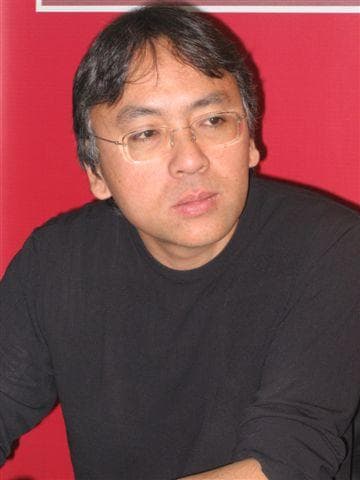
Sir Kazuo Ishiguro is a Japanese-born British novelist, screenwriter, musician, and short-story writer. He is one of the most critically acclaimed and praised contemporary fiction authors writing in English, having been awarded the 2017 Nobel Prize in Literature. In its citation, the Swedish Academy described Ishiguro as a writer "who, in novels of great emotional force, has uncovered the abyss beneath our illusory sense of connection with the world".
Similar books
- The Remains of the Day
Kazuo Ishiguro
4.1 (200k) average on GoodreadsLiterary FictionExplores themes of memory, regret, and an unreliable narrator reflecting on a past life, with a similar melancholic tone.
- Atonement
Ian McEwan
4.4 (70) average on GoodreadsFeatures a central mystery, the impact of childhood events on adult life, and the manipulation of truth and memory, often in a historical setting.
- The Great Gatsby
F. Scott Fitzgerald
3.9 (3.8M) average on GoodreadsHistorical FictionExamines the elusive nature of the past, the construction of identity, and a protagonist's obsessive quest for an idealized version of reality.
- The Ghost Writer
Philip Roth
3.4 (5k) average on GoodreadsHistorical FictionRoth's The Ghost Writer (1979) also delves into the complexities of memory, identity, and the allure of constructing alternative histories, albeit in a different context. Like Ishiguro's Banks, Roth's protagonist, Nathan Zuckerman, is immersed in a world where reality and imagination intertwine, particularly concerning the legendary figure of E.I. Lonoff and the mysterious Amy Bellette. Both novels explore how individuals project their desires and unresolved issues onto others and past events. However, Roth's novel is more explicitly concerned with literary identity and the burden of artistic legacy, whereas Ishiguro's When We Were Orphans uses the detective genre as a framework to explore broader themes of post-colonial identity and the psychological aftermath of a fragmented childhood, making its scope somewhat wider in its historical and geopolitical implications.
- The Old Man and the Sea
Ernest Hemingway
3.8 (831k) average on GoodreadsLiterary FictionA Cuban fisherman's long struggle with a giant marlin becomes a story of endurance and dignity, now retold for young adults with illustrations, phonetic guides, and writing prompts in Traditional Chinese.
- One Hundred Years of Solitude
Gabriel García Márquez
4.1 (753k) average on GoodreadsLiterary FictionThrough the multi-generational story of the Buendía family, a mythical town deals with the repeating patterns of time, love, and solitude, as the extraordinary mixes with the ordinary.





Enjoyed the summary?
A summary gives you the shape of the book. The book itself has the detail, the examples and the voice.
Find When We Were Orphans on AmazonAs an Amazon Associate, BookBrief earns from qualifying purchases. How we're funded