

Synopsis
Covers the whole plot, including the ending.
- Difficulty
- Medium
- Pacing
- Moderate
- Mood
- Atmospheric, Melancholy, Intense, Reflective, Poetic
- Read it if
- You enjoy character-driven literary fiction exploring mother-daughter relationships, coming-of-age, and resilience in the face of adversity, with a strong emphasis on atmosphere and emotional depth.
- Skip it if
- You prefer fast-paced plots, lighthearted themes, or stories with clear-cut happy endings. The novel contains mature themes including abuse and sexual content.
White Oleander Plot Summary
Covers the whole plot, including the ending.
Ingrid's Crime and Astrid's First Foster Home
The story begins with Astrid Magnussen, a young girl living in Los Angeles with her beautiful, artistic, and fiercely independent mother, Ingrid. Their life, though unconventional, is deeply intertwined with Ingrid's creative spirit and her demanding personality. This existence is shattered when Ingrid falls in love with Barry Taggart, a man who ultimately betrays her. In a fit of vengeful passion, Ingrid poisons Barry with white oleander, leading to her arrest and conviction for murder. Astrid is then placed into her first foster home with Starr, a born-again Christian and former stripper, who lives in a trailer park with her children and live-in boyfriend, Ray. Astrid struggles to adapt to Starr's strict religious rules and the chaotic environment.
Life with Starr and the Shooting Incident
In Starr's home, Astrid quickly learns to observe and adapt. She forms a tentative friendship with Starr's daughter, Carolee, and experiences her first physical intimacy with Ray, Starr's boyfriend. Ray, a recovering alcoholic, is drawn to Astrid's quiet vulnerability. Starr, however, becomes increasingly jealous and unstable, fueled by her suspicions about Ray and Astrid. The tension escalates dramatically when Starr, in a drunken rage, shoots Ray and then herself, believing Ray and Astrid are having an affair. Astrid is unharmed but deeply traumatized by the violence and Starr's suicide attempt, which leaves Starr permanently disabled and Ray recovering.
The World of Marvel and the Search for Identity
Following the traumatic events at Starr's, Astrid is moved to her second foster home, a dilapidated house in the Hollywood Hills belonging to Marvel Turlock. Marvel is a reclusive, overweight woman who hoards antique dolls and lives in squalor, rarely leaving her bed. Astrid, left largely to her own devices, is deprived of proper food, hygiene, and emotional connection. She learns to be self-reliant, rummaging for food and taking care of herself. This period is marked by extreme neglect and a sense of invisibility, forcing Astrid to further internalize her struggles and develop a hardened exterior as a coping mechanism against the indifference of her surroundings and Marvel's passive cruelty.
Claire's Affection and Ingrid's Influence
Astrid's third foster home is with Claire Richards, a beautiful and lonely actress living in a luxurious apartment. Claire is kind, gentle, and genuinely loves Astrid, providing her with the stability, affection, and material comforts she has long craved. Astrid thrives under Claire's care, experiencing a sense of belonging for the first time. However, Claire's own emotional fragility and dependence on her estranged husband, Mark, become increasingly apparent. Ingrid, from prison, subtly manipulates Astrid, fostering a sense of guilt and loyalty that prevents Astrid from fully embracing her new life. Ingrid's letters often contain veiled criticisms and demands, undermining Claire's positive influence.
Claire's Downfall and Astrid's Betrayal
Ingrid, jealous of Claire's connection with Astrid and her perceived happiness, begins a campaign of psychological manipulation through her letters to Astrid. She subtly plants seeds of doubt and insecurity in Claire's mind, particularly concerning Mark and her acting career. Claire, already prone to depression and anxiety, becomes increasingly unstable. Astrid, torn between her loyalty to her mother and her love for Claire, struggles to navigate the complex emotional landscape. Ultimately, Ingrid's insidious suggestions contribute to Claire's despair, leading Claire to commit suicide. Astrid is devastated, feeling responsible for Claire's death due to her mother's influence and her own inability to protect Claire.
The World of Amelia and the Flea Market
After Claire's death, Astrid is placed in a group home, a brief but difficult interlude, before being moved to her fourth foster home with Amelia Ramos. Amelia is a free-spirited, impoverished artist who lives in a chaotic house filled with other foster children and a constant stream of visitors. Amelia runs a flea market stall and encourages the children to work and contribute. Astrid finds a sense of belonging among the diverse group of children and adults. She learns to haggle, to create, and to value resourcefulness. This environment, though lacking in traditional comforts, offers Astrid a degree of freedom and a chance to explore her own nascent artistic talents, allowing her to further shed her previous identities.
Paul and Astrid's Relationship
In Amelia's house, Astrid meets Paul, a boy her age who shares a similar background in the foster system. Paul is artistic, sensitive, and understanding, and the two quickly develop a deep romantic and emotional bond. Their relationship provides Astrid with a much-needed sense of intimacy, trust, and shared experience. They explore their sexuality together, offering each other comfort and a sense of normalcy amidst the instability of their lives. Paul becomes a significant anchor for Astrid, representing a genuine connection and a glimpse into a future where she might find lasting love and partnership, separate from her mother's influence.
Bernadette and the Cult of Self-Possession
After Amelia's, Astrid briefly lives with a young woman named Annie, whose home is clean but devoid of warmth. She then moves to a much harsher environment, living with Bernadette, a woman who takes in foster children for the money and offers no emotional support or guidance. Bernadette's philosophy is one of extreme self-reliance and emotional detachment. She teaches Astrid to be tough, to expect nothing from others, and to protect herself at all costs. This period further hardens Astrid, forcing her to confront the brutal realities of survival in a world that offers little compassion. She learns to be wary and to rely solely on her own cunning and strength.
Olivia and the Pornography Industry
Astrid's next placement is with Olivia Johnstone, a former porn actress who now manages a small group of young women involved in the adult film industry. Olivia is charismatic and seemingly offers Astrid a path to independence and financial stability. Astrid, seeking control over her own body and image, begins to pose for explicit photographs. This experience is both empowering and exploitative, forcing Astrid to confront her own vulnerability and the objectification of women. She learns about the transactional nature of beauty and desire, further complicating her understanding of self-worth and autonomy, all while navigating the moral ambiguities of this new world.
Ingrid's Trial and Astrid's Testimony
Throughout her foster care journey, Astrid maintains a complex, often fraught, relationship with her mother, Ingrid, through letters and prison visits. Ingrid continues to exert a powerful, almost hypnotic, influence over Astrid, shaping her perspectives and subtly manipulating her emotions. Years later, Ingrid's murder conviction is appealed, and Astrid is called to testify. This moment is a turning point for Astrid. She is forced to choose between loyalty to her mother and her own truth. Her testimony, though difficult, represents Astrid's final act of breaking free from Ingrid's absolute control and asserting her own independent identity, despite the emotional cost.
The Final Foster Home and Self-Acceptance
After testifying at her mother's appeal, Astrid is placed in her final foster home with a kind, elderly woman named Rena. Rena provides a quiet, stable environment where Astrid can finally process her tumultuous past and begin to heal. This period allows Astrid to reflect on her journey through the various foster homes, each leaving an indelible mark on her identity. She begins to piece together the fragments of her experiences, understanding how each foster mother, for better or worse, contributed to the woman she has become. Astrid starts to embrace her artistic inclinations, finding solace and expression in her own creative pursuits, separate from Ingrid's shadow.
Astrid's Independence and Future
By the novel's conclusion, Astrid Magnussen has transformed from a passive, impressionable girl into a resilient, self-possessed young woman. She has survived the emotional and physical abuses of the foster care system, navigated complex relationships, and ultimately broken free from her mother's oppressive influence. Astrid leaves the foster system, ready to embark on her own life. She has learned to trust her own judgment and to define her own values. While the scars of her past remain, Astrid carries them not as burdens, but as integral parts of her unique identity, enabling her to create a future defined by her own choices and artistic expression, rather than by her mother's legacy.
White Oleander Characters
Astrid Magnussen
Protagonist
A resilient young woman who navigates the tumultuous Los Angeles foster care system.
Astrid is initially a quiet, observant, and impressionable girl, deeply devoted to her captivating but dangerous mother, Ingrid. As she moves through a series of foster homes, she adapts chameleon-like to each new environment, absorbing the lessons and coping mechanisms of her various caretakers. She is intelligent, artistic, and possesses an innate desire for love and stability, which is constantly tested and often denied. Her journey is one of profound self-discovery, as she sheds imposed identities and ultimately forges her own.
Relationships: Ingrid Magnussen (Daughter, victim of emotional manipulation, ultimately breaks free); Starr (First foster mother, abusive, religious fanatic); Ray (Starr's boyfriend, first sexual experience, a source of danger); Marvel Turlock (Second foster mother, neglectful hoarder); Claire Richards (Third foster mother, loving but fragile, ultimately manipulated to suicide by Ingrid); Paul (Boyfriend, fellow foster child, a source of genuine connection); Amelia Ramos (Fourth foster mother, unconventional artist, provides a sense of community); Bernadette (Foster mother, teaches harsh self-reliance); Olivia Johnstone (Foster mother, introduces Astrid to the adult film industry)
Ingrid Magnussen
Antagonist
Astrid's brilliant, beautiful, and dangerously narcissistic poet mother imprisoned for murder.
Ingrid is a charismatic and fiercely independent poet whose artistic genius is intertwined with a profound narcissism and emotional cruelty. She views the world, and her daughter, as extensions of her own will and aesthetic. Imprisoned for murder, she continues to exert a powerful, often destructive, influence over Astrid through letters and visits. She values beauty, art, and intellectual superiority above all else, often at the expense of genuine human connection and empathy. Her love for Astrid is possessive and conditional, hindering Astrid's ability to form healthy attachments.
Relationships: Astrid Magnussen (Mother, manipulative, possessive, controlling); Barry Taggart (Lover, victim of Ingrid's murder)
Starr
Supporting
Astrid's first foster mother, a volatile born-again Christian and former stripper.
Starr is a complex character: a born-again Christian striving for redemption, but still deeply rooted in her past struggles with addiction and jealousy. She is volatile, prone to dramatic outbursts, and deeply insecure. While she attempts to instill religious values in Astrid, her own actions are often hypocritical and self-destructive. She offers Astrid a glimpse into a chaotic, working-class world, but her emotional instability ultimately leads to violence and her own tragic downfall.
Relationships: Astrid Magnussen (First foster mother, abusive, religious influence); Ray (Live-in boyfriend, victim of Starr's jealousy)
Claire Richards
Supporting
Astrid's third foster mother, a beautiful and fragile actress who offers genuine love.
Claire is a delicate and loving woman, a former actress who provides Astrid with the most stable and affectionate home environment she experiences. She is kind, gentle, and genuinely desires to be a good mother figure. However, Claire is deeply insecure, emotionally fragile, and dependent on her estranged husband, Mark. Her vulnerability makes her susceptible to Ingrid's subtle manipulations, leading to her tragic demise. She represents a lost opportunity for Astrid to experience unconditional love and stability.
Relationships: Astrid Magnussen (Third foster mother, loving but fragile, victim of Ingrid's manipulation); Mark (Estranged husband, source of Claire's insecurity)
Paul
Supporting
Astrid's boyfriend and fellow foster child, an artist who offers genuine connection.
Paul is a sensitive, artistic, and understanding young man whom Astrid meets at Amelia's foster home. He shares Astrid's experiences within the foster system, creating a deep bond of empathy and shared understanding between them. He is a source of genuine affection, intimacy, and stability for Astrid, representing a healthy alternative to the chaotic and manipulative relationships she has known. Paul encourages Astrid's artistic inclinations and helps her to envision a future beyond her mother's shadow.
Relationships: Astrid Magnussen (Boyfriend, fellow foster child, artistic partner)
Amelia Ramos
Supporting
Astrid's fourth foster mother, an unconventional, free-spirited artist.
Amelia is a spirited, unconventional artist who runs a chaotic but vibrant household filled with foster children and creative energy. She is poor but resourceful, teaching her children independence and the value of hard work through her flea market business. Amelia offers Astrid a sense of community and the freedom to explore her own creativity. While not providing traditional comforts, her home fosters a sense of belonging and resilience, allowing Astrid to develop practical skills and a more robust sense of self.
Relationships: Astrid Magnussen (Fourth foster mother, unconventional, artistic influence)
Ray
Supporting
Starr's live-in boyfriend, a recovering alcoholic who has an affair with Astrid.
Ray is Starr's live-in boyfriend, a recovering alcoholic with a quiet demeanor. He is initially kind to Astrid, offering her a degree of attention and affection she hasn't received. Their brief sexual encounter is a pivotal moment for Astrid, marking her first experience of intimacy. However, his weakness and inability to resist Starr's manipulation or protect Astrid contribute to the volatile environment of Starr's home, ultimately leading to him being shot by Starr.
Relationships: Astrid Magnussen (Lover, source of first sexual experience); Starr (Girlfriend, shooter)
Marvel Turlock
Supporting
Astrid's second foster mother, a reclusive hoarder who provides extreme neglect.
Marvel is a profoundly neglectful and reclusive woman, defined by her hoarding of antique dolls and her inability to care for herself or Astrid. She offers no emotional support, minimal physical care, and operates in a state of passive cruelty. Her home is a place of squalor and isolation, forcing Astrid into extreme self-reliance and a deeper understanding of human indifference. Marvel represents the most extreme form of neglect Astrid experiences, hardening her and forcing her to find internal strength.
Relationships: Astrid Magnussen (Second foster mother, neglectful, emotionally abusive)
White Oleander Themes
The Search for Identity and Self-Definition
Astrid's journey through multiple foster homes explores identity. Each home, with its unique rules and values, forces Astrid to adapt and adopt different personas. From Starr's religious piety to Amelia's artistic freedom, and Bernadette's self-sufficiency, Astrid constantly redefines herself. She struggles to break free from her mother Ingrid's powerful, suffocating influence, ultimately forging an identity that is a composite of her experiences, yet distinctly her own. This shows in her changing appearance, her artistic expression, and her eventual ability to testify against her mother.
“I had no idea who I was. I was a chameleon, changing my colors to match the foster mother.”
Maternal Influence and Its Destructive Power
The novel deeply examines the complex and often destructive nature of maternal love, particularly through the relationship between Ingrid and Astrid. Ingrid, a brilliant poet, uses her intellect and charisma to manipulate and control Astrid, even from prison. Her 'love' is possessive and conditional, viewing Astrid as an extension of herself rather than an independent being. Ingrid actively sabotages Astrid's chances at happiness (e.g., Claire's suicide) and healthy attachments, forcing Astrid to confront the painful reality that her mother's love is a beautiful, but poisonous, white oleander. Astrid's ultimate liberation involves rejecting this toxic influence.
“I was her experiment, her favorite doll, and she was forever pulling the strings.”
Survival and Resilience
Astrid's entire existence in the foster care system shows human resilience. She endures physical neglect, emotional abuse, violence, and profound loss, yet she consistently finds ways to survive and even thrive. Each foster home presents new challenges, from starvation with Marvel to Ingrid's emotional manipulation, but Astrid learns to adapt, to observe, and to protect herself. Her ability to compartmentalize trauma, to find small moments of beauty or connection, and to ultimately assert her own agency highlights the extraordinary capacity of the human spirit to endure adversity and emerge stronger.
“I learned to live in the space between the words, the moments of silence where the world revealed itself.”
The Nature of Art and Beauty
Art and beauty are central themes, often presented as both redemptive and destructive forces. Ingrid embodies a dangerous form of artistic purity, where aesthetic ideals justify cruel actions. The white oleander itself is beautiful but deadly, mirroring Ingrid's character. Astrid's journey involves finding her own artistic voice, distinct from her mother's. She learns to appreciate beauty in unexpected places (the flea market, her own photography) and uses art as a means of expression and healing, rather than as a weapon or a tool for manipulation. This theme explores the moral responsibility that comes with creative power.
“Beauty is a whore, Astrid. You have to use her, not let her use you.”
The Fragility of Love and Connection
Throughout her life, Astrid experiences various forms of love and connection, almost all of which prove fragile or conditional. Starr's love is possessive and violent, Marvel's is non-existent, and Claire's, though genuine, is ultimately too delicate to withstand Ingrid's malice. Even her bond with Paul, while strong, exists within the transient nature of the foster system. This theme highlights the difficulty of forming lasting bonds when one is constantly uprooted and emotionally scarred. It shows Astrid's deep longing for unconditional love and the painful lessons learned when those connections are severed.
“Love was a country I had visited, but could not live in.”
Plot Devices & Literary Techniques
The White Oleander
A recurring symbol of dangerous beauty and toxic love.
The white oleander is not only the murder weapon but also a potent symbol throughout the novel. It represents beauty that conceals poison, mirroring Ingrid's charismatic yet destructive nature. Its recurring presence in the narrative, from the initial crime to Astrid's later reflections, serves as a constant reminder of the toxic legacy Ingrid leaves. It symbolizes the seductive power of beauty, the deceptive nature of appearances, and the idea that something seemingly benign can be inherently deadly, much like Ingrid's influence on Astrid's life and the lives of those around her.
Epistolary Elements (Ingrid's Letters)
Ingrid's letters from prison serve as a continuous source of manipulation and insight into her character.
Ingrid's letters to Astrid from prison are a crucial plot device. They allow Ingrid to maintain a powerful, almost omnipresent, influence over Astrid's life, even when physically absent. These letters are not merely updates; they are carefully crafted tools of psychological manipulation, filled with veiled criticisms, philosophical pronouncements, and subtle commands. They prevent Astrid from fully integrating into her new foster families and serve to remind her of her mother's 'superiority' and control. They also provide direct access to Ingrid's internal world, revealing her unwavering narcissism and her unique perspective on life, art, and survival.
Chameleon Metaphor
Astrid's ability to adapt to each foster home, changing her identity to survive.
The metaphor of Astrid as a chameleon is explicitly used and implicitly shown throughout the novel. As she moves from one vastly different foster home to another, Astrid instinctively adapts her appearance, behavior, and even her internal monologue to suit her environment and the expectations of her foster mothers. This adaptability is a survival mechanism, allowing her to blend in and minimize conflict. However, it also highlights her struggle to form a stable, authentic self. Each 'color' she takes on leaves a residue, contributing to the complex tapestry of her eventual, independent identity, as she learns to discern which adaptations are truly her own.
The Foster Care System
The fragmented and often failing system that shapes Astrid's journey.
The foster care system itself acts as a significant plot device, serving as the primary catalyst for Astrid's episodic journey. It is depicted as a bureaucratic, underfunded, and often inadequate entity that inadvertently exposes Astrid to a wide spectrum of human experience, from neglect to genuine affection. The constant transitions, the lack of consistent care, and the sheer unpredictability of her placements drive the narrative forward and force Astrid's rapid emotional and psychological development. The system's failings highlight the vulnerability of children within it and the profound impact of instability on a young life.
First-Person Retrospective Narration
Astrid narrates her story as an adult, providing reflection and maturity to her traumatic childhood.
The novel is told from Astrid's first-person perspective, but crucially, it is a retrospective narration. This means that the Astrid telling the story is an older, more mature version of the character, looking back on her childhood experiences. This narrative choice allows for a layer of reflection, analysis, and emotional distance that would not be possible with an immediate, in-the-moment perspective. The adult Astrid can interpret the events, understand the motivations of others (especially Ingrid), and articulate the profound impact of her trauma, providing a richer, more nuanced understanding of her journey and her eventual self-realization.
White Oleander Quotes
“I was the Joan of Arc of the suburbs and I was going to save America.”
“The things you love are the things that destroy you.”
“Every life is a story. Every story is a destination.”
“I learned to be a chameleon, to be what the person I was with wanted me to be.”
“White oleander. The flower of death. A beautiful killer.”
“You were the one who taught me to see the world as a place of infinite possibility.”
“You have to be a hunter, not the hunted.”
“We are what we are, and we're not what we're not.”
“There are no accidents. Only the inevitable.”
“To be a writer, you have to be a reader, and you have to be curious.”
“You can't save anyone, Astrid. You can only save yourself.”
“My mother was a force of nature, and I was just a leaf in her storm.”
“Beauty is a form of power, and it's dangerous.”
“I was learning that the world was not a safe place, and that I had to protect myself.”
Quiz
10 questions on the plot and the characters. Each answer comes with a short explanation.
Question 1
What is Ingrid Magnussen's profession before her imprisonment?
- A sculptor
- A painter
- A poet
- A musician
Show answer
C. A poet Ingrid Magnussen is established as a brilliant, enigmatic poet whose artistic nature deeply influences Astrid's early life.
Question 2
Why is Ingrid Magnussen imprisoned?
- For bank robbery
- For the murder of her lover, Barry Kolker
- For drug trafficking
- For arson
Show answer
B. For the murder of her lover, Barry Kolker Ingrid is imprisoned for poisoning her lover, Barry Kolker, with white oleander, which sets the central conflict of the novel in motion.
Question 3
What is the significance of the 'white oleander' in the novel's title?
- It is Astrid's favorite flower.
- It symbolizes purity and innocence.
- It is the poisonous plant Ingrid uses to murder her lover.
- It represents the beauty of Los Angeles.
Show answer
C. It is the poisonous plant Ingrid uses to murder her lover. The white oleander is a highly poisonous plant used by Ingrid to commit murder, thus symbolizing her destructive nature and the toxicity she brings to Astrid's life.
Question 4
Which foster mother is a former B-movie actress who struggles with alcoholism and eventually commits suicide?
- Star
- Rena Grushenka
- Claire Richards
- Marvel
Show answer
C. Claire Richards Claire Richards is the vulnerable, beautiful former actress who forms a deep bond with Astrid but ultimately succumbs to her own demons and Ingrid's manipulative influence.
Question 5
What artistic medium does Astrid primarily pursue during her time with Paul Gaston?
- Poetry
- Photography
- Collage and assemblage
- Painting
Show answer
C. Collage and assemblage With Paul Gaston, Astrid finds an outlet for her creativity in collage and assemblage, creating art from discarded materials, reflecting her own fragmented experiences.
Question 6
What is a recurring theme expressed through Astrid's many foster homes?
- The stability and comfort of the foster care system.
- The search for belonging and identity amidst constant change.
- The universal love between mothers and daughters.
- The ease of escaping one's past.
Show answer
B. The search for belonging and identity amidst constant change. Astrid's journey through various foster homes highlights her struggle to find a sense of self and belonging, constantly adapting to new environments and identities imposed upon her.
Question 7
How does Ingrid react when Astrid attempts to visit her in prison for the first time after a long separation?
- She warmly embraces Astrid and apologizes for her actions.
- She refuses to see Astrid, claiming to be too busy.
- She criticizes Astrid's appearance and choices, maintaining her controlling nature.
- She is indifferent and barely acknowledges Astrid's presence.
Show answer
C. She criticizes Astrid's appearance and choices, maintaining her controlling nature. Ingrid consistently uses her prison visits to manipulate and criticize Astrid, reinforcing her control and never offering genuine maternal warmth or remorse.
Question 8
Astrid eventually testifies against Ingrid during her appeal. What specific event or realization prompts Astrid to make this decision?
- Ingrid's expression of deep regret and a plea for forgiveness.
- Astrid's desire to finally please her mother by helping her get out of prison.
- Ingrid's manipulation leading to Claire Richards' suicide, causing Astrid to fully see her mother's destructive nature.
- A direct request from the prosecution to help them win the appeal.
Show answer
C. Ingrid's manipulation leading to Claire Richards' suicide, causing Astrid to fully see her mother's destructive nature. Astrid's decision to testify against Ingrid is a pivotal moment, driven by the realization of her mother's culpability in Claire's death and a final assertion of her own independence from Ingrid's destructive influence.
Question 9
How does Astrid's relationship with her mother, Ingrid, evolve throughout the novel?
- It consistently strengthens into a loving and supportive bond.
- It remains stagnant, with Astrid always seeking Ingrid's approval.
- It transforms from complete dependence to a complex, independent understanding of her mother's flaws and her own resilience.
- It becomes increasingly hostile, leading to a complete and permanent estrangement.
Show answer
C. It transforms from complete dependence to a complex, independent understanding of her mother's flaws and her own resilience. Astrid's relationship with Ingrid is the central dynamic, evolving from a child's adoration and dependence to a young woman's struggle for self-definition and eventual liberation from her mother's destructive influence.
Question 10
What does the ending of the novel suggest about Astrid's future and her final relationship with her past?
- She returns to Los Angeles to live near her mother, seeking reconciliation.
- She completely abandons her artistic pursuits to pursue a conventional life.
- She embraces her past experiences and the lessons learned, using them to inform her art and shape her independent identity, carrying her 'baggage' with her to a new place.
- She becomes a clone of her mother, perpetuating the same destructive patterns.
Show answer
C. She embraces her past experiences and the lessons learned, using them to inform her art and shape her independent identity, carrying her 'baggage' with her to a new place. By the end, Astrid has collected her experiences, both good and bad, and carries them with her, using them as inspiration for her art and forging her own unique identity, rather than succumbing to her mother's fate or completely rejecting her past.
White Oleander FAQ
What is the central conflict driving Astrid Magnussen's journey throughout the novel?
Astrid's central conflict stems from her struggle to define her own identity separate from her mother, Ingrid Magnussen, a brilliant but manipulative poet. She grapples with the traumatic legacy of Ingrid's imprisonment and the subsequent instability of navigating numerous foster homes, each forcing her to adapt and reshape herself.
How does Ingrid Magnussen's artistic nature influence her parenting and Astrid's development?
Ingrid's artistic nature manifests as a fierce, uncompromising, and often destructive force in her parenting, prioritizing aesthetic purity and independence above all else. She instills in Astrid a unique perspective on beauty and truth but also a profound sense of emotional detachment and a constant need to prove her resilience.
Describe the significance of the 'white oleander' itself within the narrative.
The white oleander symbolizes both beauty and deadly toxicity, mirroring Ingrid Magnussen's character and her impact on Astrid's life. It represents the alluring yet poisonous nature of Ingrid's love and influence, which, like the plant, can be captivating but ultimately destructive if consumed.
What role does the setting of Los Angeles play in shaping Astrid's experiences?
Los Angeles serves as a sprawling, diverse backdrop, with each foster home representing a distinct subculture or 'universe' within the city. The city's transient nature, its extremes of wealth and poverty, and its distinct neighborhoods reflect the varied and often isolating experiences Astrid encounters, from Hollywood Hills to impoverished areas.
Which foster mother has the most profound positive impact on Astrid's self-discovery?
Among her many foster mothers, Starr, the born-again Christian, initially offers a glimpse of warmth and stability, but it is ultimately Olivia Johnstone, the wealthy artist and former muse, who provides Astrid with a sense of belonging and artistic guidance, helping her to cultivate her own creative voice and independence.
What subtle connections exist between Astrid's various foster homes beyond the obvious plot progression?
Beyond the direct progression, there's a subtle thematic thread connecting the homes through Astrid's evolving artistic expression and her search for a 'home' that mirrors Ingrid's complex aesthetic. Each environment, from Starr's kitsch to Olivia's refined art, subtly influences Astrid's internal landscape and her understanding of beauty and ugliness.
Are there any recurring symbols or motifs that link Ingrid's philosophy to Astrid's later choices?
The motif of 'cutting' or 'shaping' appears repeatedly, from Ingrid's pruning of her garden to her brutal honesty and Astrid's eventual work with sculptures and mannequins. This reflects Ingrid's philosophy of stripping away the inessential, a lesson Astrid internalizes and transforms into her own artistic and personal autonomy.
How does the novel subtly hint at Ingrid's continued manipulation even from prison?
Ingrid's continued manipulation is hinted at through her letters, her carefully chosen words, and her ability to evoke guilt and longing in Astrid. Even when physically absent, her psychological presence is dominant, shaping Astrid's decisions and emotional responses, often through a blend of profound insight and subtle emotional blackmail.
What psychological defense mechanisms does Astrid develop to cope with her traumatic childhood?
Astrid develops several defense mechanisms, including chameleon-like adaptability, disassociation, and a tendency to observe rather than fully participate emotionally. She learns to compartmentalize her experiences and often creates internal narratives to make sense of the chaos, protecting her fragile sense of self.
How does Ingrid Magnussen's narcissism impact Astrid's ability to form healthy attachments?
Ingrid's profound narcissism, characterized by a lack of empathy and a focus on her own artistic vision and needs, severely impairs Astrid's ability to form healthy attachments. Astrid struggles with trust, intimacy, and a fear of abandonment, often replicating patterns of seeking approval or withdrawing from emotional vulnerability.
Analyze the 'mother wound' present in Astrid's relationship with Ingrid.
The 'mother wound' in Astrid's relationship with Ingrid is deep and multifaceted, stemming from Ingrid's emotional neglect, her use of Astrid as an extension of herself, and her ultimate betrayal. This wound manifests as a lifelong struggle for self-worth, a constant yearning for unconditional love, and the arduous task of healing from profound maternal abandonment.
How does Astrid's search for identity relate to Erik Erikson's stages of psychosocial development?
Astrid's journey primarily aligns with Erikson's 'Identity vs. Role Confusion' stage, as she grapples with who she is separate from her mother and her various foster environments. Each foster home presents a different 'role' she must inhabit, forcing her to continually re-evaluate and construct her sense of self amidst conflicting influences.
Is Ingrid Magnussen a purely villainous character, or are there nuances to her portrayal?
Ingrid Magnussen is not purely villainous; her portrayal is nuanced, depicting her as a complex figure driven by an uncompromising artistic integrity and a unique, albeit destructive, philosophy of life. While her actions are often harmful, her fierce independence and profound insights are also presented as a source of dark allure and even a twisted form of strength.
To what extent does Astrid truly break free from Ingrid's influence by the novel's end?
By the novel's end, Astrid achieves significant psychological emancipation, no longer seeking Ingrid's approval or succumbing to her manipulation. While Ingrid's influence will always be a part of Astrid's identity, Astrid has forged her own artistic voice and a clear sense of self, demonstrating a profound break from the cycle of dependence.
How does the ending of the novel, with Astrid in Germany, signify her ultimate triumph?
Astrid's relocation to Germany and her work creating sculptures of angels from found objects signifies her ultimate triumph. It represents her embrace of her own artistic vision, her ability to transform brokenness into beauty, and her choosing an independent life far from Ingrid's shadow, establishing her own 'home' and identity.
What is the novel's stance on the nature of 'art' and the sacrifices it demands?
The novel suggests that art, particularly in its purest form, can demand immense personal sacrifice, even to the point of cruelty or moral compromise, as exemplified by Ingrid. It explores the idea that true artistic vision can be both beautiful and destructive, often requiring an unyielding self-focus that can alienate others.
Could the character of Paul be considered Astrid's true 'savior' or merely another fleeting connection?
Paul represents a significant, gentle, and stable connection for Astrid, offering a sense of normalcy and unconditional affection that was absent in her earlier life. While not a 'savior' in a dramatic sense, his consistent presence and quiet love provide a crucial emotional anchor, allowing Astrid to experience healthy attachment and self-acceptance.
About the author

Janet Fitch is an American author known for her literary fiction. Her notable work, "White Oleander," explores themes of identity and resilience through the story of a young girl navigating life in foster care. Fitch's writing often delves into complex emotional landscapes and the intricacies of human relationships.
Similar books
- The Glass Castle
Jeannette Walls
4.3 (903k) average on GoodreadsBiographyExplores a challenging childhood and unconventional parents, focusing on resilience and self-discovery.
- Where the Crawdads Sing
Delia Owens
4.5 (975k) average on GoodreadsHistorical FictionFeatures a strong female protagonist navigating isolation and hardship, with beautiful descriptive language.
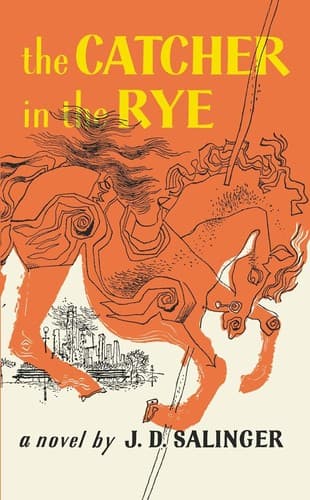
- The Catcher in the Rye
J.D. Salinger
3.8 (2.7M) average on GoodreadsYoung AdultWhile both explore adolescent alienation and a search for authenticity, Salinger's novel is primarily an internal, intellectual journey of a privileged boy. Fitch's work is intensely physical, emotional, and driven by external survival in a harsh environment, with a female protagonist facing systemic challenges rather than internal disillusionment.
- The Secret Life of Bees
Sue Monk Kidd
4.1 (1.1M) average on GoodreadsHistorical FictionBoth novels feature young female protagonists seeking maternal figures and finding community after leaving difficult homes. However, Kidd's novel offers a more redemptive and ultimately comforting portrayal of found family and healing. Fitch's White Oleander delves into a far more corrosive and dangerous form of maternal influence, presenting a starker, less optimistic view of human connection and the long shadow of trauma, with less clear-cut resolution.
- The Old Man and the Sea
Ernest Hemingway
3.8 (831k) average on GoodreadsLiterary FictionA Cuban fisherman's long struggle with a giant marlin becomes a story of endurance and dignity, now retold for young adults with illustrations, phonetic guides, and writing prompts in Traditional Chinese.
- One Hundred Years of Solitude
Gabriel García Márquez
4.1 (753k) average on GoodreadsLiterary FictionThrough the multi-generational story of the Buendía family, a mythical town deals with the repeating patterns of time, love, and solitude, as the extraordinary mixes with the ordinary.




Enjoyed the summary?
A summary gives you the shape of the book. The book itself has the detail, the examples and the voice.
Find White Oleander on AmazonAs an Amazon Associate, BookBrief earns from qualifying purchases. How we're funded