

Core Idea
- Difficulty
- Easy
- Read it if
- You enjoy intimate, reflective essays on personal growth, motherhood, and finding joy and self-acceptance after an unconventional past, especially if you appreciate Drew Barrymore's unique perspective.
- Skip it if
- You are looking for a linear, chronological celebrity tell-all memoir with deep dives into Hollywood scandals, or if you prefer a highly structured narrative over thematic reflections.
Key Takeaways from Wildflower
Laundry as a Life Skill
The mundane act of self-sufficiency can be a powerful anchor in chaos.
Drew talks about a time of great uncertainty when she was a teenager, living alone at 14. Amidst this freedom, she found an unexpected anchor in the simple act of doing her own laundry. This chore became a symbol of self-reliance and a way to control her life when much else felt out of control. It was not about clean clothes, but the ritual itself—sorting, washing, drying, and folding—that gave her a sense of order and achievement. This shows how basic life skills, often overlooked, can be important for mental health and personal power, especially during difficult times.
“I was totally on my own, but I was doing my laundry. And it felt good. It felt like I was doing something responsible. It felt like I was taking care of myself.”
In the book: Drew's personal anecdote of living alone at 14 and discovering a sense of stability and self-worth through the routine of doing her own laundry.
Try this: Identify one small, repeatable act of self-care or household responsibility that you often outsource or neglect. Consciously engage in it daily or weekly, focusing on the satisfaction of completion rather than just the task itself. Use it as a mini-meditation or a moment to affirm your capacity for self-sufficiency.
Related ideas: self-sufficiency, personal-agency, doing-the-work
The Power of Imperfect Goodbyes
Finding peace in unconventional farewells, especially with complicated relationships.
Drew's relationship with her father was complicated and often difficult. When it was time to say goodbye, she did not look for a dramatic reconciliation. Instead, she found a way to honor their unique, sometimes hard, connection in a way that felt real to them. This idea emphasizes that closure does not always come easily. For those with complex family situations, seeking an 'ideal' goodbye can be impossible. True peace often comes from accepting imperfections, acknowledging the reality of the relationship, and finding a personal way to mark a transition or loss. It is about letting go of what society expects for grief and doing what feels right for your own story.
“It wasn't a perfect goodbye, but it was ours. It was perfect for us.”
In the book: Drew's account of saying goodbye to her father, which she describes as unconventional but ultimately fitting for their relationship.
Try this: Reflect on a past or current complex relationship. Instead of striving for a 'perfect' resolution or apology, consider what a truly authentic and personal form of closure or acknowledgment might look like for you and that person, even if it's unconventional or internal.
Related ideas: grief, family-dynamics, closure
The Road Trip as a Metaphor
Embracing the unexpected detours and challenges of life's journey.
Drew's story about getting stuck under a gas station overhang during a road trip is a good symbol for her life. Her journey has included unexpected problems, public mistakes, and times of feeling stuck or lost. However, her story consistently shows a will to 'keep going.' This is not about avoiding problems, but about how one reacts to them. The road trip comparison shows that life is not a straight path; it has detours, breakdowns, and moments where you question your direction. The real adventure is in handling these challenges, learning from them, and finding your way forward, often in unexpected ways. It shows that growth happens in the struggle, not just when things are easy.
“Sometimes you get stuck, sometimes you get lost, but you keep going. That's the whole point.”
In the book: The story of Drew getting stuck in a gas station overhang during a cross-country road trip, and her broader life narrative of overcoming public struggles.
Try this: When facing an unexpected obstacle or setback, instead of viewing it as a failure, frame it as a 'detour' or 'getting stuck in an overhang.' Ask yourself: What can I learn from this unexpected stop? What new perspective might I gain before moving forward?
Related ideas: resilience, personal-growth, overcoming-adversity
The Transformative Power of Motherhood
Finding true purpose and grounding through unconditional love.
For someone who had a difficult childhood and early adulthood, motherhood gave Drew a strong sense of purpose. Her story suggests that becoming a mother was not just another event, but a fundamental change in her values. The strong love she feels for her children offered a stability she may have lacked, helping her grow and accept herself. This does not mean motherhood is the only path to purpose, but for Drew, it clearly provided a deep, anchoring love that helped her deal with past problems and build a healthier, happier present. It speaks to the idea that finding something bigger than yourself can be very life-changing.
“Everything I thought I knew about love and purpose was redefined the moment I became a mother.”
In the book: Drew's consistent reflections throughout the book on how her identity and priorities shifted dramatically after becoming a mother, leading to a more stable and fulfilling life.
Try this: Identify a relationship or commitment in your life that provides you with a profound sense of purpose and unconditional love (it doesn't have to be parental). Consciously lean into that relationship, acknowledging its power to ground you and offer perspective during challenging times.
Related ideas: motherhood, purpose, unconditional-love
The Art of Reinvention
Embracing change and evolving beyond past labels.
Drew Barrymore's career and public image show how much she has changed. From child star to 'wild child' to successful actress, producer, businesswoman, and talk show host, she has always defied easy labels. This point highlights the importance of not letting past stories or public views define your future. Drew actively looked for new challenges and roles, showing a deep desire for growth. Her story encourages readers to see life as a series of chapters, each offering a chance to learn, adapt, and redefine oneself, instead of being limited by earlier versions of who they were or what they did. It is a strong message about having control over your life and the ability to keep changing personally and professionally.
“I never wanted to be stuck in one box. I always wanted to keep creating and changing.”
In the book: Her career trajectory, moving from child actor, through a rebellious phase, to establishing Flower Films, and later launching Flower Beauty and her talk show.
Try this: Reflect on a label or past identity that you feel limits you. Brainstorm three small, actionable steps you can take this week to explore a new interest, skill, or aspect of your personality that challenges that old label. Start a new hobby, read a book on a new topic, or connect with someone outside your usual circle.
Related ideas: reinvention, personal-evolution, identity
Finding Joy in the Everyday
Cultivating appreciation for simple pleasures amidst a extraordinary life.
Despite a life of unique experiences, fame, and money, Drew Barrymore often talks about the deep happiness she finds in simple, everyday moments. Whether it is doing laundry, cooking for her children, or sharing a quiet moment with loved ones, her story values the beauty of the ordinary. This suggests that true happiness does not only come from big achievements or outside approval, but from truly appreciating the small, often overlooked, joys of life. For someone who has seen both extreme highs and lows, her shift towards valuing simplicity shows where real contentment comes from. It is a call to be present and thankful for the current moment, no matter your outside situation.
“It's in the quiet moments, the ordinary things, that I find the most joy now.”
In the book: Her reflections on finding happiness in domestic tasks, family time, and the routines of daily life, contrasting with her earlier, more chaotic public image.
Try this: Choose one ordinary daily activity (e.g., making coffee, walking the dog, washing dishes). For one week, fully engage with that activity, noticing sensory details and the satisfaction it brings, rather than rushing through it. Practice finding a small moment of joy within it.
Related ideas: gratitude, mindfulness, simple-living
The Journey to Self-Acceptance
Embracing all chapters of one's life, even the messy ones.
Drew's memoir is not a story of regret, but of acceptance. She openly discusses her difficult past, including early struggles and public mistakes. Instead, she sees these experiences as important parts of her journey, essential in shaping who she is today. This emphasizes the importance of self-acceptance, not just of our strengths and successes, but of our perceived failures and hard times. It is about knowing that every experience, good or bad, adds to the unique story of who we are. This view allows for real healing and growth, moving past shame or regret to a place of complete self-love and understanding. It is a strong message that true wisdom comes from accepting all parts of one's history.
“I wouldn't change any of it, because it all made me who I am.”
In the book: The candidness with which she discusses her rebellious youth, drug use, and public struggles, but always with a tone of reflection and integration rather than shame.
Try this: Identify one past experience you often regret or wish you could change. Instead of dwelling on the negative, write down three ways that experience, however difficult, contributed to a strength, lesson, or aspect of your character you value today.
Related ideas: self-acceptance, past-integration, personal-narrative
The Value of Chosen Family
Building supportive networks beyond biological ties.
Given her unusual and often broken biological family background, Drew Barrymore's story clearly shows the important role of 'chosen family.' Throughout her life, friends and mentors stepped in to offer the support, stability, and strong love that her immediate family sometimes could not. This highlights that while biological ties can be important, they are not the only source of support. Actively building relationships with people who offer genuine care, understanding, and a sense of belonging is important for well-being, especially for those who have experienced family trauma or instability. It celebrates the bonds we make through shared experiences and mutual respect, which can be just as, if not more, impactful than blood relatives.
“My friends became my family, and they saved me in so many ways.”
In the book: Numerous anecdotes throughout the book referencing close friends, godparents, and mentors who provided stability and love during various challenging periods of her life.
Try this: Identify three people in your life who constitute your 'chosen family.' Reach out to one of them this week to express your appreciation for their presence and support, reinforcing those valuable bonds.
Related ideas: chosen-family, community, social-support
Embracing Vulnerability for Connection
Sharing one's authentic self fosters deeper relationships and self-understanding.
Drew's memoir itself is an act of openness, sharing personal stories, struggles, and successes. This willingness to be real, even about the less flattering parts of her past, has been key to her lasting public appeal and, more importantly, her personal growth. This highlights that real connection—with others and with oneself—often comes from a willingness to be open. Hiding imperfections or showing a perfect version of oneself can create barriers. By embracing and sharing her real self, Drew shows that being open is not a weakness but a strength, building empathy, deeper relationships, and a more whole sense of self. It is an important lesson in the courage it takes to truly be seen.
“I've learned that the more honest you are, the more people connect with you. And the more you connect with yourself.”
In the book: The very act of writing and publishing a memoir that delves into personal struggles, and her public persona which is often characterized by candidness and openness.
Try this: In a safe and trusted relationship, choose one small, non-critical vulnerability to share this week (e.g., a minor fear, a past mistake you've learned from, a current uncertainty). Observe how this act of openness impacts your connection.
Related ideas: vulnerability, authenticity, emotional-intelligence
The Art of Giving Back
Finding fulfillment and perspective through philanthropy and kindness.
Beyond her personal and professional achievements, Drew consistently shows a commitment to giving back, whether through her work with the World Food Programme or simple acts of kindness. This emphasizes that true, lasting fulfillment often comes from helping others. For someone who experienced both great privilege and deep hardship, finding ways to make a positive impact provides important perspective and a deeper sense of purpose. It is not just about big charitable acts, but also about the small, daily acts of compassion and generosity that benefit both the giver and receiver. This idea suggests that a balanced, healthy life includes looking outward, recognizing our connection to others and our ability to uplift them.
“When you help others, you truly help yourself. It's the most rewarding feeling.”
In the book: Her involvement with various charitable organizations, particularly the World Food Programme, and her general ethos of kindness and generosity mentioned throughout the book.
Try this: Identify one small way you can give back to your community or help someone in need this week, whether it's volunteering an hour, offering a genuine compliment, or making a small donation to a cause you care about. Reflect on how it makes you feel.
Related ideas: philanthropy, kindness, purpose
Wildflower Quotes
“I never regret what I do, only what I don't do.”
“The f-word in my life is 'fear.'”
“If you are a dreamer, come in. If you are a dreamer, a wisher, a liar, a hoper, a prayer, a magic bean buyer. If you're a pretender, come sit by my fire. For we have some flax-golden tales to spin. Come in! Come in!”
“I'm a wildflower, and I'm growing in the cracks of the concrete.”
“Happiness is the best makeup.”
“It's okay to be a beautiful mess.”
“I believe in the power of women. I believe in the power of sisterhood.”
“My life has been a series of beautiful mistakes.”
“Being a mom has changed everything. It's the most important role I've ever had.”
“I'm not trying to be perfect. I'm just trying to be myself.”
“Sometimes the greatest lessons are learned through the hardest times.”
“You can still be a good person with a messed-up past.”
“I want to do things that make me feel alive, even if they're a little scary.”
“My heart is full of love, and I want to share it with the world.”
Quiz
10 questions on the main ideas. Each answer comes with a short explanation.
Question 1
Which specific chore does Drew Barrymore credit with potentially saving her life when she was living on her own at 14?
- Cooking dinner every night
- Doing her own laundry
- Cleaning her apartment
- Grocery shopping
Show answer
B. Doing her own laundry Drew recounts how the simple, repetitive act of doing laundry provided a sense of normalcy, accomplishment, and a reason to keep going during a tumultuous period of her life.
Question 2
What unusual incident occurred during a cross-country road trip that Drew recounts in 'Wildflower'?
- Her car broke down in the middle of a desert
- She accidentally drove into a lake
- She got stuck in a gas station overhang
- She was mistaken for someone else and almost arrested
Show answer
C. She got stuck in a gas station overhang One of the memorable adventures Drew shares is getting her vehicle stuck in a gas station overhang, highlighting the often-unpredictable nature of her early experiences.
Question 3
How does Drew describe her relationship with her father, John Drew Barrymore, in the book?
- Consistently close and supportive throughout her life
- Distant and complicated, but with a unique understanding at the end
- Non-existent after her childhood
- Strict and authoritarian
Show answer
B. Distant and complicated, but with a unique understanding at the end Drew's relationship with her father was famously tumultuous, but she describes a poignant and unique goodbye that only they could have shared, reflecting their complex bond.
Question 4
What overarching theme does Drew emphasize as a key takeaway from her early life challenges in 'Wildflower'?
- The importance of avoiding risks at all costs
- The necessity of relying solely on others for support
- Resilience and finding strength through adversity
- That fame automatically solves all personal problems
Show answer
C. Resilience and finding strength through adversity The memoir is filled with stories of overcoming difficulties, from living alone as a teen to navigating Hollywood, all pointing to a central theme of resilience and personal growth.
Question 5
In one chapter, Drew reflects on her experience with 'Flower Films,' the production company she co-founded. What does she primarily attribute its success to in the book?
- Pure luck and being in the right place at the right time
- A meticulous business plan developed from a young age
- A strong collaborative spirit and a focus on telling specific stories
- Her family's long-standing connections in the industry
Show answer
C. A strong collaborative spirit and a focus on telling specific stories Drew discusses her hands-on approach and the collaborative effort with her business partner Nancy Juvonen, emphasizing their shared vision for the company and the types of films they wanted to make.
Question 6
When discussing her early experiences with fame and the media, what is a key contrast Drew draws between her public persona and her private struggles?
- She felt completely comfortable in the public eye and had no private struggles.
- Her public image was often one of wild child, while privately she craved stability and normalcy.
- She was always meticulously private, and her struggles were never reported.
- Her public persona was always wholesome, contrasting with a secretly rebellious nature.
Show answer
B. Her public image was often one of wild child, while privately she craved stability and normalcy. Drew often reflects on how the 'wild child' image projected by the media didn't fully capture her internal desire for a stable home life and personal growth, highlighting a significant disconnect.
Question 7
What does Drew emphasize as a crucial element in building a 'healthy and happy place' for herself today, as described in the book?
- Maintaining a fast-paced, constantly changing lifestyle
- A focus on self-care, building a supportive family, and pursuing creative passions
- Strict adherence to traditional Hollywood career paths
- Complete isolation from her past experiences and relationships
Show answer
B. A focus on self-care, building a supportive family, and pursuing creative passions The book culminates in Drew's current state of happiness, which she attributes to creating a stable home, nurturing her children, and channeling her energy into meaningful projects like her beauty brand and production company.
Question 8
Drew shares a story about a specific item she kept from her childhood as a symbol of hope and perseverance. What was it?
- A worn-out teddy bear
- A faded photograph of her parents
- A wildflower pressed in a book
- A small, chipped porcelain doll
Show answer
C. A wildflower pressed in a book The title 'Wildflower' is deeply personal, and Drew discusses keeping a pressed wildflower as a symbol of growth in unexpected places, mirroring her own life journey.
Question 9
How does Drew reflect on the concept of 'family' in 'Wildflower,' given her unconventional upbringing?
- She believes family is solely defined by biological ties.
- She emphasizes that family can be chosen and built through deep connections, not just blood.
- She concludes that family is an irrelevant concept in her life.
- She argues that only traditional nuclear families can provide stability.
Show answer
B. She emphasizes that family can be chosen and built through deep connections, not just blood. Given her background, Drew frequently discusses the importance of the 'family' she created for herself, including close friends and colleagues, highlighting that family is built on love and support, not just genetics.
Question 10
In one of her more philosophical reflections, Drew discusses the idea of 'reinvention.' What is her primary argument regarding continuous reinvention in her life?
- Reinvention is a forced act of discarding one's past entirely.
- True reinvention involves integrating past experiences while evolving and growing.
- She believes she has never truly reinvented herself, only adapted.
- Reinvention is only possible for those who have had difficult pasts.
Show answer
B. True reinvention involves integrating past experiences while evolving and growing. Drew's memoir is a testament to her constant evolution, but she consistently frames it not as erasing her past, but as learning from it and integrating those lessons into who she becomes next, making her a 'wildflower' that adapts and thrives.
Wildflower FAQ
What is the main focus of Drew Barrymore's book 'Wildflower'?
'Wildflower' is a collection of personal essays and stories from Drew Barrymore's life, reflecting on the adventures, challenges, and experiences that shaped her. It's not a traditional chronological autobiography but rather a series of snapshots from her journey.
Does 'Wildflower' cover Drew Barrymore's entire life up to its publication?
While it touches upon various periods, 'Wildflower' primarily focuses on the earlier, more formative years of Drew Barrymore's life, including her childhood and young adulthood. It delves into key moments and lessons learned that brought her to her present state of happiness and success.
What kind of stories can readers expect in 'Wildflower'?
Readers can anticipate a mix of humorous, poignant, and insightful anecdotes, such as her experiences living independently at 14, memorable road trip mishaps, and deeply personal moments like saying goodbye to her father. The stories are designed to offer a unique glimpse into her perspective.
Is 'Wildflower' a tell-all expose or a more reflective memoir?
'Wildflower' is much more of a reflective memoir than a tell-all expose. Drew Barrymore shares personal stories with honesty and vulnerability, focusing on the lessons learned and growth achieved rather than sensationalizing past events.
Does 'Wildflower' offer advice or practical life lessons?
While not a self-help book, 'Wildflower' implicitly offers life lessons through Drew Barrymore's experiences and reflections. Readers can glean insights into resilience, self-discovery, and finding joy amidst challenges from her personal narratives.
How is 'Wildflower' different from other celebrity memoirs?
'Wildflower' stands out by its episodic, essay-like structure rather than a linear biography, and Drew Barrymore's distinctive voice brings a raw authenticity and often whimsical perspective to her experiences. It emphasizes personal growth and the beauty of life's imperfections.
What is the significance of the title 'Wildflower'?
The title 'Wildflower' symbolizes Drew Barrymore's journey of growth, resilience, and thriving in various environments, much like a wildflower that blossoms wherever it finds itself. It represents her natural, uncultivated spirit and ability to flourish despite adversity.
Does the book include details about Drew Barrymore's acting career?
While her acting career is part of her life, 'Wildflower' focuses more on the personal, day-to-day adventures and emotional experiences that shaped her, rather than a detailed account of her filmography. It's about the woman behind the roles.
Is 'Wildflower' suitable for young adult readers?
Given Drew Barrymore's candid discussions of her unique childhood and challenges, 'Wildflower' can resonate with young adult readers, offering perspectives on independence, overcoming obstacles, and self-acceptance. However, it is written for a general adult audience.
About the author

Drew Barrymore is an American actress, producer, and director, widely recognized for her roles in films like E.T. the Extra-Terrestrial and Charlie's Angels. Her memoir, "Wildflower," offers a candid look into her life and career. Barrymore's work often explores themes of personal growth and resilience, drawing from her unique experiences in Hollywood.
Similar books
- Yes Please
Amy Poehler
3.8 (430k) average on GoodreadsBiographyA collection of humorous and insightful essays on life, career, and personal experiences from a beloved female celebrity.
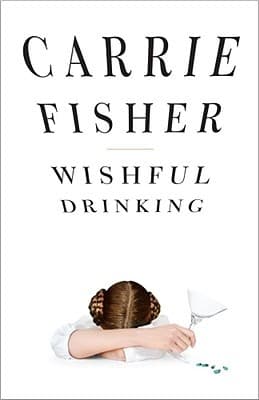
- Wishful Drinking
Carrie Fisher
3.8 (65k) average on GoodreadsPsychologyFisher's memoir is characterized by sharp wit, dark humor, and a more direct, often shocking, confrontation of trauma, addiction, and mental health. Barrymore's Wildflower is gentler, more focused on finding the positive and embracing imperfection with warmth, rather than Fisher's incisive, almost weaponized vulnerability.
- Bossypants
Tina Fey
4.0 (848k) average on GoodreadsBiographyFey's Bossypants offers a more structured, comedic, and career-focused narrative, providing insights into navigating the entertainment industry with humor and strategic observations. Barrymore's Wildflower is more personal, domestic, and emotionally driven, prioritizing themes of family, self-acceptance, and everyday joys over professional achievements and comedic anecdotes.
- The Diary of a Young Girl
Anne Frank
4.2 (2.7M) average on GoodreadsBiographyDuring the Nazi occupation, a teenage girl's diary, written from a secret annex, shares observations on humanity, hope, and the wait for freedom.
- Eat, Pray, Love
Elizabeth Gilbert
3.6 (1.5M) average on GoodreadsLifestyleA heartbroken writer leaves her conventional life for a year-long global search for pleasure in Italy, spiritual devotion in India, and unexpected love and balance in Bali.
- Night
Elie Wiesel
4.3 (970k) average on GoodreadsBiographyIn the darkness of Auschwitz and Buchenwald, a teenage Elie Wiesel faces the extermination of his family, the loss of his faith, and the lasting scars of humanity's deepest cruelty.





Enjoyed the summary?
A summary gives you the shape of the book. The book itself has the detail, the examples and the voice.
Find Wildflower on AmazonAs an Amazon Associate, BookBrief earns from qualifying purchases. How we're funded