
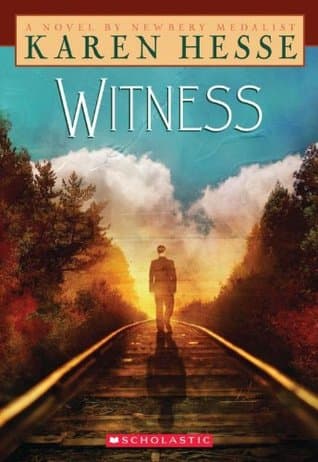
Core Idea
- Difficulty
- Medium
- Read it if
- You want to understand the gradual, insidious spread of hatred within a community and the various ways individuals react to it. This book is for those interested in historical fiction that illuminates social psychology, the power of individual choice, and the importance of empathy.
- Skip it if
- You prefer straightforward historical accounts without a poetic, multi-perspective narrative style, or if you are looking for a light read without confronting themes of racism, prejudice, and moral compromise.
Key Takeaways from Witness
The Insidious Spread of Hatred
Prejudice can infiltrate even the most seemingly idyllic communities.
Karen Hesse's 'Witness' shows that racial and religious prejudice, like the Ku Klux Klan, was not only in the American South but could also hurt a quiet Vermont town in 1924. The story shows that hate is not always clear or violent at first; it often starts with whispers, leaving people out, and making others feel different. The characters' surprise that the Klan could grow in their town warns that ignoring growing intolerance lets it get worse, leading to terrible results. The novel shows that a community's 'goodness' does not protect against bigotry if its members stay silent or go along with it.
“The Klan's shadow stretched even to the quiet hills of Vermont, proving no place is immune to its venom.”
In the book: The entire setting of the book – a small, pastoral Vermont town – is evidence of this. The initial disbelief and slow realization among some characters that the Klan's influence is real and growing in their own backyard.
Try this: Actively challenge microaggressions and exclusionary language in your own community, regardless of how 'safe' or 'tolerant' it seems. Support local initiatives that promote diversity and understanding, and speak out against any form of organized hate, no matter how small or distant it may seem.
Related ideas: community-prejudice, insidious-hatred, small-town-bigotry
The Power of Multiple Perspectives
Truth is a mosaic, best understood through diverse voices.
'Witness' uses a narrative with many voices, showing events through 11 different characters, each speaking in poetry. This structure is not just a style choice; it is central to the book's message. It shows how personal experiences shape understanding, especially during a crisis. What one character sees as small, another feels as a serious threat. This method makes the reader put together different views, showing the town's complex social makeup and the various ways people deal with, explain, or fight prejudice. It teaches empathy and critical thinking, showing that no single story can tell the whole truth.
“Each voice, a thread in the tapestry of our town, weaving a story only truly seen when all are heard.”
In the book: The book's entire narrative structure, with 11 distinct characters expressing their viewpoints in poetic form, such as Leanora Sutter (a black girl), Esther Hirsch (a Jewish girl), Sara (a farm woman), and Merlin Van Tornhout (a young man struggling with choices).
Try this: When trying to understand a complex issue or conflict, actively seek out and listen to a wide range of perspectives, especially from those directly affected. Resist the urge to form opinions based on a single narrative or source, and practice empathy by trying to see situations from different points of view.
Related ideas: polyvocal-narrative, empathy-building, subjective-truth
Friendship as a Bulwark Against Hate
Unlikely bonds can defy and diminish the power of prejudice.
At the heart of 'Witness' is the friendship between 12-year-old Leanora Sutter, who is Black, and 6-year-old Esther Hirsch, who is Jewish. In a town torn apart by the Klan, their bond shows how human connection can overcome divisions. This friendship is not just a small part of the story; it is a key counterpoint to the hate, showing how personal relationships can build understanding and strength. Their simple, yet deep, connection offers hope, proving that love and acceptance can exist and even grow during persecution. It reminds us that individual acts of kindness and unity can create resistance against widespread hostility.
“In a world trying to tear us apart, our hands found each other, a silent promise against the storm.”
In the book: The central friendship between Leanora Sutter (black) and Esther Hirsch (Jewish), who are both targeted by the Klan and find solace and strength in each other's company.
Try this: Actively seek out friendships and connections with people from different backgrounds than your own. Be a friend and ally to those who are marginalized or targeted, even when it's difficult or unpopular. Understand that personal connections can be a potent force against division.
Related ideas: interracial-friendship, resilience-against-hate, solidarity-in-adversity
Hypocrisy in the Pulpit
Religious fervor can mask and enable profound moral failings.
The fire-and-brimstone preacher in 'Witness' is a stark picture of religious hypocrisy. He twists scripture to justify hate and exclusion, especially against Jewish and Black residents. His sermons, at first seen as righteous by some, slowly show him to be a fanatic whose actions go against his stated faith. This character warns about the dangers of strict beliefs and using religious power to fuel bigotry. It shows how those who claim moral superiority can be the most corrupt, using their position to divide and stir up trouble, rather than unite and heal. His actions eventually show him as a hypocrite, revealing the gap between his words and true compassion.
“He preached of God's love, yet his heart was a stone, casting shadows of hate upon those unlike him.”
In the book: The character of the fire-and-brimstone preacher, whose sermons are described as revealing him as a zealot and whose actions brand him as a hypocrite in the story.
Try this: Critically evaluate religious or ideological leaders, not just by their words, but by their actions and the impact of their teachings on others. Be wary of anyone who uses faith to justify hatred, exclusion, or violence, and prioritize compassion and human dignity above rigid doctrine.
Related ideas: religious-hypocrisy, dogmatic-bigotry, preacher-fanaticism
The Burden of Moral Choice
Neutrality in the face of injustice is a choice with consequences.
Merlin Van Tornhout, an 18-year-old, represents the struggle to know right from wrong when facing strong social pressure. His story shows the moral challenge for individuals caught between growing fanaticism and their own conscience. Merlin's attempts to 'fit in' with adults and the Klan's influence make him face hard choices, showing that doing nothing or just watching injustice has serious results. His struggle highlights that morality is not always clear, especially when a community is swayed by powerful, hateful ideas. His path illustrates the inner conflict and the chance for good or bad in such situations.
“To stand by and watch, is to choose a side, a silent nod to the darkness.”
In the book: The character of 18-year-old Merlin Van Tornhout, who struggles to fit in with the adult world and determine the difference between right and wrong as the Klan's influence grows.
Try this: Reflect on your own moral compass and consider what you would do if faced with similar pressures. Actively choose to stand up against injustice, even when it's uncomfortable or unpopular. Understand that your choices, or lack thereof, contribute to the moral fabric of your community.
Related ideas: moral-dilemma, bystander-effect, personal-responsibility
The Vulnerability of the 'Other'
Targeted groups face unique and compounded dangers during times of prejudice.
Leanora Sutter (Black) and Esther Hirsch (Jewish) show the unique vulnerability of 'others' when a community gives in to prejudice. They are not just affected by the Klan; they are targeted because of their race and religion. The book shows the constant fear, the small and clear acts of unfairness, and the deep loneliness that comes with being marked as an enemy by a powerful group in one's own town. Their experiences highlight how hate harms marginalized communities most, making them bear the brunt of violence and exclusion. It is a clear reminder of the human cost of bigotry and the need for protective alliances.
“To be different in their eyes was to wear a target, to live with a fear others could not know.”
In the book: The specific targeting of 12-year-old Leanora Sutter (black) and 6-year-old Esther Hirsch (Jewish) by the newly formed Klan.
Try this: Be an active ally to marginalized groups in your community. Educate yourself on the specific challenges and dangers they face. Speak up when you witness discrimination or prejudice, and work to create inclusive spaces where all feel safe and valued.
Related ideas: marginalized-communities, targeted-persecution, racial-religious-discrimination
History's Echoes in the Present
Past events offer crucial lessons for understanding contemporary societal challenges.
Karen Hesse places 'Witness' in real historical events, such as the Leopold and Loeb murder trial, giving the story a strong sense of its time and linking it to the realities of 1924. This historical detail reminds readers that the themes—racial and religious hate, the rise of extreme groups, and the fight for moral clarity—are not just ideas but were real experiences. By including these details, Hesse stresses that history is not just dates but a living story of human experience, offering important lessons for understanding and dealing with similar issues today. The book quietly urges us to learn from the past to prevent its darker parts from happening again.
“The past is not dead; it is not even past. It breathes in the choices we make today.”
In the book: The inclusion of real historical events like the murder trial of Leopold and Loeb, which grounds the story in the specific period of 1924.
Try this: Engage with history, especially local and social history, to understand the roots of current societal issues. Draw parallels between past struggles against prejudice and contemporary challenges, using historical knowledge to inform your actions and advocacy.
Related ideas: historical-relevance, lessons-from-history, societal-memory
The Slow Burn to Violence
Hatred rarely erupts; it builds through a crescendo of small aggressions.
Hesse skillfully builds tension, leading slowly but surely to violence. This pacing is key, as it mirrors how extremist movements happen in real life. Hate rarely appears as sudden, large-scale violence. Instead, it usually grows through smaller aggressive acts: whispers, exclusion, damage to property, threats, and fear. The book shows how a community can slowly accept these smaller acts, making the eventual burst of physical violence seem almost unavoidable. This slow build serves as a strong warning, showing how important it is to address prejudice and aggression early before it gets out of control and causes lasting harm.
“The whispers turn to shouts, the stares to stones, until the very air crackles with the promise of harm.”
In the book: The description of the story building 'the tension with a slow crescendo of inevitability that ends in violence,' as noted in the review.
Try this: Recognize and challenge early signs of prejudice, discrimination, and aggression in your environment. Do not dismiss 'small' acts of hate as harmless; understand that they contribute to an environment where greater violence can occur. Support community efforts to de-escalate tensions and promote peaceful resolution.
Related ideas: escalation-of-violence, prejudice-progression, social-tension
Acceptance as a Revolutionary Act
Choosing to accept and protect others defies the divisive forces of hatred.
Amidst the Klan's growing hate, characters like Sara, the middle-aged farm woman who takes Esther in, show the powerful impact of acceptance. Despite warnings from neighbors and fear in the community, Sara chooses compassion over fitting in, offering protection and understanding to a child targeted by prejudice. Her actions are not passive; they are active, clear choices that go against the dividing forces at play. This shows that acceptance is not just tolerance but an active stand of valuing and protecting others, especially when they are vulnerable. In a world designed to separate, such acts of unconditional acceptance become strong statements of humanity and resistance.
“To open your door, your heart, when others slam theirs shut – that is the truest courage.”
In the book: Sara, the middle-aged farm woman, taking Esther under her wing 'despite the warnings of her neighbors,' and trying to help Esther understand the Klan's hatred.
Try this: Actively practice radical acceptance in your daily life, especially towards those who are different or marginalized. Be willing to go against social pressure to stand up for and protect others. Prioritize empathy and compassion in your interactions, and model inclusive behavior for others.
Related ideas: radical-acceptance, compassionate-resistance, inclusive-action
Witness Quotes
“It seems to me that the Lord is on the side of those who are willing to take a stand, no matter how small or how great the stand.”
“Some folks say it's un-Christian to hate. I say it's un-Christian to sit by and let folks be hurt.”
“The wind carries a lot of things. Lies, mostly. And fear.”
“Sometimes you have to break a few eggs to make an omelet. And sometimes, you just break eggs.”
“A man's worth ain't in the color of his skin, but in the content of his heart.”
“Fear is a powerful weapon. It can make good people do bad things.”
“There's a difference between what's legal and what's right.”
“Words can be like stones, thrown to hurt and wound.”
“Even in the darkest night, a single candle can make a difference.”
“It's not enough to just not be part of the problem. You got to be part of the solution.”
“Silence can be a kind of speaking, too. A loud one.”
“The past ain't ever really past. It just waits for its turn to come 'round again.”
“Sometimes, the hardest thing to do is nothing at all, when everything inside you screams to act.”
“A town is only as good as the people in it.”
Quiz
10 questions on the main ideas. Each answer comes with a short explanation.
Question 1
Which year does the story of 'Witness' by Karen Hesse primarily take place?
- 1918
- 1924
- 1932
- 1905
Show answer
B. 1924 The review explicitly states the story takes place in a small Vermont town in the year 1924.
Question 2
How many different characters' points of view are used to tell the story in 'Witness'?
- 7
- 9
- 11
- 13
Show answer
C. 11 The review states, 'Hesse tells her story, which is based on real events, through the eyes of 11 different characters.'
Question 3
What is the primary format in which each character's point of view is expressed in 'Witness'?
- Prose chapters
- Diary entries
- Letters
- Poetic form
Show answer
D. Poetic form The review notes, 'Each point of view is expressed in poetic form, but with a stark clarity of difference that makes the voices unique and identifiable.'
Question 4
Which historical event is mentioned as being woven into the tale of 'Witness'?
- The Scopes Monkey Trial
- The Wall Street Crash
- The murder trial of Leopold and Loeb
- The Palmer Raids
Show answer
C. The murder trial of Leopold and Loeb The review explicitly states, 'Hesse weaves real historic events into her tale, such as the murder trial of the infamous kidnappers Leopold and Loeb.'
Question 5
Which two motherless girls are at the heart of the tale and come to the attention of the Ku Klux Klan?
- Sara and Leanora
- Esther and Merlin
- Leanora Sutter and Esther Hirsch
- Leanora and Sara
Show answer
C. Leanora Sutter and Esther Hirsch The review identifies them: 'At the heart of the tale are two motherless girls who come to the attention of the newly formed Klan: 12-year-old Leanora Sutter, who is black, and 6-year-old Esther Hirsch, who is Jewish.'
Question 6
What is the primary role of the character Merlin Van Tornhout in the story?
- He is the leader of the Ku Klux Klan.
- He is a fire-and-brimstone preacher.
- He struggles to fit in and determine right from wrong.
- He is Esther's widowed father.
Show answer
C. He struggles to fit in and determine right from wrong. The review describes Merlin as '18-year-old Merlin Van Tornhout, a young man struggling to fit in with the adult world and determine for himself the difference between right and wrong.'
Question 7
Which character is described as a middle-aged farm woman who takes Esther under her wing despite community warnings?
- Leanora Sutter
- Sara
- Esther Hirsch
- Merlin Van Tornhout
Show answer
B. Sara The review states, 'There is a middle-aged farm woman named Sara who takes Esther under her wing despite the warnings of her neighbors.'
Question 8
What central conflict or issue does the Ku Klux Klan bring to the seemingly 'pastoral, insular community' of the Vermont town?
- Economic depression
- Political corruption
- Racial prejudice and fanaticism
- Environmental concerns
Show answer
C. Racial prejudice and fanaticism The review highlights 'the devastating impact of the Ku Klux Klan on this pastoral, insular community' and mentions 'the deadly undercurrents of racial prejudice' and 'fanaticism.'
Question 9
How does Karen Hesse build tension in 'Witness' according to the review?
- Through abrupt plot twists and sudden revelations.
- By using overly descriptive and lengthy prose.
- With a slow crescendo of inevitability using sparse and powerful prose.
- Mainly through internal monologues of a single character.
Show answer
C. With a slow crescendo of inevitability using sparse and powerful prose. The review states, 'Using prose that is both sparse and powerful, she builds the tension with a slow crescendo of inevitability that ends in violence.'
Question 10
Beyond depicting prejudice and fanaticism, what ultimate lesson does 'Witness' offer, according to the reviewer?
- The importance of economic prosperity in community building.
- The true power of friendship and acceptance.
- The futility of resisting societal change.
- The necessity of strict adherence to religious dogma.
Show answer
B. The true power of friendship and acceptance. The review concludes by stating the book 'offers up an unforgettable lesson on the true power of friendship and acceptance.'
Witness FAQ
What is 'Witness' about?
'Witness' by Karen Hesse is a poetic novel set in a small Vermont town in 1924, exploring the devastating impact of the Ku Klux Klan on the community. It tells a story of friendship, fanaticism, and racial prejudice through the eyes of 11 different characters.
Does 'Witness' work as a historical fiction novel?
Yes, 'Witness' effectively functions as historical fiction by weaving real historical events, such as the Leopold and Loeb murder trial, into its narrative. This grounds the story in its specific 1924 setting and enhances its period flavor.
Who are the main characters in 'Witness'?
The core characters include 12-year-old Leanora Sutter (Black), 6-year-old Esther Hirsch (Jewish), Sara (a farm woman), a fire-and-brimstone preacher, and 18-year-old Merlin Van Tornhout. The story is told through the perspectives of 11 distinct voices.
What is the significance of the Ku Klux Klan in 'Witness'?
The Ku Klux Klan is the central antagonist in 'Witness,' representing the forces of racial and religious hatred that disrupt the otherwise peaceful Vermont community. Their presence and actions drive much of the conflict and persecution faced by characters like Leanora and Esther.
How does 'Witness' differ from other historical novels about the KKK?
'Witness' stands out by telling its story through a series of distinct poetic monologues from 11 different characters, offering a mosaic of perspectives on the KKK's impact. Its setting in a seemingly idyllic Vermont town in 1924 also provides a unique backdrop compared to more common Southern settings.
Is 'Witness' based on a true story?
Yes, Karen Hesse's 'Witness' is based on real events, grounding its fictional narrative in historical accuracy regarding the presence and activities of the Ku Klux Klan in 1920s Vermont.
What themes are explored in 'Witness'?
'Witness' explores profound themes such as racial prejudice, religious intolerance, friendship, fanaticism, hypocrisy, and the struggle to define right from wrong. It also highlights the power of acceptance and the devastating consequences of hatred.
How does the poetic form contribute to the story in 'Witness'?
The poetic form allows each of the 11 characters to express their point of view with stark clarity and unique voice. This stylistic choice enhances the emotional impact, builds tension, and allows for a rich, multifaceted exploration of the events.
Does 'Witness' have a hopeful ending?
While 'Witness' builds to a climax involving violence and persecution, it ultimately offers an unforgettable lesson on the true power of friendship and acceptance. It suggests that even amidst hatred, connections and humanity can endure.
About the author

Karen Hesse is an American author known for her works of fiction, particularly for young readers. Her notable books include "Out of the Dust," "Letters from Rifka," "The Music of Dolphins," "Witness," and "Aleutian Sparrow," which often explore themes of resilience and identity. Hesse's writing has received significant recognition, including prestigious awards for children's literature.
Similar books
- To Kill a Mockingbird
Harper Lee
4.3 (4.5M) average on GoodreadsHistorical FictionExplores racial prejudice and moral courage in a small town through the eyes of various residents.
- The Book Thief
Markus Zusak
4.4 (1.8M) average on GoodreadsHistorical FictionDepicts life under a rising oppressive regime and the power of human connection amidst hatred and war.
- The Hate U Give
Angie Thomas
4.5 (504k) average on GoodreadsYoung AdultAddresses contemporary racial injustice and the struggle for identity and voice in the face of systemic prejudice.
- The House of the Spirits
Isabel Allende
4.2 (190k) average on GoodreadsFantasyAllende's novel also uses multiple perspectives to chronicle historical upheaval, but it employs a more traditional narrative structure and magical realism. Hesse's Witness uses stark free verse, providing a more immediate and internal, almost documentary-like, feel to the characters' experiences with prejudice.
- 1984
George Orwell
4.2 (3.1M) average on GoodreadsPoliticsIn a future where surveillance and thought control are absolute, a man's search for truth clashes with the Party, showing that hope can be a form of rebellion.
- Animal Farm
George Orwell
4.0 (2.7M) average on GoodreadsPoliticsA farm animals' rebellion against humans turns into a pig-led dictatorship, showing how power corrupts and revolutionary ideals are betrayed.





Enjoyed the summary?
A summary gives you the shape of the book. The book itself has the detail, the examples and the voice.
Find Witness on AmazonAs an Amazon Associate, BookBrief earns from qualifying purchases. How we're funded