
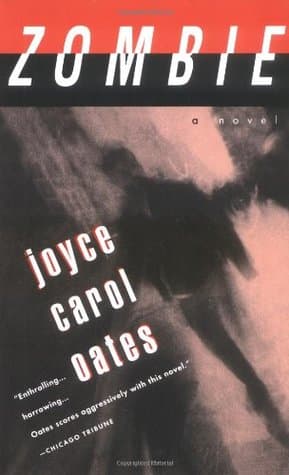
Synopsis
Covers the whole plot, including the ending.
- Difficulty
- Hard
- Pacing
- Moderate
- Mood
- Dark, Disturbing, Unsettling, Clinical, Psychological
- Read it if
- You are fascinated by the psychology of serial killers and want to experience a chilling, first-person dive into the mind of a psychopath, presented with disturbing realism and literary depth.
- Skip it if
- You are sensitive to graphic depictions of violence, child abduction, and psychological horror, or prefer stories with clear moral boundaries and hopeful resolutions.
Zombie Plot Summary
Covers the whole plot, including the ending.
The Awakening of Quentin P.
Quentin P., an intellectually disabled young man in a suburban town, writes in a journal. He wants to create a 'zombie' — a submissive, lobotomized boy to be his perfect friend. Quentin focuses on various young boys in his neighborhood, stalking them and imagining their capture. His home life involves a distant mother and an absent father, leaving him mostly unsupervised. He works at a grocery store, but his mind is filled with dark fantasies he sees as logical and right. His first attempts to interact with potential victims are awkward and socially inept, often seen as strange rather than threatening by others.
The First Target: Timothy K.
Quentin picks Timothy K., a local boy, for his 'zombie' project. He starts following Timothy, watching his routines and home. Quentin's thoughts show his growing frustration with the world and his inability to form real connections, which he blames on others' 'weakness' or 'stupidity.' He believes making a 'zombie' will give him a perfect, uncritical bond. His stalking becomes bolder, leading to a tense meeting where he lures Timothy to a secluded spot but is interrupted before he can complete his plan. This near-miss only strengthens Quentin's resolve, making him feel more powerful and closer to his goal.
The Abduction and Initial Captivity
After several failed tries, Quentin successfully abducts a young boy named Michael H. He lures Michael into his car and takes him to a hidden, soundproofed room in the basement of his family's old summer cottage, in a remote area. Quentin has carefully prepared this space with restraints and tools he thinks are needed for his 'procedure.' Michael is scared and confused, but Quentin sees his fear as a sign he can be molded. Quentin records every detail of the abduction and Michael's first captivity, including the boy's cries and his own growing sense of victory and control.
The 'Procedure' and Lobotomy
Quentin begins the 'procedure' on Michael, planning a crude lobotomy with tools he got, including an ice pick. His understanding of the procedure comes from fragmented information and his own deluded ideas, leading to a brutal act. He believes that by cutting parts of Michael's brain, he will remove the boy's will and personality, turning him into a docile 'zombie' for Quentin's pleasure and companionship. The process is described through Quentin's detached view, showing his complete lack of empathy and distorted reality. Michael suffers greatly, and Quentin watches the changes in him with a perverse, scientific satisfaction.
Life with the 'Zombie'
After the lobotomy, Michael H. has severe brain damage, in a vegetative or semi-vegetative state. Quentin tries to interact with him as his perfect companion, dressing him, feeding him, and talking to him, but Michael does not respond. His 'zombie' is not the intelligent, submissive partner Quentin imagined. Despite Michael's condition, Quentin treats him like a living doll, a silent witness to his twisted desires. He carefully records Michael's physical decline and his own attempts to 'care' for him, while dealing with the unexpected emptiness of his accomplishment.
The Search and Growing Suspicion
Michael H.'s disappearance starts a police investigation. The community is worried, and flyers with Michael's picture circulate. Quentin watches the search with smugness and paranoia, believing he is untouchable and smarter than the police. However, small clues and inconsistencies in his behavior begin to draw attention from his mother and, later, a local detective. Quentin's journal entries show his increasing anxiety about being found, even as he dismisses every potential threat. He believes his intelligence and careful planning will keep him free.
Quentin's Internal Conflict and Rationalizations
As weeks pass, Quentin's internal thoughts become more frantic. He continues to justify his actions, blaming society, his parents, and even Michael for his situation. He sees himself as a victim, misunderstood, and views his 'zombie' project as a valid scientific effort or a necessary act of creation. He records his thoughts, often contradicting himself, showing his deep delusion and psychological breakdown. He shifts between feeling all-powerful and intensely paranoid, convinced everyone is either too stupid to understand him or plotting against him. His journal becomes a confession and a statement of his distorted worldview.
The Discovery and The Escape
Michael H.'s decaying body is found in the summer cottage basement, not by police, but by Quentin's mother, who, sensing a strange smell and her own suspicions about Quentin's secrecy, checks the rarely used property. The gruesome discovery immediately points to Quentin. Quentin panics and tries to flee, leaving his journal and any pretense of normal life. He tries to escape, believing he can outsmart the police, but his poor social skills and lack of planning beyond the immediate act make his escape clumsy. He is now a hunted fugitive, his fantasy world collapsing.
The Pursuit and Capture
Police start a full manhunt for Quentin P. His journal, found at the cottage, becomes key evidence, offering insight into his motives and actions. The journal's contents confirm the monstrous nature of his crimes and his delusion. Quentin, confused and desperate, is eventually found and arrested. The capture is presented as anticlimactic, emphasizing Quentin's ultimate powerlessness against the structured world he hates. Despite his capture, Quentin's internal narrative suggests he still lacks remorse or understanding of his actions, seeing himself as a misunderstood genius.
Aftermath and Unrepentance
Quentin P. is jailed and faces legal consequences. However, his prison journal entries show he remains largely unrepentant and lives in his own distorted reality. He sees his imprisonment as unjust punishment for his 'experiments' and still believes in his 'zombie' project. He reflects on his past actions with chilling detachment, still rationalizing his violence and expressing frustration that the world cannot understand his 'vision.' The story ends with Quentin still trapped in his own mind, unable to grasp the horror he caused, leaving the reader with a disturbing sense of his deep pathology.
Zombie Characters
Quentin P.
Protagonist/Antagonist
The intellectually disabled young man and serial killer who narrates his own crimes.
Quentin P. is a young man with intellectual disabilities, living in a suburban town. He is the first-person narrator, providing a chillingly detailed account of his descent into sexual psychopathy and murder. He is obsessed with creating a 'zombie' – a lobotomized, submissive boy who will be his perfect companion. Quentin lacks empathy, possesses a highly distorted sense of logic, and sees himself as an unappreciated genius. His internal world is a chaotic mix of elaborate fantasies, self-pity, and grandiose delusions, all meticulously documented in his journal. He believes his actions are justified and necessary for his own fulfillment.
Relationships: Michael H. (Victim, 'zombie' project); Quentin's Mother (Distant, largely unaware, eventually discovers the crime); Timothy K. (Initial target, potential victim)
Michael H.
Victim
The young boy abducted and lobotomized by Quentin P.
Michael H. is a young, innocent boy who becomes Quentin P.'s primary victim. He is abducted and subjected to a brutal lobotomy, leaving him in a vegetative state before his eventual death. Michael represents the devastating consequence of Quentin's unchecked pathology and the innocence destroyed by his grotesque fantasies. He is depicted primarily through Quentin's detached and clinical observations, stripped of his personhood and reduced to an object of Quentin's twisted 'experiment.' His terror and suffering are conveyed implicitly through Quentin's descriptions of his reactions before the 'procedure.'
Relationships: Quentin P. (Captor and killer)
Quentin's Mother
Supporting
Quentin's largely absent and oblivious mother who eventually discovers the crime.
Quentin's mother is a somewhat detached and preoccupied figure in his life. She is largely unaware of the depth of her son's psychopathy, though she occasionally notes his odd behaviors or secretive nature. She provides minimal supervision, allowing Quentin the freedom to pursue his dark obsessions. Her discovery of Michael H.'s body in the summer cottage basement is a pivotal moment, shattering her ignorance and triggering the investigation that leads to Quentin's capture. Her character highlights the often-unseen horrors that can exist within seemingly normal family structures.
Relationships: Quentin P. (Son, whose crimes she is oblivious to until the end)
Timothy K.
Mentioned
A young boy who is an early target of Quentin P.'s predatory fantasies.
Timothy K. is one of the first boys Quentin P. fixates on as a potential 'zombie' candidate. He is stalked by Quentin, who meticulously observes his routines and fantasizes about abducting him. While Timothy escapes actual harm, his presence in the narrative establishes the escalating nature of Quentin's predatory behavior and his systematic approach to selecting victims. He serves as a precursor to Michael H., demonstrating Quentin's developing methodology and increasing boldness.
Relationships: Quentin P. (Obsessive stalker, potential abductor)
The Detective (unnamed)
Supporting
The law enforcement officer investigating Michael H.'s disappearance.
A local detective becomes involved in the search for Michael H. after his disappearance. This character represents the external force of law and order attempting to penetrate Quentin's carefully constructed world of delusion and crime. While not a prominent character, the detective's presence signifies the growing pressure on Quentin and the inevitable consequences of his actions. The detective's investigation is what eventually leads to Quentin's mother discovering the body, though the journal is the true key to understanding the killer.
Zombie Themes
The Nature of Evil and Psychopathy
The novel explores the mind of a sexual psychopath, showing evil not as an outside force, but as a logical idea within Quentin P.'s warped perception. It shows how a complete lack of empathy, along with intellectual disability and neglect, can lead to monstrous acts. Quentin's journal entries reveal his justifications, his belief in his own superiority, and his inability to understand the suffering he causes, highlighting the self-justification in psychopathy. The book avoids sensationalism, focusing instead on the disturbing internal logic of madness.
“For the zombie is not a person, not a human being like you or me. The zombie is a perfect companion, a slave, an instrument, a thing. A thing that loves you.”
The Failure of Society and Family
The novel suggests that societal and family structures fail to recognize or stop Quentin's growing pathology. His mother's detachment and the community's blindness to his odd behaviors allow his dark fantasies to grow and become violent. The lack of proper care, understanding, or intervention for his intellectual disabilities and disturbing tendencies creates a void where his psychopathy can thrive. The story implies that while Quentin is responsible for his actions, his environment unintentionally helped his unchecked development.
“They don't understand me. Nobody understands. They think I'm stupid but I'm smarter than all of them.”
The Distortion of Reality and Language
Quentin's first-person narration is an example of unreliable storytelling, showing how a disturbed mind twists reality and language to fit its own goals. He redefines 'love,' 'companionship,' and 'care' in horrific ways, using medical terms to justify his acts. His journal uses euphemisms and rationalizations, turning victims into 'zombies' and torture into 'procedures.' This theme shows how internal narratives shape perception and how a loss of empathy can lead to a complete separation from objective reality and moral truth.
“The procedure went well. He is changing. He is becoming my perfect friend.”
Control and Power
A main drive for Quentin P. is his need for control and power, stemming from his feelings of inadequacy and social isolation. He wants to have absolute dominance over another person, turning a living boy into a compliant 'zombie' that exists only to serve him. This search for power makes up for his perceived powerlessness in the world. The act of abduction, torture, and lobotomy is the ultimate expression of his desire to control, to create a perfect, uncritical companion who will never reject or betray him, as he believes society has.
“He will do everything I want. He will never talk back. He will be mine.”
Plot Devices & Literary Techniques
First-Person Unreliable Narrator
The story is told entirely from the perspective of the psychopathic killer, Quentin P.
The entire novel is presented as Quentin P.'s journal, making him the sole narrator. This device is crucial as it plunges the reader directly into the mind of a killer, forcing them to experience his distorted logic, rationalizations, and complete lack of empathy firsthand. The unreliability stems from Quentin's intellectual disability and psychopathy, which cause him to interpret events and motives in ways that are deeply skewed and self-serving. This perspective creates a chilling intimacy, blurring the lines between the reader's understanding and Quentin's deranged reality, making the horror more profound and disturbing.
The Journal/Confessional Format
The narrative is structured as Quentin P.'s meticulous, self-written journal entries.
The novel's structure as a journal provides an unfiltered, raw glimpse into Quentin's thoughts, plans, and actions. This format allows for a detailed, almost forensic, examination of his psychological deterioration and the methodical planning behind his crimes. It serves as both a confessional and a manifesto, documenting his twisted philosophy and his 'scientific' approach to creating his 'zombie.' The journal's existence also functions as a crucial plot point, eventually serving as undeniable evidence against him, providing the reader with a terrifying, intimate understanding of his internal world.
Euphemism and Clinical Detachment
Quentin P. uses sterile, medical, or euphemistic language to describe his horrific acts.
Quentin P. frequently employs clinical and detached language to describe his violent and depraved acts. He refers to the lobotomy as a 'procedure' or 'operation' and his victim as a 'zombie' or 'specimen.' This linguistic device highlights his profound dehumanization of his victims and his inability to acknowledge the moral gravity of his actions. It also reveals his desperate attempt to rationalize and legitimize his behavior, creating a veneer of scientific rigor over his brutal fantasies. This detachment amplifies the horror, as the reader is forced to confront the stark contrast between the clinical terms and the gruesome reality they describe.
Foreshadowing through Obsession
Quentin's early obsessions and fantasies clearly predict his later actions.
From the very beginning of the novel, Quentin's detailed fantasies about capturing, subduing, and 'transforming' young boys serve as strong foreshadowing for his eventual abduction and lobotomy of Michael H. His meticulous planning, the acquisition of tools, and his internal monologues about the 'perfect zombie' explicitly lay out his intentions long before they are acted upon. This device builds a sense of dread and inevitability, as the reader watches Quentin's obsessions slowly but surely translate into horrifying reality, making his crimes feel less like sudden outbursts and more like the logical conclusion of a deeply disturbed mind.
Zombie Quotes
“I will get inside your head, I will make myself at home, I will never leave.”
“It was my secret, the best secret, the most important. To know someone, to possess them.”
“They say the eyes are the windows to the soul. I say the eyes are the windows to the skull.”
“I was just trying to help. That's all. Just trying to help her.”
“The world is full of people who want to be told what to do. They're just waiting for someone to tell them.”
“Sometimes you have to break things to make them better.”
“She was like a doll. A beautiful doll. Waiting to be played with.”
“The darkness inside me was a hungry thing. Always hungry.”
“Love is just another word for wanting something so bad you'll do anything to get it.”
“Nobody understands. Nobody ever will.”
“I wanted to be inside her head. To know everything she knew. To be her.”
“The silence was the best part. The absolute, perfect silence.”
“You can't trust anyone. Not really. Not ever.”
“Some things are meant to be broken. Some people are meant to be broken.”
Quiz
10 questions on the plot and the characters. Each answer comes with a short explanation.
Question 1
What is the primary narrative perspective used in 'Zombie'?
- Third-person omniscient
- First-person from Quentin P.'s perspective
- Alternating first-person from victims' perspectives
- Second-person addressing the reader
Show answer
B. First-person from Quentin P.'s perspective The novel is famously written entirely from the first-person perspective of Quentin P., immersing the reader directly into his disturbed mind.
Question 2
What is Quentin P.'s self-assigned 'mission' or purpose, as he perceives it?
- To become a famous artist
- To find a cure for his mental illness
- To create a 'zombie' companion completely subservient to him
- To expose corruption in his local community
Show answer
C. To create a 'zombie' companion completely subservient to him Quentin P. believes he is creating a 'zombie' – a perfect, compliant companion – through his horrific acts.
Question 3
What kind of institution does Quentin P. frequently attend or mention being a part of?
- A community college
- A church youth group
- A day program for individuals with intellectual disabilities
- A local gym
Show answer
C. A day program for individuals with intellectual disabilities Quentin P. attends a 'school' or day program for individuals with intellectual disabilities, which provides him with some structure and access to potential victims.
Question 4
How does Quentin P. typically refer to his victims in his internal monologue?
- As 'students'
- As 'my girls' or 'my boys' (depending on gender)
- As 'the unchosen'
- As 'experiments'
Show answer
B. As 'my girls' or 'my boys' (depending on gender) Quentin P. often refers to his victims with possessive and dehumanizing terms like 'my girl' or 'my boy,' reflecting his twisted sense of ownership and control.
Question 5
What is the significance of the title 'Zombie' in the context of Quentin P.'s actions and beliefs?
- It refers to his love for horror movies.
- It describes his own feeling of being emotionally dead.
- It represents his desire to create a mindless, obedient companion.
- It is a metaphor for society's indifference to suffering.
Show answer
C. It represents his desire to create a mindless, obedient companion. The 'zombie' refers to Quentin P.'s ideal companion – a person stripped of their will and identity, completely under his control.
Question 6
Which of these is NOT a recurring element in Quentin P.'s internal monologues?
- Obsessive focus on specific body parts
- Detailed planning of his future academic career
- Rationalizations for his violent acts
- Distorted interpretations of social interactions
Show answer
B. Detailed planning of his future academic career While Quentin P. has a distorted internal world, his thoughts are not occupied by academic career planning. Instead, they are dominated by his obsessions, rationalizations, and misinterpretations.
Question 7
How does the author use Quentin P.'s unreliable narration to build suspense and horror?
- By explicitly stating his intentions to the reader before he acts.
- By gradually revealing the gap between his perceived reality and the horrific truth of his actions.
- By having other characters frequently contradict his statements.
- By using a detached, objective tone throughout the novel.
Show answer
B. By gradually revealing the gap between his perceived reality and the horrific truth of his actions. The horror stems from being inside Quentin P.'s mind, where his horrific acts are rationalized and twisted into a perverse logic, slowly revealing the true extent of his depravity.
Question 8
What is a central theme explored through Quentin P.'s character regarding the nature of evil?
- Evil is always a result of societal neglect.
- Evil can be a deeply personal, internally consistent 'logic' for the perpetrator.
- Evil is a supernatural force beyond human comprehension.
- Evil is primarily driven by a desire for financial gain.
Show answer
B. Evil can be a deeply personal, internally consistent 'logic' for the perpetrator. The novel's strength lies in portraying how Quentin P.'s actions, though horrific, follow an internal 'logic of madness,' making his evil deeply personal and terrifyingly self-justified.
Question 9
How does the novel challenge the reader's perception of sanity and madness?
- By presenting Quentin P. as clearly insane from the very beginning.
- By making Quentin P.'s reasoning appear almost rational within his own twisted framework.
- By contrasting Quentin P.'s madness with the clear sanity of all other characters.
- By suggesting that madness is a temporary state for most people.
Show answer
B. By making Quentin P.'s reasoning appear almost rational within his own twisted framework. The novel is unique in its portrayal of 'the logic of madness,' where Quentin P.'s internal justifications, though horrifying, are presented with a chilling consistency that blurs the lines of sanity.
Question 10
Which literary device is most central to the novel's impact, given its narrative style?
- Allegory
- Irony
- Stream of consciousness (from a disturbed mind)
- Hyperbole
Show answer
C. Stream of consciousness (from a disturbed mind) The entire novel is presented as a stream of consciousness from Quentin P.'s disturbed mind, allowing the reader direct, unfiltered access to his thoughts and perceptions, which is crucial to the book's impact.
Zombie FAQ
What is the core premise of Joyce Carol Oates' 'Zombie'?
'Zombie' delves into the mind of Quentin P., a young man with severe developmental disabilities and a chilling obsession with creating his ideal 'zombie' – a lobotomized, compliant companion. The novel is presented as his own fragmented, delusional journal entries and observations, charting his descent into abduction, sexual assault, and murder as he attempts to fulfill this grotesque fantasy.
Who is Quentin P., and what are his defining characteristics?
Quentin P. is the novel's protagonist and narrator, a young man described as having a large, clumsy physique and significant cognitive impairments, likely a form of autism spectrum disorder or intellectual disability. He is fixated on the idea of control and companionship, leading him to believe that only a lobotomized victim can provide the uncritical affection he craves, reflecting a profound inability to form genuine human connections.
What role does the 'lobotomy' play in Quentin's worldview?
For Quentin, the lobotomy is not just a medical procedure but a symbolic act of purification and control, essential for creating his ideal 'zombie.' He believes it will erase the victim's individuality, rendering them perfectly submissive and incapable of rejection, thus fulfilling his distorted need for unconditional love and preventing them from 'betraying' him with their own thoughts or desires.
How does the author convey Quentin's mental state to the reader?
Joyce Carol Oates immerses the reader directly into Quentin's fractured consciousness through his first-person narration, characterized by repetitive phrases, non-sequiturs, distorted logic, and a chilling lack of empathy. The language itself reflects his cognitive difficulties and his inability to process complex emotions or social cues, making his internal world disturbingly vivid and believable.
Are there specific victims mentioned in the novel, and what happens to them?
Yes, Quentin targets several young individuals, often those he perceives as vulnerable or 'lost.' He abducts them, subjects them to his 'lobotomy' attempts – which are crude, violent, and ultimately fatal – and then discards their bodies. The novel details his interactions with these victims, particularly his attempts to 're-educate' them into his compliant 'zombies' before they succumb to his brutality.
What is the significance of the recurring phrase 'I am not like other people'?
This phrase underscores Quentin's profound sense of isolation and his perceived difference from the rest of humanity, which he both resents and uses to justify his actions. It highlights his inability to empathize or understand social norms, reinforcing his belief that his unique desires require unique, violent solutions, and that he is exempt from conventional morality.
Does the novel hint at any specific developmental disorders for Quentin P.?
While never explicitly diagnosed within the text, Quentin's behaviors strongly suggest a severe form of autism spectrum disorder combined with intellectual disability and psychopathy. His literal interpretations, repetitive behaviors, social deficits, and intense fixations, alongside his lack of remorse and violent tendencies, align with a complex constellation of neurodevelopmental and personality disorders.
How does the setting (e.g., suburban environment) contribute to the novel's horror?
The suburban setting heightens the horror by juxtaposing Quentin's monstrous acts with the presumed safety and normalcy of everyday life. His ability to operate undetected, preying on vulnerable youth within seemingly ordinary neighborhoods, underscores the idea that evil can lurk beneath the most mundane surfaces, making his crimes even more unsettling and pervasive.
Are there any characters who try to help or understand Quentin, and how do they fail?
Quentin interacts with various authority figures and social workers, but they consistently fail to grasp the true depth of his depravity and manipulative nature. They often misinterpret his cognitive difficulties as simple naivete or suggestibility, underestimating his cunning and his capacity for violence, thus allowing him to continue his gruesome activities unchecked.
What psychological theories might explain Quentin's obsession with 'zombies' and control?
Quentin's obsession can be analyzed through attachment theory, where his inability to form secure attachments leads to a distorted need for absolute control and compliance from others. His desire for a 'zombie' reflects a compensatory mechanism for profound feelings of powerlessness and rejection, seeking a relationship where he cannot be hurt or abandoned, even if it's based on violence and dehumanization.
How does Quentin's cognitive disability influence his psychopathy?
His cognitive disability, particularly his literal thinking and difficulty with abstract concepts like empathy or social reciprocity, likely exacerbates his psychopathy. It prevents him from understanding the suffering of others or the societal implications of his actions, allowing his violent impulses to manifest without the internal moral checks that might exist in a neurotypical individual.
What is the significance of Quentin's repetitive language and internal monologues?
Quentin's repetitive language and internal monologues serve multiple psychological functions: they reflect his cognitive rigidity and obsessive thought patterns, act as a self-soothing mechanism to reinforce his distorted beliefs, and create a chilling sense of inevitability as he cycles through his justifications for violence. This repetition traps the reader within his delusional echo chamber.
How does Quentin rationalize his violent acts, and what does this reveal about his psyche?
Quentin rationalizes his violence by convincing himself that he is performing a benevolent act, 'rescuing' his victims from their 'badness' and granting them a peaceful, compliant existence as his 'zombies.' This reveals a profoundly narcissistic and delusional psyche incapable of acknowledging the harm he inflicts, instead reframing his brutality as a distorted form of love and care.
Is 'Zombie' primarily a horror novel, a psychological study, or something else?
'Zombie' transcends traditional genre classifications; while it contains elements of horror due to its graphic violence and disturbing subject matter, its primary purpose is a deep, unsettling psychological study. It aims to meticulously map the inner landscape of a profoundly disturbed mind, forcing the reader to confront the logic of madness rather than simply experiencing fear.
How does the author challenge the reader's empathy or understanding of evil?
Oates challenges reader empathy by immersing them directly in Quentin's perspective, forcing them to experience his twisted logic and justifications. This intimate viewpoint makes the evil feel disturbingly human and internal, rather than external and monstrous, prompting readers to grapple with the origins and manifestations of depravity in a way that is profoundly uncomfortable.
What is the thematic significance of the title 'Zombie'?
The title 'Zombie' signifies Quentin's ultimate goal: to strip individuals of their autonomy, consciousness, and will, turning them into mindless, obedient beings. It represents the ultimate dehumanization and control, a metaphor for the complete annihilation of the self in service of another's distorted desires, and reflects Quentin's own 'deadness' to human connection.
Does the novel offer any hope or redemption for Quentin P. or his victims?
The novel offers no hope or redemption for Quentin P.; his narrative arc is a relentless descent into further violence and delusion. For his victims, there is only tragedy and the ultimate loss of life. The book's power lies in its unflinching portrayal of irredeemable evil, leaving the reader with a chilling sense of despair and the brutal reality of Quentin's existence.
How does the ending of the novel contribute to its overall impact?
The ending of 'Zombie' is deliberately ambiguous and unsettling, suggesting that Quentin P. remains at large and unrepentant, perhaps even continuing his horrific acts. This lack of definitive closure amplifies the novel's terror, implying that such evil is not easily contained or defeated, and that the 'logic of madness' persists, leaving a lasting, disturbing impression on the reader.
About the author

Joyce Carol Oates is an American author known for her extensive body of work in fiction. Her notable books include The Falls, Zombie, The Accursed, Them, and Wonderland, which explore themes of identity, violence, and the human experience. Oates has received numerous awards throughout her career, establishing her as a significant voice in contemporary literature.
Similar books
- American Psycho
Bret Easton Ellis
3.8 (242k) average on GoodreadsThrillerExplores the mind of a serial killer with graphic detail and a detached, internal narrative.
- The Killer Inside Me
Jim Thompson
3.8 (21k) average on GoodreadsThrillerFeatures a first-person narrative from a psychopath, detailing their twisted logic and violent acts.
- A Clockwork Orange
Anthony Burgess
4.0 (601k) average on GoodreadsThrillerDelves into the psychology of a violent young man and themes of control and free will.
- In Cold Blood
Truman Capote
4.1 (529k) average on GoodreadsThrillerCapote's work is a true-crime account that meticulously balances the perspectives of both perpetrators and victims, emphasizing journalistic rigor and empathy for the victims. Oates's Zombie, in contrast, deliberately confines itself almost entirely within the killer's mind, making it a more purely psychological horror that prioritizes the perpetrator's internal world over external events or victim perspectives.
- The Old Man and the Sea
Ernest Hemingway
3.8 (831k) average on GoodreadsLiterary FictionA Cuban fisherman's long struggle with a giant marlin becomes a story of endurance and dignity, now retold for young adults with illustrations, phonetic guides, and writing prompts in Traditional Chinese.
- One Hundred Years of Solitude
Gabriel García Márquez
4.1 (753k) average on GoodreadsLiterary FictionThrough the multi-generational story of the Buendía family, a mythical town deals with the repeating patterns of time, love, and solitude, as the extraordinary mixes with the ordinary.


Enjoyed the summary?
A summary gives you the shape of the book. The book itself has the detail, the examples and the voice.
Find Zombie on AmazonAs an Amazon Associate, BookBrief earns from qualifying purchases. How we're funded