
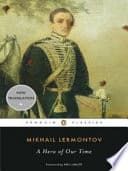
Synopsis
Covers the whole plot, including the ending.
- Difficulty
- Medium
- Pacing
- Moderate
- Mood
- Melancholy, Philosophical, Cynical, Reflective
- Read it if
- You enjoy classic Russian literature, psychological character studies, and Byronic heroes.
- Skip it if
- You prefer fast-paced plots with clear moral arcs or dislike anti-heroes.
A Hero of Our Time Plot Summary
Covers the whole plot, including the ending.
Bela
The story begins with a narrator traveling in the Caucasus mountains, who meets an old captain named Maxim Maximych. Maxim Maximych tells a story from his past about a young, rich Russian officer named Grigory Alexandrovich Pechorin. Pechorin, stationed at a small fort, becomes interested in Bela, the beautiful daughter of a local Circassian prince. He works with Bela's brother, Azamat, to take her. Azamat agrees to give Bela to Pechorin for Pechorin's horse, Kazbich's Karagyoz. Pechorin takes Bela, starting a sad series of events over several months. Bela, at first against it, slowly falls in love with Pechorin, but his interest fades after a while.
Bela (Continued)
Pechorin's first strong feelings for Bela quickly disappear, replaced by his usual boredom and restlessness. He ignores her, spending his days hunting. Bela, heartbroken by his lack of care, becomes sad. Meanwhile, Kazbich, the horse's owner, seeks revenge for its theft and his father's death, both caused by Pechorin. Kazbich attacks Bela while she is riding with Pechorin, badly hurting her. Bela dies in Pechorin's arms. He seems surprisingly unaffected, though he is sick for a week afterward. Maxim Maximych expresses his confusion and sadness over Pechorin's detached nature. The narrator later meets Pechorin, but their meeting is short and unsatisfying, as Pechorin is distant and not interested in talking.
Maxim Maximych
The narrator, still traveling in the Caucasus, unexpectedly meets Maxim Maximych again. They are both waiting for rides at a coaching station. To Maxim Maximych's great surprise and happiness, Pechorin also arrives at the same station, on his way to Persia. Maxim Maximych eagerly rushes to greet his old friend, full of fond memories. However, Pechorin's reaction is clearly cold and dismissive. He shows no real warmth or interest in Maxim Maximych's stories or his well-being, quickly leaving to get ready for his journey. This meeting deeply hurts Maxim Maximych, who feels rejected and sad by Pechorin's uncaring nature. The narrator watches this painful exchange, further confirming his view of Pechorin's mysterious and distant character.
Pechorin's Journal: Taman
The narrator, having gotten Pechorin's journal after his death, begins to share its contents. The first entry, 'Taman,' describes Pechorin's stay in a small coastal town. He finds himself in a hut with a blind boy and a mysterious, beautiful girl. Pechorin suspects they are smugglers and, driven by boredom and curiosity, tries to find out their secrets. The girl, Undine, tries to trick him, then tries to drown him by pushing him into the sea during a boat ride. Pechorin escapes, but his meddling causes the smugglers to stop their work and leave Taman, taking the blind boy. Pechorin thinks about the trouble he has caused, leaving the blind boy without his companions and a way to live, and feels unsatisfied and bored.
Pechorin's Journal: Princess Mary
Pechorin's journal continues with his time in Pyatigorsk, a spa town for Russian high society. He meets his old acquaintance, Grushnitsky, a proud and showy young cadet who likes Princess Mary Ligovskaya. Pechorin, wanting amusement and a cynical need to feel superior, decides to win Princess Mary's affection, even though he doesn't really care for her. He purposefully blocks Grushnitsky's attempts to impress Mary and quietly works against him at every turn. Pechorin's planned indifference first interests Mary, and he begins to charm her with his mysterious personality and witty, often cynical, comments, drawing her away from Grushnitsky and other suitors.
Pechorin's Journal: Princess Mary (Continued)
Pechorin keeps up his manipulative pursuit of Princess Mary, making her fall deeply in love with him, even as he remains emotionally distant. He enjoys the power he has over her, but finds no lasting joy in it. At the same time, he meets Vera, a married woman with whom he had a strong affair years ago. Vera is still deeply in love with Pechorin and risks everything to be with him, meeting him in secret. Pechorin is drawn to Vera's lasting devotion, finding in it a rare sign of real feeling, though he cannot fully return it. His conflicting desires and his inability to commit to either woman create a complex emotional situation, showing his inner struggles and his effect on those around him.
Pechorin's Journal: Princess Mary (Continued)
Grushnitsky, more and more jealous and shamed by Pechorin's success with Princess Mary, becomes hostile. Encouraged by a group of shallow officers, Grushnitsky spreads rumors about Pechorin and Mary, eventually challenging Pechorin to a duel. Pechorin, aware of Grushnitsky's vanity and the plan against him, agrees. He finds out that Grushnitsky and his seconds mean to load Pechorin's pistol with a blank, making sure Pechorin dies while it looks like Pechorin missed. Pechorin, calmly and carefully, reveals their trickery and insists on a fair duel. He forces Grushnitsky to fight with a loaded pistol, and, despite Grushnitsky's pleas, Pechorin kills him, showing no regret. The duel shows Pechorin's cold calculation and his willingness to remove anyone who gets in his way.
Pechorin's Journal: Princess Mary (Conclusion)
After the duel, Pechorin tells Princess Mary that he never loved her and was just playing with her feelings, breaking her heart. He makes it clear that he cannot marry her, leaving her devastated and shamed. His actions, along with the scandal of the duel, lead to his being sent away from Pyatigorsk. He is transferred to a remote fortress, a punishment he accepts with his usual indifference. Before leaving, he tries to meet Vera one last time, but his horse collapses, stopping him from reaching her. He thinks about his inability to find happiness, recognizing his destructive nature and the pain he causes others, yet remaining unable or unwilling to change.
Pechorin's Journal: The Fatalist
The last entry in Pechorin's journal, 'The Fatalist,' happens in a Cossack village. Pechorin and some officers discuss predestination. Lieutenant Vulich, a Serbian officer, argues that a man's fate is set and offers to prove it by holding a loaded pistol to his head. He pulls the trigger, and the pistol misfires. He then cocks it again and fires it at a wall, where it goes off, seemingly proving his point. Later that night, Vulich is killed by a drunk Cossack, an event that deeply affects Pechorin, making him face the unpredictable nature of fate and the limits of human will. Pechorin thinks about the irony of Vulich surviving the pistol only to die in such an ordinary way, further thinking about the unclear nature of destiny.
Pechorin's Journal: The Fatalist (Conclusion)
After Vulich's death, the drunk Cossack barricades himself in a hut. Pechorin, still thinking about predestination and driven by a dark curiosity, decides to test his own fate. He dramatically enters the hut through a window, facing the armed Cossack directly. The Cossack tries to stab him, but Pechorin manages to disarm and control him, coming out unharmed. This act of calculated risk further shows Pechorin's complex relationship with danger and his inner struggle with big life questions. He thinks about the experience, concluding that while fate may exist, human choice and willingness to take risks also play a role in shaping one's destiny. The novel ends shortly after this, with Pechorin's final fate unknown to the reader, though the narrator mentions his death in Persia.
A Hero of Our Time Characters
Grigory Alexandrovich Pechorin
Protagonist
A cynical, intelligent, and restless young officer, bored with life.
Pechorin is a Byronic hero – a highly intelligent, educated, and charismatic young Russian officer. However, beneath his charming exterior lies a profound cynicism, an overwhelming sense of ennui, and an inability to experience genuine emotion or find lasting satisfaction. He is driven by a constant need for excitement and stimulation, often at the expense of others, and is acutely aware of his own destructive nature. He struggles with existential questions, pondering fate, free will, and the meaning of his own existence, yet remains trapped in a cycle of manipulation and detachment.
Relationships: Maxim Maximych (former superior, paternal figure (from Maxim's side), object of Pechorin's indifference); Bela (object of Pechorin's fleeting passion, victim of his boredom); Princess Mary Ligovskaya (object of Pechorin's manipulative 'game', victim of his cruelty); Vera (former lover, enduring passion from Vera's side, Pechorin's only source of genuine, albeit fleeting, feeling); Grushnitsky (rival, victim of Pechorin's jealousy and manipulation, opponent in a fatal duel)
Maxim Maximych
Supporting
An old, kind-hearted staff-captain, a foil to Pechorin's cynicism.
Maxim Maximych is an older, experienced, and fundamentally good-natured staff-captain in the Russian army. He represents traditional values, loyalty, and simple, honest emotions. He is genuinely fond of Pechorin, despite being constantly bewildered by his enigmatic and often cruel behavior. He possesses a strong sense of duty and compassion, which stands in stark contrast to Pechorin's detached cynicism. His perspective offers the first, more sympathetic, view of Pechorin, though he ultimately fails to comprehend the younger man's complex inner world.
Relationships: Grigory Alexandrovich Pechorin (former subordinate, object of Maxim Maximych's affection and confusion); Bela (figure of Maxim Maximych's pity and concern)
Bela
Supporting
A young Circassian princess, abducted and tragically abandoned by Pechorin.
Bela is a beautiful, spirited, and innocent Circassian girl, the daughter of a local prince. She is forcibly abducted by Pechorin, initially resisting him but eventually falling deeply in love. Her character embodies purity and natural emotion, making her a stark contrast to the jaded Russian society characters. Her tragic fate highlights Pechorin's destructive impact on those around him, particularly those who are more vulnerable and emotionally open. Her story emphasizes the clash between Russian colonial power and the indigenous people of the Caucasus.
Relationships: Grigory Alexandrovich Pechorin (abductor, lover, eventual source of her heartbreak and death); Azamat (brother who betrays her for a horse); Kazbich (her family's enemy, indirectly causes her death)
Princess Mary Ligovskaya
Supporting
A beautiful and vain young society woman, seduced and discarded by Pechorin.
Princess Mary is a young, beautiful, and somewhat naive noblewoman from Russian high society, visiting the spa town of Pyatigorsk. She is initially drawn to Pechorin's enigmatic and indifferent demeanor, seeing him as more interesting than her other suitors, particularly Grushnitsky. She represents the superficiality and social games of the upper class, but her genuine feelings for Pechorin make her vulnerable to his manipulations. Her heartbreak at Pechorin's rejection is a key illustration of his emotional cruelty and his inability to truly connect with others.
Relationships: Grigory Alexandrovich Pechorin (object of her affection, her seducer and heartbreaker); Grushnitsky (her admirer, whom she rejects for Pechorin)
Vera
Supporting
Pechorin's former lover, who remains deeply devoted to him despite his flaws.
Vera is a married woman with whom Pechorin had a passionate affair years before. She is the only character in the novel for whom Pechorin seems to feel anything approaching genuine affection, perhaps because her love for him is so unconditional and self-sacrificing. She is willing to risk her reputation and her marriage for him, demonstrating a profound and enduring devotion. Her character highlights Pechorin's capacity to inspire intense love, even as he remains incapable of fully reciprocating it. She is a tragic figure, perpetually bound to a man who cannot truly commit.
Relationships: Grigory Alexandrovich Pechorin (her enduring love, former and current secret lover); Her Husband (figure of her social obligation, whom she betrays for Pechorin)
Grushnitsky
Supporting
A vain and theatrical young cadet, Pechorin's rival and eventual duel victim.
Grushnitsky is a young, melodramatic cadet, full of affected romanticism and a desire to appear tragic and interesting. He is vain, easily manipulated, and deeply insecure, constantly seeking attention and admiration. He is infatuated with Princess Mary and sees Pechorin as a rival. His character serves as a caricature of the superficial Byronic poseur, making him an easy target for Pechorin's cynical games. His pride and susceptibility to manipulation ultimately lead him to his fatal duel with Pechorin.
Relationships: Grigory Alexandrovich Pechorin (rival, manipulator, killer); Princess Mary Ligovskaya (object of his unrequited affection)
Lieutenant Vulich
Supporting
A Serbian officer who tests fate and dies tragically.
Vulich is a Serbian officer with a strong belief in predestination. He is calm, courageous, and willing to put his life on the line to prove his philosophical convictions. His character appears in 'The Fatalist' and serves as a catalyst for Pechorin's own reflections on fate and free will. His dramatic act of holding a pistol to his head and his subsequent, seemingly random, death profoundly impact Pechorin, forcing him to confront the unpredictable and often ironic nature of destiny.
Relationships: Grigory Alexandrovich Pechorin (philosophical interlocutor, witness to his death)
The Narrator (Traveling Officer)
Supporting
The framing narrator who collects Pechorin's journal and presents his story.
The unnamed narrator is a traveling officer who frames the entire novel. He first hears about Pechorin from Maxim Maximych, then briefly encounters Pechorin himself, and finally comes into possession of Pechorin's journal after his death. The narrator is observant, reflective, and acts as the reader's guide, presenting different perspectives on Pechorin's character. He is an intellectual who attempts to understand Pechorin, but ultimately admits to the enigma of his personality. His role is crucial in shaping the reader's perception of the protagonist, offering a complex, multi-faceted portrait.
Relationships: Maxim Maximych (source of initial stories about Pechorin, travel companion); Grigory Alexandrovich Pechorin (brief acquaintance, posthumous 'editor' of his journal)
A Hero of Our Time Themes
Existential Boredom and Ennui
Pechorin's main trait is his deep boredom, which comes from a lack of meaning in his life. He is too smart and sensitive for the shallow society he lives in, yet he cannot find a good use for his energy. This boredom pushes him to seek danger, manipulate others, and act destructively, not out of meanness, but from a desperate need for excitement. His constant restlessness and unhappiness, clear in how he treats Bela and Princess Mary, show a soul unable to find peace or true happiness, always searching for something more that never comes.
“My soul is corrupted by the world; my imagination is unquiet, my heart is insatiable. Everything is trivial to me.”
The Byronic Hero and the 'Superfluous Man'
Pechorin is the classic Byronic hero, a common type in 19th-century books: charming, smart, often sad, with a mysterious past and a cynical view of the world. He is also an early example of the 'superfluous man' in Russian literature – a talented person who, because of society or inner flaws, finds no real purpose in life. Pechorin's wasted abilities, his intelligence combined with his destructive acts, and his inability to fit into society reflect the worries of a generation of Russian nobles who felt alienated and without purpose. His character criticizes a society that offers no outlet for its most talented members.
“I carry within me a thousand passions, but I suppress them all; they seethe within me and find no outlet.”
Fate vs. Free Will
This idea is most clearly explored in 'The Fatalist,' where Pechorin and Vulich discuss whether human destiny is set. Vulich's dramatic act of testing fate and his later death, seemingly random yet fulfilling a 'predestined' quality, greatly affects Pechorin. Pechorin himself often acts with a sense of fatalistic distance, yet he also actively tries to control things and manipulate events. His confrontation with the drunk Cossack is his own test of fate, suggesting a complex mix between a person's choices and a larger, mysterious destiny. The novel leaves the question open, highlighting the uncertainty of human action.
“I like to doubt everything: this disposition of mind does not interfere with the decisiveness of my character, on the contrary, as far as I am concerned, I always go bolder when I do not know what awaits me.”
Colonialism and Cultural Clash
The setting in the Caucasus mountains, a region under Russian expansion, provides a background for ideas of colonialism and cultural conflict. The 'Bela' section especially shows this, illustrating the sad results of Russian officers entering Circassian life. Pechorin's taking of Bela, Azamat's betrayal of his sister for a Russian horse, and the violence that follows highlight the destructive effect of foreign presence and the loss of local traditions. The novel quietly questions the romantic idea of the 'noble savage' by showing the Circassians as complex people, but also emphasizes the weakness of native groups to the power and unclear morals of the colonizers.
“The Asiatic is only a child; he needs to be guided, and not always with kindness.”
The Nature of Love and Relationships
Lermontov looks at different sides of love and human connection, mostly through Pechorin's inability to keep them. Bela's innocent, strong love is crushed by Pechorin's indifference. Princess Mary's romantic view turns into bitter shame. Only Vera's lasting, self-sacrificing love seems to bring out a small spark of real feeling from Pechorin, yet even this he cannot fully accept or return. Pechorin's relationships are marked by manipulation, power struggles, and a deep emotional distance, showing his inability for true closeness and his tendency to harm what he touches. The novel suggests that for some, love is just another game to relieve boredom.
“I am incapable of loving; I can only play the part of a lover.”
Plot Devices & Literary Techniques
Unreliable Narrator / Multiple Perspectives
The story is told through several distinct voices, offering varied views of Pechorin.
The novel employs a complex narrative structure with multiple narrators. First, an unnamed traveling officer recounts Maxim Maximych's stories about Pechorin ('Bela'). Then, the narrator meets Pechorin himself ('Maxim Maximych'). Finally, the bulk of the novel comes from Pechorin's own journal, edited and presented by the narrator. This layered approach allows for a multifaceted and often contradictory portrait of Pechorin, preventing a simple interpretation of his character and highlighting the subjective nature of perception. Each narrator brings their own biases and understanding, enriching the reader's experience.
Framing Device
The narrative is framed by an unnamed traveling officer who introduces and comments on Pechorin's story.
The entire novel is structured as a framing device, where an unnamed narrator introduces Pechorin's story. He first presents Maxim Maximych's account, then his own brief encounter with Pechorin, and finally Pechorin's journal. This device allows Lermontov to control the flow of information, gradually revealing Pechorin's character from external observations to his internal thoughts. It also provides a meta-narrative layer, where the act of storytelling and interpretation becomes part of the novel's themes, as the narrator grapples with understanding the enigmatic protagonist.
Foreshadowing
Hints and clues throughout the narrative suggest future tragic events or character revelations.
Lermontov uses foreshadowing to build suspense and deepen the thematic resonance of the novel. For instance, Maxim Maximych's early observations about Pechorin's coldness and restlessness in 'Bela' hint at the tragic outcomes in 'Princess Mary.' The initial description of Grushnitsky's vanity and Pechorin's cynical nature in Pyatigorsk foreshadows their inevitable conflict and the duel. This device creates a sense of inevitability and tragedy, emphasizing Pechorin's destructive nature and the predetermined quality of some events, even as characters struggle with free will.
Irony
Situational and dramatic irony highlight the contradictions in Pechorin's character and fate.
Irony is a pervasive element in 'A Hero of Our Time.' Situational irony is evident in Pechorin's constant pursuit of excitement leading only to deeper boredom, or in Vulich surviving a self-inflicted gunshot only to die by a drunken Cossack's saber. Dramatic irony occurs when the reader understands Pechorin's manipulative intentions, while characters like Princess Mary remain oblivious. This device underscores the futility of Pechorin's actions, the unpredictable nature of life, and the often tragic gap between appearance and reality, particularly in high society interactions.
A Hero of Our Time Quotes
“I have an unfortunate character; whether it is my upbringing that has made me so, or God that has created me thus, I do not know.”
“My love brought no happiness, for I sacrificed nothing for her. I loved for myself, for my own pleasure.”
“What is the use of happiness if it is not eternal?”
“Evil begets evil; good begets good. This is a law of nature.”
“I began to remember, and it seemed that I had never loved anyone more than her. Oh, what a strange thing is memory!”
“I often ask myself why I cling so stubbornly to life, why I fear death. Perhaps because I am not yet satisfied with life.”
“The story of a human soul, even the pettiest soul, is almost more curious and useful than the history of an entire nation.”
“My restless nature, which has always demanded action, has thrown me from one pursuit to another.”
“I was born to suffer, and I am the cause of suffering in others.”
“There are two men in me: one lives in the full sense of the word, the other thinks and judges him.”
“Why did I not want to be content with a quiet, simple happiness? Is it because I did not understand it?”
“The most beautiful flowers grow on the edge of precipices.”
“I love my enemies, but only as long as they don't threaten me.”
“I was a tool in the hands of fate, and it seemed that everyone was a tool in mine.”
Quiz
10 questions on the plot and the characters. Each answer comes with a short explanation.
Question 1
Which character in 'Bela' is a Circassian chief and Bela's father?
- Kazbich
- Azamat
- The Old Prince
- Maxim Maximych
Show answer
C. The Old Prince The Old Prince is Bela's father and the Circassian chief whose daughter is abducted by Azamat and later Pechorin.
Question 2
What is the primary reason Pechorin gives for pursuing Bela in the first episode?
- He genuinely falls in love with her.
- He is bored and seeks a new adventure or distraction.
- He wants to spite Maxim Maximych.
- He is ordered to do so by his military superiors.
Show answer
B. He is bored and seeks a new adventure or distraction. Pechorin explicitly states his boredom and the need for new experiences as the driving force behind his pursuit of Bela, reflecting his cynical and restless nature.
Question 3
In 'Maxim Maximych', what is Maxim's reaction when Pechorin finally appears and greets him?
- He is overjoyed and embraces Pechorin warmly.
- He is deeply offended by Pechorin's coldness and indifference.
- He is surprised but quickly forgives Pechorin.
- He pretends not to recognize Pechorin.
Show answer
B. He is deeply offended by Pechorin's coldness and indifference. Maxim Maximych is deeply hurt and offended by Pechorin's brief, indifferent greeting and immediate departure, which contrasts sharply with Maxim's own eager anticipation.
Question 4
What is the primary reason Pechorin engages in the duel with Grushnitsky in 'Princess Mary'?
- Grushnitsky insulted Princess Mary.
- Pechorin felt a genuine threat to his honor.
- Pechorin deliberately provoked Grushnitsky out of boredom and a desire to assert dominance.
- They were both vying for Vera's affection.
Show answer
C. Pechorin deliberately provoked Grushnitsky out of boredom and a desire to assert dominance. Pechorin, driven by his cynical nature and a need for psychological manipulation, systematically provokes Grushnitsky, viewing him as a 'pathetic' rival and ultimately leading him to his death.
Question 5
Which of the following best describes Pechorin's relationship with Vera in 'Princess Mary'?
- It is a passionate, committed love affair.
- It is a long-standing, secret affair based on mutual understanding and a shared history.
- Vera is merely another conquest for Pechorin.
- Pechorin feels indifferent towards Vera.
Show answer
B. It is a long-standing, secret affair based on mutual understanding and a shared history. Vera is the only woman Pechorin admits to having truly loved, and their affair is a recurring, secretive one that spans years, suggesting a deeper, though still complicated, bond than his other relationships.
Question 6
What literary device is most prominent in the structure of 'A Hero of Our Time'?
- Linear chronological narrative
- Epistolary novel
- Frame narrative with an unreliable narrator
- Stream of consciousness
Show answer
C. Frame narrative with an unreliable narrator The novel employs a complex structure, starting with the Traveler's account, then Maxim Maximych's story, and finally Pechorin's own journal, making it a frame narrative with multiple perspectives, some of which are subjective.
Question 7
In 'The Fatalist', what is Pechorin's ultimate conclusion about predestination after his experience with Vulich and the drunken Cossack?
- He firmly believes in absolute predestination.
- He remains ambivalent, finding no definitive answer to the question.
- He concludes that free will always triumphs over fate.
- He dismisses the concept of fate entirely as superstition.
Show answer
B. He remains ambivalent, finding no definitive answer to the question. Despite Vulich's apparent 'luck' and Pechorin's own survival of the Cossack's pistol, Pechorin's reflections at the end of 'The Fatalist' reveal his continued intellectual struggle and ambivalence regarding the nature of fate and free will, rather than a definitive resolution.
Question 8
What is the significance of the title 'A Hero of Our Time' in relation to Pechorin?
- It implies that Pechorin embodies the ideal virtues and moral strength of his era.
- It is an ironic title, highlighting Pechorin's moral failings and the 'sickness' of his generation.
- It suggests Pechorin is a popular figure beloved by society.
- It refers to Pechorin's military heroism and bravery in battle.
Show answer
B. It is an ironic title, highlighting Pechorin's moral failings and the 'sickness' of his generation. The title is famously ironic. Lermontov presents Pechorin not as a conventional hero, but as a reflection of the spiritual and moral malaise, the 'sickness', of the educated Russian youth of his time, marked by cynicism, boredom, and wasted potential.
Question 9
How does Pechorin's self-analysis in his journal ('Pechorin's Journal') contribute to the novel's overall portrayal of him?
- It confirms the external judgments of him as purely evil and manipulative.
- It reveals a complex, introspective, and self-aware individual, despite his destructive actions.
- It proves his genuine desire for redemption and change.
- It primarily serves to justify his actions without any self-criticism.
Show answer
B. It reveals a complex, introspective, and self-aware individual, despite his destructive actions. Pechorin's journal offers a direct insight into his mind, revealing a profound capacity for self-analysis and introspection. He understands his own flaws and destructive tendencies, even if he cannot or will not change them, making him a complex and compelling character beyond simple villainy.
Question 10
Which of the following philosophical concepts is most directly explored through Pechorin's character and his interactions?
- Utilitarianism
- Romantic Idealism
- Existential ennui and the search for meaning in a seemingly meaningless world
- Strict adherence to social conventions and morality
Show answer
C. Existential ennui and the search for meaning in a seemingly meaningless world Pechorin's constant search for excitement, his profound boredom, his inability to find lasting satisfaction, and his cynical view of human relationships all point to a deep-seated existential ennui and a struggle to find purpose in a world that offers him no fulfilling outlet for his considerable intellect and energy.
A Hero of Our Time FAQ
What is the overarching structure of 'A Hero of Our Time' and why is it significant?
The novel is structured as a series of five linked novellas presented out of chronological order, with each episode offering a different perspective on the protagonist, Pechorin. This fragmented, non-linear approach allows Lermontov to gradually reveal Pechorin's complex character through various narrators and situations, creating a more nuanced and mysterious portrait than a simple chronological biography would.
Who is Grigory Alexandrovich Pechorin and what are his defining characteristics?
Grigory Alexandrovich Pechorin is the cynical, bored, and Byronic protagonist, a young officer exiled to the Caucasus. He possesses intelligence, charm, and courage, but these gifts are wasted due to his profound ennui, his inability to find lasting satisfaction, and his destructive impact on those around him.
What role does the Caucasus setting play in the novel?
The wild and exotic Caucasus serves as both a physical and metaphorical backdrop for Pechorin's adventures and internal struggles. It represents a place of exile, adventure, and raw passion, contrasting sharply with the artificiality of Russian high society and providing the stage for Pechorin's disruptive interactions with local cultures and fellow Russians.
Briefly summarize the events of 'Bela,' the first novella.
'Bela' introduces Pechorin through the eyes of Maxim Maximych, an older, good-hearted officer. Pechorin abducts a Circassian princess, Bela, from her family, seduces her, but quickly grows bored and abandons her emotionally, leading to her tragic death at the hands of her vengeful brother, Kazbich.
What is the central conflict in 'Princess Mary'?
In 'Princess Mary,' Pechorin deliberately manipulates the affections of Princess Mary Ligovskaya and cruelly toys with Grushnitsky, a fellow officer. His actions are driven by a desire to exert power and alleviate boredom, culminating in a fatal duel with Grushnitsky and the ruination of Mary's reputation.
How does Lermontov use the different narrators to shape our perception of Pechorin?
Lermontov employs multiple narrators – the traveling author, Maxim Maximych, and Pechorin himself – to provide diverse and often conflicting perspectives. Maxim Maximych offers a simpler, more bewildered view, while Pechorin's diary entries provide direct insight into his complex inner world, allowing the reader to synthesize a multifaceted understanding.
What is the significance of Pechorin's 'Journal' in understanding his character?
Pechorin's 'Journal' is crucial as it offers his unvarnished thoughts, motivations, and self-analysis, providing direct access to his cynicism and despair. It reveals his intellectual depth and his awareness of his own destructive nature, allowing the reader to judge him not just by his actions but by his internal justifications and torments.
Are there any subtle foreshadowing elements regarding Pechorin's ultimate fate or lack thereof?
The framing narrative, where the author learns of Pechorin's death in Persia, immediately establishes his end, but the details remain vague, emphasizing his transient and ultimately unfulfilled existence. This foreshadowing underscores the futility of his actions and the emptiness of his life, even before we delve into his 'adventures.'
What does Pechorin's relationship with Vera reveal about his capacity for genuine emotion?
Pechorin's relationship with Vera is perhaps the closest he comes to genuine affection, as she is the only woman he admits to having loved in the past. However, even with Vera, his possessiveness, his fear of commitment, and his ultimate inability to prioritize her well-being over his own whims illustrate his profound emotional damage and self-absorption.
Analyze Pechorin's 'fatalism' as presented in 'The Fatalist.'
In 'The Fatalist,' Pechorin grapples with the concept of predestination, testing it by challenging the fatalistic belief of Vulich. While he intellectually questions fate, his actions, particularly his daring capture of the drunken Cossack, suggest a subconscious desire to prove his own agency or, conversely, to tempt fate and find meaning in extreme situations.
How does Pechorin's boredom drive his destructive behavior?
Pechorin's profound boredom is the primary catalyst for his destructive actions, as he constantly seeks stimulation and novelty to escape his existential ennui. He manipulates people, engineers conflicts, and engages in dangerous escapades not out of malice, but from a desperate need for any sensation that will make him feel alive, regardless of the consequences for others.
Discuss the psychological impact of Pechorin's Byronic hero archetype on those around him.
Pechorin's Byronic allure – his mysteriousness, intelligence, and melancholic charm – initially attracts others, like Bela and Princess Mary, who are drawn to his intensity. However, his inherent cynicism and inability to form genuine attachments ultimately leave a trail of emotional devastation, heartbreak, and even death for those who fall under his influence.
Is Pechorin a villain, a victim, or both?
This is a central interpretive debate. Pechorin is undoubtedly a destructive force, making him a villain to those he harms. However, his profound internal suffering, his sense of being a 'moral cripple,' and his articulate self-awareness suggest he is also a victim of his own nature and perhaps the 'sickness' of his generation, making him a complex blend of both.
How does Lermontov use 'A Hero of Our Time' to comment on Russian society in the 1830s?
Through Pechorin, Lermontov critiques the intellectual and moral stagnation of the educated Russian gentry of his era, often referred to as the 'superfluous man.' Pechorin's wasted talents and cynicism reflect a generation disillusioned after the Decembrist revolt, lacking a meaningful outlet for their energies and resorting to self-destruction and manipulation.
What is the meaning of the novel's title, 'A Hero of Our Time'?
The title is ironic and satirical. Pechorin is presented not as a traditional heroic figure but as a 'hero' in the sense that he embodies the prevailing moral and psychological ailments of his generation. He represents the 'best' (most intelligent, capable) of his time, yet his 'heroism' lies in his profound disillusionment and destructive potential.
Compare Pechorin's character to other famous 'superfluous men' in Russian literature.
Pechorin is often considered the prototype of the 'superfluous man,' predating figures like Oblomov (Oblomov) and Bazarov (Fathers and Sons) in his intellectual gifts, social alienation, and inability to find purpose. He shares with them a sense of being out of place and a destructive idleness, but Pechorin's active manipulation sets him apart from Oblomov's passive inertia.
What is the significance of the duel between Pechorin and Grushnitsky?
The duel is a climax that highlights Pechorin's cold calculation and Grushnitsky's pathetic vanity. Pechorin ruthlessly exploits Grushnitsky's insecurity and desire for dramatic effect, orchestrating the duel under unfair conditions. It underscores Pechorin's destructive nature and his willingness to sacrifice others for his own amusement or perceived honor.
How does the novel explore themes of fate versus free will?
The novel, particularly in 'The Fatalist,' directly engages with the theme of fate versus free will. Pechorin, despite his intellectual skepticism, often acts as if driven by an uncontrollable destiny, while simultaneously asserting his will through manipulation and calculated risks. The narrative leaves it ambiguous whether his actions are fated or merely the result of his destructive character.
About the author

Mikhail Yuryevich Lermontov was a Russian Romantic writer, poet and painter, sometimes called "the poet of the Caucasus", the most important Russian poet after Alexander Pushkin's death in 1837 and the greatest figure in Russian Romanticism. His influence on later Russian literature is still felt in modern times, not only through his poetry, but also through his prose, which founded the tradition of the Russian psychological novel.
Similar books
- Eugene Onegin
Alexander Pushkin
4.1 (52k) average on GoodreadsRomanceFeatures another iconic 'superfluous man' in 19th-century Russia, exploring themes of boredom and unfulfilled potential.
- Notes from Underground
Fyodor Dostoevsky
4.2 (84k) average on GoodreadsPsychologyOffers a deep dive into the mind of a complex, alienated, and cynical protagonist, albeit in a more direct first-person style.
- The Old Man and the Sea
Ernest Hemingway
3.8 (831k) average on GoodreadsLiterary FictionA Cuban fisherman's long struggle with a giant marlin becomes a story of endurance and dignity, now retold for young adults with illustrations, phonetic guides, and writing prompts in Traditional Chinese.
- One Hundred Years of Solitude
Gabriel García Márquez
4.1 (753k) average on GoodreadsLiterary FictionThrough the multi-generational story of the Buendía family, a mythical town deals with the repeating patterns of time, love, and solitude, as the extraordinary mixes with the ordinary.
- The Goldfinch
Donna Tartt
3.9 (720k) average on GoodreadsLiterary FictionHaunted by a tragic explosion and clutching a stolen Dutch masterpiece, a young orphan navigates the opulent drawing rooms of New York and the gritty underbelly of the art world, desperately seeking connection and redemption amidst a life spiraling into crime and obsession.
- Little Fires Everywhere
Celeste Ng
4.1 (713k) average on GoodreadsLiterary FictionIn Shaker Heights, an artist and her daughter move in, and their free-spirited lives clash with a rule-bound matriarch, revealing hidden conflicts beneath a perfect surface.





Enjoyed the summary?
A summary gives you the shape of the book. The book itself has the detail, the examples and the voice.
Find A Hero of Our Time on AmazonAs an Amazon Associate, BookBrief earns from qualifying purchases. How we're funded