
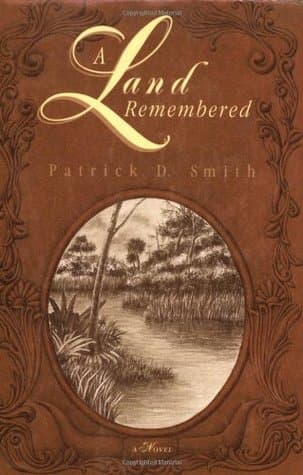
Synopsis
Covers the whole plot, including the ending.
- Difficulty
- Easy
- Pacing
- Moderate
- Mood
- Epic, Reflective, Historical, Rugged, Melancholy
- Read it if
- You enjoy sweeping historical sagas, multi-generational family stories, and narratives about the American frontier, particularly the unique history of Florida.
- Skip it if
- You prefer fast-paced thrillers or stories without a strong environmental message and the melancholic reflection on the cost of progress.
A Land Remembered Plot Summary
Covers the whole plot, including the ending.
The MacIveys Arrive in the Florida Wilderness
In 1858, Tobias MacIvey, a poor cracker, arrives in the Florida wilderness with his wife Emma and their two-year-old son, Zechariah (Zech). They settle near Lake Okeechobee, immediately facing challenges from the harsh environment, including mosquitoes, alligators, and dense scrub. Their first home is a simple lean-to, and they survive by Tobias's hunting and Emma's cleverness. They quickly learn the dangers of the land, meeting Seminole Indians and other early settlers. Tobias wants to make a living and raise cattle, a goal that defines the family's first fight against nature and isolation. He trades with distant settlements, slowly gaining possessions and establishing their presence in the vast, wild territory.
Building a Life and Facing Hardship
The MacIveys build a log cabin and begin to get cattle, branding them with their 'TB' mark. Tobias learns survival skills from a Seminole named Keith Tiger, including how to navigate swamps and hunt. A bad freeze kills most of their cattle, leaving the family almost starving. Tobias shows his strength by walking hundreds of miles to buy new stock, showing his strong will. During this time, Zech grows, learning to ride and hunt with his father, forming a close bond with the land and its animals. The family faces threats from rustlers and the constant dangers of the wilderness, but their connection grows stronger through shared difficulties.
The Civil War and Its Aftermath
The Civil War causes Tobias to leave his family and join the Confederate army. Emma and Zech are left alone to manage the growing cattle herd and protect their home. They face extreme hardship, relying on their intelligence and the help of their black friend, Skillit. Confederate deserters become a big threat, raiding their supplies and trying to steal their cattle. Zech, still a boy, has to grow up fast, often taking on the role of protector. When Tobias returns, he is changed by the war. The family rebuilds their lives, but the war's effects stay with them, especially Tobias, who struggles with the violence he saw.
The Great Cattle Drives Begin
With the war over, the need for beef in Cuba and the North grows, leading Tobias and Zech to start long cattle drives across Florida to the coast. These drives are full of danger, including stampedes, difficult swamps, and encounters with wild animals and hostile people. They partner with Skillit, who becomes a vital part of their work. Through hard work and good business sense, the MacIveys begin to get rich, changing from small farmers to important cattlemen. Zech, now a young man, shows himself to be a skilled cracker and a natural leader, having his father's strength and love for the land.
Zech's Marriage and Family Life
Zech meets and falls in love with Solly, a strong and independent young woman. They marry and have a son, Solomon, continuing the MacIvey family. Zech takes over more of the daily cattle business, expanding their herds and influence. Solly, like Emma, proves to be a strong frontier woman, supporting her family and helping their success. The family's wealth grows, allowing them to get more land and improve their homes. However, Florida's changing environment, with more settlers and development, begins to shift the family's connection to the wild land they once knew.
Tobias's Passing and Zech's Legacy
After a long life, Tobias MacIvey dies, leaving Zech to continue the family's work. Tobias's death is a turning point, as Zech fully takes on leadership. He keeps expanding the cattle business, getting large amounts of land. Zech's son, Solomon, grows up learning the cattle trade, just as Zech did from Tobias. Zech keeps the family's close connection to the land, though he also sees progress coming. He teaches Solomon the importance of hard work, respect for nature, and family, preparing him for the challenges of a rapidly changing Florida.
The Rise of Development and Solomon's Path
As Solomon MacIvey grows, Florida changes greatly. Cattle drives become less common as railroads and new transport methods appear. Real estate development booms, and the large lands the MacIveys had for cattle become very valuable. Solomon, unlike his father and grandfather, is more interested in business and development than in the hard life of a cracker. He sees the chance for wealth in selling parts of the family's land. This change moves away from the family's first values, as the focus shifts from living off the land to making money from selling it.
Solomon Embraces Real Estate
Solomon fully uses the chances offered by Florida's land boom. He starts selling large parts of the MacIvey estate, developing them into towns, farms, and resorts. His business skill leads to great wealth and influence, changing the MacIveys from pioneering cattlemen into powerful real estate owners. He builds big homes and lives a rich life, far from Tobias's humble beginnings. While very successful, he feels an internal conflict as he sees the lasting damage to the natural Florida his ancestors valued, a land he himself is now helping to reshape.
The Cost of Progress and Solomon's Regret
As Solomon gets older, he sees the results of the unchecked development he led. The once clean rivers and swamps are polluted, wildlife is destroyed, and the large, open spaces are replaced by concrete and neighborhoods. He sees the destruction of the wilderness that supported his family for generations. A deep feeling of guilt and regret begins to affect him, realizing that getting rich has come at a permanent cost to the land he inherited. He feels less connected to the values of Tobias and Zech, who lived in harmony with nature.
Solomon's Final Act of Preservation
In his later years, Solomon MacIvey, an old man in 1968, tries to make up for his part in destroying Florida's wilderness. He buys a large area of untouched land, like the clean Florida his grandfather Tobias first saw. His goal is to preserve this land, making sure at least one piece of the original wilderness stays untouched by development. This act is a moving attempt to reconnect with his family's past and to honor Tobias and Zech. He thinks about the irony of his family's journey, from struggling to survive on the land to using it for profit, and his final effort to protect a piece of what was lost.
A Land Remembered Characters
Tobias MacIvey
Protagonist
The determined patriarch who establishes the MacIvey family in the Florida wilderness.
Tobias is the quintessential Florida cracker: rugged, resourceful, and fiercely independent. He arrives in Florida in 1858 with nothing but a dream to make a life for his family. Driven by a deep love for his wife Emma and son Zech, he faces starvation, freezes, rustlers, and war with unwavering resolve. He possesses an innate understanding and respect for the land, learning to live in harmony with nature. Tobias is a man of few words but immense integrity, establishing the moral foundation and work ethic for the MacIvey dynasty. His legacy is one of perseverance and a profound connection to the wild Florida frontier.
Relationships: Emma MacIvey (Devoted wife and partner in survival); Zechariah (Zech) MacIvey (Beloved son, whom he teaches the ways of the land); Skillit (Trusted friend and partner in cattle drives); Keith Tiger (Seminole mentor who teaches him wilderness skills)
Emma MacIvey
Supporting
Tobias's resilient and supportive wife, the anchor of the early MacIvey family.
Emma is the steadfast and strong-willed wife of Tobias. She endures the unimaginable hardships of frontier life alongside her husband, from living in a lean-to to battling starvation and raising Zech in the wilderness. Her quiet strength, resourcefulness, and unwavering support are crucial to the family's survival and success. She is the emotional core of the family, providing comfort and stability amidst the harsh realities of their existence. Emma embodies the resilience of pioneer women, contributing equally to the family's establishment in Florida.
Relationships: Tobias MacIvey (Devoted husband and partner); Zechariah (Zech) MacIvey (Beloved son)
Zechariah (Zech) MacIvey
Protagonist
Tobias's son, who expands the family's cattle empire and bridges the gap between pioneer life and modern Florida.
Zech is born into the Florida wilderness and grows up intimately connected to the land, inheriting his father's skills as a cracker and his deep respect for nature. He is a natural leader, courageous, and fiercely protective of his family and their cattle. Zech takes over the family business after Tobias's death, expanding their land holdings and leading epic cattle drives. He embodies the second generation's blend of traditional cracker values with a pragmatic understanding of the changing times. He marries Solly and fathers Solomon, passing on the MacIvey legacy, though with a growing awareness of encroaching development.
Relationships: Tobias MacIvey (Father and mentor); Emma MacIvey (Mother); Solly MacIvey (Wife); Solomon MacIvey (Son); Skillit (Lifelong friend and partner)
Solly MacIvey
Supporting
Zech's strong and capable wife, who brings a new generation into the MacIvey family.
Solly is Zech's wife and the mother of Solomon. She is a resilient and intelligent woman who proves to be a fitting partner for Zech, understanding the demands of their life and contributing to the family's success. While not as extensively detailed as Emma, Solly represents the strength and adaptability of women in the evolving Florida frontier. She is instrumental in raising Solomon and maintaining the family home, providing the domestic foundation for Zech's continued work in the cattle business.
Relationships: Zechariah (Zech) MacIvey (Husband); Solomon MacIvey (Son)
Solomon MacIvey
Protagonist
Zech's son, who transforms the family's wealth from cattle to real estate, later regretting the environmental cost.
Solomon is the third and final generation of the MacIvey family depicted. Unlike his father and grandfather, he is more inclined towards business and development than the rustic life of a cracker. He inherits vast lands and capitalizes on Florida's real estate boom, becoming incredibly wealthy and influential. Initially driven by ambition and the desire for prosperity, he later experiences profound regret and guilt as he witnesses the environmental destruction caused by the development he spearheaded. His journey is one of moral reckoning, as he tries to atone for the exploitation of the land in his old age, ultimately seeking to preserve a piece of what was lost.
Relationships: Zechariah (Zech) MacIvey (Father); Solly MacIvey (Mother)
Skillit
Supporting
A loyal black man who becomes an indispensable friend and partner to Tobias and Zech.
Skillit is a freed slave who becomes a lifelong friend and essential partner to Tobias and Zech MacIvey. He is depicted as skilled, courageous, and utterly loyal, playing a crucial role in their cattle drives and survival. Despite the racial prejudices of the era, the MacIveys treat Skillit with respect and as an equal, highlighting their moral compass. Skillit's presence underscores themes of friendship, loyalty, and the diverse individuals who shaped early Florida. He is a symbol of steadfast companionship and an invaluable member of the MacIvey family's working unit.
Relationships: Tobias MacIvey (Close friend and partner); Zechariah (Zech) MacIvey (Close friend and partner)
Keith Tiger
Supporting
A Seminole Indian who teaches Tobias essential wilderness survival skills.
Keith Tiger is a Seminole Indian who befriends Tobias MacIvey in the early days of his settlement. He provides Tobias with invaluable knowledge of the Florida wilderness, teaching him how to hunt, navigate the swamps, and understand the rhythms of nature. Keith Tiger represents the indigenous wisdom and deep connection to the land that the Seminoles possessed. His mentorship is crucial for the MacIveys' initial survival and underscores the cultural exchange that occurred in early Florida, as well as the respect Tobias held for those who truly understood the environment.
Relationships: Tobias MacIvey (Mentor and friend)
Frog
Supporting
A cracker cowboy who works for Zech and Solomon, representing the changing face of Florida's workforce.
Frog is a cracker cowboy who works for the MacIvey family during Zech and Solomon's time. He is a reliable and skilled hand, representing the continuity of the cracker way of life even as Florida begins to modernize. Frog is loyal to the MacIveys and embodies the hardworking spirit of the cowboys who shaped Florida's cattle industry. His character helps to illustrate the gradual shift in the cattle business, from the pioneering efforts of Tobias to the more organized operations under Zech and Solomon.
Relationships: Zechariah (Zech) MacIvey (Employer); Solomon MacIvey (Employer)
A Land Remembered Themes
Man vs. Nature
The novel's main theme is humanity's interaction with the Florida wilderness, from struggle to eventual exploitation. Tobias and Emma first fight nature for survival, respecting its power while trying to make a living. Scenes of freezes, hurricanes, and animal encounters show this struggle. As generations pass, the relationship changes from living together to control, ending with Solomon's generation actively changing and destroying the natural land for money. The book laments the loss of the wild land, showing the lasting impact of human progress.
“And there was the land, a land of beauty and terror, of endless promise and crushing despair. A land to be remembered.”
The American Dream and Its Cost
The MacIvey family's journey is a classic American success story: rising from poverty to great wealth and influence. Tobias's first dream is simply to support his family and own land. Zech expands this into a large cattle business. Solomon then turns this into a real estate fortune. However, the novel explores the moral and environmental cost of this dream. The pursuit of wealth leads to the destruction of the land that gave them their first chance, making Solomon face the emptiness of material gain without caring for the environment.
“He knew that what he had done was wrong, that he had helped destroy the beautiful land his father and grandfather had loved.”
Family Legacy and Generational Change
The novel carefully follows three generations of the MacIvey family, showing how each generation adapts to and changes Florida. Tobias establishes the pioneering spirit and connection to the land. Zech expands the cattle business, bridging the gap between wilderness and growing civilization. Solomon, however, marks a big change, putting profit over preservation, which leads to a crisis of conscience. The theme explores how values and priorities change across generations, and how one generation's choices affect the next, for good or bad.
“Each generation had its own dreams, its own battles to fight, its own way of looking at the land.”
Respect for the Land and Its Inhabitants
Initially, the MacIveys, especially Tobias and Zech, show great respect for Florida's land and wildlife. Tobias learns from the Seminoles, and both he and Zech live in balance with the environment, understanding its cycles and limits. This respect extends to their relationships with people like Skillit and the Seminoles, valuing individuals regardless of race or background. As the family gets richer and Solomon takes over, this respect fades, replaced by seeing the land as something to sell. The novel is a strong lament for this lost respect, urging a return to caring for the land.
“The land was not something to be owned, but something to be cared for, to be loved.”
Resilience and Perseverance
From Tobias's early fight against starvation and a bad freeze to Zech's hard cattle drives and battles with rustlers, the MacIvey family shows remarkable strength. They face huge difficulties, including natural disasters, war, poverty, and isolation, yet they never give up. This theme highlights the strong spirit of early Florida pioneers and their ability to overcome problems through sheer determination and hard work. Their persistence is the basis of their eventual success, even as that success ultimately leads to new kinds of conflict.
“They had learned to live with the land, to take its blows and rise again, stronger for the struggle.”
Plot Devices & Literary Techniques
Generational Saga
Follows the MacIvey family across three generations, illustrating societal and environmental changes.
The novel spans over a century, chronicling the lives of Tobias, Zech, and Solomon MacIvey. This generational structure allows Patrick Smith to illustrate the profound transformation of Florida from a wild frontier to a developed state. It highlights how the family's values, relationship with the land, and definition of 'success' evolve (and sometimes devolve) with each passing generation. This device also emphasizes the long-term consequences of human actions on both the environment and family legacy, culminating in Solomon's reflective regret.
The Land as a Character
Florida's wilderness is a dynamic, living entity that shapes the characters and plot.
Florida's natural environment – the swamps, scrub, forests, rivers, and wildlife – is not merely a setting but an active force in the narrative. It challenges the MacIveys, provides for them, and ultimately suffers at their hands. The land's transformation from pristine wilderness to exploited resource mirrors the family's journey and is central to the novel's thematic concerns. Descriptions of its beauty and its devastation are vivid and emotionally charged, making the land's fate as compelling as that of the human characters.
Cattle Drives
Epic journeys that serve as a crucible for character development and plot advancement.
The long, perilous cattle drives undertaken by Tobias and Zech are recurring plot devices. These drives are not just economic endeavors; they are tests of endurance, skill, and character. They provide opportunities for the MacIveys to demonstrate their resilience, forge deep bonds with companions like Skillit, and confront the dangers of the wilderness. The drives also mark the passage of time and the growth of the MacIvey fortune, while vividly illustrating the arduous life of a Florida cracker cowboy and the scale of their enterprise.
Flashbacks/Framing Device
Solomon's reflections in 1968 frame the historical narrative of his ancestors.
The story begins and ends with an aged Solomon MacIvey in 1968, looking back on his family's history. This framing device allows the entire narrative of Tobias and Zech to be presented as a long flashback or a remembered history. It provides Solomon's perspective, colored by his regret and the environmental destruction he witnesses, giving the historical events a poignant context and emphasizing the theme of loss. It underscores that the past is always present, informing the moral reckoning of the final generation.
Symbolism of the 'TB' Brand
A simple cattle brand symbolizing family identity, heritage, and connection to the land.
The 'TB' brand, initially created by Tobias MacIvey for his cattle, serves as a powerful symbol throughout the novel. It represents the family's identity, their hard-won heritage, and their claim to the land. As the cattle empire grows, the brand becomes synonymous with the MacIvey name and their success. It signifies their roots in the cracker tradition and their initial connection to the wild Florida. Even as Solomon shifts to real estate, the 'TB' brand is a constant reminder of where the family came from and the values that originally defined them.
A Land Remembered Quotes
“A man can be poor in money, but he can be rich in land.”
“The land is all we have. It's our past and our future.”
“You don't own the land; the land owns you.”
“We came to this land with nothing but our hands and our will.”
“The only thing that lasts is the land. Everything else is just passing through.”
“A man's word is his bond, and his land is his soul.”
“We fought the land, and the land fought back, but in the end, we learned to live with it.”
“Money comes and goes, but the land remains.”
“The cracker way is to take only what you need and leave the rest for tomorrow.”
“This land remembers all who have walked upon it.”
“We built this life from the sweat of our brows and the strength of our backs.”
“The river doesn't care about a man's plans; it flows where it will.”
“A family is like a tree, rooted in the land, growing through the years.”
“You can't tame this land, but you can learn to love it.”
Quiz
10 questions on the plot and the characters. Each answer comes with a short explanation.
Question 1
In what year does the story of the MacIvey family begin?
- 1848
- 1858
- 1868
- 1878
Show answer
B. 1858 The novel opens in 1858 when Tobias MacIvey arrives in the Florida wilderness with his wife and infant son to start a new life, marking the beginning of the family's three-generation saga.
Question 2
What is the primary occupation that initially sustains the MacIvey family in the Florida wilderness?
- Cattle ranching
- Farming crops
- Hunting and gathering
- Trading with settlers
Show answer
C. Hunting and gathering The MacIveys start as dirt-poor Crackers relying on hunting wild game and gathering resources from the land to survive the harsh frontier conditions before transitioning to cattle ranching.
Question 3
Who is the infant son that Tobias MacIvey brings to Florida at the start of the novel?
- Zech MacIvey
- Solomon MacIvey
- Emma MacIvey
- Tobias MacIvey Jr.
Show answer
A. Zech MacIvey Zech MacIvey is Tobias's son who grows up to continue the family's legacy, bridging the generations from frontier survival to eventual wealth and land ownership.
Question 4
What natural disaster poses a recurring threat to the MacIveys' cattle and livelihood?
- Earthquakes
- Tornadoes
- Hurricanes
- Floods
Show answer
C. Hurricanes Hurricanes are among the many hardships the MacIveys face in Florida, damaging their property and cattle as they struggle to build a life in the volatile environment.
Question 5
Which group does the MacIvey family form respectful friendships with, despite societal persecution?
- Spanish settlers
- British traders
- Black and Indian communities
- Northern industrialists
Show answer
C. Black and Indian communities The novel highlights the MacIveys' compassion and alliances with black and Indian characters, showcasing themes of humanity and respect amid the frontier's racial tensions.
Question 6
What major historical event indirectly affects the MacIveys through encounters with deserters?
- The War of 1812
- The American Revolution
- The Civil War
- World War I
Show answer
C. The Civil War Confederate deserters from the Civil War are mentioned as one of the adversities the MacIveys battle, reflecting the novel's integration of Florida's historical context into their personal struggles.
Question 7
By the end of the novel, what realization does Solomon MacIvey come to about the family's use of the land?
- It was perfectly sustainable
- It had been exploited beyond need
- It should have been abandoned earlier
- It was necessary for survival
Show answer
B. It had been exploited beyond need Solomon MacIvey, representing the third generation, understands that the pursuit of wealth led to overexploitation of the land, tying into the book's themes of greed and environmental respect.
Question 8
What award did 'A Land Remembered' win from the Florida Historical Society?
- The Pulitzer Prize
- The National Book Award
- The Tebeau Prize
- The Florida Book Award
Show answer
C. The Tebeau Prize The novel received the Tebeau Prize as the Most Outstanding Florida Historical Novel, recognizing its significant contribution to Florida's historical literature and its enduring popularity.
Question 9
What is described as the MacIveys' 'most formidable adversary' in their rise from Crackers to tycoons?
- Wild animals
- Natural disasters
- Greed, including their own
- Political conflicts
Show answer
C. Greed, including their own While the MacIveys face many external challenges, the novel emphasizes that internal greed becomes their greatest enemy, ultimately leading to moral and environmental consequences.
Question 10
In which year does the story conclude with Solomon MacIvey's reflections?
- 1958
- 1968
- 1978
- 1988
Show answer
B. 1968 The narrative spans from 1858 to 1968, covering three generations and ending with Solomon MacIvey's realization about the land's exploitation, marking a full circle in the family's history.
A Land Remembered FAQ
What is 'A Land Remembered' about?
'A Land Remembered' follows three generations of the MacIvey family in Florida from 1858 to 1968, chronicling their journey from impoverished Crackers struggling against the wilderness to wealthy real estate tycoons, ultimately grappling with the environmental and moral costs of their success.
Why should I read 'A Land Remembered'?
This novel offers a rich, immersive portrayal of Florida's history through the lens of a resilient family, blending adventure, hardship, and poignant themes about human ambition and environmental stewardship, making it both entertaining and thought-provoking.
What is the background/setting of 'A Land Remembered'?
Set in Florida from 1858 to 1968, the story spans the frontier wilderness era through modernization, featuring swamps, cattle ranches, and growing urban landscapes, reflecting the state's transformation from untamed land to developed territory.
What are the most memorable quotes?
Key quotes include Solomon MacIvey's realization that 'the land has been exploited far beyond human need' and Tobias MacIvey's reflections on survival, such as 'We ain't rich in money, but we're rich in land,' highlighting themes of greed and connection to nature.
What writing style does the author use?
Patrick Smith employs a straightforward, descriptive narrative with vivid imagery and dialect, blending historical detail with emotional depth to create an epic, multi-generational saga that feels authentic to Florida's Cracker culture.
What minor details add significant meaning?
Details like the MacIveys' interactions with persecuted blacks and Indians, or their battles with mosquitoes and hurricanes, subtly emphasize themes of resilience, community, and the harsh realities of frontier life beyond mere survival.
What are some subtle foreshadowing moments?
Early struggles with rustlers and Confederate deserters hint at later conflicts with human greed, while Tobias's initial reverence for the land foreshadows Solomon's eventual regret over its exploitation in the modern era.
What unexpected character connections exist?
The MacIveys form alliances with marginalized groups like blacks and Indians, which contrast with their later dealings with wealthy tycoons, showing how their relationships evolve from solidarity to isolation as their fortune grows.
What are unspoken character motivations?
Tobias is driven by a deep-seated desire to provide security for his family, while Solomon's later actions stem from an unacknowledged guilt over abandoning their ancestral values for material success, reflecting internal conflicts about progress.
What psychological complexities do characters exhibit?
Characters like Zech MacIvey balance toughness with tenderness, showing vulnerability in friendships with outsiders, while later generations struggle with the psychological toll of wealth, feeling disconnected from their roots and the land.
What are the major emotional turning points?
Key moments include Tobias's arrival in the wilderness, the family's survival through a devastating hurricane, and Solomon's realization in 1968 that their success has come at the cost of the land's health, evoking a mix of triumph and regret.
How do relationship dynamics evolve?
The MacIveys shift from close-knit, interdependent family units facing external threats to more isolated, wealth-driven individuals in later generations, with relationships strained by greed and a loss of shared purpose.
Which parts remain ambiguous or open-ended?
The novel leaves open whether Solomon's regret leads to meaningful change or if the cycle of exploitation continues, and it subtly questions if the MacIveys' legacy is one of triumph or tragedy, inviting reader interpretation.
What are controversial scenes or decisions?
The MacIveys' transition from land stewards to real estate tycoons, involving clear-cutting and development, sparks debate about whether their ambition justifies environmental harm, highlighting tensions between progress and preservation.
'A Land Remembered' ending explained: how it ends & what it means
The novel ends in 1968 with Solomon MacIvey realizing the land has been over-exploited, symbolizing a critique of unchecked capitalism and a call for environmental responsibility, suggesting that true wealth lies in harmony with nature rather than domination.
About the author

Patrick D. Smith is an American author known for his fiction, particularly "A Land Remembered," which explores Florida's history and environment through the lives of its characters. His works often reflect themes of nature and the human experience in the context of the American South.
Similar books
- The Yearling
Marjorie Kinnan Rawlings
4.0 (26k) average on GoodreadsChildren'sExplores the harsh realities of life in the Florida wilderness and the bond between humans and nature.
- Lonesome Dove
Larry McMurtry
4.5 (149k) average on GoodreadsHistorical FictionFeatures epic cattle drives and the challenges of frontier life in a developing American landscape.
- Their Eyes Were Watching God
Zora Neale Hurston
3.9 (266k) average on GoodreadsReferenceTheir Eyes Were Watching God is also set in early 20th-century Florida but focuses on African American culture, identity, and self-discovery, using the landscape as a backdrop for social commentary. Smith's novel, while touching on diverse communities, primarily explores the white pioneer's struggle against the wilderness, offering a different cultural and historical lens.
- To Kill a Mockingbird
Harper Lee
4.3 (4.5M) average on GoodreadsHistorical FictionIn the 1930s Jim Crow South, Harper Lee writes about racial injustice, moral growth, and the quiet courage of a lawyer father, Atticus Finch, as seen through his young daughter's eyes.
- The Great Gatsby
F. Scott Fitzgerald
3.9 (3.8M) average on GoodreadsHistorical FictionIn the opulent Roaring Twenties, a mysterious millionaire's lavish parties hide his desperate, tragic pursuit of a lost love, exposing the emptiness within the American Dream.
- Pride and Prejudice
Jane Austen
4.3 (3M) average on GoodreadsHistorical FictionIn a society focused on status and money, Elizabeth Bennet navigates love and pride, challenging Mr. Darcy and social expectations to find true affection.





Enjoyed the summary?
A summary gives you the shape of the book. The book itself has the detail, the examples and the voice.
Find A Land Remembered on AmazonAs an Amazon Associate, BookBrief earns from qualifying purchases. How we're funded