
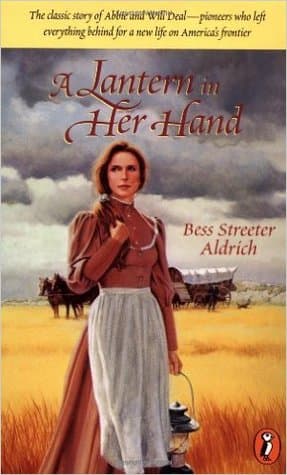
Synopsis
Covers the whole plot, including the ending.
- Difficulty
- Easy
- Pacing
- Slow
- Mood
- Heartwarming, Reflective, Resilient, Historic
- Read it if
- You enjoy historical fiction about strong women, pioneer life, and the development of the American West.
- Skip it if
- You prefer fast-paced plots or stories with a strong central conflict and resolution, rather than a generational saga.
A Lantern in Her Hand Plot Summary
Covers the whole plot, including the ending.
Abbie's Youth and Dreams
In the late 1860s, young Abbie Deal lives a comfortable life in a small Iowa town. She is a bright, imaginative girl who loves music, poetry, and literature. Her biggest dream is to work in music or writing, believing she has a special talent and wants to achieve 'big things.' She often tells her fiancé, Will Deal, about these hopes. He is practical but supports her in his own quiet way. Abbie values her close family, especially her parents, who encourage her love for learning. However, the demands of pioneer life and the expectations for young women of her time begin to challenge her idealistic views for the future, hinting at the sacrifices she will make.
Marriage and the Move West
Abbie marries Will Deal, a steady, hardworking young man, despite her remaining romantic ideas of a grander future. Soon after their wedding, Will decides to move west and claim land in the new territory of Nebraska. Abbie, worried about leaving her familiar life and her beloved piano, agrees to go with him. The journey west is hard, with primitive conditions, long days of travel in a covered wagon, and the constant danger of the wild. This move marks the first major sacrifice of Abbie's personal dreams, as the demands of pioneer life immediately begin to overshadow her artistic goals, forcing her to face a difficult new reality.
Building a Sod House and Starting a Family
Upon arriving in Nebraska, Abbie and Will build their first home: a simple sod house. The construction is physically tiring, and Abbie, used to nicer surroundings, struggles with the rough living conditions. Despite the difficulties, she adapts, learning to cook over an open fire, manage a small household, and endure the isolation of the prairie. Children soon arrive, starting with Frank, then Victor, and later others. Each birth brings both joy and more responsibility, further tying Abbie to the demanding realities of motherhood and homesteading. Her days become a constant cycle of chores, childcare, and making do with little, leaving almost no time for her old interests.
Challenges of Prairie Life
Life on the Nebraska prairie brings a continuous series of challenges for Abbie and her growing family. They face harsh winters with brutal blizzards that threaten their survival, isolating them for weeks. Summers bring scorching droughts that kill crops and dust storms that cover everything. Illness is a constant worry, with little access to doctors, and Abbie often acts as nurse for her children. The struggle for basic survival is constant, requiring great resilience and cleverness. Despite these difficulties, Abbie maintains a quiet strength, using an inner fortitude she did not know she had, always putting her family's well-being before her own comfort or wishes.
Moments of Joy and Simple Pleasures
Despite the many difficulties, Abbie finds moments of joy and simple pleasures that keep her spirits up. She enjoys her children's laughter, their personalities, and their small achievements. The beauty of the prairie, from the vast starry nights to the wildflowers, sometimes breaks through her routine. She treasures letters from her family in Iowa, which connect her to her past. Evenings spent singing hymns with Will and the children, or reading aloud from a favorite book, become important traditions. These small moments of happiness show Abbie's lasting hope and her ability to find beauty and meaning in her challenging life.
A Growing Family and Community
As the years pass, Abbie and Will's family grows to include nine children. The children, raised in the sod house, learn the values of hard work and self-reliance from their parents. Slowly, other settlers arrive, and a small community begins to form around the Deal homestead. Neighbors share resources, help each other during hard times, and gather for social events, providing much-needed company. Abbie, though reserved, plays a quiet but important role in the growing community, offering help and comfort when needed. The increasing population brings the promise of schools, churches, and a more established society, a sharp contrast to their initial isolation.
The Children Grow Up
Abbie watches her children grow from babies to strong, capable young adults. Each child develops a distinct personality and set of goals. Frank, the oldest, shows his father's practicality and work ethic, becoming a successful farmer. Victor, more artistic, eventually leaves the farm for education and a professional career. The girls, like Margaret and Clara, become wives and mothers, contributing to the growing community. Abbie teaches them a love for learning and strong morals, even though her own educational dreams were mostly unfulfilled. She is very proud of their achievements and their contributions to the developing state, seeing her part in their successes.
Loss and Resilience
Life on the prairie, while offering joyful moments, also brings deep sorrow. Abbie suffers the heartbreaking loss of several children to illnesses and accidents, a common tragedy in pioneer times. Each loss leaves a lasting mark on her, testing her faith and resilience. Later, she also faces the great grief of losing her husband, Will, who dies after years of hard work. Despite these devastating events, Abbie's spirit remains strong. She finds strength in her surviving children, her grandchildren, and her steady belief in the future. Her quiet endurance shows the human ability to persevere through immense pain.
The Changing Landscape
As Abbie ages, she sees a remarkable change in the Nebraska landscape. The sod house is eventually replaced by a larger frame house. Roads are built, towns grow, and railroads connect isolated communities. Schools and churches become established. The wild prairie, once a challenging wilderness, slowly gives way to cultivated fields and organized settlements. Abbie reflects on the great progress she has seen, from the 'feeble beginnings of a raw state' to a thriving civilization. She feels quiet pride knowing that her family and her own tireless efforts played a key role in this development, embodying the spirit of the pioneers.
A Legacy of Love and Strength
In her later years, Abbie lives a full life, surrounded by her many children and grandchildren. Her children have become successful, respected members of their communities, a result of the foundation she and Will built. She enjoys watching her grandchildren play, sharing stories of the early days, and offering her quiet wisdom. Though her youthful dreams of artistic greatness were never realized as she imagined, she comes to understand that her life's work — raising a family, building a home, and helping a state grow — was a different, perhaps grander, kind of greatness. She finds deep contentment in her legacy of love, resilience, and family, a 'lantern in her hand' guiding generations.
Principal Figures
Abbie Deal
Protagonist
A woman who sacrifices her personal dreams to build a home and family on the Nebraska prairie.
Abbie Deal begins as a sensitive, imaginative young woman with a deep love for music, poetry, and intellectual pursuits, dreaming of a life beyond the ordinary. She is intelligent, observant, and possesses an inner strength that is initially hidden beneath her gentle demeanor. As a pioneer wife and mother, she transforms into a resilient and self-sacrificing matriarch, enduring immense hardship and loss without complaint. Her quiet determination and unwavering commitment to her family define her, even as she secretly harbors echoes of her youthful artistic longings.
Relationships: Will Deal (Devoted husband, steady partner, and father to her children.); Frank Deal (Eldest son, practical and hardworking, takes after his father.); Victor Deal (Son with artistic leanings, who eventually pursues higher education.); Her Children (Her primary focus and source of both joy and sorrow, for whom she sacrifices everything.)
Will Deal
Supporting
Abbie's practical and hardworking husband, a steadfast pioneer.
Will Deal is Abbie's husband, a man of quiet strength, practicality, and unwavering resolve. He is a farmer by nature, deeply connected to the land, and driven by the desire to provide for his family. While he may not always understand Abbie's more artistic sensibilities, he deeply loves and supports her, trusting her judgment and appreciating her resilience. He works tirelessly to build their homestead, enduring the same hardships as Abbie but with a more stoic demeanor. His steady presence is the anchor for the Deal family amidst the chaos of pioneer life.
Relationships: Abbie Deal (Devoted husband, provides stability and love.); His Children (Loving father, teaches them the value of hard work and self-reliance.)
Frank Deal
Supporting
Abbie's eldest son, who embodies the pioneer spirit and becomes a successful farmer.
Frank is the eldest son of Abbie and Will, and he quickly takes on responsibilities, demonstrating a strong work ethic and a practical mind from a young age. He is dependable, hardworking, and deeply rooted in the land, much like his father. Frank represents the continuation of the pioneer legacy, embracing farming as his chosen path and contributing to the agricultural development of Nebraska. He is a steady presence in his mother's life, providing support and continuity as the family grows and changes.
Relationships: Abbie Deal (Devoted son, helps on the farm and supports his mother.); Will Deal (Learns farming and work ethic from his father, carrying on his legacy.)
Victor Deal
Supporting
Abbie's son who pursues education and a professional career, reflecting her unfulfilled dreams.
Victor is one of Abbie's sons who displays a more intellectual and artistic inclination, perhaps inheriting some of his mother's unfulfilled dreams. Unlike his brothers who are drawn to farming, Victor is driven by a desire for education and a professional life beyond the prairie. He represents the next generation's opportunity to pursue paths that were largely unavailable to their pioneer parents. His success in a professional field brings Abbie a quiet sense of pride, as it echoes her own youthful aspirations for a life of the mind.
Relationships: Abbie Deal (Son who embodies some of her intellectual and artistic hopes.); His Siblings (Different in aspirations, but still part of the close-knit family.)
Margaret Deal
Supporting
One of Abbie's daughters, who follows a traditional path of marriage and motherhood.
Margaret is one of Abbie's daughters, who, like many young women of her time, embraces the traditional roles of wife and mother. She learns the domestic skills and resilience necessary for pioneer life from Abbie, and she contributes to the growing community through her own family. While her story isn't as detailed as some of the sons, she represents the continuation of the family unit and the establishment of new households on the prairie, reflecting the success of Abbie's efforts in raising a large and thriving family.
Relationships: Abbie Deal (Daughter, learns domestic skills and values from her mother.); Her Siblings (Grows up alongside them in the sod house.)
Clara Deal
Supporting
Another of Abbie's daughters, contributing to the family and community.
Clara is another of Abbie's daughters, who, like Margaret, grows up amidst the hardships and joys of prairie life. She learns the importance of resilience, resourcefulness, and family bonds from her mother. Clara's life, though not extensively detailed, represents the collective contribution of Abbie's children to the developing state. She becomes a part of the fabric of the community, carrying forward the values instilled by her pioneer parents and contributing to the growth and stability of the region.
Relationships: Abbie Deal (Daughter, raised under her mother's care and guidance.); Her Siblings (Grows up as part of the large Deal family.)
Abbie's Parents
Mentioned
Provide a connection to Abbie's past and her more refined upbringing.
Abbie's parents, though not present for most of the narrative, represent her roots and the more comfortable, cultured life she left behind in Iowa. They are portrayed as loving and supportive, encouraging her intellectual and artistic pursuits. Their letters and occasional visits serve as a vital link for Abbie to her past, reminding her of her youthful dreams and providing a contrast to her harsh pioneer reality. Their influence shapes Abbie's early character and her enduring love for learning.
Relationships: Abbie Deal (Loving parents, provide her initial upbringing and encourage her dreams.)
Themes & Insights
Sacrifice and Redefinition of Greatness
The main theme is Abbie's journey from youthful artistic dreams to a life of hard pioneer work. She gives up her hopes of musical and literary fame for the demands of marriage, motherhood, and homesteading. However, the novel suggests her 'greatness' is not lessened but redefined: it is in her steady resilience, her ability to raise a family through great hardship, and her part in building a new state. This is clear in her quiet pride in her children's success and her thought that she was 'part of the epic' without realizing it.
“But it's funny...I was always too busy filling up the youngsters and getting patches on the overalls to notice that I was part of the epic.”
The Enduring Spirit of the Pioneer Woman
Abbie shows the strength, resilience, and quiet determination of the pioneer woman. She faces blizzards, droughts, illness, isolation, and the loss of children with remarkable courage, never giving in to despair. Her ability to adapt to basic conditions, manage a large household with few resources, and maintain hope against great odds highlights the incredible inner strength needed to settle the American frontier. Her story celebrates the often unrecognized heroines who built homes and communities through unimaginable challenges.
“She had given up her dreams, perhaps, but she had gained a life, rich and full, in a way she could never have imagined.”
The Cycle of Life and Progress
The novel carefully shows the passage of time and the big changes Abbie witnesses, from the wildness of early Nebraska to a thriving, settled state. It explores the cycle of generations, as Abbie's children grow up, create their own lives, and add to the progress she started. The change from a sod house to a frame house, the founding of schools and towns, and the success of her descendants all show the theme of progress and the lasting impact of those who laid the groundwork. Abbie's life reflects America's westward expansion.
“I've seen the feeble beginnings of a raw state and the civilization that developed there, and I've been part of the beginning and part of the growth.”
The Importance of Family and Home
Despite her early desire for individual achievement, Abbie ultimately finds her deepest fulfillment and purpose in her family and the home she creates. The family unit, first in the sod house and then in the frame house, serves as a safe place and the center of her life. Her constant efforts are aimed at raising her children and keeping a loving, stable home amid the harsh outside world. The novel emphasizes that the greatest treasure Abbie builds is not a career, but a strong, lasting family that continues her legacy.
“Her home was her kingdom, her children her crown.”
Plot Devices & Literary Techniques
Flashbacks and Reminiscence
Abbie's memories of her youth and past dreams.
Throughout the narrative, Abbie often reflects on her younger days in Iowa, her love for music and poetry, and her aspirations for a grander life. These moments of reminiscence serve as a poignant contrast to her current harsh realities as a pioneer. They highlight the sacrifices she has made and allow the reader to understand the depth of her inner life and the dreams she quietly carries, even as she fulfills her duties. This device enriches her character by revealing her layered emotional landscape.
Symbolism of the Lantern
Represents hope, guidance, and Abbie's inner light.
The 'lantern in her hand' (from the title) symbolizes Abbie's enduring hope, her role as a guide for her family, and her quiet inner strength. It represents the light she brings to her home and community, even in the darkest times of hardship and despair. It also metaphorically stands for the spark of her youthful dreams, which, though transformed, continues to illuminate her path and the lives of her descendants, guiding them towards a brighter future on the prairie.
The Sod House
Symbolizes the harsh beginnings and resilience of pioneer life.
The sod house is a central symbolic element, representing the primitive, challenging, yet ultimately foundational nature of pioneer life. It is both a shelter and a testament to the family's resourcefulness and determination. Its eventual replacement by a frame house symbolizes progress, the taming of the wilderness, and the establishment of a more permanent civilization. The sod house serves as a constant reminder of how far Abbie and her family have come and the immense labor required to build a life from scratch.
Seasonal Cycles
Reflect the relentless challenges and rhythms of pioneer existence.
The narrative frequently references the changing seasons – the brutal blizzards of winter, the scorching droughts of summer, the promise of spring, and the harvest of autumn. These seasonal cycles are more than just background; they dictate the rhythm of pioneer life, presenting constant challenges and opportunities. They underscore the relentless struggle against nature and the cyclical nature of hardship and renewal, emphasizing the enduring resilience required of Abbie and her family to survive and thrive on the prairie.
A Lantern in Her Hand Quotes
“Life is a hard, grim thing, but it has its compensations.”
“A woman's place is where she can do the most good.”
“There was a loneliness in her heart that the wide prairie seemed to intensify.”
“The greatest thing in life is not to be loved, but to love.”
“It was a life of ceaseless toil, but it was also a life of freedom.”
“The prairie had claimed her, body and soul, but it had also given her strength.”
“You can't live without hope, not really.”
“Every generation has its own battles to fight, and its own songs to sing.”
“A home is not just a house; it's the people in it, and the memories they make.”
“The wind was her lullaby, and the stars her nightlight.”
“Sometimes the greatest courage is just to keep going.”
“She had built her life with her own hands, brick by brick, dream by dream.”
“The years flowed like a river, carrying away sorrow and bringing new joys.”
“A lantern in her hand, she had lit the way for others.”
Quiz
10 questions on the plot and the characters. Each answer comes with a short explanation.
Question 1
What was Abbie Deal's initial dream or ambition as a young woman?
- To become a famous writer and poet.
- To do 'big things' and achieve greatness, possibly through music or art.
- To travel the world and see many different places.
- To own a grand house in a bustling city.
Show answer
B. To do 'big things' and achieve greatness, possibly through music or art. Abbie expressed a desire to 'do big things' and felt a 'light in the woods' beckoning her when she read verse or heard music, suggesting an artistic or impactful ambition.
Question 2
What kind of dwelling did Abbie's children initially grow up in?
- A log cabin.
- A canvas tent.
- A rude sod hut.
- A small wooden frame house.
Show answer
C. A rude sod hut. The description explicitly states that her 'children, raised in a rude sod hut, were prosperous men and women of a thriving state'.
Question 3
What did Abbie realize was her 'great' accomplishment, despite it not being her original dream?
- Becoming a celebrated local musician.
- Leading a political movement for women's rights.
- Being part of the beginning and growth of a raw state into a civilization.
- Amassing a large personal fortune through shrewd investments.
Show answer
C. Being part of the beginning and growth of a raw state into a civilization. Abbie proudly stated, 'I've seen the feeble beginnings of a raw state and the civilization that developed there, and I've been part of the beginning and part of the growth.'
Question 4
What genre is 'A Lantern in Her Hand' classified as?
- Fantasy
- Science Fiction
- Historical Fiction
- Mystery
Show answer
C. Historical Fiction The provided information explicitly lists 'Historical Fiction, Young Adult, Romance' as the genres for the book.
Question 5
What is the primary setting for the significant events of Abbie's life, as indicated by her reflections?
- A bustling East Coast city.
- A remote mountain retreat.
- The American West, specifically a developing state.
- A small, unchanging European village.
Show answer
C. The American West, specifically a developing state. Abbie says, 'I've hardly been away from this yard. I've seen the feeble beginnings of a raw state and the civilization that developed there,' and the synopsis mentions 'a young girl who went West as a bride'.
Question 6
Abbie's statement, 'I was always too busy filling up the youngsters and getting patches on the overalls to notice that I was part of the epic,' highlights which thematic element?
- The regret of missed opportunities for personal fame.
- The mundane, yet profound, nature of daily pioneer life and its contribution to larger history.
- The frustration of being confined to domestic duties.
- The lack of recognition for women's contributions in history.
Show answer
B. The mundane, yet profound, nature of daily pioneer life and its contribution to larger history. This quote emphasizes how ordinary, daily tasks of raising a family and sustaining life on the frontier, while seemingly unheroic, were in fact integral to the 'epic' development of a new state.
Question 7
What kind of personal feeling did Abbie experience when she read verse or heard music, related to her early ambitions?
- A sense of peaceful contentment.
- A feeling of deep sadness and despair.
- A longing so intense it made her throat hurt with wanting to do something great.
- A desire to escape her current circumstances.
Show answer
C. A longing so intense it made her throat hurt with wanting to do something great. Abbie explicitly states, 'And when I read verse or hear music...or...sing...it beckons me one, and my throat hurts with wanting to do something great.'
Question 8
The title 'A Lantern in Her Hand' most likely symbolizes what aspect of Abbie's journey?
- Her literal job of carrying a lantern during nighttime chores.
- Her role as a guide or source of hope and resilience for her family and the developing community.
- Her hidden talent for creating beautiful light fixtures.
- Her constant search for knowledge and enlightenment through books.
Show answer
B. Her role as a guide or source of hope and resilience for her family and the developing community. Given the themes of pioneering and building a nation, 'a lantern in her hand' likely symbolizes her steady guidance, enduring spirit, and the hope she brought to her family and the nascent community during challenging times.
Question 9
How does the book's description characterize Abbie's contribution to the development of the state?
- As a passive observer of historical change.
- As a direct, hands-on participant in its 'feeble beginnings' and subsequent 'civilization'.
- As a critical voice against the challenges of pioneer life.
- As someone whose impact was largely forgotten by history.
Show answer
B. As a direct, hands-on participant in its 'feeble beginnings' and subsequent 'civilization'. Abbie explicitly states, 'I've been part of the beginning and part of the growth,' indicating active participation rather than passive observation.
Question 10
The phrase 'I've seen everything...and I've hardly been away from this yard' implies what about Abbie's perspective on life?
- She regrets her limited travels and wishes for more adventure.
- She believes that profound experiences and historical significance can be found in one's immediate surroundings and daily life.
- She is sarcastic about the lack of excitement in her life.
- She is unaware of the larger world beyond her home.
Show answer
B. She believes that profound experiences and historical significance can be found in one's immediate surroundings and daily life. This statement highlights her realization that despite not traveling widely, she witnessed and participated in the vast historical transformation of a state, finding universal significance in her local, domestic experiences.
A Lantern in Her Hand FAQ
What is the central theme of 'A Lantern in Her Hand'?
The central theme revolves around the quiet heroism and profound impact of ordinary pioneer women like Abbie Deal, who, despite sacrificing personal dreams for family and survival, played a crucial role in building a new civilization on the American frontier. It highlights the beauty and significance found in dedicated domestic life and the enduring strength of the human spirit.
Who is Abbie Deal and what is her initial ambition?
Abbie Deal is the protagonist, a young woman with a deep love for poetry, music, and literature, who dreams of doing 'big things' and achieving artistic greatness. She imagines a life beyond the domestic sphere, one filled with intellectual pursuits and creative expression, symbolized by the 'light in the woods' that beckons her.
How does Abbie's life diverge from her youthful aspirations?
Abbie's life takes a different path when she moves west as a bride with her husband, Will Deal, to the Nebraska frontier. Instead of pursuing artistic greatness, she dedicates herself to raising a large family in challenging conditions, enduring sod houses, blizzards, and financial hardships, becoming a quintessential pioneer mother.
What role does Will Deal play in Abbie's life and the family's development?
Will Deal is Abbie's supportive and hardworking husband, who shares her vision for a family and a future in the West. He is a pragmatic and resilient pioneer, providing the physical labor and stability necessary for their survival and eventual prosperity, though he doesn't always fully grasp Abbie's deeper artistic longings.
What significant historical period does the book cover?
The book spans several decades, beginning in the mid-19th century with the early settlement of Nebraska and extending into the early 20th century. It vividly portrays the transition from a raw, untamed frontier to a more settled and civilized state, mirroring the broader development of the American West.
What is the significance of the 'lantern' in the title?
The 'lantern' in the title symbolizes Abbie herself – a guiding light and source of warmth, wisdom, and comfort for her family and community amidst the harshness of pioneer life. It also represents the enduring spirit and moral strength she carries, illuminating the path for future generations even when her own dreams are eclipsed.
How does Abbie maintain her connection to her artistic passions throughout her life?
Despite her demanding life, Abbie secretly nurtures her love for beauty and knowledge. She reads cherished books, recites poetry to herself, sings lullabies to her children, and instills a love for learning in them, often finding solace and strength in these small, private moments of artistic engagement.
Are there any symbolic objects or recurring motifs that represent Abbie's internal world?
Abbie's few treasured books, particularly her volume of poetry, serve as a recurring motif, representing her inner intellectual and artistic life that she guards amidst her practical duties. Her piano, acquired later in life, also symbolizes a return to her musical passion and a connection to the 'big things' she once dreamed of.
How does Abbie's initial quote about 'doing big things' contrast with her later realization?
Initially, Abbie defines 'big things' as grand artistic or intellectual achievements. Her later realization, 'I've seen everything...and I've hardly been away from this yard,' signifies her profound understanding that her 'big thing' was the epic task of raising a family and building a civilization, a greatness she was too busy living to notice.
How does Abbie's character demonstrate resilience and adaptability?
Abbie demonstrates immense resilience by enduring incredible hardships—blizzards, poverty, illness, and the loss of loved ones—without succumbing to despair. Her adaptability is seen in her ability to transition from a cultured young woman to a resourceful pioneer, learning to cook, clean, farm, and care for her family in the harshest conditions.
What psychological impact does the constant struggle of pioneer life have on Abbie?
While Abbie remains strong, the constant struggle undeniably shapes her. It forces her to suppress her personal desires for the good of her family, leading to moments of quiet longing and introspection. However, it also fosters profound empathy, wisdom, and a deep appreciation for life's simple joys and the bonds of family.
How does the novel explore the concept of self-sacrifice through Abbie's experiences?
Abbie's life is a testament to profound self-sacrifice. She consistently prioritizes her children's needs, education, and well-being over her own artistic ambitions or comforts. This sacrifice, though initially perhaps a source of quiet regret, ultimately becomes the foundation of her greatest fulfillment and the legacy she leaves behind.
In what ways do Abbie's children reflect her influence, both directly and indirectly?
Abbie's children reflect her influence in various ways: some inherit her love for learning and go on to achieve professional success, others embody her practicality and resilience in their own lives. All carry the moral compass and work ethic instilled by their mother, even if they don't always articulate her specific dreams.
Is Abbie's story primarily one of triumph or quiet melancholy?
Abbie's story is a complex blend of both. It's a triumph of spirit, resilience, and the successful forging of a family and community. Yet, there's an underlying current of quiet melancholy for the unfulfilled artistic dreams of her youth. The book suggests that true triumph can reside in the acceptance and redefinition of greatness.
Does the book romanticize pioneer life, or does it offer a realistic portrayal?
While imbued with a sense of nostalgic warmth, the book offers a largely realistic portrayal of pioneer life, detailing the immense hardships, isolation, poverty, and constant toil. It doesn't shy away from depicting the harsh realities, but frames them through Abbie's enduring spirit, preventing it from becoming overly grim.
What message does the novel convey about the definition of 'greatness'?
The novel profoundly redefines 'greatness,' suggesting it is not solely found in grand public achievements but equally, if not more so, in the dedicated, often unseen, efforts of individuals like Abbie who nurture families, build communities, and preserve culture. Her 'epic' was in the everyday acts of love and survival.
How does Abbie's perspective on time and change evolve throughout her life?
Initially, Abbie looks forward with hopeful anticipation to a future of personal achievement. As she ages, her perspective shifts to a deep appreciation for the passage of time and the profound changes she has witnessed, from a 'raw state' to a 'civilization,' recognizing her integral role in that historical transformation.
Could Abbie have pursued her artistic dreams if circumstances were different?
It's debatable. While the frontier life certainly constrained her, the novel suggests that Abbie's deep sense of duty and love for her family would likely have led her to prioritize their well-being regardless. Her 'big things' might have still been redefined, albeit in a different context, reflecting her core values.
About the author
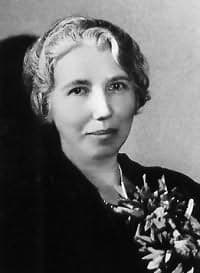
Bess Streeter Aldrich was a celebrated American author known for her realistic portrayals of pioneer life in the Midwest. Her most enduring work, "A Lantern in Her Hand," published in 1928, resonated with readers for its depiction of a woman's strength and resilience through hardship. Aldrich's novels often explored themes of family, community, and the challenges of frontier existence.
Similar books
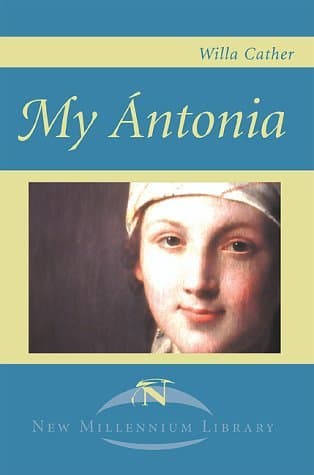
- My Ántonia
Willa Cather
3.8 (120k) average on GoodreadsHistorical FictionCaptures the beauty and hardship of pioneer life on the American prairie through a strong female protagonist.
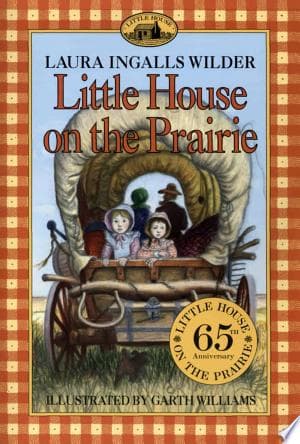
- Little House on the Prairie
Laura Ingalls Wilder
4.2 (256k) average on GoodreadsChildren'sOffers a detailed, family-focused portrayal of 19th-century American pioneer experiences.
- To Kill a Mockingbird
Harper Lee
4.3 (4.5M) average on GoodreadsHistorical FictionIn the 1930s Jim Crow South, Harper Lee writes about racial injustice, moral growth, and the quiet courage of a lawyer father, Atticus Finch, as seen through his young daughter's eyes.
- The Great Gatsby
F. Scott Fitzgerald
3.9 (3.8M) average on GoodreadsHistorical FictionIn the opulent Roaring Twenties, a mysterious millionaire's lavish parties hide his desperate, tragic pursuit of a lost love, exposing the emptiness within the American Dream.
- Pride and Prejudice
Jane Austen
4.3 (3M) average on GoodreadsHistorical FictionIn a society focused on status and money, Elizabeth Bennet navigates love and pride, challenging Mr. Darcy and social expectations to find true affection.
- Angels & Demons
Dan Brown
3.9 (2.7M) average on GoodreadsThrillerA Harvard symbologist races through Rome's ancient sites, deciphering cryptic clues to unmask the Illuminati and stop a vengeful plot to destroy the Vatican with a stolen antimatter weapon.




Enjoyed the summary?
A summary gives you the shape of the book. The book itself has the detail, the examples and the voice.
Find A Lantern in Her Hand on AmazonAs an Amazon Associate, BookBrief earns from qualifying purchases. How we're funded