
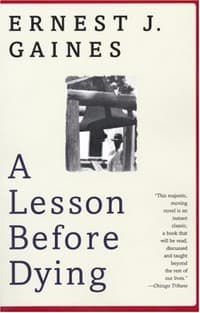
Synopsis
Covers the whole plot, including the ending.
- Difficulty
- Medium
- Pacing
- Slow
- Mood
- Somber, Reflective, Thought-provoking, Poignant
- Read it if
- You appreciate powerful literary fiction exploring themes of race, justice, dignity, and education in the American South.
- Skip it if
- You prefer lighthearted reads or avoid stories with tragic endings and intense emotional depth.
A Lesson Before Dying Plot Summary
Covers the whole plot, including the ending.
The Crime and the Verdict
In Bayonne, Louisiana, a young, uneducated Black man, Jefferson, is in the wrong place at the wrong time. He is present during a liquor store robbery and shootout where two other Black men and the white store owner die. Jefferson, the only survivor, is arrested, tried, and convicted of robbery and murder. His defense attorney, trying to save him from the electric chair, argues that Jefferson is no smarter than a hog, unintentionally dehumanizing him. Despite this, the all-white jury sentences Jefferson to death, scheduling his execution for the first Friday after Easter.
Aunt Lou and Miss Emma's Plea
After Jefferson's conviction, his godmother, Miss Emma, is upset by the defense attorney's comparison of Jefferson to a hog. She believes this label will stop Jefferson from dying with dignity. Miss Emma, with Grant Wiggins's aunt, Tante Lou, asks Grant, a schoolteacher, to visit Jefferson in jail. They want Grant to teach Jefferson to die like a man, not a hog, and to help him regain his self-worth. Grant, at first resistant and cynical about the effort's futility given the racism, reluctantly agrees out of respect and love for the two elderly women.
Grant's First Visits
Grant begins visiting Jefferson at the parish jail in the courthouse. Sheriff Guidry, the white sheriff, is doubtful and unhelpful, initially making Grant speak to Jefferson in the dayroom with other inmates. Jefferson is withdrawn, resentful, and unresponsive. He largely refuses to speak to Grant, often grunting or ignoring him, acting like the 'hog' he was called. Grant's early attempts to talk to Jefferson or teach him are met with silence or defiant, childish behavior, leaving Grant frustrated.
The School and the Community
Grant teaches at a run-down one-room schoolhouse on the plantation, educating the children of Black laborers. He sees the cycle of poverty and oppression trapping his community. Grant feels a strong sense of responsibility, but also frustration with the limits on his students and himself. He wants to leave the South and its racism, often feeling his efforts are useless. His relationship with his girlfriend, Vivian Baptiste, a separated teacher, offers comfort and intellectual company, but also complicates his desire to leave.
Vivian's Influence
Vivian Baptiste, Grant's intelligent and kind girlfriend, supports him in his difficult task. She understands Grant's cynicism and his wish to leave the South, but she also challenges him to find meaning in his work and commitment to his community. Vivian encourages Grant to keep visiting Jefferson, seeing potential for growth and dignity in both men. Her steady belief in Grant's mission helps him move past his initial despair and find new ways to connect with Jefferson, reminding him of his own humanity.
Small Breakthroughs
After many frustrating visits, Grant tries a new approach. He asks Sheriff Guidry for permission to bring Jefferson a small radio, hoping it might offer comfort or distraction. Surprisingly, Guidry agrees. Grant also starts bringing Jefferson a small notebook and pencil, encouraging him to write his thoughts, even a few words. These small actions begin to break through Jefferson's tough exterior. Though still mostly silent, Jefferson starts listening to the radio and occasionally writing in the journal, showing a willingness to engage.
The Gift of the Pecans
One day, Miss Emma brings Jefferson a bag of pecans during her visit, a loving gesture. Later, when Grant visits, he finds Jefferson saved some pecans for him. This simple act of sharing, a small but important gesture of generosity, marks a turning point in their relationship. It shows Jefferson is starting to think beyond himself, a flicker of humanity and connection. Grant is deeply moved, seeing it as the first real sign his efforts might not be wasted, and that Jefferson is beginning to regain his dignity.
The Last Supper
As Jefferson's execution date nears, a 'last supper' is arranged for him. Miss Emma and Tante Lou, with other community members and Grant, share a meal with Jefferson in his cell. This gathering is sad, a final communal act of love and support. During this meal, Jefferson, who has slowly been opening up, asks questions and expresses his feelings more openly. He shares his last meal with his loved ones, an experience that strengthens his connection to his community and helps him face death with more grace.
Jefferson's Journal
In the days before his execution, Jefferson continues writing in the journal Grant gave him. His entries, at first simple, slowly become more thoughtful and clear. He writes about his fears, his thoughts on God, and his growing understanding of what it means to be a man. He thanks Grant and Miss Emma, and says he wants to die with dignity. The journal shows his change, proving he found his voice and humanity, fulfilling Grant's mission.
The Execution
On the day of his execution, Jefferson walks to the electric chair with calm and dignity. Grant, unable to be there, waits at the schoolhouse with his students, praying for Jefferson. Paul, the white deputy sheriff, sees Jefferson's final moments and later tells Grant about them. Paul describes Jefferson's bravery and how he affected everyone present, including the white officials. Jefferson's courageous death changes him from a victim into a martyr, giving hope and pride to his community.
Paul's Message and Grant's Tears
After the execution, Deputy Paul visits Grant at the school, bringing Jefferson's journal and describing his dignified death. Paul, who had shown quiet respect for Jefferson, tells Grant that Jefferson was the bravest man there and that he was proud to have known him. He also delivers a final message from Jefferson, thanking Grant. Overwhelmed by the news and the emotional weight of the experience, Grant, who had been stoic, finally cries, finding release and a deeper understanding of his own purpose.
Principal Figures
Grant Wiggins
Protagonist
An educated Black teacher tasked with helping Jefferson find dignity before his execution.
Grant is a cynical, intellectual Black man who returned to his rural Louisiana hometown after attending university. He teaches at the plantation's segregated school, feeling trapped by the systemic racism and the limitations of his environment. He struggles with his identity and purpose, torn between his desire to escape to a more progressive life and his deep-seated ties to his community. He initially resents being forced to visit Jefferson, viewing it as a futile and painful task, but gradually finds his own humanity and purpose through the process.
Relationships: Jefferson (mentor/mentee, eventually a deep, transformative bond); Tante Lou (aunt, maternal figure, source of obligation and love); Miss Emma (Jefferson's godmother, a respected elder, source of obligation); Vivian Baptiste (girlfriend, confidante, intellectual partner)
Jefferson
Central Figure/Victim
A young, uneducated Black man wrongly convicted of murder and sentenced to death.
Jefferson is a simple, uneducated Black man in his early twenties who becomes an unwitting participant in a liquor store robbery and shootout. After being labeled a 'hog' by his defense attorney, he internalizes this dehumanizing image, becoming withdrawn, resentful, and defiant in his jail cell. He struggles with his impending death and his sense of self-worth. Through Grant's persistent visits and the love of his godmother, he slowly begins to reclaim his dignity and understand his own significance, ultimately facing his execution with courage.
Relationships: Grant Wiggins (mentee/student, eventually a deep, transformative bond); Miss Emma (godmother, primary source of love and support); Paul (deputy sheriff, develops a quiet respect for Jefferson)
Tante Lou
Supporting
Grant's aunt and a strong, traditional figure in the Black community.
Tante Lou is Grant's formidable and deeply religious aunt, who raised him. She is a pillar of strength and tradition in the Black community, embodying resilience and a strong moral compass. She is instrumental in persuading Grant to visit Jefferson, using her authority and emotional leverage. Her expectations and unwavering belief in the importance of dignity and community responsibility drive much of Grant's initial reluctant compliance and eventual commitment. She represents the older generation's wisdom and quiet strength.
Relationships: Grant Wiggins (aunt, maternal figure, moral authority); Miss Emma (close friend, fellow elder)
Miss Emma
Supporting
Jefferson's godmother, who instigates Grant's mission to help Jefferson.
Miss Emma is Jefferson's loving and devoted godmother. She is deeply hurt and offended by the defense attorney's description of Jefferson as a 'hog,' fearing he will die without dignity. Her desire to see Jefferson die as a man, not an animal, is the primary motivation for approaching Grant. She is a compassionate and determined woman, making regular visits to Jefferson despite her failing health. Her love and unwavering belief in Jefferson's humanity are crucial to his eventual transformation.
Relationships: Jefferson (godmother, primary source of love and support); Tante Lou (close friend, fellow elder)
Vivian Baptiste
Supporting
Grant's girlfriend and a supportive fellow teacher.
Vivian is a beautiful, intelligent, and compassionate mulatto teacher who is Grant's girlfriend. She is married but separated and is waiting for her divorce to be finalized, as she fears losing her children if she leaves her husband prematurely. She provides Grant with emotional support, intellectual companionship, and a sounding board for his frustrations. Vivian encourages Grant to persevere with Jefferson, challenging his cynicism and reminding him of the importance of his work and his connection to the community. She represents a potential future for Grant, but also a complex personal situation.
Relationships: Grant Wiggins (girlfriend, confidante, intellectual partner)
Paul
Supporting
A kind and respectful white deputy sheriff.
Paul is a young, white deputy sheriff at the parish jail who gradually develops a quiet respect for Jefferson and Grant. Unlike the other white officials, he is not openly hostile or prejudiced. He treats Grant with civility and shows genuine empathy for Jefferson's plight. Paul is the one who ultimately witnesses Jefferson's execution and delivers his final message and journal to Grant, becoming a bridge between the Black and white communities and demonstrating that humanity can transcend racial divides.
Relationships: Grant Wiggins (professional acquaintance, develops mutual respect); Jefferson (jailer/prisoner, develops quiet respect)
Sheriff Guidry
Antagonist/Supporting
The white sheriff who oversees Jefferson's incarceration.
Sheriff Guidry is the white sheriff of the parish, responsible for Jefferson's custody. He embodies the institutional power structure of the segregated South. While not overtly cruel, he is initially skeptical and condescending towards Grant's mission, viewing it as a waste of time. He maintains strict control over the jail visits and reminds Grant of the racial hierarchy. However, he eventually allows some concessions, such as the radio, and his interactions with Grant highlight the pervasive racial tensions and power imbalances.
Relationships: Grant Wiggins (authority figure/subordinate, initially adversarial); Jefferson (jailer/prisoner)
Reverend Ambrose
Supporting
The spiritual leader of the Black community.
Reverend Ambrose is the spiritual leader of the Black community and a respected elder. He is deeply religious and believes in the power of faith and the importance of spiritual preparation for death. He frequently clashes with Grant's secular and cynical viewpoint, arguing that Grant needs to understand the true needs of the community and the importance of faith for Jefferson. He represents the traditional religious values and the spiritual strength that underpins the community's resilience.
Relationships: Grant Wiggins (community elder, spiritual advisor, often in conflict); Miss Emma (parishioner, fellow elder)
Themes & Insights
Dignity and Humanity
The main theme is the struggle to regain and assert dignity when facing dehumanization. Jefferson, called a 'hog' by his lawyer, internalizes this insult. But through Grant's help and his community's love, he learns to die like a man. This journey is for Jefferson and also for Grant, who finds his own humanity by helping another. Jefferson's choice to stand tall and face death with courage, as Deputy Paul describes, deeply affects everyone, showing the human spirit's triumph over oppression. This appears in Jefferson's journal entries, where he writes about wanting to be a man for his people.
“A man is not a hog, he is not a pig, he is not an animal. He is a man. He has a soul.”
Racial Injustice and Systemic Oppression
The novel clearly shows the widespread racial injustice and oppression Black people faced in the Jim Crow South. Jefferson's wrongful conviction and death sentence result from a prejudiced legal system that valued a Black man's life less than a white man's. The run-down schoolhouse, limited chances for Black children, and the constant fear and respect shown by the Black community toward white authority all illustrate the deep-seated racism. Grant's cynicism comes from his awareness of this inescapable cycle of oppression, showing the futility many felt in trying to change their situation.
“What she wants is for him to die like a man, and that's what I'm trying to teach him to do.”
The Burden of Education and Responsibility
Grant Wiggins, as one of the few educated Black men in his community, carries a heavy responsibility. His family and community expect him to use his education to uplift others, leading to the difficult task of teaching Jefferson. Grant at first resents this burden, feeling isolated by his education and wanting to leave the South. However, by helping Jefferson, he realizes that true education involves not just knowledge, but also empathy, courage, and commitment to his community. His journey is about understanding that his education is a tool for empowerment, not an escape.
“I was not a hero. I was a teacher, and I was trying to make a man out of a hog.”
Community and Connection
Despite the harsh realities, the novel celebrates the Black community's strength and resilience in adversity. The collective effort to support Jefferson – from Miss Emma's steady love to Tante Lou's insistence, and the community's prayers – highlights the importance of communal bonds. Grant, initially distant, slowly reconnects with his community through his mission. The 'last supper' scene, where the community shares a meal with Jefferson, symbolizes this strong sense of solidarity and shared humanity, showing that even in the darkest times, connection and mutual support provide strength.
“We are a people, Grant. We are a strong people. We are a people that have come through much. We are a people that will endure.”
Plot Devices & Literary Techniques
The Journal
Jefferson's personal diary, revealing his internal transformation.
The journal, given to Jefferson by Grant, serves as a powerful symbol of Jefferson's journey from dehumanized prisoner to a man of dignity. Initially, Jefferson resists writing, but as he begins to engage with Grant, his entries evolve from simple, childlike scribbles to profound reflections on his life, his fears, and his understanding of what it means to be a man. It provides direct insight into his internal world and his emotional and intellectual growth, culminating in a testament to his newfound self-worth. It also serves as a tangible legacy for Grant and the community.
The 'Hog' Metaphor
A dehumanizing comparison that Jefferson internalizes and then rejects.
The defense attorney's analogy of Jefferson as a 'hog' during his trial is a critical plot device. It not only leads to Miss Emma's desperate plea for Grant's help but also becomes a psychological prison for Jefferson. He initially embodies this label, grunting and refusing to speak, reinforcing the dehumanizing stereotype. Grant's mission then becomes to help Jefferson shed this identity, proving to himself and others that he is a man. Jefferson's eventual rejection of this label, particularly in his journal and his dignified death, marks his profound transformation and defiance against systemic racism.
The Electric Chair
A looming symbol of racial injustice and mortality.
The electric chair, referred to as 'the chair' or 'Old Sparky,' is a constant, terrifying presence throughout the novel. It symbolizes the ultimate power of the white judicial system over Black lives and the brutal reality of racial injustice. Its impending arrival and the countdown to Jefferson's execution create intense suspense and urgency, driving the narrative forward. It forces both Jefferson and Grant to confront mortality, dignity, and the meaning of life in the face of inevitable death. Its presence underscores the high stakes of Grant's mission.
The Schoolhouse
A symbol of hope, despair, and the cyclical nature of oppression.
The dilapidated, one-room schoolhouse where Grant teaches serves as a powerful symbol of the limited opportunities and systemic neglect faced by the Black community. It represents both the hope for education and a better future, and the despair of its inadequacy and the seemingly endless cycle of poverty and oppression. Grant's struggles within the school reflect his broader frustrations with his community and his role. It is also the place where Grant often reflects on his mission with Jefferson and where he ultimately receives the news of Jefferson's death, connecting the personal struggle to the community's future.
A Lesson Before Dying Quotes
“Do you know what a hero is, Grant? A hero is someone who does something for other people. He's not thinking about himself. He's thinking about other people.”
“What she wants is for him to walk to that chair. I'm sure she wants him to walk to that chair, but she wants him to do it like a man. She wants him to die like a man. She wants him to show them that he's not a hog. That's all she wants.”
“A myth is a an old lie that people believe. People believe in myths because it makes them feel better about themselves. But it's still a lie.”
“I was not there, yet I was there. No, I was not there, but I was there. No, I was not there, yet I was there. No, I was not there, but I was there. No, I was not there, yet I was there. No, I was not there, but I was there. No, I was not there, yet I was there. No, I was not there, but I was there. No, I was not there, yet I was there. No, I was not there, but I was there. No, I was not there, yet I was there. No, I was not there, but I was there. No, I was not there, yet I was there. No, I was not there, but I was there. No, I was not there, yet I was there. No, I was not there, but I was there. No, I was not there, yet I was there.”
“Do you know what a man is, Jefferson? A man is somebody who takes care of his family. Somebody who works hard. Somebody who is not afraid to die.”
“I told them I was going to stay here and rot, but I couldn't. I couldn't do it. I couldn't leave them. I couldn't leave them to their misery.”
“A hog. Yes, that's what they said you were. And what's a hog? A hog is an animal that eats slop. A hog is an animal that doesn't know anything. A hog is an animal that doesn't care about anything. A hog is an animal that doesn't have any feelings.”
“You can go to school, you can go to college, but if you don't do something for your people, then you're nothing.”
“I want to be remembered. I want to be remembered as a man. Not as a hog. Not as a coward. I want to be remembered as a man.”
“We are all in this together, and we are all going to die. But we can die like men, or we can die like hogs.”
“He was the strongest man in the room, and he was going to die.”
“Tell Nannan I'm a man. Tell her I'm a man.”
“I was crying, not for Jefferson, but for all of us. All of us who had been there, all of us who were there, all of us who would be there.”
“We ain't got nothing but ourselves, and we got to hold on to that.”
Quiz
10 questions on the plot and the characters. Each answer comes with a short explanation.
Question 1
What is Jefferson's initial reaction when Grant Wiggins first visits him in his jail cell?
- He is eager to talk and engage with Grant.
- He acts like a hog, grunting and refusing to speak.
- He is hostile and threatens Grant.
- He cries and begs Grant for help.
Show answer
B. He acts like a hog, grunting and refusing to speak. When Grant first visits Jefferson, Jefferson has internalized the defense attorney's dehumanizing description and behaves like a 'hog,' grunting and not speaking, which frustrates Grant.
Question 2
What object does Grant give Jefferson to write his thoughts in?
- A small notepad
- A leather-bound journal
- A marble composition book
- A set of loose-leaf papers
Show answer
C. A marble composition book Grant gives Jefferson a marble composition book and a pencil, encouraging him to write down his feelings and thoughts, which becomes a crucial part of Jefferson's transformation.
Question 3
Who is the district attorney who prosecuted Jefferson and is resistant to Grant's visits?
- Sheriff Guidry
- Paul Bonin
- Matthew Antoine
- Henry Pichot
Show answer
. The district attorney who prosecuted Jefferson is not a main character in terms of interaction with Grant, but the sheriff is Guidry, and Henry Pichot is the white man who owns the plantation where Grant's aunt works. Paul Bonin is the deputy who becomes friendly with Grant. This question aims to check specific character roles.
Question 4
What is the primary reason Miss Emma and Tante Lou want Grant to visit Jefferson?
- To teach Jefferson how to read and write before he dies.
- To help Jefferson understand his legal options for appeal.
- To help Jefferson die with dignity, as a man, not a hog.
- To convince Jefferson to reveal the truth about the robbery.
Show answer
C. To help Jefferson die with dignity, as a man, not a hog. Miss Emma and Tante Lou's main goal is for Grant to instill a sense of self-worth and dignity in Jefferson, so he can face his execution as a man, countering the defense attorney's dehumanizing remarks.
Question 5
What does Grant initially feel about his role as a teacher in the segregated South?
- He feels proud and fulfilled, believing he is making a difference.
- He feels trapped and resentful, wanting to escape to a more promising life elsewhere.
- He is indifferent, seeing it merely as a job.
- He believes it is his calling and embraces the challenges.
Show answer
B. He feels trapped and resentful, wanting to escape to a more promising life elsewhere. Grant is initially very conflicted and resentful about his position, feeling trapped by the expectations of his community and longing for a life away from the oppressive South.
Question 6
What significant event causes a shift in Grant's relationship with Jefferson, showing Jefferson's growing humanity?
- Jefferson asks Grant to read the Bible to him.
- Jefferson expresses concern for Miss Emma's health.
- Jefferson finally admits his innocence to Grant.
- Jefferson starts openly discussing his fear of death.
Show answer
B. Jefferson expresses concern for Miss Emma's health. A pivotal moment is when Jefferson expresses concern for his godmother, Miss Emma, asking if she is okay, demonstrating a capacity for empathy and a move away from his 'hog' persona.
Question 7
What is the symbolism of the 'small hero' that Grant eventually comes to understand?
- The act of a black man standing up for his rights in court.
- The bravery of a teacher defying the white power structure.
- The quiet dignity and resistance shown by an ordinary man in the face of injustice.
- The sacrifice of one's life for the greater good of the community.
Show answer
C. The quiet dignity and resistance shown by an ordinary man in the face of injustice. The 'small hero' refers to Jefferson's transformation and his decision to face his death with dignity and courage, defying the expectations of him as a 'hog.' This quiet resistance is a profound act of heroism in their oppressive society.
Question 8
Why does Vivian, Grant's girlfriend, initially discourage him from getting too involved with Jefferson?
- She believes it's a lost cause and will only bring Grant pain.
- She thinks Grant should focus on his own escape plan.
- She is jealous of the time Grant spends away from her.
- She fears for Grant's safety in the jail.
Show answer
A. She believes it's a lost cause and will only bring Grant pain. Vivian, while supportive of Grant, initially cautions him against getting too emotionally invested in Jefferson's fate, fearing it will only lead to heartbreak and frustration for Grant given the inevitable outcome.
Question 9
What is the significance of the pie and ice cream that Jefferson requests for his last meal?
- It symbolizes his desire for a taste of freedom.
- It's a simple, childlike request that highlights his innocence and humanity.
- It is a traditional dish from his childhood that brings him comfort.
- It is a gesture of defiance against the harshness of his imprisonment.
Show answer
B. It's a simple, childlike request that highlights his innocence and humanity. Jefferson's request for simple, sweet treats like pie and ice cream for his last meal underscores his childlike innocence and vulnerability, making his eventual dignified walk to the chair even more poignant.
Question 10
How does Sheriff Guidry's attitude towards Grant and Jefferson evolve throughout the novel?
- He remains consistently hostile and uncooperative.
- He softens slightly, showing a grudging respect for Grant's efforts.
- He becomes openly sympathetic and tries to help Jefferson.
- He becomes more strict and tries to prevent Grant's visits.
Show answer
B. He softens slightly, showing a grudging respect for Grant's efforts. While never fully embracing Grant's mission, Sheriff Guidry's initial strictness and skepticism gradually give way to a subtle, grudging respect for Grant's persistence and the positive impact he has on Jefferson. This is seen in small gestures and his final conversation with Grant.
A Lesson Before Dying FAQ
What is the central premise of 'A Lesson Before Dying'?
'A Lesson Before Dying' centers on Jefferson, a young black man wrongly convicted of murder and sentenced to death, and Grant Wiggins, an educated black teacher tasked with helping Jefferson face his execution with dignity. Set in a racially segregated Louisiana parish in the late 1940s, the novel explores themes of justice, identity, and the search for meaning in the face of systemic oppression.
Who is Jefferson and what is his tragic situation?
Jefferson is a young, uneducated black man who was present during a liquor store robbery and shootout where three men died. Despite being an innocent bystander, his lawyer's dehumanizing defense, comparing him to a 'hog,' leads to his conviction for murder and a death sentence. This perceived injustice fuels the community's desire for him to die with dignity.
Who is Grant Wiggins and what is his initial reluctance?
Grant Wiggins is the novel's protagonist, a black teacher who has returned to his hometown after attending university, feeling trapped by his circumstances. Initially, he is cynical and resentful, reluctant to visit Jefferson because he sees it as a futile exercise that will only deepen his own despair and highlight the injustices he desperately wants to escape.
What role do Miss Emma and Tante Lou play in the story?
Miss Emma is Jefferson's godmother, a deeply religious and resolute woman who initiates the request for Grant to visit Jefferson, hoping he can help Jefferson die like a man. Tante Lou is Grant's aunt, a strong matriarch who, along with Miss Emma, uses emotional leverage and moral suasion to compel Grant to undertake the difficult task, despite his resistance.
How does the setting of the late 1940s South influence the narrative?
The late 1940s Southern setting, marked by rigid racial segregation and white supremacy, is crucial to the narrative. It explains the inherent injustice of Jefferson's trial and conviction, the limited opportunities available to black characters like Grant, and the pervasive fear and resignation that define the community's daily existence under Jim Crow laws.
What is the significance of the 'hog' insult used by Jefferson's defense attorney?
The defense attorney's comparison of Jefferson to a 'hog' is a pivotal insult that strips Jefferson of his humanity in the courtroom, directly contributing to his conviction and sentencing. This dehumanization is the primary motivation for Miss Emma and the community to want Grant to help Jefferson regain his dignity and die as a man, not an animal.
What is the symbolic meaning of Jefferson's diary?
Jefferson's diary, given to him by Grant, symbolizes his journey toward self-awareness, literacy, and reclaiming his voice. It's a tangible representation of his thoughts and feelings, allowing him to articulate his fears, hopes, and eventual understanding of his own heroism, transforming him from a silent victim to a man with an internal life.
What does the symbol of food, particularly the pecans and the last meal, represent?
Food, especially the pecans Grant brings and Jefferson's last meal, symbolizes humanity, connection, and the simple pleasures denied by injustice. The pecans are a small gesture of kindness, while Jefferson's request for his last meal, humble but specific, is one of his final acts of agency and a subtle defiance against his dehumanization.
How does the character of Paul, the white deputy, defy expectations?
Paul, the young white deputy, defies the typical racist authority figure often seen in such settings by treating Jefferson and Grant with respect and compassion. He offers Jefferson his hand at the end, a profound gesture of human connection across racial divides, and expresses genuine sorrow and admiration for Jefferson's courage.
How does Grant's internal conflict between staying and leaving reflect a broader psychological struggle?
Grant's internal conflict reflects the psychological struggle of many educated black individuals in the Jim Crow South: the desire to escape oppressive conditions versus the moral obligation to uplift one's community. His cynicism and despair stem from feeling trapped and powerless, battling the impulse to flee from a system he believes cannot be changed.
What psychological impact does the 'hog' insult have on Jefferson?
The 'hog' insult deeply internalizes Jefferson's sense of worthlessness and resignation, causing him to initially embody the animalistic behavior attributed to him. Psychologically, it reinforces the dehumanizing narrative, making him believe he is indeed no better than a hog, which Grant must painstakingly work to undo.
How does the relationship between Grant and Jefferson evolve psychologically?
Psychologically, their relationship evolves from initial resentment and resistance on both sides to mutual respect and love. Grant's initial cynicism gives way to empathy and purpose, while Jefferson moves from despair to dignity, finding his voice and self-worth through Grant's persistence and belief in him. Their bond becomes a source of strength for both.
What psychological toll does the expectation of 'being a man' take on the characters?
The expectation of 'being a man' places an immense psychological toll, particularly on Jefferson and Grant. For Jefferson, it means confronting death with dignity despite injustice, a heavy burden. For Grant, it means sacrificing his personal desires for escape to fulfill a communal expectation, leading to internal conflict and self-doubt about his own capacity for heroism.
Is the novel primarily a story about racial injustice or personal redemption?
The novel is inextricably both. While deeply rooted in the racial injustices of the Jim Crow South, which serve as the catalyst for the plot, its core narrative is about the personal redemption of both Jefferson and Grant. Jefferson finds his dignity and humanity, while Grant finds purpose and overcomes his own cynicism, making it a story of individual transformation within a harsh societal context.
What is the 'lesson' implied in the title, and for whom is it intended?
The 'lesson' in the title is multi-faceted: for Jefferson, it's the lesson of dying with dignity and reclaiming his humanity; for Grant, it's the lesson of finding purpose and connection within his community; and for the reader, it's a lesson about the profound power of empathy, resistance, and the human spirit in the face of injustice. It's a lesson in what it truly means to be a man.
Does Grant truly 'save' Jefferson, or does Jefferson save Grant?
This is a key interpretive question. While Grant provides the tools and encouragement for Jefferson to find his voice and dignity, it can be argued that Jefferson's courage and transformation ultimately 'save' Grant. Jefferson's journey gives Grant a profound sense of purpose, helping him overcome his own despair and cynicism, thus liberating him from his intellectual and emotional paralysis.
How does the novel challenge traditional notions of heroism?
The novel challenges traditional notions of heroism by portraying it not through grand, violent acts, but through quiet, internal resistance and the simple act of facing death with dignity. Jefferson's heroism lies in reclaiming his humanity and standing tall in the face of an unjust execution, while Grant's heroism is his perseverance and willingness to engage with profound suffering for the sake of another.
What is the lasting impact of Jefferson's execution on the community and Grant?
Jefferson's execution, though tragic, has a profound and lasting impact. For the community, his dignified death becomes a powerful symbol of resistance and hope, inspiring a quiet pride. For Grant, it is a transformative experience, cementing his commitment to his people and his role as a teacher, finally understanding the true meaning of courage and sacrifice.
About the author
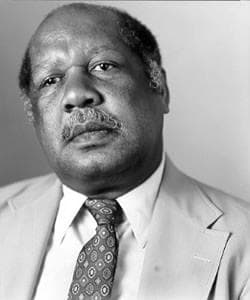
Ernest J. Gaines was an American author known for his poignant explorations of African American life in the South. His notable works include "A Lesson Before Dying," which addresses themes of justice and dignity, "The Autobiography of Miss Jane Pittman," a narrative of a former slave's life, and "A Gathering of Old Men," which delves into racial tensions and community.
Similar books
- To Kill a Mockingbird
Harper Lee
4.3 (4.5M) average on GoodreadsHistorical FictionExplores racial injustice and moral courage in the American South through a child's eyes.
- The Color Purple
Alice Walker
4.2 (521k) average on GoodreadsHistorical FictionFocuses on the struggles and resilience of African American individuals in the early 20th century.
- Go Tell it on the Mountain
James Baldwin
4.0 (51k) average on GoodreadsLiterary FictionExamines complex family dynamics and the Black experience with a strong sense of place and character.
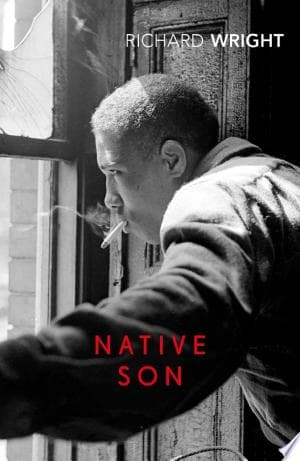
- Native Son
Richard Wright
4.0 (89k) average on GoodreadsHistorical FictionWright's Native Son offers a more visceral, bleak, and confrontational depiction of racial injustice and its devastating psychological impact on Bigger Thomas. While both explore the consequences of racism, Gaines's novel emphasizes the redemptive power of community and individual dignity, whereas Wright's is starker and less hopeful about individual agency within a hostile system. Gaines's protagonist, Grant, actively seeks to uplift, while Bigger is largely a victim of circumstance and systemic oppression.
- The Old Man and the Sea
Ernest Hemingway
3.8 (831k) average on GoodreadsLiterary FictionA Cuban fisherman's long struggle with a giant marlin becomes a story of endurance and dignity, now retold for young adults with illustrations, phonetic guides, and writing prompts in Traditional Chinese.
- One Hundred Years of Solitude
Gabriel García Márquez
4.1 (753k) average on GoodreadsLiterary FictionThrough the multi-generational story of the Buendía family, a mythical town deals with the repeating patterns of time, love, and solitude, as the extraordinary mixes with the ordinary.





Enjoyed the summary?
A summary gives you the shape of the book. The book itself has the detail, the examples and the voice.
Find A Lesson Before Dying on AmazonAs an Amazon Associate, BookBrief earns from qualifying purchases. How we're funded