
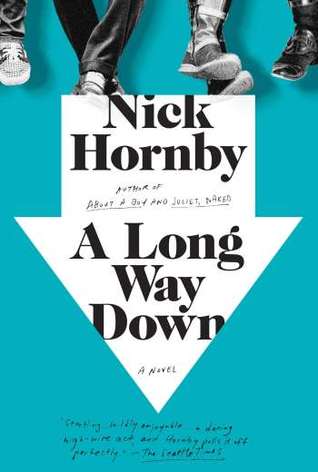
Synopsis
Covers the whole plot, including the ending.
- Difficulty
- Medium
- Read it if
- You appreciate dark humor, character-driven narratives about mental health struggles, and stories that find hope in unexpected places and through unlikely friendships.
- Skip it if
- You are looking for a straightforward, clinical analysis of depression or prefer books without themes of suicide, even if ultimately hopeful.
A Long Way Down Quotes
“The way I saw it, you had to choose between despair and optimism, and I went for optimism a long time ago.”
“You know, the thing about suicide is that it's not actually about wanting to die. It's about wanting to stop the pain.”
“We're all in the same boat, but we're not all rowing in the same direction.”
“Sometimes you have to be kind to yourself. Not in a self-indulgent way, but in a way that recognizes you're doing the best you can.”
“The trouble with modern life is that nobody has any time to be miserable properly.”
“You don't get many second chances in life, but when you do, you have to grab them with both hands.”
“It's funny how you can be surrounded by people and still feel completely alone.”
“We're all just trying to get through the day without falling apart.”
“The past is a heavy burden, but you don't have to carry it forever.”
“Sometimes the bravest thing you can do is ask for help.”
“Life doesn't always give you what you want, but it gives you what you need to learn.”
“We're all broken in some way, but that doesn't mean we can't be fixed.”
“The world keeps spinning, whether you're on it or not.”
“Happiness isn't a destination; it's something you find along the way.”
Quiz
10 questions on the plot and the characters. Each answer comes with a short explanation.
Question 1
What is the name of the London building where the four main characters meet on New Year's Eve?
- The Shard
- Topper's House
- The Gherkin
- London Bridge
Show answer
B. Topper's House The book explicitly states that the four characters encounter one another on the roof of Topper's House, which is described as a London destination famous as the last stop for those ready to end their lives.
Question 2
Which character is described as a former TV talk show host?
- JJ
- Martin
- Jess
- Maureen
Show answer
B. Martin The book introduction identifies Martin as the former TV talk show host among the four main characters, while JJ is a musician, Jess is a teenage girl, and Maureen is a mother.
Question 3
According to Maureen's perspective in the excerpt, why does she find the religious condemnation of suicide contradictory?
- Because suicide victims are often mentally ill and shouldn't be punished
- Because the promised afterlife reward is denied to those who try to reach it sooner
- Because society treats queue-jumping more harshly than suicide
- Because New Year's Eve is an inappropriate time for such serious decisions
Show answer
B. Because the promised afterlife reward is denied to those who try to reach it sooner Maureen reflects that people are told they'll go to a 'marvelous place' after death, but the one action that could get them there quicker (suicide) actually prevents them from getting there at all, which she finds logically inconsistent.
Question 4
What does Martin criticize about coroners' verdicts on suicide cases he researched online?
- They never consider financial motives
- They attribute suicide to 'disturbed mental balance' even when external circumstances clearly explain it
- They fail to mention the role of substance abuse
- They ignore the impact of seasonal depression
Show answer
B. They attribute suicide to 'disturbed mental balance' even when external circumstances clearly explain it Martin notes that coroners routinely state the person 'took his own life while the balance of his mind was disturbed,' but when he reads about the tragic circumstances (infidelity, job loss, death of a child), he believes the person's reaction was perfectly reasonable, not evidence of mental disturbance.
Question 5
Which character expresses regret about choosing New Year's Eve for their suicide attempt, suggesting more 'classier' dates instead?
- Martin
- JJ
- Jess
- Maureen
Show answer
B. JJ JJ reflects that New Year's Eve was 'a night for sentimental losers' and that he should have picked dates associated with famous suicides like Virginia Woolf (March 28) or Nick Drake (November 25) to find 'like-minded souls' rather than 'hopeless f*ck-ups.'
Question 6
What does Jess say about the party she attended just before going to the roof?
- It was an exciting celebration that made her feel temporarily better
- It was so depressing that even the happiest person in London would want to jump off the roof afterward
- It was canceled at the last minute, leaving her with nowhere to go
- It featured live music that reminded her of better times
Show answer
B. It was so depressing that even the happiest person in London would want to jump off the roof afterward Jess describes the party as 'a shit party' with 'ancient crusties' drinking cider and smoking spliffs, and says the pathetic New Year's celebration (sarcastic clapping at midnight) was so dismal that 'you could have turned up to that party as the happiest person in London, and you'd still have wanted to jump off the roof by five past twelve.'
Question 7
What common experience initially brings the four characters together in the novel?
- They all work in the same office building
- They are attending the same therapy group for depression
- They have all independently decided to attempt suicide at the same location on the same night
- They are participating in a reality TV show about personal challenges
Show answer
C. They have all independently decided to attempt suicide at the same location on the same night The book's premise centers on four strangers—Martin, JJ, Jess, and Maureen—who coincidentally all go to Topper's House on New Year's Eve with the intention of jumping to their deaths, and their encounter on the roof interrupts their plans and connects them.
Question 8
According to the book description, what is a central theme explored through the characters' interactions?
- The economic pressures of modern urban life
- Connections made and missed, and the possibility of second chances
- The superiority of British culture over American culture
- The technical aspects of television production
Show answer
B. Connections made and missed, and the possibility of second chances The book description explicitly states it is 'a tale of connections made and missed, punishing regrets, and the grace of second chances,' highlighting how the characters' chance meeting creates unexpected bonds and opportunities for redemption.
Question 9
What narrative technique does Nick Hornby use to tell the story in 'A Long Way Down'?
- Third-person omniscient narration focusing on one protagonist
- Epistolary format through letters and emails
- Four distinct first-person voices alternating throughout
- Second-person narration addressing the reader directly
Show answer
C. Four distinct first-person voices alternating throughout The book description notes that Hornby tells the story 'in four distinct and riveting first-person voices,' allowing readers to experience the perspectives of Martin, JJ, Jess, and Maureen directly as they confront their crises.
Question 10
What ironic contrast does the book description highlight about 'A Long Way Down'?
- It is set in London but all characters wish they were in New York
- It is a novel about suicide that is surprisingly full of life
- It features British characters but was written by an American author
- It discusses death but contains no scenes of actual violence
Show answer
B. It is a novel about suicide that is surprisingly full of life The description concludes by calling it 'a novel about suicide that is, surprisingly, full of life,' emphasizing how the story explores dark themes with humor, vitality, and human connection rather than pure despair.
A Long Way Down FAQ
What is 'A Long Way Down' about?
'A Long Way Down' is a novel about four strangers—Martin, JJ, Jess, and Maureen—who meet on New Year's Eve on the roof of a London building known as a suicide spot. Through their distinct first-person narratives, the story explores their reasons for wanting to end their lives, their unexpected connection, and their journey toward second chances, blending dark humor with themes of regret and redemption.
Does 'A Long Way Down' have a happy ending?
The novel ends on a hopeful note rather than a traditionally 'happy' one. The characters do not go through with their suicide plans and form a tentative support group, finding meaning in their shared experience. It emphasizes the possibility of change and connection, but leaves their futures open-ended, reflecting the complexity of mental health and recovery.
How is 'A Long Way Down' different from other books about suicide?
Unlike many serious or tragic portrayals of suicide, 'A Long Way Down' uses humor and multiple perspectives to humanize its characters, making it surprisingly life-affirming. It focuses on the absurdity and irony of their situations while exploring deep psychological themes, offering a balance of provocation and empathy that sets it apart from more somber treatments of the subject.
What is the significance of the four narrators in 'A Long Way Down'?
The four narrators—Martin, JJ, Jess, and Maureen—represent diverse backgrounds and reasons for despair, from career failure to personal loss. Their distinct voices highlight how suicide can affect anyone, regardless of age or circumstance, and their interactions show how shared vulnerability can lead to unexpected support and understanding, driving the novel's exploration of human connection.
Does 'A Long Way Down' work as a comedy about suicide?
Yes, the novel effectively uses dark comedy to address suicide, making it accessible and thought-provoking without trivializing the subject. Hornby's witty dialogue and ironic situations help diffuse tension while still respecting the characters' pain, allowing readers to engage with serious themes in a way that is both entertaining and emotionally resonant.
How does 'A Long Way Down' handle mental health themes?
The book approaches mental health through the characters' internal struggles and societal pressures, such as Martin's critique of coroners labeling suicides as 'disturbed.' It avoids simplistic solutions, instead showing how talking, listening, and small acts of solidarity can provide relief, emphasizing that recovery is a gradual process influenced by human connection.
Is 'A Long Way Down' based on a true story?
No, 'A Long Way Down' is a work of fiction, not based on a specific true story. However, it draws on realistic psychological and social issues, such as depression, loneliness, and the stigma around suicide, making the characters' experiences relatable and grounded in common human struggles, despite the novel's imaginative plot.
What is the 'jumping-off point' metaphor in 'A Long Way Down'?
The 'jumping-off point' refers both literally to the roof where the characters consider suicide and metaphorically to the moments in life that push people to despair. It symbolizes a crisis that can lead to either destruction or a new beginning, as the characters use their encounter as a catalyst for re-evaluating their lives and finding alternative paths forward.
How does 'A Long Way Down' compare to Nick Hornby's other books?
Like Hornby's other works, such as 'High Fidelity' or 'About a Boy,' this novel features witty, flawed characters and explores themes of identity and relationships. However, 'A Long Way Down' is darker and more psychological, focusing on suicide and mortality, while still retaining his signature humor and insight into modern life, making it a unique entry in his bibliography.
Is 'A Long Way Down' appropriate for readers sensitive to suicide topics?
The novel deals directly with suicide and dark themes, so it may be triggering for some readers. However, it handles the subject with sensitivity and humor, aiming to provoke thought rather than glorify despair. It's recommended for mature audiences who can engage with complex emotional content, and it often sparks discussions about mental health and resilience.
About the author

Nicholas Peter John Hornby is an English writer and lyricist. He is best known for his memoir Fever Pitch (1992) and novels High Fidelity and About a Boy, all of which were adapted into feature films. Hornby's work frequently touches upon music, sport, and the aimless and obsessive natures of his protagonists. His books have sold more than 5 million copies worldwide as of 2018. In a 2004 poll for the BBC, Hornby was named the 29th most influential person in British culture. He has received two Academy Award for Best Adapted Screenplay nominations for An Education (2009), and Brooklyn (2015).
Similar books
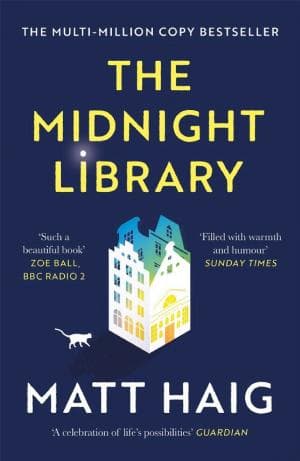
- The Midnight Library
Matt Haig
Explores themes of regret, alternate lives, and finding reasons to live, with a focus on mental well-being.
- It's Kind of a Funny Story
Ned Vizzini
4.1 (211k) average on GoodreadsPsychologyFeatures a protagonist in a mental health facility, using humor to address serious themes of depression and recovery.
- Eleanor Oliphant Is Completely Fine
Gail Honeyman
4.3 (708k) average on GoodreadsLiterary FictionA character-driven story about an isolated individual finding connection and dealing with past trauma.
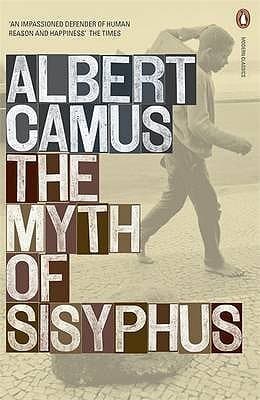
- The Myth of Sisyphus
Albert Camus
4.2 (25k) average on GoodreadsPhilosophyWhile both explore the absurdity of existence and despair, Hornby's novel grounds these themes in relatable human struggles and interpersonal connection, offering a more character-driven and less purely philosophical approach than Camus's essay.
- The Bell Jar
Sylvia Plath
4.0 (591k) average on GoodreadsPsychologyPlath's novel offers an intense, internal, and often solitary journey through depression. Hornby's work, in contrast, emphasizes the power of shared desperation and mutual support among a group, providing a more externally focused and ultimately more optimistic perspective on recovery.
- The Perks of Being a Wallflower
Stephen Chbosky
4.2 (1.3M) average on GoodreadsPsychologyThrough letters, a shy high school freshman learns to navigate first love, trauma, and self-discovery, stepping off the sidelines and into life.




Enjoyed the summary?
A summary gives you the shape of the book. The book itself has the detail, the examples and the voice.
Find A Long Way Down on AmazonAs an Amazon Associate, BookBrief earns from qualifying purchases. How we're funded