

Synopsis
Covers the whole plot, including the ending.
- Difficulty
- Medium
- Pacing
- Slow
- Mood
- Melancholy, Reflective, Nostalgic, Subtle
- Read it if
- You appreciate character studies, particularly of complex female protagonists, and enjoy novels reflecting on the American West's transformation.
- Skip it if
- You prefer fast-paced plots with clear-cut heroes and villains, or shy away from themes of moral ambiguity and disillusionment.
A Lost Lady Plot Summary
Covers the whole plot, including the ending.
The Forrester Place
Young Niel Herbert and his friends, including the scandalous Ivy Peters, are fascinated by the Forrester home in Sweet Water, Nebraska. Captain Daniel Forrester, a respected railroad builder, and his much younger, charming wife, Marian, live in a grand house on a hill, a symbol of refinement in the rough frontier town. Niel, in particular, is captivated by Mrs. Forrester's beauty, grace, and sophisticated manner. The boys often visit the Forrester property, sometimes to hunt or simply to observe the elegance that emanates from the house. Mrs. Forrester treats them kindly, often inviting them inside for lemonade or conversation, making them feel like welcome guests despite their youth. Niel idealizes Marian, seeing her as the perfect woman and the embodiment of the noble era of the railroad pioneers.
A Secret Discovery
During a hunting trip near the Forrester home, Niel Herbert stumbles upon a secluded thicket. To his shock, he discovers Mrs. Forrester in an intimate embrace with Frank Ellinger, a handsome and adventurous man from Denver. This unexpected sight shatters Niel's idealized image of Marian. He had always seen her as pure and untouchable, a symbol of grace and fidelity. The revelation of her infidelity introduces a complexity and vulnerability to her character that Niel was not prepared for, marking a significant loss of innocence for the young boy and forcing him to confront the less than perfect realities of adulthood and human relationships. He struggles to reconcile the woman he idealized with the woman he just witnessed.
Captain Forrester's Injury
Captain Daniel Forrester suffers a severe fall from his horse, resulting in a permanent physical disability that largely confines him to his home. This accident marks a turning point for the Forrester household and for Marian. The Captain, once a powerful and active figure, becomes dependent on others, and his once vibrant home takes on a more subdued atmosphere. Marian's role shifts dramatically; she becomes his primary caregiver, dedicating herself to his comfort. Despite the added strain, she maintains her cheerful disposition in his presence, though Niel notices the toll it takes on her. The financial stability of the Forresters also becomes uncertain, as their investments are tied to the changing fortunes of the West and the decline of the pioneering spirit.
Ellinger's Departure and Mrs. Forrester's Despair
Following Captain Forrester's accident and the subsequent financial troubles, Frank Ellinger, who had been a frequent visitor and Marian's lover, abruptly leaves Sweet Water. His departure is a blow to Mrs. Forrester, who had evidently held deep affection for him. Niel observes her increasing sadness and vulnerability, noticing the cracks in her usually composed facade. One evening, Niel finds Mrs. Forrester weeping uncontrollably on the porch, a sight that deeply affects him. He tries to comfort her, but her grief is overwhelming. This moment further humanizes Marian for Niel, showing him her capacity for sorrow and the pain of lost love, making her less of an untouchable ideal and more of a complex, suffering individual.
Niel's Loyalty and Mrs. Forrester's Resilience
As Captain Forrester's health declines and the family's financial situation worsens, Niel Herbert helps Mrs. Forrester. He frequently visits, offering practical help and companionship, becoming a steadfast presence in her life. He often reads to the Captain, runs errands, and provides emotional support to Marian, who struggles to maintain appearances while dealing with her husband's illness and the looming financial pressures. Despite her personal struggles and the earlier revelation of her affair, Niel's admiration for her endures, mixed now with a sense of protective loyalty. He witnesses her remarkable endurance and her determination to provide comfort and dignity to her ailing husband, even as her own life becomes increasingly difficult.
The Captain's Death
Captain Daniel Forrester eventually dies, leaving Marian a widow. His death marks the end of an era, both for Mrs. Forrester and for the pioneering spirit of the Old West that he embodied. The funeral is a somber affair, attended by many who respected the Captain. After his death, the Forrester house, once a vibrant hub, begins to decline. Mrs. Forrester is left to manage the estate, which is burdened with debt. Niel observes her struggle to maintain the property and her former lifestyle without the Captain's guiding presence and financial acumen. The house, once a symbol of grandeur, begins to show signs of neglect, mirroring Marian's own fading fortunes and the changing times.
Ivy Peters's Influence
After Captain Forrester's death, Ivy Peters, a coarse and opportunistic local lawyer, begins to influence Mrs. Forrester. He initially helps her with legal and financial matters, but his intentions are not good. Niel is disgusted by Ivy's disrespectful demeanor and the way he seems to exploit Marian's vulnerability. Ivy's presence further tarnishes Mrs. Forrester's reputation in the town, as he is known for his crude manners and lack of moral standing. Niel observes Marian allowing herself to be treated poorly by Ivy, seemingly out of necessity or a lack of other options. This relationship distresses Niel, as he sees his former idol succumbing to the harsh realities of her diminished circumstances and associating with someone so against the Captain's values.
Niel's Disillusionment
Niel Herbert returns to Sweet Water after some time away and is horrified to find Mrs. Forrester living a life he considers debased. He overhears her engaged in a vulgar conversation with Ivy Peters and other unsavory characters, laughing at crude jokes and displaying a lack of refinement that shocks him. This final encounter completely shatters Niel's last remaining illusions about Marian. He sees her as having fallen from grace, abandoning the elegance and dignity he once admired. This moment marks a profound and painful disillusionment for Niel, who resolves to leave Sweet Water and its tarnished memories behind, believing that the woman he once idolized is truly lost.
The Sale of the Land
Following Mrs. Forrester's departure from Sweet Water, Ivy Peters eventually acquires the Forrester property, including the remaining undeveloped land. This transaction symbolizes the triumph of the new, materialistic, and often ruthless generation over the old, honorable, and romantic pioneering spirit represented by Captain Forrester. Ivy immediately begins to exploit the land, draining the beautiful marshlands that Niel cherished, turning them into agricultural fields. This act is a final desecration of the Forrester legacy and a physical manifestation of the changing landscape of the West, where natural beauty and historical significance are sacrificed for profit and utility. Niel sees this as the ultimate degradation of what the Forrester name once stood for.
A Chance Encounter and a Revelation
Years later, Niel Herbert, now a successful lawyer, travels to New York for a legal conference. There, he encounters Henry Atkins, a man who knew Mrs. Forrester in her later years in Argentina. Atkins recounts how Marian, despite her diminished circumstances and advancing age, managed to captivate wealthy Englishmen, eventually marrying a titled Englishman and living a life of comfort and social prominence until her death. This revelation profoundly alters Niel's perception of Mrs. Forrester. He realizes that despite her struggles and the compromises she made in Sweet Water, her essential charm, endurance, and ability to adapt and thrive never truly left her. He understands that his earlier judgment of her was perhaps too harsh and that her spirit, though tested, was never truly 'lost.'
Principal Figures
Marian Forrester
Protagonist
A beautiful, charming, and complex woman who embodies both the grace and the vulnerabilities of a changing era.
Marian Forrester is the captivating and enigmatic wife of Captain Daniel Forrester. She possesses an extraordinary charm, beauty, and grace that captivate everyone in Sweet Water, especially young Niel Herbert. She is a woman of refinement and sophistication, a vestige of a more elegant time, yet beneath her polished exterior lies a passionate and somewhat restless spirit. She is deeply devoted to her husband, caring for him diligently after his accident, but also harbors a need for excitement and affection that leads her to take lovers. Her character is a study in contrasts: loyal yet unfaithful, refined yet capable of pragmatic survival, an ideal yet deeply human.
Relationships: Captain Daniel Forrester (Husband; a relationship of deep respect, affection, and duty, but also one where she seeks emotional fulfillment elsewhere.); Niel Herbert (Object of his idealized admiration, later his source of disillusionment and eventual re-understanding.); Frank Ellinger (Lover; a passionate but ultimately fleeting affair.); Ivy Peters (Later associate/lover; a relationship of necessity and compromise, viewed with disgust by Niel.)
Niel Herbert
Narrative Perspective/Supporting
A sensitive and observant young man who idealizes Mrs. Forrester and experiences the disillusionment of witnessing her decline.
Niel Herbert serves as the primary lens through which the story is told. He is a sensitive, intelligent, and morally upright young man who grows up in Sweet Water and is deeply captivated by Marian Forrester. He idealizes her, seeing her as the embodiment of beauty, grace, and the noble spirit of the Old West. His journey is one of disillusionment as he witnesses Marian's moral compromises and the decay of the values he holds dear. He struggles to reconcile his idealized image of her with the reality of her actions, representing the loss of innocence and the harsh realities of adulthood. He later becomes a successful lawyer, reflecting his disciplined nature.
Relationships: Marian Forrester (Object of his idealized admiration, later his source of disillusionment and eventual re-understanding.); Captain Daniel Forrester (Respected mentor figure, representing the integrity of the Old West.); Ivy Peters (Antithesis of his values; a source of disgust and moral opposition.)
Captain Daniel Forrester
Supporting
A respected railroad pioneer and a symbol of the Old West's integrity and grandeur.
Captain Daniel Forrester is Marian's much older husband, a prominent figure in the building of the Transcontinental Railroad. He is a man of integrity, generosity, and quiet dignity, representing the heroic, pioneering spirit of the American West. Despite his age, he commands respect and is deeply loved by Marian, though their relationship is not without its complexities. His physical decline after an accident and eventual death symbolize the passing of the old order and the values it upheld. He provides a moral and historical anchor for the story, his presence highlighting the changing times and the challenges faced by those who cannot adapt.
Relationships: Marian Forrester (Wife; a relationship of deep affection and mutual respect, though she seeks passion outside.); Niel Herbert (Respected mentor figure for Niel.)
Ivy Peters
Antagonist/Supporting
A crude, opportunistic, and materialistic young man who embodies the changing, less honorable spirit of the New West.
Ivy Peters is a local lawyer and one of Niel's childhood acquaintances who grows into a coarse and unscrupulous man. He represents the antithesis of Captain Forrester's values: he is materialistic, exploitative, and lacks refinement or moral integrity. Ivy's actions, particularly his acquisition of the Forrester land and his disrespectful treatment of Marian, symbolize the degradation of the West and the triumph of a new, less noble generation. He is driven by self-interest and a desire for profit, embodying the crass commercialism that replaces the pioneering spirit. His presence highlights Marian's increasing vulnerability and the harsh realities she faces.
Relationships: Marian Forrester (Later associate/lover; a relationship born of necessity and compromise for Marian, and exploitation for Ivy.); Niel Herbert (Childhood acquaintance, later Niel's moral opposite and source of disgust.)
Frank Ellinger
Supporting
A handsome, adventurous, and ultimately unreliable man who is Marian's lover.
Frank Ellinger is a charismatic and adventurous man from Denver who becomes Marian Forrester's lover. He is handsome, exciting, and provides Marian with the passion and excitement she seems to miss in her marriage. His presence introduces the theme of infidelity and the complexities of Marian's desires. However, he proves to be unreliable, abandoning Marian after Captain Forrester's accident, highlighting the superficiality of their affair compared to the deeper bonds of marriage and duty. He represents a fleeting escape for Marian from the constraints of her life in Sweet Water.
Relationships: Marian Forrester (Lover; a passionate but ultimately fleeting affair.)
Henry Atkins
Mentioned/Supporting
An acquaintance who provides Niel with crucial information about Mrs. Forrester's later life.
Henry Atkins is a character Niel encounters years later in New York. He knew Marian Forrester during her time in South America and provides Niel with a new perspective on her life after she left Sweet Water. Atkins's account reveals that Marian, despite her earlier struggles, managed to regain a degree of social standing and comfort by marrying a titled Englishman. He describes her enduring charm and resilience, challenging Niel's earlier, more judgmental conclusions about her fate. Atkins serves as a narrative device to complete Marian's story and offer Niel a more mature understanding.
Relationships: Marian Forrester (Acquaintance from her later life in Argentina.)
Themes & Insights
The Decline of the Old West and the Rise of the New Order
The novel portrays the transition from the heroic, principled era of the American pioneers to a more materialistic and utilitarian age. Captain Forrester embodies the noble spirit of the Old West, with his integrity, generosity, and vision in building the railroad. His physical decline and death symbolize the fading of this era. In contrast, characters like Ivy Peters represent the 'New West,' driven by greed, exploitation, and a lack of moral refinement, as seen in his draining of the Forrester marshlands for profit. The Forrester home itself, once a beacon of grace, becomes a symbol of this decay, eventually falling into the hands of the very forces that undermine the old values.
“The Old West had been full of fine gentlemen, but they were gone. The new generation was hard, grasping, and without grace.”
Idealism vs. Reality
This theme is central to Niel Herbert's journey. He initially idealizes Marian Forrester, seeing her as a perfect embodiment of beauty, grace, and fidelity, a symbol of the untarnished past. His discovery of her affair with Frank Ellinger, and later her association with Ivy Peters, shatters this idealized image, forcing him to confront the complex, often messy realities of human nature. The novel explores the pain of losing innocence and the difficulty of reconciling one's cherished ideals with the imperfect truths of life. Niel's eventual understanding in the novel's closing suggests a mature acceptance that reality is often more nuanced than youthful idealism allows.
“He had an ache in his heart, a ache that was not for himself. It was for a lost lady, and for all the lost loveliness that she had carried with her.”
The Nature of Womanhood and Survival
Marian Forrester's character explores the complexities of womanhood in a changing world. She is a woman of great charm and passion, but also one who must navigate a patriarchal society and dwindling resources after her husband's decline. Her 'lostness' is not necessarily a moral failing but a series of compromises made for emotional fulfillment and ultimately, survival. She seeks affection and excitement, even if it leads to infidelity, and later aligns herself with Ivy Peters out of necessity. The novel asks whether her adaptability and ability to charm her way to comfort in her later years in Argentina are signs of endurance or further moral compromise, suggesting that survival often requires shedding certain ideals.
“She was not altogether a lady, perhaps, but she had the faculty of being whatever was expected of her.”
Loss and Memory
The entire narrative is steeped in a sense of loss—the loss of a golden age, the loss of innocence, and the loss of a beloved figure. Niel's recollections of Marian and the Forrester home are filtered through a nostalgic haze, even as he recounts the painful details of her decline. The novel suggests that memory itself is a selective and often idealized construct. The past, represented by Captain Forrester and Marian in her prime, is mourned, but Cather also explores how memories shape identity and provide a sense of continuity, even when the physical manifestations of that past are gone. The final revelation about Marian's life in Argentina allows Niel to reconcile his memories with a fuller understanding of her journey.
“The world was changing, and he was watching it change.”
Plot Devices & Literary Techniques
Symbolism of the Forrester House
The Forrester home represents the grandeur, decline, and eventual loss of the pioneering era.
Initially, the Forrester house on the hill symbolizes the elegance, refinement, and stable values of the Old West and Captain Forrester's legacy. It is a beacon of culture and hospitality in the rough frontier town. As the Captain's health and fortunes decline, the house begins to reflect this decay, becoming neglected and eventually falling into the hands of Ivy Peters. Its transformation mirrors the broader societal shift, from a place of grace to one of utilitarianism, symbolizing the passing of an era and the triumph of a less noble order.
Niel Herbert as a Witness-Narrator
Niel's perspective shapes the reader's understanding of Marian Forrester and the changing West.
Niel Herbert functions primarily as a witness-narrator, observing Marian Forrester's life from his youth into adulthood. His idealized view of her at the beginning, followed by his disillusionment, guides the reader's emotional journey. His perspective, while subjective and sometimes judgmental, provides an intimate and consistent lens through which to experience the story. By presenting Marian largely through Niel's eyes, Cather explores themes of idealism, the loss of innocence, and the complexities of human judgment, allowing for a nuanced understanding that is ultimately challenged by the novel's ending.
The Marshlands
The natural landscape near the Forrester home symbolizes untouched beauty and its eventual destruction.
The marshlands near the Forrester property represent a pristine, untouched natural beauty, a wildness that exists alongside the cultivated elegance of the Forrester home. They are a place of solace and observation for Niel. Ivy Peters's act of draining these marshlands for agricultural profit symbolizes the environmental and spiritual degradation brought about by the 'New West's' utilitarian and exploitative mindset. This destruction reflects the broader theme of the loss of natural beauty and the unbridled pursuit of material gain, marking a definitive break from the romanticized past.
The Railroad
The Transcontinental Railroad symbolizes progress, connection, and the foundation of Captain Forrester's legacy.
The Transcontinental Railroad is intrinsically linked to Captain Forrester's identity and legacy, representing the monumental achievement and pioneering spirit of his generation. It symbolizes progress, the taming of the wilderness, and the connection of disparate parts of the country. However, as the novel progresses, the railroad also comes to represent a past glory, a finished project that no longer holds the same power or promise. Its presence highlights the Captain's past triumphs while underscoring the shift to a new era where such grand, honorable endeavors are replaced by smaller, more mundane pursuits.
A Lost Lady Quotes
“That was always the way; it was as if she had an agreement with life, and life, in return, was to be very nice to her.”
“She was a woman to whom the generous impulse was a necessity; she had to give.”
“But the great fact was that she was beautiful, and that beauty was a gift, like a voice or an ear for music.”
“It was the first time Frank Ellinger had ever looked at her with anything but admiration.”
“He was a man who knew how to live, and he knew how to die.”
“She was still a lost lady, but she was still lovely, and still, in her way, honest.”
“He was a man of large, generous nature, and his heart was as open as his hand.”
“It was as if the bloom was gone from the world for him.”
“She was not a woman who could be happy without a great many things.”
“The Captain's wife was a woman of the world, and she had a way with her.”
“He had wanted to be a great man, but he had been only a very kind one.”
“The country was growing old, and the men who had made it were growing old and dying.”
“She was not a woman who could be tied down; she was essentially a bird, a creature of the air.”
“It was a fine thing to be a woman, and to be loved by a man like Captain Forrester.”
Quiz
10 questions on the plot and the characters. Each answer comes with a short explanation.
Question 1
What is the name of the young man through whose perspective much of Marian Forrester's story is told?
- Frank Ellinger
- Niel Herbert
- Ivy Peters
- Captain Daniel Forrester
Show answer
B. Niel Herbert Niel Herbert is the primary observer and central consciousness through whom the reader experiences Marian Forrester's life and the changing West.
Question 2
In what Western town along the Transcontinental Railroad do the Forresters reside?
- Omaha
- Denver
- Sweet Water
- Cheyenne
Show answer
C. Sweet Water The Forresters live in the fictional town of Sweet Water, which serves as a microcosm for the changing American West.
Question 3
What is Captain Forrester's profession or past achievement that gives him his title?
- A Civil War general
- A successful cattle rancher
- A pioneer in railroad building
- A retired naval officer
Show answer
C. A pioneer in railroad building Captain Forrester earned his title and wealth as a pioneer in the construction of the Transcontinental Railroad, representing the heroic era of the West.
Question 4
What does Niel Herbert initially idealize about Marian Forrester?
- Her business acumen and financial success
- Her ability to adapt to modern changes
- Her charm, grace, and embodiment of a bygone era's elegance
- Her strict adherence to local social conventions
Show answer
C. Her charm, grace, and embodiment of a bygone era's elegance Niel views Marian as a symbol of beauty, grace, and the refined spirit of the pioneering West, making her an idealized figure in his youth.
Question 5
Who is Frank Ellinger in relation to Marian Forrester?
- Her estranged brother
- Her lover before Captain Forrester
- Her discreet lover during her marriage to Captain Forrester
- A business partner of Captain Forrester
Show answer
C. Her discreet lover during her marriage to Captain Forrester Frank Ellinger is Marian's lover, and their affair is a significant plot point that shatters Niel's idealized view of her.
Question 6
What significant event marks the beginning of the Forrester's financial decline?
- Captain Forrester's investment in a failed gold mine
- The collapse of the Transcontinental Railroad company
- Captain Forrester's stroke and subsequent paralysis
- Marian's excessive spending on European trips
Show answer
C. Captain Forrester's stroke and subsequent paralysis Captain Forrester's stroke incapacitates him, leading to financial difficulties and Marian's struggle to maintain their estate.
Question 7
How does Ivy Peters represent the 'new West' compared to Captain Forrester's 'old West'?
- Ivy embodies intellectualism and cultural refinement, while Forrester represents brute force.
- Ivy values practical, acquisitive, and often ruthless ambition, while Forrester represents heroic, expansive vision.
- Ivy is a community builder and philanthropist, whereas Forrester was a solitary figure.
- Ivy promotes traditional values and morality, while Forrester was a rebel.
Show answer
B. Ivy values practical, acquisitive, and often ruthless ambition, while Forrester represents heroic, expansive vision. Ivy Peters is characterized by his pragmatic, often crude and materialistic approach, symbolizing the decline of the heroic, romantic West into a more utilitarian, commercial one.
Question 8
What is the ultimate fate of the Forrester's property in Sweet Water?
- It is preserved as a historical landmark.
- It is purchased by Niel Herbert to honor the Captain.
- It is taken over and transformed by Ivy Peters, losing its former character.
- It is inherited by a distant relative and maintained in its original state.
Show answer
C. It is taken over and transformed by Ivy Peters, losing its former character. After the Forresters' decline, Ivy Peters acquires the property, tearing down trees and making changes that symbolize the erasure of the old West's charm and grandeur.
Question 9
How does Niel Herbert's perception of Marian Forrester evolve throughout the novel?
- He initially dislikes her but eventually comes to admire her resilience.
- He maintains an unwavering admiration for her, despite all revelations.
- He moves from an idealized adoration to a disillusioned understanding of her complexities and flaws, yet retains a measure of affection.
- He becomes completely indifferent to her as he matures and leaves Sweet Water.
Show answer
C. He moves from an idealized adoration to a disillusioned understanding of her complexities and flaws, yet retains a measure of affection. Niel's journey involves a painful realization that Marian is not the perfect, ethereal being he imagined, but a complex woman with human frailties, though he never fully loses his emotional connection to her.
Question 10
What broader theme does Marian Forrester's 'lost lady' status primarily represent in the novel?
- The universal plight of women in restrictive societies.
- The decline of the heroic, romantic American West and its values.
- The inevitable failure of all aristocratic families.
- The personal tragedy of an individual struggling with mental illness.
Show answer
B. The decline of the heroic, romantic American West and its values. Marian Forrester, with her grace, charm, and eventual decline, embodies the passing of the grand, adventurous spirit of the old West, giving way to a more mundane and materialistic era.
A Lost Lady FAQ
What is the central conflict in 'A Lost Lady' from Niel Herbert's perspective?
From Niel Herbert's perspective, the central conflict is the disillusionment he experiences as he witnesses the moral decay and pragmatic compromises of Marian Forrester, whom he initially idealizes as a symbol of grace and the romantic pioneer era. This personal disillusionment mirrors the broader decline of the 'heroic' West into a more materialistic and less noble period, challenging his youthful ideals.
Who is Marian Forrester and what is her initial appeal to the young men of Sweet Water?
Marian Forrester is the beautiful, charming, and vivacious wife of Captain Daniel Forrester, a respected railroad pioneer. She appeals to the young men of Sweet Water, particularly Niel, because she embodies a sophisticated, almost European elegance and a joyful spirit that stands in stark contrast to the rough, utilitarian environment of the frontier town, representing a connection to a more refined world.
How does Captain Forrester's character serve as a contrast to Marian's?
Captain Daniel Forrester, a stoic and honorable railroad builder, embodies the integrity and pioneering spirit of the 'Old West.' His steadfastness, generosity, and unshakeable dignity serve as a stark contrast to Marian's more volatile, pleasure-seeking nature and her later compromises, highlighting the generational and moral shift occurring in Sweet Water.
What role does the town of Sweet Water play in the novel?
Sweet Water, a town established by the Transcontinental Railroad, functions as a microcosm of the changing American West. It represents the transition from the era of grand, adventurous pioneers like Captain Forrester to a more commercial, less idealistic period, reflecting the broader societal shifts and the decline of certain values.
What major events lead to Marian Forrester's decline in Niel's eyes?
Marian's decline in Niel's eyes is triggered by several revelations, including his discovery of her affair with Frank Ellinger, her subsequent relationship with Ivy Peters after Captain Forrester's death, and her increasing financial pragmatism. These acts shatter Niel's idealized image of her, revealing a more complex and flawed woman driven by survival and pleasure.
What is the significance of the 'marsh hawk' incident involving Ivy Peters?
The 'marsh hawk' incident, where a young Ivy Peters blinds a bird with a slingshot, is a crucial early detail that foreshadows his cruel, destructive nature and lack of empathy. It subtly introduces his character as a representative of the 'new' generation that lacks the moral depth and respect for nature characteristic of the 'Old West' pioneers.
How do the various men in Marian's life (Captain Forrester, Frank Ellinger, Ivy Peters) represent different aspects of the changing West?
Captain Forrester embodies the noble, pioneering spirit of the 'Old West.' Frank Ellinger represents a more dashing, reckless, and somewhat amoral transitional figure. Ivy Peters, with his opportunistic and crude pragmatism, symbolizes the ascendance of the 'new' West, driven by materialism and a disregard for traditional values, ultimately exploiting the land and its people.
What is the implied fate of Marian Forrester after she leaves Sweet Water, as suggested by Niel's encounter in Buenos Aires?
Niel's later encounter with a mutual acquaintance in Buenos Aires implies that Marian Forrester eventually remarried a wealthy Englishman and lived a life of continued social grace and comfort abroad. This suggests she successfully adapted to her circumstances, finding a way to maintain her desired lifestyle, even if it meant leaving her past behind.
Discuss Niel Herbert's psychological journey throughout the novel.
Niel Herbert undergoes a profound psychological journey from naive idealization to bitter disillusionment, and finally to a more mature, melancholic acceptance. His initial worship of Marian Forrester is shattered by her moral compromises, forcing him to confront the complexities of human nature and the loss of a romanticized past, shaping his understanding of beauty and decay.
How does Marian Forrester cope with the constraints and expectations placed upon her as a woman in the late 19th-century West?
Marian Forrester copes by asserting her individuality through charm, wit, and ultimately, by pursuing her desires for pleasure and social connection, even if it means defying societal expectations through extramarital affairs. She navigates her circumstances by prioritizing her own vitality and happiness, often at the expense of others' perceptions, rather than conforming to a restrictive role.
Analyze Captain Forrester's psychological state following his financial ruin and stroke.
Following his financial ruin and stroke, Captain Forrester maintains a remarkable psychological resilience and dignity, even as his physical capabilities decline. He remains stoic and noble, refusing to let his misfortunes diminish his spirit or his kindness, demonstrating an inner strength that contrasts sharply with Marian's more external coping mechanisms.
What psychological impact does Niel's discovery of Marian's affair with Frank Ellinger have on him?
The discovery of Marian's affair with Frank Ellinger has a devastating psychological impact on Niel, shattering his innocent idealism and his perception of her as a pure, unattainable figure. It introduces him to the harsh realities of human imperfection and betrayal, marking a significant loss of innocence and a deep personal disillusionment.
Is Marian Forrester a victim of her circumstances or a morally ambiguous survivor?
Marian Forrester is best interpreted as a morally ambiguous survivor. While she faces societal constraints and the decline of her husband's fortune, her choices to engage in affairs and adapt to new, less honorable relationships demonstrate a proactive pursuit of her own desires and well-being. She makes pragmatic decisions to ensure her survival and maintain her lifestyle, rather than passively succumbing to fate.
How does the novel explore the theme of memory and the idealization of the past?
The novel deeply explores the theme of memory and idealization through Niel Herbert's perspective. He consistently romanticizes Captain Forrester's era and Marian's initial charm, often struggling to reconcile these idealized memories with the harsh realities of their decline. This idealization highlights the human tendency to remember the past through a nostalgic, often selective, lens.
What is the ultimate 'lost' aspect in 'A Lost Lady' – Marian's virtue, the Old West, or Niel's innocence?
The 'lost' aspect is multifaceted. It encompasses Marian's lost virtue in Niel's eyes, the fading of the honorable 'Old West' represented by Captain Forrester, and crucially, Niel's own lost innocence and idealized view of the world. All three are inextricably linked, with Marian serving as a poignant symbol for the broader decline observed by Niel.
Does the novel condemn Marian Forrester for her choices, or does it offer a more nuanced understanding of her character?
The novel offers a nuanced understanding of Marian Forrester, rather than a simple condemnation. While Niel's perspective is critical and judgmental, the narrative subtly portrays her as a complex woman driven by a profound need for vitality and pleasure in a changing world. Her actions, though morally questionable to some, are presented as a means of survival and self-preservation, inviting empathy alongside criticism.
How does Cather use natural imagery to reflect the changing moral landscape of Sweet Water?
Cather uses natural imagery to reflect the changing moral landscape by contrasting the robust, untamed beauty of the early West with later descriptions of encroaching civilization and despoiled nature. For example, the pristine forests and clear streams associated with the Captain's era give way to the 'raw' and 'ugly' land under Ivy Peters's development, mirroring the decline from nobility to crude materialism.
What is the significance of the title 'A Lost Lady'?
The title 'A Lost Lady' is significant because it refers to Marian Forrester, who is 'lost' in multiple ways: she loses her social standing and moral integrity in the eyes of Sweet Water society, particularly Niel; she represents a lost ideal of womanhood and grace; and she is a relic of a 'lost' era of the American West that is rapidly disappearing. It evokes both tragedy and nostalgia.
About the author
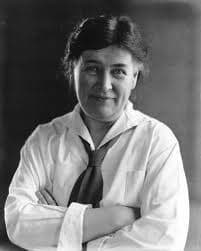
Willa Sibert Cather was an American writer known for her novels of life on the Great Plains, including O Pioneers!, The Song of the Lark, and My Ántonia. In 1923, she was awarded the Pulitzer Prize for One of Ours, a novel set during World War I.
Similar books
- My Ántonia
Willa Cather
3.8 (120k) average on GoodreadsHistorical FictionExplores themes of the American frontier and strong female characters through a reflective narrative.
- The Great Gatsby
F. Scott Fitzgerald
3.9 (3.8M) average on GoodreadsHistorical FictionFeatures an idealized 'lost lady' and a young male narrator observing a world of faded grandeur and moral decline.
- Ethan Frome
Edith Wharton
3.4 (108k) average on GoodreadsHistorical FictionA concise, character-driven story exploring love, duty, and the constraints of society in a specific historical setting.
- The Age of Innocence
Edith Wharton
4.0 (139k) average on GoodreadsHistorical FictionBoth A Lost Lady and The Age of Innocence explore the societal constraints and moral ambiguities faced by women in a specific historical period, often through the eyes of an admiring but ultimately detached male protagonist. Wharton's novel, set in Gilded Age New York, delves into the rigid social codes of the elite, much like Cather examines the fading aristocracy of the American West. However, Wharton's focus is more explicitly on the oppressive nature of social conventions and the tragic consequences of defying them, whereas Cather's novel emphasizes the personal and societal cost of a changing moral landscape and the decline of an entire way of life. While both heroines (Ellen Olenska and Marian Forrester) are seen as 'lost' or unconventional, Wharton's Olenska is more of an intellectual rebel, while Cather's Forrester is a creature of charm and instinct whose 'transgressions' are more about survival and vitality in a world that no longer values her kind.
- The Old Man and the Sea
Ernest Hemingway
3.8 (831k) average on GoodreadsLiterary FictionA Cuban fisherman's long struggle with a giant marlin becomes a story of endurance and dignity, now retold for young adults with illustrations, phonetic guides, and writing prompts in Traditional Chinese.
- One Hundred Years of Solitude
Gabriel García Márquez
4.1 (753k) average on GoodreadsLiterary FictionThrough the multi-generational story of the Buendía family, a mythical town deals with the repeating patterns of time, love, and solitude, as the extraordinary mixes with the ordinary.





Enjoyed the summary?
A summary gives you the shape of the book. The book itself has the detail, the examples and the voice.
Find A Lost Lady on AmazonAs an Amazon Associate, BookBrief earns from qualifying purchases. How we're funded