

Core Idea
- Difficulty
- Easy
Key Takeaways from A Man Without a Country
The Absurdity of Modern Warfare
Vonnegut's Dresden experience shaped his lifelong critique of war's senselessness and its dehumanizing effects.
Vonnegut, a survivor of the World War II firebombing of Dresden, often returns to this traumatic event. He does so not out of a desire for revenge, but to show war's pure absurdity and horror. He emphasizes the widespread destruction and loss of innocent lives, arguing that such events strip people of their dignity and purpose. His experiences in Dresden shaped much of his cynical yet deeply empathetic view of the world. This influenced his writing on themes like fate, free will, and how humans can be both incredibly cruel and compassionate. This perspective is key to understanding his work and his broader thoughts on conflict.
“I say that no art is possible without a vivid awareness of what a shit-storm the world is.”
In the book: Vonnegut's direct recounting of his experiences as a POW during the firebombing of Dresden, a recurring theme in his works and explicitly detailed in this memoir.
Try this: Reflect on how historical conflicts are framed and challenge narratives that glorify war or minimize civilian suffering. Seek out diverse perspectives on conflict to gain a more complete understanding of its human cost.
The Power and Peril of Storytelling
Stories are essential for making sense of life, but they can also be used to perpetuate harmful myths.
Vonnegut, a master storyteller, understood the human need for stories to make sense of the world. He believed artists and writers were important for offering new ideas and questioning common, often too simple, narratives. However, he also warned against believing stories without question, especially those from political and corporate groups trying to control public opinion. This idea that stories can both enlighten and manipulate is powerful. It urges readers to be careful consumers and creators of narratives. His whimsical illustrations in the book highlight the playful yet serious nature of his storytelling.
“We are what we pretend to be, so we must be careful about what we pretend to be.”
In the book: Vonnegut's frequent allusions to his own writing process and the impact of literature, coupled with his critiques of media and political rhetoric.
Try this: Critically analyze the stories presented in media, politics, and even personal interactions. Consider the underlying motives and potential biases of the storyteller, and actively seek out diverse narratives.
The Human Need for Community and Connection
Despite his cynicism, Vonnegut consistently emphasizes the importance of belonging and mutual support.
Throughout the memoir, Vonnegut often said he disliked people, but he also showed a deep belief in the need for human connection and community. He regretted the growing isolation in modern society and the loss of shared values. His personal stories, from his family life to his interactions with other writers, showed his belief that meaning comes from relationships and acts of kindness. This is one of the book's most touching insights. It shows that even someone who called himself 'a man without a country' still wanted to belong and have a shared purpose. This argument has limits because Vonnegut does not offer specific ways to build community, but instead points out its absence.
“We are here on Earth to help others; what the others are here for, I don't know.”
In the book: His reflections on the importance of family, friendship, and the shared experience of being human, despite societal failings.
Try this: Actively cultivate and nurture your relationships. Seek out opportunities to connect with others, contribute to your community, and practice empathy and mutual aid.
Critique of American Exceptionalism
Vonnegut challenges the notion of American moral superiority and its historical self-deceptions.
Vonnegut openly criticized American society, especially its tendency toward extreme patriotism, materialism, and forgetting parts of its own history. He questioned the idea that America is special, arguing that the nation, like any other, has moral failings and deceives itself. He pointed out issues like environmental damage, economic inequality, and hypocritical foreign policy. This criticism is not hateful; instead, it is mournful. It comes from a deep love for his country and a wish for it to live up to its stated ideals. His observations are especially relevant in today's political discussions.
“Americans are forever searching for love in all the wrong places. They are forever searching for smart bombs, and for other ways to kill people, and for ways to make money, and for ways to get ahead of other people. But they are not searching for love.”
In the book: His direct criticisms of U.S. foreign policy, economic disparities, and the cultural obsession with consumerism.
Try this: Question nationalistic narratives and engage in critical self-reflection about societal values. Advocate for policies that promote social justice, environmental sustainability, and ethical international relations.
The Importance of Humor and Laughter
Humor serves as a vital coping mechanism against life's inherent absurdities and tragedies.
Despite the often grim topics he discussed, Vonnegut consistently used humor to cope and understand. His wit, often dark and satirical, allowed him to face the most painful parts of human existence—war, death, injustice—without falling into despair. He suggested that laughter is not avoiding reality but a way to acknowledge its absurdity and find moments of lightness in the darkness. This is the book's strongest insight, showing how humor can be a powerful form of resilience and a path to deeper truth. His own illustrations, often playful and cartoonish, show this mix of serious commentary and lighthearted presentation.
“Laughter and tears are both responses to frustration and exhaustion. I myself prefer to laugh, since there is less cleaning up to do afterward.”
In the book: The pervasive use of irony, satire, and self-deprecating humor throughout his anecdotes and philosophical musings.
Try this: Cultivate a sense of humor as a coping mechanism for stress and adversity. Seek out opportunities for laughter and use it to gain perspective on challenging situations.
The Simplicity of Happiness
True contentment lies not in material wealth or status, but in simple pleasures and human connection.
Vonnegut offered a different view from the constant pursuit of material success and outside approval. He often reminded readers to value small, overlooked moments of joy: a good meal, beautiful music, the company of loved ones. This focus on simple pleasures directly challenges a consumer-driven society that often links happiness with buying things. His advice to 'notice when you are happy' is a deep call to mindfulness and gratitude. It encourages a shift in perspective from wanting more to appreciating what exists. This perspective is especially meaningful in an age of constant digital distractions.
“And I urge you to please notice when you are happy, and exclaim or murmur or think at some point, 'If this isn't nice, I don't know what is.'”
In the book: His recurring advice to consciously acknowledge moments of happiness and his critiques of materialism.
Try this: Practice mindfulness and gratitude daily. Take time to appreciate simple pleasures, spend quality time with loved ones, and consciously reduce reliance on external factors for happiness.
The Enduring Value of Art and Creativity
Art provides solace, meaning, and a means to express the inexpressible in a chaotic world.
As an artist, Vonnegut consistently supported the power of creativity. He saw art—whether writing, painting, or music—not just as entertainment but as a basic human activity that enriches the soul and helps people deal with life's harsh realities. He encouraged everyone to engage in some form of artistic expression, regardless of their perceived talent. He emphasized the process more than the final product. This belief highlights his own dedication to writing and his whimsical illustrations throughout the book. It shows that creative expression is a vital way to process the world and find personal meaning.
“Practicing an art, no matter how well or badly, is a way to make your soul grow.”
In the book: His personal reflections on his career as a writer and his encouragement for others to engage in creative pursuits.
Try this: Engage in creative activities, regardless of skill level. Support artists and cultural institutions. Recognize the intrinsic value of art for personal well-being and societal enrichment.
Beware of 'Busywork' and Misplaced Priorities
Modern society often prioritizes meaningless tasks over genuine human needs and environmental stewardship.
Vonnegut often criticized the absurdity of modern life. He saw people trapped in cycles of 'busywork' that brought little real satisfaction or benefit. He lamented society's obsession with economic growth at the expense of environmental health and human well-being. He encouraged readers to question common paths and define their own purpose, rather than simply following societal expectations. This argument has limits because it does not offer a clear plan for escaping these societal traps. Instead, it is a powerful call for individual thought and resistance against conformity. His observations are especially important in discussions about climate change.
“The most important thing for you to do is to find out what you really want to do, and then do it. And don't let anybody tell you that what you want to do is silly or stupid.”
In the book: His criticisms of corporate culture, environmental neglect, and the pursuit of wealth over intrinsic value.
Try this: Evaluate your own priorities and activities. Identify and eliminate 'busywork' from your life, focusing instead on tasks and pursuits that align with your values and contribute to genuine well-being.
The Fragility and Preciousness of Life
Life is a brief, miraculous flicker against an indifferent universe, deserving of awe and care.
Beneath Vonnegut's cynical surface was a deep respect for life itself. He marveled at the improbable existence of humanity and the natural world, often reminding readers of our shared cosmic beginnings. His thoughts on death, though often stark, underlined the preciousness of our time. He advocated for deep humility and wonder when facing existence, urging us to treat each other and the planet with kindness and respect. This theme gives a philosophical anchor to his often-varied reflections, bringing his different observations together into a consistent worldview that values life above all else.
“We are all children of the universe, with no less right to be here than the trees and the stars.”
In the book: His cosmic perspective on humanity's place in the universe and his calls for environmental responsibility and interhuman kindness.
Try this: Cultivate a sense of wonder and awe for life. Treat all living beings and the planet with respect and care, recognizing the interconnectedness of all existence.
Rejecting Dogma and Embracing Skepticism
Questioning authority and established beliefs is crucial for intellectual and moral integrity.
Vonnegut consistently promoted healthy skepticism, especially toward religious and political doctrines. He encouraged readers to think critically, question assumptions, and resist blindly following any ideology. His own declared agnosticism and his satirical jabs at organized religion were not meant to dismiss but to advocate for individual thought and moral independence. This is a powerful call to intellectual independence, urging people to form their own conclusions based on evidence and empathy, rather than inherited beliefs. His approach is particularly relevant in an age of misinformation and echo chambers.
“Don't be a jerk. Be kind. And question everything.”
In the book: His frequent critiques of religious fundamentalism, political rhetoric, and his personal declaration of being a 'freethinker'.
Try this: Actively question information sources and authority figures. Engage in critical thinking, seek out diverse perspectives, and cultivate a nuanced understanding of complex issues.
Quiz
10 questions on the main ideas. Each answer comes with a short explanation.
Question 1
What is the primary genre of "A Man Without a Country" according to the description?
- Science Fiction
- Politics, Biography, Memoir, Philosophy
- Historical Fiction
- Mystery
Show answer
B. Politics, Biography, Memoir, Philosophy The description explicitly lists 'Politics, Biography, Memoir, Philosophy' as the genres.
Question 2
Who is the author of "A Man Without a Country"?
- George Orwell
- Hunter S. Thompson
- Kurt Vonnegut Jr.
- Douglas Adams
Show answer
C. Kurt Vonnegut Jr. The book title and description clearly state it is by Kurt Vonnegut Jr.
Question 3
What are some of the qualities used to describe the book's tone and style?
- Solemn, academic, and dry
- Penetrating, introspective, incisive, and funny
- Angry, rebellious, and confrontational
- Romantic, sentimental, and nostalgic
Show answer
B. Penetrating, introspective, incisive, and funny The description uses words like 'penetrating, introspective, incisive, and laugh-out-loud funny'.
Question 4
What is Vonnegut described as doing in this book that he does 'best'?
- Developing complex plotlines
- Creating intricate worlds
- Being himself
- Analyzing economic theories
Show answer
C. Being himself The description states, 'this is Vonnegut doing what he does best: being himself.'
Question 5
What aspect of Vonnegut's life experiences does the book touch upon?
- His career as a chef
- His coming of age and war experiences
- His travels to outer space
- His childhood in a circus
Show answer
B. His coming of age and war experiences The text mentions 'his coming of age in America, his formative war experiences, or his life as an artist.'
Question 6
Who illustrated "A Man Without a Country"?
- A professional graphic designer
- His editor
- The author himself
- A famous cartoonist
Show answer
C. The author himself The description states, 'Whimsically illustrated by the author'.
Question 7
The book is described as being intimate, tender, and brimming with the scope of Kurt Vonnegut’s what?
- Financial investments
- Scientific research
- Political ambitions
- Passions
Show answer
D. Passions The final sentence reads, 'A Man Without a Country is intimate, tender, and brimming with the scope of Kurt Vonnegut’s passions.'
Question 8
The description implies that Vonnegut is considered a significant figure in what field?
- Culinary arts
- Modern dance
- Letters (literature)
- Theoretical physics
Show answer
C. Letters (literature) The text refers to him as 'one of the great men of letters of this era—or any era'.
Question 9
Which of the following topics is NOT explicitly mentioned as being discussed in the book?
- Sex
- Art
- Sports
- Politics
Show answer
C. Sports The description lists 'life, art, sex, politics, and the state of America’s soul' as topics, but not sports.
Question 10
The phrase 'state of America’s soul' suggests the book might offer a critique or reflection on what?
- The nation's economic performance
- The country's cultural and moral condition
- The effectiveness of its military
- The advancements in its technology
Show answer
B. The country's cultural and moral condition The 'soul' of a nation typically refers to its character, values, and moral or cultural state.
A Man Without a Country FAQ
What is Kurt Vonnegut's "A Man Without a Country" about?
This book is a collection of essays and reflections by Kurt Vonnegut Jr. where he shares his thoughts on life, art, sex, politics, and his perspective on the state of America's soul. It's characterized by his signature wit, introspection, and humor.
What kind of writing style does Vonnegut use in this book?
Vonnegut employs a style that is both penetrating and incisive, often laced with his distinctive laugh-out-loud humor. The book is intimate and tender, showcasing his unique voice and personal experiences.
Does "A Man Without a Country" include autobiographical elements?
Yes, the book delves into autobiographical elements, with Vonnegut describing his coming of age in America and his formative war experiences. He also touches upon his life as an artist.
Is "A Man Without a Country" a political book?
While it engages with politics and the state of America's soul, it's not solely a political treatise. It blends political commentary with personal reflections, philosophy, and observations on life and art.
Are there illustrations in "A Man Without a Country"?
Yes, the book is whimsically illustrated by Kurt Vonnegut himself, adding another layer to its intimate and personal feel.
What philosophical themes are explored in the book?
The book touches on philosophical themes related to the human condition, the meaning of life, and societal commentary. Vonnegut uses his characteristic blend of cynicism and hope to explore these ideas.
Who is the intended audience for "A Man Without a Country"?
The book is for readers who appreciate Kurt Vonnegut's distinctive voice, humor, and insightful observations on life and society. It appeals to fans of his work and those interested in contemporary American culture and thought.
How does Vonnegut's war experience influence this book?
His formative war experiences are a significant part of his background and are woven into his reflections in the book, influencing his perspective on life, humanity, and the world.
What makes this book different from other Vonnegut novels?
Unlike his novels, "A Man Without a Country" is a direct collection of personal essays and reflections, allowing readers to engage with Vonnegut's unfiltered thoughts and opinions in a more intimate memoir-like format.
About the author
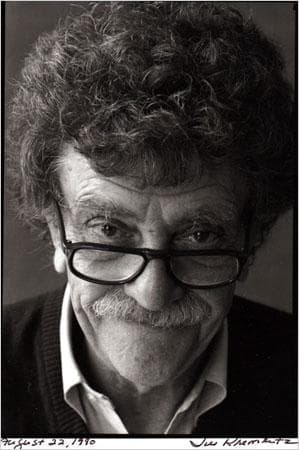
Kurt Vonnegut Jr. was an American author known for his satirical and often darkly humorous fiction. His notable works include "Breakfast of Champions," "Mother Night," "Player Piano," "A Man Without a Country," "Bluebeard," and "Timequake." Vonnegut's writing frequently explores themes of free will, technology, and the absurdity of human existence.
Similar books
- Fear and Loathing in Las Vegas
Hunter S. Thompson
4.1 (299k) average on GoodreadsLifestyleBoth books offer biting critiques of American society and politics, but their approaches differ significantly. Thompson's work is an immersive, drug-fueled, gonzo journalism odyssey, chaotic and visceral, reflecting the counterculture's disillusionment. Vonnegut, in "A Man Without a Country," offers a more reflective, melancholic, and subtly humorous critique, delivered with the wisdom of an elder statesman. While Thompson's anger is raw and explosive, Vonnegut's is a weary, resigned sadness punctuated by wit and hope.
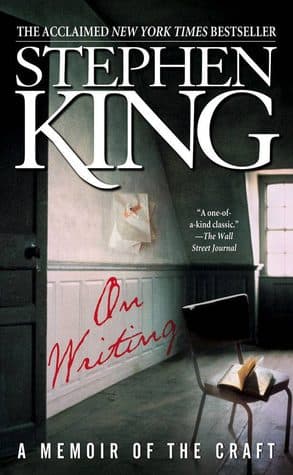
- On Writing: A Memoir of the Craft
Stephen King
4.3 (222k) average on GoodreadsBiographyWhile both books are memoirs that offer insights into a famous author's mind, their primary focus diverges. King's "On Writing" is largely a practical guide to the craft of writing intertwined with his personal story. Vonnegut's "A Man Without a Country," on the other hand, is less about the mechanics of writing and more about his philosophical outlook on life, politics, and humanity, using his life experiences as illustrative anecdotes rather than instructional lessons.
- 1984
George Orwell
4.2 (3.1M) average on GoodreadsPoliticsIn a future where surveillance and thought control are absolute, a man's search for truth clashes with the Party, showing that hope can be a form of rebellion.
- Animal Farm
George Orwell
4.0 (2.7M) average on GoodreadsPoliticsA farm animals' rebellion against humans turns into a pig-led dictatorship, showing how power corrupts and revolutionary ideals are betrayed.
- Freakonomics: A Rogue Economist Explores the Hidden Side of Everything
Steven D. Levitt
4.0 (709k) average on GoodreadsBusinessThis book uses economic principles to reveal the surprising incentives behind everything from drug dealing and real estate to cheating teachers and the decline of crime.
- I Am Malala: The Story of the Girl Who Stood Up for Education and Was Shot by the Taliban
Malala Yousafzai
4.1 (419k) average on GoodreadsPoliticsA teenage girl from a Taliban-controlled valley refuses to give up her books, becoming a global voice for education even after an assassination attempt.





Enjoyed the summary?
A summary gives you the shape of the book. The book itself has the detail, the examples and the voice.
Find A Man Without a Country on AmazonAs an Amazon Associate, BookBrief earns from qualifying purchases. How we're funded