
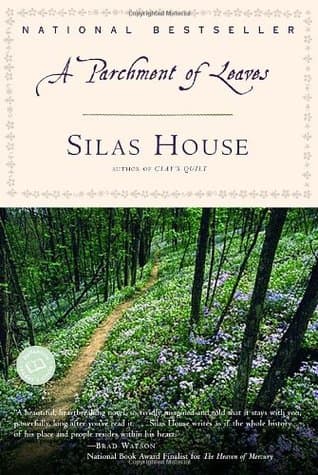
Synopsis
Covers the whole plot, including the ending.
- Difficulty
- Medium
- Pacing
- Moderate
- Mood
- Melancholy, Reflective, Poignant, Resilient
- Read it if
- You enjoy poignant, character-driven historical fiction exploring themes of love, prejudice, and forgiveness, particularly in a Southern Appalachian setting.
- Skip it if
- You prefer fast-paced plots or are sensitive to themes of sexual assault and racial prejudice.
A Parchment of Leaves Plot Summary
Covers the whole plot, including the ending.
Vine Leaves Her Family for Saul
The story opens with Vine, a young Cherokee woman, living a traditional life with her family in the mountains of eastern Kentucky. She meets Saul, a young white man, and they quickly fall in love despite cultural differences and her family's disapproval, especially her mother's. Vine decides to leave her home and people to marry Saul and live with his family in the nearby white community. She moves into Saul's family home, which includes his mother, Esme, his brother, Aaron, and Aaron's wife, Aidia. Vine immediately faces the challenges of adapting to a new life and the prejudices of the white townspeople who see her as an outsider and 'Indian'.
Adjusting to a New Home and Growing Tensions
Upon moving in, Vine finds herself in a household with distinct personalities. Esme, Saul's mother, is initially reserved but observant, slowly warming to Vine. Aidia, Aaron's wife, is flighty and gossipy, often making Vine feel more isolated. However, Aaron, Saul's brother, poses the biggest challenge. From the beginning, Aaron shows an unsettling attraction to Vine, watching her and making inappropriate comments. Vine tries to ignore his advances, focusing on her love for Saul and her efforts to learn the customs of her new home, such as cooking and gardening. She feels the constant gaze of the townspeople, who are curious and often judgmental of her presence.
Saul's Absence and Aaron's Escalating Obsession
Saul, needing to provide for his new family, decides to leave Kentucky to find work in Detroit's automobile factories. His departure leaves Vine feeling even more isolated and exposed in a community that still largely views her as an outsider. With Saul gone, Aaron's behavior towards Vine worsens. His unsettling glances turn into direct propositions and physical harassment. Vine tries to fend him off, but Aaron becomes more persistent and aggressive, making her life a constant state of fear and anxiety within her own home. She tries to confide in Esme, but Esme, though aware of Aaron's difficult nature, seems unwilling or unable to directly confront her son.
The Unspeakable Act
The tension ends in a horrific act when Aaron rapes Vine. The assault leaves Vine traumatized, both physically and emotionally. She struggles with shame and despair, made worse by the fear of how this act will affect her marriage to Saul and her standing in the community. She finds it difficult to say what happened, carrying the burden of the violence in silence. The event shatters her sense of security and trust. She grapples with the implications for her body and spirit. The act changes her perception of her new home and the people within it, especially Aaron and her own ability to cope.
Vine's Pregnancy and Saul's Return
Following the rape, Vine discovers she is pregnant. This news brings a new layer of terror and confusion, as she knows the child could be Aaron's. When Saul eventually returns from Detroit, Vine faces the immense difficulty of how to tell him about the rape and the potential paternity of their child. She fears his reaction, his judgment, and the damage it could do to their love and marriage. The weight of her secret is almost unbearable. She struggles to find the words to convey the horror she has endured and the uncertainty of their future as a family. Saul, overjoyed to be home, senses a change in Vine but cannot immediately tell why.
The Truth Revealed and Saul's Devastation
Gathering courage, Vine finally tells Saul about Aaron's rape and her pregnancy. Saul is devastated by the revelation, his love for Vine clashing with the betrayal by his own brother. His initial reaction is a mix of shock, anger, and heartbreak. Overcome with rage and a desire for justice, Saul confronts Aaron. The confrontation quickly escalates into a violent fight between the two brothers. The family home, once a place of hopeful new beginnings for Vine, becomes a scene of tragedy and shattered trust, as the hidden secrets and resentments finally erupt, changing their relationships forever.
Aaron's Death and the Aftermath
During their violent confrontation, Saul kills Aaron. The tragic event sends shockwaves through the family and the community. Saul is arrested and tried for murder. Despite the circumstances of the rape and the provocation, the legal system finds Saul guilty, and he is sentenced to prison. This leaves Vine alone, pregnant, and facing an uncertain future. She is left to deal not only with the trauma of the rape and Aaron's death but also with the loss of Saul and the responsibility of raising a child potentially conceived through violence. The community's whispers and judgments intensify, further isolating her.
Life Without Saul and Raising a Child
While Saul is in prison, Vine gives birth to a son, whom she names Little Saul. The paternity remains an unspoken shadow, but Vine loves her child fiercely. She dedicates herself to raising him, finding strength she didn't know she had. She continues to live with Esme, and their relationship deepens as they navigate their shared grief and loss. Vine finds solace in nature, connecting with the mountains and her Cherokee heritage. This provides a sense of grounding and resilience. She visits Saul in prison when she can, maintaining their bond despite the physical separation and the tragedy that has befallen them.
Saul's Release and a New Beginning
After years of imprisonment, Saul is released. His return is a moment of both relief and trepidation for Vine. They must navigate the emotional scars of the past, including the memory of Aaron, the rape, and the years of separation. Saul is confronted with Little Saul, the son he was not present to raise, and the unspoken question of his paternity. Slowly and with much effort, Saul and Vine begin the difficult process of rebuilding their life together. Their love, though tested and transformed by suffering, endures. They strive to create a new normal, finding strength in each other and their son, and forging a path forward despite the lingering shadows of their shared history.
Forgiveness and Moving Forward
In the final parts of the story, Vine, Saul, and Esme, along with Little Saul, begin to find peace and healing. Vine, through her resilience and deep connection to her heritage, finds a way to forgive, not just Aaron for his act, but also herself for the pain she carried. Saul, too, deals with his anger and grief, eventually coming to terms with the past and embracing Little Saul as his own, regardless of biology. The family, though scarred, learns to live with their history, finding strength in their interconnectedness and the power of love and forgiveness. They look towards a future where they can honor their past while building a life of quiet hope and renewed purpose in the Kentucky mountains.
Principal Figures
Vine
Protagonist
A resilient Cherokee woman who marries into a white family and endures immense hardship.
Vine is the central protagonist, a young Cherokee woman who embodies strength, resilience, and a deep connection to nature and her heritage. She is initially portrayed as innocent and deeply in love with Saul, willing to leave her family and culture for him. Throughout the novel, she faces profound challenges, including cultural prejudice, a brutal rape, and the loss of her husband to prison. Her journey is one of endurance, quiet suffering, and ultimately, a profound capacity for forgiveness. She finds solace in the natural world and draws strength from her ancestral roots, which helps her navigate trauma and rebuild her life.
Relationships: Saul (Husband, deep love and enduring partnership); Aaron (Brother-in-law, rapist, source of trauma); Esme (Mother-in-law, initially reserved, later a supportive confidante); Little Saul (Son, source of renewed purpose and love)
Saul
Supporting
Vine's white husband, who struggles with family loyalty, justice, and the consequences of violence.
Saul is Vine's kind and loving husband, a white man from the Kentucky mountains. He is deeply devoted to Vine, but his love is tested by his brother's actions and the societal pressures of his community. He is driven by a strong sense of justice and protection for Vine, which leads him to confront Aaron with tragic consequences. His time in prison forces him to confront his own actions and the complexities of his family's past. Saul's arc is about processing grief, guilt, and eventually, finding forgiveness and a renewed connection with his wife and son.
Relationships: Vine (Wife, deep love and enduring partnership); Aaron (Brother, ultimately killed by Saul in a fit of rage); Esme (Mother, complex relationship, shared grief); Little Saul (Son, learns to accept and love him unconditionally)
Aaron
Antagonist
Saul's troubled brother, whose destructive obsession with Vine leads to tragedy.
Aaron is Saul's brother and the primary antagonist. He is portrayed as a volatile, unpredictable man with a dark, obsessive attraction to Vine. His jealousy of Saul's happiness and his inability to control his impulses lead him to commit the horrific act of raping Vine. Aaron represents the darker side of human nature and the destructive power of unchecked desire and resentment. His actions are the catalyst for much of the novel's tragedy, leading to his own death and Saul's imprisonment. He is a gifted banjo player, which adds a layer of complexity to his otherwise reprehensible character.
Relationships: Vine (Object of his obsession, victim of his violence); Saul (Brother, rival for Vine's attention, ultimately killed by Saul); Aidia (Wife, neglected and often gossipy); Esme (Mother, struggles with his difficult nature)
Esme
Supporting
Saul and Aaron's mother, a strong and observant woman who slowly forms a bond with Vine.
Esme is Saul and Aaron's mother, a woman of quiet strength and deep observation. Initially, she is somewhat reserved towards Vine, but over time, she comes to accept and respect her daughter-in-law. Esme is aware of Aaron's troubled nature and his inappropriate behavior but struggles with how to intervene effectively. After the tragedy, she becomes a pillar of support for Vine, sharing her grief and helping to raise Little Saul. Her character represents maternal love, resilience, and the quiet dignity of women in the Appalachian mountains. She finds a profound connection with Vine through shared hardship.
Relationships: Vine (Daughter-in-law, initially cautious, later a deep bond of shared grief and support); Saul (Son, loves him deeply, struggles with his imprisonment); Aaron (Son, struggles with his difficult nature, mourns his loss); Aidia (Daughter-in-law, often exasperated by her gossipy nature)
Aidia
Supporting
Aaron's flighty and gossipy Melungeon wife, often oblivious to the true nature of events.
Aidia is Aaron's wife, characterized by her flighty demeanor, talkativeness, and love for gossip. As a Melungeon woman, she also occupies a somewhat liminal space in the community, though not as starkly as Vine. Aidia is often oblivious to the deeper tensions and dark undercurrents within the household, or perhaps chooses to ignore them. Her constant chatter and focus on superficial matters contrast sharply with Vine's quiet suffering. She serves as a foil to Vine, highlighting the different ways women cope or fail to cope with difficult circumstances within the family.
Relationships: Aaron (Husband, neglected by him); Vine (Sister-in-law, often gossips about her or misunderstands her); Esme (Mother-in-law, sometimes exasperated by Aidia's behavior)
Little Saul
Supporting
Vine's son, whose paternity is ambiguous but who represents hope and a future for the family.
Little Saul is Vine's son, born after the rape. His paternity is a silent, heavy question mark, yet he becomes a symbol of hope and resilience for Vine and, eventually, for Saul. He is a child born out of trauma but raised with immense love. His presence forces the characters to confront their past and choose to move forward. He represents the future and the possibility of healing and forgiveness, transcending the tragic circumstances of his conception through the love of his family.
Relationships: Vine (Mother, deeply loved and cherished); Saul (Father (accepts as his own), a source of renewed family bond); Esme (Grandmother, dotes on him)
Vine's Mother
Mentioned
Vine's Cherokee mother, who disapproves of her marriage to a white man and foresees trouble.
Vine's mother is a significant, though largely unseen, character who represents Vine's Cherokee heritage and the wisdom of tradition. She strongly disapproves of Vine's decision to marry Saul and live among white people, intuiting the difficulties and prejudices Vine will face. Her warnings serve as an early foreshadowing of the troubles to come. Her presence, even in memory, provides Vine with a connection to her roots and a source of strength during her darkest times, reminding her of who she is and where she comes from.
Relationships: Vine (Daughter, source of cultural identity and initial conflict)
Themes & Insights
Identity and Belonging
The novel explores identity, especially through Vine's experience as a Cherokee woman marrying into a white family. She deals with losing her traditional community and finding her place in a new, often hostile, environment. Her Cherokee heritage is a core part of her identity, giving her strength and solace amidst challenges. The struggle for belonging extends to the Melungeon character, Aidia, showing the nuances of racial and cultural identity in the Appalachian region. Vine's eventual ability to reconcile her past and present, and to feel at home in herself, is central to her journey.
“She was a woman of two worlds, the one she'd left and the one she was trying to make her own, and neither felt quite right.”
Forgiveness and Healing
Forgiveness is a central theme, important for Vine to move past the trauma of rape and the subsequent tragedies. She must learn to forgive Aaron, not for his actions, but to free herself from hatred. The theme also extends to Saul, who must forgive himself for killing his brother and accept his son's complex paternity. The novel suggests that healing can only begin once forgiveness, both of others and of oneself, is achieved. It is not about condoning the wrong but releasing its power over one's life.
“Forgiveness didn't make the past disappear, but it made it possible to live in the present.”
Love and Betrayal
The love between Vine and Saul is the emotional core of the novel, tested by extreme circumstances. Their love is a source of strength but also a point of vulnerability. Betrayal shows most powerfully through Aaron's actions, which shatter family trust and lead to violence. The novel examines how love can persist even after deep betrayal and how individuals cope with devotion and disappointment. Saul's betrayal by his brother is as devastating as Vine's physical violation, showing the complex bonds within families.
“Their love was a fragile thing, built on promises and hope, now shattered by a single, brutal act.”
The Power of Nature and Heritage
Nature, especially the Appalachian mountains, is a constant and powerful presence throughout the novel. For Vine, the natural world is a source of comfort, wisdom, and connection to her Cherokee heritage. It grounds her and provides solace when human relationships fail. Her connection to the earth and her ancestral traditions offers a spiritual refuge and a way to understand her place in the world. The mountains are not just a setting but a character, mirroring the characters' resilience and providing a sense of timelessness and continuity.
“The mountains, ancient and silent, held her secrets and offered her strength.”
Prejudice and Otherness
The novel portrays the prejudice Vine faces as a Cherokee woman in a mostly white community in early 20th-century Appalachia. She is constantly seen as 'other,' subjected to stares, whispers, and a lack of understanding. This theme shows the racial and cultural tensions of the era and the challenges faced by those who cross societal boundaries. Aaron's actions are partly fueled by his dehumanization of Vine as an 'Indian,' showing how prejudice can lead to violence. The theme explores the pain of being an outsider and the struggle to be seen and accepted for who one truly is.
“They saw the Indian first, before they saw the woman.”
Plot Devices & Literary Techniques
First-Person Narrative (Vine's Perspective)
Provides intimate access to Vine's thoughts, feelings, and experiences.
The story is primarily told from Vine's first-person perspective, allowing readers deep insight into her emotional and psychological journey. This narrative choice immerses the reader in her struggles, fears, and triumphs, making her trauma and resilience deeply personal and impactful. By experiencing events through her eyes, the reader gains a profound understanding of the prejudice she faces, the horror of the rape, and her internal battle for forgiveness and healing. It emphasizes her isolation and her unique perspective as an outsider in her new community.
Foreshadowing (Vine's Mother's Warnings)
Hints at future difficulties and tragedies through early warnings.
Early in the novel, Vine's Cherokee mother voices strong disapproval of her marriage to Saul and warns her of the difficulties she will face living among white people. These warnings serve as significant foreshadowing, preparing the reader for the cultural clashes, prejudice, and personal tragedies that Vine will endure. This device builds tension and underscores the profound cultural divide Vine chooses to cross, making the subsequent events feel both inevitable and heartbreakingly predictable from a traditional perspective, adding weight to the narrative's tragic elements.
Symbolism of Nature (Mountains, Rivers)
Reflects characters' inner states and provides solace and continuity.
The natural landscape of the Appalachian mountains and the rivers within them function as powerful symbols. For Vine, the mountains represent her heritage, resilience, and a source of spiritual grounding and solace amidst her trauma. They offer a sense of constancy and ancient wisdom that contrasts with the volatile human drama. The river can symbolize the flow of life, cleansing, or the irreversible passage of time and events. Nature often mirrors Vine's emotional state, becoming a refuge and a silent witness to her suffering and eventual healing, emphasizing her deep connection to the earth.
The Banjo (Aaron's Music)
Symbolizes Aaron's complex character, talent, and destructive nature.
Aaron's banjo playing is a recurring motif and a significant symbol. It highlights his artistic talent and sensitivity, contrasting sharply with his violent and obsessive nature. The beauty of his music often masks the darkness within him, creating a jarring dissonance that reflects his troubled psyche. The banjo can also symbolize a form of cultural expression and tradition, which Aaron twists and perverts through his actions. Its presence underscores the tragedy of his wasted potential and the destructive power he wields despite his moments of musical grace.
A Parchment of Leaves Quotes
“The mountains, they whisper secrets to those who listen.”
“Love ain't always a soft thing. Sometimes it's hard and sharp, like a rock against your skin.”
“A woman's heart is a wild thing, hard to tame, even by herself.”
“There are some things you just know, deep down, without anyone ever having to tell you.”
“Grief is a river, and you either learn to swim or you drown.”
“Some people carry their past like a heavy sack, others let it blow away like leaves.”
“The wind carries the scent of trouble, if you know how to smell it.”
“Sometimes the hardest thing to do is forgive yourself.”
“Beauty can be a curse, drawing eyes and trouble alike.”
“It ain't the falling that hurts, it's the sudden stop.”
“The truth is a tricky thing. Sometimes it sets you free, and sometimes it locks you up tighter than ever.”
“You can't outrun what's inside you, no matter how far you go.”
“There's a kind of peace in knowing what you're up against, even if it's terrible.”
“The future is a path you walk, not a picture you see.”
Quiz
10 questions on the plot and the characters. Each answer comes with a short explanation.
Question 1
What is the primary reason Vine leaves her family and homeland at the beginning of the novel?
- To escape a forced marriage within her own community.
- She is banished for breaking a tribal law.
- To marry a young white man named Saul.
- To seek a new life and opportunities in a bigger town.
Show answer
C. To marry a young white man named Saul. The book explicitly states that Vine 'trains her eye on a young white man, forsaking her family and their homeland to settle in with Saul's people.' Her decision is driven by her love for Saul.
Question 2
Which character is described as Saul's 'smart-as-a-whip, slow-to-love mother'?
- Aidia
- Esme
- Vine's mother
- Melungeon wife
Show answer
B. Esme The introductory text names Saul's mother as Esme, describing her with those specific traits. Aidia is Aaron's wife.
Question 3
What is Aaron's notable talent and personality trait?
- He is a skilled hunter, but often withdrawn.
- He is a gifted banjo player, hot tempered and unpredictable.
- He is a talented carpenter, known for his calm demeanor.
- He is a charismatic preacher, but secretly deceitful.
Show answer
B. He is a gifted banjo player, hot tempered and unpredictable. The description of Aaron states he is 'a gifted banjo player, hot tempered and unpredictable,' which becomes significant to the plot.
Question 4
How do the townspeople generally view Vine after she moves in with Saul's family?
- With admiration for her courage and independence.
- As an outsider, due to her Cherokee heritage.
- With indifference, as her presence is largely unnoticed.
- With suspicion, believing she has a hidden agenda.
Show answer
B. As an outsider, due to her Cherokee heritage. The text states, 'Vine is viewed as an outsider by the townspeople,' highlighting the racial and cultural prejudice she faces.
Question 5
What does Vine's mother predict about her daughter's move to Saul's family?
- She predicts it will be a challenging but ultimately rewarding experience.
- She predicts that Vine will quickly adapt and be accepted.
- She predicts it would not go smoothly.
- She predicts Vine will eventually return to her own people.
Show answer
C. She predicts it would not go smoothly. Vine's mother 'had predicted would not go smoothly,' indicating her foresight regarding the difficulties Vine would encounter.
Question 6
What is the initial nature of Aaron's interest in Vine?
- He is deeply supportive and protective of her.
- He is strangely fixated on her, which makes Vine uncomfortable.
- He is openly hostile and resentful of her presence.
- He is indifferent, rarely acknowledging her.
Show answer
B. He is strangely fixated on her, which makes Vine uncomfortable. Vine 'slowly realizes, is strangely fixated on her,' which becomes a source of tension and a key plot point.
Question 7
What significant personal journey does Vine undertake by the end of the described events?
- She learns to master the banjo, like Aaron.
- She learns to forgive others and, most importantly, herself.
- She learns to assert her dominance within Saul's family.
- She learns to completely assimilate into the white community.
Show answer
B. She learns to forgive others and, most importantly, herself. The text concludes by stating, 'she learns what it means to forgive others and, most important, how to forgive herself,' highlighting a central theme of the novel.
Question 8
What term is used to describe Aaron's wife, Aidia?
- Quiet and reserved
- Strong-willed and independent
- Flightly and chattery Melungeon
- Wise and maternal
Show answer
C. Flightly and chattery Melungeon Aidia is explicitly described as Aaron's 'flightly and chattery Melungeon wife,' providing a specific detail about her character and background.
Question 9
The novel's setting is specified as 'the early 1900s.' What does this historical context imply about the challenges Vine faces?
- It suggests a period of widespread acceptance and integration for Native Americans in white communities.
- It highlights a time when racial and cultural prejudices, particularly against Native Americans, were prevalent and often unchallenged.
- It indicates a focus on industrialization and economic struggles, rather than social issues.
- It means medical advancements were the primary source of conflict in the story.
Show answer
B. It highlights a time when racial and cultural prejudices, particularly against Native Americans, were prevalent and often unchallenged. The early 1900s in the American South was a period marked by significant racial segregation and prejudice against non-white populations, making Vine's experience as a Cherokee woman marrying into a white family particularly fraught with difficulty and societal disapproval.
Question 10
The phrase 'a delicate negotiation into this new family and culture' primarily refers to Vine's efforts to:
- Secure a position of power and authority within Saul's household.
- Understand and adapt to the customs, expectations, and relationships of Saul's family and the surrounding white community.
- Convince Saul's family to adopt Cherokee traditions and beliefs.
- Negotiate the terms of her inheritance with Saul's mother, Esme.
Show answer
B. Understand and adapt to the customs, expectations, and relationships of Saul's family and the surrounding white community. The 'delicate negotiation' refers to Vine's struggle to assimilate and find acceptance within a new, unfamiliar cultural and familial environment, especially given the racial tensions of the period.
A Parchment of Leaves FAQ
What is 'A Parchment of Leaves' about?
'A Parchment of Leaves' tells the story of Vine, a young Cherokee woman in early 1900s rural Kentucky, who falls in love with and marries Saul, a white man. She leaves her family and traditional life to join his community, facing prejudice from the townspeople and a dangerous obsession from Saul's brother, Aaron, which ultimately leads to a violent tragedy and a profound journey of forgiveness.
Why should I read 'A Parchment of Leaves'?
You should read this book for its lyrical prose, deep exploration of racial prejudice, cultural clash, and the complexities of love and family in early 20th-century Appalachia. Silas House crafts a poignant narrative that delves into themes of identity, belonging, and the arduous path to self-forgiveness after profound loss and violence, offering a powerful emotional experience.
What is the background/setting of 'A Parchment of Leaves'?
The novel is set in the isolated, mountainous region of rural Kentucky in the early 1900s, a time marked by significant racial tensions and cultural divides. This backdrop highlights the challenges Vine faces as a Cherokee woman marrying into a white family and community, emphasizing the insular nature of the Appalachian towns and the prejudices prevalent during that era.
What are the most memorable quotes?
While specific quotes are not provided in the summary, memorable passages often reflect Vine's internal struggles, her observations of nature, and the raw emotions of love and loss. The author's use of poetic language to describe the Appalachian landscape and the characters' inner lives is a hallmark of the book, making many of its lines resonant.
What writing style does the author use?
Silas House employs a lyrical and evocative writing style, rich with sensory details and a strong sense of place. His prose is often described as poetic, giving a voice to the natural world of Appalachia and the deep emotional states of his characters, particularly Vine, through a blend of direct narrative and introspective reflection.
What minor details add significant meaning?
Vine's Cherokee heritage and upbringing, though sometimes subtle, significantly inform her resilience and perspective, contrasting sharply with the white community's more rigid views. Details about her connection to nature and her quiet strength, as predicted by her mother, underscore her unique position and the challenges she overcomes.
What are some subtle foreshadowing moments?
Vine's mother's initial prediction that Vine's marriage to Saul 'would not go smoothly' subtly foreshadows the difficulties, particularly the violent turn of events. Aaron's 'hot tempered and unpredictable' nature and his 'strangely fixated' gaze on Vine are clear, though initially understated, hints of the danger he poses later in the story.
What unexpected character connections exist?
Beyond the central conflict, the evolving relationship between Vine and Saul's mother, Esme, is significant. Esme, initially 'slow-to-love,' eventually becomes a source of support for Vine, highlighting an unexpected bond that transcends the initial cultural and familial barriers and offers Vine a form of acceptance within her new family.
What are unspoken character motivations?
Aaron's unspoken motivation for his fixation on Vine likely stems from a combination of lust, jealousy of his brother Saul, and a deep-seated prejudice against Vine's Cherokee heritage. His actions are driven by an inability to accept Vine into their family and a desire to exert control or dominance, rooted in insecurity.
What psychological complexities do characters exhibit?
Vine exhibits immense psychological complexity in her journey from cultural displacement to profound forgiveness, grappling with grief, trauma, and the societal pressures of being an outsider. Aaron's character reveals the destructive depths of obsession and prejudice, while Esme's gradual acceptance of Vine shows the complexities of overcoming ingrained biases.
What are the major emotional turning points?
A major emotional turning point is Vine's decision to marry Saul and leave her family, marking her initial leap of faith and love. The violent turn of events involving Aaron and its tragic consequences is the most significant emotional climax, forcing Vine into a profound journey of grief, anger, and ultimately, self-forgiveness.
How do relationship dynamics evolve?
Relationship dynamics evolve significantly, particularly between Vine and Saul, as their love is tested by external prejudice and internal family conflict. The bond between Vine and Esme transforms from initial wariness to mutual respect and support. Most dramatically, the relationship between Vine and Aaron escalates from initial discomfort to dangerous obsession and tragic violence.
Which parts remain ambiguous or open-ended?
While the core narrative of Vine's journey towards forgiveness is clear, the long-term societal acceptance of Vine within her new community, beyond her immediate family, might remain somewhat open-ended. The full extent of the townspeople's shift in perception towards her, rather than just her personal healing, could be an area for reader interpretation.
What are controversial scenes or decisions?
The most controversial aspect of the novel is likely Aaron's violent actions towards Vine, which serves as the catalyst for the story's tragic climax. Vine's eventual path to forgiving Aaron, or at least forgiving herself in the aftermath of his actions, could also be a point of debate among readers, given the severity of the violence.
'A Parchment of Leaves' ending explained: how it ends & what it means
The ending of 'A Parchment of Leaves' culminates in Vine learning 'what it means to forgive others and, most important, how to forgive herself' following the violent events involving Aaron. It signifies her profound personal growth and resilience, moving beyond victimhood to embrace healing and self-acceptance, finding peace despite the immense tragedy and prejudice she endured.
About the author

Silas House is an American author known for his fiction that often explores themes of place and identity. His notable work, A Parchment of Leaves, delves into the complexities of family and heritage in the Appalachian region. House's writing reflects his deep connection to the culture and landscape of Kentucky.
Similar books
- Where the Crawdads Sing
Delia Owens
4.5 (975k) average on GoodreadsHistorical FictionExplores a strong female protagonist navigating isolation and prejudice in a natural setting, with a focus on survival and love.
- Christy
Catherine Marshall
4.2 (49k) average on GoodreadsHistorical FictionFeatures a young woman adapting to life in the Appalachian Mountains, facing cultural clashes and personal challenges.
- The Color Purple
Alice Walker
4.2 (521k) average on GoodreadsHistorical FictionDeals with a Black woman's struggle against abuse and racial prejudice, ultimately finding strength and forgiveness.
- Serena
Ron Rash
3.5 (34k) average on GoodreadsLiterary FictionBoth A Parchment of Leaves and Serena are set in early 20th-century Appalachia and explore themes of nature, power, and human conflict. However, Serena focuses more on the ruthless ambition and destructive power of its titular character, a timber baroness, providing a darker, more intense portrayal of human greed and environmental exploitation. House's novel, while acknowledging hardship, maintains a more introspective and character-driven focus on resilience and prejudice, with a slightly gentler narrative tone.
- The Grapes of Wrath
John Steinbeck
4.0 (750k) average on GoodreadsHistorical FictionWhile geographically distinct (Appalachia vs. the Dust Bowl), both novels depict families struggling against harsh social and economic conditions during periods of significant American upheaval. The Grapes of Wrath offers a broader, more overtly political critique of capitalism and the plight of the working class, following a larger family's migration. A Parchment of Leaves, in contrast, is more intimate, focusing on the specific racial and cultural challenges faced by an individual and her immediate community, offering a micro-narrative within a similar historical context of hardship and prejudice.
- The Old Man and the Sea
Ernest Hemingway
3.8 (831k) average on GoodreadsLiterary FictionA Cuban fisherman's long struggle with a giant marlin becomes a story of endurance and dignity, now retold for young adults with illustrations, phonetic guides, and writing prompts in Traditional Chinese.





Enjoyed the summary?
A summary gives you the shape of the book. The book itself has the detail, the examples and the voice.
Find A Parchment of Leaves on AmazonAs an Amazon Associate, BookBrief earns from qualifying purchases. How we're funded