
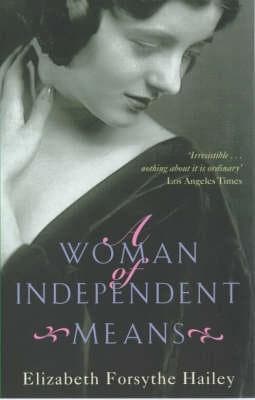
Synopsis
Covers the whole plot, including the ending.
- Difficulty
- Easy
- Pacing
- Moderate
- Mood
- Nostalgic, Reflective, Enduring, Observational
- Read it if
- You enjoy sweeping historical sagas following a strong female protagonist through decades of personal and societal change, told primarily through letters.
- Skip it if
- You prefer fast-paced plots with high stakes and intricate mysteries, or if you dislike epistolary novels.
A Woman of Independent Means Plot Summary
Covers the whole plot, including the ending.
A Young Bess Steed Finds Her Voice and Fortune
The story begins with Bess Steed as a young girl in turn-of-the-century Texas. She shows strong independence and will. Raised by her mother, Annie, and her Aunt Emma after her father's early death, Bess observes the world closely. She tells about her early life through letters, a format that defines her story. A key moment happens when Bess's maternal grandmother, a woman with money and a strong character, dies. She leaves Bess a large inheritance. This money gives Bess financial independence at a time when women had few such chances. It shapes her future choices and relationships. Her early letters describe her schooling, friendships, and growing awareness of social rules and expectations, which often conflict with her own desires.
Courtship and Marriage to Robert Garner
As Bess grows into a young woman, several men want to marry her. Robert Garner is the one who wins her heart. Robert is handsome, charming, and from a good family. He has many qualities society considers good in a husband. Their courtship, told in her letters, shows a passionate connection, but also the first signs of trouble. This is because of Bess's strong will and Robert's more traditional ideas for a wife. Despite these tensions, Bess and Robert marry. This event begins her life as Mrs. Robert Garner. The first years of their marriage are happy, with setting up their home and planning a family. All the while, Bess tries to balance her independent nature with the demands of married life.
Motherhood and Domestic Life
Bess and Robert soon have children: first their son, Robert Jr. (Bobby), and later their daughters, Eleanor and another daughter. Bess puts her energy into raising her children, writing about their milestones and her joys and frustrations as a mother in her letters. Her money lets her manage household affairs without depending on Robert financially. This both empowers her and sometimes causes small problems in their marriage. She takes an active part in her children's education and upbringing, giving them some of her own strength and resourcefulness. Despite her home duties, Bess stays involved with the world. She keeps her friendships and continues to express her opinions and observations on society and politics, often through her letters.
World War I and Shifting Realities
World War I affects Bess's comfortable life. Her letters from this time show the widespread worry and patriotism, as well as her personal fears for the future. Robert is not called to fight, but the war impacts their social group and economy. Bess, always practical, helps with wartime efforts. She shows her ability to organize and contribute beyond the home. The war also shows her how fragile life is and the suffering in the world. This broadens Bess's view beyond her immediate family and community. This time marks a small change in how she understands her place in a larger, more complex world. It strengthens her resilience.
The Roaring Twenties and Social Change
The 1920s bring new social change, flapper culture, and economic growth. Bess watches this with her usual mix of curiosity and judgment. Her children, especially her daughters, start to grow up during this time. They adopt some of the newer fashions and attitudes, sometimes to Bess's annoyance. She deals with their independence, which reminds her of her own youth, but also with her protective feelings as a mother. Bess continues to manage her investments, proving herself good with money. Her letters from this decade show her involvement with current issues, her opinions on the changing roles of women, and her efforts to guide her children through a fast-changing world. All the while, she keeps her own distinct sense of self.
The Great Depression and Financial Acumen
The stock market crash of 1929 begins the Great Depression, a time of great hardship for many. However, Bess's long-standing financial independence and careful management of her inheritance are very valuable. While Robert's business ventures face problems, Bess's investments, often made against Robert's advice, provide a stable base for the family. Her letters from this era describe the widespread economic trouble she sees and her own efforts to be careful with money and supportive. This time shows Bess's practical intelligence and her steady resolve in a crisis. It shows the real value of her 'independent means' beyond just wealth. She becomes an even more important source of strength for her family.
Loss and Resilience
As years pass, Bess experiences significant personal losses. Her husband, Robert, dies, leaving a void in her life. This loss, described with emotion in her letters, forces Bess to face widowhood and a new phase of independence. She also goes through the pain of losing other close family members and friends over time. Despite her grief, Bess shows remarkable strength. She continues to manage her affairs, support her children and grandchildren, and keep up her many letters. These tragedies, while deeply hurtful, do not lessen her spirit but make it stronger. They show a lasting strength and acceptance of life's sorrows alongside its joys.
World War II and Grandchildren
World War II brings another time of global conflict and personal worry. Bess, now a grandmother, watches her grandchildren grow and, in some cases, go to war. Her letters from this time show her fears for their safety, her patriotism, and her observations on the deep societal changes caused by the war. She supports the war effort from home, much as she did during World War I, but with the added perspective of age and experience. This time highlights her role as the family leader, a source of wisdom and stability for her growing family. She continues to document family events, from births to marriages, making sure the family's story is kept through her words.
Later Life and Reflections
As Bess enters her older years, her letters become more reflective. They are filled with memories of her past, her joys, and her sorrows. She observes the fast technological and social changes of the mid-20th century, often with a mix of wonder and mild disapproval. Her relationship with her children and grandchildren changes, as she becomes a respected, though sometimes opinionated, elder. She continues to manage her money, showing her lifelong skill. Despite the physical problems that come with age, Bess keeps her sharp wit and her interest in the world. Her letters remain her main way of expressing herself, showing her lasting spirit and her wish to connect with loved ones.
A Legacy of Letters and Independence
The novel ends with Bess's final letters, leading to her death. These last letters have a sense of farewell, but also peace and acceptance. Throughout her long life, Bess Steed Garner stays true to her independent spirit. She is shaped by her early inheritance, her strong will, and her steady determination. Her letters, which make up the entire story of the book, are a chronicle of an ordinary yet extraordinary woman living through a time of great change in American history. She leaves behind not just a family, but a legacy of strength, resilience, and the impact of a woman who truly lived life on her own terms, a woman of independent means in every way.
Principal Figures
Bess Steed Garner
Protagonist
A fiercely independent woman whose life, documented through letters, spans from the turn of the century to the 1960s.
Bess is the heart and soul of the novel, a woman defined by her strong will, sharp intellect, and financial independence. From a young age, she challenges societal norms, using her inherited wealth not for extravagance, but as a tool for autonomy and security. She is a devoted mother and wife, yet never fully relinquishes her individual identity. Her observations on life, love, family, and society are insightful and often opinionated, revealing a complex character who navigates personal joys and tragedies with remarkable resilience. Her letters are her voice, her diary, and her legacy, providing an intimate window into her mind and the changing world around her.
Relationships: Robert Garner (Husband, a source of love and occasional conflict due to differing views); Annie Steed (Mother, a loving and supportive figure); Aunt Emma (Maternal aunt, a significant caregiver and influence in her youth); Robert Jr. (Bobby) (Eldest child, son); Eleanor (Daughter)
Robert Garner
Supporting
Bess's loving and traditional husband, whose views often contrast with her independent nature.
Robert is Bess's husband, a handsome and charming man from a respectable family. He represents the more traditional male role of his era, valuing stability, social standing, and a wife who conforms to societal expectations. While he deeply loves Bess, he sometimes struggles with her financial independence and strong opinions, occasionally trying to assert control or offer conservative advice on her investments. He is a good provider and a devoted father, but his conventional outlook often highlights Bess's unique character. His presence provides a counterpoint to Bess's modernity, showcasing the societal tensions of their time.
Relationships: Bess Steed Garner (Wife, a complex and loving partnership); Robert Jr. (Bobby) (Son); Eleanor (Daughter)
Annie Steed
Supporting
Bess's mother, a gentle yet supportive influence in her early life.
Annie is Bess's mother, a kind and loving woman who raises Bess after her husband's death. She provides a nurturing environment for Bess and often tries to guide her spirited daughter towards more conventional paths, though she ultimately supports Bess's choices. Annie's letters, while less frequent than Bess's, offer glimpses into the family's early life and the societal expectations placed upon women of her generation. She is a stable and affectionate presence, contributing to Bess's foundation of love and security.
Relationships: Bess Steed Garner (Daughter, a close and loving bond); Aunt Emma (Sister)
Aunt Emma
Supporting
Bess's maternal aunt, a practical and sometimes stern figure who helps raise her.
Aunt Emma is Bess's maternal aunt who plays a significant role in her upbringing alongside Annie. She is often portrayed as more practical and less sentimental than Annie, providing a grounding influence. While she may sometimes offer unsolicited advice or express concern over Bess's unconventional ways, she deeply cares for her niece. Emma's presence highlights the importance of extended family in the early 20th century and offers another perspective on the expectations for women during that era. She is a steady, albeit sometimes critical, figure in Bess's life.
Relationships: Bess Steed Garner (Niece, a formative influence); Annie Steed (Sister)
Robert Jr. (Bobby)
Supporting
Bess and Robert's eldest child and only son, who often struggles to live up to his parents' expectations.
Bobby is Bess and Robert's first child and only son. As he grows, his character is revealed through Bess's observations and his own occasional letters. He faces the pressure of being the male heir and often struggles to find his own path, sometimes disappointing his parents with his choices or lack of ambition compared to his father. His relationship with Bess is complex, marked by both maternal love and occasional frustration from Bess's side regarding his decisions. He represents the generational shifts and the challenges children face in meeting parental expectations.
Relationships: Bess Steed Garner (Mother, a loving but sometimes critical bond); Robert Garner (Father)
Eleanor
Supporting
Bess and Robert's daughter, who shares some of Bess's independent spirit but follows a more traditional path.
Eleanor is one of Bess and Robert's daughters. She is often depicted as sharing some of Bess's intelligence and strong will, yet she navigates her own life and relationships within the evolving social landscape. Her experiences, from courtship to marriage and motherhood, provide another perspective on womanhood in the mid-20th century. Bess's letters frequently mention Eleanor's life events, showing Bess's maternal concern and her pride in her daughter, even as Eleanor makes her own choices. Eleanor represents the generation that follows Bess, benefiting from some of her mother's trailblazing spirit but still facing societal constraints.
Relationships: Bess Steed Garner (Mother, a close and supportive relationship); Robert Garner (Father)
Will
Supporting
Bess's childhood friend and early suitor, representing an alternative path for her life.
Will is Bess's childhood friend and one of her early admirers. He represents a different kind of love and partnership than what she finds with Robert. Will is often portrayed as understanding Bess's independent nature more deeply than Robert, and their connection is one of intellectual companionship and shared history. While Bess ultimately chooses Robert, Will remains a significant figure in her memory and through occasional mentions, serving as a 'what if' in her life's narrative. His character highlights Bess's deliberate choice of Robert and the complexities of her heart.
Relationships: Bess Steed Garner (Childhood friend and suitor, a deep platonic and romantic connection)
Sally
Supporting
Bess's lifelong friend, providing a consistent confidante and contrasting perspective.
Sally is one of Bess's closest and most enduring friends. Their friendship, documented through Bess's letters to Sally, provides a continuous thread throughout Bess's life. Sally often serves as a sounding board for Bess's thoughts, opinions, and frustrations, and her responses (though not explicitly shown) imply a reciprocal relationship of trust and understanding. Sally's own life experiences, often hinted at through Bess's letters, provide a contrasting or parallel view of womanhood during the same historical period, enriching the social tapestry of the novel.
Relationships: Bess Steed Garner (Lifelong best friend and confidante)
Themes & Insights
Independence and Autonomy
The main theme is Bess's strong independence, especially her financial freedom, in an era when women often depended on men. Her inherited wealth lets her make choices, share opinions, and get through economic problems without giving in to outside pressure. This theme shows up in her marriage, her child-rearing, and her personal beliefs. It often sets her apart from others of her time. It explores the freedom and challenges that come with going against traditional expectations for women, and how true independence is not just financial but also intellectual and emotional. Her refusal to be defined only by her roles as wife and mother highlights this theme.
“I may be married, but I am still Bess Steed, and I will not be told what to do with my own money or my own mind.”
The Evolution of Womanhood
The novel tells the story of changing roles and expectations for women from the early 1900s through the 1960s, seen through Bess's eyes. Bess herself is a transitional figure, a woman ahead of her time. She manages her home life while keeping a strong public and personal voice. The experiences of her mother, friends, and daughters show different parts of womanhood across generations, from the restricted Victorian era to the more free mid-century. This theme explores the societal pressures, personal sacrifices, and gradual gains in freedom and recognition for women over six decades. It highlights Bess's unique position as a 'woman of independent means' in this changing setting.
“The world keeps changing, and I suppose women must change with it, though I sometimes wonder if the new ways are always better.”
Love, Marriage, and Family
This theme looks at the complexities of romantic love, the realities of marriage, and the lasting bonds of family. Bess's marriage to Robert is shown with deep affection and realistic problems. It explores how two strong people, one traditional and one independent, live their lives together. The challenges of motherhood, the joys of grandparenting, and the inevitable losses within a family are central to Bess's story. The novel shows how love grows, lasts, and sometimes struggles. It also shows how family provides both comfort and occasional frustration through different life stages, all seen through Bess's observant and often opinionated view.
“Marriage is not always easy, my dear, but it is a journey worth taking, with all its bumps and triumphs.”
The Passage of Time and Historical Change
The novel uses Bess's long life to show important historical events and societal changes over six decades of American history. From World War I and the Roaring Twenties to the Great Depression and World War II, Bess's letters connect these big historical stories to personal experience. The theme shows how global events impact individual lives and families, and how society changes in terms of technology, social customs, and gender roles. Bess's consistent voice offers a unique view on these changes. She often thinks about how the world she knew as a child is very different from the world of her grandchildren, showing the constant passage of time.
“Sometimes I feel as though I have lived through a hundred years, the changes have been so vast and so swift.”
Communication and Connection
Because the book is written as letters, this theme is tied to the story's structure. Writing and receiving letters is central to Bess's life. It is her main way of communicating, expressing herself, and connecting to the outside world. It shows how important written letters were before instant communication, emphasizing the thought and effort needed to keep relationships. Through her letters, Bess not only shares her life but also processes her experiences, thinks about her past, and keeps her identity. The limits and strengths of this communication form show the value of personal stories and the desire for lasting connection.
“My dearest friend, I find that putting pen to paper is the only way I can truly sort out my thoughts and feel connected to you.”
Plot Devices & Literary Techniques
Epistolary Format
The entire novel is presented as a collection of letters written by Bess Steed Garner.
The novel is entirely composed of letters written by Bess Steed Garner to various family members and friends throughout her life. This intimate first-person perspective allows readers direct access to Bess's thoughts, observations, and emotions, making her a highly personal and unreliable narrator in the best sense. The format highlights her character's love for communication and reflection, while also creating a sense of immediacy and historical authenticity. It underscores the theme of connection and the passage of time, as readers witness her life unfold through her own words, often with gaps that encourage inference and reflection.
Generational Saga
The narrative spans multiple generations within the Steed/Garner family.
The story not only follows Bess's life but also traces the lives of her mother, her children (Bobby and Eleanor), and her grandchildren. This generational saga allows the author to explore the evolution of societal norms, particularly regarding women's roles, over an extended period. It shows how personal traits and family dynamics are passed down or rebelled against, and how historical events impact successive generations differently. The passing of the torch from Bess to her descendants, and her observations on their lives, adds depth to the themes of change, legacy, and family continuity.
Historical Context as Backdrop
Major American historical events are integral to the personal narrative.
The novel uses significant American historical periods—from the turn of the 20th century through the 1960s, including World War I, the Roaring Twenties, the Great Depression, and World War II—as an active backdrop to Bess's personal life. These events are not merely mentioned but are shown to directly impact her family's fortunes, her children's choices, and her own worldview. This device grounds Bess's personal story in a larger national narrative, illustrating how individual lives are shaped by, and in turn reflect, the broader historical currents of their time. Bess's reactions to these events provide a unique, personalized historical commentary.
Foreshadowing through Reflection
Bess's later letters subtly hint at future events or reflect on past decisions with newfound wisdom.
While the letters are written chronologically, Bess's mature voice often allows for subtle foreshadowing as she reflects on past decisions or hints at future anxieties. For example, early letters about Robert's traditional views might subtly foreshadow future marital disagreements, or her initial investments might hint at their importance during the Depression. This is less about explicit predictions and more about the narrator's retrospective understanding, enriching the reader's perception of her journey. This device adds layers of meaning to her experiences and highlights her growth in wisdom over time.
A Woman of Independent Means Quotes
“I have learned to live alone, but I have not learned to like it.”
“A woman of independent means is a woman who can afford to be herself.”
“Marriage is not a destination but a journey, and sometimes the road is very rough.”
“I have always believed that money is a tool, not a master.”
“The heart has its reasons, which reason does not know.”
“To be a mother is to live with your heart outside your body.”
“I have made my own mistakes, and I have paid for them. That is the price of freedom.”
“Time does not heal all wounds; it merely teaches us to live with the scars.”
“A woman's place is wherever she decides it is.”
“Love is not a possession to be held, but a gift to be given.”
“I have seen the world change, and I have changed with it, but I have never lost myself.”
“Happiness is not a station you arrive at, but a manner of traveling.”
“The greatest luxury is the freedom to choose.”
“I have loved and I have lost, but I have never regretted loving.”
Quiz
10 questions on the plot and the characters. Each answer comes with a short explanation.
Question 1
What event at the beginning of the novel provides Bess Steed Garner with her 'independent means'?
- She wins a large sum in a business venture
- She marries into a wealthy family
- She inherits wealth from her father
- She receives a government pension
Show answer
C. She inherits wealth from her father Bess inherits both wealth and a legacy of determination from her father at the turn of the century, which establishes her financial independence in a time when women had few choices.
Question 2
What literary device structures the entire narrative of 'A Woman of Independent Means'?
- Third-person omniscient narration
- A series of diary entries
- Letters written by Bess to various people
- Flashbacks told by multiple characters
Show answer
C. Letters written by Bess to various people The novel is composed entirely of letters written by Bess Steed Garner from the early 1900s through the 1960s, providing an intimate first-person perspective on her life and experiences.
Question 3
Which of the following best describes Bess's relationship with her children throughout the novel?
- Consistently harmonious and supportive
- Distant and formal due to her focus on business
- Often tested but fundamentally strong
- Abandoned when she pursues her independence
Show answer
C. Often tested but fundamentally strong The bond between mother and child is described as 'often-tested' in the book's description, reflecting the complex, evolving relationships Bess has with her children as she navigates life's challenges.
Question 4
What historical period does Bess's life primarily span in the novel?
- Late 1800s to 1920s
- Early 1900s through the 1960s
- Post-World War II to 1980s
- Victorian era to World War I
Show answer
B. Early 1900s through the 1960s The novel follows Bess from the turn of the century (early 1900s) through the 1960s, covering major historical events and social changes across six decades.
Question 5
How does Bess demonstrate her 'will to defy a society that demands conformity'?
- By refusing to marry anyone
- By becoming a political activist
- By managing her own finances and making independent life choices
- By moving to another country
Show answer
C. By managing her own finances and making independent life choices As a woman of independent means in an era when women had limited options, Bess uses her inherited wealth and determination to make her own decisions about marriage, family, and personal fulfillment, challenging societal expectations.
Question 6
What aspect of Bess's character is highlighted as she endures 'life's trials and triumphs'?
- Her tendency to avoid conflict
- Her reliance on others for emotional support
- Her unfailing courage and indomitable spirit
- Her preference for solitude
Show answer
C. Her unfailing courage and indomitable spirit The book description emphasizes Bess's 'unfailing courage and indomitable spirit' as she faces various challenges, from personal sacrifices to societal pressures, throughout her life.
Question 7
Which television adaptation featured Sally Field as Bess Steed Garner?
- A made-for-TV movie in 1995
- A television miniseries
- A weekly drama series
- A documentary special
Show answer
B. A television miniseries The book was adapted into a television miniseries starring Sally Field, which helped introduce the story to a wider audience beyond the book's initial publication.
Question 8
What does the novel explore about marriage through Bess's experiences?
- Only its romantic ideals
- Its flaws and rewards
- Its complete irrelevance to independence
- Its legal restrictions exclusively
Show answer
B. Its flaws and rewards The book description specifically mentions 'the flaws and rewards of marriage' as one of the key themes, showing Bess's complex navigation of marital relationships alongside her independence.
Question 9
In what significant way does Bess's inheritance differ from just financial wealth?
- It includes property but no cash
- It comes with social obligations she must fulfill
- It encompasses determination and desire as well as money
- It is tied to a requirement to remain unmarried
Show answer
C. It encompasses determination and desire as well as money Bess inherits 'a legacy—not only of wealth but of determination and desire,' which shapes her character and enables her to become truly independent beyond just financial means.
Question 10
Which publisher released the trade paperback edition mentioned in the description?
- Viking
- Penguin
- Random House
- HarperCollins
Show answer
B. Penguin While Viking originally published the book in 1978, Penguin released a trade paperback edition to introduce the story to new generations of readers, as noted in the description.
A Woman of Independent Means FAQ
What is 'A Woman of Independent Means' about?
The novel follows Bess Steed Garner, a wealthy Texas woman, from 1899 to 1968 as she navigates life's challenges through two world wars, the Great Depression, and societal changes. Told entirely through her letters, it chronicles her three marriages, motherhood, business ventures, and her determination to maintain independence in an era when women had limited options.
Why should I read 'A Woman of Independent Means'?
This epistolary novel offers a compelling portrait of female resilience across six decades of American history. Through Bess's vivid correspondence, readers experience intimate perspectives on marriage, loss, motherhood, and financial independence rarely depicted in historical fiction about this period.
What is the background/setting of 'A Woman of Independent Means'?
The story spans from 1899 to 1968, primarily set in Dallas, Texas, with episodes in Europe and various American locations. It moves through the Progressive Era, World War I, the Roaring Twenties, the Great Depression, World War II, and the post-war period, reflecting how historical events impact Bess's personal and financial life.
What are the most memorable quotes from the book?
Key quotes include Bess's declaration 'I am a woman of independent means' asserting her autonomy, and her observation about marriage: 'A successful marriage requires falling in love many times, always with the same person.' Another poignant line reflects on loss: 'Grief is the price we pay for love.'
What writing style does Elizabeth Forsythe Hailey use?
Hailey employs an epistolary format—the entire novel consists of Bess's letters to family, friends, and business associates. This creates an intimate, first-person perspective that reveals Bess's evolving voice, biases, and growth while allowing readers to interpret gaps between what she writes and what she might truly feel.
What minor details add significant meaning to the story?
The changing letterheads and addresses trace Bess's social mobility and geographic movements. Her shifting salutations and closings (from formal 'Dear Sir' to intimate 'Dearest') map relationship developments. References to specific investments and property acquisitions subtly document her growing financial acumen.
What are some subtle foreshadowing moments?
Early letters mentioning Bess's headaches foreshadow her later health struggles. Her childhood fascination with her grandfather's business papers hints at her future financial independence. Comments about 'the transience of happiness' in her first marriage anticipate later marital difficulties and losses.
What unexpected character connections exist?
Bess's childhood friend Eleanor becomes both her closest confidante and her rival in later years. Business associates from her first husband's circle reappear as crucial contacts when she manages her own investments. Servants and employees who appear briefly in early letters sometimes return decades later in changed circumstances.
What are Bess's unspoken character motivations?
Beneath her confident exterior, Bess is driven by deep-seated fears of dependency and irrelevance. Her relentless social climbing and business ventures stem from anxiety about losing control. Her sometimes-overbearing motherhood masks guilt about prioritizing independence over traditional maternal roles.
What psychological complexities do characters exhibit?
Bess displays contradictory traits: generous yet controlling, emotionally guarded yet craving connection, progressive in business yet conservative in social values. Her third husband Sam reveals complexity through his patience with Bess's independence while quietly asserting his own needs. Daughter Lydia embodies the generational conflict between tradition and liberation.
What are the major emotional turning points?
Key emotional shifts include Bess's devastation after her first husband Rob's sudden death, her conflicted joy when daughter Lydia rejects her values, her profound loneliness during her second marriage to Arthur, and her hard-won contentment in her third marriage to Sam. The death of her son Andrew represents her most profound loss.
How do Bess's relationship dynamics evolve?
With husbands: from passionate but unequal partnership with Rob, to comfortable but distant arrangement with Arthur, to mature mutual respect with Sam. With children: from controlling motherhood to strained distance with Lydia, to tragic loss with Andrew. With friends: from youthful intimacy to complex rivalries that test lifelong bonds.
Which parts of the story remain ambiguous or open-ended?
The novel never fully reveals whether Bess's business successes came more from privilege or genuine skill. Her true feelings about her second husband Arthur remain ambiguous. The extent of her loneliness behind her confident facade is left for readers to interpret through gaps in her correspondence.
What are controversial scenes or decisions in the book?
Bess's decision to send her children to boarding school while she travels is debated as either neglectful or pragmatic for her era. Her business dealings during the Depression, where she profits while others suffer, raise ethical questions. Her sometimes-manipulative treatment of friends and family challenges sympathetic readings of her character.
How does 'A Woman of Independent Means' end and what does it mean?
The novel concludes in 1968 with Bess, now elderly, reflecting on her life through letters to her granddaughter. She expresses pride in her independence but also acknowledges the costs—strained relationships, personal losses, and moments of profound loneliness. The ending suggests that true independence requires continual negotiation between self-determination and human connection, with Bess ultimately finding peace in her legacy rather than regretting her choices.
How does Bess's concept of independence evolve throughout the novel?
Initially, Bess equates independence with financial security inherited from her father. Through widowhood, remarriage, motherhood, and business ventures, she redefines it as emotional self-reliance, the courage to make unpopular decisions, and the resilience to rebuild after losses. By the end, she understands independence as the freedom to choose connection without sacrificing self.
What role does historical context play in Bess's choices?
Historical events directly shape Bess's opportunities and constraints: World War I creates her first widowhood and necessitates financial management; the 1920s offer social liberation but market volatility; the Depression tests her business ethics; World War II brings family separation and new roles for women; post-war prosperity allows reflection on her life's meaning.
How does the epistolary format affect character perception?
Since readers only see Bess's perspective through her curated letters, they must read between lines to understand other characters. This creates dramatic irony when Bess's self-perception contrasts with how recipients might interpret her letters. The format also allows tracking her maturation through evolving writing style and priorities.
Similar books
- The House of the Spirits
Isabel Allende
4.2 (190k) average on GoodreadsFantasyMulti-generational saga of a family through historical upheaval, focusing on strong female characters.
- Gone with the Wind
Margaret Mitchell
4.3 (1.1M) average on GoodreadsHistorical FictionFollows a resilient, independent woman through turbulent historical periods, dealing with love, loss, and survival.
- The Age of Innocence
Edith Wharton
4.0 (139k) average on GoodreadsHistorical FictionWharton's The Age of Innocence also delves into the social conventions and constraints placed upon women in a specific historical period (late 19th-century New York), but it does so with a sharper, more critical societal critique and a tragic romantic core. While both protagonists grapple with societal expectations, Wharton's Newland Archer and Ellen Olenska are more explicitly constrained by their era's rigid class structure and moral codes, leading to a sense of unfulfilled longing. Hailey's Bess, though facing limitations, actively seeks and often achieves a degree of independence and self-actualization that is less prominent in Wharton's more fatalistic portrayal of social entrapment. Hailey's tone is generally more celebratory of individual resilience, even within constraints, compared to Wharton's often melancholic social commentary.
- To Kill a Mockingbird
Harper Lee
4.3 (4.5M) average on GoodreadsHistorical FictionIn the 1930s Jim Crow South, Harper Lee writes about racial injustice, moral growth, and the quiet courage of a lawyer father, Atticus Finch, as seen through his young daughter's eyes.
- The Great Gatsby
F. Scott Fitzgerald
3.9 (3.8M) average on GoodreadsHistorical FictionIn the opulent Roaring Twenties, a mysterious millionaire's lavish parties hide his desperate, tragic pursuit of a lost love, exposing the emptiness within the American Dream.
- Pride and Prejudice
Jane Austen
4.3 (3M) average on GoodreadsHistorical FictionIn a society focused on status and money, Elizabeth Bennet navigates love and pride, challenging Mr. Darcy and social expectations to find true affection.




Enjoyed the summary?
A summary gives you the shape of the book. The book itself has the detail, the examples and the voice.
Find A Woman of Independent Means on AmazonAs an Amazon Associate, BookBrief earns from qualifying purchases. How we're funded