

Synopsis
Covers the whole plot, including the ending.
- Difficulty
- Hard
- Pacing
- Variable
- Mood
- Epic, Intellectually Stimulating, Conspiratorial, Whimsical, Darkly Humorous
- Read it if
- You love dense, challenging literary fiction with a vast cast, intricate historical detail, and a blend of science, mysticism, and adventure. Perfect for readers who enjoy piecing together complex narratives and exploring profound philosophical themes.
- Skip it if
- You prefer straightforward plots, linear narratives, or easily digestible stories. This book demands significant commitment and patience, and its length and complexity can be daunting.
Against the Day Plot Summary
Covers the whole plot, including the ending.
The Chicago World's Fair and the Ruin of Webb Traverse
The novel opens at the 1893 Chicago World's Columbian Exposition, where the Chums of Chance, a group of boy aeronauts, have an early adventure. The story then moves to Colorado mining towns, introducing Webb Traverse, a labor activist and bomb expert. Agents of powerful mining companies, specifically the industrialist Scarsdale Vibe, brutally murder him. Webb's four sons—Frank, Reef, Kit, and Zane—deal with their father's death. This event fuels their individual searches for revenge against Scarsdale Vibe and the powerful groups he represents. It sends them to different parts of the world and different social levels, from anarchist groups to scientific research.
Reef Traverse's Anarchist Path and the Balkan Entanglement
Reef Traverse, driven by a strong desire for revenge, enters the world of anarchism. He becomes a skilled bomb-maker and operative, taking part in various acts of sabotage and political violence across Europe. His journey takes him through revolutionary groups in Paris, the changing politics of the Balkans, and near figures like the secret agent Renfrew. Reef's actions are part of the complex pre-World War I spying and political maneuvering, often involving the hidden interests of industrialists like Scarsdale Vibe, who seems to be involved everywhere. Reef's path is full of danger and moral choices as he seeks justice for his father.
Frank Traverse and the Search for the Tøndelhorn
Frank Traverse, the most intellectual brother, becomes interested in the Tøndelhorn, a theoretical device that might control time and reality, possibly allowing travel 'against the day'—into the past or future. His search leads him to academic groups, occult societies, and meetings with unusual scientists and mathematicians who explore the limits of physics and metaphysics. He meets figures like the mathematician Merle Rideout and the mystical Yashmeen, whose knowledge of old traditions and esoteric science is important. Frank's journey is less about direct revenge and more about understanding the forces that shape their world, believing that controlling these forces might correct the wrongs done to his family.
Kit Traverse and the Bifurcation of History
Kit Traverse, another intellectual brother, studies mathematics and theoretical physics, especially the work of Dr. Vormance. He explores ideas of higher dimensions, quantum mechanics, and the possibility of different timelines or parallel universes, called 'bifurcations.' Kit's academic work is not just abstract; he thinks understanding these theories might help him understand or change the 'day' that led to his father's death. His path crosses with various academics and scientists, including the scientist Dally. He often debates the nature of reality and the flexibility of time, often in places like Göttingen and Venice.
Zane Traverse, The Chums of Chance, and Aerial Adventures
Zane Traverse, the youngest and most adventurous brother, joins the Chums of Chance, a group of young airship fans who travel the world in their dirigible, the 'Inconvenience.' The Chums—including their leader Lindsay Nosegay, Miles Blundell, and Darby Suckling—have many adventures, meeting historical figures, secret societies, and strange events. Their missions often involve scientific discovery, spying, and navigating early 20th-century political tensions. While Zane's immediate search for revenge is less clear, his experiences with the Chums show him the vastness and strangeness of the world, often connecting indirectly to the larger actions of Scarsdale Vibe and global power.
The Mexican Revolution and the American Southwest
The story often moves to the American Southwest and Mexico, especially during the Mexican Revolution. Reef Traverse becomes involved with revolutionary groups, including those led by Pancho Villa and Emiliano Zapata, often using his bomb-making skills. Zane and the Chums of Chance are also in the region, sometimes providing air support or scouting. This setting allows several characters to interact, sometimes unknowingly, with global capitalism and political manipulation, often arranged by figures like Scarsdale Vibe, who tries to use the region's resources and instability for his own gain. The desert and revolutionary energy create a setting for violence and moral uncertainty.
The Intersecting Lives of Dally and Yashmeen
Dally, a mathematician and scientist, and Yashmeen, a mysterious figure with knowledge of esoteric traditions and 'against the day' travel, become important characters. Dally, often with Kit Traverse, explores quantum physics and parallel realities. Yashmeen, connected to Frank Traverse, has old wisdom and a practical understanding of manipulating time and space. Both women are intelligent, independent, and important to the brothers' understanding of the world. They represent different types of knowledge—scientific and mystical—and their interactions with the Traverse brothers challenge common ideas, offering other views on reality and the chance to go beyond linear time.
Scarsdale Vibe's Global Machinations
Scarsdale Vibe, the main antagonist, is a powerful industrialist whose empire includes mining, finance, and weapons. His agents and interests appear in almost every plotline, from labor disputes in Colorado to political plots in the Balkans and the Mexican Revolution. Vibe is not just a capitalist; he is a hidden figure who seems to control global events for his own power and profit, often using violence and lies. His constant pursuit of wealth and control makes him a widespread threat, and the Traverse brothers' individual quests for revenge against him become more complex as they learn about his vast influence and the real nature of his operations.
The Approach of World War I
As the novel continues, World War I grows closer, slowly affecting the different plotlines. Political tensions in Europe increase, and scientific discoveries about explosives and higher dimensions become more serious. Characters like Reef Traverse find their anarchist actions mixing with national goals, while Kit and Frank's scientific work is increasingly seen for its military uses. The Chums of Chance see the changing global politics from their airship. The approaching war is a huge backdrop, threatening to remove the differences between individual quests and global conflict, and forcing characters to face the results of their actions and beliefs.
The Climax of Vengeance and the Nature of Time
The different story threads start to come together, leading to confrontations with Scarsdale Vibe and his agents. Reef's violent path reaches its peak, while Frank and Kit explore the mysteries of the Tøndelhorn and the possibility of 'against the day' travel—the ability to move through time and other realities. The idea of the 'day' (the present, linear time) versus 'against the day' (a realm of possibilities and non-linear time) becomes central. The brothers' search for revenge becomes a deep exploration of fate, free will, and the nature of reality itself. The novel suggests that while direct revenge may be hard to get or unsatisfying, understanding and possibly changing the fabric of time offers a different kind of ending, or perhaps, an endless continuation of possibilities.
Principal Figures
Webb Traverse
Mentioned
Radical labor activist whose murder sets the plot in motion.
Webb Traverse is the patriarch of the Traverse family, a skilled bomb-maker, and a dedicated labor activist in the Colorado mining towns. His radical politics and efforts to unionize miners lead to his brutal murder by agents of Scarsdale Vibe, an event that serves as the primary catalyst for the entire novel. Though he dies early in the story, his presence and legacy loom large over his four sons, driving their individual and collective quests for vengeance and understanding. He represents the oppressed working class and the violent struggle against industrial capitalism at the turn of the century.
Relationships: Frank Traverse (father); Reef Traverse (father); Kit Traverse (father); Zane Traverse (father)
Scarsdale Vibe
Antagonist
Ruthless industrialist and the primary target of the Traverse brothers' revenge.
Scarsdale Vibe is a powerful and malevolent industrialist whose vast empire encompasses mining, finance, and munitions. He is directly responsible for the murder of Webb Traverse and acts as the overarching antagonist of the novel. Vibe is a shadowy figure whose influence extends globally, manipulating political events, exploiting resources, and orchestrating violence for his own gain. He embodies unchecked capitalism and the corrupting force of power, often operating through a network of agents and collaborators. His wealth and reach make him an almost ubiquitous, seemingly unbeatable foe.
Relationships: Webb Traverse (murderer of); Frank Traverse (target of vengeance); Reef Traverse (target of vengeance); Kit Traverse (target of vengeance); Zane Traverse (target of vengeance)
Reef Traverse
Protagonist
Anarchist bomb-maker seeking violent retribution for his father's murder.
Reef Traverse is the most direct and violent of Webb's sons in his pursuit of vengeance. He becomes a skilled anarchist bomb-maker, traveling through Europe and Mexico, engaging in acts of political violence and sabotage. Reef is driven by a burning rage and a desire for immediate, tangible retribution against Scarsdale Vibe and the oppressive systems he represents. His journey is marked by danger, moral ambiguity, and encounters with various revolutionary figures and secret agents. He represents the visceral, explosive response to injustice, often finding himself caught in larger geopolitical machinations.
Relationships: Webb Traverse (son); Frank Traverse (brother); Kit Traverse (brother); Zane Traverse (brother)
Frank Traverse
Protagonist
Intellectual seeker of the Tøndelhorn and the nature of reality.
Frank Traverse is one of Webb's sons, more inclined towards intellectual pursuits than his brother Reef. He becomes obsessed with the theoretical device known as the Tøndelhorn, believing it holds the key to manipulating time and reality, potentially offering a way to undo or understand his father's death. His quest leads him into academic, scientific, and occult circles, where he encounters eccentric mathematicians, physicists, and mystics. Frank's journey is a philosophical and scientific exploration of the boundaries of existence, seeking a deeper, perhaps spiritual, understanding of the forces at play in the world.
Relationships: Webb Traverse (son); Reef Traverse (brother); Kit Traverse (brother); Zane Traverse (brother); Yashmeen (lover/mystical guide)
Kit Traverse
Protagonist
Mathematician and physicist exploring higher dimensions and parallel worlds.
Kit Traverse is another of Webb's intellectually gifted sons, who dedicates himself to the study of advanced mathematics and theoretical physics. He delves into concepts like quantum mechanics, higher dimensions, and the possibility of 'bifurcations' or parallel universes, often under the influence of the reclusive Dr. Vormance. Kit's pursuit is driven by a desire to understand the fundamental fabric of reality, hoping that scientific knowledge might provide a means to counteract the injustices faced by his family. His journey takes him to academic centers in Europe, where he engages in intense theoretical debates and interacts with other brilliant minds, including Dally.
Relationships: Webb Traverse (son); Reef Traverse (brother); Frank Traverse (brother); Zane Traverse (brother); Dally (intellectual collaborator/lover)
Zane Traverse
Protagonist
Youngest Traverse brother and member of the Chums of Chance aeronauts.
Zane Traverse is the youngest and most adventurous of the Traverse brothers. He joins the Chums of Chance, a group of boy aeronauts who traverse the globe in their airship, the 'Inconvenience.' Zane's experiences with the Chums expose him to a vast array of strange phenomena, historical events, and eccentric characters. While his quest for revenge is less overtly central than his brothers', his aerial adventures provide a unique perspective on the unfolding global conflicts and scientific advancements. He represents a sense of innocent wonder and youthful exploration amidst the chaos of the early 20th century.
Relationships: Webb Traverse (son); Reef Traverse (brother); Frank Traverse (brother); Kit Traverse (brother); Lindsay Nosegay (fellow Chum); Miles Blundell (fellow Chum)
Dally
Supporting
Brilliant female mathematician and scientist, associated with Kit Traverse.
Dally is a highly intelligent and independent female mathematician and physicist who collaborates with Kit Traverse. She is at the forefront of exploring cutting-edge theories in quantum mechanics, higher dimensions, and the nature of reality. Dally challenges the male-dominated scientific establishment and offers crucial insights into the complex theoretical concepts that Kit is pursuing. Her character embodies intellectual prowess and a pioneering spirit, pushing the boundaries of scientific thought in a world rapidly changing due to new discoveries and impending war. She often serves as a sounding board and intellectual partner for Kit.
Relationships: Kit Traverse (intellectual collaborator/lover)
Yashmeen
Supporting
Mysterious woman with knowledge of esoteric traditions and 'against the day' travel.
Yashmeen is a mysterious and enigmatic woman who possesses deep knowledge of esoteric traditions, occult practices, and the secrets of 'against the day' travel. She becomes romantically involved with Frank Traverse and acts as his guide into the mystical and non-linear aspects of reality. Yashmeen represents an ancient, intuitive understanding of the universe that complements and sometimes contradicts the purely scientific approaches of characters like Kit and Dally. Her presence introduces elements of magic, spirituality, and the potential for manipulating time and fate through means beyond conventional science.
Relationships: Frank Traverse (lover/mystical guide)
Lindsay Nosegay
Supporting
Leader of the Chums of Chance airship crew.
Lindsay Nosegay is the capable and adventurous leader of the Chums of Chance, the group of boy aeronauts who travel the world in their airship, the 'Inconvenience.' He is responsible for guiding the Chums through their numerous escapades, which often involve scientific exploration, espionage, and navigating various global conflicts and strange phenomena. Lindsay embodies a spirit of youthful idealism and adventurous inquiry, providing a lighter, more fantastical counterpoint to the darker, more politically charged narratives of the other Traverse brothers. He is a skilled pilot and a resourceful leader.
Relationships: Zane Traverse (fellow Chum); Miles Blundell (fellow Chum)
Renfrew
Supporting
Elusive secret agent involved in pre-war European espionage.
Renfrew is a recurring and enigmatic secret agent who operates in the shadowy world of pre-World War I European espionage. He is often associated with various intelligence agencies and political factions, and his true allegiances are frequently unclear. Renfrew encounters Reef Traverse on several occasions, sometimes as an ally, sometimes as an adversary, always adding to the complexity of the political landscape. He embodies the paranoia and moral ambiguity of the spy world, reflecting the intricate web of alliances and betrayals that characterized the era leading up to the Great War.
Relationships: Reef Traverse (intermittent ally/adversary)
Themes & Insights
Identity and Self-Discovery
The Traverse brothers' journeys are about defining themselves after their father's murder and within larger historical events. Each brother chooses a different path—revenge, science, mysticism, adventure—to understand his place and deal with his inherited past. Frank and Kit find identity through intellectual work, Reef through political action, and Zane through exploration. All seek purpose and meaning in their chaotic era. Their quests are not only for revenge but for self-discovery.
“For what is a man, what has he got? If not himself, then he has naught.”
The Nature of Time and Reality
Pynchon explores linear versus non-linear time, parallel universes, and how reality can change. Ideas like 'against the day' travel, the Tøndelhorn, and 'bifurcations' question common understandings of existence. Characters like Frank and Kit explore scientific and mystical theories that suggest time is not fixed and other realities might exist. This theme questions fate, free will, and the chance to change past events, making the novel a metaphysical exploration as well as historical. The story itself often moves non-linearly, reflecting this idea.
“The Day, it is a day of reckoning, a day of wrath, a day against which all other days must be measured.”
Anarchism, Capitalism, and Political Violence
The novel shows the ideological conflicts of the late 19th and early 20th centuries. The Traverse brothers' search for revenge comes from their father's murder by agents of industrial capitalism (Scarsdale Vibe). Reef Traverse adopts anarchism and political violence to fight oppression, while powerful corporations and governments are shown manipulating global events, leading to labor disputes, revolutions, and eventually, world war. The novel examines the effectiveness and morality of these different approaches to power and justice.
“There is no justice, there is only us.”
Science, Occultism, and Esoterica
Pynchon blurs the lines between new scientific discovery and old mystical traditions. Theoretical physics, higher mathematics, and explosives exist alongside talks of the Tøndelhorn, psychic events, and secret societies. Characters like Frank and Kit explore scientific aspects, while Yashmeen represents the occult. This theme suggests that different kinds of knowledge, whether rational or intuitive, might offer ways to understand the universe's deeper secrets. It shows an era where scientific advances often mixed with esoteric beliefs.
“The science of our age, it is the magic of another.”
The End of an Era and the Dawn of Modernity
Spanning from the 1893 Chicago World's Fair to the end of World War I, the novel captures a key moment in history—the shift from the Victorian age to the modern era. It shows rapid technological advances (airships, cinema, advanced explosives), the rise of global capitalism, and the increasing complexity of international politics that led to World War I. This theme explores the hope of progress along with the worries of social change, the loss of innocence, and the major changes that reshaped the world, often through the eyes of characters trying to adapt.
“The world was ending, but it was also beginning.”
Plot Devices & Literary Techniques
The Tøndelhorn
A theoretical device capable of manipulating time and reality.
The Tøndelhorn is a mythical or theoretical device that becomes a central object of pursuit for Frank Traverse. It is described as a means to access or manipulate 'against the day' travel, allowing for movement outside of linear time and possibly into alternate realities. While its physical existence is ambiguous, it functions as a powerful symbol of humanity's desire to transcend the limitations of time and fate. It drives much of the scientific and metaphysical inquiry in the novel, embodying the quest for ultimate knowledge and control over the fabric of existence.
The Chums of Chance
A group of boy aeronauts whose adventures provide a fantastical counterpoint.
The Chums of Chance are a recurring group of young airship adventurers, including Zane Traverse, who travel the world in their dirigible, the 'Inconvenience.' They function as a narrative device to introduce elements of pulp adventure, scientific discovery, and a more lighthearted tone amidst the novel's darker themes of political violence and complex physics. Their escapades allow Pynchon to explore various geographical locations and historical events from a unique, often whimsical, perspective. They represent a sense of youthful wonder and the boundless possibilities of exploration at the dawn of the 20th century.
Bifurcations and Parallel Universes
Theoretical scientific concepts suggesting divergent timelines and realities.
Bifurcations are a key theoretical concept explored by Kit Traverse and other scientists, referring to points in time where reality splits, creating divergent timelines or parallel universes. This device allows Pynchon to playfully (and seriously) explore 'what if' scenarios and the inherent uncertainty of quantum mechanics. It underpins the novel's larger theme about the nature of time and reality, suggesting that the past is not fixed and that multiple outcomes might exist for any given event. It blurs the line between historical fact and speculative fiction, making the narrative itself feel like a series of branching possibilities.
The Bomb/Explosives
A recurring motif representing both destruction and scientific advancement.
Bombs and explosives are a pervasive motif throughout the novel, symbolizing both the destructive potential of human conflict and the cutting edge of scientific and technological advancement. Webb Traverse is a bomb expert, Reef Traverse becomes an anarchist bomb-maker, and the development of new explosives is a significant aspect of the scientific discussions leading up to World War I. The bomb serves as a tangible manifestation of the era's volatile political climate and the dangerous intersection of science, industry, and warfare. It represents sudden, irreversible change and the ultimate consequence of unchecked power.
The Eye of the Camera/Early Cinema
A recurring symbol of observation, manipulation, and the dawn of a new medium.
Early cinema and photography appear frequently, from the Chicago World's Fair to the nascent film industry. This device symbolizes the emerging power of observation, documentation, and manipulation of reality. The camera captures events, but also distorts them, creating illusions and propaganda. It reflects the shift in how people perceive and record their world, moving towards a more mediated and constructed reality. The idea of being 'watched' or 'recorded' also ties into themes of surveillance and control, particularly in the context of political espionage and industrial power.
Against the Day Quotes
“The world is a much more complicated place than you think, and there are many things going on that you don't know about.”
“Every age has its peculiar fancy, and ours is for the end of the world.”
“History is not a ledger, it's a dream.”
“There are no accidents, only events that haven't been explained yet.”
“To be innocent is to be without a story.”
“Light, as we know, is a form of energy. But what if it's also a form of consciousness?”
“The past is an infinite regress of explanations, each one leading to another.”
“When you have to choose between two evils, always choose the one you haven't tried before.”
“The world is not just what we see, but what we fail to see, what we are not allowed to see.”
“Time is an illusion, but a very persistent one.”
“There is no freedom without the freedom to choose your own chains.”
“Every object in the universe is connected to every other object, by forces we barely comprehend.”
“The future is always arriving, but never quite here.”
“What is evil? Only a certain kind of failure to imagine.”
Quiz
10 questions on the plot and the characters. Each answer comes with a short explanation.
Question 1
Which real-life scientific concept, often associated with Nikola Tesla, plays a significant role in the speculative physics explored in 'Against the Day'?
- Quantum entanglement
- Wireless energy transmission
- Theory of relativity
- Subatomic particle accelerators
Show answer
B. Wireless energy transmission Wireless energy transmission, a concept Nikola Tesla famously pursued, is a key element in the novel's blend of historical science and speculative fiction, particularly with characters like Scarsdale Vibe and his various projects.
Question 2
What is the primary motivation for the Chums of Chance, a group of young adventurers, in their airborne escapades?
- To discover new continents
- To map the Earth's magnetic fields
- To explore strange phenomena and uphold a sense of adventure against the encroaching forces of order
- To deliver secret messages for various governments
Show answer
C. To explore strange phenomena and uphold a sense of adventure against the encroaching forces of order The Chums of Chance embody a spirit of youthful adventure and exploration, often encountering bizarre events and resisting the more rigid, often sinister, forces of the world, making 'c' the best fit.
Question 3
Which historical event involving labor disputes in the American West is a significant backdrop for the Traverse family's story?
- The Haymarket Affair
- The Pullman Strike
- The Colorado Labor Wars
- The Anthracite Coal Strike
Show answer
C. The Colorado Labor Wars The Colorado Labor Wars, particularly the events around the Cripple Creek mining district, form a crucial historical and narrative foundation for the Traverse family's experiences and their pursuit of revenge.
Question 4
What is the name of the mysterious mathematical entity that some characters, particularly the mathematicians and physicists, are obsessed with and believe holds the key to understanding reality?
- The Riemann Hypothesis
- The Imaginary Number i
- The Quaternion
- The Golden Ratio
Show answer
C. The Quaternion Quaternions, a non-commutative extension of complex numbers, are a recurring motif and a subject of intense intellectual and even mystical speculation among the novel's scientific characters, believed to unlock secrets of space and time.
Question 5
What is the primary relationship between the characters Frank Traverse and Reef Traverse?
- They are rival inventors.
- They are brothers seeking vengeance for their father's death.
- They are estranged business partners.
- They are members of opposing secret societies.
Show answer
B. They are brothers seeking vengeance for their father's death. Frank and Reef Traverse are two of the sons of Webb Traverse, and much of their individual and collective narrative revolves around seeking revenge for their father's assassination during the Colorado Labor Wars.
Question 6
Which of the following best describes the novel's approach to historical accuracy?
- It strictly adheres to documented historical events and figures without deviation.
- It uses historical events and figures as a backdrop, but freely integrates speculative science, conspiracy theories, and fictional characters.
- It presents an alternative history where major events unfolded entirely differently.
- It focuses solely on the personal lives of fictional characters, with historical events only vaguely referenced.
Show answer
B. It uses historical events and figures as a backdrop, but freely integrates speculative science, conspiracy theories, and fictional characters. Pynchon is known for weaving meticulously researched historical details with elaborate fictional narratives, scientific speculation, and a pervasive sense of conspiracy, making 'b' the most accurate description.
Question 7
What role does the character Scarsdale Vibe primarily play in the overarching narrative?
- He is a benevolent patron of the arts and sciences.
- He is a powerful, shadowy industrialist and financier, often connected to the forces opposing the protagonists.
- He is a revolutionary leader in the Mexican Revolution.
- He is a reclusive mathematician who discovers a new dimension.
Show answer
B. He is a powerful, shadowy industrialist and financier, often connected to the forces opposing the protagonists. Scarsdale Vibe is a significant antagonist figure, a wealthy and influential industrialist whose machinations and connections to various power structures often place him in opposition to the more free-spirited or rebellious characters, including the Traverse family.
Question 8
The novel frequently explores the theme of 'doubling' or 'doppelgängers.' Which of these is a prominent example of this theme?
- The identical airships used by the Chums of Chance.
- The various characters who assume false identities or are mistaken for others, often leading to confusion and blurring of individual agency.
- The recurring appearance of twin cities across different continents.
- The use of two distinct narrative voices throughout the book.
Show answer
B. The various characters who assume false identities or are mistaken for others, often leading to confusion and blurring of individual agency. The theme of doubling is pervasive, with characters frequently adopting aliases, being mistaken for others, or encountering individuals who seem to be their exact counterparts, contributing to the novel's atmosphere of paranoia and shifting realities.
Question 9
What is the significance of the Chicago World's Fair of 1893 (World's Columbian Exposition) in the novel's opening?
- It serves as the setting for a major scientific breakthrough that revolutionizes travel.
- It's where the Chums of Chance first meet and form their group.
- It acts as a symbolic nexus of technological optimism and underlying social tensions, marking the beginning of the era the novel explores.
- It's the site of a major assassination that sparks the plot's central conflict.
Show answer
C. It acts as a symbolic nexus of technological optimism and underlying social tensions, marking the beginning of the era the novel explores. The Chicago World's Fair is presented as a dazzling display of fin-de-siècle progress and technological marvels, but also hints at the darker currents of industrial power, social unrest, and impending global conflicts that will define the period leading up to WWI.
Question 10
Which character, often associated with a camera and documenting events, plays a recurring role across various plotlines, often in the nascent film industry?
- Lew Basnight
- Kit Traverse
- Pugnax
- Dally Rideout
Show answer
A. Lew Basnight Lew Basnight is a prominent character who works as a photographer and later becomes involved in the early silent film industry in Hollywood, his camera often capturing or influencing the events around him.
Against the Day FAQ
What is 'Against the Day' about?
'Against the Day' is an epic, sprawling novel by Thomas Pynchon that follows a multitude of characters across the globe from the 1893 Chicago World's Fair to the end of World War I. At its core, it intertwines the adventures of the Traverse family, anarchists seeking revenge for their patriarch's murder, with the escapades of a group of mathematicians, physicists, and airship pilots exploring the nature of reality, time, and the aether.
Why should I read 'Against the Day'?
You should read 'Against the Day' for its unparalleled ambition, its rich tapestry of historical detail blended with speculative fiction, and its unique Pynchonian humor and paranoia. It offers a dazzling, complex exploration of early 20th-century anxieties, the clash between capital and labor, and the scientific revolutions that reshaped the world, all wrapped in a thrilling, puzzle-like narrative.
What is the background/setting of 'Against the Day'?
The novel is set primarily between 1893 and 1918, spanning a vast geographical and historical landscape. Key settings include the American West during the labor wars, turn-of-the-century London, revolutionary Mexico, Balkan powder kegs, and even the Arctic, all against the backdrop of burgeoning scientific discovery, global political unrest, and the lead-up to World War I. The Chicago World's Fair serves as an important initial nexus for many characters.
What are the most memorable quotes?
While Pynchon's novels are often more about narrative flow than isolated quotes, memorable lines often reflect his themes of paranoia and the nature of reality. For instance, the recurring idea that 'history is a nightmare from which I am trying to awake' (though a Joyce quote, it resonates deeply) or descriptions of the 'pre-Anarchist glow' capture the book's atmosphere. The novel is rich in its unique character observations and scientific musings, such as 'The world is a very strange place, and it's getting stranger every day.'
What writing style does the author use?
Thomas Pynchon employs a dense, polyphonic, and often anachronistic style characterized by elaborate sentences, shifting perspectives, and a blend of highbrow intellectualism with lowbrow humor. His prose is rich with allusions, scientific jargon, song lyrics, and slapstick comedy, often juxtaposing moments of profound beauty or terror with absurd digressions, creating a challenging yet rewarding reading experience.
What minor details add significant meaning?
The recurring motif of the T-W-I-T, a mysterious device or principle that allows for travel through the fourth dimension or 'beyond the day,' is a subtle detail that underpins much of the novel's speculative science fiction elements. Also, the seemingly random appearances of characters like the 'Chums of Chance' in various disguises across different plots suggest a deeper, unseen network or control, hinting at the novel's overarching themes of conspiracy and hidden forces.
What are some subtle foreshadowing moments?
The early discussions among the Chums of Chance about the nature of the aether and its potential for traversal subtly foreshadow the later, more explicit explorations of time travel and alternate realities. Similarly, the initial descriptions of Webb Traverse's anarchist activities and his violent end set a tone of political struggle and revenge that will drive his children's narratives for the entire novel, though the specifics of their paths are unpredictable.
What unexpected character connections exist?
One significant unexpected connection is the hidden relationship between Scarsdale Vibe, the ruthless capitalist, and the Traverse family. While Vibe is the primary antagonist responsible for Webb Traverse's death, his past entanglements and shared history with various characters, including the mysterious 'Inconvenience,' reveal a deeper, more complicated web of influence that extends beyond simple good-versus-evil dynamics. Also, the Chums of Chance often unknowingly cross paths with or influence the Traverse siblings.
What are unspoken character motivations?
For Kit Traverse, much of his motivation, beyond the explicit quest for revenge, seems to stem from a subconscious desire to understand and perhaps reconcile with the scientific and spiritual legacy of his eccentric family, particularly his father's radicalism. Similarly, Dally Ride's pursuit of her own photographic art, while seemingly independent, often appears driven by an unspoken need to document and make sense of the chaotic world around her, perhaps as a way to control it or find beauty within its disorder.
What psychological complexities do characters exhibit?
Lew Basnight, the detective, grapples with profound psychological complexities, including his struggle with identity and his capacity for violence, often blurring the lines between his professional duties and personal vendettas. Renfrew and Werfner, the rival scientists, exhibit a complex mix of intellectual curiosity, professional jealousy, and a deep-seated fear of the unknown, driving their often-reckless experiments with the fabric of reality itself.
What are the major emotional turning points?
The assassination of Webb Traverse serves as the foundational emotional turning point, propelling his children into their individual quests for revenge and understanding. Another is Reef Traverse's decision to join the Mexican Revolution, which marks a shift from personal vendetta to a broader ideological struggle, forcing him to confront the complexities of justice and violence on a larger scale. The various characters' encounters with the horrors of World War I also serve as significant emotional catalysts.
How do relationship dynamics evolve?
The relationship dynamics in 'Against the Day' are constantly evolving. The fraternal bonds among the Traverse siblings (Reef, Frank, Kit, and Lake) shift from shared grief and a unified purpose of revenge to more individualistic paths, sometimes leading to estrangement or unexpected alliances. Romantic relationships, like that between Reef and Estrella, are often passionate but fraught with danger and ideological clashes, reflecting the turbulent times they live in.
Which parts remain ambiguous or open-ended?
Many aspects of 'Against the Day' remain deliberately ambiguous, particularly regarding the true nature of the T-W-I-T and its implications for reality. The ultimate fate and allegiances of several characters, especially those who navigate the shadowy world of espionage and secret societies, are often left undefined. Pynchon also leaves open the question of whether the various conspiracies are truly orchestrated by a single entity or are simply the emergent properties of a chaotic world.
What are controversial scenes or decisions?
The novel contains several scenes that could be considered controversial due to their graphic violence, sexual content, or morally ambiguous character actions, such as the detailed depictions of labor strife and revolutionary violence. Reef Traverse's involvement in acts of sabotage and assassination, even in the name of political freedom, presents a morally complex decision for the reader. The novel's often playful approach to serious historical events can also be seen as controversial.
'Against the Day' ending explained: how it ends & what it means
The ending of 'Against the Day' does not offer a neat resolution but rather a culmination of the novel's themes of entropy, the nature of time, and the coming of the modern age. As World War I concludes, many characters find themselves scattered, scarred, or dead, their quests for revenge or scientific discovery often incomplete or transformed. The final chapters emphasize the transition from the 'day' of the 19th century to a more fragmented, uncertain 20th century, suggesting that the 'day' itself has been 'against' them, leading to an ambiguous future where the boundaries of reality remain fluid.
About the author
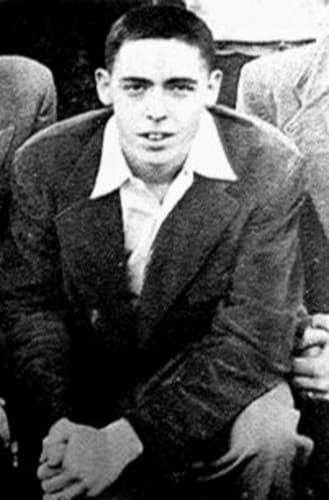
Thomas Ruggles Pynchon Jr. is an American novelist noted for his dense and complex novels. His fiction and non-fiction writings encompass a vast array of subject matter, genres and themes, including history, music, science, and mathematics. For Gravity's Rainbow, Pynchon won the 1973 U.S. National Book Award for Fiction.
Similar books
- Ulysses
James Joyce
3.7 (111k) average on GoodreadsLiterary FictionSimilar in its ambitious scope, linguistic playfulness, and demand on the reader's attention.
- The Old Man and the Sea
Ernest Hemingway
3.8 (831k) average on GoodreadsLiterary FictionA Cuban fisherman's long struggle with a giant marlin becomes a story of endurance and dignity, now retold for young adults with illustrations, phonetic guides, and writing prompts in Traditional Chinese.
- One Hundred Years of Solitude
Gabriel García Márquez
4.1 (753k) average on GoodreadsLiterary FictionThrough the multi-generational story of the Buendía family, a mythical town deals with the repeating patterns of time, love, and solitude, as the extraordinary mixes with the ordinary.
- The Goldfinch
Donna Tartt
3.9 (720k) average on GoodreadsLiterary FictionHaunted by a tragic explosion and clutching a stolen Dutch masterpiece, a young orphan navigates the opulent drawing rooms of New York and the gritty underbelly of the art world, desperately seeking connection and redemption amidst a life spiraling into crime and obsession.
- Little Fires Everywhere
Celeste Ng
4.1 (713k) average on GoodreadsLiterary FictionIn Shaker Heights, an artist and her daughter move in, and their free-spirited lives clash with a rule-bound matriarch, revealing hidden conflicts beneath a perfect surface.
- Eleanor Oliphant Is Completely Fine
Gail Honeyman
4.3 (708k) average on GoodreadsLiterary FictionA lonely woman's structured life changes when an IT guy and an elderly man help her learn to open her heart.






Enjoyed the summary?
A summary gives you the shape of the book. The book itself has the detail, the examples and the voice.
Find Against the Day on AmazonAs an Amazon Associate, BookBrief earns from qualifying purchases. How we're funded